unprecedented kidnapping maduro

The unprecedented kidnapping of Maduro

The opinions expressed in this article are personal and do not reflect those of Thailand News.

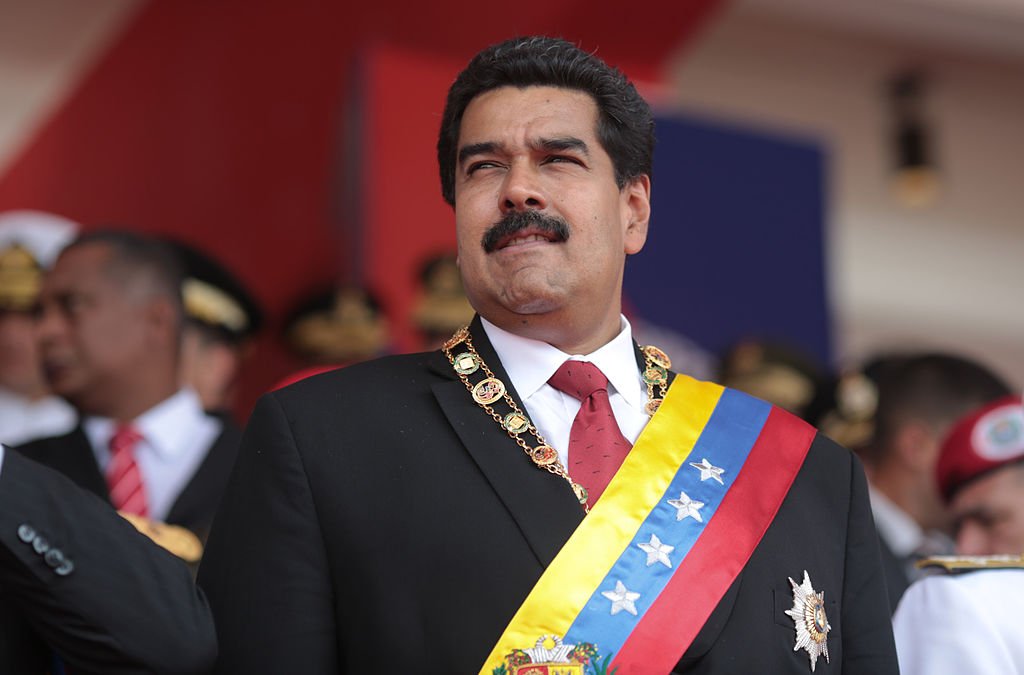
Written By Isidoros Karderinis – The unprecedented kidnapping in the world annals, in the manner in which it took place, of Venezuelan President Nicolas Maduro constitutes not only a military intervention in a sovereign and independent country in violation of the principles of international law, but also constitutes a clear warning to the entire planet. A warning to every insubordinate leader of any country.

Helicopter launches attack on Venezuela Supreme Court

Already on January 3, 2026, during a press conference he gave regarding the military operation and arrest of Maduro, US President Donald Trump issued threats against Colombian President Gustavo Petro, stating the following: “He would do well to be careful.”

At the same time, the US president hinted that Cuba could be a topic of discussion within the context of broader US policy in the region, highlighting Washington’s ability to expand its focus beyond Venezuela.

US Secretary of State Marco Rubio even said that the Cuban government should be worried after Maduro’s arrest. Specifically, he said: “If I lived in Havana and was member of the government, at least I would be worried,” adding that “Cuba is a disaster” and that the country is “run by incompetent and depraved men.”

The history of the United States, moreover, is characterized by extensive imperialist interventions, both territorial and interventionist in other countries. Specifically, there have been approximately 400 interventions since 1776, when the Second Continental Congress adopted the Declaration of Independence on July 4, declaring the independence of the 13 American Colonies from the British Empire, an event that marked the official founding of the United States of America.

Who can forget that from April 15 to 19, 1961, 1,400 anti-Fidel Castro fighters, trained and financed by the CIA, attempted to land at the Bay of Pigs, 250 kilometers from Havana, but failed to overthrow the Cuban communist regime. These battles resulted in the deaths of about a hundred people on each side.
“With Salvador Allende winning the elections of September 4, 1970 in Chile and already Fidel Castro in Cuba, we will have a Red sandwich in Latin America that will inevitably become all Red,” Richard Nixon feared, and his fear was soon confirmed by the election results.

So, in the face of this unpleasant reality for the United States, a solution had to be found. And the solution was found on that morning of September 11, 1973, when a military coup took place under the head of the army, General Augusto Pinochet, with the support of the United States, but also of Brazil, whose military regime was completely friendly and cooperative with the United States. The coup plotters, after first surrounding and bombing the Presidential Palace, then stormed it. Salvador Allende and his close associates were killed, after fierce resistance.

The United States also invaded Panama in mid-December 1989 during the presidency of George W. Bush. The purpose of the military invasion was to oust Panama’s de facto leader, General Manuel Noriega, who was accused by American authorities of extortion and drug trafficking.

So, if one is looking for a historical parallel where the US arrested a de facto leader of a country and transferred him to the US for trial, the Noriega case is the most characteristic. And this happened after a regular military invasion, that is, in the context of a coordinated armed intervention, and certainly not a “normal” peace.

Noriega managed to escape and took refuge in the Vatican embassy in Panama City, the country’s capital, where he remained for 11 days. There, he was subjected to relentless psychological warfare in order to surrender. The US military set up a horrible , deafening wall of sound outside the embassy. A fleet of Humvees with loudspeakers constantly played hard rock and occasionally heavy metal music. For example, “Panama” by the heavy metal singers Van Halen was played.

The Holy See rightly complained to President Bush, and the musical war ended after three days. By January 3, 1990, the general had agreed to surrender.
But what are the deeper reasons for the US military invasion of Venezuela and the pursuit of overthrowing the insubordinate existing regime?

Venezuela, therefore, has the largest proven oil reserves in the world, amounting to approximately 303.8 billion barrels as of 2021. For comparison, leading oil producing countries have smaller reserves. Specifically, Saudi Arabia has approximately 267 billion barrels and Kuwait has 101.5 billion barrels.

At the same time, the country’s proven natural gas reserves exceeded 5.6 trillion cubic meters in 2021. It should be noted, at the same time, that in the Western Hemisphere, only the United States had more reserves.

Also, Venezuela’s total iron ore reserves are estimated at 4.5 billion tons. And here it should be emphasized regarding iron reserves that the country is second in the region after Brazil. Venezuela finally has some of the largest reserves of bauxite in the world, a mineral used to produce aluminum. The country’s total bauxite reserves amount to 950 million tons.

It is, therefore, clear to any objective observer that the US covets Venezuela’s wealth-producing resources. Resources that they cannot get their hands on with the existing regime, which is a political and military partner and ally of Moscow, Beijing and Tehran, but also the main supplier of oil to China, whose control is drying up the flow.

The solution therefore for them, for the US, in order to secure primacy in the relentless international competition is the overthrow of the existing Venezuelan regime and the emergence of a president and a government that is absolutely friendly and serviceable. The rest, that is, whether such a thing is legal and democratic, does not concern them at all.

Fire leaves 68 dead in Venezuela police station cells

In closing, I would like to emphasize that the leaders of any country are overthrown only by their people, that is, by popular uprisings and revolutions, as has happened in various countries in the past. They are not overthrown by the military intervention of another country, a foreign power. Therefore, the US military invasion of Venezuela and the kidnapping of its president, Nicolas Maduro, are absolutely condemnable for any democratic and free-thinking citizen of the world.

By Isidoros Karderinis

Similar Posts

  • Thai Forensic Institute Points to Potential Heart Failure in Vlogger Hlun Solo’s Death

    BANGKOK, Thailand – The second autopsy of popular Thai travel vlogger Bowornthat Pengsuk, widely known online as Hlun Solo, suggests heart failure as a potential cause of death, though forensic experts have not ruled out poisoning due to severe limitations caused by the initial examination in Georgia. The Central Institute of Forensic Science conducted the […]

  • | |

    Security scare in Germany

    German federal authorities and counterterrorism investigators have significantly heightened their security  following alarming revelations. According to confidential police documents cited by major German media outlets—including Süddeutsche Zeitung, NDR, and WDR—a Ukrainian cargo plane parked near an explosive-rigged drone at Leipzig/Halle Airport was actively carrying a shipment of military ammunition. The discovery has transformed what was initially treated as a localized security disruption into a high-stakes counterterrorism investigation into potential state-sponsored sabotage on critical European infrastructure. The Incident at Leipzig/Halle Airport The security breach unfolded late Tuesday night when airport ground personnel spotted a small First-Person View (FPV) drone hovering low to the ground near the tarmac. The unmanned aerial vehicle (UAV) eventually came to rest directly between two massive Antonov An-124 strategic freighters operated by Ukraine’s state-owned Antonov Airlines. Surprise grew among security officials when automated drone-detection systems failed to register the rogue aircraft prior to visual sighting. Specialized bomb disposal technicians from the Saxony State Criminal Police Office (LKA) quickly deployed remote bomb-disposal robots to neutralize the hazard. Forensic teams carefully detached a detonator from a fist-sized package of high-grade military explosives attached to the drone. Subsequent laboratory testing indicated the substance was likely Semtex, a potent explosive widely utilized in military and industrial demolition. Investigative reports from national daily Bild noted that only a technical malfunction in the improvised triggering mechanism prevented the explosive payload from detonating upon contact. High-Stakes Cargo at a Vital Strategic Hub The potential severity of the incident escalated sharply once investigators confirmed the contents of the adjacent aircraft. The Antonov freighter had recently arrived from France laden with military munitions intended for onward transfer. While authorities have not officially disclosed the specific caliber or destination of the military cargo, the presence of volatile munitions alongside a military-grade explosive device drastically raised the potential damage radius had an explosion occurred. Leipzig/Halle Airport serves as a vital artery for international air commerce, but it also holds immense geopolitical importance. It is the primary operational base for NATO’s Strategic Airlift International Solution (SALIS) program, which utilizes heavy transport planes to ferry military equipment across Europe and bolster defense along the alliance’s eastern flank. A Broader Pattern of “Hybrid Attacks” The drone discovery was not the sole disruption recorded at the facility that evening. In a separate and puzzling event during the same operational window, another commercial freight aircraft performing a go-around maneuver reported a mid-air collision with an unidentified flying object near the airfield. The affected jet sustained light damage before diverting to land safely at Hanover Airport. Search teams continue to comb the surrounding countryside for wreckage or debris connected to that mid-air collision. German Interior Minister Alexander Dobrindt characterized the overall event as a classic “hybrid attack scenario,” warning of elevated threat levels against key supply chains and public infrastructure across the nation. While German federal prosecutors have not yet formally named suspects, several European lawmakers have publicly pointed toward foreign state intelligence services seeking to disrupt Western logistics networks and military support routes.   Flight operations at Leipzig/Halle Airport have since returned to normal schedules, but the incident has prompted urgent calls for updated security protocols and enhanced anti-drone defenses across major European transportation infrastructure.

  • | |

    Field Marshal Asim Munir,  Iranian Momeni hold ke…

    Iranian Interior Minister Eskandar Momeni called on Field Marshal Syed Asim Munir, Chief of Army Staff and Chief of Defence Forces, at the General Headquarters (GHQ) in Rawalpindi on Tuesday to discuss regional security and bilateral cooperation. The meeting focused on issues of mutual interest, including regional security, defence cooperation and effective border management between Pakistan and Iran. Both sides exchanged views on the evolving regional security environment and stressed the importance of maintaining close coordination to address common security challenges and strengthen bilateral relations. The Iranian interior minister appreciated Pakistan’s diplomatic efforts in promoting regional peace and stability. He acknowledged the country’s role in encouraging dialogue, reducing tensions and supporting peaceful solutions to regional disputes. The two sides also underscored the importance of continued cooperation to improve border security and strengthen mechanisms aimed at preventing cross-border threats while promoting stability in the region. The meeting concluded with a shared commitment to enhancing cooperation and maintaining regular coordination in support of regional peace, security and mutual prosperity.

  • | |

    Charli XCX says husband George Daniel inspired one…

    Charli XCX is giving fans a rare glimpse into her personal life, revealing that her husband, George Daniel, played a major role in inspiring one of the most heartfelt songs from her latest music. The Grammy-winning pop star recently reflected on her relationship with Daniel, the drummer for British band The 1975, explaining that he was the first person who truly understood her on both a personal and creative level. That deep connection, she said, naturally found its way into her songwriting. Speaking in a recent interview, Charli described Daniel as someone who has always encouraged her to be completely herself. She explained that their relationship is built on honesty, trust and a shared passion for music, qualities that have strengthened their bond since they first began dating. According to the singer, one of her newest songs was directly inspired by those feelings. Rather than writing a traditional love song, Charli wanted to capture the comfort of being with someone who accepts every part of her personality. She said Daniel gave her the confidence to express emotions she had previously struggled to put into words. Charli and Daniel married earlier this year after announcing their engagement in 2023. Since then, the couple have continued to support each other’s careers while balancing busy schedules in the music industry. Fans have frequently praised their relationship, noting the genuine affection they display during public appearances and collaborative projects. The singer also spoke about how marriage has influenced her outlook on life. She admitted that she once questioned whether settling down was right for her, but meeting Daniel changed her perspective. Feeling understood, respected and emotionally secure has allowed her to approach both life and music with renewed confidence. Their creative partnership has become another defining feature of their relationship. Daniel has contributed to Charli’s music behind the scenes, and the pair have often exchanged ideas in the recording studio. Charli believes that working together has strengthened both their marriage and their artistic vision, allowing them to inspire one another without losing their individual identities. Fans have welcomed Charli’s latest comments, with many appreciating the candid insight into a relationship that has remained relatively private despite both artists’ high profiles. Her reflections also offer a reminder that meaningful relationships can inspire creativity in unexpected ways. For Charli XCX, the song is more than another addition to her catalogue. It represents a chapter of personal growth, love and acceptance. By crediting George Daniel as the person who truly understood her, the singer has highlighted the emotional connection that continues to shape both her life and her music.

  • |

    Netanyahu claims Hezbollah pushed back from border…

    Israeli Prime Minister Benjamin Netanyahu has stated that Israeli forces have pushed Hezbollah approximately 5 to 8 miles (8 to 13 kilometers) back from the Israel-Lebanon border and destroyed about 94 percent of the militant group’s estimated 150,000 missiles and rockets . In an interview with Fox News, Netanyahu highlighted what he described as significant military gains against Hezbollah, which has been a central adversary along Israel’s northern frontier for decades . The Prime Minister also pointed to a new trilateral agreement that has opened direct Israeli-Lebanese talks for the first time in decades. Under this arrangement, Israel is to withdraw its forces from Lebanese territory as Lebanon moves to disarm Hezbollah . Netanyahu expressed cautious optimism but noted that whether the Lebanese army can effectively hold and secure the territory “is yet to be seen,” while adding that Israel is “willing to give it a try” . However, the situation on the ground appears tense, as Lebanese President Joseph Aoun has separately briefed French President Emmanuel Macron on what Beirut describes as ongoing Israeli violations in southern Lebanon . The details of those alleged violations were not immediately specified, but they underscore the fragility of the current security arrangements. The developments come amid a broader regional push to stabilize multiple fronts, including the recent Israeli cabinet approval for an International Stabilization Force to enter Gaza . The Lebanese front has remained a critical concern, with cross-border exchanges of fire having intensified over the past years. Netanyahu’s remarks suggest that Israel views the military campaign against Hezbollah as having achieved its primary objectives of degrading the group’s offensive capabilities and creating a buffer zone near the border. The success of the political track, however, now hinges on the Lebanese state’s ability to enforce disarmament commitments a task that has historically proven challenging given Hezbollah’s deep entrenchment in Lebanese society and politics . As of now, neither Hezbollah nor the Lebanese government has publicly responded to Netanyahu’s claims regarding the group’s military losses or the border buffer zone.

  • | | |

    Economists urge SBP to hold rate at 11.5%

    Economists have recommended that the State Bank of Pakistan (SBP) keep its policy rate unchanged at 11.5% at its upcoming monetary policy meeting on July 27. The recommendation comes as inflation has started to ease, but underlying price pressures remain high. Analysts believe the economy is also recovering unevenly, leaving limited room for another increase in borrowing costs. A recent economic assessment showed that headline inflation fell to 11.1% in June. However, core inflation remained elevated. Urban core inflation stood at 8.7%, while rural core inflation was recorded at 7.9%. Economists said much of the current inflationary pressure is coming from food, energy, transport and government-controlled prices. These factors cannot be addressed effectively through interest-rate changes alone. They also warned that a recent increase in the Sensitive Price Indicator (SPI) requires close monitoring. The development could indicate that the decline in inflation has not yet become firmly established. Financial market indicators also support maintaining the current policy rate. Short-term Treasury bill yields remain close to the SBP’s existing rate, while the overnight interest rate is also broadly aligned with the current monetary policy stance. However, yields on longer-term Treasury bills have increased. The six-month yield reached 11.80%, while the 12-month yield rose to 11.99%. Economists said the movement reflects some caution about the medium-term economic outlook. The assessment noted that Pakistan’s economic recovery has gained momentum but remains uneven. Large-scale manufacturing continues to face challenges, while there are no strong signs of excessive demand that would require another rate hike. Economists warned that raising the policy rate further could increase borrowing costs for businesses and consumers. It could also discourage investment and slow economic activity without directly tackling the supply-side factors behind current inflation. Pakistan’s external position has improved in recent months. Higher foreign exchange reserves, strong remittance inflows and relative stability in the exchange rate have reduced immediate pressure on the economy. Despite these improvements, risks remain. The country continues to face a sizeable merchandise trade deficit and upcoming external debt repayments. Heavy dependence on imported energy also leaves Pakistan vulnerable to international oil price fluctuations. A sharp rise in global oil prices could increase transportation and energy costs in Pakistan. It could also widen external pressures and trigger another round of inflation. Persistent core inflation is another major concern. If underlying price pressures remain high, inflation expectations could become difficult to control. This could delay any reduction in interest rates or force the central bank to consider tighter monetary policy. A weakening exchange rate could create additional pressure by making imports more expensive. It could also affect foreign exchange reserves and increase imported inflation. Economists have therefore advised the SBP to closely monitor private-sector borrowing, lending rates, monetary growth and the difference between short- and long-term interest rates. For now, the indicators favour maintaining the policy rate at 11.5%. However, economists say the central bank should remain ready to adjust its stance if inflation, oil prices, exchange-rate pressures or external financing risks deteriorate.

Leave a Reply

Your email address will not be published. Required fields are marked *