netanyahu claims hezbollah
|

Netanyahu claims Hezbollah pushed back from border…

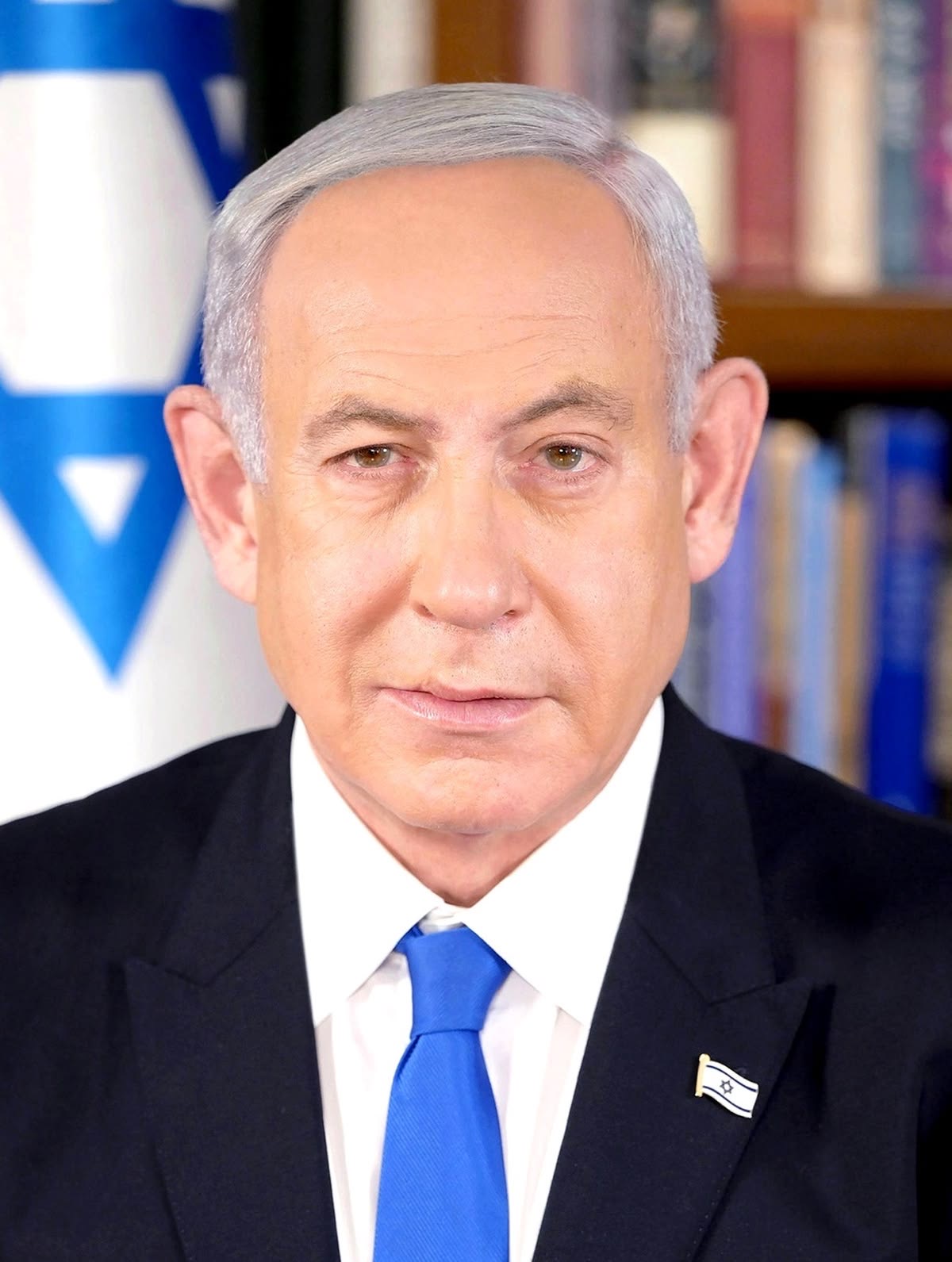
Israeli Prime Minister Benjamin Netanyahu has stated that Israeli forces have pushed Hezbollah approximately 5 to 8 miles (8 to 13 kilometers) back from the Israel-Lebanon border and destroyed about 94 percent of the militant group’s estimated 150,000 missiles and rockets .

In an interview with Fox News, Netanyahu highlighted what he described as significant military gains against Hezbollah, which has been a central adversary along Israel’s northern frontier for decades .

The Prime Minister also pointed to a new trilateral agreement that has opened direct Israeli-Lebanese talks for the first time in decades. Under this arrangement, Israel is to withdraw its forces from Lebanese territory as Lebanon moves to disarm Hezbollah . Netanyahu expressed cautious optimism but noted that whether the Lebanese army can effectively hold and secure the territory “is yet to be seen,” while adding that Israel is “willing to give it a try” .

However, the situation on the ground appears tense, as Lebanese President Joseph Aoun has separately briefed French President Emmanuel Macron on what Beirut describes as ongoing Israeli violations in southern Lebanon . The details of those alleged violations were not immediately specified, but they underscore the fragility of the current security arrangements.

The developments come amid a broader regional push to stabilize multiple fronts, including the recent Israeli cabinet approval for an International Stabilization Force to enter Gaza . The Lebanese front has remained a critical concern, with cross-border exchanges of fire having intensified over the past years.

Netanyahu’s remarks suggest that Israel views the military campaign against Hezbollah as having achieved its primary objectives of degrading the group’s offensive capabilities and creating a buffer zone near the border. The success of the political track, however, now hinges on the Lebanese state’s ability to enforce disarmament commitments a task that has historically proven challenging given Hezbollah’s deep entrenchment in Lebanese society and politics .

As of now, neither Hezbollah nor the Lebanese government has publicly responded to Netanyahu’s claims regarding the group’s military losses or the border buffer zone.

Similar Posts

  • | |

    AJK polls completed transparently, says top poll o…

    Chief Election Commissioner of Azad Jammu and Kashmir Justice (retd) Ghulam Mustafa Mughal has said that the first phase of the electoral process in the region was completed in a free and transparent manner. He said all political parties actively participated in the elections. He added that polling was conducted in a peaceful environment across the region. Justice (retd) Ghulam Mustafa Mughal said voters participated in large numbers. He said people exercised their constitutional right to vote and took part in the electoral process. The chief election commissioner said the overall polling process remained peaceful. He said election authorities and other relevant institutions worked to ensure that voters could cast their ballots. He also acknowledged the role of law enforcement agencies during the elections. According to him, security personnel played an exemplary role in maintaining law and order. The chief election commissioner said security arrangements helped keep the polling environment peaceful. Law enforcement agencies remained deployed to deal with any situation that could affect the electoral process. However, he said an incident was reported in Samahni where attempts were made to disrupt polling. The people involved in creating a disturbance were arrested, he said. Justice (retd) Ghulam Mustafa Mughal said the authorities took action to ensure that polling activities were not affected. He stressed that maintaining peace was essential for a smooth electoral process. He also highlighted the participation of political parties in the elections. He said their involvement reflected the importance of the electoral process in Azad Jammu and Kashmir. The chief election commissioner’s statement came after the completion of the first phase of polling in the region. The election process attracted significant participation from voters. He said the authorities remained focused on ensuring transparency throughout the process. He also stressed the importance of maintaining law and order during polling. The election authorities are now expected to continue the next stages of the electoral process according to the announced schedule. The results and subsequent procedures will determine the political direction of the region. Justice (retd) Ghulam Mustafa Mughal said the peaceful completion of the first phase was an important development. He maintained that the cooperation of political parties, voters, election officials and law enforcement agencies helped the process move forward.

  • | | |

    Pakistan imposes new restrictions on foreign media

    Pakistani authorities have exposed regulatory measures governing foreign media operations in the country. The strategy has triggered an alarm among press freedom advocates, legal observers, and media personnel. Under the newly issued Foreign Media Facilitation Guidelines, journalists representing international organizations will no longer be permitted to travel or cover news events outside three major metropolitan hubs without explicit prior authorization from the government. The regulations come at a delicate juncture marked by escalating political instability, public demonstrations, and security crackdowns across key regions including recent demonstrations connected to heightened tensions in Kashmir and subsequent enforcement actions in urban centers like Lahore. Critics argue that by constraining the scope of international newsgathering precisely when accurate coverage is most vital, the state risks deepening information voids and exacerbating the spread of unverified claims. Key Requirements of the New Media Framework Administered through the External Publicity Wing of Pakistan’s Ministry of Information, the updated regulatory policy establishes procedural hurdles for international news agencies. Foreign correspondents, local staff, contributors, and freelance journalists working for international outlets must secure an official No Objection Certificate (NOC) before traveling to conduct reporting assignments outside Islamabad, Karachi, and Lahore. Regions requiring prior approval now explicitly cover all provincial territories, sensitive border zones, and Pakistan-administered Kashmir. The framework provides no defined processing timeframe for NOC applications, leaving reporting teams facing unpredictable delays and potential administrative holds. The Ministry reserves the authority to suspend or revoke official media accreditation if reporting is judged to run counter to the country’s national sovereignty, ideology, or public safety phrasing that legal analysts describe as intentionally open-ended. Backlash from Analysts and Rights Groups The enactment of these guidelines has drawn sharp rebuke from political commentators, civil society organizations, and international press watchdogs, who view the move as part of a systematic contraction of independent journalism within the country. Former senator and political commentator Mustafa Nawaz Khokhar highlighted the grave consequences of curtailing foreign news organizations, warning that restricting legitimate press operations ultimately undermines public trust. These guidelines are tantamount to choking international media in an increasingly shrinking space, Khokhar noted, emphasizing the vital role global news outlets play when local media environments face structural pressure. The public looks at the international media for independent reporting. Placing restrictions simply creates more room for disinformation and the spread of fake news.   Rights groups including the Pakistan Federal Union of Journalists (PFUJ) and international watchdogs have echoed these concerns. They’re pointing out that advance the requirement of government permission for routine reporting effectively grants authorities veto power over what news reaches the global audience. Broader Context of Press Freedom in Pakistan Pakistan’s media environment has historically operated in a complex space balancing constitutional guarantees of free speech against national security laws. However, media analysts note that state oversight of both traditional print/broadcast journalism and online digital spaces has tightened significantly in recent years. The introduction of the new foreign media guidelines coincides with broader legislative shifts aimed at regulating online speech and social media platforms. Observers express concern that administrative barriers, combined with strict digital laws, could leave remote or politically sensitive areas completely cut off from independent news coverage. By limiting foreign journalists’ mobility primarily to the capital and two largest economic centers, field reporting from rural regions, border zones, and conflict-affected territories will become exceptionally difficult to conduct legally. Implications for International Coverage As international newsrooms adapt to the new framework, news gathering strategies across South Asia are likely to face operational friction. Bureau chiefs and correspondents report that unpredictable NOC processing times make time-sensitive breaking news coverage outside major cities nearly impossible to guarantee.   Without direct on-the-ground access for independent journalists, global news consumers may increasingly have to rely on official statements or unverified social media updates during crises. For a country navigating complex domestic politics and delicate international relations, press freedom advocates warn that restricting the lens through which the world views Pakistan could backfire, isolating the nation’s political discourse and fostering an environment where misinformation thrives unchecked.

  • |

    India’s top court orders release of minors amid exam protests

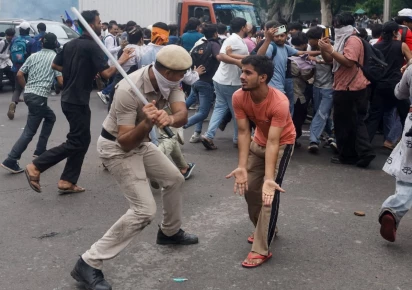
    NEW DELHI: India’s Supreme Court has ordered authorities to release minors detained during protests over examination paper leaks and directed officials to preserve evidence linked to allegations of excessive police force. Chief Justice Surya Kant reportedly issued the interim directions while hearing petitions filed by student protesters and activists. The petitions accuse police and paramilitary personnel of using excessive force, including baton charges and other crowd-control measures, against demonstrators. The court also directed authorities to preserve all available surveillance material from the protests. This includes CCTV recordings, drone footage and body-camera video. Officials were further told to protect the personal and digital information of protesters and ensure that it is not publicly disclosed. The court reportedly barred authorities from taking coercive action against protesters while the matter remains under consideration. Justice Kant stressed the importance of an independent investigation into allegations of mistreatment. He said accountability must be established if wrongdoing occurred. The government has defended the security forces’ response, describing the measures as necessary for crowd control. Solicitor General Tushar Mehta told the court that around 250 police officers were also injured during the unrest. He reportedly said the government had no objection to an investigation into allegations involving protesters. The protests erupted after question papers for a national medical college entrance examination were leaked. The controversy triggered demonstrations in New Delhi and several other parts of India. Protesters demanded reforms to the examination system, withdrawal of cases against demonstrators and compensation for families of students who died by suicide following the controversy. The demonstrations ended after the education minister resigned and the government agreed to several demands raised by the protesters. Meanwhile, the Indian government has proposed tougher penalties for examination paper leaks. Under the proposed amendments, the maximum prison sentence could be increased to 10 years, while fines could rise to more than $1 million. The government says the proposed changes are intended to strengthen the examination system, speed up legal proceedings and restore confidence among students and young people. The issue has also created political tension in parliament. Opposition lawmakers have repeatedly raised concerns about the police response to the protests and demanded accountability. In several cities, clashes between demonstrators and security personnel led to tear gas and baton charges. Authorities also suspended a police officer in an eastern state after he allegedly fired rounds into the air while attempting to disperse student protesters. Concerns have additionally emerged over the use of artificial intelligence-powered surveillance during demonstrations. Activists have questioned the deployment of police surveillance equipment capable of providing wide-area monitoring of protest gatherings. A protest group that helped lead the movement has claimed that hundreds of students were arrested in different states. However, the figure has not been independently verified.

  • Cambodia Hires U.S. Firm to Wage Information War, Documents Show

    BANGKOK — A U.S.-based consulting firm has been formally contracted by the Cambodian government to conduct an international information campaign aimed at discrediting Thailand and swaying global opinion amid ongoing border hostilities, according to documents published by the STRONG Anti-Corruption Thailand Club. Civilian Death Toll in Thailand Rises to 16 Amid Continued Border Clashes The […]

  • |

    LHC warns of serious environmental consequences

    The Lahore High Court has issued a 265-page detailed judgment in cases related to smog and environmental degradation, warning that continued damage to nature could leave future generations without essential natural resources. The court said human activities have pushed the environment and climate to a critical stage. Pollution, excessive use of natural resources and environmental degradation are intensifying rapidly, making immediate and effective action necessary. The judgment stressed that environmental protection is not solely the responsibility of government departments. Citizens, institutions, businesses, educational organisations and local authorities must also play their part. The court expressed serious concern over the rapid decline in groundwater levels, describing the situation as extremely dangerous. It stressed that water remains essential for human survival and warned that its unnecessary consumption and wastage could create severe problems for future generations. The court directed relevant authorities to introduce practical measures to conserve water and reduce unnecessary consumption. As part of its water conservation measures, the court directed authorities to ensure that water used for ablution at mosques is collected instead of being wasted. The court ordered that the collected water should be reused for watering plants and greenery. It observed that even small conservation measures could have a significant impact when implemented on a large scale. The judgment highlighted the strong connection between environmental protection and fundamental human rights. The court noted that the right to a clean, healthy and sustainable environment has gained constitutional significance in Pakistan following the insertion of Article 9A into the Constitution. It called for long-term policies to protect air, water, soil, trees and other natural resources instead of relying only on temporary measures during severe smog episodes. The court warned that continued neglect of the environment could cause irreversible damage. It stressed that authorities must treat environmental protection as a permanent priority rather than responding only when smog or other environmental emergencies become severe. The Lahore High Court has issued several directions during the long-running smog case covering air pollution, tree plantation, groundwater conservation and urban environmental management. Through its continuing supervisory role, the court has also monitored the implementation of these measures by government departments and environmental bodies. The judgment called for collective action and changes in human behaviour to tackle Punjab’s growing environmental challenges and protect natural resources for future generations.

Leave a Reply

Your email address will not be published. Required fields are marked *