ajk polls completed
| |

AJK polls completed transparently, says top poll o…

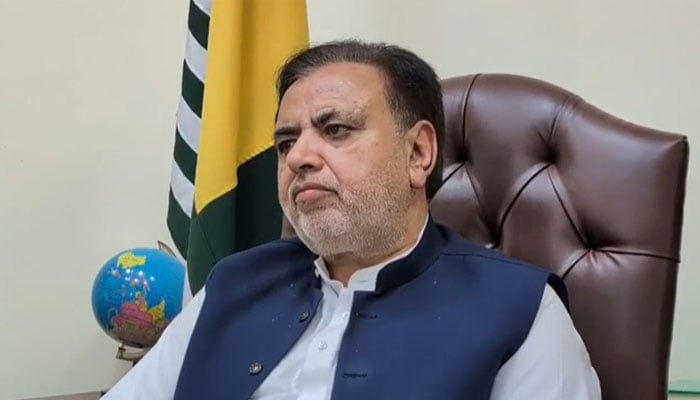
Chief Election Commissioner of Azad Jammu and Kashmir Justice (retd) Ghulam Mustafa Mughal has said that the first phase of the electoral process in the region was completed in a free and transparent manner.

He said all political parties actively participated in the elections. He added that polling was conducted in a peaceful environment across the region.

Justice (retd) Ghulam Mustafa Mughal said voters participated in large numbers. He said people exercised their constitutional right to vote and took part in the electoral process.

The chief election commissioner said the overall polling process remained peaceful. He said election authorities and other relevant institutions worked to ensure that voters could cast their ballots.

He also acknowledged the role of law enforcement agencies during the elections. According to him, security personnel played an exemplary role in maintaining law and order.

The chief election commissioner said security arrangements helped keep the polling environment peaceful. Law enforcement agencies remained deployed to deal with any situation that could affect the electoral process.

However, he said an incident was reported in Samahni where attempts were made to disrupt polling. The people involved in creating a disturbance were arrested, he said.

Justice (retd) Ghulam Mustafa Mughal said the authorities took action to ensure that polling activities were not affected. He stressed that maintaining peace was essential for a smooth electoral process.

He also highlighted the participation of political parties in the elections. He said their involvement reflected the importance of the electoral process in Azad Jammu and Kashmir.

The chief election commissioner’s statement came after the completion of the first phase of polling in the region. The election process attracted significant participation from voters.

He said the authorities remained focused on ensuring transparency throughout the process. He also stressed the importance of maintaining law and order during polling.

The election authorities are now expected to continue the next stages of the electoral process according to the announced schedule. The results and subsequent procedures will determine the political direction of the region.

Justice (retd) Ghulam Mustafa Mughal said the peaceful completion of the first phase was an important development. He maintained that the cooperation of political parties, voters, election officials and law enforcement agencies helped the process move forward.
Similar Posts

  • | |

    Arooj Aurangzeb calls out support for Indian Gen Z

    Arooj Aurangzeb is a name that carries real weight in Pakistan’s student activism circles. In 2019, she went viral after a video of her reciting a powerful poem during the student solidarity march spread rapidly across social media. She was protesting alongside thousands of other students who were demanding the restoration of student unions and proper political representation for young people within the country’s institutions. The videos from that movement were electric, emotional and widely shared, including hers. Seven years later, she is back in the public conversation, but this time it is not because of a protest. It is because of a contradiction she says she can no longer stay quiet about. When Indian students began protesting over the NEET paper leak at Jantar Mantar, demanding justice and systemic reform in the country’s examination system, Pakistani social media users responded with visible enthusiasm. Support poured in from across the border, with many Pakistanis praising the Indian Gen Z for their courage, awareness and refusal to be silent. Arooj Aurangzeb watched that wave of support and felt something shift inside her. She took to social media to point out what she saw as a glaring and painful inconsistency. While Pakistanis were celebrating the Indian protesters and calling their movement inspiring, many of those same people had ridiculed, trolled and dismissed her and her fellow students when they took to the streets in 2019 for exactly the same kind of systemic change. She did not hold back. She highlighted the irony directly, asking how the same people who mocked Pakistani students fighting for their rights could turn around and feel so moved by Indian Gen Z doing the same thing. Her post was not framed as anti-India. It was framed as a question about selective empathy and the way Pakistanis sometimes extend more admiration to voices from abroad than to those speaking up at home. The internet did not respond with silence. Reactions were divided and sharp. Some users sided with her immediately. “We never stand by our own heroes,” one person wrote, capturing the frustration that Arooj was articulating. Others pushed back, with one commenter arguing that the dynamics of Indian and Pakistani Gen Z are completely different and that direct comparisons were unfair. Another raised a pointed question of their own, asking why so many Pakistani revolutionaries eventually leave the country on foreign visas, a remark that suggested the critique went both ways. Arooj Aurangzeb’s voice in 2019 was a reminder that young Pakistanis were willing to stand up and demand something better. Her voice in 2026 is a reminder that those same young people are still watching, still paying attention, and still asking why the recognition they deserved then continues to be denied while admiration flows so freely elsewhere.

  • | | |

    Global oil prices drop 12% in three days, Pakistan…

    Pakistani consumers have yet to benefit from a sharp decline in global oil prices, despite international petroleum markets recording a fall of up to 12% over the past three days. The continued high fuel prices have added to the financial burden on households already struggling with rising inflation. Over the last 12 days, fuel prices in Pakistan have increased significantly, with diesel becoming Rs. 65.08 per litre more expensive and petrol rising by Rs. 25.10 per litre. The increases followed the federal government’s decision on July 17 to introduce a daily fuel price adjustment mechanism in line with international market trends. On July 17, petrol was priced at Rs. 310.71 per litre, while high-speed diesel was available at Rs. 323.30 per litre. As of July 29, petrol is being sold at Rs. 335.81 per litre, whereas diesel has climbed to Rs. 388.38 per litre, marking one of the steepest short-term increases in recent years. Although consumers witnessed two minor reductions in petrol prices during this period, the relief was limited. Petrol prices were cut by Rs. 0.35 per litre on July 21 and by Rs. 1.00 per litre on July 27. Diesel prices, however, have not been reduced since the daily pricing mechanism came into effect. International oil markets experienced a sustained upward trend after July 17, contributing to higher domestic fuel prices. However, between July 25 and July 28, global petroleum prices fell sharply, with reports indicating a decline of approximately 12% across major international benchmarks. Despite this significant drop in global prices, Pakistani consumers have not yet received any corresponding reduction at the pump. The absence of immediate relief has sparked concerns among motorists and businesses, particularly those heavily dependent on transportation and logistics, where fuel costs directly affect operating expenses. Economists note that lower international oil prices, if sustained, could create room for a reduction in domestic fuel prices in the coming days. Any adjustment, however, will depend on several factors, including exchange rate movements, government taxes and levies, freight costs, and the pricing formula adopted by the authorities. With inflation continuing to squeeze household budgets, many consumers are hoping the recent decline in global oil prices will soon translate into lower petrol and diesel prices in Pakistan, easing transportation costs and reducing pressure on the overall cost of living.

  • Austrian Expatriate Sentenced To 1,673 Years In Thailand

    NAKHON RATCHASIMA, Thailand — An Austrian national has been sentenced to 1,673 years in prison by a Thai court for the prolonged sexual abuse of his daughter, a case that has drawn attention to international cooperation in prosecuting child exploitation crimes. Police arrest Thai man for repeatedly raping 12 year old daughter The 54-year-old man, […]

  • |

    BNP veteran Alamgir elected Bangladesh president

    Bangladesh’s parliament has elected veteran Bangladesh Nationalist Party leader Mirza Fakhrul Islam Alamgir as the country’s new president, marking another major development in the country’s political transition. The 78-year-old politician secured victory in a parliamentary vote on Thursday, defeating retired army Colonel Oli Ahmed, who was backed by the Jamaat-e-Islami-led opposition alliance. Chief Election Commissioner A.M.M. Nasir Uddin announced Alamgir as the winner after he received 255 votes against Ahmed’s 88. Alamgir is expected to take the oath of office on Friday evening. Although the presidency in Bangladesh is largely ceremonial, the president serves as the country’s head of state and commander-in-chief of the armed forces. Executive powers remain with the prime minister and cabinet. Alamgir’s election comes after the BNP returned to power following the February general election. The party and its allies secured a two-thirds majority in parliament, while BNP leader Tarique Rahman became prime minister. The presidential election was triggered by the resignation of Mohammed Shahabuddin, who stepped down last month citing health reasons before completing his five-year term. Shahabuddin, a former Awami League politician and close associate of former prime minister Sheikh Hasina, had become president in 2023. Hasina left Bangladesh and moved to India after a mass uprising removed her government from power in August 2024. She has previously indicated that she plans to return to Bangladesh later this year. Alamgir is one of the BNP’s longest-serving senior figures. He served as the party’s secretary-general from 2016 until being nominated for the presidency. During the Awami League government’s rule, Alamgir emerged as one of the BNP’s most prominent opposition leaders. He faced several arrests and legal cases during his political career. His political journey began after he completed his studies in economics at the University of Dhaka. He initially worked as a teacher before entering politics. Alamgir joined the BNP in the early 1990s and gradually rose through its ranks. He later held several senior government positions and served as local government minister before leaving the position following his nomination for president. His election now places a longtime opposition figure in Bangladesh’s highest constitutional office as the BNP consolidates its political position following its return to government.

  • | |

    Only 170 officials and rising HIV cases push Sindh…

    Islamabad / Karachi: The Sindh Healthcare Commission came under intense scrutiny in the Senate after lawmakers questioned its ability to control illegal medical practices and respond effectively to the growing HIV situation in Sindh. Senators raised concerns over delayed action, staff shortages, and legal weaknesses that they said were limiting the Commission’s performance. The issue was discussed during a meeting of the Senate Standing Committee on National Health Services, Regulations and Coordination chaired by Senator Amir Waliuddin Chishti. The meeting was attended by Senator Syed Masroor Ahsan, Senator Samina Mumtaz Zehri, Senator Nadeem Ahmed Bhutto, Senator Nasir Mehmood Butt, Senator Anusha Rehman Ahmad Khan through Zoom, Federal Minister Syed Mustafa Kamal and Sindh Labour Minister Saeed Ghani along with senior federal and provincial health officials. Senator Nasir Mehmood Butt questioned why FIRs had still not been registered against those responsible in connection with the HIV situation, while Senator Syed Masroor Ahsan expressed dissatisfaction over delays in action and questioned the role of the Sindh Healthcare Commission in preventing the spread of the disease. Responding to the Committee, the Chief Executive Officer of the Sindh Healthcare Commission said the Commission had already registered several FIRs against medical quacks. However, he stated that weaknesses in the existing legal framework allowed many accused to obtain bail shortly after arrest. He informed the Committee that amendments to the law were being prepared to strengthen action against quackery. The CEO also disclosed that the Commission has only around 170 officials serving across the entire province, highlighting a serious shortage of human resources. Senator Samina Mumtaz Zehri questioned why the Commission remained understaffed and asked whether the issue had been formally raised with the Sindh Government. Federal Minister Syed Mustafa Kamal requested the Committee Chairman to issue directions so the matter could move forward. Senator Syed Masroor Ahsan stressed that the Government should acknowledge administrative shortcomings wherever they exist. He also asked how many times the Sindh Healthcare Commission had formally requested additional staff from the Provincial Government. The discussion also focused on the governance structure of the Commission. Members were informed that after the 18th Constitutional Amendment, the Sindh Health Department no longer exercises administrative control over the Sindh Healthcare Commission. Federal Minister Syed Mustafa Kamal suggested that legislative measures should be considered to address governance-related issues affecting provincial institutions. The Committee also examined the appointment process for members of the Sindh Healthcare Commission Board. The Secretary Health informed members that the Department did not have the authority to appoint or remove Board members. Senator Samina Mumtaz Zehri observed that such limitations weaken accountability, while Senator Nasir Mehmood Butt expressed concern that the Chief Executive Officer of the Commission was not administratively answerable to the Secretary Health. Earlier in the meeting, Sindh Labour Minister Saeed Ghani informed the Committee that two inquiries had been conducted into the Valika Hospital incident, during which 37 officials were identified for disciplinary action. He said the inquiry findings had not been made public due to security considerations but assured the Committee that strict action would be taken against those found responsible. He also informed members that the Sindh Government had established a social security fund to support families affected by HIV.

  • | |

    How did the PIMS NICU tragedy unfold?

      An initial investigation by the Pakistan Institute of Medical Sciences (PIMS) has shed new light on the fire that killed 15 newborn babies at the hospital’s neonatal intensive care unit (NICU). According to the preliminary report prepared by the PIMS administration, a nebulizer attached to an incubator, used to deliver or monitor oxygen for a newborn, reportedly burst inside the NICU. The incident caused the oxygen to catch fire, triggering a blaze in the unit. The report says the fire initially remained limited but spread rapidly. Thick smoke entered the babies’ breathing system through the oxygen pipeline, while the fire and heat also affected the infants. The preliminary findings indicate that the newborns died from a combination of oxygen supply failure, smoke inhalation and burn injuries. Earlier, rescue officials and hospital authorities had attributed the fire to an air-conditioner compressor explosion in the gynecology ward. They also said the presence of oxygen cylinders contributed to the rapid spread of the flames. One newborn reportedly survived the incident. The tragedy has raised serious questions about safety arrangements and emergency response at the hospital. The bodies of the deceased newborns have been handed over to their families. Parents and eyewitnesses alleged that hospital staff were not present in the nursery when the fire broke out and claimed that the doors remained closed, making it difficult to evacuate the babies. They also questioned the response time of rescue teams. PIMS Executive Director, however, rejected claims that staff had abandoned the NICU. He said two doctors, four nurses and other staff members were present in the intensive care unit at the time of the incident. He also maintained that the hospital had an adequate fire safety system. The Capital Development Authority (CDA) said its rescue teams reached the hospital soon after receiving the emergency call. According to the authority, firefighters brought the blaze under control and immediately shifted the affected newborns to the intensive care unit for treatment. The district administration has formed an eight-member inquiry committee to determine the exact cause of the fire and assess whether safety protocols were properly followed. The committee has been directed to submit its findings within 24 hours. The conflicting accounts about the source of the fire have increased pressure for a detailed and impartial investigation. The final inquiry is expected to establish how the fire started, why it spread so quickly, whether the oxygen system played a role and whether the hospital staff and emergency services responded according to established safety procedures.

Leave a Reply

Your email address will not be published. Required fields are marked *