marriyum aurangzeb says
| |

Marriyum Aurangzeb says Kashmiris have chosen PML-…

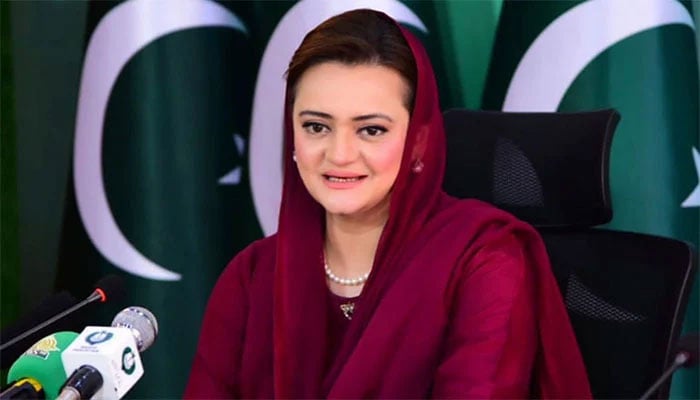
Senior Punjab Minister Marriyum Aurangzeb has said that the people of Azad Jammu and Kashmir have already made their political choice in favour of the Pakistan Muslim League-Nawaz (PML-N).

In a statement, Aurangzeb said Mirpur had given its verdict in favour of the PML-N on July 24. She linked the decision to the visit of PML-N leader Nawaz Sharif and party leader Maryam Nawaz to the city.

According to Aurangzeb, the response from the people of Mirpur showed their support for the PML-N leadership. She said the people had made their choice clear through their political support.

Aurangzeb said the PML-N’s electoral symbol, the lion, had also received strong support. She claimed that by voting for the lion symbol, the people had formally expressed their belief that the development of Azad Jammu and Kashmir was connected with the PML-N.

She said the party was committed to the progress and development of the region. Aurangzeb maintained that the public response in different areas was an indication of growing support for the PML-N.

The senior provincial minister also referred to the situation in Muzaffarabad. She said the people of Muzaffarabad had already announced their decision on July 21.

Aurangzeb said the political choices made in Mirpur and Muzaffarabad reflected the direction of the election campaign. She suggested that the response from voters in both areas had strengthened the PML-N’s position.

She further said August 2 would be an important day for the people of Azad Jammu and Kashmir. According to her, voters would use the lion symbol to formally announce their decision through the ballot.

Aurangzeb urged Kashmiris to vote for the PML-N and support its leadership. She presented the party as a force for development and progress in Azad Jammu and Kashmir.

The statement comes amid the ongoing electoral activity in the region. Political parties are campaigning to win the support of voters ahead of the final voting process.

Aurangzeb’s remarks underline the PML-N’s focus on development as a central theme of its campaign. She said the people’s vote would determine the future political direction of Azad Jammu and Kashmir.

The minister expressed confidence that voters would reaffirm their support for the PML-N on August 2 by voting for the lion symbol.
Similar Posts

  • | |

    PIMS denies CT Scan failure after Imran Khan’s h…

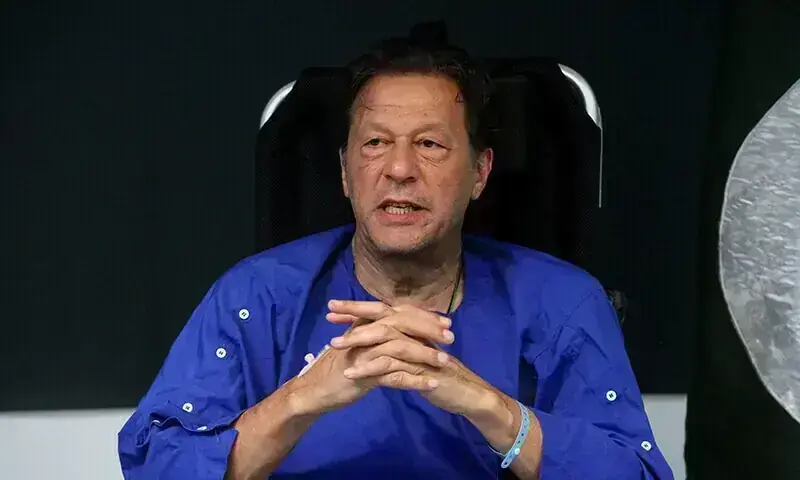
    ISLAMABAD: The Pakistan Institute of Medical Sciences (PIMS) has rejected reports that its CT scanning facility was unavailable after former prime minister and PTI founder Imran Khan was unable to undergo a recommended heart scan during his recent visit to the hospital. In a statement issued on Tuesday, the hospital administration said the CT machine installed in 2022 “remains functional” and continues to provide diagnostic services. Imran, who is currently incarcerated at Adiala Jail, was taken to Pims last week for an eye-related procedure and other medical examinations. Doctors had reportedly recommended a CT coronary angiography (CTA), a diagnostic test used to examine the coronary arteries and identify possible blockages. However, the test was not performed before he was returned to jail. The development prompted Prime Minister Shehbaz Sharif to order an inquiry into reports that the required facility at Pims was not operational. An inquiry committee was subsequently constituted to establish the facts surrounding the missed examination. Pims clarified that medical imaging procedures are carried out according to clinical assessments, specialist recommendations, patient-safety requirements and established medical protocols. The administration also cautioned against interpreting the use or non-use of a particular imaging procedure outside its medical context. A senior Pims doctor, speaking on condition of anonymity, said approximately a dozen CT coronary angiographies had been performed at the hospital before the latest statement was issued. The controversy has also intensified demands from PTI leaders for Imran to be transferred to Shifa International Hospital in Islamabad. The Supreme Court had directed on August 18 that he be shifted to the facility. PTI Information Secretary Sheikh Waqas Akram has questioned why the recommended examination was not carried out. He said a government-appointed medical board examined Imran on August 10, while a Pims cardiologist had recommended the cardiac scan earlier due to reported fluctuations in blood pressure, palpitations, headaches and restlessness, along with concerns related to his age and prolonged incarceration. Akram alleged that the test was considered medically necessary but was not conducted when Imran was brought to Pims. He further claimed that hospital officials cited the unavailability of the facility despite the presence of a functioning CT scanner. The conflicting accounts have placed renewed attention on Imran’s medical care and the circumstances surrounding the recommended cardiac examination, with the government-ordered inquiry expected to clarify whether the test was withheld for medical reasons or because of an operational issue.

  • |

    EU to end automatic GSP+ extension from 2027, Pakistan told to submit fresh action plan

    ISLAMABAD: The European Union (EU) is set to introduce a revised mechanism for extending its Generalised Scheme of Preferences Plus (GSP+) trade facility from January 2027, under which beneficiary countries will no longer receive an automatic extension. The Commerce Ministry informed the National Assembly Standing Committee on Commerce on Wednesday that Pakistan would have to formally seek continuation of the GSP+ facility and submit an action plan covering its commitments under 32 United Nations conventions. Commerce Secretary Jawad Paul briefed the committee that the new GSP+ framework would come into force in January 2027, followed by a two-year transition period. During this period, countries benefiting from the scheme will be required to prepare and submit their respective plans, which will subsequently be assessed by the European Union. According to the secretary, the EU’s assessment of Pakistan contains both positive observations and areas of concern. Among the issues highlighted by the European bloc is the human rights situation in Pakistan, along with security and climate-related challenges. The briefing was given during a meeting of the National Assembly Standing Committee on Commerce chaired by Jawad Hanif. Members including Asad Alam Khan Niazi, Khurshid Ahmed Junejo, Shaista Pervaiz, Dr Ramesh Kumar Vankwani, Tahira Aurangzeb, Mir Amir Magsi, Dr Mirza Ikhtiar Baig and Kiran Haider attended the meeting. EU concerns discussed The committee asked the Commerce Ministry to explain the concerns raised by the European Union in its latest assessment of Pakistan and their possible implications for the country’s trade interests. Jawad Paul said the EU report had acknowledged the difficult circumstances Pakistan was facing, particularly in terms of security challenges, economic pressures and climate-related disasters, including floods. These factors, he said, had affected the country’s capacity to fully implement various commitments. He urged members of parliament to present Pakistan’s perspective during their engagements with European Parliamentarians and other EU representatives. The secretary maintained that Pakistan’s circumstances should be taken into account while evaluating the country’s performance under the GSP+ framework. He said the government needed to undertake fundamental measures to address the challenges identified by the EU while also ensuring that Pakistan’s position was effectively communicated to European stakeholders. The committee also expressed concern over the repeated absence of the Commerce Minister from its meetings and conveyed its displeasure over the matter. Tariff reforms aimed at boosting exports The meeting also reviewed the government’s tariff reforms and their impact on industrial competitiveness and exports. Committee members questioned whether exporters would be required to commit to specific export targets in return for government support. The committee chairman clarified that the measures being introduced should not be viewed simply as incentives for exporters, arguing that reductions in duties and taxes were intended to lower production costs and improve Pakistan’s competitiveness in international markets. Officials from the Commerce Ministry said the government had been pursuing a policy of reducing tariff protection and lowering the cost of imported raw materials. The objective, they said, was to enable domestic industries to become more competitive and increase their presence in international markets. As part of the reforms, tariffs on around 2,000 tariff lines were reduced last year to make raw materials and other industrial inputs available at lower prices. The secretary said tariff reforms were being implemented under the National Tariff Policy and that the government had provided an estimated Rs160 billion benefit to industry and exporters during the previous year. For fiscal year 2026-27, another Rs120 billion has been earmarked under the relevant support measures. According to the Commerce Ministry, the previous Rs120 billion package was associated with a $1.27 billion increase in exports during 2025-26. Jawad Paul acknowledged that the tariff changes could initially result in higher imports as industries gained access to cheaper inputs and machinery. However, he argued that the trade imbalance could gradually improve as increased industrial production translated into stronger exports. Committee seeks review of Pakistan-China trade agreement The standing committee also raised concerns over Pakistan’s trade deficit with China and identified the China-Pakistan Free Trade Agreement (CPFTA) as an issue requiring closer examination. Members asked the Commerce Ministry to provide a detailed presentation on the agreement’s impact on Pakistan’s exports, imports and overall trade balance. The committee also sought an update on the latest trade discussions between Pakistan and the United States. The Commerce Secretary assured members that a detailed briefing on the matter would be provided in an in-camera session. Export Development Fund restructuring reviewed The committee separately examined the restructuring of the Export Development Fund (EDF). Officials told the meeting that the management and decision-making structure of the fund had been moved towards greater private-sector participation, with leading exporters being given a more significant role in determining spending priorities. The committee welcomed the shift towards projects that have a direct and measurable connection with export growth rather than conventional infrastructure-focused initiatives. Members also reviewed the allocation of 40% of the Export Finance Scheme (EFS) portfolio for small and medium-sized enterprises (SMEs). They stressed that smaller businesses should have fair and sufficient access to export financing so that they can participate more effectively in international trade. Pakistan Reinsurance Company performance discussed The committee also reviewed the performance and investment strategy of Pakistan Reinsurance Company Limited (PRCL). Members were informed that the company retained nearly 30% of its risk domestically, while approximately 70% was placed in international reinsurance markets, including London, Dubai and Singapore. The committee chairman called for careful management of the company’s financial resources and urged officials to explore opportunities to improve returns without compromising risk-management standards. Proposed amendments for Karachi Chamber examined The committee considered the Trade Organizations (Third Amendment) Bill, 2026, a Private Member’s Bill seeking amendments to the Trade Organizations Act in relation to the Karachi Chamber of Commerce and Industry (KCCI). During the discussion, members examined the special status of KCCI and proposed exemptions from certain district-related provisions. The chairman directed that the proposed amendments be drafted in appropriate legal language in consultation with the Ministry of Commerce and the Ministry of Law and Justice

  • Bangkok Train Collision Driver Tested Positive For Drugs, Lacked Operating License

    BANGKOK, Thailand — The driver of the freight train involved in Saturday’s fatal collision with a passenger bus at a Bangkok level crossing tested positive for drug abuse and was operating without a valid rail transport license, according to senior transportation officials. Also, according to Deputy Transport Minister Siripong Angkasakulkiat, the freight train was operating […]

  • |

    Toxic faces disappointing reactions from audiences nationwide

    Yash and Kiara Advani’s much-awaited film Toxic has officially arrived in cinemas, but its opening-day response from audiences has been far from the excitement that surrounded the project before its release. The film hit theatres on August 26, marking Yash’s return to the big screen after a four-year gap following the success of the K.G.F franchise. With a star-studded cast featuring Kiara Advani, Nayanthara, Tara Sutaria and Huma Qureshi, Toxic had generated considerable anticipation among fans. The film has been directed by Geetu Mohandas and revolves around a powerful mafia group, promising an intense and visually striking cinematic experience. However, after watching the film on its first day, several moviegoers took to social media to share their disappointment. While expectations were high because of Yash’s popularity and the film’s ambitious scale, a section of viewers felt that the final product failed to live up to the hype. One viewer described Toxic as a “huge disappointment,” criticizing its storytelling, pacing and overall execution. According to the audience member, the film felt boring and failed to make an impact despite the expectations surrounding it. The viewer rated the movie 2 out of 5 and suggested that much more was expected from a project featuring such a major star. Another viewer was even more critical of the film, calling it a major disappointment and describing the experience as extremely frustrating. The reaction also focused on the film’s lengthy runtime and Yash’s portrayal, with the viewer questioning why a major star’s comeback had been presented in such a manner. The negative reactions have particularly focused on the contrast between the film’s massive pre-release buzz and the experience some audiences reported after watching it. Yash’s return had been eagerly awaited since his last appearance in K.G.F: Chapter 2, and fans had expected Toxic to deliver another memorable performance from the actor. Instead, some viewers have described the comeback as loud but lacking substance. For them, the film’s scale, star power and promotional build-up were not enough to compensate for what they considered weak storytelling and execution. The reactions have also sparked discussions about whether Toxic was able to make effective use of its impressive ensemble cast. With actors such as Kiara Advani, Nayanthara, Tara Sutaria and Huma Qureshi sharing the screen with Yash, expectations were naturally high. However, early audience feedback suggests that some viewers felt the characters and performances did not make the desired impact. Despite the criticism, the film’s opening-day response on social media represents only the initial reaction, and its overall reception could change as more audiences watch it in the coming days. Box-office performance, word of mouth and reviews from a wider section of viewers will ultimately determine how Toxic fares during its theatrical run. For now, however, the film appears to have left a section of moviegoers underwhelmed, particularly those who had been waiting years to see Yash make his return to the big screen. With such high expectations attached to the project, Toxic now faces the challenge of convincing audiences that the film has more to offer beyond its star power and grand presentation.

  • | | |

    Fresh claims link India using Afghan soil for anti…

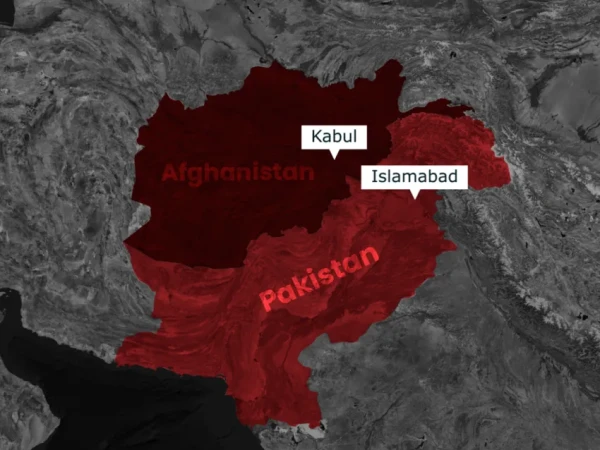
    ISLAMABAD: Fresh claims regarding alleged Indian support for anti-Pakistan militant groups have resurfaced after former Afghan intelligence chief Masood Andarabi made remarks linking New Delhi to militant activities operating from Afghan territory. According to media reports, Andarabi, while speaking during a program hosted by The Diplomat, claimed that India has sought to expand its influence in Afghanistan following recent regional developments. He alleged that New Delhi’s objective is to cultivate influence over the militant group referred to by Pakistan as Fitna al-Khawarij and use it to advance activities against Pakistan. His comments have reignited discussions over Pakistan’s longstanding position that militant groups allegedly backed by India have exploited Afghan soil to target Pakistan’s security and stability. The developments come amid heightened regional tensions following Pakistan’s reported strikes on suspected militant hideouts inside Afghanistan. Analysts say the operation was intended to signal Islamabad’s resolve against cross-border terrorism while underscoring its concerns over the presence of armed groups operating from Afghan territory. Security experts believe Andarabi’s remarks lend support to Pakistan’s repeated assertions that hostile elements have used Afghanistan as a base for launching attacks against Pakistan with alleged external backing. However, India has consistently rejected such accusations and denies supporting militant activities against Pakistan.

  • | | |

    PM Shehbaz, Field Marshal Munir begin Saudi visit

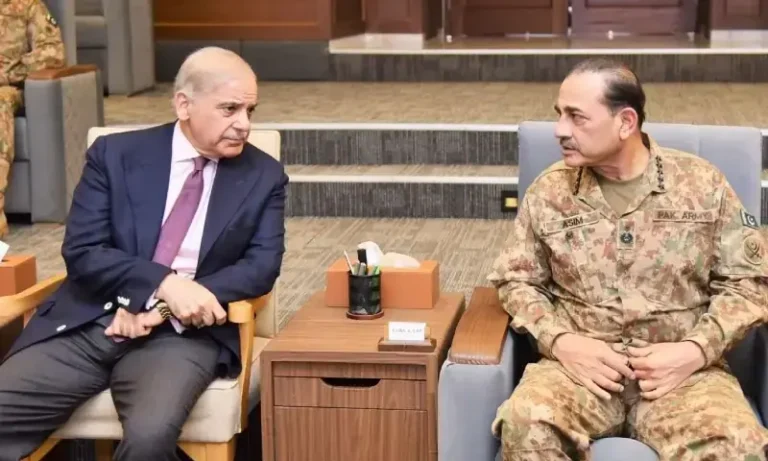
    Prime Minister Shehbaz Sharif and Chief of Defence Forces and Chief of Army Staff Field Marshal Asim Munir will pay an official visit to Saudi Arabia from August 6 to 8 to hold high-level talks aimed at strengthening bilateral ties and discussing key regional developments. According to the Foreign Office, Deputy Prime Minister and Foreign Minister Ishaq Dar will also join the delegation after completing his visit to Jordan. During the visit, Prime Minister Shehbaz is scheduled to meet Saudi Crown Prince Mohammed bin Salman. The discussions will focus on expanding cooperation between the two countries, enhancing strategic relations and reviewing regional and international issues of mutual interest. The Foreign Office said the visit reflects the deep-rooted relationship between Pakistan and Saudi Arabia, built on decades of close cooperation, mutual trust and strong brotherly ties. Officials said the high-level engagements are expected to further strengthen political, economic and strategic cooperation between the two countries. Both sides are also likely to discuss ways to improve coordination on regional security and international affairs. The visit comes at a time of heightened tensions in the Gulf region, giving the meetings added diplomatic significance. However, Pakistani officials said the agenda extends beyond the current regional situation and is aimed at reinforcing the long-term strategic partnership between Islamabad and Riyadh. The Foreign Office added that the visit will help deepen bilateral relations, expand cooperation in areas of shared interest and enhance collaboration at multilateral forums. Prime Minister Shehbaz last visited Saudi Arabia in April, where he held meetings with the kingdom’s top leadership to discuss bilateral cooperation and regional developments.

Leave a Reply

Your email address will not be published. Required fields are marked *