only 170 officials
| |

Only 170 officials and rising HIV cases push Sindh…

Islamabad / Karachi: The Sindh Healthcare Commission came under intense scrutiny in the Senate after lawmakers questioned its ability to control illegal medical practices and respond effectively to the growing HIV situation in Sindh. Senators raised concerns over delayed action, staff shortages, and legal weaknesses that they said were limiting the Commission’s performance.

The issue was discussed during a meeting of the Senate Standing Committee on National Health Services, Regulations and Coordination chaired by Senator Amir Waliuddin Chishti. The meeting was attended by Senator Syed Masroor Ahsan, Senator Samina Mumtaz Zehri, Senator Nadeem Ahmed Bhutto, Senator Nasir Mehmood Butt, Senator Anusha Rehman Ahmad Khan through Zoom, Federal Minister Syed Mustafa Kamal and Sindh Labour Minister Saeed Ghani along with senior federal and provincial health officials.

Senator Nasir Mehmood Butt questioned why FIRs had still not been registered against those responsible in connection with the HIV situation, while Senator Syed Masroor Ahsan expressed dissatisfaction over delays in action and questioned the role of the Sindh Healthcare Commission in preventing the spread of the disease.

Responding to the Committee, the Chief Executive Officer of the Sindh Healthcare Commission said the Commission had already registered several FIRs against medical quacks. However, he stated that weaknesses in the existing legal framework allowed many accused to obtain bail shortly after arrest. He informed the Committee that amendments to the law were being prepared to strengthen action against quackery. The CEO also disclosed that the Commission has only around 170 officials serving across the entire province, highlighting a serious shortage of human resources.

Senator Samina Mumtaz Zehri questioned why the Commission remained understaffed and asked whether the issue had been formally raised with the Sindh Government. Federal Minister Syed Mustafa Kamal requested the Committee Chairman to issue directions so the matter could move forward.

Senator Syed Masroor Ahsan stressed that the Government should acknowledge administrative shortcomings wherever they exist. He also asked how many times the Sindh Healthcare Commission had formally requested additional staff from the Provincial Government.

The discussion also focused on the governance structure of the Commission. Members were informed that after the 18th Constitutional Amendment, the Sindh Health Department no longer exercises administrative control over the Sindh Healthcare Commission. Federal Minister Syed Mustafa Kamal suggested that legislative measures should be considered to address governance-related issues affecting provincial institutions.

The Committee also examined the appointment process for members of the Sindh Healthcare Commission Board. The Secretary Health informed members that the Department did not have the authority to appoint or remove Board members. Senator Samina Mumtaz Zehri observed that such limitations weaken accountability, while Senator Nasir Mehmood Butt expressed concern that the Chief Executive Officer of the Commission was not administratively answerable to the Secretary Health.

Earlier in the meeting, Sindh Labour Minister Saeed Ghani informed the Committee that two inquiries had been conducted into the Valika Hospital incident, during which 37 officials were identified for disciplinary action. He said the inquiry findings had not been made public due to security considerations but assured the Committee that strict action would be taken against those found responsible. He also informed members that the Sindh Government had established a social security fund to support families affected by HIV.

Similar Posts

  • | |

    Sophie Turner names fan-favorite hair color from h…

    Sophie Turner is looking back at the many hair colors she has worn throughout her career, revealing which shade gets the most positive reaction from fans. The 30-year-old actress became internationally famous as Sansa Stark on Game of Thrones, a role that transformed her career and made her auburn-red hair one of her most recognizable features. Turner began dyeing her naturally blonde hair red at just 13 after landing the role in 2009. Since then, she has experimented with several different shades, including platinum blonde, auburn and brunette. (People.com⁠) From natural blonde to Sansa’s signature red Turner’s hair transformation was closely connected to her Game of Thrones journey. Her natural blonde hair had to be changed to an auburn-red shade for Sansa, creating a look that audiences quickly associated with the character. Over the years, Turner has spoken positively about the red color because of what it represents in her career. In a previous interview, she explained that the shade was especially meaningful because it was the first major hair transformation she experienced for a professional role. She also associated red hair with the strong characters she had played. (Allure⁠) However, red is no longer the only color connected to Turner. She has repeatedly returned to blonde, experimented with darker shades and even appeared as a brunette for her upcoming role as Lara Croft in Amazon’s Tomb Raider series. (People.com⁠) Blonde gets the biggest reaction In a recent interview with The Sydney Morning Herald, Turner reflected on how people respond to her different hair eras. According to the actress, blonde has received the most positive reactions. Red, meanwhile, can create strong reactions but does not generate them as consistently. She also explained that brunette hair can make her feel more anonymous because people are less likely to recognize her. The comments show how dramatically hair color can influence the way Turner is perceived. After spending much of her teenage years and early adulthood associated with Sansa’s red hair, returning to blonde has offered her a different sense of identity. A career defined by transformation Turner’s changing hair colors have become a visual timeline of her career. From the red-haired Sansa Stark to her blonde looks and latest brunette transformation, each era has accompanied a different stage of her professional life. While fans may have their own favorite shade, Turner’s latest comments make one thing clear: blonde currently wins when it comes to the most positive public reaction.

  • | | |

    Global oil prices drop 12% in three days, Pakistan…

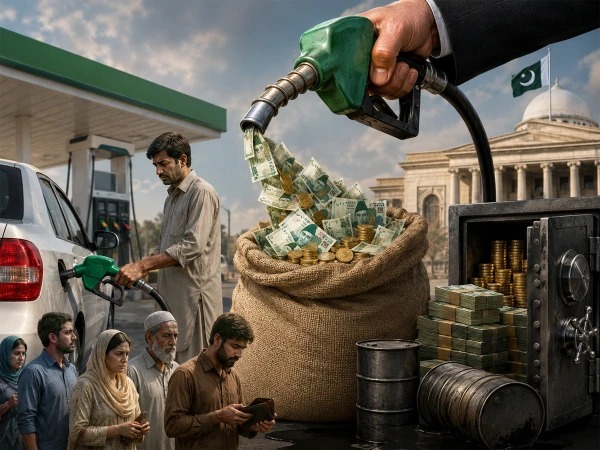
    Pakistani consumers have yet to benefit from a sharp decline in global oil prices, despite international petroleum markets recording a fall of up to 12% over the past three days. The continued high fuel prices have added to the financial burden on households already struggling with rising inflation. Over the last 12 days, fuel prices in Pakistan have increased significantly, with diesel becoming Rs. 65.08 per litre more expensive and petrol rising by Rs. 25.10 per litre. The increases followed the federal government’s decision on July 17 to introduce a daily fuel price adjustment mechanism in line with international market trends. On July 17, petrol was priced at Rs. 310.71 per litre, while high-speed diesel was available at Rs. 323.30 per litre. As of July 29, petrol is being sold at Rs. 335.81 per litre, whereas diesel has climbed to Rs. 388.38 per litre, marking one of the steepest short-term increases in recent years. Although consumers witnessed two minor reductions in petrol prices during this period, the relief was limited. Petrol prices were cut by Rs. 0.35 per litre on July 21 and by Rs. 1.00 per litre on July 27. Diesel prices, however, have not been reduced since the daily pricing mechanism came into effect. International oil markets experienced a sustained upward trend after July 17, contributing to higher domestic fuel prices. However, between July 25 and July 28, global petroleum prices fell sharply, with reports indicating a decline of approximately 12% across major international benchmarks. Despite this significant drop in global prices, Pakistani consumers have not yet received any corresponding reduction at the pump. The absence of immediate relief has sparked concerns among motorists and businesses, particularly those heavily dependent on transportation and logistics, where fuel costs directly affect operating expenses. Economists note that lower international oil prices, if sustained, could create room for a reduction in domestic fuel prices in the coming days. Any adjustment, however, will depend on several factors, including exchange rate movements, government taxes and levies, freight costs, and the pricing formula adopted by the authorities. With inflation continuing to squeeze household budgets, many consumers are hoping the recent decline in global oil prices will soon translate into lower petrol and diesel prices in Pakistan, easing transportation costs and reducing pressure on the overall cost of living.

  • | | |

    Missile hits ship leaving Strait of Hormuz, UK Mar…

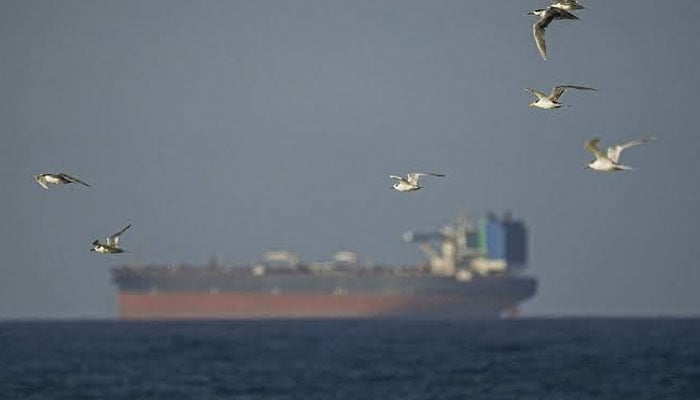
    A commercial vessel sailing out of the Strait of Hormuz was struck by a missile, causing damage to its engine and injuring members of its crew, the United Kingdom Maritime Trade Operations (UKMTO) said on Tuesday. The incident has added to growing concerns over maritime security in one of the world’s most strategically important waterways, where tensions have remained high amid the wider conflict involving Iran and regional powers. According to UKMTO, the vessel was hit after leaving the Strait of Hormuz. The missile caused damage to the ship’s engine, while members of the crew were also affected in the attack. Omani coast guard personnel responded to the incident and are providing assistance to the crew, UKMTO said. No further details about the condition of the vessel or the extent of the injuries were immediately available. The agency did not identify who fired the missile. The circumstances surrounding the attack, including the type of missile used and the exact location of the strike, were also not immediately disclosed. The Strait of Hormuz is a critical global shipping route through which a substantial share of the world’s oil supplies passes. Any attack on commercial shipping in or around the waterway can raise concerns about the safety of international trade and energy supplies. The latest incident comes as tensions remain particularly sensitive around the Gulf. Shipping companies and maritime authorities have been closely monitoring developments, with any disruption in the waterway capable of affecting global markets. Meanwhile, Iranian officials have strongly rejected what they describe as repeated claims and threats concerning the Strait of Hormuz. Ibrahim Azizi, chairman of Iran’s parliament’s National Security Commission, criticised US President Donald Trump over his remarks regarding the strategic waterway. In a statement issued from Tehran, Azizi urged Trump to focus on his own security instead of making what he called baseless and endless claims about the Strait of Hormuz. Azizi also made a provocative reference to Trump’s personal safety, saying the US president should think about ensuring his own security. The latest missile strike remains under investigation, and the identity of those responsible has yet to be established. Further information from maritime authorities is expected as officials assess the vessel, crew and circumstances surrounding the attack. For now, the incident has renewed fears that rising regional tensions could spill over into commercial shipping and threaten vessels using one of the world’s busiest energy corridors.

  • |

    PCB unveils major domestic cricket overhaul ahead of ODI World Cup

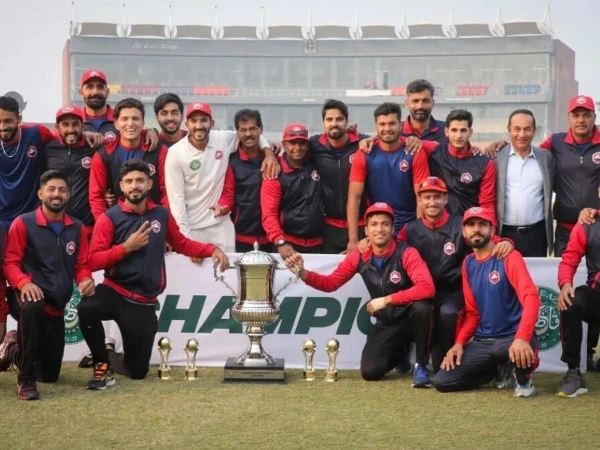
    LAHORE: The Pakistan Cricket Board (PCB) has announced a significant revamp of its 2026–27 domestic cricket season, introducing structural changes aimed at strengthening competition and preparing players for the upcoming ICC Men’s ODI World Cup. The new domestic calendar places greater emphasis on high-quality white-ball cricket while also reshaping Pakistan’s premier first-class competition to improve competitiveness across all formats. According to the PCB, the season will begin on August 11 in Multan with the National Champions Cup, a four-team one-day tournament. Squads for the competition will be selected by the national selection committee, providing emerging players with an opportunity to impress in the 50-over format ahead of the global tournament. The board has also confirmed that the domestic season will feature two List A competitions. Following the National Champions Cup, teams will compete in the President’s Cup, giving players additional match practice and selectors a broader pool of performances to evaluate before international assignments. One of the biggest changes announced is the expansion of regional participation. The number of regional teams has increased from 18 to 20, with Sialkot and Peshawar each receiving permission to field a second team. PCB officials believe the move will create more opportunities for talented cricketers across the country and deepen the domestic talent pipeline. In another landmark decision, the prestigious Quaid-e-Azam Trophy has been divided into Gold and Silver Divisions for the first time in the tournament’s history. The Gold Division will feature the country’s eight strongest teams, while the Silver Division will include 12 teams competing for promotion and a chance to challenge the top sides. Both divisions are scheduled to begin on November 1, with the new format designed to increase the quality and intensity of first-class cricket. The domestic campaign will conclude with the National T20 Cup, scheduled for February and March, ensuring players receive competitive exposure in all three major formats before the international season intensifies. PCB officials said the revised structure reflects the board’s long-term strategy of producing better-prepared cricketers capable of succeeding at the highest level. By increasing meaningful competition, expanding opportunities for regional teams, and aligning domestic cricket with international priorities, the board hopes to strengthen Pakistan’s player development pathway. Cricket analysts have welcomed the changes, saying the new format could raise the standard of domestic cricket while helping selectors identify consistent performers ahead of major international tournaments, including the 2027 ODI World Cup.

  • |

    Algeria bus plunge kills 25, dozens injured

    At least 25 people were killed and 44 others injured after a passenger bus veered off the road and plunged into a ravine near the coastal city of Boumerdes in northern Algeria on Friday. According to Algeria’s civil defence agency, the crash occurred at around 9:40am local time, prompting an immediate emergency response. Rescue teams rushed to the scene to recover victims, provide medical assistance and transport the injured to nearby hospitals. Officials said the bus left the roadway for reasons that are still under investigation. Authorities warned that the death toll could increase as several of the injured remain in critical condition. The accident is one of Algeria’s deadliest road tragedies in recent years. Investigators are working to determine the exact cause of the crash. Road accidents continue to claim thousands of lives across Algeria each year. Safety officials have repeatedly identified speeding, reckless driving and human error as the leading causes of fatal crashes. The latest tragedy follows several major bus accidents in recent years. In August 2025, 18 people were killed when a bus plunged into a ravine near Algiers. A few months later, in December, another bus overturned in the Bechar region, leaving 14 people dead. Official road safety data shows that traffic accidents claimed 3,838 lives and injured more than 37,000 people across Algeria in 2025, highlighting the country’s ongoing road safety challenges.

  • | |

    AJK Assembly seeks Truth Commission over unrest

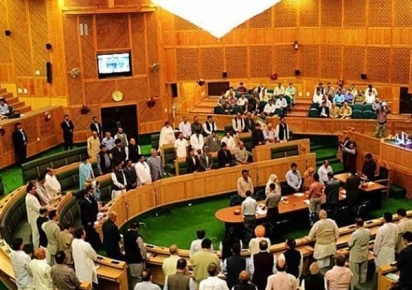
    The Azad Jammu and Kashmir (AJK) Legislative Assembly has unanimously passed a resolution calling for the formation of an independent Truth Commission to investigate the recent unrest that claimed several lives and left many others injured. The proposed commission will examine the causes of the violence, investigate all reported deaths, injuries and property damage, and recommend measures to provide relief to victims and prevent similar incidents in the future. The move comes after violent clashes between law enforcement personnel and protesters in Rawalakot, where both security officials and demonstrators reported casualties. The unrest sparked widespread concern and renewed calls for an impartial investigation. According to the resolution, the Truth Commission will function as an independent and impartial body. Its structure, powers and terms of reference will be finalised jointly by the federal government and representatives of the protest leadership before being formally established under AJK law. The commission will be tasked with reviewing all aspects of the recent crisis. It will examine evidence related to deaths, injuries, property losses and allegations of violence. Authorities said the inquiry will be conducted without any predetermined conclusions, ensuring that every affected family and relevant party has an opportunity to present evidence and testimony. The proposed body will have access to official records, including government documents, police reports, forensic material, communication records, videos and witness statements. Sensitive information involving national security or witness protection may be reviewed through confidential proceedings. The Assembly clarified that the commission will not determine criminal guilt or hand down punishments. Instead, if evidence suggests legal violations, the matter will be referred to the relevant investigative or judicial authorities for further action. Individuals or institutions facing adverse findings will also be given an opportunity to respond before any conclusions are reached. The commission will submit interim and final reports within an agreed timeframe. Its final report is expected to be made public, subject to legal restrictions concerning national security and witness safety. It may also recommend compensation for victims, institutional reforms, legal action where necessary and measures to prevent future unrest. The resolution also called for immediate de-escalation of tensions across the region. It urged the government to restore normal life by reopening roads, ensuring medical and emergency services, improving communication networks and maintaining the uninterrupted supply of essential goods. At the same time, protest organisers were urged to suspend demonstrations until the commission completes its work. The governments of AJK and Pakistan were also asked to avoid further actions linked to the crisis during the inquiry, except where immediate measures are required to protect public safety. The Assembly reaffirmed its commitment to democratic values, constitutional governance and the rule of law. It stressed that peaceful protest, freedom of expression and the right to raise political, economic and social demands are guaranteed under democratic principles. However, it strongly rejected violence, vandalism, the use of weapons and attempts to challenge state authority through force. Lawmakers paid tribute to security personnel, police officials and civilians who lost their lives during the unrest. They expressed sympathy with all affected families and stressed that every victim deserves justice, humanitarian assistance and equal treatment under the law. The House also appealed to citizens, political workers, traders and youth to distance themselves from violent elements. It emphasised that responsibility for any unlawful acts should be determined individually through evidence and due legal process rather than collective blame.

Leave a Reply

Your email address will not be published. Required fields are marked *