chinese suspects seek
| |

Chinese suspects seek bail in organ trade case

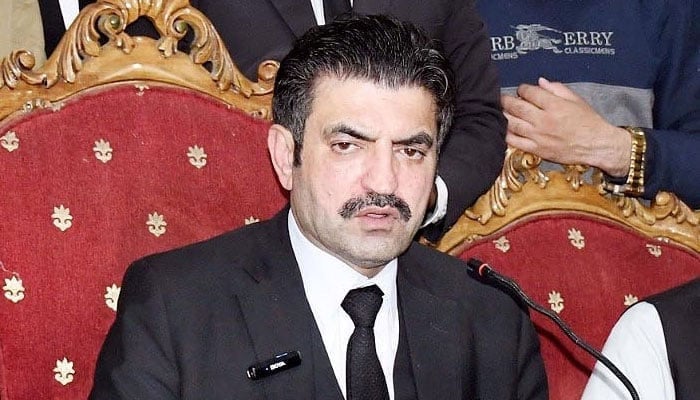
Three Chinese nationals arrested in a case involving the alleged illegal sale of human organs have approached the Islamabad High Court (IHC) seeking post-arrest bail.

The bail petitions were heard by IHC Justice Arbab Muhammad Tahir. The petitioners include Li Gang Chai, Ping Fei Guo and Wang Bao.

The three suspects are facing a case registered by the Federal Investigation Agency’s (FIA) Corporate Crime Circle. A trial court had earlier rejected their bail applications.

Appearing on behalf of the petitioners, Barrister Yawar Qureshi requested the court to transfer the cases to another bench. He told the court that petitions involving similar circumstances were already pending before a different bench.

The lawyer requested that the three cases also be transferred to the bench of Justice Muhammad Azam Khan.

Justice Arbab Muhammad Tahir observed that Justice Muhammad Azam Khan was currently on summer vacation and transferring the cases could delay the proceedings by around a month.

However, following the lawyer’s insistence, the court accepted the request for consideration of the bench change.

The court directed that the case file be sent to the Chief Justice’s Office for a decision regarding the transfer of the petitions.

Similar Posts

  • Viral video raises questions over staff availability at DHQ Hospital Tank

    TANK: A video circulating on social media showing the Children’s Ward of District Headquarters Hospital Tank has raised serious questions about the availability of medical staff and administrative supervision at the hospital. In the video, an attendant of a patient can be heard speaking in Pashto and claiming that he brought his patient to the Children’s Ward but, despite waiting for two hours, neither a doctor nor a nurse was present. The video also shows an apparently empty counter and beds in the Children’s Ward, prompting concerns among citizens regarding the functioning of the hospital, availability of medical staff and timely provision of treatment to patients. However, the claims made in the video could not be independently verified. The patient’s attendant also questioned elected representatives, saying that people had voted for MNAs and MPAs with the expectation that healthcare facilities in the area would improve, asking who would now be responsible for improving the condition of the hospital. Following the circulation of the video on social media, citizens and social circles have expressed concern and called for immediate action by the relevant authorities. Public representatives and social activists have urged the Chief Minister Khyber Pakhtunkhwa, Chief Secretary and senior health authorities to conduct an immediate and surprise inspection of DHQ Hospital Tank. They demanded that the attendance of doctors, nurses and other medical staff, duty rosters and the availability of healthcare facilities in all wards be thoroughly reviewed. The citizens further called for the hospital to be made fully functional in practical terms rather than merely being upgraded on paper, with the presence of medical staff ensured in all wards and patients provided timely, quality and dignified healthcare services.

  • |

    Far-right extremism expert Heidi Beirich arrested as US Justice Department expands case against SPLC

    The United States Department of Justice has arrested leading far-right extremism expert Heidi Beirich, charging her with financial crimes in an expansion of the federal government’s criminal case against the Southern Poverty Law Centre (SPLC). A superseding indictment returned in Alabama federal court charges Beirich, the former chief financial officer and Intelligence Project director for the SPLC, with conspiracy to commit wire fraud, conspiracy to make false statements to a bank, and conspiracy to commit money laundering. The charges stem from an April indictment against the civil rights organization over a discontinued intelligence programme that paid informants to infiltrate white supremacist groups. Federal prosecutors allege the SPLC secretly funneled donor funds through shell companies and fictitious entities to hide payments made to field sources. The government claims Beirich engaged in a romantic relationship with one informant and oversaw the transfer of $140,000 in donor funds into a shared bank account. Beirich, who currently serves as chief strategy officer and co-founder of the Global Project Against Hate and Extremism, denied the allegations through her legal counsel. Defense attorney Michael Proctor characterized the prosecution as politically motivated retaliation against an expert who dedicated decades to dismantling white supremacist movements. A federal judge in Alabama permitted the broader case against the SPLC to proceed last week after rejecting arguments requesting a dismissal on grounds of vindictive prosecution.

  • Cambodian Attacks Continue but Intensity Declines Substantially: Thai Defence Ministry

    BANGKOK – Cambodian forces continued strikes along the Thai border on Sunday, the fourteenth day of renewed hostilities, though the intensity of attacks has dropped considerably, according to the Thai Ministry of Defence. In a daily briefing, Defence Ministry spokesman Rear Admiral Surasant Kongsiri reported that Cambodian troops fired rockets from BM-21 multiple launchers at […]

  • | |

    Punjab launches drone flood surveillance

    The Punjab government has introduced drone-based monitoring for the first time to strengthen its flood management system and improve early warning capabilities across the province. The new initiative is aimed at detecting flood surges before they reach populated areas, allowing authorities to take timely preventive measures and reduce the risk of damage to lives, property and infrastructure. According to a spokesperson for the Punjab government, the drone surveillance programme has been launched on the directions of Chief Minister Maryam Nawaz. The operation covers all major barrages, rivers and headworks in Punjab. Officials are using drones to monitor water levels, river flow and changing conditions in real time. The spokesperson said the technology will help authorities identify any sudden increase in water flow and provide advance warnings to disaster management agencies. This will improve emergency planning and allow local administrations to respond more quickly if flood conditions develop. As part of the monitoring campaign, drones surveyed Trimmu Barrage, where water levels were found to be within the normal range. Drone inspections were also carried out along the Ravi and Sutlej rivers in Pakpattan. Officials reported that water levels in both rivers remained stable and did not pose any immediate threat. Further drone surveillance was conducted at Talibwala Bridge over the Chenab River in Sargodha. Authorities observed that the river’s flow was normal. Similar monitoring was also carried out at Head Sidhnai, where officials reviewed water movement and overall river conditions through aerial imaging. At Head Marala, drones recorded a water flow of 174,000 cusecs. Authorities also monitored water conditions at Rasul Barrage in Mandi Bahauddin to assess the overall flood situation in the region. The provincial government said drone technology will play a key role in modernising Punjab’s flood monitoring system. Real-time aerial surveillance will help officials detect changes in river conditions more accurately and improve coordination among disaster response agencies.

  • | |

    Sher Afzal Marwat urges government to rethink deci…

      National Assembly Member Sher Afzal Marwat has said that the government appears to be stuck on an issue that could negatively affect its public image and political standing. Marwat said the government needed to carefully consider its decisions and avoid taking positions that could ultimately damage its reputation among the public. He emphasized that decisions involving ordinary citizens, particularly matters related to healthcare, should be approached with greater understanding and consideration.   Commenting on the issue of medical treatment, Marwat said there was nothing wrong with a patient choosing to receive treatment at a private hospital at their own expense. He argued that if an individual is willing and able to pay for medical services privately, the government should not necessarily object to that choice.   According to Marwat, people should have the freedom to decide where and how they want to receive medical treatment, particularly when they are using their own resources. He suggested that restricting such choices could create unnecessary controversy and may not serve the interests of either the government or the public.   Marwat further stressed that the government must think carefully before making decisions that could have political or social consequences. He said that authorities should assess both the immediate and long-term impact of their policies instead of becoming fixated on a single issue. His comments come amid ongoing public debate over government decisions concerning healthcare and access to medical facilities. The issue has drawn attention because healthcare remains a sensitive matter for citizens, particularly those who seek timely treatment and may prefer private hospitals because of availability, facilities, or personal choice. Marwat’s remarks also highlight the broader question of how governments should balance public-sector policies with individual rights and choices. While governments have a responsibility to regulate healthcare and ensure that citizens have access to affordable and quality treatment, individuals may also want the option of using private healthcare services when they can afford them. The lawmaker maintained that the government should adopt a practical and carefully considered approach rather than allowing political disagreements to influence decisions that directly affect citizens. In his view, policies should be designed in a way that protects public interests while also respecting individual choices. He warned that continuing to remain focused on an issue without considering its wider implications could harm the government’s political standing. According to him, the government needs to recognize how its decisions are perceived by the public and make choices accordingly. Marwat’s statement reflects growing calls for greater flexibility and careful decision-making in matters that affect ordinary people. His comments suggest that governments can avoid unnecessary criticism by taking public concerns into account and ensuring that their policies remain focused on practical solutions. The National Assembly member ultimately urged the government to reconsider its approach and make decisions after carefully examining their possible consequences. He emphasized that thoughtful policymaking is essential to maintaining public confidence and avoiding decisions that could damage the government’s image. The remarks underline the importance of balancing government policy with the rights, needs, and preferences of citizens, particularly in sensitive areas such as healthcare.

  • |

    Maj Gen (R) Dr. Rajih Al-Baqami needs to go beyond defence diplomacy

    ISLAMABAD: For the second consecutive time, the Kingdom of Saudi Arabia has appointed a career military veteran as its ambassador to Islamabad, inaugurating a compelling new chapter in Pakistan-Saudi defense diplomacy. The recent designation of Major General (R) Dr. Rajih bin Tami Al-Baqami as the Saudi envoy comes at a pivotal geopolitical juncture. Smaller Gulf states like Qatar, Bahrain, and particularly Kuwait are increasingly turning their strategic gaze toward Riyadh for defense assurances. In response, Saudi Arabia has conspicuously integrated Pakistan into the its defensive calculus, both specifically within the Gulf and more broadly across the Middle East. This deepening collaboration signifies the beginning of the end of an era characterized by blind, unilateral reliance on the United States for regional security. Whether through multinational maritime security coalitions or trilateral defense pacts, Riyadh has unequivocally positioned Islamabad as a trusted strategic partner. Crucially, while Washington has not been entirely excluded from the new arrangements, the table that once seated only the US now accommodates Pakistan and Turkey’s president states that more seats will soon be filled. His hint is for Egypt. Turkey is playing a big game and Egypt is part of his plans for Sahel and Middle East. Moreover, Saudi Arabia has extended its supportive hand to facilitate Pakistan’s major defense agreements with Somalia, further expanding Islamabad’s footprint in Riyadh’s sphere of influence. This rapidly evolving landscape demands an exceptionally shrewd Saudi diplomat in Islamabad, given that intellectual powerhouses like the United States are unlikely to passively observe these seismic shifts in the affluent Gulf region. One could argue that defense diplomacy has cycled back to the fervor of the 1970s but the stark difference is that the towering strategic minds of that era, such as Zulfikar Ali Bhutto, Ardeshir Zahedi, and Henry Kissinger, are no longer among us and on the other hand China of today is 100 times more important than China of 1970s. However, Crown Prince Mohammed bin Salman has proven himself uniquely adept at this high-stakes game. Without jeopardizing ties with Washington, he has fortified relations with Beijing to an unprecedented degree; in fact, Riyadh is now expanding its commercial and strategic footprint with China more aggressively than with the US. According to the Saudi Foreign Ministry, Dr. Al-Baqami is among eight newly appointed ambassadors who recently took their oath before the Crown Prince in Jeddah. Despite this formal announcement, frequent winner of government awards for his services in journalism, Saleh Zaafir, curiously attributed the news to his “sources.” Meanwhile, leading AI chatbots and search engines like ChatGPT, DeepSeek, and Gemini draw a blank regarding the nature of Dr. Al-Baqami’s specific postings in Saudi diplomatic missions London and Jordan, which strongly suggests a classified, defense-oriented portfolio. Dr. Al-Baqami hails from the warrior Al-Baqami tribe, a lineage renowned for its formidable resilience and esprit de corps. Yet, a note of caution is urgently warranted. Misleading and unrealistic commentary regarding Saudi-Pakistan defense pacts has become rife. These agreements will not automatically neutralize Pakistan’s internal existential threats, specifically, the escalating bureaucratic corruption and spiraling crime rates. The historical precedent is sobering: the practice of deploying military officers to diplomatic roles is ancient, tracing back to the Roman and Byzantine empires, yet it has no inherent correlation with a nation’s prosperity or moral standing. Napoleon formalized this tradition in the pre-WWI era, but French military envoys failed to stave off famine and destitution in France. Subsequently, professional foreign ministries emerged, and bureaucrats, much like termites, consumed diplomacy from the inside, burying interstate relations beneath classified files. When opacity became the norm, civil society rebelled, giving rise to digital media and public diplomacy, a trend recently taken to extremes by former US President Donald Trump. For the new Saudi ambassador, public diplomacy will prove a formidable challenge. Although several Saudi-funded media outlets operate in Pakistan, they have largely been hijacked by populist scribes who have reduced them to ashes of sensationalism. Reclaiming these platforms from the clutches of journalistic mediocrity must be an immediate priority. Dr. Al-Baqami’s predecessor, Nawaf bin Malik Al-Maliki, a retired Saudi Navy officer, remained in Islamabad for nearly twelve years. Pakistan’s navy has historically played a pivotal role in the formation and training of the Saudi Naval Forces. Al-Maliki initially arrived as defense attaché in 2014, the very year MBS ascended to a high office before being appointed Defense Minister in 2015. When MBS became Crown Prince in 2017, Al-Maliki assumed the ambassadorship. He retained this position for a decade indicating that he was a trusted confidant of the Crown Prince. Intriguingly, Al-Maliki’s next posting is Algeria—a nation where military dominance permeates business and governance, ensnaring the country in poverty and bloodshed. As Algeria remains a Saudi ally, it is premature to forecast the trajectory of his new mission. To conclude, one can only hope that Major General (Retd) Dr. Rajih Al-Baqami’s tenure in Pakistan transcends the narrow confines of defense diplomacy. The true test of his legacy will lie in revitalizing public diplomacy, fostering people-to-people connections, and navigating the intricate socio-political fabric of Pakistan with the same dexterity he brings to the strategic chessboard.

Leave a Reply

Your email address will not be published. Required fields are marked *