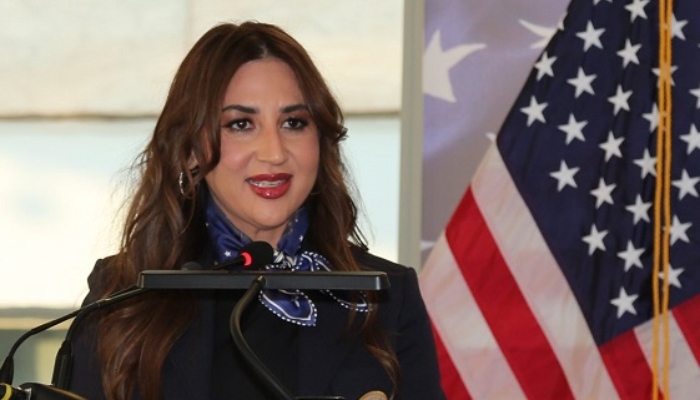
paris jackson recalls
|

Paris Jackson recalls first meeting mother Debbie Rowe

Paris Jackson has shared rare details about meeting her biological mother, Debbie Rowe, for the first time when she was 15, offering a glimpse into how their relationship gradually developed over the years.

The 28-year-old model and actress discussed her family life during a recent appearance on the Call Her Daddy podcast. She explained that she first became curious about her biological mother when she was around 10 or 11 years old. At the time, Paris said she simply asked for her mother’s name and was satisfied with the answer she received.

She eventually reconnected with Rowe at around 15 and said the two began growing closer toward the end of her teenage years.

Recalling their first meeting, Paris said the encounter was surprisingly relaxed. She remembered coming downstairs to find Rowe in the living room with her grandmother. Rather than feeling overwhelmed or uncomfortable, Paris simply greeted her mother and sat down to talk.

The pair later went out together and spent the day getting to know each other.

Paris also reflected on her approach to relationships, saying that having too many expectations can sometimes make personal connections more difficult. She explained that entering a relationship with an open mind gives people the opportunity to develop a bond naturally instead of forcing it to meet a particular idea of how things should be.

She described this approach as creating space for something genuine and organic to grow.

Paris is the daughter of the late pop icon Michael Jackson and Debbie Rowe. The former couple also share their eldest son, Prince Jackson. Michael’s youngest child, Bigi Jackson, was born through a surrogate.

Rowe met Michael while working as an assistant at the dermatologist’s office he visited. The pair married in 1996, but their relationship was short-lived, and they divorced in 2000. Michael Jackson subsequently received full custody of their children.

Following the divorce, Rowe largely stepped away from the public spotlight and moved to Palmdale, California, where she reportedly pursued her interest in horse breeding and maintained a private lifestyle.

Paris and Rowe began rebuilding their relationship in 2013. Their connection became particularly close several years later when Paris supported her mother during her battle with breast cancer in 2016.

Looking back on their relationship, Paris’ comments suggest that their bond developed gradually rather than being shaped by expectations. Her willingness to approach the relationship openly appears to have helped her and Rowe establish a closer connection after years apart.

Her latest revelations offer a rare look into the personal relationship between the mother and daughter, while also highlighting Paris’ perspective on family, expectations and allowing relationships to develop naturally.

Similar Posts

  • |

    Just minutes of intense exercise may offer greater health benefits

      A new study by American scientists has revealed that just a few minutes of extremely intense exercise may provide greater health benefits than spending hours doing light or moderate physical activity. The study examined how different levels of exercise affect proteins and biological processes in the human body. Researchers found that short bursts of high-intensity exercise produced significantly greater changes in health-related proteins in the blood compared with cycling at a normal pace. As part of the research, participants performed intense cycling on an exercise bike in 30-second bursts. Each high-speed cycling session was followed by a four-minute recovery period. Researchers observed positive changes in 714 proteins associated with health and bodily functions after the intense exercise. In comparison, cycling at a normal pace affected only seven proteins highlighting the potentially powerful biological response triggered by short periods of vigorous physical activity. One of the most interesting findings involved a molecule known as Lac-Phe, which has been linked to appetite regulation and metabolism. According to the researchers, intense exercise increases levels of Lac-Phe in the body. The molecule may help regulate hunger and appears to influence fat metabolism. The researchers also found that intense physical activity activated more than 1,600 genes in fat cells, potentially increasing the body’s ability to burn or process fat. These findings suggest that high-intensity exercise may trigger a much broader metabolic response than previously understood. To further examine the possible long-term health implications, the scientists analyzed data from more than 53,000 people. Their analysis showed that several of the proteins activated by intense exercise were associated with a lower risk of conditions such as cardiovascular disease, type 2 diabetes and obesity. The researchers also found connections between these biological changes and processes related to aging. This suggests that intense physical activity may potentially help slow some of the biological effects associated with aging, although further research is needed to fully understand these relationships. Dr. Paul Cohen, the lead researcher of the study, said the findings were particularly interesting because they demonstrated how the body can produce a powerful positive response after only a few minutes of intense exercise. He noted that the discovery could be particularly useful for people with busy lifestyles who struggle to find enough time for lengthy workouts. Instead of spending several hours exercising, short periods of high-intensity activity may provide substantial biological benefits. The findings add to growing scientific evidence that the intensity of exercise may be just as important as its duration. While regular physical activity remains essential for maintaining overall health, the study suggests that brief periods of vigorous exercise could be an efficient way to stimulate important metabolic and cardiovascular responses. However, intense exercise is not necessarily suitable for everyone. People who are new to exercise or have existing health concerns should consider their fitness level and consult a qualified healthcare professional before beginning high-intensity workouts. Overall, the study offers an encouraging message for people who find it difficult to dedicate long hours to exercise. A carefully structured routine involving short bursts of intense activity may potentially produce significant health benefits, making exercise more practical for people with demanding daily schedules.

  • | | |

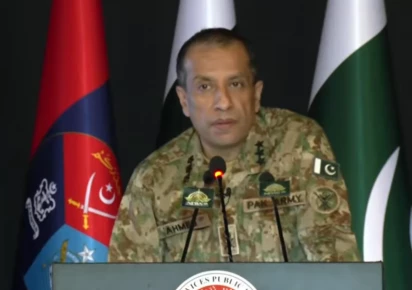
    Pakistan ‘not a hard state’, says DG I…

    Lieutenant General Ahmed Sharif Chaudhry, Director General of Inter-Services Public Relations (ISPR), said on Friday that Pakistan cannot yet be described as a “hard state,” stressing that the country’s laws must apply equally to all citizens without discrimination or elitism. Speaking at a press conference focused on the security situation in Balochistan, the military spokesperson said the briefing aimed to address concerns about the province and explain the broader national security landscape. He clarified that the term “hard state” does not refer to military rule but to a system where the rule of law is upheld uniformly, every citizen is treated equally, and all issues are resolved through legal and constitutional mechanisms. The DG ISPR urged citizens to balance demands for rights with their constitutional responsibilities. Referring to Article 5 of the Constitution, he said loyalty to the state and obedience to the Constitution and the law are fundamental obligations of every Pakistani. He added that national identity should take precedence over provincial or ethnic affiliations, emphasizing that every citizen’s foremost identity should be Pakistani. Highlighting the country’s counterterrorism efforts, Lt Gen Chaudhry said security forces have conducted 40,348 intelligence-based operations (IBOs) across Pakistan so far this year, averaging around 194 operations daily, with a significant number taking place in Balochistan. According to the military spokesperson, security forces have eliminated 2,084 terrorists during 2026, averaging nearly 10 militants killed each day. He said 3,145 terrorist incidents have been recorded this year, while 819 people have lost their lives, including 303 Pakistan Army personnel, 194 members of law enforcement agencies, and 322 civilians. He also revealed that 28 suicide bombings have occurred this year, claiming that most of the attackers were Afghan nationals. He said Afghan citizens, along with individuals linked to Afghan security forces, were among those killed or arrested during counterterrorism operations. Comparing recent years, the DG ISPR said security forces killed 2,597 terrorists throughout 2025, while the total for 2026 has already reached 2,084. He noted that the effectiveness of counterterrorism operations has improved over time, with security forces now inflicting heavier losses on militant groups. Responding to questions about the increase in terrorist incidents, Lt Gen Chaudhry said militant groups affiliated with the Taliban have intensified their activities because Pakistan has adopted a firm stance against them. He added that the rise in reported incidents also reflects the growing number of proactive intelligence-based operations, which lead to more engagements between security forces and terrorists. He reaffirmed that Pakistan’s security forces remain committed to eliminating terrorism and maintaining stability across the country, particularly in Balochistan.

  • |

    Sudanese army drone strike on traditional court in North Darfur leaves dozens dead

    A drone attack launched by the Sudanese armed forces killed at least 35 people and left dozens of others injured after striking a traditional court session in the village of Ghara al-Zawiya, located in North Darfur. The civil monitoring group Emergency Lawyers reported that multiple missiles hit a customary gathering held under a tree where local elders, community leaders, and residents had assembled to resolve regional disputes. Eyewitness accounts confirmed that the victims included four tribal leaders alongside two commanders from the Rapid Support Forces, which currently holds administrative control over much of the Darfur region. Human rights observers and legal advocacy groups strongly condemned the attack, characterising the targeting of civilian infrastructure and traditional judicial venues as a violation of international humanitarian law. The incident underscores the growing deployment of uncrewed aerial systems across Sudan’s ongoing civil conflict, which has displaced millions and caused severe humanitarian degradation nationwide.

  • | |

    Punjab orders inquiry into handwritten medico-lega…

    Lahore: The Punjab Specialized Healthcare and Medical Education Department has ordered an inquiry against five medical superintendents over the issuance of handwritten Medico-Legal Certificates (MLCs) and Post-Mortem Reports (PMRs), despite mandatory procedures requiring the documents to be generated through a computerized system. The action follows serious concerns raised by a Lahore High Court Division Bench regarding the continued issuance of handwritten medico-legal documents at several teaching hospitals across Punjab. According to an official departmental order issued on August 2, 2026, a meeting was held at the Specialized Healthcare and Medical Education Department on July 8 to examine the issue. The meeting reviewed records showing that several hospitals had issued handwritten MLCs and PMRs during the preceding months in violation of established standard operating procedures. The hospitals identified in the departmental record include Nishtar Hospital Multan, Allama Iqbal Memorial Teaching Hospital Sialkot, Dr Faisal Masood Teaching Hospital Sargodha, Services Hospital Lahore and Allama Iqbal Teaching Hospital Dera Ghazi Khan. The highest number of handwritten MLCs was reported at Allama Iqbal Memorial Teaching Hospital Sialkot, where 1,243 such certificates were issued, along with 43 handwritten PMRs. Nishtar Hospital Multan reportedly issued 816 handwritten MLCs and 182 handwritten PMRs. Dr Faisal Masood Teaching Hospital Sargodha recorded 735 handwritten MLCs and 48 PMRs, while Services Hospital Lahore issued 680 handwritten MLCs. At Allama Iqbal Teaching Hospital Dera Ghazi Khan, the record showed 768 handwritten MLCs and 10 handwritten PMRs. The department said the available record provided sufficient grounds for proceedings against the concerned officers under Section 3 of the Punjab Employees Efficiency, Discipline and Accountability (PEEDA) Act, 2006. The allegations relate to alleged misconduct and inefficiency in the discharge of official responsibilities. Among the officers facing inquiry is Dr Rao Amjad Ali Khan, former Medical Superintendent of Nishtar Hospital Multan. The issue has also raised questions about the responsibility of officials and staff working in forensic and medico-legal departments. Questions have emerged over how handwritten reports continued to be issued despite the availability of a mandatory computerized system. Computerization of MLCs and PMRs was introduced to improve transparency, maintain reliable records and reduce the possibility of alteration or manipulation of sensitive medico-legal documents. Such reports can play an important role in criminal investigations and court proceedings. The inquiry is expected to establish why the prescribed digital system was bypassed, identify officials responsible for the violations and determine whether disciplinary action is warranted. The department will also examine the circumstances surrounding the issuance of the handwritten reports and the role of the relevant hospital administrations.

  • | | |

    US-Pakistan trade surpasses $8 billion, says Natal…

    US Chargé d’Affaires in Pakistan Natalie Baker has said that bilateral trade between the United States and Pakistan exceeded $8 billion in 2025. Baker visited Lahore on August 11 and 12, where she held meetings with Punjab Chief Minister Maryam Nawaz Sharif, Adviser Ali Dar, business leaders and technology experts. According to the US Embassy, discussions during the visit focused on artificial intelligence (AI), higher education, innovation, trade and investment opportunities between the two countries. Baker said the United States remained committed to working with Pakistan’s private sector, universities, innovators and government institutions to strengthen economic and technological cooperation. She noted that Pakistan’s technology sector was expanding rapidly, creating opportunities for greater collaboration in trade, investment, AI and emerging technologies. The US diplomat highlighted software development, digital services and artificial intelligence as areas with significant potential for cooperation between the two countries. Emphasising the importance of stronger commercial ties, Baker said bilateral trade had crossed the $8 billion mark in 2025. She also stressed the potential of US educational expertise to create new opportunities for Pakistani students while contributing to stronger economic ties between Pakistan and the United States. Baker’s Lahore visit focused on exploring new areas of partnership and strengthening existing economic and technological links. Discussions with government officials, business representatives and technology experts also highlighted the growing role of innovation and digital industries in Pakistan’s economy. The US diplomat said continued cooperation between the two countries could help expand investment, support technological development and create new opportunities for businesses and students in both countries.

  • | |

    IHC reserves verdict on judges’ appointments ple…

    The Islamabad High Court (IHC) on Thursday reserved its verdict on the maintainability of a petition challenging the delay in the approval of judicial appointments for high courts across the country. Justice Arbab Muhammad Tahir heard the petition filed by advocate Luqman Zafar Chaudhary through his counsel Zahid Asif Chaudhry. The petitioner requested the court to direct President Asif Ali Zardari to approve a summary forwarded by the prime minister for the appointment of 19 additional judges and the confirmation of five judges in the Islamabad, Lahore, Sindh, Balochistan and Peshawar high courts. During the hearing, the petitioner’s lawyer argued that the Judicial Commission of Pakistan (JCP) had recommended the appointments during its meetings held on July 20 and 21. He said the summary was later sent to the president for approval, but no decision has been made despite the passage of more than two weeks. The counsel maintained that the delay is affecting the functioning of the superior judiciary. He informed the court that the tenure of an additional judge of the Sindh High Court has already expired, while the terms of four additional judges of the Peshawar High Court are expected to end within the coming days. The lawyer also told the court that reports suggest the government may issue notifications regarding the appointments within the next 48 hours. Justice Tahir repeatedly questioned whether a constitutional petition could legally be maintained against the president. He asked the petitioner’s counsel to cite any previous court ruling in which a writ had been issued against the president regarding the exercise of constitutional powers. The court observed that the judgments presented by the petitioner did not support the argument that courts could direct the president in matters governed by Article 48 of the Constitution. Justice Tahir asked whether any legal precedent existed requiring the president to act on such matters through a judicial order. The petitioner’s counsel argued that Article 48 requires the president to act on the advice of the prime minister or the cabinet. He maintained that the president has no independent authority to indefinitely delay judicial appointments once the Judicial Commission has completed its recommendations. The lawyer further argued that the Ministry of Law is the competent authority to issue appointment notifications after the completion of the constitutional process. He claimed that the president’s role in the appointment process is largely formal and that unnecessary delays should not hinder the functioning of the judiciary. The petitioner requested the court to seek responses from the federal government, the Prime Minister’s Office and the Ministry of Law regarding the status of the pending summary. However, the court declined to issue notices at this stage.

Leave a Reply

Your email address will not be published. Required fields are marked *