gen group behind
| |

Gen Z group behind India’s cockroach protest…

The Cockroach Janta Party, the youth movement that forced a top Indian minister to quit, says it has no plans yet to contest elections despite its growing influence among young voters.

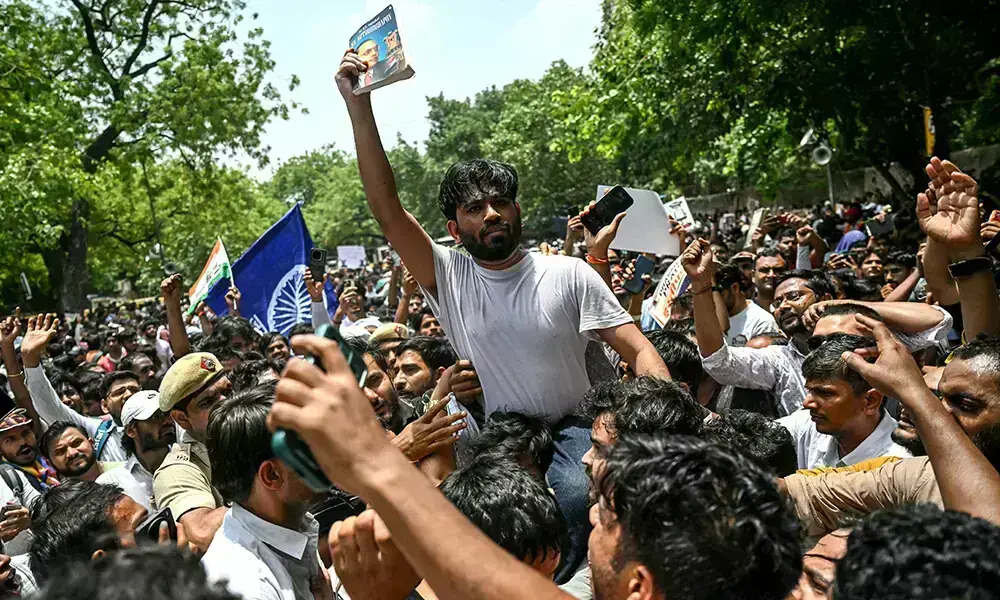
Abhijeet Dipke, the founder of the group, told a foreign news agency on Tuesday that the organization intends to stay focused on grassroots mobilization rather than rush into formal politics. The statement comes weeks after protests led by Dipke swept through Delhi and spread to other parts of the country, ultimately pressuring Prime Minister Narendra Modi’s education minister to step down.

Speaking from his family home in Maharashtra, Dipke said the group wants to first understand what young Indians actually want before deciding its next move. He announced that supporters would gather for a two day meeting starting Wednesday to map out priorities for the movement going forward.

“The purpose will be to form the agenda for the Cockroach Janta Party and discuss how we can take this social movement forward,” Dipke said, as well wishers arrived at his home carrying flowers and gifts.

Dipke made clear that entering electoral politics is not on the table for now, though he left the door open for the future. He said he would only consider building a formal party if a clear majority of supporters pushed for it, and that any decision to contest elections would come later, guided by public sentiment rather than a fixed timeline.

He argued that Indian politics does not currently need another party competing for power. Instead, he said, the country requires a broader public campaign aimed at restoring faith in institutions that have lost credibility among ordinary citizens. Dipke said the group’s immediate priority is to give voice to the frustrations of India’s youth, many of whom, in his view, no longer trust the country’s political class, judiciary or press.

He emphasized the importance of listening directly to young people before setting any formal agenda, saying it was necessary to understand their actual concerns rather than assume them. Dipke made these comments while still recovering from typhoid, which he contracted during the weeks he spent camped out during the Delhi demonstrations.

A hero’s welcome at home

Following the 36 day protest, Dipke traveled back to his hometown of Chhatrapati Sambhajinagar, where hundreds of supporters lined up outside his home to greet him, many carrying flowers in celebration of the movement’s success.

Dipke’s rise to prominence has been rapid. After returning to India in June from his studies in the United States, he became a household name almost overnight when his call to protest against leaked medical entrance exam papers pulled tens of thousands of young demonstrators onto the streets of the capital.

The pressure campaign achieved a significant result on July 25, when Education Minister Dharmendra Pradhan resigned from his post. Authorities had attempted to disperse the crowds using tear gas and baton charges, but the demonstrations continued regardless. In the aftermath, the government announced tougher legal penalties for those involved in leaking exam papers and formed a committee to reassess the broader examination system.

The stakes attached to these entrance exams are enormous for India’s youth. Millions of students spend years preparing for them, viewing a strong result as their surest route to stable, well paying careers and financial security for their families.

Wary of political traps

Dipke explained that he is avoiding a formal political launch partly out of concern that the government could use investigations or legal pressure to undermine the party’s leadership if it formalized too quickly. He also said he has no intention of aligning the movement with any existing political party, even as opposition figures in India have tried to capitalize on the rare momentum the protests created against Modi’s government.

Some of that caution appears to draw on regional experience. In neighboring Bangladesh, a youth led party that emerged after mass protests ousted long time leader Sheikh Hasina in 2024 went on to perform poorly in this year’s elections, a result that may be shaping how Dipke approaches the question of formal politics in India.

Political observers say the true test of whether young Indians’ frustration translates into votes will come in elections scheduled for next year in Uttar Pradesh, India’s most populous state, along with Punjab and Modi’s home state of Gujarat. A bigger risk for the ruling Bharatiya Janata Party could emerge in the 2029 general election if the Cockroach Janta Party evolves into a formal political force by then.

Political analyst Amitabh Tiwari said the movement is unlikely to cause major damage to the BJP in upcoming state elections but could grow into a more serious factor by the time of the next general election. He added that if the group builds a party structure, continues championing youth causes and sustains its current momentum, it stands a real chance of attracting broader support.

Security concerns following the protests remain high. More than a dozen police officers have been stationed outside Dipke’s family home after he received threats on social media once his profile surged following the initial call to protest in May, a period in which the Cockroach Janta Party’s Instagram following grew to 22 million within days.

Dipke said his greatest worry is not for his own safety but for that of his parents. He expressed relief at being back home and said he trusts that government provided security will keep his family safe in the coming weeks.

The episode adds to a growing pattern across South Asia, where youth led movements have increasingly forced political concessions from long entrenched governments, even when those movements stop short of transforming into electoral parties themselves.

Similar Posts

  • | |

    Indian technology provided to Afghan Taliban repor…

      Security experts have claimed that technology allegedly provided by India to the Afghan Taliban for use against Pakistan has also failed to achieve its intended purpose. According to a report, the Tehreek-e-Taliban Pakistan (TTP) and the Balochistan Liberation Army (BLA) are receiving what the report describes as full support from the Afghan Taliban regime, along with financial assistance from India. The report further claims that the groups are being supported through various means as part of activities directed against Pakistan. The report stated that the Afghan Taliban regime claimed to have carried out a drone attack against Pakistan in June 2026. However, according to the report, the drone was intercepted and destroyed in the air by Pakistan’s air defence system before it could reach its intended target. Security experts cited in the report said the drones allegedly used in the attack were supplied by India. They described the drones as relatively low-grade in terms of technology, with limited operational capabilities. According to the assessment, the systems lack the sophistication required to effectively penetrate Pakistan’s modern air defence network. The reported incident has once again drawn attention to the growing use of unmanned aerial vehicles, or drones, in regional security and military operations. Drones have increasingly become an important tool for surveillance, reconnaissance and attacks because of their relatively low operating costs and ability to operate without putting pilots at direct risk. However, experts say the effectiveness of a drone depends heavily on its technological capabilities, including its range, navigation system, communication links, payload capacity, electronic protection and ability to avoid detection. Less sophisticated drones can be vulnerable to modern radar and counter-drone technologies, particularly when they are detected at an early stage. According to the report, Pakistan has developed and deployed defence mechanisms capable of detecting and neutralising such aerial threats. The country’s air defence network is equipped to identify incoming objects and take appropriate measures to prevent them from reaching sensitive targets. The report claims that the destruction of the drone demonstrates the limitations of the technology allegedly supplied by India and highlights the challenges faced by armed groups attempting to use relatively unsophisticated unmanned systems against a country with established air defence capabilities. Security experts further maintained that the incident demonstrates the importance of advanced detection and interception systems in countering the increasing drone threat. As unmanned systems become more widely available, countries across the region are investing in technologies designed to detect, track and neutralise hostile drones. The report also linked the alleged use of Indian-supplied drones to broader security concerns involving militant groups operating in and around the region. It claimed that the TTP and BLA have benefited from support from the Afghan Taliban and financial assistance from India. These claims, however, remain allegations and would require independent verification. The reported June 2026 incident is likely to remain a subject of discussion among security analysts as Pakistan continues to strengthen its air defence and counter-drone capabilities. The episode also highlights the technological competition surrounding unmanned aerial systems and the growing importance of electronic and aerial defence measures. According to the report, Pakistan’s ability to detect and neutralise the drone before it could cause damage demonstrates that its existing defence mechanisms can pose a significant challenge to low-capability unmanned aerial systems.

  • |

    TikTok star Cesar Gastelum shot dead during livestream in Mexico

    Mexican social media influencer Cesar Gastelum was shot and killed while livestreaming in Culiacan. The city sits in the northwestern state of Sinaloa, a region long troubled by unrest. Gastelum had built a following of nearly 600,000 people on TikTok. He was known mainly for his comedy content and light-hearted videos. At the time of the attack, he was streaming live outside a fast-food restaurant with friends. Footage from the livestream showed two helmeted individuals approaching on a motorcycle. The driver reportedly opened fire directly at Gastelum during the broadcast. The attack unfolded in real time as viewers watched the stream online. A security official in Sinaloa confirmed Gastelum’s death shortly after the incident. Authorities said a major security operation was launched in response. Details about a possible motive have not yet been released publicly. According to Reuters, the killing adds to a pattern of violence in the region. Culiacan, the state capital, has seen ongoing clashes between rival criminal groups. These factions have been fighting for territorial control across the city for some time. Sinaloa has repeatedly made headlines in recent years over organised crime activity. The state is widely associated with one of Mexico’s most powerful drug cartels. Public killings and targeted attacks have periodically disrupted daily life in the region. The incident has drawn comparisons to another high-profile case from last year. In May 2025, Mexican beauty influencer Valeria Marquez was killed in a similar way. She was shot while livestreaming from a salon in Zapopan, Jalisco. Marquez, who was 23 at the time, was killed after a man entered the salon. Prosecutors said he opened fire before fleeing the scene afterward. Her case was later investigated using femicide protocols by local authorities. Both cases have renewed concern over the safety risks facing content creators in Mexico. Livestreaming has increasingly placed influencers in vulnerable, exposed situations during public appearances. Digital rights groups have previously called for stronger protections for online creators. Authorities have not indicated whether the two cases are connected in any way. Investigations into Gastelum’s death remain ongoing as officials gather further information. No arrests have been announced at this time.

  • | | |

    Chehlum processions held nationwide under tight se…

    Thousands of mourners across Pakistan observed the Chehlum of Hazrat Imam Hussain (RA) and the martyrs of Karbala on Tuesday, with religious processions and gatherings taking place under extensive security arrangements in major cities. Authorities deployed thousands of police personnel, installed surveillance systems and implemented strict traffic and security measures to ensure the peaceful observance of the occasion. In Karachi, the central Chehlum procession began from Nishtar Park after a religious gathering. The procession is following its traditional route under a comprehensive security plan. More than 5,000 police officers and personnel have been deployed along the route, while roads leading to the procession have been sealed with containers. Senior police officials visited the route to review security arrangements and monitor the deployment. The city administration urged residents to cooperate with law enforcement agencies, follow traffic advisories and use alternate routes to avoid inconvenience. In Lahore, the main Chehlum procession started from Haveli Alif Shah inside Delhi Gate and is proceeding along its traditional route before concluding at Karbala Gamay Shah. More than 10,000 police personnel have been assigned to provide security. Roads and streets connected to the procession route have been secured with barriers and barbed wire, while surveillance is being carried out through CCTV cameras, drones and sniper deployment on high-rise buildings. Officials said 43 Smart Safe City centres across Punjab are monitoring processions in real time. In Lahore alone, more than 800 surveillance cameras are being used to monitor processions, religious gatherings and other sensitive locations. Additional portable smart cameras have also been installed to strengthen security. In Rawalpindi, the central Chehlum procession commenced from Imambargah Ashiq Hussain under heightened security, with police and other law enforcement agencies deployed throughout the route. In Quetta, two major processions were taken out from Alamdar Road and Hazara Town to commemorate the martyrs of Karbala. More than 1,700 police personnel, supported by the Frontier Corps (FC), have been deployed to maintain law and order. Authorities sealed procession routes and intensified security checks at entry and exit points. CCTV cameras are monitoring the routes, while a Quick Response Force has been stationed at multiple locations to respond to any emergency. As part of the security measures, mobile phone and internet services have been temporarily suspended in several areas of Quetta. Across the country, law enforcement agencies remain on high alert to ensure the peaceful conclusion of Chehlum processions. Authorities have appealed to the public to cooperate with security personnel and follow official instructions to help maintain peace and public safety during the religious observance.

  • | | |

    Govt plans single gas tariff after scrapping 12 sl…

    ISLAMABAD: The government has decided to abolish the existing 12-slab gas tariff structure and introduce a uniform gas tariff for consumers. Under the proposed system, protected consumers will be shifted to an income-based subsidy mechanism. The government plans to protect low-income households through targeted subsidies rather than maintaining separate protected tariff slabs. The proposed reform is aimed at replacing the existing cross-subsidy mechanism with a simpler and more targeted system. The government and the International Monetary Fund (IMF) are expected to discuss and finalise a timeline for eliminating cross-subsidies and introducing a single gas tariff during the Fund’s fourth review of Pakistan’s economic programme, expected to take place in September or October 2026. Under the planned arrangement, subsidies would be directed specifically towards eligible low-income consumers, while the broader consumer base would be brought under a common gas pricing structure. The move is expected to form part of wider reforms aimed at improving the efficiency and transparency of the gas pricing system and reducing the financial burden created by the existing cross-subsidy structure.

  • | |

    Noreen Gulwani’s bold take on love, respect and freedom

    Actor Noreen Gulwani has spoken about financial independence, relationships and personal growth, saying respect and understanding should remain the foundation between men and women. In a recent interview, Gulwani said women should not become overconfident or self-centred after becoming financially independent. She explained that some women may develop such attitudes after experiencing years of social restrictions. She said earning money should bring confidence but should not lead to arrogance. According to her, everyone should remain open to advice and criticism regardless of their financial status. Gulwani also said men have an equal responsibility in building respectful relationships. She added that women want to be treated with kindness and dignity rather than feeling controlled or restricted. Talking about marriage, the actor said she has not rushed into the decision because she is waiting for the right partner. She said she meets people and tries to understand their thoughts and personalities before considering marriage. Gulwani encouraged young people to see their twenties as a time for exploring their identity and discovering their goals. She said society often creates pressure to complete education, get a job, marry and have children quickly, but people should also focus on understanding themselves. She shared that her priorities have changed over time. The actor said she now dreams of living closer to nature and raising children away from the pressures of city life and excessive screen use. Discussing her career journey, Gulwani revealed that she initially studied journalism and broadcasting abroad. However, she later realised that the field did not match her personality and decided to focus on writing and acting. She described theatre as her biggest artistic passion. According to Gulwani, stage acting requires more energy, creativity and quick decision-making compared with television performances. She recalled that live theatre often requires actors to handle unexpected situations immediately because there is no chance to stop and repeat a scene. Speaking about social media controversies, Gulwani said she avoids unnecessary public debates. She believes that not every statement requires a response and prefers to maintain a neutral approach. Commenting on singer Falak Shabir’s views about women’s clothing, she said she did not agree with his opinion but did not think responding publicly would change the situation. She added that everyone should have the freedom to make personal choices.

  • | |

    Naqvi defends officials over viral carriage video

    Interior Minister Mohsin Naqvi has defended the Capital Development Authority (CDA) chairman and Islamabad Inspector General of Police (IGP) after a video of the two officials arriving at an Independence Day event in a horse-drawn carriage triggered criticism on social media. CDA Chairman retired Lt Sohail Ashraf and Islamabad IGP Syed Ali Nasir Rizvi were seen arriving at the parade in the carriage. The video showed event organisers asking the audience to applaud as the officials arrived, but little response could be heard from the crowd. The footage quickly spread online, with several social media users describing the scene as outdated and comparing it with practices associated with the colonial era. Naqvi later issued a clarification, saying the officials should not be blamed for using the carriage. According to the interior minister, the chief guest and he were delayed because of a meeting between the president and prime minister. He said people had been waiting at the venue since 5pm. When it became clear that the senior officials would arrive late, instructions were given to start the programme so that citizens would not have to wait any longer. Naqvi explained that the horse carriage had originally been arranged for the chief guest. However, due to the delay, it was used by the CDA chairman and Islamabad police chief to proceed with the programme. The minister also said both officers had initially been reluctant to begin the event in the absence of the chief guest and himself. He maintained that they proceeded only after receiving specific instructions. Despite the explanation, criticism continued online. Former federal minister Shireen Mazari shared the video and questioned the decision, while digital rights activist Usama Khilji criticised what he described as behaviour inappropriate for senior government officials. Several journalists and public figures also reacted strongly to the footage. Journalist Farzana Ali questioned the appropriateness of such a display at a time when ordinary citizens are facing economic difficulties. Journalist Zarrar Khuhro described the scene as embarrassing, while researcher Ammar Rashid criticised what he viewed as the growing distance between government officials and the public. Former Pemra chairman Absar Alam also condemned the incident, calling it an example of an outdated bureaucratic mindset. Former Sindh governor Mohammad Zubair drew a comparison with the recent visit of Norway’s foreign minister to Islamabad. He highlighted footage showing the foreign minister handling his own luggage at the airport and contrasted it with the behaviour shown in the Islamabad parade video

Leave a Reply

Your email address will not be published. Required fields are marked *