security personnel martyred
| |

14 security personnel martyred, 27 injured in suic…

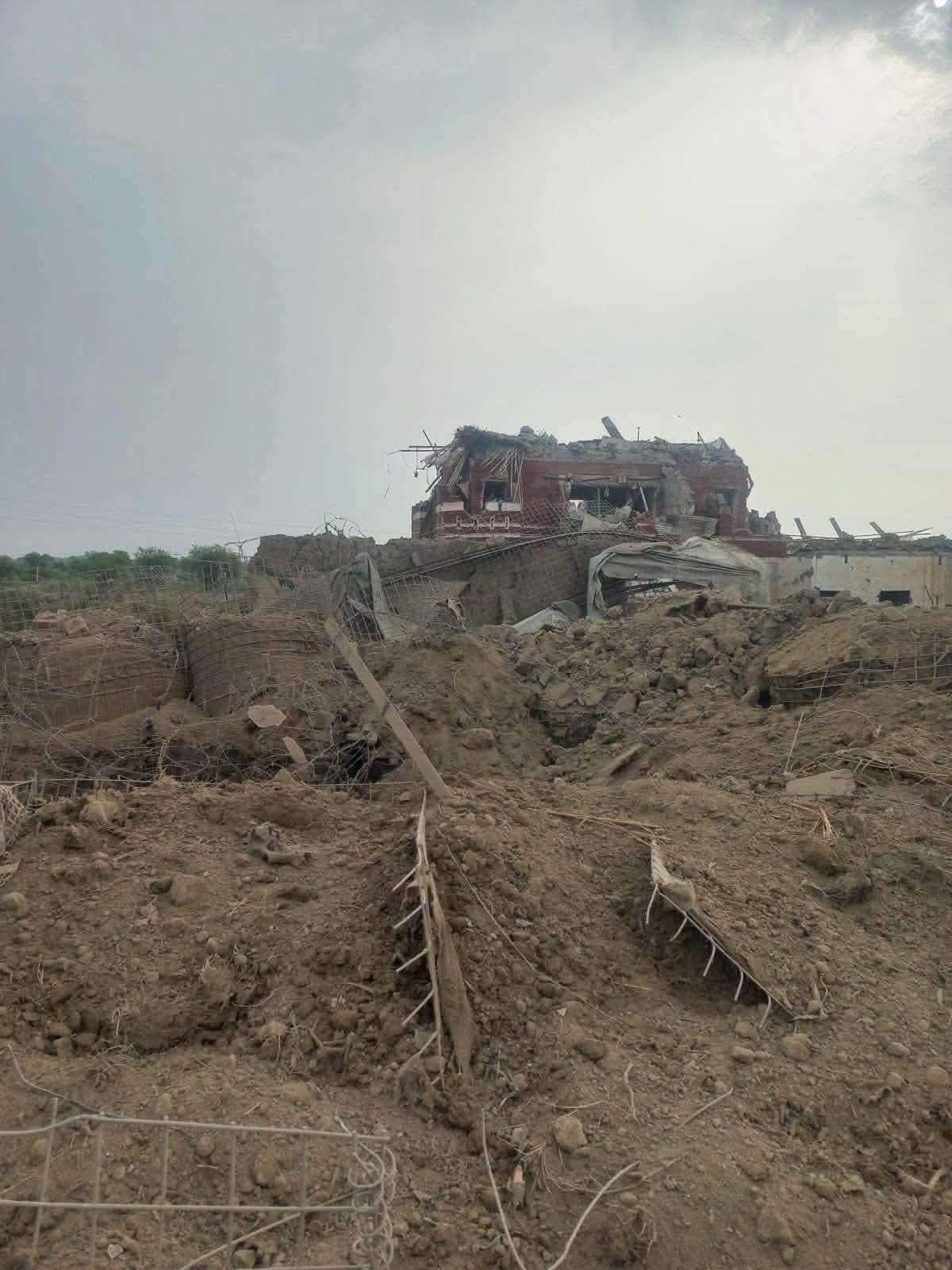
TANK: At least 14 security personnel were martyred and 27 others injured in a major suicide attack on the Manjhi Khel Joint Check Post in Tank district after terrorists rammed an explosives-laden vehicle into the facility late Thursday night, triggering a massive blast.

According to security and police sources, the powerful explosion caused extensive destruction to the check post, completely demolishing seven to eight rooms and damaging nearby houses. Shortly after the blast, an intense exchange of gunfire erupted between the attackers and security forces and continued for a considerable period.

Sources said all attackers were killed during the ensuing security operation. A clearance and search operation remains underway as authorities continue removing debris and recovering bodies.

The martyred personnel reportedly include two police officials, seven members of the security forces, and one Forest Guard. Among the police personnel who embraced martyrdom were Constable Bilal and driver Tala Muhammad.

The injured include four police officials Constable Ismatullah Akbari, Constable Jasim, Constable Muhammad Dawood, and Constable Pir Ghulam along with other security personnel. All the wounded were shifted to the District Headquarters Hospital, Tank, for medical treatment.

According to sources, two of the attackers were wearing uniforms resembling those of the Pakistan Army in an apparent attempt to deceive security personnel.

Preliminary information suggests the suicide attack was carried out using a Datsun/Mazda vehicle loaded with approximately 1,500 kilograms of explosives. Sources also claimed that a white Toyota Corolla GLi was used by the attackers, apparently to facilitate their movement after the explosion.

Following the attack, security forces cordoned off the area and launched a large scale search and clearance operation. Officials are collecting evidence to determine the full circumstances of the attack. However, an official statement confirming the casualty figures and operational details is still awaited.

Meanwhile, the funeral prayers for the martyred personnel are expected to be attended by Inspector General of Khyber Pakhtunkhwa Police Zulfiqar Hameed and Chief Secretary Khyber Pakhtunkhwa Syed Shahab Ali Shah.

In response to the security situation, the district administration has imposed a district-wide curfew in Tank from 6:00 a.m. to 6:00 p.m., with all entry and exit routes to the city closed until further notice. Authorities have urged residents to cooperate with law enforcement agencies and avoid unnecessary travel during the curfew.

Similar Posts

  • | |

    Whoopi Goldberg shares the secret behind her bigge…

    Whoopi Goldberg has revealed an unexpected secret behind some of the biggest roles of her career. The acclaimed actress recently explained that several of her most memorable movies came after other actors had turned the projects down. Speaking on the podcast Baby, This Is Keke Palmer, Goldberg, 70, reflected on how she landed the lead role in the 1992 comedy Sister Act. The actress revealed that the movie was originally written with Bette Midler in mind. “They wrote that for Bette Midler,” Goldberg explained, according to reports from PEOPLE and Entertainment Weekly. Midler ultimately passed on the project, opening the door for Goldberg to take on the role that would become one of her career-defining performances. (People.com⁠) How Goldberg found major opportunities Goldberg explained that she eventually developed a strategy for finding roles that other actors had rejected. She asked her agents to send her scripts that had already been turned down by other performers. That approach proved surprisingly successful. In addition to Sister Act, Goldberg landed roles in movies that had initially been developed with other stars in mind. Burglar, for example, had originally been intended for Bruce Willis, while Jumpin’ Jack Flash was initially associated with Shelley Long. (People.com⁠) Goldberg suggested that her experiences were partly connected to the limited opportunities available to Black actresses at the time. Rather than allowing those barriers to stop her, she looked for projects that had been passed over and found ways to make them her own. Sister Act became a career highlight Goldberg eventually transformed Sister Act into a showcase for her comedy and musical talents. She played Deloris Van Cartier, a nightclub singer who enters witness protection and is hidden in a convent. The film became a major success following its 1992 release, with Goldberg’s performance becoming closely associated with the movie. She returned for the 1993 sequel, Sister Act 2: Back in the Habit. (D23⁠) Midler has previously discussed why she rejected the role. She explained that she was concerned her audience would not want to see her wearing a nun’s habit. The decision ultimately gave Goldberg the opportunity to create an iconic character of her own. (People.com⁠) Goldberg’s Hollywood lesson Looking back, Goldberg’s career offers an unusual lesson about opportunities. Some of her most recognizable performances came from projects that initially seemed destined for someone else. Her story also highlights how persistence can create unexpected breakthroughs. Instead of waiting for Hollywood to offer her the obvious choices, Goldberg searched for opportunities others had overlooked. Decades later, Sister Act remains one of her signature films, proving that sometimes the role that was written for someone else can become the performance audiences remember forever.

  • |

    Cristiano Ronaldo marries Georgina after 8-year love story

    Cascais, Portugal: Football superstar Cristiano Ronaldo and his longtime partner Georgina Rodríguez have officially turned nearly a decade of love into marriage, marking a new chapter in one of the world’s most closely followed celebrity relationships. The 41-year-old Portuguese football icon and 32-year-old Spanish-Argentine model tied the knot in a private civil ceremony in Cascais, Portugal, on August 11, with their five children reportedly present for the intimate occasion. The couple confirmed the news through a simple but powerful social media post. Ronaldo shared a photograph showing the couple’s hands together, with their wedding bands clearly visible, alongside the caption “C❤️G”. The understated announcement quickly sent fans around the world into celebration mode. The wedding comes exactly one year after Rodríguez announced their engagement in August 2025, displaying her striking oval-shaped diamond ring and declaring that she would say “yes” to Ronaldo in this life and every life. Their love story began in 2016, when Rodríguez was working as a sales assistant at a Gucci store in Madrid. Their relationship soon grew beyond the fashion world, and they made their first major public appearance together at the Best FIFA Football Awards in Zurich in January 2017. Over the years, the pair built a family life away from Ronaldo’s demanding football career. They share five children: twins Eva Maria and Mateo, daughters Alana and Bella, and Ronaldo’s eldest son, Cristiano Jr. Their journey has also included profound personal hardship. In 2022, the couple announced the heartbreaking death of Bella’s twin brother, Ángel, shortly after his birth. The tragedy became one of the most difficult moments of their relationship, with the couple supporting each other through the loss. Now, after years of shared memories, family milestones and public attention, Ronaldo and Rodríguez have officially become husband and wife. For fans who have followed their journey since its early days, the wedding represents the long-awaited finale to a love story that began quietly in a Madrid fashion store and eventually captured global attention.

  • | |

    Rs19,000 billion federal spending sparks Senate de…

    Islamabad: A Senate committee has raised serious questions over the functioning of the Council of Common Interests (CCI), warning that constitutional powers given to provinces after the 18th Amendment are being weakened through the revival of federal ministries on devolved subjects. The Senate Standing Committee on Devolution expressed concern that ministries related to education, health, agriculture, food security, climate change and other provincial matters were recreated at the federal level despite their transfer to provinces under the constitutional process. The committee questioned why federal institutions were continuing to handle matters that were supposed to belong to provinces after the 18th Constitutional Amendment, calling for a review of the entire system. The meeting was held at Parliament House, Islamabad, where Senator Zamir Hussain Ghumro presided over the session. Senators Poonjo Bheel and Jan Muhammad Buledi also attended the meeting. Senator Ghumro said that under the 18th Amendment, a detailed process was completed in 2010 and 2011 to transfer powers from the federal government to provinces. He explained that notifications issued on December 2, 2010, April 15, 2011, and June 29, 2011 resulted in the devolution of 17 ministries dealing with subjects that were shifted to provincial control. According to Senator Ghumro, the recreation of ministries after June 30, 2011, on subjects already transferred to provinces was against the spirit of the Constitution. He specifically pointed towards areas including education, health, national food security, culture, climate change, housing, social initiatives, EOBI, Evacuee Trust matters and Zakat and Ushr related functions. The senator argued that creating federal structures for provincial subjects has increased government expenses at a time when Pakistan is facing financial pressure. He claimed that federal government expenditure has increased to around Rs19,000 billion, while the country’s total tax and non tax revenue stands near Rs20,000 billion. Senator Ghumro said that apart from defence requirements due to security challenges, other federal ministries should have limited budgets according to constitutional responsibilities. He suggested that reducing unnecessary federal administrative structures could save around Rs5,000 to Rs6,000 billion and help reduce dependence on foreign loans. The committee also raised concerns about the ineffective role of the Council of Common Interests, a constitutional body responsible for resolving issues between the federation and provinces. Senator Ghumro said the CCI’s permanent secretariat was not functioning effectively and stressed that the institution must be strengthened to protect provincial rights. The committee decided to form a subcommittee to examine alleged violations related to the implementation of the 18th Amendment, including the revival of ministries and the role of the CCI. Senator Poonjo Bheel said that ministries created on devolved subjects should be abolished because the matter had already been settled through the constitutional process. Senator Jan Muhammad Buledi said the subcommittee should not only review the recreated ministries but also examine why the CCI had become ineffective despite having an important constitutional role. The committee also directed the Establishment Division to avoid making appointments in departments dealing with devolved subjects and ensure that provincial representation is protected in government appointments and promotions. Officials were asked to provide details of appointments in different grades within two weeks and submit a compliance report within 15 days. It emphasized that the federal government should support provinces rather than reduce their constitutional benefits. The committee also reviewed the issue of the Rs46 billion allocation for Quaid-e-Azam’s Mausoleum, which was not released last year and was reportedly transferred to another ministry. The committee directed authorities to provide monthly progress reports regarding the development and maintenance of Mazar-e-Quaid. The committee further sought details about the tenure of federal secretaries and directed the Establishment Division to submit complete records.

  • |

    Shift in Democratic backing signals growing rift over US support for Israel

    A long-standing bipartisan consensus in Washington regarding unyielding support for Israel is facing unprecedented strain, primarily driven by deepening fractures within the Democratic Party. Escalating military action in Gaza, broader regional conflict, and Prime Minister Benjamin Netanyahu’s close alignment with US Republicans have steadily eroded traditional Democratic backing, threatening to transform America’s foreign policy landscape into a sharp partisan divide. This internal tension is increasingly evident across Capitol Hill and key electoral contests. Congressional votes attempting to restrict or eliminate annual military assistance, which amounts to billions of dollars alongside recent emergency packages, have gained significant momentum, drawing support from senior figures like former Speaker Nancy Pelosi despite pushback from House leadership. High-profile primary races in battlegrounds such as Michigan, Florida, and Colorado highlight this rift, pitting progressive candidates advocating a complete halt to military funding against establishment figures emphasising the strategic necessity of security ties. Recent public opinion polls reinforce this realignment, with a solid majority of Democratic voters maintaining that Washington is overly supportive of Israel, reflecting a generational shift that could permanently alter future US diplomatic relations.

  • |

    Google DeepMind exec admits AI extinction risk is “not zero

    Lila Ibrahim, Google DeepMind’s Chief AI Readiness Officer, will not put a number on the odds of AI wiping out humanity. She is not dismissing the possibility either. Speaking to Fortune, she said the risk is “not zero,” admitting that anything more specific would just be guesswork on her part. Ibrahim was among those who signed the Center for AI Safety’s 2023 statement, alongside co-founders of Anthropic and OpenAI. That statement argued AI extinction risk deserves the same global priority as nuclear war and pandemics. Three years on, she still believes staying silent on existential risk would be irresponsible. She feels this way especially now, given how far the technology has advanced since then. Some of her peers sound even more alarmed. Geoffrey Hinton, often called the “godfather of AI,” estimates a 10% to 20% chance of extinction within the next three decades. Anthropic’s Dario Amodei has gone further, putting the odds of things going “really, really badly” at around 25%. These warnings are not new either. Physicist Stephen Hawking, who used AI tools himself, raised similar concerns long before ChatGPT even existed. Ibrahim compares the situation to the pandemic, pointing out that the worst risks rarely arrive the way people expect. She noted that entire industries failed to properly weigh risk during earlier tech shifts, including the rise of the internet and social media. She is just as sceptical of the optimistic predictions floating around. Elon Musk recently told The Economist that money will stop mattering by 2036, imagining a future of cheap abundance and universal high income once robots take over most jobs. Jeff Bezos has predicted millions of people living in space by 2045. Sam Altman, meanwhile, envisions new job opportunities specifically for graduates working in space. Ibrahim isn’t convinced by either scenario, arguing that AI simply is not developing fast enough to make these predictions realistic anytime soon. Rather than debating far-off futures, Ibrahim says she is more focused on using AI to tackle problems happening right now. She pointed to climate change and industrial pollution as areas where the technology could make a real difference. She was also clear that AI’s benefits should not be limited to a handful of powerful companies. For her, that is just as important as managing the risks.

  • |

    Israeli strikes kill two in Gaza as hospital medicine warehouses are destroyed

    Two Palestinians were killed in an Israeli air strike in Gaza on Saturday, while separate strikes destroyed warehouses storing medical supplies for Al Aqsa Martyrs Hospital, raising new concerns about access to healthcare in the territory as uncertainty continues over a possible agreement between Israel and Hamas. According to Palestinian health officials, the two people were killed in the Sheikh Radwan area of Gaza City. The Israeli military said the strike targeted Hamas fighters but did not provide further details about the operation or identify those killed. In another strike earlier the same day, two warehouses near Al Aqsa Martyrs Hospital in Deir al Balah were destroyed. Gaza’s Health Ministry said the buildings contained essential medicines and medical equipment used by the hospital to treat patients, including those receiving dialysis for kidney failure. Other supplies such as wound care materials and gauze were also stored there. The attack also damaged two additional medical storage facilities and the hospital’s outpatient clinic. Hospital officials said no injuries were reported among staff or patients during the incident, but they warned that the destruction of medical supplies would make it more difficult to provide treatment to those in need. Dr Khalil al Daqran, who works at the hospital, condemned the strike and said the destroyed warehouse contained critical medical resources needed for daily operations. He said the loss of the supplies would place further strain on healthcare services already struggling under difficult conditions. Witnesses said Israeli forces issued an evacuation warning before carrying out the strike. The Israeli military did not immediately comment on the attack targeting the warehouse complex. Under international humanitarian law, hospitals and civilian medical facilities are protected during armed conflict unless they are being used for military purposes. Israel has repeatedly accused Hamas and other armed groups of operating from within civilian infrastructure, including hospitals and surrounding buildings, an allegation Hamas has denied. Fatima Sharab, a displaced Palestinian staying in a nearby camp, said many families had chosen to shelter close to the hospital because they expected easier access to medical care if needed. She said the strike caused widespread destruction in the area and left many displaced people without shelter. The latest attacks come despite a ceasefire agreement reached last year through US mediation. Fighting and Israeli military operations have continued across Gaza in the months since. Palestinian health authorities say more than 1,200 people have been killed during that period, with many of the victims reported to be civilians, including women and children. Hamas has not regularly disclosed the number of its fighters killed. Attention is now focused on a possible breakthrough in negotiations to end the conflict. US President Donald Trump recently announced that Hamas had agreed to disarm as part of a broader peace initiative aimed at ending the war. However, Israeli Prime Minister Benjamin Netanyahu has not publicly confirmed whether Israel accepts the reported agreement. Israeli National Security Minister Itamar Ben Gvir has openly opposed the proposal, saying Israel should continue military operations and maintain its campaign against Hamas leaders. Meanwhile, Trump’s Board of Peace has released a roadmap outlining the final steps of its proposed plan, stating that Israel would halt military operations as part of the agreement if all parties move forward with its implementation.

Leave a Reply

Your email address will not be published. Required fields are marked *