iranian photojournalist yalda
| |

Iranian photojournalist Yalda Moayeri sentenced to…

An Iranian court has reportedly sentenced prominent photojournalist Yalda Moayeri to 15 years in prison in absentia, in a case involving allegations of activities against Iran and working in the interests of Israel and the United States.

According to reports, the case was brought under an Iranian espionage-related law introduced in 2025. The allegations reportedly include giving interviews to foreign media outlets and providing photographs to organizations allegedly connected with the United States and Israel.

Authorities also accused Moayeri of using her journalistic work and material published online to advance what they described as the interests of Israel and the United States. However, Reuters reportedly noted that the contents of the court documents could not be independently verified.

The court handed down the 15-year sentence while Moayeri was not present at the proceedings. She has reportedly been given 10 days to appeal the decision.

In addition to the prison sentence, the court ordered the confiscation of her cameras, mobile phones and other electronic equipment. The ruling also reportedly restricts her from participating in cultural and media activities, holding public office and posting on social media.

Moayeri has disputed the circumstances of the proceedings. She said she was unable to attend the trial because she had not received formal notification about the hearing. According to her account, when she went to Tehran’s Revolutionary Court, she was not given complete case documents, while a colleague had to copy details of the charges by hand.

The photojournalist also said Iranian security forces raided her Tehran home in February and confiscated her mobile phone, laptop, cameras and other equipment. A press freedom organization reported that personnel affiliated with the Islamic Revolutionary Guard Corps searched her home on February 3 and seized electronic devices.

Moayeri has previously faced legal action in Iran because of her journalistic work. She was arrested in September 2022 while covering nationwide protests that followed the death of Mahsa Amini in police custody. Her arrest occurred during the protests that became associated with the “Woman, Life, Freedom” movement. She was released on bail in December 2022.

She has continued documenting political developments and protests in Iran. In early 2026, her photographs from protests were published by the French newspaper Le Monde, while reports indicated that authorities subsequently searched her home and continued legal proceedings against her.

The latest sentence has drawn attention because of its potential implications for press freedom and the ability of journalists to document events in Iran. The case remains subject to appeal, while independent verification of the Iranian court’s allegations remains limited.

Similar Posts

  • | | | |

    Iran FM accuses West of ‘shameful hypocrisy’

    Iran FM accuses West of ‘shameful hypocrisy’Iranian Foreign Minister Abbas Araghchi has sharply criticised France and other Western countries over their stance on human rights and Iran’s treatment of protesters. Araghchi accused Western governments of adopting double standards by condemning Tehran over its response to domestic unrest while, in his view, failing to take meaningful action over Israel’s conduct in Gaza and the wider Middle East. In a statement on X, the Iranian foreign minister said countries such as France should stop giving lectures to others on human rights and international law. He described what he called Western hypocrisy as both “clear and shameful,” arguing that their policies had undermined their claims of moral authority. Araghchi also criticised Western support for Israel, saying that backing Israel during the Gaza conflict and what he described as aggression against Iran had damaged the credibility of Western governments on human rights issues. His comments came after the European Union and 20 other countries issued a joint statement expressing concern over the deaths of protesters in Iran. The countries called on the Iranian authorities to take meaningful measures to protect human rights. They also urged Tehran to end the use of the death penalty and release people who had allegedly been detained arbitrarily. Araghchi rejected the criticism and questioned the consistency of Western governments’ positions on human rights. The dispute highlights growing tensions between Iran and Western nations over the treatment of protesters, the use of capital punishment and the broader conflict in the Middle East. Iran has repeatedly accused Western governments of interfering in its internal affairs and applying selective standards to international human rights issues. Western governments, meanwhile, have continued to raise concerns about the treatment of protesters and detainees in Iran.

  • | |

    US expands import blacklist over Chinese forced la…

    The United States has banned imports from 43 additional Chinese companies over alleged human rights abuses and forced labour involving Uyghurs and other minority groups in the Xinjiang region. The decision marks the largest single expansion of the Uyghur Forced Labor Prevention Act Entity List since its enactment in December 2021, bringing the total number of restricted entities from 144 to 187. Newly blacklisted firms span electronics, lithium, metals, pharmaceuticals, and food sectors, including major capacitor manufacturer Hunan Aihua Group and exporter Chacha Food Co, which US officials accuse of sourcing materials or recruiting personnel through state-backed forced labour programmes. While US Customs and Border Protection has intercepted more than 24,300 shipments valued at nearly $1 billion under the law, the Chinese embassy in Washington has rejected the allegations, maintaining that workers of all ethnic groups in Xinjiang freely choose their employment and receive equal remuneration.

  • | |

    Government raises petrol price despite global decl…

    The federal government has increased the price of petrol by Rs4.45 per litre, despite a reported decline in international petroleum prices, according to a notification issued by the Ministry of Energy. The revised fuel prices will come into effect from August 6, 2026. The latest notification states that the new prices have been determined in line with the pricing mechanism recommended by the Oil and Gas Regulatory Authority (OGRA) and approved by the federal government. Under the revised rates, the price of petrol has increased from Rs328.56 to Rs333.01 per litre, representing an increase of Rs4.45 per litre. The decision comes only a day after the government had announced lower fuel prices for August 5. In contrast, the price of high-speed diesel (HSD) has been reduced by Rs2.00 per litre. Following the reduction, the retail price of diesel has declined from Rs385.86 to Rs383.86 per litre, providing limited relief to transport operators and commercial users who rely heavily on diesel. According to government sources, the increase in petrol prices is linked to adjustments in the petroleum levy. The government has reportedly increased the petroleum levy on high-speed diesel by Rs1.44 per litre, raising it from Rs70.86 to Rs72.30 per litre. Officials say such adjustments form part of the government’s broader fiscal strategy while maintaining the petroleum pricing framework. The announcement has drawn attention because global crude oil prices have softened in recent weeks, leading many consumers to expect a reduction in domestic fuel prices. However, local retail fuel prices are influenced by several factors in addition to international oil prices, including exchange rate fluctuations, taxes, petroleum levy, transportation costs, and other government-imposed charges. The revised fuel prices are expected to affect transportation expenses, logistics costs, and overall inflation, as petrol remains a key commodity for private motorists and commercial activities across Pakistan. The government had previously announced reduced prices for August 5, lowering petrol by Rs3.39 per litre and high-speed diesel by Rs4.07 per litre. However, the latest notification revises those rates, resulting in a fresh increase in petrol prices while providing only a modest reduction in diesel prices. The new pricing structure will remain in effect until the government announces its next scheduled review of petroleum product prices.

  • |

    UK brain drain? 246,000 Britons leave in a year

    The number of young and skilled people leaving the United Kingdom has increased significantly in recent years, raising concerns about the country’s ability to retain its talent. However, experts have cautioned against describing the trend as a complete “brain drain,” saying many people may eventually return to the UK. Official figures show that around 246,000 British citizens left the country last year, while the number of Britons returning was considerably lower. The gap between departures and returns has continued to widen since 2022. People under the age of 35 make up a significant proportion of those leaving the UK. Rising living costs, high taxes, expensive housing and increasing education costs are among the factors encouraging young people to consider opportunities abroad. The UK’s labour market has also become a concern for young graduates. Unemployment has reached 5.2 per cent, while the number of graduate-level job opportunities has reportedly fallen by around 45 per cent. London, in particular, has become increasingly expensive for young professionals. High rents and the overall cost of living are making it difficult for many people to establish themselves financially. Research suggests that the desire among young Britons to live and work abroad is growing. According to a British Council study, 72 per cent of Britons aged 18 to 30 are considering living and working overseas either temporarily or for a longer period. Canada and Australia are emerging as popular destinations for Britons seeking better career opportunities and a lower cost of living. The trend has sparked debate over whether Britain is becoming less attractive to skilled workers. Experts, however, say migration should not automatically be viewed as a permanent loss of talent. Many young professionals move abroad to gain international experience, improve their career prospects or seek better living conditions. Some may eventually return to Britain after gaining experience overseas. The growing number of departures nevertheless presents a challenge for the UK economy. Retaining young graduates and skilled professionals is increasingly important as the country faces pressure from rising living costs and a competitive global labour market.

  • | |

    Electricity bills to increase this month under new…

    The National Electric Power Regulatory Authority (NEPRA) has announced a 75-paisa per unit increase in electricity prices for consumers across Pakistan, including domestic users of K-Electric. The revised tariff will be reflected in electricity bills issued during August 2026, according to an official notification released by the regulator. The increase has been approved under the monthly fuel cost adjustment (FCA) for June 2026, a mechanism through which electricity tariffs are periodically revised to account for changes in fuel generation costs. The adjustment applies to electricity consumers served by power distribution companies nationwide, including those receiving electricity from K-Electric in Karachi. According to the notification, consumers will pay an additional Rs0.75 per unit in their August electricity bills. The fuel cost adjustment is a routine regulatory measure designed to recover fluctuations in the cost of electricity generation caused by varying fuel prices and the overall energy mix used by power producers. NEPRA stated that the revised charges are part of the monthly adjustment process and are intended to align electricity tariffs with the actual cost of power generation during the relevant period. The authority regularly reviews requests submitted by power distribution companies before approving any changes in consumer tariffs. The latest increase comes as electricity consumers across Pakistan continue to face higher utility costs amid rising inflation and increasing household expenses. The adjustment will affect millions of residential, commercial, and industrial consumers, although the exact financial impact will depend on individual electricity consumption levels. Domestic consumers in Karachi supplied by K-Electric will also be subject to the revised tariff, ensuring that the increase is implemented uniformly across the country. The notification confirms that the additional charges will be included in the current billing cycle for August. Fuel cost adjustments are separate from the base electricity tariff and may result in either increases or reductions in monthly bills depending on changes in fuel prices and electricity generation costs. In recent years, these periodic revisions have become a regular feature of Pakistan’s electricity pricing system as regulators seek to recover actual power generation expenses. Consumers are advised to review their upcoming electricity bills carefully to understand the impact of the latest tariff adjustment and any other applicable charges included in the monthly billing statement.

  • | |

    President Asif Ali Zardari meets interior minister…

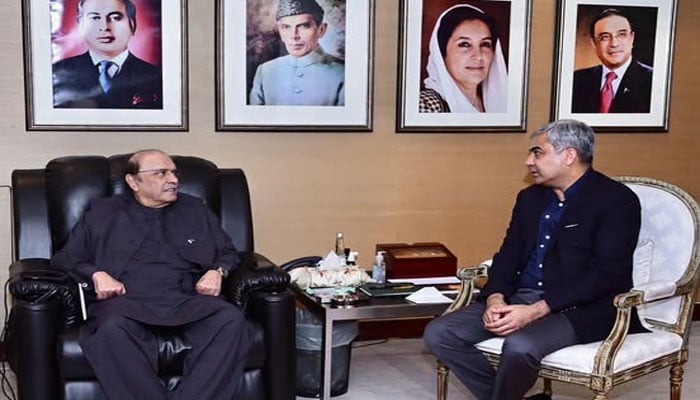
    President of Pakistan Asif Ali Zardari held a meeting with Federal Interior Minister Syed Mohsin Naqvi, during which the two discussed the prevailing political situation in the country as well as a range of important national issues. According to sources familiar with the meeting, the discussion focused on matters of national importance and developments taking place on the political front. The two leaders exchanged views on the current situation and considered issues that require attention at the federal level. The meeting between President Zardari and Interior Minister Mohsin Naqvi comes at a time when the country is facing a number of political, administrative, and security-related challenges. The Interior Ministry plays a key role in dealing with internal security, law and order, border management, immigration, and other matters directly linked to national stability. Sources said that the president and the interior minister also reviewed issues falling within the ministry’s domain. Although details of the discussion were not officially disclosed, the meeting provided an opportunity to exchange views on the government’s priorities and the broader national situation. Political developments were also discussed during the meeting. President Zardari and Minister Naqvi reportedly considered the evolving political environment and its potential impact on governance and national affairs. Both sides emphasized the importance of maintaining stability and addressing important issues through institutional and political channels. The meeting also highlighted the coordination required among key state institutions and government departments to effectively deal with challenges facing the country. In his capacity as federal interior minister, Mohsin Naqvi is responsible for a number of sensitive matters related to internal security and public order, making his discussions with the president significant in the context of national governance. President Asif Ali Zardari, who serves as the head of state, has also been engaged in consultations with senior government officials and political leaders on matters concerning the country. Such meetings provide a platform for reviewing national developments and exchanging views on issues of public and governmental importance. While no major decisions from the meeting were immediately announced, the discussions are understood to have covered several important matters. The meeting reflects the continued engagement between the presidency and the federal government on political and national issues. The exact details of the matters discussed have not been made public. However, sources described the meeting as an important consultation concerning the country’s political situation and other key national affairs. The meeting concluded with both sides exchanging views on the issues discussed. Further developments or decisions related to the matters raised during the meeting may become clearer through official statements or announcements from the government. The meeting between President Zardari and Interior Minister Mohsin Naqvi is therefore being viewed as part of ongoing consultations among senior government officials aimed at assessing the country’s political environment and addressing issues of national significance.

Leave a Reply

Your email address will not be published. Required fields are marked *