saudi arabia unveils
|

Saudi Arabia unveils plans for Multinational Marit…

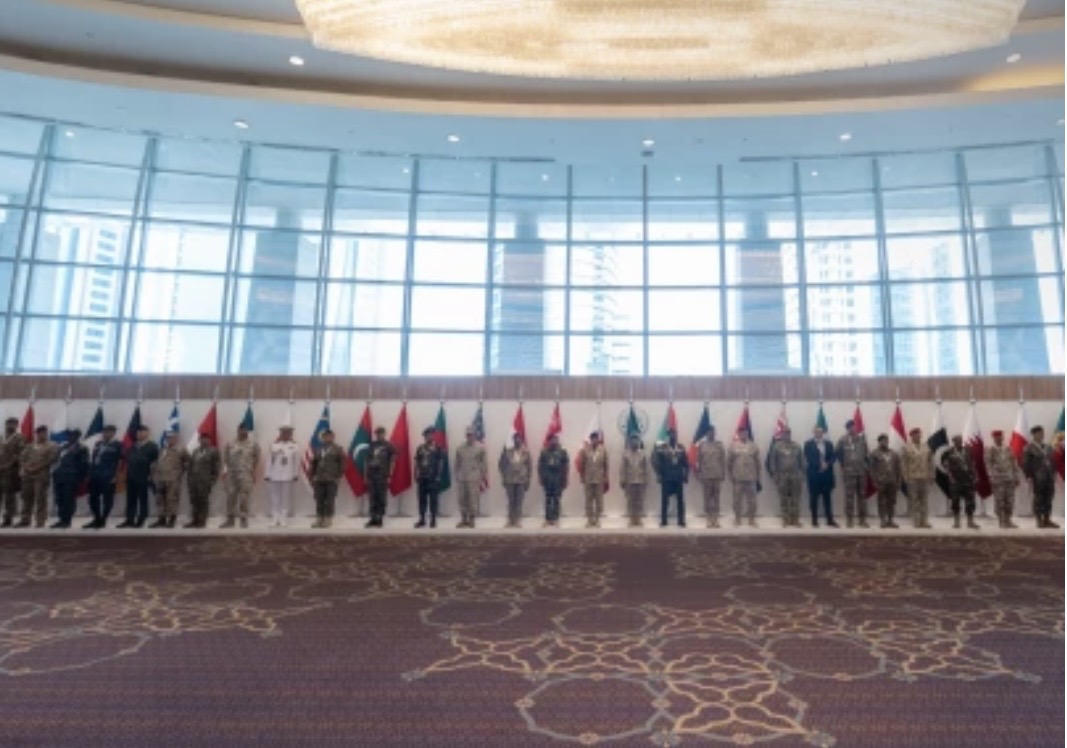
Saudi Arabia and 13 other countries, including Pakistan, on Thursday announced the creation of a multinational maritime defence coalition aimed at safeguarding freedom of navigation, international trade and energy supply routes in the Bab al-Mandab Strait, the Red Sea and the Gulf of Aden.

The Saudi defence ministry said representatives from 43 countries and the European Union attended an international meeting that discussed the proposed coalition, with Saudi Arabia serving as its founding and leading state and hosting its headquarters. The ministry said the coalition would strengthen maritime security, safeguard freedom of navigation, secure international trade routes and energy supply lines, and protect shared maritime interests in the strategic waterways.

Fourteen countries, including Turkey, Pakistan, Egypt, Sudan and Djibouti, issued a joint statement supporting the proposed coalition. Among the six Gulf Arab states, Oman and the United Arab Emirates were not listed among the countries backing the statement. The founding states said participation in the coalition’s activities would remain a sovereign decision for each member state, stressing that the alliance is “purely defensive in nature, does not target any state, alliance or international organization, and will conduct all its activities in full compliance with international law while respecting state sovereignty and protecting freedom of navigation.”

The joint statement said the coalition was established as a “framework for maritime defence cooperation” aimed at enhancing maritime security, protecting freedom of navigation, securing international trade and energy supply routes, and safeguarding interests in the Bab al-Mandab Strait, the Red Sea and the Gulf of Aden.

The announcement comes amid heightened tensions in the Red Sea, where Yemen’s Houthi rebels have launched a series of attacks on Saudi-linked shipping. Saudi Arabia has responded with air strikes on what it said were Houthi military facilities in Yemen’s Hodeidah used to threaten commercial shipping. The Red Sea tensions mark the latest front in the wider Iran war, with attacks on shipping spreading beyond the Gulf and pushing oil prices higher.

The Bab el-Mandeb Strait, linking the southern Red Sea with the Gulf of Aden and the Indian Ocean, is a key maritime chokepoint for global trade and energy shipments. The European Union launched a naval mission in the Red Sea in 2024 to help restore and safeguard freedom of navigation after the Houthis disrupted maritime traffic by attacking vessels in what they said was solidarity with Palestinians during the Gaza war. The new Saudi-led coalition represents a significant expansion of international efforts to secure the region’s vital waterways.

Similar Posts

  • | |

    2,300 Israeli settlers storm Al-Aqsa

    Around 2,300 Israeli settlers entered the Al-Aqsa Mosque compound in occupied East Jerusalem on Wednesday morning, according to Palestinian officials and international media reports. Palestinian authorities described the mass entry as one of the largest such incursions this year. The incident took place as Jewish settlers marked Tisha B’Av, a religious day of mourning that commemorates the destruction of ancient Jewish temples, according to Jewish tradition. The site holds deep religious significance for both Muslims and Jews. Muslims refer to it as the Al-Aqsa Mosque compound, while Jews call the area the Temple Mount. Israel’s far-right National Security Minister Itamar Ben-Gvir also entered the compound under heavy police protection. His presence at the sensitive holy site has previously drawn strong criticism from Palestinians and sparked concerns over rising tensions in Jerusalem. The Jerusalem Governorate said the number of Israeli settlers entering the compound could increase further by sunset. Palestinian officials also reported that Israeli forces imposed tight security restrictions around the entrances to Al-Aqsa and across the Old City of Jerusalem. Large numbers of Israeli security personnel deployed throughout the area, while Palestinian worshippers faced restrictions on accessing the mosque. According to the governorate, only a limited number of Palestinians managed to reach Al-Aqsa for the dawn prayer. Palestinian officials further alleged that Israeli forces assaulted several worshippers and local residents during the heightened security measures. The latest incident comes amid continued tensions surrounding access to and control of the Al-Aqsa Mosque compound, one of the most sensitive religious and political flashpoints in the Israeli-Palestinian conflict.

  • | |

    Mir Raza exhumation halted over medical board row

    The exhumation of Mir Ali Raza’s body has been postponed for Friday, his father’s lawyer Jibran Nasir said. Nasir spoke to the media and raised serious concerns over the medical board formed for the case. He said a third notification regarding the medical board had been issued. According to Nasir, the first and second medical boards were merged to form a new third board. However, he said the family does not accept the latest notification. He said Mir Raza’s parents had already recorded their statements before the investigating officer. Nasir said the family would not allow the exhumation to take place under the supervision of what he called a disputed medical board. He described the exhumation as a sensitive legal process. He said the court had directed the police surgeon and police to take necessary action. A medical team was formed after the court’s directions. However, Nasir alleged that the medical board was changed overnight. He said the sudden change had raised serious questions for the family. He questioned why doctors from Karachi were not included in the new board. He also questioned the removal of doctors who had been part of the earlier medical board. Nasir asked why a new board was formed without first withdrawing the previous notification. He also questioned why the new notification was issued during the night. He questioned the role of the Director General Health in Hyderabad. He asked under which law the official became the supervising officer of the medical board. Nasir also questioned how the orders of the Karachi police surgeon were superseded. He asked which order of the health secretary was referred to in the letter issued from Hyderabad. He said the family would not accept any alternative arrangement. They would only recognize the previously constituted eight-member medical board. Nasir also raised questions about the investigation into Mir Raza’s death. He said the investigating officer could not recover a bullet casing for eight days. According to him, the casing was recovered only after the family approached the court. He questioned how important the casing could be without the recovery of the pistol allegedly used in the incident. Nasir also alleged that the investigating officer had not properly inspected Mir Raza’s room. He said the family had lost a young member and wanted the case to be investigated with complete seriousness. He stressed that an exhumation was not an ordinary procedure. Meanwhile, preparations for the exhumation had been completed at the PECHS cemetery in Karachi. A police team had also reached the cemetery.

  • | |

    Iran’s parliament backs bill criminalizing c…

    Iran’s parliament approved the general framework of a bill Sunday that would make it a crime to give interviews or engage in other communication with media outlets considered hostile to the Islamic Republic, including American or Israeli outlets and any media funded by either country, according to Iran’s Shargh newspaper. Osman Salari, a member of parliament’s judicial and legal commission, said individual provisions within the bill, which aims to counter what officials describe as foreign intelligence influence, still require separate debate and approval. He told the Mizan news agency that details reported so far about the bill should not be treated as final. Under the proposed legislation, interviews or participation in discussions with media deemed hostile would be banned outright, with violations carrying prison terms ranging from six months to two years. Interviews with other foreign media outlets would require advance notification to the intelligence ministry, while any contact with foreign embassies, offices of foreign organizations or other non Iranian institutions, conducted without notification and written permission from the foreign ministry, would draw fines and the loss of certain social rights. The bill would also increase penalties for economic crimes carried out under the direction or supervision of foreign actors, prohibit sharing information with foreigners without intelligence ministry approval, and limit scientific cooperation with foreign institutions to those on an approved list. It would further criminalize policy or legislative proposals made under the direction of foreign intelligence services if such proposals are found to harm Iran’s security or independence, with penalties reaching up to 30 years in prison. Cases brought under this provision would fall under the jurisdiction of Iran’s Revolutionary Courts. Parliament will now review the bill article by article. Once lawmakers approve a final text, the legislation must still pass review by the Guardian Council before it can take effect as law. This is not the first time Iran has moved to criminalize cooperation with foreign entities. A law passed in 2025, following a 12 day war with Israel, introduced harsher penalties for alleged cooperation with hostile states. Earlier this month, Iranian photojournalist Yalda Moaiery was sentenced to 15 years in prison under that law over accusations that included giving interviews to media considered hostile and supplying photographs to organizations linked to the United States and Israel.

  • | | |

    Khamenei’s resurfaced message explains Iran’s …

    Tehran: A message previously shared by Iran’s Supreme Leader, Ayatollah Ali Khamenei, has resurfaced on social media during the Chehlum commemorations of Hazrat Imam Hussain (RA), drawing renewed attention to Iran’s stance against reaching a deal with the United States. The post, published on the social media platform X from Ayatollah Khamenei’s account, quotes a saying attributed to Imam Hussain (RA), emphasizing the duty to stand against oppression. The message states that those who fail to confront tyranny risk sharing the same fate as the oppressor. It concludes by saying that this principle is the reason Iran refuses to compromise with the United States, linking the country’s political position to its ideological beliefs. The message was originally posted on October 13, 2019, but has now been republished to coincide with the Chehlum observance honoring the martyrs of Karbala, highlighting the continued significance of its message in Iran’s political narrative.

  • | |

    Diddy’s prison release date moved forward again …

    Sean “Diddy” Combs is now expected to be released from federal prison sooner than previously anticipated after his projected release date was moved forward once again. The latest update marks the second adjustment in just over a month, reducing the amount of time the music mogul is expected to spend behind bars while his legal appeal remains ongoing.  According to updated records from the U.S. Federal Bureau of Prisons, Combs is now scheduled to be released on February 23, 2028, replacing the previous projected date of April 15, 2028. Earlier this year, his expected release had already been moved up from April 25, 2028, which itself followed an earlier projected date of June 4, 2028. The repeated revisions have drawn renewed public attention to the rapper’s sentence and the federal prison system’s administrative calculations.  The 56-year-old music executive is currently serving a 50-month federal prison sentence at the Federal Correctional Institution (FCI) Fort Dix in New Jersey. In 2025, a jury found Combs guilty on two counts of transportation to engage in prostitution. However, he was acquitted of the more serious charges of racketeering conspiracy and sex trafficking. The court also imposed a $500,000 fine and a period of supervised release following the completion of his prison sentence.  Federal officials have not publicly explained why Combs’ projected release date has been revised multiple times. Reports suggest the adjustments could be linked to standard Bureau of Prisons sentence calculations and participation in rehabilitation programs available to eligible inmates. However, prison authorities have not confirmed a specific reason for the latest change.  Meanwhile, Combs’ legal team continues to challenge his conviction. His attorneys have filed an appeal, arguing that his sentence was excessive and seeking either a new trial or a reduced sentence. The appeal remains pending, meaning the current release date could still change depending on future court decisions or administrative reviews.  The revised release timeline comes just days after reports emerged that Combs had been placed in solitary confinement following an altercation with another inmate at FCI Fort Dix. According to media reports, prison staff quickly intervened and separated those involved. It remains unclear whether the incident will have any impact on his projected release date or prison status.  Although the updated release date brings Combs one step closer to freedom, his legal troubles are far from over. Beyond the ongoing appeal, he continues to face multiple civil lawsuits alleging sexual misconduct, all of which he has denied. For now, February 23, 2028, remains the official projected release date listed by the Federal Bureau of Prisons, though future legal or administrative developments could alter that timeline. 

  • |

    Cuba plunges into darkness as national electric grid collapses

    Cuba’s state-owned grid operator, Union Electrica de Cuba, announced that the national electricity system collapsed late on Sunday night, leaving approximately 10 million residents without power. The widespread outage marks the fourth major blackout to hit the country in recent weeks following three similar grid failures recorded throughout July. The worsening energy crisis is driven by severe fuel shortages, which have left the nation’s ageing power generation facilities unable to meet basic electrical demand. Sanctions and geopolitical shifts have severely restricted the island’s ability to import crude oil. Following the ouster of Venezuelan President Nicolas Maduro in January, a US-imposed oil blockade cut off Cuba’s primary source of imported fuel, while alternative shipments from Mexico have also stopped under pressure from Washington. To mitigate the escalating power supply emergency, the Cuban government has initiated unprecedented reforms by allowing private businesses and foreign-backed entities into its domestic wholesale fuel market.

Leave a Reply

Your email address will not be published. Required fields are marked *