war reconciliation war

From War Reconciliation to War Team: Pakistan&#821…

By Engr. Saqlain Abid

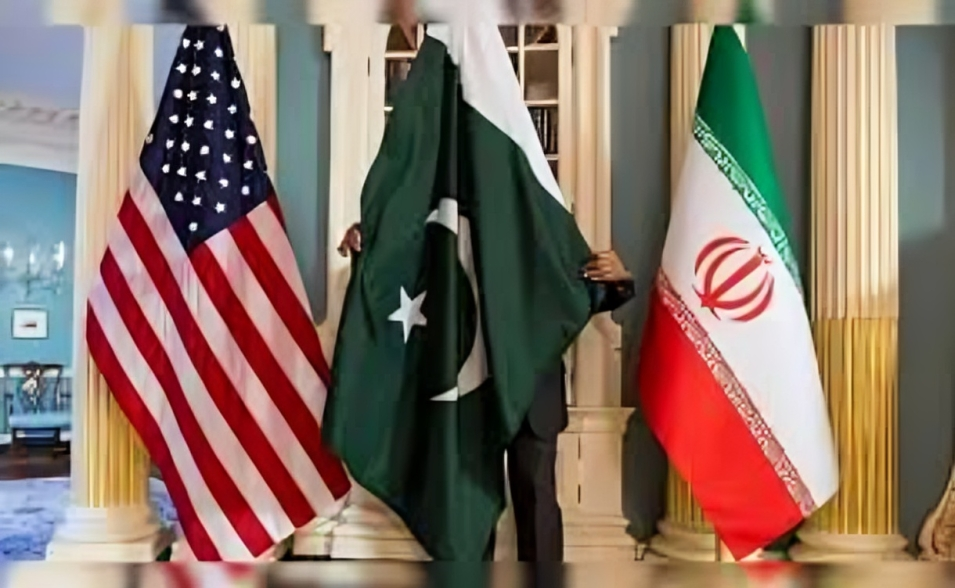
Pakistan’s diplomatic position appears to be entering one of its most delicate phases in recent years. What initially seemed to be a conflict limited to the United States and Iran is gradually expanding into a broader regional confrontation, forcing many states to reconsider their strategic choices. After six consecutive days of American bombing inside Iran and the continued military response by the Houthis against Saudi Arabia, Pakistan may find itself moving from the role of mediator toward that of a potential participant in a wider regional security framework.

For months, Islamabad attempted to maintain balanced relations with all major actors. Pakistan consistently called for restraint, dialogue, and reconciliation while avoiding direct involvement in the conflict. However, regional defence commitments and strategic partnerships may eventually place Islamabad under increasing pressure. If Saudi Arabia invokes defence cooperation against Houthi attacks, Pakistan could face difficult decisions regarding its military and diplomatic responsibilities. Since the Houthis are widely regarded as being closely aligned with Iran’s Islamic Revolutionary Guard Corps (IRGC), any Pakistani military involvement against them would inevitably carry implications for Pakistan-Iran relations.

Such a development would represent more than another military confrontation. It would symbolise the further fragmentation of the Muslim world. If Pakistan, another major Muslim state, enters a conflict involving an Iranian proxy, one must ask whether any meaningful concept of Muslim strategic unity ever truly existed. The divisions that have surfaced during recent crises suggest that political interests, national security calculations, and regional rivalries continue to outweigh religious solidarity.

Recent diplomatic developments have also raised important questions. Turkey’s growing regional activism and President Recep Tayyip Erdoğan’s visible engagement alongside President Donald Trump during last week’s summit have been interpreted by many observers as a signal that regional alliances are evolving. Simultaneously, Iran appears to be facing mounting economic constraints, prolonged sanctions, and increasing diplomatic isolation. The question naturally arises: what strategic options remain available to Tehran?

Iran still possesses considerable leverage despite its economic difficulties. The Strait of Hormuz remains one of the world’s most critical energy chokepoints, while the Houthis retain the capability to disrupt maritime traffic through the Bab-el-Mandeb Strait. Any prolonged disruption in either corridor would significantly affect global energy markets, increasing oil prices and creating severe economic pressure on Europe and the wider international community. These maritime realities provide Iran with strategic leverage even while under military and economic pressure.

This changing environment also raises another possibility. Washington may be attempting to reshape its regional security architecture. The Gulf monarchies, particularly Saudi Arabia and the United Arab Emirates, have invested enormous financial resources over the past decade in regional security arrangements. Yet repeated conflicts have exposed limitations in those frameworks. If confidence in the existing Gulf-centred order continues to weaken, the United States may increasingly look toward countries such as Turkey and Pakistan as more active regional security partners.

Pakistan’s strategic importance cannot be ignored. It possesses one of the world’s largest armed forces, nuclear capability, extensive counterterrorism experience, and a unique ability to maintain dialogue with competing regional actors. Together with Turkey, Pakistan could potentially contribute to a new regional security framework. Recent praise directed toward both President Erdoğan and Pakistan’s Chief of Army Staff, Field Marshal Asim Munir, by President Trump has naturally generated speculation regarding future strategic cooperation, although such interpretations remain speculative and should be approached with caution.

Nevertheless, Pakistan must carefully evaluate the costs of any deeper military commitment. A defence partnership should never be viewed as a one-sided obligation. If Pakistan were expected to support Saudi Arabia during a regional conflict, an equally important question deserves attention: would Saudi Arabia provide similar military support if Pakistan faced aggression elsewhere, particularly from India? The answer remains uncertain. Defence agreements are strongest when obligations, expectations, and strategic interests are genuinely reciprocal.

Pakistan’s greatest contribution may not lie on the battlefield but at the negotiating table. Rather than becoming another participant in an expanding regional war, Islamabad should utilise its diplomatic credibility to encourage a new regional dialogue. Any future Muslim security architecture should emerge through regional consensus, not through external approval or great-power competition. Iran has demonstrated that it remains an influential regional actor whose interests cannot simply be ignored. Sustainable peace will require engagement with Tehran rather than permanent confrontation.

Ultimately, Pakistan stands at a strategic crossroads. It can either become another member of an expanding war coalition or position itself as a credible architect of a new regional order built upon diplomacy, mutual security, and South Asian consensus. In an era where wars are becoming increasingly costly and alliances increasingly fragile, Pakistan’s greatest strength may be its ability to build bridges rather than battle lines.
Similar Posts

  • The Great Tragedy of Partition—VII Cabinet Missi…

    Some constitutional settlements fail because they are unjust. Others fail because those who might have accepted them cease to trust one another before the settlement can take effect The failure of the Simla Conference did not persuade Britain to abandon the search for a united constitutional settlement. On the contrary, it convinced the newly elected Labour Government that another and far more comprehensive initiative had become indispensable. The Second World War had ended. Britain emerged victorious, but financially exhausted and politically transformed. The question confronting Prime Minister Clement Attlee’s government was no longer, whether India would become independent. Independence had become inevitable. The remaining question was whether it could be achieved without Partition. The responsibility for answering that question fell upon one of the most significant constitutional delegations ever sent to British India. In March 1946, the Cabinet Mission, comprising Lord Pethick-Lawrence, Sir Stafford Cripps and A. V. Alexander, arrived in India with instructions not merely to negotiate the transfer of power but to devise a constitutional framework capable of reconciling profoundly different political aspirations within a single state.  Unlike earlier initiatives, the Cabinet Mission did not attempt to persuade one side to surrender its constitutional claims to another. Instead, it sought to construct a constitutional architecture that would allow competing visions of India to coexist. The Mission recognised two political realities that earlier proposals had struggled to reconcile. Indian National Congress continued to insist upon the unity of India, while the Muslim League maintained that Muslim political nationhood required constitutional recognition. The challenge lay in accommodating both principles without destroying either. The solution proposed by the Mission was both innovative and extraordinarily complex. It rejected the immediate creation of a sovereign Pakistan, arguing that Partition would generate formidable administrative, economic and strategic difficulties. At the same time, it acknowledged that an excessively centralised constitution would be unacceptable to the Muslim League. The Mission, therefore, proposed a three-tier constitutional structure. At the centre would stand a limited Union Government responsible only for defence, foreign affairs and communications, together with the finances necessary to discharge those functions. The provinces would retain extensive autonomy over most subjects of governance. Between these two levels, the provinces would form three groups reflecting geographical and political realities. Sections A, B and C would be empowered to frame constitutions for their respective groups while participating in the larger Union. The constitutional ingenuity of the proposal lay precisely in its attempt to preserve India’s international unity while recognising its internal diversity. Neither complete centralisation nor compl therefore sought a middle constitutional path. Congress interpreted the Plan as preserving the essential unity of India, though many of its leaders remained apprehensive that compulsory provincial grouping might weaken the authority of the future Union. The Muslim League initially accepted the proposal because the grouping arrangements appeared capable of protecting Muslim-majority provinces and preserving the possibility of greater autonomy in the future. For a brief moment, it appeared that a constitutional compromise acceptable to both major political parties had finally emerged. That moment proved remarkably short-lived. The difficulty did not lie primarily in the constitutional text. It lay in conflicting interpretations of the text. Congress regarded the provincial groupings as temporary arrangements that could subsequently be modified by elected provincial legislatures. The Muslim League regarded them as an essential constitutional guarantee protecting Muslim political autonomy. The same constitutional document, thus, came to embody fundamentally different expectations. The archival record preserved in the Transfer of Power volumes reveals that British officials themselves recognised this ambiguity. The Mission deliberately employed language capable of attracting acceptance from both Congress and the League. Diplomatic flexibility succeeded in producing initial agreement but left unresolved the deeper question of how the Constitution would actually operate once political power had been transferred. Ambiguity, which had previously served as an instrument of negotiation, now became a source of constitutional instability. The situation deteriorated further after Jawaharlal Nehru, speaking as President of the Congress, declared that the Constituent Assembly would remain sovereign in determining the future Constitution and would not regard itself as permanently bound by every aspect of the Cabinet Mission Plan. The Muslim League interpreted these remarks as evidence that the constitutional safeguards upon which it had relied could be altered after the transfer of power. Confidence rapidly evaporated. Muhammad Ali Jinnah responded by withdrawing the League’s earlier acceptance and announcing Direct Action. The constitutional conversation increasingly gave way to political confrontation. The tragic communal violence that followed profoundly altered the atmosphere in which constitutional negotiations continued. The Cabinet Mission nevertheless occupies a unique place in the constitutional history of South Asia. It represented the most sophisticated attempt to reconcile unity with diversity through constitutional design. It neither denied Muslim political aspirations nor abandoned the ideal of a united India. Instead, it sought to accommodate both within an asymmetrical federal structure unprecedented in British constitutional practice. Whether the Plan would ultimately have succeeded if fully implemented remains one of the most enduring questions in modern South Asian historiography. Historians continue to disagree. Some regard it as the last realistic opportunity to preserve Indian unity. Others argue that political distrust had already advanced too far for even the most carefully designed constitutional arrangement to survive. The documentary evidence suggests that the Mission came closer than any previous initiative to securing acceptance from both principal political organisations. Its collapse. Therefore, deserves to be understood not simply as another failed negotiation but as the moment when the possibility of a united constitutional future receded most dramatically. The tragedy of Partition was still not inevitable. The Indian Independence Act of 1947 had not yet been enacted, the boundaries of the future states had not been drawn, and constitutional alternatives technically remained available. Nevertheless, after the collapse of the Cabinet Mission, the political space for compromise contracted with alarming speed. The search for constitutional reconciliation increasingly yielded to preparations for constitutional separation. The next article examines the final phase of British rule under Lord Mountbatten. It explores how the acceleration of

  • Pakistan’s Development Partners

    Like other developing countries around the globe, Pakistan also seeks to optimize a higher and impact-oriented investment rate in order to achieve higher and sustainable economic growth. In this regard, Pakistan’s development partners provide knowledge advisory and financial assistance to support implementation of economic reforms that will spur sustainable economic growth. The priority of the incumbent federal government headed by Prime Minister Muhammad Shehbaz Sharif is to undertake development partners’ engagements around two key objectives: (i) achieve sustainable social and economic growth as envisioned in its development plans to reduce poverty and inequality, and to create equitable access to social services and create employment opportunities for the youth, and (ii) address the external and fiscal imbalances for enhanced macroeconomic stability. The disbursement of Foreign Economic Assistance (FEA) remained low during the financial year 2025-26, as against budgeted figures of Rs 5777654.488 million, foreign assistance received was Rs 5024516.997 million. For the new financial year 2026-27, Pakistan was most likely to receive Rs 6779624.460 million (US $ 23.38 billion) from its development partners. Breakup-wise, Pakistan will be borrowing US $ 400.422 million (Rs 116122.423 million) from bilateral resources, US $ 4866.223 million (Rs 1411204.727 million) from multilateral resources, (US $ 235.000 million) from foreign commercial banks, US $ 12000.00 million (Rs 3480000.000 million) through bilateral deposit, US $ 1122.370 million (Rs 325487.300 million) through Naya Pakistan Certificate, and US $ 530.000 million (Rs 153700.000 million) from International Monetary Fund (IMF). Foreign assistance secured by Pakistan from its development partners also include, as usual, foreign aid for autonomous bodies such as WAPDA (Power), National Transmission and Dispatch Company (NTDC), National Highway Authority (NHA), and Power Division. Higher Education Commission (HEC) and SUPARCO were among the autonomous bodies who also received foreign assistance during the financial year 2025-26, but both of these were not among the foreign assistance beneficiaries somehow for the just commenced fiscal year 2026-27. Figures have been avoided for want of space, please. External resources, as per information available from the official sources, are derived from a combination of financing instruments, including project loans and grants, programme loans and other loans. Project loans and grants are received from specialised International Financial Institutions and friendly countries with specific purposes; project loans and grants for Public Sector Development Programme (PSDP) are received for various projects being executed by Federal Government, Provincial Governments and various Autonomous Bodies such as WAPDA, PEPCO, NHA, etc.; there are certain projects which are kept out of PSDP and executed by Federal and Provincial Governments and Autonomous Bodies by receiving project loans and grants; programme loans are provided for budgetary support and are linked/tied with achievement of specific targets and goals; and other loans comprise of loans from Islamic Development Bank, Sovereign Bonds, Sukuk Bonds, etc. raised from non-traditional sources. Bilateral sources included China, Denmark, France, Germany, Italy, Japan, Korea, Kuwait, Oman, Saudi Arabia, and the USA. Multilateral sources included Asian Development Bank (ADB), Asian Infrastructure Investment Bank (AIIB), EIB, International Bank for Reconstruction & Development (IBRD), International Development Association (IDA), International Fund for Agricultural Development (IFAD), IsDB, PEC Fund and the United Nations, and the International Monetary Fund (IMF). There was no Saudi Arabia Time Deposit and no SAFE China Deposit commitments for the financial year 2026-27. World Bank, Asian Development Bank (ADB), Asian Infrastructure Investment Bank (AIIB) and IsDB were the major multilateral development partners who have conducted important diagnostic studies as well as formulated well-aligned medium-term country partnership strategies. Developments in Pakistan’s economy were also being closely monitored and rated by important rating agencies like Fitch, Moody’s and S & P which help Pakistan in accessing capital markets. Support from development partners and international financial institutions is critical to implementing the federal government’s agenda for sustained and balanced development for the people. The aim and objective of seeking foreign or external financial assistance can be stated as “promoting economic and social development in the developing countries.” It can also be defined as “Administered transfer of resources from a donor country or international financial agency to the developing countries with a view to encourage economic growth.” Foreign aid can be in the form of money, goods or technical assistance and can also be between two (bilateral) or many (multilateral) countries/institutions. Foreign aid is also looked for to meet both the economy’s balance of payments gap and investment gap. That is why project and technical assistance alone are not sufficient.

  • SPSC: When Cockroaches Approach the Granary

    A society does not collapse the day corruption is discovered; it begins to decay the day corruption becomes ordinary. The Sindh Public Service Commission (SPSC), established to uphold merit and provide equal opportunities to the youth of Sindh, has repeatedly found itself at the center of controversy. Allegations of paper leaks, irregularities, and lack of transparency have steadily eroded public confidence, leading thousands of young aspirants to raise their voices in protest. Reports of demonstrations against SPSC over recruitment and examination concerns, as well as past official action following examination irregularities, reflect the depth of this mistrust. The title, “Cockroaches Approaching the Granary,” is symbolic. A granary stores the food that sustains a nation, while cockroaches represent decay, contamination, and silent destruction. Public institutions responsible for selecting the brightest minds are the granaries of governance. If corruption, negligence, or manipulation infiltrates these institutions, they contaminate not merely examinations but the very future of society. The protests by the youth of Sindh are not simply demonstrations against one institution. They are a cry for justice, transparency, and dignity. Behind every candidate stands a family that has invested years of sacrifice, countless hours of preparation, and unwavering hope. When the credibility of competitive examinations is questioned, it is not only individual dreams that are shattered; public trust in the state’s promise of equal opportunity is weakened. This struggle echoes a wider regional concern. Across South Asia, young people have repeatedly taken to the streets whenever examination systems were perceived to have failed them. In India, nationwide protests over alleged examination paper leaks became a powerful reminder that education and public recruitment derive their legitimacy from public trust. Whether in India or Pakistan, the message from the youth remains remarkably similar: merit cannot survive where examination integrity is compromised. The issue transcends politics. It is fundamentally about governance. Every leaked paper, every allegation of favoritism, and every unexplained irregularity diminishes the value of honest effort. When deserving candidates begin to believe that influence outweighs competence, a dangerous message spreads across society: hard work is no longer enough. The consequences extend far beyond recruitment. Civil servants, lecturers, engineers, doctors, and administrators selected through questionable processes ultimately shape the institutions that govern millions. Weak recruitment today becomes weak governance tomorrow. A nation that compromises on merit ultimately compromises on its future. Yet this moment also presents an opportunity. The protests of Sindh’s youth should not be viewed merely as expressions of anger but as demands for institutional reform. Transparent examination procedures, secure digital systems, independent oversight, prompt investigations into alleged irregularities, and public accountability can restore confidence. Institutions earn respect not by claiming perfection but by responding credibly to legitimate concerns. History reminds us that nations progress when their institutions are stronger than individual interests. The youth of Sindh are asking for nothing extraordinary. They seek only a level playing field where success is determined by knowledge, ability, and perseverance rather than by connections or corruption. The metaphor of cockroaches approaching the granary serves as a warning. If the guardians of merit fail to protect the granary, decay will eventually consume the harvest. But if institutions choose transparency over secrecy and accountability over complacency, the granary can once again nourish hope instead of despair. The future of Sindh depends not merely on educating its youth but on convincing them that their honesty, talent, and hard work will always be rewarded. Merit is the foundation of every successful society. Once that foundation cracks, the entire structure stands in peril.

  • The Great Tragedy of Partition—IX   Was the tra…

    History does not become inevitable merely because it happened The Partition of British India is frequently narrated backwards. Because India and Pakistan emerged as separate states in August 1947, every disagreement preceding their creation is treated as another step towards an unavoidable conclusion. Political demands become fixed destinies, failed negotiations appear predestined to fail, and the violence accompanying the transfer of power is presented as the inevitable consequence of ancient communal hostility. The documentary record examined in this series suggests a different conclusion. To ask whether Partition was inevitable is, in fact, to combine three distinct questions. Was the political division of British India unavoidable? Was the accelerated timetable chosen for the transfer of power unavoidable? Was the mass displacement and violence accompanying Partition unavoidable? These questions are related, but they do not admit the same answer. The constitutional division of India was not historically inevitable from the beginning of the anti-colonial struggle. Competing political visions existed, but so did repeated attempts to accommodate them. The possibility of a united constitutional order survived the Lahore Resolution, the Cripps Mission and even the failure of the Simla Conference. The Cabinet Mission Plan of 1946 came remarkably close to obtaining acceptance from both Congress and the Muslim League by proposing a weak centre, autonomous provinces and compulsory provincial groupings. That arrangement might have survived; it might also have collapsed under the weight of its own ambiguities. History cannot establish with certainty what would have happened under a constitutional plan that was never fully implemented. It can establish that an alternative existed and that, for a brief period, both principal political parties considered it preferable to immediate Partition. The collapse of that opportunity did not result from one sentence, one leader or one political organisation. Congress feared that compulsory groupings would weaken the future Union and prevent the construction of an effective national government. The Muslim League feared that Congress would use its strength in the Constituent Assembly to dismantle the safeguards upon which Muslim-majority provinces had relied. British negotiators used ambiguity to secure agreement but failed to create a mechanism capable of resolving the conflicting interpretations that followed. Political trust disappeared faster than constitutional ingenuity could replace it. By early 1947, division had become increasingly probable. The Cabinet Mission framework had collapsed, the interim government was paralysed, communal violence had spread and the principal political parties no longer shared a common conception of India’s constitutional future. An increasingly probable outcome, however, is not the same as an historically predetermined one. It was the cumulative product of decisions taken, compromises rejected, assurances doubted and opportunities lost. The Second World War had accelerated this process. Britain’s strategic dependence upon India strengthened the bargaining positions of Indian political parties while weakening imperial authority. Congress demanded effective power and national independence. The Muslim League used the altered constitutional balance to secure recognition of Muslims as a political nation. The Communist Party of India (CPI), approaching the question from an entirely different intellectual tradition, acknowledged the “just essence” of the Pakistan demand through the principle of national self-determination. Muslim intellectuals were simultaneously debating what Pakistan would mean. The discussions in Tarjuman-ul-Qur’an and Tolu-e-Islam demonstrated that support for a Muslim homeland did not produce agreement about the nature of the future state. The political demand for Pakistan and the constitutional content of Pakistan were related questions, but they were never identical. British policy also evolved. The Raj did not simply devise Partition according to a predetermined imperial design. Nor can it be treated as a neutral referee unable to influence events. British constitutional arrangements had shaped political representation, while wartime policy altered the balance between Congress and the Muslim League. Cripps introduced the possibility that provinces might remain outside a future Union. Simla exposed the struggle over who could represent Indian Muslims. The Cabinet Mission attempted to preserve unity through decentralisation. Mountbatten ultimately concluded that division offered the fastest route to British withdrawal. Responsibility was therefore differentiated, but it was not absent. Congress and the Muslim League made decisions with consequences they could not fully control. British authorities retained formal power, controlled the timetable and supervised the division of the state. Provincial governments failed to protect vulnerable communities. Communal organisations, militias and local groups transformed political antagonism into killings, abductions and forced migration. Ordinary Hindus, Muslims and Sikhs, most of whom had exercised no influence over constitutional negotiations, paid the greatest price. This brings us to the second question. Even if political Partition had become unavoidable by the middle of 1947, was its hurried implementation equally unavoidable? The evidence permits a firmer answer. Britain had initially announced that power would be transferred by June 1948. Mountbatten brought the date forward to August 1947. This acceleration left only weeks to divide provinces, assets, armed forces, civil services, railways, irrigation systems and administrative records. The boundary awards were disclosed after the new states had formally come into existence. Political leaders could reasonably fear that prolonged uncertainty would intensify disorder, but haste was a choice made within difficult circumstances, not an irresistible law of history. The third question concerns the violence itself. No provision of the Indian Independence Act ordered a compulsory exchange of populations. Nothing in constitutional separation required refugee trains to become moving graveyards, women to be abducted or families to abandon ancestral homes. Violence arose from fear, organised attacks, retaliatory killings, administrative collapse and the failure to provide adequate security. Its precise course could not have been predicted, but its scale was not constitutionally necessary. The tragedy was therefore greater than Partition. It lay in the manner in which Partition was conceived, accelerated and implemented. The Indian Independence Act legally created two Dominions, but independence did not immediately erase the institutions of empire. Section 8 allowed the governmental machinery of the Government of India Act, 1935, as adapted, to continue until the new Dominions framed their own constitutions. Pakistan would remain governed under that inherited framework until its first Constitution came into force in 1956. Political sovereignty

  • Democratic Technocracy and a New Administrative St…

    A truly democratic-technocratic model for Pakistan should also address the country’s administrative structure. Pakistan is too large and administratively complex to depend on highly centralized decision-making from Islamabad and provincial capitals. A modern governance system should therefore consider the creation of new provinces or constitutionally recognized administrative units, based on population, geography, economic viability, administrative accessibility, historical and cultural considerations, and the ability to provide effective public services. This distribution must not be based on the ground of nationality. In my personal opinion, in Pakistan, there is a very emotional and stimulation mind sets found everywhere, they create prejudice mentality among the whole nation. All provinces names should be on the basis of their respective specialty of that particular area. Sindh, Punjab, Khaiber pakhtoon kha, Balochistan, these names also must be changed to other names. This will remove the nation base mentality. The objective should not be to divide Pakistan on the basis of ethnicity, language or political rivalry. Rather, administrative boundaries should be designed around governance and public welfare. Where existing provinces have become too large to administer effectively, new administrative units could bring government closer to citizens, improve resource allocation, strengthen accountability and allow regional development plans to be tailored to local needs. Here is a very common example, as if there is a school, when strength of the students increases, school starts to produce more campus, this is just because of good administration, to deliver good services, to provide better education to all students equally. So same case is in Pakistan, now the population has been reached out more than 250 million. While, at the time of 1947, the population was 70-75 million, that was combined, west and East Pakistan both, and West Pakistan comprised of only 32-33 million. Now imagine, now the population is more than 250 million and provinces are same. The population has been increases up to 681%. Imagine….! Punjab population was 20 million in 1947, now in 2026 is 127 million. Sindh population was 6 million in 1947 and now in 2026 is 56 million. Similarly KPK was 11 million in 1947 and now is 41 million, Baluchistan was 4.3 million in 1947 and now is 15 million. By these figures, more provinces or administrative units must have been developed many years ago. When we look for cities of Sindh, as the largest opposition found in Sindh against this proposal, we see, Karachi population was 1 million and in 2026 is more than 20 million, Hyderabad was 5-6 lacs, means 500 to 600 thousands, and now in 2026 is 2.4 million. Similarly Tharparker population was almost 300 thousand only, now near to 2 million, Nawabshah, currently is SBA was 500 thousand in 1947 now in 2026 is almost 2 million, Larkana was 420 thousands and now is 1.7 million, Sukkur was 340 thousand in 1947 and now is 1.6 million. If I write the whole country data then we need many pages, so these main examples are presented to elaborate that new provinces or administrative units are compulsory in the country for the betterment of Pakistan and the people of Pakistan. Now, keeping in view the concept of new provinces or new administrative units, under a Democratic Technocracy model, each administrative unit could have an elected political government supported by professional technocratic administration. Citizens would elect their representatives, while key departments would be managed by qualified professionals and career administrators. Health systems could be led by experienced health administrators and public-health professionals; education by education-policy specialists; municipal development by professional urban planners and engineers; finance by qualified public-finance specialists; and agriculture, water, energy and industry by relevant technical experts. In current system, our all ministries have, very unfortunately, absolute irrelevant Persons to run that particular area, except a very few. Now see this model, would create a three-level governance architecture: Federal Government → Provincial/Regional Governments → Empowered Local Governments At the federal level, matters such as defense, foreign affairs, currency, national economic policy and other genuinely national responsibilities would remain centralized. At the regional level, governments would concentrate on sectors such as health, education, agriculture, provincial infrastructure and regional economic development. At the local level, elected governments would become directly responsible for municipal services, sanitation, water supply, local roads, primary healthcare, local education, waste management and other services that directly affect citizens. A New Map for Better Governance Pakistan should therefore be willing to have a serious national debate about whether the present administrative map remains optimal for the country’s future. The creation of additional provinces or administrative regions should be based on objective criteria rather than political convenience. A proposed new unit should undergo an independent feasibility assessment covering: – Population and geographic size – Administrative accessibility – Economic and revenue potential – Existing infrastructure – Healthcare and education requirements – Natural resources – Urban and rural population distribution – Connectivity and transportation – Fiscal sustainability – Public opinion and consultation – Protection of minority and regional rights No new unit should be created merely because a political group demands it, nor should a legitimate administrative reform be rejected simply because existing political interests oppose it. The principle should be simple: “Administrative boundaries should serve citizens-not political elites”. A smaller and more manageable administrative structure, combined with empowered local governments and professional administration, could make it easier to identify responsibility, measure performance and deliver public services. However, creating new provinces alone will not solve Pakistan’s governance problems. A smaller province with the same inefficient institutions would simply reproduce the same problems on a smaller scale. Administrative restructuring must therefore occur simultaneously with civil-service reform, fiscal decentralization, digital governance, merit-based appointments, independent oversight and strong local governments. The ultimate objective should be to create a Pakistan in which every citizen can reach an effective government institution without travelling hundreds of kilometers to a distant provincial capital, while every level of government remains constitutionally accountable to the people. This is where administrative reform and Democratic Technocracy meet: democracy determines representation, technocracy ensures competence,

  • From steel to semiconductors and back

    It is widely believed that the more things change, the more they remain the same. For nations to stand on their own feet, the basics have to be covered; it is the lesson of history which must never be ignored. Steel has always been considered the basic building block of advancement. Pakistan started off well in producing its metals. In the decade of the sixties, the Kalabagh Iron deposit was upgraded by the German Krupp Wrenn process to be later converted into steel. Germans are known for thoroughness; they produced VW cars with the local metal. The powerful import lobby prevailed and the Pilot Plant was shut down. Precious time was lost. Finally, in the decade of the seventies the Soviet Union came to our help. The Pakistan Steel Mills project was started outside Karachi at Port Qasim. In the decade of the eighties Pakistan started producing its own steel based on imported ore and coal. The plan was to gradually replace the imported raw materials with the indigenous. At its peak the mill produced about 3 MTPY ( Million Tons per year ) against a national demand of 5 MTPY. Instead of increasing capacity, the plant was shut down in the year 2015. Coming from a family of technologists, I opted for Metallurgical Engineering. I wanted to join Pakistan Steel Mills ( PSM ) which was recruiting students for education and training in USSR. But instead, I landed in the USA where I completed my masters study from the College of Mines University of Arizona ( U of A ). Arizona was considered the world Copper Capital with several mines around. In the decade of the seventies an organization was established at the federal level called Resource Development Corporation ( RDC ) with its head office in Karachi while PUNJMIN ( Punjab Mineral Company ) covered Punjab where Kalabagh and Chiniot Iron deposits were located. It was RDC that launched the first Copper-Gold project at Saindak through its subsidiary SML ( Saindak Metals Limited ) in the year 1992. I was closely associated with this project as the bench studies were conducted in Tucson by a consulting firm by the name of MSME ( Mountain States Mineral Enterprise ). Till my master’s level, mining remained my focus. After graduating in 1981 when I returned in 1983 to start my doctoral program in Arizona, mining had been replaced by high-tech Silicon based Semiconductors. Research was focused on electronic materials. Silicon was produced from Silica Sand on which Integrated Circuits ( ICs ) were built. Metals like Aluminum, Titanium, Gold and Copper were being used. Then came the Solar Cells which Pakistan had produced in the decade of the seventies but missed opportunity due to lack of commercial linkages. While the Semiconductors and Solar batteries are in great demand, the material needs have increased manifold. Mining is back with a bang. Without basic raw materials, the technological advancements are not possible. I have gone full circle in my own career, and so have the technological advancements. From Steel to Copper, then Silicon based Semiconductors followed by mining and gasification of Coal. As a nation, we have missed several opportunities. Catch-up is possible through Leap-Frogging which is widely used by late entrants. China and India have adopted this approach effectively. The crusade should start with a Minerals Development roadmap. PMDC ( Pakistan Mineral Development Corporation ) and PUNJMIN can take the lead. Most of our mineral deposits remain un-tapped which can be developed to meet our needs. Self-sufficiency in Steel and Copper is achievable. Even lithium is available to produce batteries. Minerals are the basic building blocks of the nation which have been ignored. High grade Silica Sand is available in the north to produce Solar Cells and Semiconductors. India has made major investments in the high-tech Semiconductor sector. In the recently held Mining Conference in Karachi, it was agreed to expand the operations at Thar to meet our energy and fertilizer needs after gasification of the Black Gold. Basics have to be covered; advancement cannot be achieved through imports and borrowing. The party should finally come to an end for nation building to start.

Leave a Reply

Your email address will not be published. Required fields are marked *