
orchard classroom remembering

The Orchard Classroom: Remembering Dr Pervez Butt

Dr Pervez Butt died on the 26th of July, 2026, at the age of 84, and with him Pakistan lost one of the last living architects of its nuclear age. The obituaries will rightly recount the long arc of his public service: joining the Pakistan Atomic Energy Commission in 1963, cutting his teeth on the design of KANUPP-I, Pakistan’s first commercial nuclear power plant, spending years at GE Canada absorbing the discipline of reactor engineering, and eventually rising to chair the PAEC from 2001 to 2006 — a tenure during which he oversaw the expansion of Chashma and laid groundwork that would carry Pakistan’s nuclear power programme well into this century. He would go on to serve as Federal Secretary for Science and Technology, as an adviser at the Planning Commission, and, until his final days, as a quiet counsel to the National Command Authority. Nishan-i-Imtiaz, Hilal-i-Imtiaz, Sitara-i-Imtiaz — the honours are a matter of record.  
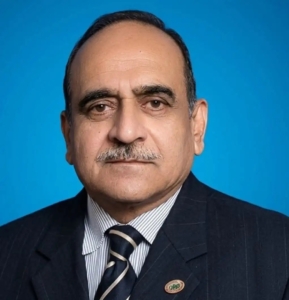
 

But I did not know him first as a chairman or a decorated public servant. I knew him as a teacher who happened to hold the keys to some of the country’s most consequential engineering decisions, and who chose, for reasons I am still grateful for, to hand a few of those keys to me.

I want to remember him the way I actually experienced him — not through the official biography, but through three long afternoons at his house in F-11 Sector, Islamabad, where he taught me something the textbooks never quite manage: how the price of nuclear electricity in Pakistan is actually determined.

Anyone who has sat through a lecture on tariff determination knows how dry the subject can be made to sound — EPC cost, fuel cost, capacity purchase price, energy purchase price, indexation, decommissioning liability. Dr. Butt made none of it dry. He made it a ritual.

Each session began the same way, and the way it began told you everything about the man. There was no walking straight into the numbers. First came tea — always a full spread of dry fruits, delicate sandwiches, fresh fruit, chana chaat, and cappuccino. It was in his drawing room that I had my first Cortado, and my first Mocha, both poured by a man who clearly took as much pride in introducing a good cup of coffee as he did in explaining a heat-rate calculation. Only once the plates were cleared did the real class begin.

He held nothing back. The sessions ran from ten in the morning until nearly four in the afternoon — six hours at a stretch, with no formal lunch break at all. Instead, somewhere past midday, a trolley would appear, loaded with Lahori chanay and naan, and he would keep teaching straight through it, tariff formulas in one breath and the economics of fuel fabrication cost in the next, a piece of naan in hand the whole time. I have sat in university seminars with more structure and far less learned.

What I remember most, though, is the break. Every two hours, without fail, he would stop — not because he was tired, but because he knew I smoked, and he had built an orchard directly across the road from his house for exactly this purpose. We would walk over together, and his waiter would already be there ahead of us, a fresh cappuccino on the table, an ashtray set out with wet tissue paper folded neatly beside it — a small, deliberate touch that told you this man planned for his guests down to the last detail. And it was in that orchard, not at his desk, that the real teaching happened. He would ask me, plainly, to repeat back what I had just understood. Not to test me — to correct me, gently, if I had drifted, and to make sure the idea had actually landed before we walked back inside for the next round.

I was, I suspect, an unlikely student for him to invest that kind of care in. I have never been a person drawn to nuclear energy for its own sake — the physics of it, the fission and the neutrons and the reactor cores, left me largely unmoved. What pulled me toward him was the economics: how a country decides what a unit of nuclear electricity should cost, how the capital recovery on a plant like K-2 or C-3 gets built into a tariff, how fuel cost and EPC cost and decommissioning liability all get stitched together into a number that regulators can defend and the public can pay. That was the language I wanted to learn, and he taught it to me the way he taught everything — thoroughly, patiently, and without ever once looking at the clock.

Looking back, I think that was the most VIP treatment anyone taught by him could have asked for — not a title, not a certificate, but three full days of a man who had chaired the PAEC choosing to spend his mornings, his working lunches, and his smoking breaks making sure a subject I hadn’t cared about a week earlier had become one I could speak on with confidence.

Pakistan will remember Dr. Pervez Butt for KANUPP and Chashma, for the plants he helped design and the institutions he helped build — the Pakistan Welding Institute, the nondestructive testing facility at Taxila, decades spent quietly ensuring that a technically demanding and politically sensitive programme kept working. Those achievements belong to the history books, and they are considerable.

I will remember the orchard. I will remember a Cortado poured by a man who insisted the tea come before the tariff, and a lecture that never stopped even for lunch. That was his real gift — not just what he knew, but how completely he was willing to give his time to make sure someone else knew it too.

Rest well, sir. The lesson stayed.

Similar Posts

  • New provinces or stronger local governments?

    The debate over Pakistan’s administrative structure has returned to the national stage after Interior Minister Syed Mohsin Raza Naqvi suggested that the country should seriously examine the question of creating new provinces or administrative units. Predictably, the discussion immediately descended into familiar political slogans. Some portrayed the proposal as a threat to federalism, others embraced it as the long-awaited solution to governance failures. Between these two extremes lies a far more important question: what does the Constitution of Pakistan actually permit, and what course best serves national unity at a time of unprecedented regional instability? The timing of the debate is significant. Pakistan today faces persistent security challenges in Balochistan and Khyber Pakhtunkhwa, constitutional sensitivities relating to Azad Jammu and Kashmir, continuing political polarisation, and a rapidly deteriorating strategic environment as conflict in the Middle East threatens to reshape regional geopolitics. In such circumstances, constitutional reform should not be driven by political expediency. It must be guided by constitutional principles, empirical evidence and the long-term interests of the federation. The Constitution of islamic Republic of Pakistan is neither silent nor rigid on the question of creating new provinces. Article 1 recognises Pakistan as a federation consisting of provinces and territories whose limits may be altered in accordance with the Constitution. However, Article 239(4) places an important constitutional safeguard on any proposal affecting provincial boundaries. No constitutional amendment that alters the limits of a province can become law unless, in addition to obtaining the prescribed parliamentary majority, it is approved by not less than two-thirds of the members of the provincial assembly concerned. This requirement reflects the federal compact. Provinces are not merely administrative divisions; they are constitutional partners in the federation. Consequently, no province can be divided, merged or otherwise altered through a simple parliamentary majority in Islamabad. Provincial consent is itself a constitutional requirement. This constitutional position explains why proposals for South Punjab, Bahawalpur, Hazara or other new provinces have repeatedly surfaced over the past two decades but have never matured into constitutional reality. Various drafts, often described collectively as proposals for a Twenty-Eighth Constitutional Amendment, have circulated in political and academic circles. They have contemplated the creation of additional provinces together with corresponding adjustments in Senate representation, National Finance Commission allocations, provincial institutions and administrative structures. Yet none has commanded the political consensus demanded by Article 239. Constitutional design has proved stronger than political rhetoric. The debate, however, should not begin with Article 239. It should begin with Article 140A. Inserted through the Constitution (Eighteenth Amendment) Act of 2010, Article 140A obliges every province to establish a local government system and devolve political, administrative and financial responsibility and authority to elected representatives. This is not merely a recommendation. It is a constitutional command. Unfortunately, after even lapse of 16 years, this remains a constitutional provision that has been implemented (sic) with greater reluctance. Successive provincial governments, irrespective of political affiliation, have preferred centralised provincial bureaucracies over constitutionally empowered local governments. Elections have been delayed, powers diluted, finances retained by provincial capitals and administrative authority reclaimed through executive control. The result is that Pakistan continues to speak the language of devolution while practising administrative centralisation. Before demanding new provinces, one must ask a more fundamental question: has Pakistan sincerely implemented the Constitution it already possesses? The empirical evidence nevertheless deserves serious attention. Pakistan has experienced extraordinary demographic transformation since independence. The country’s population has increased from approximately 34 million in the early years of independence to over 255 million today, yet the number of provinces has remained unchanged. The presentation recently unveiled on constitutional and administrative reforms demonstrates this remarkable contrast and argues that governance structures have failed to evolve alongside population growth. It further notes that each of Pakistan’s four provinces administers populations exceeding those of many sovereign countries and that, among major federations, Pakistan places an unusually large administrative burden upon each provincial government. Whether one accepts every conclusion of that presentation/study or not, the underlying constitutional question cannot be ignored. Effective governance depends not merely upon constitutional powers but upon administrative reach. A provincial capital hundreds of kilometres from remote districts inevitably encounters greater challenges in delivering education, healthcare, policing and justice than a more decentralised system. The presentation also links many development indicators with administrative distance from provincial capitals, suggesting that constitutional debate should be informed by measurable governance outcomes rather than political sentiment alone. However,  administrative efficiency is only one dimension of federalism. The second is national integration. Pakistan’s history demonstrates that provincial identities become dangerous only when constitutional grievances remain unresolved. Conversely, attempts to suppress legitimate constitutional debate merely strengthen centrifugal tendencies. The Constitution therefore wisely provides a peaceful and democratic mechanism through which territorial adjustments may be considered while ensuring that no province loses its constitutional status without its own consent. This balanced approach deserves preservation. Current security realities also counsel prudence. Parts of Balochistan continue to face organised violence supported by hostile external actors. Khyber Pakhtunkhwa confronts renewed terrorist activity along its western frontier. Azad Jammu and Kashmir occupies a unique constitutional and strategic position within Pakistan’s national policy on Jammu and Kashmir. Simultaneously, the widening conflict across the Middle East has introduced new uncertainties affecting regional security, energy supplies and geopolitical alignments. These circumstances require a stronger federation rather than a weaker one. That objective, however, should not be confused with excessive centralisation. Strong federations are built upon responsive institutions, constitutional legitimacy and public confidence. Citizens judge the State not by constitutional theory but by whether schools function, hospitals remain open, justice is delivered promptly and basic civic services reach every district. Equally important is the responsibility of political leadership. Statements by political actors—including repeated interventions by Maulana Fazlur Rehman on constitutional and provincial questions—must be evaluated through the prism of constitutionalism rather than political confrontation. Democratic disagreement is legitimate, but constitutional discourse should unite rather than inflame an already polarised polity. The Constitution provides lawful mechanisms for reform. Political mobilisation should reinforce those mechanisms, not substitute for them.

  • Literature for Life: The Classics That Continue to…

    Every few months, someone declares that people no longer need literature. The argument usually sounds convincing enough. We live in a world of instant news, endless social media, podcasts, and artificial intelligence. Information arrives faster than ever before. Why spend days with a novel when an opinion can be delivered in mere seconds? Yet the strange thing is that the more information we have, the more relevant literature seems to become. Hand someone a novel written a century ago, and they might discover their own world reflected in its pages, including many of the same fears and uncertainties they face today. That is more than a coincidence. It is literature doing exactly what it has always done, peering beyond the moment in which it was written. Literature offers more than a compelling story and reminds us why it continues to resonate till date. Many admire literature for its alluring language and craft. Others value it for the evolutionary nature and futuristic tendencies. That’s the side this leans toward. Literature stays with us because it explains the world we’re still trying to make sense of. Every generation believes its experiences are unique. Pandemics feel unprecedented, propaganda seems like a modern invention and the world today evolves at a pace that feels unlike anything before it. Yet long before any of this dominated the headlines, writers had already imagined it, warned about it, or lived through versions of it themselves. Literature does not simply reflect its own era. It reaches far beyond it, exploring aspects of human nature that continue to surface despite changing circumstances. When COVID-19 hit in 2020, thousands of readers picked up a novel from 1947 and discovered echoes of the present. Albert Camus’s The Plague, set in the Algerian city of Oran, seemed to describe their own lives with strange precision; the empty streets, the panic-buying, the denial before the lockdowns, and that eerie numbness that emerged as the crisis dragged on. Camus never saw a pandemic like this coming. What he understood, decades before any of us lived through one, was how people respond when disruption takes hold. George Orwell did something similar, except his warning arrived even earlier. Nineteen Eighty-Four gave us words we now use so casually and forget they came from fiction: surveillance, doublethink, thoughtcrime. Orwell imagined a state where truth could be manipulated and every move was watched. Decades later, in a world run by data and constant tracking, his descriptions still feel eerily familiar. Pakistani writers were making this same point long before it became the world’s concern. Saadat Hasan Manto’s Toba Tek Singh imagined a man stranded between two countries decades before the world started talking about refugees and border crises. Qurratulain Hyder’s Aag Ka Darya traced the same cycle of displacement and rebuilding that we’re still watching today, whether in Gaza, Ukraine, or Afghanistan, revealing how human beings survive conflict no matter which war or which century it happens to be. What makes literature so accurate over time is not mysticism. Writers were not fortune-tellers. They were keen observers of human nature. They sensed that while the world keeps reinventing itself, people rarely do. A writer who understands these instincts deeply enough, produces literature that seems to anticipate futures it was never meant to witness. That same power demands caution. Literature can expose hidden truths just as easily as it can be used as a tool of persuasion. Throughout history, poems, novels, and stories have been used to shape how people think, feel, and behave. Rudyard Kipling’s The White Man’s Burden is a reminder of how easily powerful narratives can turn domination into duty. It shows how persuasive language can make unequal power structures appear virtuous and troubling ideas sound noble. The same dynamic persists today, whenever power seeks a more palatable language to conceal itself. The Soviet Union promoted an entire genre known as socialist realism, where literature was not expected to explore human complexity but to glorify the state and inspire loyalty. Even something as ordinary as a school curriculum works the same way. The books chosen for students are never just neutral stories. They are early lessons that shape young minds, teaching them which histories to trust and which values to hold onto. This is the quiet, manipulative side of literature that doesn’t need to announce itself, yet still decides how an entire generation views the world. Literature deserves more than passive consumption. The same stories that broaden our understanding can also be used to influence and persuade. That makes reading critically, asking who wrote something and why, not just an academic skill, but a way of navigating a world built on narratives. What keeps literature alive is not tradition, nostalgia, or academic praise. It is the moment of recognition it still delivers. When a writer long gone can describe anxieties, conflicts, and dilemmas that feel unmistakably current, how many of our modern concerns are merely old questions in new disguises?

  • Man: The Cruelest Animal?

    “Remember your humanity, and forget the rest”— Bertrand Russell and Albert Einstein, The Russell–Einstein Manifesto, 1955   On the morning of August 6, 1945, Hiroshima was a living city. Children were preparing for school, workers were beginning another day, meals were being eaten, conversations remained unfinished and countless ordinary plans had been made for an evening many would never see. At 8:15 am, a single atomic bomb changed all that. In seconds, a city became an inferno and human ingenuity demonstrated what it was capable of when divorced from human conscience. Three days later, Nagasaki suffered the same fate.   More than eight decades have passed, yet the mind still struggles to comprehend what happened. Not merely the scale of destruction, but the extraordinary contradiction it represented. Human beings had acquired sufficient knowledge of physics to split the atom but apparently insufficient wisdom to prevent that knowledge from being used to incinerate fellow human beings. This raises an uncomfortable question: is man the cruellest animal?   Animals kill. Nature is certainly not a sentimental place. Predators hunt for food, animals fight over territory, mates and dominance, and some species occasionally kill for reasons other than immediate survival. Yet no creature other than Homo sapiens has transformed killing into an organised industry. No animal constructs factories to manufacture weapons capable of destroying entire cities. None develops elaborate ideologies to justify mass slaughter, calculates acceptable casualties or decorates members of its species for becoming exceptionally efficient at killing others. Only the supposedly “wise man” has achieved such sophistication.   The atomic bombings cannot, of course, be examined outside the horrors of the Second World War. Nazi Germany had perpetrated the holocaust. Imperial Japan had committed horrific atrocities across Asia. Cities had already been devastated by conventional and incendiary bombing. Millions of soldiers and civilians were dead. Defenders of the decision to use atomic weapons maintain that the bombs accelerated Japan’s surrender and avoided an invasion that could have caused enormous casualties on both sides. Critics have long questioned whether alternatives existed and whether the second bombing, in particular, was necessary.   Historians may continue debating these questions. Humanity must confront another. At what point does military necessity cease to provide moral shelter for the deliberate infliction of unimaginable suffering upon civilians? Perhaps the most disturbing legacy of Hiroshima and Nagasaki is not simply that atomic bombs were used. It is that humanity had reached a stage where the destruction of enormous number of ordinary people could be incorporated into strategic calculation. Human beings had become numbers. Therein lies the first requirement of organised cruelty: dehumanisation.   Before we can inflict unbearable suffering upon others, we must somehow stop seeing them as ourselves. They become the enemy, an alien race, religion, nationality, sect or ideology. Children become unfortunate collateral damage. Dead bodies become casualty figures. Destroyed neighbourhoods become strategic targets. Language performs the anaesthesia that conscience might otherwise refuse. Once human beings are converted into categories, almost anything becomes possible.   History is littered with evidence. Colonial atrocities required subject populations to be regarded as inferior. Ethnic cleansing requires neighbours to become enemies. Genocide requires individual faces to disappear behind collective labels. Modern warfare similarly becomes easier to tolerate when suffering is viewed through satellite images rather than through the eyes of a mother holding her dead child. Perhaps that explains one of the strangest contradictions of our species. The same human hand that tenderly caresses a newborn can press the button that launches a missile towards somebody else’s newborn.   The same species that produces Mozart and Rumi, builds hospitals, writes poetry, explores distant planets and risks lives rescuing strangers from disasters also constructs concentration camps, torture chambers, chemical weapons and nuclear warheads. How can such tenderness and such barbarity inhabit the same creature?   We proudly call ourselves civilised. Yet civilisation cannot merely mean technological advancement. If anything, technology without corresponding moral advancement makes human beings more dangerous, not less. A primitive weapon can kill one person. Human intelligence created weapons capable of killing millions. Science gives us power. It does not necessarily give us wisdom. That distinction should haunt us.   The scientists who unlocked the secrets of the atom demonstrated one of humanity’s greatest intellectual achievements. But when knowledge becomes separated from ethics, achievement can become catastrophe. Ten years after Hiroshima and Nagasaki, Bertrand Russell and Albert Einstein, together with other distinguished scientists, issued their famous manifesto warning humanity about nuclear war. Their appeal was breathtakingly simple: “Remember your humanity, and forget the rest.”   What an extraordinary plea to have to make to human beings. Remember that the person across the border is human. Remember that the child beneath the rubble is human. Remember that the mother screaming outside a hospital is human. Remember that beneath uniforms, flags, religions, ethnicities and nationalities beats essentially the same vulnerable human heart.   Yet eighty-one years after Hiroshima, humanity still maintains nuclear arsenals capable of inflicting destruction on a scale those who witnessed 1945 could scarcely have imagined. Governments speak comfortably of deterrence, strategic balance, tactical nuclear weapons and acceptable responses. Behind this sophisticated vocabulary lies an elementary reality: we have created instruments capable of annihilating ourselves and entrusted their possible use to human beings subject to anger, ambition, miscalculation and fear. What could be more absurd?   Perhaps the problem lies in our understanding of civilisation itself. We measure progress through economic growth, scientific discovery, technological innovation and military capability. We celebrate artificial intelligence, space exploration and machines capable of performing tasks once thought impossible but are we becoming better human beings? Can technological advancement truly be called progress if our moral consciousness remains primitive?   The jungle may be brutal, but it possesses no Hiroshima, no Nagasaki, no Bosnia, no Rwanda and no Gaza. Animals do not convene conferences to plan genocide. They do not manufacture propaganda to persuade millions to hate strangers. They do not teach generations to inherit ancient hostilities. Above all, they have never developed

  • Cultivating Peace, Instead of Controlling Violence

    Pakistan today stands at a defining moment where acts of intolerance, hate speech, mob violence, sectarian divisions and ideological polarisation are increasingly visible across both physical and digital spaces. While not every expression of intolerance translates into terrorism, history demonstrates that violent extremism rarely appears overnight; it gradually develops through unchecked prejudice, manipulated narratives and the normalisation of hatred. Every incident of mob lynching, religious intolerance, political violence or online radicalisation serves as a reminder that extremism is fundamentally a societal challenge before it becomes a security challenge. This reality demands a fundamental shift in national thinking from merely controlling violent behaviour after it erupts to cultivating a culture of peace, critical thinking, social cohesion and democratic values that prevents extremism from taking root in the first place. The controlling approach has historically dominated Pakistan’s national security doctrine. Following the Army Public School tragedy in December 2014, the National Action Plan (NAP) became the country’s principal counterterrorism framework. Security operations such as Zarb-e-Azb and Radd-ul-Fasaad significantly weakened organised terrorist networks and restored the writ of the state in several conflict-affected regions. These achievements cannot be underestimated. However, extremism is not merely a security problem; it is a social, psychological, educational and communication challenge. Arresting militants may eliminate immediate threats, but it does not necessarily eliminate the narratives, grievances and social environments that produce future extremists. Modern countering violent extremism (CVE) literature increasingly supports prevention over reaction. International experience from countries such as Indonesia, Singapore, Denmark and Morocco demonstrates that sustainable peace emerges through education reforms, community engagement, youth empowerment, digital literacy, responsible religious discourse and economic inclusion. Pakistan itself has gradually begun recognising this shift. The recently approved National Prevention of Violent Extremism (NPVE) Policy reflects an important transition from exclusively kinetic responses towards prevention, rehabilitation and resilience-building. The policy introduces a comprehensive prevention framework emphasising community participation, education, strategic communication, rehabilitation and institutional coordination. At the federal level, the National Counter Terrorism Authority (NACTA) remains Pakistan’s principal coordinating institution for counterterrorism and counter-extremism policies. Established under the NACTA Act 2013, its mandate extends beyond intelligence coordination to include research, policy development, monitoring the National Action Plan, public awareness, strategic communication and prevention of violent extremism. During the past two years, NACTA has expanded partnerships with universities, international organisations and civil society. It has launched the National Prevention of Violent Extremism Policy, strengthened monitoring mechanisms, promoted research through the Pakistan Journal of Terrorism Research, signed academic partnerships and introduced public engagement initiatives such as peace festivals and youth outreach programmes. Despite these encouraging developments, NACTA continues to face structural limitations that reduce its overall effectiveness. Institutional coordination between federal and provincial stakeholders remains inconsistent. Budgetary constraints, staffing shortages and overlapping mandates with provincial Counter Terrorism Departments often weaken implementation. Many of its policy recommendations remain stronger on paper than in practice because execution depends upon provincial governments. Furthermore, public visibility of NACTA remains limited. Most Pakistani citizens know little about its preventive work, despite the fact that ideological resilience requires continuous public engagement rather than bureaucratic coordination alone. Independent researchers have similarly concluded that Pakistan’s transition towards non-kinetic counter-extremism is promising but still constrained by implementation deficits and institutional fragmentation. Punjab has taken a significant institutional step by establishing the Punjab Centre of Excellence on Countering Violent Extremism (CoE-CVE), which recently received autonomous legal status through provincial legislation. The decision reflects an important understanding that violent extremism cannot be addressed solely through policing. The Centre has been designed to function as a policy, research, training and coordination platform supporting prevention, community resilience and strategic communication. Its transformation into an autonomous institution is expected to strengthen institutional continuity, inter-agency coordination and evidence-based policymaking. The Centre represents one of Pakistan’s most important experiments in moving from control towards cultivation. Instead of focusing exclusively on arrests and surveillance, it aims to understand why individuals become vulnerable to extremist narratives in the first place. Universities, educational institutions, media organisations, religious scholars, psychologists and community leaders are increasingly recognised as partners in prevention rather than passive observers. This multidisciplinary philosophy aligns with global best practices, where prevention begins in classrooms, families, workplaces and digital platforms long before security agencies become involved. Nevertheless, the Punjab Centre of Excellence also faces considerable challenges. Being a relatively new institution, measurable outcomes remain limited. Much of its work has concentrated on institutional development, stakeholder engagement and policy formulation rather than long-term behavioural impact. Evaluating prevention programmes presents an inherent methodological challenge because successful prevention often means that negative events never occur. Unlike policing statistics, cultivation outcomes such as increased social cohesion, reduced intolerance or strengthened democratic resilience require longitudinal research and sophisticated impact measurement. Pakistan’s educational system presents another critical weakness. Schools continue to prioritise examination performance while giving limited attention to civic education, media literacy, conflict resolution, emotional intelligence and critical thinking. Extremist organisations thrive where young people lack analytical skills and become vulnerable to simplified narratives dividing society into absolute categories of believers and enemies. A cultivation approach therefore requires curriculum reforms encouraging dialogue, diversity, constitutional values and peaceful disagreement. The digital environment further complicates Pakistan’s counter-extremism landscape. Radicalisation increasingly occurs through encrypted messaging applications, algorithm-driven social media platforms and transnational online networks. Traditional security institutions cannot effectively monitor every digital interaction. Instead, digital resilience must be cultivated among citizens themselves. Media literacy programmes teaching young people to identify misinformation, hate speech, manipulation and extremist propaganda should become integral components of educational policy. Economic marginalisation also deserves attention. Poverty alone does not create terrorists, but unemployment, social exclusion and limited upward mobility increase vulnerability to recruitment by extremist organisations offering identity, purpose and financial incentives. Pakistan’s youth bulge therefore represents both an opportunity and a risk. If properly educated, employed and politically included, young Pakistanis can become the country’s greatest peacebuilders. If neglected, the same demographic may remain susceptible to polarisation and radical narratives. Political polarisation constitutes another growing concern. Public discourse increasingly rewards confrontation over consensus. Television debates, social media campaigns and partisan rhetoric often

  • Pakistan’s Next Strategic Advantage: From La…

    By Tahseenullah For decades, labour migration in Pakistan has largely been viewed as a response to unemployment and poverty. While this perspective has served its purpose, it no longer reflects the realities of today’s global economy. In the twenty-first century, labour mobility has become far more than an economic necessity—it is a strategic investment in human capital, national competitiveness and economic diplomacy. Countries that can produce skilled, certified and globally competitive workers will hold a distinct advantage in an increasingly interconnected labour market. As ageing populations, declining fertility rates and persistent labour shortages reshape developed economies, demand for skilled workers is rising across Europe, East Asia and other advanced markets. Pakistan, with one of the world’s youngest populations, is well positioned to seize this opportunity. The real challenge is not whether Pakistan has enough young people willing to work abroad, but whether it can equip them with internationally recognised skills, qualifications, language proficiency and professional competencies that meet evolving global labour market demands. Pakistan’s labour migration journey began with the establishment of the Bureau of Emigration and Overseas Employment in 1971, following the Gulf oil boom. Since then, more than 15 million Pakistanis have migrated through regular channels, contributing significantly to infrastructure, healthcare, construction, transport and service sectors worldwide while improving the livelihoods of millions of families back home. Today, overseas employment remains one of Pakistan’s most important economic assets. According to BEOE, 862,625 Pakistanis migrated for employment in 2023, followed by 725,672 in 2024 and 762,499 in 2025, with early trends indicating sustained international demand in 2026. Meanwhile, the Pakistan Migration Report 2025 and the State Bank of Pakistan estimate workers’ remittances at approximately US$38.3 billion in FY2024–25, representing nearly 9.34 percent of GDP. These remittances strengthen foreign exchange reserves, reduce poverty and support macroeconomic stability. Yet labour migration has rarely been treated as a strategic pillar of Pakistan’s long-term economic planning. The global labour market is undergoing profound change. According to the World Economic Forum’s Future of Jobs Report 2025, demographic shifts, technological advances and the green transition will create millions of new employment opportunities over the coming decade. Healthcare professionals, engineers, IT specialists, skilled technicians, renewable energy workers, construction professionals and caregivers are expected to remain in particularly high demand. Pakistan possesses a valuable demographic dividend, with nearly two-thirds of its population under the age of 30. However, this advantage will only translate into economic gains through sustained investment in education, Technical and Vocational Education and Training (TVET), international certification, digital skills and language training. The challenge is clear. The Pakistan Migration Report 2025 shows that nearly two-thirds of Pakistani migrant workers remain low-skilled or unskilled. While their contribution is invaluable, low-skilled employment often results in lower wages, limited career progression and greater vulnerability to labour market shocks. In contrast, highly skilled migrants generally access better jobs, stronger labour protections and significantly higher earnings. Pakistan must therefore move beyond a traditional labour export model towards a human capital export strategy. Success should no longer be measured simply by the number of workers leaving the country, but by the quality, productivity and global competitiveness of its workforce. Achieving this transformation requires comprehensive reforms. TVET institutions must align training with international occupational standards and labour market needs. Language education in German, Japanese, Korean and Italian, alongside digital literacy, workplace ethics and intercultural communication, should become integral components of workforce development. Market diversification is equally important. While Gulf Cooperation Council countries will remain Pakistan’s primary labour destinations, excessive dependence on one region exposes the country to geopolitical uncertainty and labour market fluctuations. Pakistan should actively expand regular labour mobility partnerships with Europe, Japan, South Korea, Australia and Canada, where structural labour shortages continue to grow. Government-to-government labour mobility agreements should become a strategic priority. Such partnerships can enhance transparency, reduce recruitment costs, improve worker protection and strengthen employer confidence in Pakistani talent. Simultaneously, Pakistan should pursue mutual recognition of qualifications and internationally accepted skills certification to facilitate smoother labour market integration. Institutional coordination will also be essential. The Ministry of Overseas Pakistanis and Human Resource Development, together with the NAVTTC, provincial TEVTAs, Overseas Employment Promoters, the Ministry of Foreign Affairs and Pakistan’s overseas missions, should implement an integrated national labour mobility framework supported by labour market intelligence, digital recruitment platforms and evidence-based policymaking. Pakistan can draw valuable lessons from the Philippines, whose migration governance combines ethical recruitment, mandatory pre-departure orientation, comprehensive worker welfare and strong overseas support systems. Adapting these practices would strengthen Pakistan’s reputation as a reliable source of skilled and protected migrant workers. At the same time, addressing irregular migration must remain a national priority. Preventing dangerous migration routes requires expanding legal migration opportunities, strengthening career counselling, improving public awareness, dismantling human smuggling networks and ensuring aspiring migrants have access to reliable information and affordable recruitment services. Labour migration should no longer be viewed solely as a means of reducing unemployment or increasing remittances. It should be recognised as a cornerstone of Pakistan’s economic diplomacy, human capital development and long-term growth strategy. The countries that will lead the future of global labour mobility will not necessarily be those with the largest populations, but those that invest in producing highly skilled, internationally certified and globally competitive talent. Pakistan has already demonstrated its ability to contribute to the global workforce. The next step is to move beyond exporting labour to exporting talent. By investing in skills, strengthening institutions, diversifying labour markets and promoting ethical, well-governed migration, Pakistan can transform its demographic dividend into one of its greatest strategic advantages. The world is searching for talent. Pakistan has the youth. What it now needs is the vision to turn that potential into global human capital leadership. Tahseen Ullah is a development and migration sector practitioner specializing in labour mobility, migration governance, education and child protection.

  • Greatest national asset

    Quite surely and certainly, Pakistan’s youth are our greatest national asset and, more importantly, the foundation of the country’s future growth. With nearly 70 percent of Pakistan’s total population below the age of 30, making the much required investment as such was not only a social responsibility but also an economic necessity. Visionary Prime Minister Muhammad Shehbaz Sharif’s focus was centred on productive employment, empowering Pakistani youth to become job creators instead of job seekers. Under his leadership and guidance, youth empowerment has been placed at the centre of the Federal Government’s development agenda. According to the relevant facts and figures in this regard available from the official sources concerned, the Federal Budget for the just commenced new financial year 2026-27 duly reflects this commitment through the largest-ever investment in Pakistan’s youth development, as Rs 40.58 billion have been directly allocated for the Prime Minister’s Youth Programme initiatives. Additionally, Rs 21 billion have also been provided for the implementation of a number of youth-focused programmes by various ministries/divisions of the Federal Government. Such a huge allocation in the new federal budget for youth development quite obviously reflects the Federal Government’s determination to provide young Pakistanis with equal opportunities in education, skills development, entrepreneurship, innovation, sports, and leadership. Federal budget allocations will hopefully further strengthen youth participation in national development. The Federal Government is in the process of building an ecosystem where young Pakistanis can create businesses, generate employment, and contribute to economic growth. This appreciable ecosystem is being built through productive employment initiatives, entrepreneurship support, skills development, and easy and comfortable access to financial resources. The youth-focused prioritized areas in the federal budget directly impacting the future of Pakistan’s young population included allocation of Rs 22.4 billion for the PM’s Youth Business & Agriculture Loan Scheme for promoting entrepreneurship and economic independence; Rs 9.9 billion for the Youth Skills Development Programme to provide market-driven technical and digital skills; Rs 3 billion for the Pakistan Education Endowment Fund for supporting talented students from disadvantaged backgrounds; another Rs 3.00 billion for IT Startups and Venture Capital support for accelerating Pakistan’s digital economy; Rs 700.00 million for Youth Development Centres; Rs 500.00 million for the Talent Hunt Youth Sports League; Rs 400.00 million for the National Volunteer Corps; Rs 300.00 million for E-Sports Arenas and Training Centres; Rs 250.00 million for National Innovation Awards; and Rs 50.00 million for the Green Youth Movement. Additionally, Rs 24.48 billion have also been allocated for expansion of the Daanish Schools Network across the country for improving access to quality education. Recognizing the fast emerging fact that the modern global economy rewards skills, innovation, and adaptability, the Federal Government has also allocated more than Rs 9.9 billion for technical, digital, and professional skills development under the PM Youth Programmes. Young Pakistanis are being trained through the Youth Skills Development Programme in fast emerging technologies including artificial intelligence (AI), blockchain, data science, and other high-demand sectors, along with traditional trades aligned with market needs. The objective is to bridge the gap between education and employment and to prepare the youth to avail and explore opportunities both within Pakistan and in foreign countries around the globe. The PM’s Youth Business & Agriculture Loan Scheme duly represents the Federal Government’s commitment to ensure entrepreneurship-led growth. Through provision of interest-free and low-markup financing, the scheme is enabling young Pakistanis to establish their own businesses, expand agricultural ventures, launch startups, and become employers. This is an ongoing initiative which has demonstrated quite significant impact, as till now Rs 365.5 billion have been disbursed to over 625,740 borrowers, which has contributed to the creation of nearly 1.96 million jobs. It is pertinent to mention here that while it is hoped that funds will be allocated for the continuation of the scheme during financial year 2026-27 in an impressive and progressive manner, thereby further strengthening entrepreneurship, small and medium enterprises (SMEs), agriculture, and innovation, quite appreciably a 25 percent quota has been reserved for women to ensure that young women also have equal access to financing and economic opportunities. The PM’s Youth Laptop Scheme is also an ongoing initiative under which six lakh laptops have so far been distributed among talented students across Pakistan. Under its Phase-IV, another one lakh laptops are being distributed. In the next phase, PM’s Chromebooks will be distributed to students nationwide, including those hailing from underserved and grassroots communities, in order to further enhance digital learning opportunities. Digital transformation is a key priority of the Federal Government’s youth development agenda. The PM’s Digital Youth Hub is Pakistan’s first national youth platform for connecting young people with opportunities across the PM’s Youth Programmes and the 4Es Framework, including education, employment, scholarships, internships, entrepreneurship, and technology. With already more than 800,000 registered users, over 16 million downloads, and over 114,000 job listings, the platform is ensuring transparent and merit-based opportunities. Sports development is another priority of the Federal Government. More than 300,000 young athletes have already so far participated in the PM’s Youth Talent Identification activities. The Federal Government is expanding sports disciplines from 12 to 23 while also establishing professional facilities. The approval of Pakistan’s first National E-Sports Policy in the very near future will further open opportunities in the rapidly growing global digital entertainment industry. Furthermore, the National Youth Employment Policy aims to create sustainable employment opportunities for Pakistan’s youth, including 32.4 million NEET (Not in Education, Employment, or Training) youth, by aligning skills development with market demands and high-growth sectors. The policy commendably focuses on youth entrepreneurship, workforce readiness, digital skills, and expanding access to decent employment opportunities, with a target of achieving 100 percent absorption of new labour-force entrants by 2030 and also increasing female labour force participation to 35 percent. Further, the National Adolescent & Youth Policy empowers Pakistan’s youth aged 10-29 years through education, skills development, employment, health, and social inclusion. The policy has been developed through consultations with 50/60 thousand youth across 40+ cities and provides a framework for youth development and nation-building.

Leave a Reply

Your email address will not be published. Required fields are marked *