
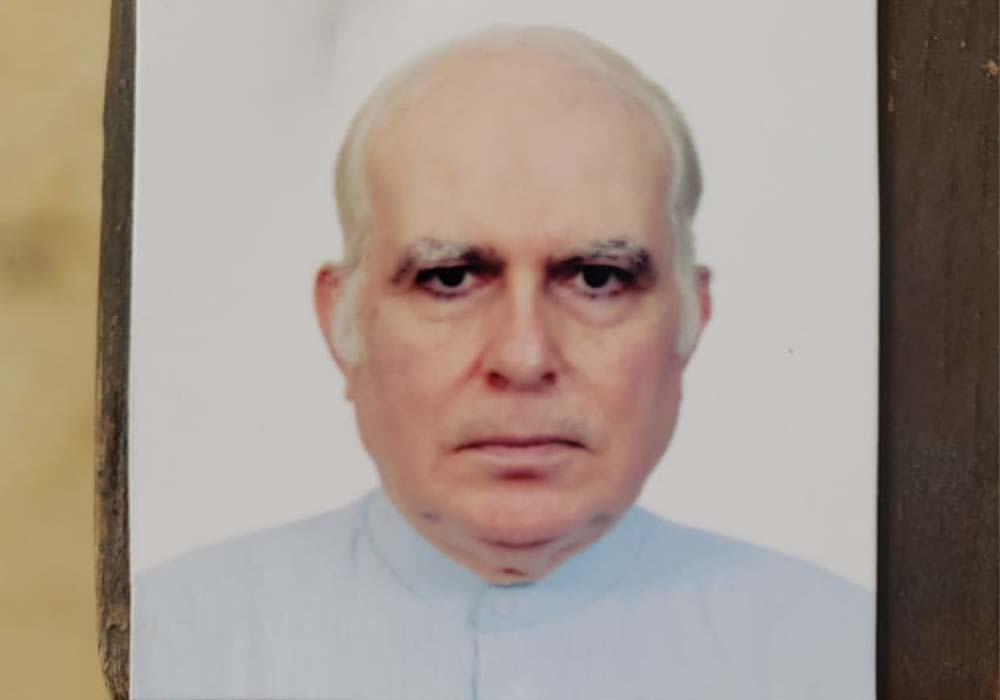
change must

Change we must

In a world driven by technology, only change is permanent. Change we must, but how? Transition from one system to another is perhaps the biggest challenge that we have not been able to cope with. Half-baked solutions with underage players cannot deliver. Reminds me of Einstein’s famous quote: “We cannot solve our problems with the same thinking we used when we created them.” Steve Jobs, one of the greatest technologists of the 21st century, went even further by saying: “Either lead or get out of the way.”

A few years back I was doing some research on universities and their impact on setting the course of nations. Syed Ahmed Khan’s Aligarh Muslim University stood out. It produced the Change Managers who not only led the freedom movement but also had the capacity to sustain it. The Islamic Republic of Pakistan (IRP) desperately needs such individuals who can understand and then manage the needful. In the year 1875 he founded the MAO College (Mohammadian Anglo Oriental College) which later grew into a university in the year 1920. He passed away in 1898 but the institution grew. Later on, Allama Iqbal led the movement, and finally it was Muhammad Ali Jinnah who succeeded in carving a new homeland in August 1947 for the Muslims of the Indian Subcontinent. Unfortunately, he did not live long enough to lay the foundations of the new state, but he did leave clear guidelines for the inherited establishment to follow (Armed Forces, Bureaucracy).

After taking over in October 1999, Pervez Musharraf created a think tank called the National Reconstruction Bureau (NRB). Headed by Lt. Gen. Tanvir Naqvi, it was located in the Chief Executive (CE) secretariat. The task was to design and execute political and administrative reforms in the country. I was invited to give my input. Naqvi Sb was very confident about delivering meaningful change. His main focus was on devolution of power. As a student of management, I asked him a simple question: “Who will implement his plan?” Bureaucracy, of course, was his quick reply. He did not have an answer to my second concern: “Why will they implement a plan which reduces their power?” He then decided to get rid of me by saying if I wanted to discuss implementation details, I should go to the third floor to the CE’s office. Finally, he stepped down and was replaced by a young novice who lacked the experience and clout to deliver meaningful change.

Then there was another initiative called the National Commission for Human Development (NCHD), led by a pediatrician from a small town in Oregon. The worthy Dr assured the CE that he would manage funds from abroad while the local expenses were to be provided by the Government of Pakistan (GOP). Various centers were established across the country and staff recruited. While GOP provided the internal resources, the external help never came despite fundraising efforts abroad. The CE was convinced that the two sectors were well covered, but they were not. Finally, NCHD became a liability and was shut down and the staff laid off.

During my term as Chairman, Pakistan Science Foundation (PSF), I lobbied for technocrats to head technical ministries, which was not well received by the powers that be. Commercialization and application of research is the biggest challenge faced by the R&D sector of the country. When I was denied an extension after the completion of my term, I paid a farewell visit to the Secretary MOST (Ministry of Science and Technology). It was a friendly meeting; the Secretary appreciated my work but complained that I did not follow his guidelines. While leaving, he pointed at the board where the names of his predecessors were written. I still remember his words: “Only our names make it here.” He did not like my spontaneous response: “Time will tell,” and it did. My lobbying prevailed; a retired Chairman of PAEC (Pakistan Atomic Energy Commission) replaced him. Though he had no commercial background, I decided to guide and support him. He recommended major investments in creating public sector entities like HMC III, run by PAEC, for meeting their equipment needs. At best, only pilot plants were viable for transfer of technology from laboratory to industry. He was unable to get the funds. As such, his term ended with no major breakthrough, and business as usual continued.

Pakistan has a federal structure of governance. Federating units are diverse with differing needs. I am in favor of devolution, but the task on hand is not simple. The forces of status quo are too entrenched. Change Managers are needed at all levels. Complexities have to be understood and managed. There has to be consensus on the road map. Islamabad has an archive of failed plans. The same mistakes should not be repeated again. The first challenge is to find qualified individuals with solid re-engineering experience to lead the crusade. Einstein and Jobs were two brilliant brains of their times; we must value their outlook to move forward and avoid chaos and confusion. Oversimplification of the task at hand must be avoided.

Similar Posts

  • The Middle Ground Shifts: How Gaza, Riyadh, and Te…

    For much of the past half-century, the Middle East was described in binaries: Arab and Israeli, Sunni and Shia, American ally and adversary. That framework is no longer sufficient. In the span of 18 months, two events have forced a fundamental reassessment of regional order: a Chinese-brokered handshake between Saudi Arabia and Iran in March 2023, and the eruption of war in Gaza in October 2023. Together, they have set in motion a realignment that is testing old alliances, elevating new mediators, and leaving the future of American-backed normalization efforts deeply uncertain.   The significance extends well beyond the region. How power is distributed between Riyadh, Tehran, Ankara, Cairo and Tel Aviv shapes global energy markets, maritime security in the Red Sea, nuclear non-proliferation, and great-power competition between the United States and China. What emerges is not a new stable order, but a fluid period of transactional diplomacy in which ideology is increasingly subordinated to regime survival and economic interest.   A Rapprochement Brokered in Beijing   The agreement announced on March 10, 2023, that Saudi Arabia and Iran would restore diplomatic relations after a seven-year rupture was remarkable less for its content than for its venue. The deal was negotiated over four days in Beijing, with China acting as guarantor.   The context was pragmatic. For Saudi Arabia, under Crown Prince Mohammed bin Salman, foreign policy has become inseparable from Vision 2030, an ambitious plan to diversify the economy away from oil. That vision requires regional calm. The years preceding the deal saw drone and missile attacks on Saudi oil infrastructure at Abqaiq and Khurais, a costly and inconclusive war in Yemen where Tehran backed the Houthi movement, and rising oil price volatility. De-escalation with Iran offered a path to contain those risks.   For Iran, the calculus was equally material. Facing stringent international sanctions, inflation above 40 percent at the time, and domestic unrest following the death of Mahsa Amini in 2022, Tehran sought diplomatic breathing room and economic openings, particularly with Gulf states that could provide investment and trade channels.   China’s role was both opportunistic and strategic. As the largest buyer of both Saudi and Iranian crude, Beijing had unique leverage and a direct interest in the stability of Gulf shipping lanes. The mediation allowed China to present itself as a responsible alternative to the United States, a power broker capable of delivering outcomes Washington could not, given its lack of diplomatic ties with Iran. Analysts in Washington and Brussels were quick to note the limits of this shift: China did not replace the U.S. security umbrella that Saudi Arabia and the Gulf states continue to rely on, nor did it offer a framework for resolving deeper sectarian and strategic rivalries. The agreement did not settle disputes over Yemen, Syria, Lebanon, or Iran’s nuclear program. It did, however, establish that regional rivals were willing to manage competition through dialogue rather than direct confrontation, and that Beijing was willing to facilitate it.   The Abraham Accords on Hold   If the Saudi-Iran détente represented one vector of realignment, the Abraham Accords represented another. Signed in 2020, the U.S.-brokered agreements that normalized relations between Israel and the United Arab Emirates, Bahrain, and Morocco marked a paradigm shift. They rested on the premise that shared concerns over Iran and shared economic interests could advance Arab-Israeli normalization even without resolution of the Israeli-Palestinian conflict.   By mid-2023, attention had turned to the potential prize of Saudi-Israeli normalization. U.S. officials pursued an ambitious package that would have linked a Saudi-Israel deal with U.S. security guarantees for Riyadh and support for a civilian nuclear program, alongside concessions toward the Palestinians.   The war in Gaza, triggered by Hamas’s attack on Israel on October 7, 2023, which killed approximately 1,200 people and led to the abduction of more than 250 hostages, and followed by Israel’s military campaign in Gaza, which Gaza health authorities report has killed tens of thousands, has fundamentally altered that trajectory.   Saudi Arabia has not abandoned the idea of normalization, but it has recalibrated its public conditions. Riyadh has stated repeatedly that any deal now requires a credible, irreversible path toward a Palestinian state. This position reflects both genuine concern over the humanitarian situation in Gaza and a reading of domestic and wider Arab public opinion, where images from the war have generated widespread anger.   For the UAE and Bahrain, which maintained their embassies in Israel throughout the war, the Accords have endured but become more subdued. Economic and security cooperation, particularly on technology, trade, and air defense against Iranian drones, has continued behind closed doors. Public-facing celebration of the accords, however, has largely been suspended. The experience has highlighted a duality: the Accords have proven resilient as state-to-state security arrangements, but fragile as instruments of broader regional integration without progress on the Palestinian question.   Gaza and the Redistribution of Influence   The prolonged conflict in Gaza has accelerated several regional trends. First, it has restored the centrality of the Palestinian issue to Arab diplomacy, after a period when many policymakers assumed it could be sidelined.   Second, it has empowered non-state actors and redefined deterrence. The near-daily exchange of fire between Israel and Hezbollah until a late-2024 ceasefire, attacks on international shipping by the Houthis in the Red Sea that disrupted an estimated 12 percent of global trade at its peak, and direct Iranian-Israeli missile exchanges in April 2024 demonstrated that escalation management has become the defining security challenge of the region.   Third, it has created space for middle powers to mediate. Qatar, alongside Egypt and the United States, emerged as a central mediator in hostage and ceasefire negotiations due to its channels to Hamas. Turkey has sought to leverage its political support for the Palestinian cause while maintaining economic ties with Israel. Oman has continued its quiet role as a back-channel facilitator.   For the United States, the war has illustrated both its indispensability and its constraints. Washington remains the only power capable

  • Imposed War and Imposed Peace Have Failed

    Today, the world faces unprecedented challenges, including the spread of unbridled unilateralism, the weakening of the fundamental principles of the United Nations Charter, the illegal recourse to force, the imposition of unilateral and indiscriminate sanctions, and the instrumental use of economic and financial mechanisms to exert political pressure. Members of the international system, particularly states as its primary actors, must defend multilateralism, respect for national sovereignty, sovereign equality of states, and the rule of law in international relations. Since June 2025, the nation of the Islamic Republic of Iran has experienced its bitterest days. The martyrdom of the Supreme Leader of the Islamic Revolution—as the highest political and religious authority of the Islamic Republic of Iran—the tragic attack on the Minab school resulting in the martyrdom of 168 school children, the testing of America’s latest lethal weapons and cluster missiles in the attack on the city of Lamerd in Fars Province and the indiscriminate assassination of its defenseless people, along with attacks on medical and healthcare facilities, educational environments, and universities, and the continuation of these crimes demonstrate that when a superpower turns rogue, international peace and security are put at risk. By imposing war, the U.S. government has driven several rounds of negotiations with Iran into a deadlock. The mediatory efforts of Pakistan to restore peace and tranquility to the region are commendable, and Iran has respected this vital role. It is crystal clear that wars are always initiated by one side, but ending them requires the presence and role of both warring parties. If the Americans, who imposed this war, desire to end it, they must respect the Pakistan Memorandum of Understanding and stop trying to impose peace on Iran through their own self-authored rules. However, it appears the United States seeks to dictate its demands upon Iran, whether through war or through peace. You cannot have your cake and eat it too. The Americans want everything at once and afford no standing to the opposing side. The blatant violation of the terms of the Pakistan MoU, continued attacks on transportation infrastructure, drinking water facilities, fishing boats, local commercial vessels, meteorological centers, and other civilian infrastructure are clear instances of violations of international law and international humanitarian law, as well as a stark example of the ongoing policy of resort to force and disregard for international obligations. The Islamic Republic of Iran underscores its firm resolve to defend its sovereignty, independence, and territorial integrity. The U.S. government is an untrustworthy and law-defying regime that does not adhere to international rules, regulations, and agreements. For this reason, many political analysts believe that U.S. conduct regarding West Asian regional issues poses a threat to the stability of the international community. What Trump has been asserting since last year regarding a U.S. victory and the defeat of Iranian military forces is merely a strategic mirage; continuing Trump’s self-destructive policies will pull America into a deep quagmire, demonstrating that they lack a proper understanding and perception of Iran’s history and its people. Direct U.S. intervention in the implementation of security and maritime arrangements in the Strait of Hormuz, alongside the re-imposition of a naval blockade, has once again endangered the security of one of the world’s most strategic waterways and disrupted the normal flow of international commercial shipping. The principled policy of the Islamic Republic of Iran has always been grounded in dialogue, diplomacy, good-neighborliness, and regional cooperation. We firmly believe that lasting peace will only be realized when aggression, occupation, threats, and double standards give way to mutual respect, the impartial execution of international law, and genuine commitment to international obligations. Although the Islamabad Memorandum of Understanding was signed by the presidents of both Iran and the United States, neighboring and regional countries—especially the Arab states of the southern Persian Gulf, acting as “Middle Eastern allies” of the U.S. government—are required under Articles 1 and 2 of this agreement to cooperate toward an immediate and permanent end to the war and the establishment and maintenance of peace. These countries must not forget that their territories were used to commit aggression against the Islamic Republic of Iran, and that such acts of aggression persist. Whether the territory of these nations was placed at the disposal of the United States, or the United States exploited their territory against Iran without their consent, makes no difference, as ultimately their facilities and capabilities were utilized against us. Consequently, these states form part of the war front against Iran, and they too must remain faithful to the Pakistan MoU. Brad Cooper, Commander of United States Central Command (CENTCOM), explicitly announced the involvement of several Persian Gulf Cooperation Council (PGCC) member states and Jordan in the United States’ military aggression against Iran. If this claim is merely a falsehood, these countries must officially and transparently refute it. The pervasive insecurity and raging fires across the region are the exclusive byproduct of continuous aggression against Iran, and regrettably, the territory of certain states serves these destabilizing actions. The Islamic Republic of Iran reserves its inherent right to self-defense to protect itself. We hope our neighboring countries reach a common understanding that the actions taken by Iran do not stem from hostility toward regional nations. We all believe that we are neighbors and will remain neighbors. Iran has repeatedly emphasized the logic of a “Strong Region,” believing that the entire region must become powerful—a region capable of resolving its own issues and challenges without relying on foreign forces, which are themselves the source of instability and insecurity. This region is a shared home; its security belongs to all its nations, and everyone must endeavor to create and maintain peace, security, and prosperity.

  • The Mirage of Fragmentation: Territorial Redrawing…

    A familiar and recurring phantom is once again haunting the political and intellectual horizon of Pakistan: the clamor for administrative redistribution and the carving out of new provinces. Whenever structural collapse, economic decay, and institutional governance reach their absolute nadir, the sanctums of power and the opaque enclaves of the establishment begin to chant a singular, predictable refrain. The root of all systemic malady, we are told, lies in the sheer geographical expanse of our existing provinces, and the ultimate panacea is the relentless division of the state. When one scrutinizes the subterranean motives, logical contradictions, and political expediencies governing this discourse, an uncomfortable truth starkly emerges. This persistent endeavor to shift the blame for chronic misgovernance and policy failure onto geographical boundaries, cultural entities, and ethnic identities is merely a resurrection of a time-worn colonial playbook—a deliberate diversion designed to distract the citizenry from real structural grievances while consolidating the apparatus of absolute control. History bears poignant witness to the reality that whenever ruling elites fail to mask their administrative ineptitude, systemic incompetence, and constitutional deviations, they seek refuge behind the seductive mirage of better governance, transforming the republic into an endless laboratory of reckless experimentation. One is compelled to ask: does any sound mind truly accept the medical wisdom of amputating a limb simply because a malignant ulcer has taken root in the arm? Are the pathologies of governance so superficial that merely redrawing cartographic lines will spontaneously engender distributive justice, institutional merit, the rule of law, and administrative transparency? A careful, unvarnished reading of pre-partition South Asian history reveals that this formula of administrative fragmentation was never a native or democratic innovation. Rather, it was a tested and ruthless instrument of British imperialism, rooted entirely in the cynical philosophy of “Divide and Rule.” In October 1905, when Lord Curzon partitioned the sprawling province of Bengal under the alluring and deceptive banner of administrative efficiency, improved governance, and better public service delivery, the official justification was identical to today’s rhetoric: that managing such a vast demographic mass from a single center was untenable. Yet history dealt a merciless blow to that colonial experiment. The people of Bengal rightly perceived the partition as a direct, existential assault on their linguistic, cultural, and political integrity, rising in fierce and unyielding resistance. Ultimately, the imperial master was forced into an ignominious retreat, revoking the partition of Bengal in 1911. That historical episode remains an enduring monument and a stark warning to contemporary rulers who imagine they can trifle with the collective historical memory, cultural affinity, and geographical unity of a populace under the intoxicating influence of unchecked power. From the very inception of Pakistan, the ruling classes consistently spurned the genuine principles of cooperative federalism, choosing instead to enshrine coercive and authoritarian centralism as the ultimate guarantee of their survival. During the formative decades of the republic, when the delicate question of distributing democratic rights among diverse constituent units arose, the dominant factions lacked the political maturity required for a pluralistic state. Instead, they forced all the western provinces and states into an unnatural straitjacket known as the “One Unit” scheme. That dark chapter of authoritarian engineering laid bare the callous indifference of the ruling elite toward the historical identities and rich diversity of the people, subjugating all societal bonds to the preservation of concentrated power. When that forced administrative edifice eventually fractured under the weight of unrelenting public resistance, the four-province federal structure was reluctantly conceded. Yet the true spirit of federalism was never allowed to breathe. The constitutional imperatives of provincial autonomy were systematically subverted, resources were inequitably distributed, and the unquenchable thirst for hegemony converted the federation into a fragile, crisis-ridden entity perpetually at war with its own constituent parts. Renowned scholars and theorists of public administration and cooperative federalism universally agree that when any sub-national unit exceeds optimal parameters in territory and population, it inevitably succumbs to bureaucratic inertia and administrative paralysis. According to global academic consensus, effective public service delivery demands a balanced proportional equilibrium between geography and demography, ensuring that the writ of the state and essential services penetrate even the most peripheral districts. However, the high-performing federal democracies of the world—such as the United States, Canada, Australia, or Germany—do not achieve excellence in governance merely because their constituent units happen to be geographically compact. They succeed because they rigorously enforce the foundational principle of **Subsidiarity**, which dictates that governance decisions must always be executed at the lowest possible tier capable of addressing them, rather than being arrogated by a distant center or provincial capital. Conversely, the powerful elite who orchestrate policy from behind the veil in Pakistan remain profoundly detached from this philosophical prerequisite. The core issue here is not the mere physical size of a province; it is the centralization of coercive power, deep-seated fiscal distortions, and a bankrupt political intent. In a country like Pakistan, where provinces already depend abjectly on federal transfers through the National Finance Commission (NFC) Award, attempting to carve out new provinces without addressing the fundamentals of fiscal federalism will only exponentially multiply the economic burden. If one merely replicates provincial capitals, bloated cabinets, and superfluous administrative secretariats without dismantling the underlying corruption, nepotism, and systemic incompetence, the public will find no relief from their miseries. Instead, the state will be pushed deeper into fiscal insolvency and bureaucratic suffocation. This brings us to the most fundamental and inescapable question: if four provinces were to be multiplied into eight, sixteen, or thirty-six administrative units tomorrow, would traditional political parties magically vanish? Would the actors occupying the corridors of power in these new provinces descend from another planet, or would they simply be the identical political dynasties and entrenched interest groups of the Pakistan Peoples Party, the Pakistan Muslim League, or Pakistan Tehreek-e-Insaf donning new nameplates? When the foundational structural architecture, the prevailing political culture, and the patronage networks of the elite remain utterly unaltered, how can the mere shifting of administrative borders dissolve the cancer of corruption, the

  • Shah Abdul Latif Bhittai: A Multifaceted Poet

    Shah Abdul Latif Bhittai was one of the most multifaceted poets of the subcontinent. The scope of his poetry covers various areas such as peace, humanity, humility, spirituality, patriotism, patience, struggle, and many other important aspects of human life. The light of his poetry reaches the minds and souls of people belonging to different walks of life. Latif was born in a period when Persian was the official language and was also the language of poetry and other means of expression. However, he broke the chains of tradition, put aside the fear of social conventions, and used Sindhi instead of Persian as the medium of his poetry. His narrative reinforces the idea that one should prefer native and indigenous languages to foreign ones, because one’s identity and cultural association are linked with indigenous languages. He does not mean to disrespect Persian; rather, he intends to reinforce the significance of native languages. Patriotism was one of the important themes of Latif’s poetry. Sur Marvi is a testament to his inner feelings about the homeland and the deep love attached to it. According to the story, when Marvi was allegedly kidnapped by Umar, the ruler of the time, and brought to his grand palace, she rejected the luxuries and comforts of the palace. Instead, she requested Umar to return her to Malir, her homeland. Marvi tells Umar that if she dies in imprisonment, her dead body should be sent back to her beloved parents, ancestors, and the land of Malir. Even after her demise, reaching her homeland would bring comfort and peace to her soul. She wishes to be buried among the fragrant herbs and plants of her beloved land. This symbolises love, simplicity, and attachment to the homeland and its people. It shows that despite achieving all worldly luxuries and privileges, a person with a true conscience desires to return to their native land. For Latif, love for the homeland is more than a feeling or a sense of belonging. It is an attachment to one’s identity, culture, and indigenous roots. Therefore, Marvi does not care about worldly luxuries but desires to return to Malir, which may be simple but possesses natural beauty, pure love, and the affection of relatives and fellow beings. For Marvi, her homeland Malir is superior and matchless. In Sur Sarang, Latif discusses rain and the prosperity that follows rainfall through agriculture, irrigation, and the grazing of domestic animals and livestock. Latif describes Thar as a thirsty land that has always longed for rain and showers because the sustainability of Thar depends upon rainfall. The dark clouds over Thar bring excitement and happiness, not only to the poor people but also to their livestock. For the rain-thirsty region of Thar, rain indicates the hope of prosperity. After rainfall, lands are cultivated, animals are kept in homes, and people experience prosperity. This reflects the deep association between humans and nature and shows how people keep high hopes from natural blessings such as rain. Latif’s poetry does not only confine itself to love, peace, and patriotism; patience, humanity, self-surrender, and contentment with minimum means are also significant themes of his poetry. He emphasises the purity and piousness of the inner soul and encourages people to sacrifice worldly desires to elevate their inner selves. During the British era, many British officers posted in Sindh recognised the greatness of Shah Abdul Latif’s poetry and paid tribute to him. Writers and scholars such as H.T. Sorley considered him one of the great poets of the world. Through their contributions, they tried to promote and spread Latif’s message of love, peace, humanity, brotherhood, and tolerance. They observed that although Latif’s poetry apparently covers regional issues and feelings, its thoughts and expressions are universal and comparable with the works of internationally recognised poets. While talking about the concept of the Lord, Latif explains that apparently there seems to be one palace having hundreds of thousands of doors and countless windows. Wherever one looks, one can see the presence of the Lord. This indicates that God is omnipresent and can be seen through different forms of His creation and symbols. One of the fundamental aspects of Latif’s poetry is real love and the approach towards the Creator. According to Latif, the initial step to achieve this elevated spiritual status is to become humble, submissive, caring, and kind towards people living on earth. He believes that in order to have access to God, one has to brush aside worldly desires and become humble and devoted. His poetry also contains messages of hope, patience, courage, and adventure. Latif says that those who have the courage and determination to cross rivers of difficulties and hardships will ultimately reach their destination. In his poetry, the river symbolises obstacles and difficult situations that a person faces while struggling to achieve success. Those who are brave enough to face the horrifying waves of difficulties can ultimately cross the river and achieve their goals. Latif also emphasises avoiding excessive desires of the material world. According to him, the way to spiritual elevation is to remain humble, kind, and caring towards the creatures of the Lord. His poetry teaches people that life is temporary and that one must play one’s role positively in this world to achieve success in the spiritual world. Sur Samundi is another important chapter of Latif’s poetry. In this Sur, Latif depicts the life of marine traders, their economic struggles, social issues, and the feelings of their loved ones when these sailors travel through deep seas and remain away from their homes for many months. In this chapter of his poetry, Latif observes that people of the olden days were involved in trade and commerce and lived prosperous lives. These mariners travelled to far off areas and traded various valuable items, including diamonds, pearls, and jewels. They left the comforts and luxuries of their homes because they preferred trade and adventure to a comfortable life. Latif not only highlights the success and struggles of these traders but also

  • Who Is Responsible for the Truth?

    One question stayed with me long after I attended a workshop under the project titled ‘Digital Trust and Free Expression in the Era of AI’, organized by the Department of Media and Development Communication, University of the Punjab with the support of the U.S. Mission to Pakistan in partnership with the Pakistan-U.S. Alumni Network, was, ‘How will we preserve digital trust and free expression in the age of AI’? As AI becomes an integral part of digital journalism, the question is no longer whether it should be used, and more importantly who should be held responsible when things go wrong. Artificial Intelligence has definitely proven to be a powerful tool for journalists. It can summarize long reports, translate content into multiple languages, follow breaking news, analyze vast quantities of data and even write complete news reports in seconds. All of these capabilities have revolutionized newsroom processes and enabled journalists to process information more efficiently than ever before. But efficiency is not the only measure of ethical journalism. Journalism isn’t about being fast, it’s about informing the public accurately, fairly and responsibly. One of the most valuable lessons I learned from the workshop was that AI does not understand information; it predicts the most likely response based on patterns in the data it has learned from. This distinction is important because when reliable information is unavailable at the time, AI generates responses that seem convincing but inaccurate, but are wrong, which is often referred to as AI hallucination. What’s most concerning is that the AI generated mistakes can appear convincing enough for people to accept them as true. This poses an ethical question: Who should be held responsible if AI-generated news contains misleading information? The burden can’t be placed entirely on the algorithm. AI has no moral judgement or legal accountability. It cannot distinguish between public interest and public harm and is not aware of the social consequences of publishing inaccurate information. This means that the responsibility rests with those who decide to employ these technologies: journalists, editors, newsroom leaders, and media organizations. While AI can help create content, it cannot replace responsibility. This is where ethics become more important than technological advancements. Checking information should not take a back seat to the ‘Publish first’ mentality. With all of the digital platforms that exist today, misinformation can spread from continent to continent within minutes and corrections often fail to reach the same audience. Each unverified headline altered photo or AI-generated mistake can damage the public’s trust, both in a specific news organization and in journalism.   The discussions also reinforced the importance of Media and Information Literacy (MIL). Verification is not only the responsibility of journalists, but also something that is necessary for every digital citizen. Learning how to use reverse image search, source verification techniques, and critical evaluation of online information is no longer an option, it’s essential for protecting ourselves from deception. As AI-generated content becomes increasingly sophisticated, it is essential to verify information before accepting it as true. AI will continue to evolve and so will digital journalism. The challenge is not innovation itself but using it responsibly. Trust is not something algorithms can build, it is something that can be gained only through transparency, accountability and a steadfast dedication to truth. While adopting new technologies to do journalism, let’s not forget that the tools should enhance journalism’s values, not shape journalism. AI may help write the news, but only humans can uphold the ethics behind it. The views, thoughts, and opinions expressed in this blog are solely those of the author and do not necessarily reflect the official policy or position of the U.S. Mission to Pakistan or USEFP.

  • Trump reopens the Saudi nuclear deal

    For a few hours this week, it looked like Washington and Riyadh had quietly closed one of the more consequential files of Donald Trump’s second term. On Wednesday, US Energy Secretary Chris Wright and his Saudi counterpart signed a civil nuclear cooperation agreement, a deal years in the making, offering American firms a foothold in a market Riyadh has long promised and long withheld. Then, a day later, the president reopened it himself. In a Truth Social post on Thursday, Trump declared the agreement “will be approved,” but added that it was “totally subject to Saudi Arabia joining the very respected and successful Abraham Accords.” He also inserted a second condition that had not been part of the signed text: no enrichment of nuclear material on Saudi soil. Within hours, press secretary Karoline Leavitt was telling reporters the deal was simply “off” unless the kingdom normalised relations with Israel, even though, by her own account, the president had not actually spoken to Crown Prince Mohammed bin Salman since posting the ultimatum. It is worth sitting with how unusual this is. A nuclear cooperation agreement, negotiated over years and signed by cabinet level officials on both sides, was retroactively rewritten by a presidential social media post, with the Saudi government left to respond through silence, and American wire services unable to get so much as a background comment out of Riyadh. Steven Cook, a Middle East scholar quoted by NPR, put the underlying question bluntly: whether “a social post supersede a signed diplomatic agreement.” That a serious foreign policy analyst even has to ask the question tells its own story about how this White House does business. The Saudi position, however, is not new, and it is not merely stubbornness. The kingdom has said for years, through King Salman and now through the Crown Prince, that normalisation with Israel requires a credible pathway to Palestinian statehood. That position survived the first Trump term’s Abraham Accords push, the Biden administration’s own normalisation efforts, and it hardened further after the October 2023 Hamas attack on Israel and the war in Gaza that followed. Riyadh’s calculus is also generational: across the Arab and Muslim world, sympathy for the Palestinian cause remains a live political fact that no government, however close to Washington, can casually override. There is also an Israeli dimension worth naming honestly. Israel’s own unease was never really about Saudi Arabia’s civilian nuclear ambitions; officials have signalled for months that they had made peace with the idea, provided it came bundled with normalisation. What Israeli commentators and officials appear to actually fear is a Saudi Arabia empowered, prestige laden, and unbound to the Accords: a regional heavyweight whose recognition Israel still needs, and has not been granted, absent a resolution nobody has yet found for the Palestinians. That is the crux the deal has now run into, and it is not a problem Trump’s Truth Social account can post its way out of. None of this means the deal is necessarily dead. Trump has a long history of issuing maximalist conditions in public while negotiating something narrower in private, and Saudi Arabia has strong economic and strategic incentives of its own to keep the nuclear track alive. But the manner in which this condition was added, abruptly, publicly, and without prior coordination with Riyadh, is itself a signal worth reading. It suggests an American approach to the region that still assumes the old leverage of the first Abraham Accords era holds unchanged, even as the ground beneath it, in Gaza’s aftermath and in Saudi public opinion, has shifted considerably. Whether Washington adjusts to that reality, or simply keeps repeating the demand more loudly, will say a great deal about how the rest of this file plays out.

Leave a Reply

Your email address will not be published. Required fields are marked *