chief justice india

Chief Justice of India versus Cockroach Janta Part…

By Muhammad Imran, Staff Member, SAHSOL-LUMS and Asma Rahmat, Final Year Law Student, SLC, Superior University and Muhammad Ameer Hamza, Final Year Law Student, SLC, Superior University

Introduction: Pakistan appears to be entering yet another phase of constitutional uncertainty, engineering, or manipulation, where political developments, institutional pronouncements, and proposals for structural reforms are converging to reshape the national discourse. Recent statements by senior state functionaries have reignited debate over governance, federalism, constitutional amendments, and the future distribution of political power. Whether these developments represent genuine constitutional reform or another episode of constitutional engineering remains an open question.

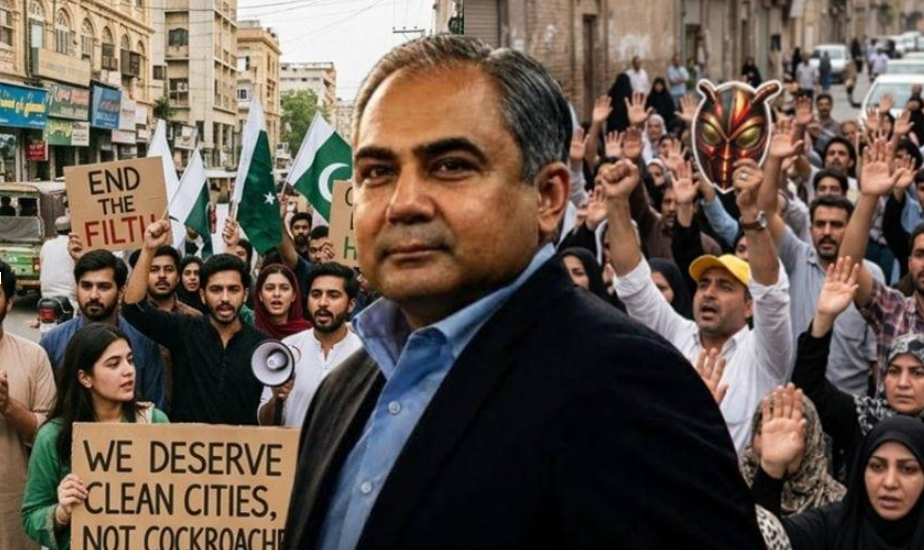
The debate was triggered during an Economic Summit when the Federal Interior Minister, Syed Mohsin Naqvi, observed that the existing “hybrid” governance arrangement had exhausted its utility. While acknowledging the efforts of the Prime Minister, he maintained that the present political system could no longer deliver effective governance and therefore required a comprehensive “reset.” He further warned that, unless structural reforms were undertaken, Pakistan risked witnessing the resurgence of what he described as the CJP as “Cockroach Janta Party”; do not take it as Chief Justice of Pakistan (CJP), a political phenomenon which, in his opinion, would be unsustainable.

Within twenty-four hours, Lieutenant General Ahmed Sharif Chaudhry, Director General of ISPR, echoed concerns regarding governance during his media briefing. He emphasized that Parliament bears the constitutional responsibility to devise solutions to persistent governance failures. He further argued that Pakistan’s rapidly expanding population necessitates a serious national debate on the creation of additional provinces to improve administrative efficiency, public service delivery, and democratic accessibility. More significantly, he linked good governance with national security, observing that sustainable counter-terrorism efforts require not only military preparedness but also effective civilian governance and institutional stability.

These successive statements have inevitably fuelled speculation regarding another phase of constitutional restructuring. Following the enactment of the person-specific (Justice Syed Mansoor Ali Shah) Twenty-Seventh Constitutional Amendment, which substantially altered Pakistan’s judicial architecture by establishing the Federal Constitutional Court (FCC) and redistributing the constitutional jurisdiction of the Supreme Court, political circles have begun discussing the possibility of a Twenty-Eighth Constitutional Amendment. Although no formal proposal has yet emerged, reports suggest that the Pakistan People’s Party (PPP) remains cautious about any constitutional initiative that may dilute the federal autonomy secured through the Eighteenth Constitutional Amendment, particularly the post-NFC fiscal arrangement.

Federalism and the NFC Question: Any discussion concerning new provinces inevitably intersects with Pakistan’s fiscal federalism. The Seventh National Finance Commission (NFC) Award and the Eighteenth Amendment fundamentally altered the Federation’s financial architecture by allocating a substantially larger share of federal revenues to the provinces. While these reforms strengthened provincial autonomy, they simultaneously reduced the fiscal capacity of the Federation.

Successive federal governments have therefore expressed concern regarding the shrinking financial resources available to discharge expanding national responsibilities. Similar proposals for revisiting the NFC framework surfaced during the Pakistan Tehreek-e-Insaf (PTI) government; however, they never materialized because constitutional amendments require a two-thirds parliamentary majority—a threshold that remained politically unattainable.

The Politics of New Provinces: The proposal to create additional provinces is hardly novel. For decades, constitutional scholars have argued that Pakistan’s demographic expansion justifies administrative decentralization. Provinces with populations exceeding those of many sovereign states inevitably face governance challenges, administrative inefficiencies, and unequal public service delivery. Yet constitutional necessity has consistently collided with political reality.

Pakistan’s two dominant political parties—the Pakistan Muslim League (Nawaz) (PML-N) and the Pakistan People’s Party (PPP)—have repeatedly expressed conditional support for provincial reorganization while demonstrating limited political willingness to implement it. Their reluctance is attributable not merely to the enormous financial burden of establishing new legislatures, governors’ houses, provincial secretariats, judicial institutions, police organizations, and civil services. More fundamentally, new provinces would inevitably redistribute political influence, electoral constituencies, financial resources, and administrative authority.

The current debate vividly illustrates this contradiction. The PPP has argued that provincial reorganization should begin with Punjab, Pakistan’s largest province by population. The PML-N, whose electoral dominance is centred in Punjab, has shown little enthusiasm for initiating such reforms within its own political base. Consequently, critics contend that the resistance to provincial restructuring reflects electoral calculations as much as constitutional considerations.

Constitutional Amendments versus Constitutional Governance: Pakistan’s constitutional history demonstrates that amendments have frequently been employed as instruments of political expediency rather than mechanisms of democratic consolidation. Whether enacted by military governments or elected administrations, constitutional amendments have often reflected prevailing political necessities instead of broad constitutional consensus.

The central question, therefore, is not whether another constitutional amendment should be enacted, but whether constitutional amendments alone are capable of resolving Pakistan’s chronic governance crisis.

Experience suggests otherwise: No constitutional amendment—regardless of its political significance—can compensate for weak institutions, ineffective governance, deficient accountability, or inconsistent adherence to constitutional norms. Constitutional text may reorganize institutions, but it cannot, by itself, transform political culture.

The Crisis of Democratic Representation: Pakistan’s more profound constitutional challenge lies elsewhere. A constitutional democracy derives its legitimacy from authentic political representation. Citizens must possess the genuine ability to elect representatives through elections that are free, fair, transparent, and universally trusted. Only under such conditions can Parliament legitimately exercise constituent authority on behalf of the people.

Critics of Pakistan’s constitutional evolution have long argued that recurrent political interruptions, institutional interventions, and governance deficits have prevented representative democracy from maturing into a fully autonomous constitutional order. Consequently, civilian supremacy—despite being an essential constitutional aspiration—has often remained institutionally fragile, docile and compliant.

Without addressing the quality and credibility of democratic representation, constitutional amendments risk becoming procedural exercises rather than substantive democratic reforms.

Institutional Power and Constitutional Accountability: Recent political developments have also revived debate regarding the practical distribution of constitutional authority among state institutions.

The Federal Interior Minister’s public assertion that the existing political system had “collapsed,” while continuing to serve in one of the most influential positions within the federal cabinet, generated significant constitutional commentary. Political analysts have interpreted this episode in different ways, but it has undeniably raised broader questions concerning constitutional accountability, institutional autonomy, civilian authority, and the practical operation of Pakistan’s governance framework.

Such debates underscore a larger constitutional reality: stable governance depends not merely upon the formal allocation of powers under the Constitution but also upon consistent respect for constitutional boundaries, democratic conventions, and institutional restraint.

Conclusion

Pakistan undoubtedly requires substantial governance reforms, including administrative decentralization, stronger provincial institutions, enhanced institutional capacity, and, where genuinely necessary, carefully considered constitutional amendments. However, constitutional engineering must not be mistaken for constitutional development. Reorganizing or redistributing institutional powers cannot, by itself, address the structural weaknesses undermining Pakistan’s democratic and constitutional order. The real solution lies in strengthening constitutionalism itself through democratic legitimacy, credible elections, judicial independence, parliamentary supremacy within constitutional limits, fiscal responsibility, institutional accountability, and unwavering adherence to the rule of law. Constitutional democracy cannot flourish through textual amendments alone; it requires institutions to respect both the letter and spirit of the Constitution.

Electoral integrity is central to this process because the electioneering is the first gate of democracy. Unless political parties and relevant state institutions ensure that elections are conducted transparently and impartially, without interference through the Results Transmission System (RTS), Returning Officers (ROs), or irregularities involving Forms 45 and 47, the establishment of genuinely representative government will remain compromised. Elections are not merely administrative exercises; they are the constitutional means through which citizens confer legitimacy upon those who govern them. Their votes must be counted for whom they voted – it will be a peaceful revolution. We need a peaceful revolution; here, peaceful means in accordance with Law and the Constitution. 

This is particularly important for Pakistan’s poor, marginalized, and politically vulnerable citizens, who participate in elections with the hope that their votes can influence government, protect their rights, and improve their lives. Any deliberate compromise of electoral integrity therefore goes beyond procedural irregularity: it undermines public confidence, weakens institutional legitimacy, and betrays citizens’ constitutional faith in democracy. When the sanctity of the vote is compromised, democracy risks becoming an exercise in institutional formalism rather than genuine popular sovereignty. Consequently, successive constitutional amendments—whether the Twenty-Seventh, Twenty-Eighth, or any that may follow—will achieve little if they merely rearrange institutional powers without addressing the causes of political instability, weak governance, and democratic fragility. The durability of a constitutional order depends not on how frequently its text is amended, but on how faithfully its principles are observed.

Ultimately, Pakistan needs not merely more constitutional amendments, but a deeper constitutional commitment. Constitutional development will become meaningful only when institutions respect constitutional limits, elections genuinely reflect the will of the people, courts remain independent, Parliament performs its constitutional functions, governments remain accountable, and citizens—especially the most vulnerable—can trust that their vote, voice, and fundamental rights are protected. Only then can constitutional democracy become a durable instrument of democratic governance, social justice, and political transformation.

Similar Posts

  • The Teachings of Hazrat Ali Hajveri (R.A)

    Hazrat Syed Ali bin Usman Al-Hajveri (R.A), popularly venerated as Data Ganj Bakhsh or Data Sahib, occupies a seminal position among the classical Sufi scholars of the Islamic tradition. Born in 1009 CE in Ghazni, present-day Afghanistan, he migrated to Lahore during the Ghaznavid period, where he spent the remainder of his life engaged in instruction, spiritual guidance, and moral reform. He died in 1072 CE and was interred in Lahore, where his shrine remains a major center of religious and cultural activity in South Asia.   The honorifics “Data” and “Ganj Bakhsh” denoting “the Giver” and “Distributor of Treasures” were conferred upon him in recognition of his intellectual munificence and his commitment to philanthropy. Historical and hagiographic sources attest that his hospice was accessible to individuals irrespective of social, linguistic, or religious affiliation. This principle of inclusivity continues to inform the ethos of his shrine, which attracts millions of pilgrims annually from Pakistan and abroad.   Hazrat Data Sahib’s principal scholarly contribution is the Persian treatise Kashf-ul-Mahjoob: The Revelation of the Veiled. Composed in the 11th century, it is regarded as the earliest systematic exposition of Sufism in the Persian language and retains canonical status in seminaries and universities worldwide. In this work, he delineates the interior dimensions of Islam, emphasizing that proximity to the Divine is attained through sincerity of intention, service to humanity, and sustained remembrance of Allah.   At present, his shrine in Lahore, known as Data Darbar, constitutes one of the largest Sufi complexes in South Asia. Daily visitation peaks on Thursdays, and the institution of perpetual langar  the provision of free meals  operationalizes his teaching on social welfare and continues to serve thousands of people each day.   The epistemological and ethical framework of Hazrat Data Sahib’s thought may be summarized under four interrelated principles.   First, he posited love of Allah and His Messenger ﷺ as the teleological basis of human existence. In Kashf-ul-Mahjoob, he argues that worship should proceed not from instrumental motives of fear or expectation of reward, but from authentic love and sincerity. He further contends that the spiritually realized individual maintains constant consciousness of Allah in all states of being.   Second, he advanced service to humanity as a form of worship. Rejecting ascetic withdrawal, he advocated an engaged ethic in which the pursuit of knowledge is coupled with service to the marginalized. His designation as “Ganj Bakhsh” reflects this commitment to the distribution of both material and spiritual resources. Third, he emphasized Tazkiya-e-Nafs, or the purification of the self, as a prerequisite for moral agency. He enjoined his disciples to abstain from vices such as greed, envy, wrath, slander, and pride, and to cultivate virtues including patience (sabr), gratitude (shukr), veracity (sidq), and contentment (qana‘at). For him, authentic knowledge was manifest not merely in textual erudition but in ethical conduct (akhlaq). Fourth, he articulated Sufism as the inward dimension of Shariah. He maintained that observance of ritual obligations  prayer, fasting, and lawful livelihood  must be complemented by dhikr, the remembrance of Allah, to ensure spiritual vitality. He further stressed the necessity of authoritative pedagogy and virtuous companionship as conduits for moral and spiritual development. The teachings of Data Ganj Bakhsh retain considerable relevance in the 21st century. In an era characterized by consumerism, occupational precarity, and digital hyper-connectivity, his advocacy of qana‘at and dhikr offers a corrective to stress, anxiety, and existential vacuity. His framework suggests that psychological equilibrium is derived less from material accumulation than from interior discipline and divine orientation.   Furthermore, his principle of social service addresses contemporary challenges of poverty, isolation, and inequality. The institutionalized langar at Data Darbar exemplifies this ethic and provides a model for civic engagement, volunteerism, and communal solidarity.   In the context of digital communication, his insistence on akhlaq assumes particular salience. His exhortations to truthfulness, humility, and restraint provide a normative basis for addressing online hostility, misinformation, and the erosion of civility. For students and professionals alike, his model affirms that technical competence must be accompanied by moral integrity.   Finally, his doctrine of equilibrium between spiritual and worldly responsibilities offers a viable paradigm for modern Muslim subjects. He did not advocate monasticism, but rather the integration of professional, academic, and technological life with enduring spiritual commitments. This synthesis enables individuals to pursue vocational excellence without compromising ethical values.   In conclusion, the legacy of Hazrat Ali Hajveri (R.A) transcends its historical milieu. Centered on love of Allah, service to humanity, and self-purification, his teachings provide a coherent response to contemporary social and psychological challenges. The adoption of these principles at the individual and communal level holds the potential to foster more just, compassionate, and purpose-driven societies.

  • The conversation we owe Kashmir

    Some things become part of your identity long before you understand why.   My love for Kashmir is one of them.   I have never had to convince myself that Kashmir mattered. It simply did. I suspect most Pakistanis would say the same. We grew up believing that Kashmiris were not strangers separated by a Line of Control, but brothers and sisters separated by circumstance.   Over time, that state narrative became something far more personal. It became brotherhood.   And brotherhood, if it means anything at all, means respecting the other’s right to make decisions for themselves.   That is why I find myself standing with the people of Azad Jammu and Kashmir today.   Not because I oppose Pakistan.   But because I support Kashmir.   The public conversation has been reduced to “twelve seats,” as though the protesters have suddenly developed an irrational dislike for a number.   They haven’t.   This has never been about twelve seats.   It is about who gets to decide the political future of Azad Jammu and Kashmir.   For those unfamiliar with the issue, the Legislative Assembly of Azad Jammu and Kashmir consists of forty-five directly elected seats. Twelve additional seats are reserved for refugees from Indian-occupied Jammu and Kashmir who now reside in Pakistan.   On paper, the idea is understandable. Pakistan’s position has always been that the people displaced from their homes remain Kashmiris and should not lose their political voice merely because conflict forced them across the border.   No reasonable person would dispute that displaced Kashmiris deserve representation.   But representation is one thing.   Control is another.   Of those twelve refugee constituencies, nine are elected from Punjab and three from Khyber Pakhtunkhwa. In practical terms, this means that more than a quarter of the directly elected Assembly is chosen by voters living outside Azad Jammu and Kashmir.   The question almost asks itself.   How can the government of a people be decided, in such significant part, by those who do not live under its administration?   Imagine if overseas Pakistanis not only voted in Pakistan’s general elections, but their constituencies alone regularly decided who became Prime Minister. Imagine if governments in Lahore or Karachi depended upon votes cast by people who did not live there. We would immediately recognise the democratic tension.   So why is it unreasonable for Kashmiris to ask the very same question?   Supporting that question does not weaken Pakistan’s position on Kashmir.   If anything, it strengthens it.   For decades, Pakistan has argued before the international community that Kashmiris possess the right to determine their own political future. Self-determination has been the moral foundation of our case.   That principle cannot stop at the Line of Control.   If we genuinely believe Kashmir belongs to the Kashmiris, then we must also believe that Kashmiris deserve the greatest possible ownership over their own democratic institutions.   Yet the debate does not end there.   Many voices now demand the immediate abolition of the refugee seats.   The law, however, is more complicated than the slogans.   In June 2026, the Supreme Court of Azad Jammu and Kashmir reaffirmed that these seats are entrenched within Article 22 of the Interim Constitution. The Court described any alteration to the Assembly’s composition as a solemn constitutional act, not something to be extracted through political pressure. Moreover, Article 33 requires prior approval from the Government of Pakistan before amendments affecting core constitutional structures may even be introduced in the Assembly.   And perhaps that raises an even bigger question than the twelve seats themselves.   Why should a legislature elected by the people of Azad Jammu and Kashmir require Islamabad’s permission before debating changes to its own constitutional structure?   If our answer is that Pakistan has always stood by Kashmir, then I ask another question.   Since when has standing beside someone entitled us to stand over them?   Brotherhood is not guardianship.   Solidarity is not supervision.   Support is not control.   Pakistan has sacrificed diplomatically, politically and morally for the Kashmiri cause. That history deserves recognition. But history cannot become a perpetual licence to decide what is best for Kashmiris without listening to Kashmiris themselves.   The protests are not asking Pakistan to abandon Kashmir.   They are asking Pakistan to trust Kashmir.   Those are two very different things.   Whether the present constitutional arrangement ultimately changes is a matter for constitutional process, not street pressure. But constitutional process should never become an excuse to avoid constitutional questions.   The protesters have asked one.   It deserves an answer.   Because this was never about twelve seats.   It was always about whether we truly believe that the future of Kashmir should be written by Kashmiris themselves.

  • President Jiang Zemin and Modern China Formatting …

    June 24, 1989, Comrade Jiang Zemin assumed the charge of Secretary General of the CPC just after the Tiananmen Square incident. This was orchestrated by ideological rivals, who instigated people with foreign support under the guise of corruption, inflation, political participation, and human resource development for the new economy. No doubt there were challenges, but the government was doing everything it could to control them and bring positive change to people’s lives. It required patience and time. However, the ideological rivals and foreign forces decided to exploit that window of opportunity and bring down the CPC.   Therefore, right after assuming the charge, Secretary General Jiang Zemin had to deal with Western countries’ false propaganda campaign against China. The West was propagating that China used brutal force and undermined human rights. However, it did not shake his determination to restore stability, the cornerstone of CPC policy. CPC is convinced that without stability, the country cannot move forward. After tackling it, he focused on economic reforms, especially after becoming President and paramount leader in 1993. From here, a new phase of reforms started. The CPC, with President Jiang at its core, began to juggle policies and options to sustain growth, ensure stable government revenue, and address people’s problems. Thus, President Jiang Zemin, with the guidance of elders, especially Deng Xiaoping, accelerated the reforms and the introduction of market-oriented policies. He took many innovative decisions to accelerate economic growth, enhance outreach, and strengthen international relations and security. First, he kick-started the first phase of privatization to reduce the burden on the State and spur private sector growth. The number of State-owned enterprises fell from 262,000 to 159,000. Almost 40 million people lost their jobs, but China continued the reform.  However, China’s privatization was led by a wise and smart policy. First, China identified the requirements for the private sector and SOEs to ensure a balance between tax and non-tax revenue. Second, China did not privatize critical industrial sectors or enterprises. Third, China established mechanisms to mitigate the impact on people and keep them engaged, thereby ensuring stability.   Second, President Jiang Zemin led China’s accession to the World Trade Organization (WTO). It was another landmark decision, which revolutionized China’s economic growth and development. After joining the WTO, China grew and developed by leaps and bounds. It also ushered in a new era of global economic linkages, which helped China develop rapidly and curb poverty. China is now the world’s largest trading partner, with over US$6 trillion in 2025, and the second-largest economy. Third, he prohibited the army from taking part in economic ventures.  Third, he introduced a strategy to revitalize the economy through science and education. He launched two landmark initiatives, Project 211 and Project 985, under this strategy. Project 211 was designed to build institutions for the 21st century. It was decided that 100 universities would be prepared for the 21st century.  For that purpose, 115 universities were identified. Project 985 was designed to create world-class universities, and 39 universities were under the project.   On the diplomatic front, he also achieved many successes. First, Hong Kong and Macau were reunited with the mainland. Second, he signed a friendship treaty with Russia and launched the Shanghai Cooperation Organization (SCO) in collaboration with Russia. Now, the SCO is one of the world’s major organizations in a multipolar world. Fourth, he also completed China’s accession to the World Trade Organization (WTO).  However, President Jiang Zemin’s most significant work was his theory of the Three Represents: the development trend of China’s advanced productive forces, the orientation of China’s advanced culture, and the fundamental interests of the overwhelming majority of the Chinese people. The Three Represents theory is a major work of the Party, following Deng Xiaoping’s theory, in building the modern Party. It reflects the CPC’s philosophy and Chinese political culture, which emphasize evolution and reform in line with ground realities. However, the interests of the people must be the paramount guiding principle. President Jiang Zemin started work just after assuming the position of Secretary General, following Tiananmen Square.  The analysis of Three Represents highlights three important things. First, it urges the Party to better serve the people and embrace new classes. Thus, Three Represents opened the Party’s doors to new classes including entrepreneurs, businessmen, and professionals. It was necessary to diversify and give development new impetus by making the Party more inclusive. However, it sparked debate among Party members and other circles. The conservative elements of the Party were not ready to accept the business community and entrepreneurs. However, there was wider support for the inclusion within and outside the Party.  Second, Three Represents encouraged the enhanced role of science, education, and technology in leading the new phase of development. Although the revitalization of the economy through science and education was already underway, there was a need to accelerate the process further.  Third, the Party envisioned that it must strive to modernize culture in accordance with socialist values and norms.  Simultaneously, President Jiang Zemin also encountered some serious problems. First of all, relations with the USA were a constant irritant. The USA continued to interfere in Taiwan and internal affairs. The situation was further complicated by the bombing of the Chinese embassy in Belgrade and the Hainan incident by USA forces. The Hainan incident was a complicated issue that threatened peace. Second, the third Taiwan Strait Crisis appeared during his tenure. On the domestic front, he had to face an intensive debate over the inclusion of business groups and entrepreneurs in the Party. Moreover, privatization, especially after accession to the WTO, generated debate in the country. However, he solved these issues with wisdom and smart policy.   In conclusion, the above discussion indicates that President Jiang Zemin assumed leadership at a critical rather than a difficult time. However, he steered the country with dedication, wisdom, and smart policies. The ultimate objective of his policies was to serve the people and build an inclusive Party in line with new realities. That’s why he is considered one of

  • Detouring Development

    Development is the process of creating lasting improvements in the lives of people by addressing their genuine social, economic, and public needs and not merely constructing new infrastructure, completing projects, impressive photographs, or utilising the allocated public funds. In a true sense, the real measure of development is whether the real problem has been solved, and whether the interventions have created sustainable public value and an evident change in social or economic conditions of the society. A project should begin with a clearly defined problem and public need. Its vision, goals, activities, and measurable indicators should follow the problem. In professional project management practices, all these elements are recorded in the planning and design phase. In Pakistan, we have mastered the art of reporting these elements without achieving any meaningful results. Imagine a public park surrounded by a steel fence. Children and families using the park are visible from the road. If funds are available and privacy is the genuine concern, the executing agency can add steel sheets, plant trees, or use temporary screens. Each solution is inexpensive and retains the existing structure. However, if the focus is primarily on expenditure, the agency may remove the functioning fence and replace it with a new brick wall. This may have a longer life, but is not necessarily the most economical or appropriate solution. Considering Pakistan’s fragile economic outlook, many major development projects are financed through foreign loans. Such funds are eventually repaid, often with interest. Money spent on an unnecessary intervention is no longer available for genuine public need. This is a recurring weakness in Pakistan, where success is measured by the money spent, not by the effectiveness of the solution. This recalls Peter Drucker’s observation. “There is nothing so useless as doing efficiently that which should not be done at all.” The continued existence of infrastructure built during the Mughal and British periods is in contrast with contemporary projects, which deteriorate within years. This might be a romantic comparison, influenced by the fact that we see only the structures that survived, but durability and long-term public value are not central to our project culture. The same mindset is evident in urban beautification schemes. Imagine a local government installs a 15-foot-high statue. The project is indeed beautiful and will produce attractive photographs for official reports, but if the same statue is mounted on thoughtfully designed columns, the shaded seating can be utilised by daily wage workers who gather at bus stops, on footpaths, and in other public spaces because no designated facility is available. This is not an encroachment issue, but a planning failure. Planners and designers should use one intervention to achieve multiple objectives. Imagine a decades-old roundabout, with a working fountain surrounded by grass. During hot afternoons, labourers and children visit the site to cool themselves in the fountain’s spray. Officials might consider this behaviour undesirable and wish to block access. They can barricade it through small trees or shrubs, but the typical response will be to uproot the entire structure, construct a new fountain, and replace the grass with artificial green carpet. The public behaviour may reflect the unavailability of affordable recreational areas or public bathing facilities. Yet, the official solution destroys a functioning public asset, removes a natural green area, and spends substantial funds without addressing the underlying need. Needs assessment appears in project reports, but they are rarely conducted with sufficient depth. Imagine a posh housing society, where tubewells were eventually replaced by private borewells. Residents have spent a considerable amount to arrange their own water supply. Now, if any government agency has received funds for water distribution, they should spend it in areas where the people are still digging borewells or have no access to clean drinking water. However, again the typical response will be to spend millions in this posh area, where households have already arranged their own water supply. The fall of the water table is the real problem, which in this case will persist after spending millions. Pakistan has an extensive planning structure, which includes the federal and provincial bodies, planning departments in government organizations, consultants, and project management units. In 2025-26 alone, the National Economic Council approved the national development portfolio of 4.224 trillion. Such substantial expenditure should produce visible and lasting improvement in people live. The problem, therefore, is not insufficient funding, but how projects are identified, designed, approved, and evaluated. The same problem is visible in education, health, and administrative projects. Consider a basic health unit or education facility with a leaking roof. The available funds should be directed to fix the roof. However, funds are allocated to boundary wall, new signage, and in some cases, for an entirely new building. Similarly, for decade, government departments are trying to digitise their operations. For a quick solution, these departments procure specialised softwares, which has high licensing costs, and inadequate training mechanisms. After years of implementation, enforcement, and expenditure, the same departments revert to paper files or to a new software. The first step should be, to strengthen the capacity of all relevant staff in problem identification and root cause analysis. Every project initiation document should clearly identify the problem, public need, examine alternatives, and link the proposed intervention to public value. These elements should always be in quantifiable terms. Moreover, the project indicators should measure the extent to which the problem is solved and the post-completion evaluation should validate the visualized public benefits. Institutions move energetically, spend heavily, and report extensively, but bypass the original problem. Pakistan does not simply need more projects; it needs projects to solve problems; it needs interventions that respond to genuine needs, preserve what already works, and provide sustainable public value. The true measure should not be the amount spent but the resolution of the problem. Unless problem-solving becomes central to planning and evaluation, fund utilisation will continue to be mistaken for development and detour away from progress we seek. Writers  Dr. Sikandar Bilal Khattak  Academician with Research Interest in Sustainable Systems Can be

  • Pakistan’s Governance Crisis

    Since its inception, Pakistan has been confronted with a multitude of complex and interwoven challenges that have persistently constrained its political stability, economic progress, institutional development, and social transformation. While the nature and intensity of these challenges have evolved over time, their cumulative impact has continued to impede the country’s pursuit of sustainable development and national prosperity. Among these enduring national challenges, the governance crisis has emerged as one of the most pressing concerns, posing serious implications for sustainable development, institutional resilience, socioeconomic progress, and the country’s long-term stability. A number of instances can be quoted to highlight the dismal situation of governance in Pakistan. The very first among these is the lack of citizens’ interest in participation. Citizens are not sufficiently aware of their participatory rights; therefore, they do not keep an eye on public officials and don’t raise their voices when their legal rights are violated by the elite class of the state. Moreover, in terms of transparency, Pakistan is far behind the required standards. According to the 2025 Corruption Perception Index published by Transparency International, Pakistan scored 28 out of 100 and ranked 136th out of 182 countries, indicating a high perceived level of public sector corruption. Furthermore, it is our bad luck that the situation of the rule of law has always been in trouble since 1947. Unfortunately, the rule of law has been confined to the conventional concept of law enforcement, internal security, and crime control, while, at the same time, it overlooks the basic elements, including transparency, accountability before the law, and the equal, just, and clear application of the law. Although, the state has numerous accountability committees and agencies to hold corrupt individuals accountable and curb corrupt practices in society. But still, the state is struggling to implement accountability in its true sense. Ignoring the major causes that have led to the deplorable situation of governance in Pakistan would be totally unjust. These include a number of factors that have directly or indirectly facilitated its existence. In this context, political instability is the biggest cause of bad governance in Pakistan. For most of the time, a myopic approach is adopted by political parties to establish their own governments. They remain engaged in the struggle for power while toppling governments by hook or by crook. Likewise, the relevant institutions do not respond immediately to the emergence of new challenges, leading to dearth of responsiveness in institution’s working.   In addition to it, the lack of strategic vision of the political leadership is also a factor which hits the structure of governance in Pakistan. Quite understandably, Political leaders have failed to foresee Pakistan’s emerging challenges and to cope with the persistent challenges that the state has been confronting for a long time. Keeping in view the crunch of governance, whom should be blamed and held accountable? It is the need of the hour that well-crafted and result-oriented policies regarding governance be formulated and effectively implemented to address the issue in its true spirit. Social media should play its crucial role in spreading awareness. Democracy should be strengthened. Posting, transfer, and promotion of bureaucrats should be done on merit. Last but not the least, the right to information should be guaranteed to citizens as provided under Article 19A of the Constitution of the Islamic Republic of Pakistan. These bold steps can place Pakistan in the list of countries having good governance.

  • Beyond’s the Bombing: The True Cost of Terrorism…

    By Laraib Ehsan “A nation does not only lose lives to terrorism it loses opportunities, confidence, and the promise of a peaceful future.” For over two decades, Pakistan has been at the forefront of the global war on terror. From suicide attacks on crowded marketplaces and educational institutions to the bombing of mosques, military facilities, and public infrastructure; terrorism has had an impact on the social fabric, economy, and politics of this nation. Despite progress achieved by Pakistan through the execution of extensive military and counter-terrorism operations, the revival of militant violence in recent years reminds us that the fight against terrorism requires continued vigilance. The true cost of terrorism is calculated not only in terms of the number of casualties but also in terms of the number of lives ruined, people displaced from their homes, and development hampered. According to the Global Terrorism Index (GTI) 2025 prepared by the Institute for Economics and Peace, Pakistan has been one of the countries worst affected by terrorism in 2024. The report showed a sharp rise in the number of terrorist attacks and casualties as a result of the increase in militant activity in Khyber Pakhtunkhwa and Balochistan. These two provinces have become the focal point of Pakistan’s current security threats where civilians, law enforcement officials, and government sites are regularly attacked. According to Security Report of the Pakistan Institute of Peace Studies 2025, presents equally worrying data. As per the report, 699 cases of terrorism were reported in Pakistan in 2025 leading to 1034 deaths and 1366 injuries occurring across the country.125 out of those killed included 354 civilians, 437 security personnel, and 243 militants. These statistics show that the phenomenon of terrorism has affected all parts of Pakistan, ranging from ordinary citizens to those responsible for ensuring the security of the state. Among all the provinces, Balochistan has suffered the most. It is rich in natural resources and significant in terms of strategic sites like Gwadar Port. Balochistan has seen not only attacks on law enforcement agencies, but also attacks on people, industrial workers, logistics, and infrastructure. Such incidents lead to loss of life as well as the reluctance of investors to invest in the region. A similar situation is happening in Khyber Pakhtunkhwa, with the major part of this region being made up of the merged districts along the border with Afghanistan. According to official statements of the Government of Pakistan and ISPR, the majority of the latest attacks were conducted by Fitna al-Khawarij, which is the official name given to Pakistani authorities to the banned Tehrik-e-Taliban Pakistan (TTP). The authorities have stated that such organizations try to exploit the safe havens they have across the border to carry out attacks on civilians and military personnel. The Impact caused by terrorism cannot be measured only in figures. Each attack leaves communities sorrowful, resulting in the creation of orphans, damaging lives, and making people unsure in the future. Schools are closed, businesses stop working, and basic health services are absent from such areas. The recent case Indicates that the threat is present. In 2025 and 2026, Pakistan witnessed multiple occurrences of deadly attacks in Baluchistan and Khyber Pakhtunkhwa aimed at security convoys, passenger transport systems, and public gatherings. One of the worst attacks was on the Jaffar Express train in Baluchistan as it targeted a passenger train carrying hundreds of civilians. The attack resulted in loss of lives, injuries to passengers, and large-scale rescue operations conducted by the security forces of Pakistan, along with other implications of terrorism, transportation disruptions, and psychological impact on travel. Despite the challenges facing Pakistan, the response of the country has always been multifaceted. It has employed its intelligence operations to respond to the attacks and adopted innovative methods for border management and coordination of various institutions in civilian and military spheres. Nevertheless, the recurring incidents of terror underline that military effects on terrorism cannot by themselves eliminate terrorism. Pakistan has made immense sacrifices during the last 20 years, with thousands of civilians dead and armed forces, police, Frontier Corps, and other law enforcement agencies sacrificing their lives for the security of their country. The strategy adopted by Pakistan against terrorism has changed substantially in the last twenty years. After a series of deadly terrorist incidents in Pakistan, the country implemented a wide-ranging counter terrorism policy consisting of military actions, intelligence sharing, border protection, and legal modifications. These operations, Operation Zarb-e-Azb (2014) and Operation Radd-ul-Fasaad (2017), destroyed terrorist facilities and disrupted the networks of terrorists working in the country. As stated in the Inter-Services Public Relations (ISPR), these operations led to the reduction of many terrorist organizations’ efficiency and helped restore state authority in previously affected territory. The Pakistan Army, together with the Pakistan Air Force, the Pakistan Navy, the Frontier Corps, the Police, and the intelligence services, has played a key role during the fight against terrorism in Pakistan. Thousands of soldiers and officers have become martyrs while saving civilian lives, defending borders, and conducting different intelligence led operations. Their sacrifices are in addition to the sacrifice made by police officers, rescuers, doctors, and ordinary people and represent one of the most significant contributions of Pakistan to the fight against terrorism in the world. Although military methods have diminished the power of terrorist organizations, specialists claim that it is not possible to defeat terrorism only by military efforts. As specified by the Financial Action Task Force (FATF), one of the most efficient means of fighting against terrorists is to stop their financing. Even though Pakistan has enhanced its anti-money laundering and counter-terrorist financing system in recent years, it is necessary to keep on practicing this idea and cooperating with other countries in order to avoid the rebirth of terrorist organizations. The economic Impact of terrorism is equally dangerous. The Pakistan Economic Surveys show that since 2001 terrorism has caused Pakistan direct and indirect economic damages of more than $150 billion. Namely, these damages include destroyed infrastructure, decreased foreign investments, reduced number of tourists,

Leave a Reply

Your email address will not be published. Required fields are marked *