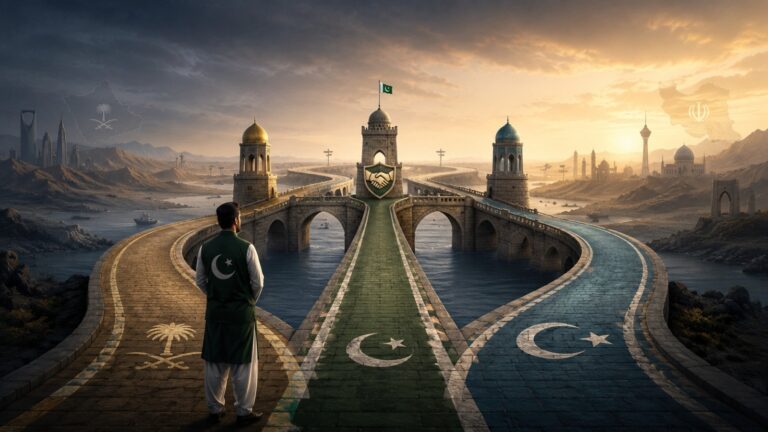
rains come lahores

When the Rains Come, Lahore’s Governance Washes …

By failing to prepare you are preparing to fail”—Benjamin Franklin

Every monsoon, Lahore receives heavy rainfall. Every monsoon, the city appears surprised.

Roads become rivers, underpasses become lakes, vehicles remain stranded for hours, businesses suspend operations, electricity fails in several localities and thousands of citizens find themselves trapped in their homes. Public officials then appear before cameras to assure the public that “all machinery has been mobilised” and “field staff are working round the clock”. The question, however, is not whether officials worked after the city was submerged. The real question is why a city that has witnessed identical scenes for decades still lacks the institutional capacity to manage a predictable annual event. Rain is not the problem. It is governance.

The latest spell of heavy rainfall has once again exposed the widening gap between Lahore’s physical expansion and its institutional preparedness. It has demonstrated that despite billions of rupees spent on roads, flyovers, underpasses, signal-free corridors and housing developments, the city’s drainage infrastructure has remained dangerously inadequate. Nature merely revealed what administrative complacency had concealed.

Lahore today is managed by a bewildering network of public institutions—the Lahore Development Authority (LDA), Traffic Engineering and Planning Agency (TEPA), Water and Sanitation Agency (WASA), Metropolitan Corporation Lahore, district administration, Punjab Housing and Town Planning Agency, Parks and Horticulture Authority and several cantonment boards. Each possesses defined statutory functions, separate budgets, independent administrative structures and overlapping jurisdictions. Yet when rain falls, responsibility becomes everyone’s—and therefore no one’s.

The ordinary citizen neither understands nor cares which agency is legally responsible for a flooded road, a blocked drain or an inundated underpass. Citizens judge governments by outcomes, not organisational charts. If roads remain submerged for hours, traffic collapses across the city and commercial activity comes to a standstill, institutional fragmentation cannot become an excuse for collective failure.

LDA deserves particular scrutiny because it has shaped Lahore’s urban landscape over the past several decades. Successive development plans have emphasised visible infrastructure and horizontal urban expansion. New housing societies continue to receive approvals while commercial activity spreads rapidly beyond the city’s traditional limits. However, sustainable urban development involves much more than constructing roads and approving layouts. It requires integrated planning for drainage, groundwater recharge, storm-water management, environmental protection and climate resilience.

These objectives have too often been subordinated to short-term development priorities. The consequences are now visible across Lahore. Natural water channels have disappeared under concrete. Green areas have steadily declined. Impervious surfaces have multiplied. Urban sprawl has accelerated. Rainwater that once infiltrated open land now accumulates almost instantly on concrete roads and paved surfaces, overwhelming drainage systems that were designed for a much smaller city. The engineering challenge has fundamentally changed but not institutional thinking.

TEPA has undoubtedly transformed Lahore’s transport infrastructure through extensive investment in roads, bridges and underpasses. Yet transport engineering cannot be separated from storm-water engineering. Every major road project should answer a simple question before construction begins: Where will the rainwater go?

Unfortunately, repeated flooding of important roads and underpasses suggests that drainage considerations have often received less attention than traffic movement. Infrastructure cannot be described as successful merely because vehicles move efficiently during dry weather. Infrastructure succeeds only when it continues functioning under adverse conditions. Modern cities are designed not for ideal weather but for extreme weather. That is precisely where Lahore repeatedly fails.

WASA occupies the frontline whenever urban flooding occurs. Its officers and field staff frequently work under extraordinarily difficult circumstances and deserve recognition for their commitment. Yet institutional performance cannot be evaluated solely by emergency response. Pumping millions of gallons of water after roads have flooded does not represent successful urban management. It merely demonstrates that preventive systems were insufficient.

Effective drainage begins months before the monsoon through systematic desilting of drains, cleaning of disposal stations, maintenance of pumping equipment, removal of encroachments on natural waterways and continuous monitoring of vulnerable locations. Emergency pumping should remain the exception. In Lahore, it has become the annual strategy.

The larger issue extends beyond engineering. It concerns public administration itself. Urban governance in Lahore suffers from fragmentation without coordination. One agency constructs roads. Another manages drainage. A third approves housing schemes. A fourth regulates utilities.

A fifth removes encroachments.

Each agency performs its own function with limited institutional integration. The result is predictable. Roads are constructed without adequate drainage capacity. Housing schemes are approved without corresponding investment in trunk infrastructure. Natural drainage channels disappear beneath commercial development. Freshly constructed roads are repeatedly excavated by utility agencies. Responsibility becomes divided while accountability disappears.

Climate change has unquestionably intensified rainfall patterns across South Asia. Extreme precipitation events are becoming more frequent. However, climate change cannot become an administrative defence. If rainfall patterns have changed, engineering standards must also change.

If cities are expanding, drainage systems must expand accordingly. If scientific forecasts predict greater climate volatility, development planning must incorporate those projections rather than relying upon obsolete assumptions. Unfortunately, Lahore continues to respond to twenty-first-century climate realities with twentieth-century infrastructure.

The economic costs of this governance failure are substantial. Businesses lose valuable operating hours. Industrial production is disrupted. Supply chains are interrupted. Thousands of daily wage earners lose income. Motor vehicles suffer avoidable damage. Insurance costs increase. Property values decline in repeatedly flooded neighbourhoods.

Public health deteriorates as stagnant water increases the risk of waterborne diseases. Collectively, these recurring economic losses almost certainly exceed the annual cost of maintaining a modern storm-water management system raising an uncomfortable question. If billions of rupees can be allocated annually for visible infrastructure projects, why does preventive maintenance remain persistently underfunded? Public finance should not reward ribbon-cutting ceremonies while neglecting maintenance. Maintenance rarely attracts political attention but its absence always attracts public suffering.

The constitutional dimension is equally significant. Article 9 of the Constitution guarantees the right to life, a concept repeatedly interpreted by superior courts to include living with dignity, safety and a healthy environment. Article 14 protects human dignity, while Article 38 obliges the State to promote the social and economic well-being of the people.

These constitutional principles impose obligations that extend beyond legislation. They require public institutions to exercise statutory powers competently, reasonably and in the public interest. Urban planning is therefore not merely an engineering exercise. It is a constitutional responsibility. Every development authority, every municipal institution and every public utility exist to serve citizens rather than administrative convenience.

The annual paralysis witnessed during every monsoon indicates that institutional accountability remains the weakest component of Lahore’s governance architecture. Performance audits should become mandatory. Every major rainfall event should be followed by an independent technical assessment identifying infrastructure failures, responsible agencies and remedial measures.

Drainage maps, maintenance schedules, desilting records, pumping capacity and flood-risk assessments should be publicly available. Transparency is not an administrative burden. It is the foundation of accountability.

Lahore possesses the financial resources, engineering expertise and technological capacity to become a climate-resilient city. Geographic Information Systems, digital drainage mapping, rainfall modelling, smart sensors and integrated command centres are now standard urban management tools across much of the world. The obstacle is no longer technology. It is governance.

Heavy rainfall has once again exposed an uncomfortable reality. Lahore has invested heavily in constructing the city of tomorrow while neglecting the systems required to keep today’s city functioning. Development cannot be measured by kilometres of roads, number of underpasses or housing schemes approved. It should instead be measured by whether citizens can travel safely, conduct business normally and return home without fear that a few hours of rain will bring one of South Asia’s largest metropolitan centres to a complete standstill.

Monsoon rains will continue. Whether they continue to expose the failures of our public institutions depends entirely upon those entrusted with planning, regulating and managing Lahore.

Efficient governments are not judged during sunshine. They are judged during storms. By that standard, Lahore’s urban governance still has a long way to go.
Similar Posts

  • Beyond Public Finance: Towards Constitutional Poli…

    The previous part VIII of this series concluded that a just tax system must satisfy more than the requirements of arithmetic. It must rest upon legislative competence, representative consent, rational classification, due process, protection against arbitrary deprivation, transparent expenditure and effective remedies. Parliament, while levying taxes cannot constitutionalise injustice merely by enacting it. Pakistan’s fiscal crisis will not be resolved by asking citizens to finance an unreformed state through increasingly coercive instruments. A recent book by Dr Hafiz A. Pasha, Fatima Malik and Hafsa Tanveer, Pakistan: Reforming an Inefficient and Inequitable Tax System, provides an appropriate opportunity to carry that argument forward. The volume is ambitious, data-rich and deserving of serious attention. Few recent studies attempt, within a single work, to map federal and provincial taxation, estimate tax gaps through different methodologies, examine incidence across income groups and sectors, evaluate fiscal incentives and finally present a quantified reform programme. Its central diagnosis is familiar but supported by extensive empirical work. Pakistan combines high statutory rates with a low tax-to-GDP ratio, excessive dependence on indirect taxation, pervasive evasion, severe sectoral disparities and weak provincial revenue mobilisation. The authors propose reforms that, in their estimation, can increase the national tax-to-GDP ratio by approximately three percentage points by 2027–28. The principal difficulty lies not in what the book measures. It lies in what the framework of measurement necessarily leaves outside its calculations. The usefulness—and limits—of the tax-gap lens The organising idea of the book is the tax gap. Through cross-country regressions, a representative-tax-system approach, monetary estimates of evasion and bottom-up calculations, the authors conclude that Pakistan possesses the potential to collect approximately three percent of GDP more in taxes. This is analytically valuable. It also risks converting a constitutional and political problem into an accounting exercise. A tax gap is not necessarily a reservoir of revenue waiting to be collected. Parts of it may reflect privileges protected by influential groups. Other parts arise from low productivity, fragmented enterprises, unemployment, weak financial inclusion and the regulatory costs created by the state itself. Informality is not always a voluntary choice made for the purpose of evasion; it can also be a survival strategy in an economy where formalisation invites multiple taxes, withholding obligations, inspections and compliance costs without ensuring reliable public services. Citizens also judge taxation in relation to expenditure. Their reluctance cannot be understood solely as non-compliance when additional revenue appears likely to finance debt servicing, administrative expansion, elite concessions, loss-making state enterprises and politically negotiated subsidies rather than education, healthcare, transport, security of property and equal economic opportunity. The decisive question is consequently not only how much more can be collected. It is who controls the state, who bears its burdens, who receives its rents, and why technically sound reforms repeatedly fail. Public finance asks how the gap should be closed. Constitutional Political Economy asks why the beneficiaries of the existing arrangement would permit it to be closed fairly. The selective fiscal state The book repeatedly recognises the presence of powerful vested interests. It identifies the under-taxation of property, agriculture, wholesale and retail trade, real estate and parts of the services sector. At the same time, it finds a disproportionate burden upon large-scale manufacturing, banking and formal businesses. Its estimate that industry bears taxes equivalent to 23.8 percent of its value added, with the incidence on large-scale manufacturing exceeding 36 percent, is particularly revealing. These figures demonstrate that Pakistan does not suffer from a uniformly low-tax equilibrium. Pakistan has created a selective fiscal state: coercive towards visible and organised taxpayers, accommodating towards politically protected or administratively difficult constituencies. This conclusion should change the design of reform. Where political influence determines the tax structure, another catalogue of proposed rates and bases cannot alter the equilibrium by itself. Reform must address the rules through which fiscal choices are made, concessions are granted and enforcement is selectively applied. A technically perfect proposal remains politically irrelevant when those who must enact it derive power from the arrangements it seeks to dismantle. Withholdingisation is not income taxation The book correctly notes that withholding and advance taxes generate overwhelming part of total income-tax revenue and have failed to eliminate evasion. It also recognises the distortions created by presumptive/mimum taxation and the fragmentation of income into separately taxed blocs. The consequences are more serious than those of an imperfect collection technique. Withholdingisation represents the gradual abandonment of income taxation as a levy on net accretion to economic power. Banks, utility companies, telecom operators, employers, import authorities, registrars and purchasers have been converted into unpaid tax collectors. Gross transactions are taxed without determining actual income, allowable expenditure, losses or the taxpayer’s real capacity to contribute. The revenue authority obtains money without developing the institutional capacity to examine accounts, conduct intelligent audits and establish taxable income. Compliant businesses suffer liquidity costs and wait for adjustments or refunds, while informal and influential sectors remain beyond meaningful assessment. The reform of income taxation must restore the return, assessment and audit as its foundations. Withholding should remain confined to situations where it is a genuine advance payment—principally salaries, dividends, profit on debt and payments to non-residents (mostly covered under tax treaties). It should remain fully adjustable against the final liability. A system based upon extracting money from every visible transaction may achieve collection targets. It cannot be described as a coherent income tax. Contradictions within the reform programme The book advocates broad-basing and criticises presumptive taxation, but later recommends restoration of a one-percent fixed tax on export proceeds. It supports neutrality while proposing a general five-year tax holiday for investment, enhanced deductions for energy costs and other selective allowances. These proposals arise from genuine concerns. Pakistan’s investment rate remains dangerously low, exporters face high energy and financing costs, and industry competes under an unstable exchange-rate and tariff environment. The proposed remedies nevertheless risk recreating the same exceptionalism that has made Pakistan’s tax system discriminatory, unpredictable and vulnerable to lobbying. A fixed tax on export proceeds is not a tax on income. It taxes turnover

  • SPSC: When Cockroaches Approach the Granary

    A society does not collapse the day corruption is discovered; it begins to decay the day corruption becomes ordinary. The Sindh Public Service Commission (SPSC), established to uphold merit and provide equal opportunities to the youth of Sindh, has repeatedly found itself at the center of controversy. Allegations of paper leaks, irregularities, and lack of transparency have steadily eroded public confidence, leading thousands of young aspirants to raise their voices in protest. Reports of demonstrations against SPSC over recruitment and examination concerns, as well as past official action following examination irregularities, reflect the depth of this mistrust. The title, “Cockroaches Approaching the Granary,” is symbolic. A granary stores the food that sustains a nation, while cockroaches represent decay, contamination, and silent destruction. Public institutions responsible for selecting the brightest minds are the granaries of governance. If corruption, negligence, or manipulation infiltrates these institutions, they contaminate not merely examinations but the very future of society. The protests by the youth of Sindh are not simply demonstrations against one institution. They are a cry for justice, transparency, and dignity. Behind every candidate stands a family that has invested years of sacrifice, countless hours of preparation, and unwavering hope. When the credibility of competitive examinations is questioned, it is not only individual dreams that are shattered; public trust in the state’s promise of equal opportunity is weakened. This struggle echoes a wider regional concern. Across South Asia, young people have repeatedly taken to the streets whenever examination systems were perceived to have failed them. In India, nationwide protests over alleged examination paper leaks became a powerful reminder that education and public recruitment derive their legitimacy from public trust. Whether in India or Pakistan, the message from the youth remains remarkably similar: merit cannot survive where examination integrity is compromised. The issue transcends politics. It is fundamentally about governance. Every leaked paper, every allegation of favoritism, and every unexplained irregularity diminishes the value of honest effort. When deserving candidates begin to believe that influence outweighs competence, a dangerous message spreads across society: hard work is no longer enough. The consequences extend far beyond recruitment. Civil servants, lecturers, engineers, doctors, and administrators selected through questionable processes ultimately shape the institutions that govern millions. Weak recruitment today becomes weak governance tomorrow. A nation that compromises on merit ultimately compromises on its future. Yet this moment also presents an opportunity. The protests of Sindh’s youth should not be viewed merely as expressions of anger but as demands for institutional reform. Transparent examination procedures, secure digital systems, independent oversight, prompt investigations into alleged irregularities, and public accountability can restore confidence. Institutions earn respect not by claiming perfection but by responding credibly to legitimate concerns. History reminds us that nations progress when their institutions are stronger than individual interests. The youth of Sindh are asking for nothing extraordinary. They seek only a level playing field where success is determined by knowledge, ability, and perseverance rather than by connections or corruption. The metaphor of cockroaches approaching the granary serves as a warning. If the guardians of merit fail to protect the granary, decay will eventually consume the harvest. But if institutions choose transparency over secrecy and accountability over complacency, the granary can once again nourish hope instead of despair. The future of Sindh depends not merely on educating its youth but on convincing them that their honesty, talent, and hard work will always be rewarded. Merit is the foundation of every successful society. Once that foundation cracks, the entire structure stands in peril.

  • The Future of Provinces in Pakistan

    The debate over the creation of new administrative units and provinces in Pakistan has once again occupied the national discourse after Federal Interior Minister Mohsin Naqvi declared that the country’s existing governance system had “collapsed” and argued that governance must be brought closer to the people through new administrative units. His remarks have revived an issue that has periodically surfaced since independence but has rarely moved beyond political rhetoric. While some interpreted his statement as a call for creating additional provinces, others argued that he was advocating broader administrative restructuring. Regardless of terminology, the debate has exposed the structural weaknesses of Pakistan’s governance architecture and compelled policymakers, constitutional experts and political parties to revisit an important question: can Pakistan continue to be governed effectively under its existing administrative framework, or has demographic growth, urban expansion and governance complexity made institutional restructuring unavoidable?  Pakistan today is home to more than 250 million people, yet it continues to function primarily through four provinces established under historical rather than administrative considerations. At independence in 1947, the population and governance challenges were dramatically different. Since then, urbanisation, economic diversification, internal migration and increasing demands for public services have transformed governance requirements. Provincial capitals often remain geographically and administratively distant from citizens living in peripheral districts. Residents of South Punjab, Hazara, southern Balochistan, merged districts of Khyber Pakhtunkhwa and interior Sindh frequently complain that decision-making remains concentrated in provincial capitals, resulting in unequal development, delayed service delivery and inadequate representation. Mohsin Naqvi’s argument rests on the proposition that governance has become excessively centralised and that citizens are compelled to travel long distances merely to access basic government services, courts and administrative offices. He further argued that countries with expanding populations have responded by creating additional administrative units rather than maintaining outdated structures. Whether one agrees with his assessment or not, his central observation deserves serious consideration because governance effectiveness is measured not by the size of government but by the accessibility, responsiveness and accountability of institutions.  The debate itself is not new. Successive governments have proposed South Punjab Province, Bahawalpur Province, Hazara Province and even administrative restructuring in Karachi and Balochistan. Parliamentary resolutions regarding South Punjab have previously been adopted, yet constitutional consensus has remained elusive. Political parties have often supported new provinces while in opposition but have shown considerably less enthusiasm after assuming power. Consequently, proposals have become election slogans rather than governance reforms.  Critics of creating new provinces argue that administrative fragmentation alone cannot solve governance failures. They point out that Pakistan’s primary problem is not necessarily the number of provinces but weak institutions, bureaucratic inefficiency, political interference, corruption and inconsistent implementation of laws. According to this perspective, multiplying provinces without institutional reform merely replicates existing inefficiencies across additional administrative boundaries. New provincial governments would require assemblies, governors, chief ministers, secretariats, police structures, judicial infrastructure and enormous recurring financial expenditures. Unless accompanied by governance reforms, decentralisation may simply increase administrative costs without improving public service delivery. Supporters, however, contend that administrative proximity improves governance outcomes. Comparative international experience demonstrates that countries such as India have periodically reorganised states to improve administrative efficiency and political representation. Smaller administrative jurisdictions often enable faster decision-making, improved monitoring, stronger accountability and more equitable distribution of development resources. Citizens generally experience better governance when government institutions are physically and administratively closer to them. These arguments have gained renewed attention following Naqvi’s intervention.  However, the current debate suffers from one significant omission. It largely ignores Pakistan’s weakest democratic institution: local government. Before creating additional provinces, policymakers must honestly evaluate why local governments have repeatedly failed. Pakistan has experimented with local government systems under different constitutional and political arrangements, yet these institutions have rarely been allowed to function independently and consistently. Elected local governments are frequently dissolved, elections are delayed and financial autonomy remains severely restricted. Provincial governments often resist devolving meaningful authority because local governments are perceived as political competitors rather than governance partners. This brings the issue of local body elections to the centre of the discussion. The Constitution envisions democratic decentralisation, yet local government elections have remained irregular across several provinces. In many cases, elected councils complete only partial terms or remain financially dependent upon provincial governments. Consequently, citizens seeking municipal services, sanitation, water supply, local roads, building regulation or community development frequently confront administrative paralysis. A country that struggles to sustain functioning local governments cannot realistically expect that merely creating additional provinces will automatically improve governance. The experience of Pakistan’s devolution reforms provides valuable lessons. The Local Government reforms introduced in the early 2000s attempted to decentralise authority by empowering districts and local councils. Although those reforms had weaknesses and generated political controversy, they demonstrated that bringing government closer to citizens can improve responsiveness when accompanied by fiscal authority, administrative autonomy and institutional accountability. Unfortunately, subsequent governments reversed or weakened many of these arrangements, resulting in repeated cycles of centralisation and decentralisation. Political reactions to Mohsin Naqvi’s proposal reflect Pakistan’s broader constitutional divisions. Some leaders have welcomed discussion on governance reform while supporting greater administrative decentralisation. Others have questioned both the timing and constitutional implications of the proposal, expressing concerns that restructuring provinces without broad political consensus could intensify ethnic, linguistic and regional sensitivities. There are also concerns that debates over provincial boundaries could distract attention from more immediate governance priorities, including economic recovery, inflation, institutional reforms and electoral credibility. The political diversity of these reactions demonstrates that constitutional restructuring cannot succeed through executive statements alone; it requires sustained parliamentary dialogue, provincial participation and national consensus.  The constitutional dimension cannot be overlooked. Creating new provinces requires constitutional amendments and political agreement among federal and provincial stakeholders. Such reforms inevitably involve questions relating to resource distribution, National Finance Commission allocations, Senate representation, civil service restructuring, judicial jurisdictions and provincial assets. Therefore, any attempt to redraw administrative boundaries without extensive consultation risks generating political instability rather than administrative efficiency. The opportunities nevertheless remain significant. Properly designed administrative restructuring could reduce regional disparities, improve public service delivery, enhance

  • Pakistan’s Defence Alliance: Is Islamabad Sh…

    Pakistan has just taken on a new kind of commitment, and it has caught people’s attention in a way that ordinary diplomatic announcements rarely do. Pakistan’s ties with Saudi Arabia go back decades, and its defence relationship with Türkiye has grown steadily closer in recent years, so cooperation between the three is not surprising on its own. What is new is the nature of the commitment: an attack on any one of the three countries is now to be treated as an attack on all three.   This is not really about whether Pakistan should be working with Saudi Arabia and Türkiye. It is about whether Islamabad has entered this arrangement with a clear enough sense of what it wants from it, and what obligations it may quietly be creating for the future.   It also helps to get the timeline right. This is not Pakistan’s first mutual-defence commitment with Saudi Arabia. Back in September 2025, the two countries had already signed a Strategic Mutual Defense Agreement, treating aggression against either as aggression against both. What is new in 2026 is the attempt to bring Pakistan, Saudi Arabia and Türkiye together inside one shared framework. Seen that way, this is less a first step and more a new layer added to a relationship that was already forming. An Alliance at a Complicated Moment The agreement comes at a difficult time. Pakistan sits right next to Iran and has a tense relationship with India, while both Saudi Arabia and Türkiye maintain strong economic ties with New Delhi. At the same time, Islamabad has to keep managing working relationships with Iran, China, the United States and its Gulf partners. Any defence commitment, then, has to be understood against several relationships that do not always move in the same direction.   Pakistan is also not entering this alliance from a position of comfort. The country is dealing with economic, security and political pressures all at once, along with instability on its Afghan border and a delicate Iran border to manage. That is a lot to balance already, which is exactly why the practical details of this new commitment matter more than the ceremony around its announcement. What Has Pakistan Actually Committed To? The basic idea is simple: an attack on one member is treated as an attack on all. But what does that actually mean in practice? What would genuinely trigger the commitment, and what military support would Pakistan be expected to give—or receive? And what happens if the three countries find themselves with different interests in the same crisis?   Pakistan’s own Foreign Ministry offered some sense of this in July 2026, saying that agreements of this kind mostly involve peacetime military cooperation, and that in an actual war, how far the commitment would go still needs to be worked out. If anything, that statement makes the case for more clarity, not less.   That uncertainty matters most in two situations close to home. If Pakistan faced another serious confrontation with India, would Saudi Arabia and Türkiye offer real support, given their own important ties to New Delhi? And if tensions with Iran escalated, would Pakistan be expected to take a position that could strain its relationship with its neighbour? Even the growing water dispute with India, one of Pakistan’s most basic security concerns, has not been publicly linked to any shared plan among the three partners. These questions remain open.   There is also a quieter concern worth sitting with. Saudi Arabia brings financial strength to the table, Türkiye brings a growing defence industry, and Pakistan brings manpower, real operational experience and nuclear deterrence. If these strengths are genuinely shared, all three countries could benefit. But if the load falls unevenly, with Pakistan carrying most of the manpower while its own position in a future India crisis stays unclear, the costs could end up outweighing the gains.   History offers a useful reminder here. In his 1983 book Can Pakistan Survive? The Death of a State, Tariq Ali examined Pakistan’s political system, its foreign policy, and the powerful role the military has long played within the state. The circumstances today are very different, but his broader question still feels relevant: can Pakistan turn its usefulness to other powers into lasting strength of its own?   Something else stood out alongside the agreement itself: the mood surrounding it. Governments naturally welcome diplomatic wins, but a defence pact carrying possible wartime obligations is a different kind of agreement than a trade deal. With so many practical details still unclear, the celebratory tone raises a fair question: is this a carefully thought-through long-term strategy, or mostly the excitement of the moment? Commitments this serious deserve a clear explanation before they deserve applause.   Pakistan must also make sure its growing ties with Saudi Arabia and Türkiye stay compatible with its long-standing relationship with China, and with the working relations it still needs with Iran and the United States. Strategic Relevance Is Not Strategic Autonomy Pakistan is becoming more important to other countries. Its military strength, its geography, its nuclear deterrence, and its relationships across very different global camps all give Islamabad real value in the eyes of others. But being useful to other countries is not the same as having a clear strategy of your own.   Strategic autonomy simply means that Pakistan knows what it wants and makes sure its partnerships actually serve that. It means asking not only what Saudi Arabia, Türkiye, China or the United States want from Pakistan, but what Pakistan wants from each of them in return. A country can be militarily valuable, geographically important and courted by several powers, and still have no defined national strategy behind it. That difference sits at the heart of this entire discussion.   Washington’s fairly quiet response also deserves attention. There is no evidence that the United States is deliberately setting a trap for Pakistan. But Islamabad should still think carefully about whether a closer Saudi-Pakistani security relationship could, over time,

  • Pakistan’s Army Chief Steps Into Diplomacy a…

    In the hierarchical world of international diplomacy, mediation between adversaries is traditionally the preserve of foreign ministries and veteran envoys. In recent months, that role has been assumed, unusually, by a uniformed officer from Islamabad.   General Syed Asim Munir, Pakistan’s Chief of Army Staff, has moved beyond the conventional mandate of an army chief to position himself as a conduit for de-escalation at a moment of acute global volatility. His emergence as an interlocutor during the recent period of heightened confrontation between the United States and Iran, and his parallel effort to formalize defense cooperation between Pakistan, Turkey and Saudi Arabia, marks a significant shift in how Pakistan projects power and how regional security is being negotiated.   The development raises a central question for international observers: can a military leader serve as a credible bridge-builder in a region where traditional diplomacy has stalled?   From Barracks to Backchannels   To understand General Munir’s diplomatic turn, context is essential.   Pakistan has long balanced a complex set of alliances. It is a Major Non-NATO Ally of the United States, with decades of security cooperation, while also maintaining a 900-kilometer border with Iran and deep cultural and economic ties with its western neighbor. That dual positioning has often placed Islamabad in a difficult spot during US-Iran escalations, but it has also given it unique access.   General Munir, who previously served as Director General of Military Intelligence and Director General of Inter-Services Intelligence, is seen within Pakistan’s security establishment as an institutionalist with deep familiarity with both Gulf and Western security concerns.   According to diplomatic sources in Islamabad and Ankara, it was during the peak of US-Iran tensions earlier this year, when direct channels were limited and rhetoric was escalating, that General Munir engaged in a series of quiet consultations. The approach, described by one senior Pakistani official as “military diplomacy focused on de-confliction,” involved relaying assessments and emphasizing the cost of miscalculation to all sides.   In Washington, the priority was to avoid a broader regional conflict that would endanger US forces and global energy supplies. In Tehran, the priority was to prevent further isolation while maintaining deterrence. Pakistan’s message, as articulated by its military leadership, was consistent: dialogue over confrontation.   While the full extent of the mediation remains confidential, as is common in such backchannels, analysts in Washington noted a distinct softening of public statements from all parties following a round of regional visits that included Pakistan. A former US State Department official familiar with South Asia said, “When civilian political space is constrained, military-to-military channels become the most reliable mechanism for crisis management.”   The Trilateral Gambit   If the US-Iran de-escalation effort established General Munir’s credentials as a crisis manager, his second initiative is more structural in nature.   In recent weeks, officials from Pakistan, Turkey and Saudi Arabia have confirmed discussions toward a shared defense understanding. The framework, still under negotiation, is understood to focus on defense industrial cooperation, joint training, counter-terrorism intelligence sharing, and interoperability rather than a NATO-style collective defense treaty.   For each country, the rationale is different but complementary.   For Saudi Arabia, under Vision 2030, there is a clear drive toward diversifying its defense partnerships and building domestic defense manufacturing capacity. Turkey brings a rapidly advancing defense industry, with its drone programs and naval systems. Pakistan offers a large, battle-tested military, nuclear deterrence expertise, and extensive experience in counter-terrorism operations.   “This is not about creating a bloc against anyone,” a Turkish defense analyst explained. “It is about strategic self-reliance. For decades, these three countries have been dependent on external suppliers. They are now asking whether they can co-produce and co-secure.”   For Pakistan, the pact represents a long-sought goal: moving from being a security consumer dependent on external aid to being a security provider and partner among major Muslim-majority states. For General Munir, who has repeatedly spoken about the link between economic security and national security, such partnerships are seen as central to national stability.   Perspectives and Challenges   The reception has been cautiously optimistic but not without complexity.   In Riyadh and Ankara, the initiative is viewed through the lens of pragmatic national interest rather than ideological unity. Saudi and Turkish officials have been careful to frame any cooperation as open and defensive, not directed at any third party, including Iran or Western allies.   In Washington and European capitals, the reaction is twofold. On one hand, there is recognition that a trilateral arrangement that increases burden-sharing and promotes stability could be beneficial, particularly if it helps contain transnational threats. On the other hand, there are questions about interoperability with existing alliances and the long-term implications for arms procurement and regional alignments.   In Tehran, observers have watched the developments closely. Any defense cooperation that excludes Iran will inevitably be scrutinized. Pakistani diplomats have sought to reassure Iran that Islamabad’s engagement with Saudi Arabia and Turkey does not come at Tehran’s expense, pointing to the earlier mediation effort as evidence of Pakistan’s balanced approach.   The most significant challenges are internal. Trilateral defense cooperation requires sustained political will, financial commitments, and harmonization of defense systems  all of which are difficult to achieve. Pakistan faces severe economic constraints, Turkey navigates its commitments to NATO, and Saudi Arabia is managing a complex regional normalization process.   Critics within Pakistan also question whether the military should be leading diplomatic initiatives that are traditionally the domain of the Foreign Office. Supporters counter that in Pakistan’s hybrid governance structure, the army chief is inevitably a central actor in foreign and security policy, and formalizing that role can bring clarity.   The Diplomat in Uniform   The broader phenomenon of the “diplomat in uniform” is not new. In Egypt, Jordan, and indeed in the United States itself, senior military leaders have often served as critical channels when civilian diplomacy has faltered.   What makes General Munir’s case distinct is the narrative he is projecting for Pakistan itself: from a country

  • Empty Classrooms, Digital Classrooms: Reimagining …

    By Engineer Arshad Hameed Abbasi, International Energy, Climate Change and Water Security Practitioner and Engineer Idrees Abbasi, Former Consultant, World Bank,  and Mr. Amjad Butt, Writer; Secretary General, Murree Literary Council, resident of [address].    There is a particular kind of grief in watching an institution outlive its usefulness while still drawing a salary, still cutting ribbons, still issuing degrees that mean less each year they are printed. That is where Pakistan’s higher education system stands today, and it is time someone said so plainly: the paradigm has already shifted, quietly, without anyone in Islamabad’s marble offices noticing. It shifted on YouTube, on TED, on edX and Udemy and Khan Academy, in a thousand free lecture halls that never asked a single Pakistani student for tuition, a hostel fee, or four years of their life. The only people who have not caught up are the ones still running the old one. There is a particular kind of grief in watching an institution outlive its usefulness while still drawing a salary, still cutting ribbons, still issuing degrees that mean less each year they are printed. That is where Pakistan’s higher education system stands today, and it is time someone said so plainly: the paradigm has already shifted, quietly, without anyone in Islamabad’s marble offices noticing. It shifted on YouTube, on TED, on edX and Udemy and Khan Academy, in a thousand free lecture halls that never asked a single Pakistani student for tuition, a hostel fee, or four years of their life. The only people who have not caught up are the ones still running the old one. For decades, the deal offered to a Pakistani student was simple: surrender your time, your family’s savings, and your twenties to a physical campus, and in exchange receive knowledge you could not get anywhere else. That deal is dead. A seventeen-year-old with a smartphone and a working internet connection can now watch a Nobel laureate explain quantum mechanics, follow a structural engineer walk through a seismic design calculation line by line, or sit in on a Stanford lecture on macroeconomics — all free, all on demand, all taught by people who are, in most cases, simply better at their subject than the men and women drawing a professor’s salary in the classroom down the road. The tragedy is not that this content exists. The tragedy is that almost no one in a position of authority ever told the students it was there. For decades, the deal offered to a Pakistani student was simple: surrender your time, your family’s savings, and your twenties to a physical campus, and in exchange receive knowledge you could not get anywhere else. That deal is dead. A seventeen-year-old with a smartphone and a working internet connection can now watch a Nobel laureate explain quantum mechanics, follow a structural engineer walk through a seismic design calculation line by line, or sit in on a Stanford lecture on macroeconomics — all free, all on demand, all taught by people who are, in most cases, simply better at their subject than the men and women drawing a professor’s salary in the classroom down the road. The tragedy is not that this content exists. The tragedy is that almost no one in a position of authority ever told the students it was there. Ask yourself honestly: when was the last time a Vice Chancellor stood in front of a first-year class and said, “Before you trust anything I teach you, go watch the version of this lecture that MIT put online for free, and come back and tell me if I taught it better”? It has not happened, and it will not happen, because the entire architecture of Pakistani higher education depends on students not asking that question. It depends on the fiction that a degree is the same thing as an education, that a seat in a lecture hall for four years is the same thing as understanding, and that an institution’s worth can be measured in acres of campus rather than in what a graduate can actually do when the exam is over and the job begins.Ask yourself honestly: when was the last time a Vice Chancellor stood in front of a first-year class and said, “Before you trust anything I teach you, go watch the version of this lecture that MIT put online for free, and come back and tell me if I taught it better”? It has not happened, and it will not happen, because the entire architecture of Pakistani higher education depends on students not asking that question. It depends on the fiction that a degree is the same thing as an education, that a seat in a lecture hall for four years is the same thing as understanding, and that an institution’s worth can be measured in acres of campus rather than in what a graduate can actually do when the exam is over and the job begins. We do not need to guess what an alternative looks like, because the world has already built it. Universities that were once measured by the size of their footprint are now measured by the depth of their content and the reach of their delivery. Institutions like the National University of Singapore have shown that a compact, space-efficient campus married to serious digital delivery outperforms sprawling, underused infrastructure every time. Meanwhile, in Pakistan, students still find themselves inside partially built mega-campuses, sitting in half-used lecture halls, being taught by professors whose most recent research contribution was a maintenance grant, while the actual global classroom — free, current, taught by the best minds alive — sits one browser tab away, untouched, unmentioned, unrecommended by the very people whose job it was to point students toward it.We do not need to guess what an alternative looks like, because the world has already built it. Universities that were once measured by the size of their footprint are now measured by the depth of their content and the reach of their delivery.

Leave a Reply

Your email address will not be published. Required fields are marked *