
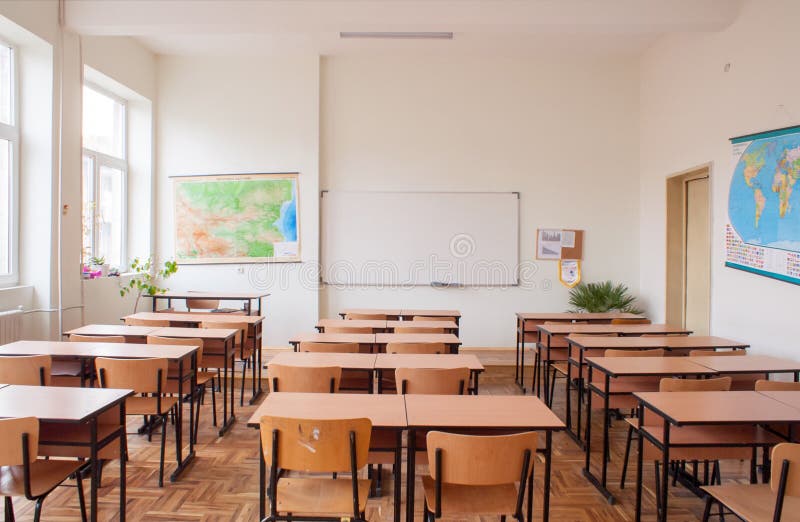
empty classrooms digital

Empty Classrooms, Digital Classrooms: Reimagining …

By Engineer Arshad Hameed Abbasi, International Energy, Climate Change and Water Security Practitioner and Engineer Idrees Abbasi, Former Consultant, World Bank,  and Mr. Amjad Butt, Writer; Secretary General, Murree Literary Council, resident of [address].


 There is a particular kind of grief in watching an institution outlive its usefulness while still drawing a salary, still cutting ribbons, still issuing degrees that mean less each year they are printed. That is where Pakistan’s higher education system stands today, and it is time someone said so plainly: the paradigm has already shifted, quietly, without anyone in Islamabad’s marble offices noticing. It shifted on YouTube, on TED, on edX and Udemy and Khan Academy, in a thousand free lecture halls that never asked a single Pakistani student for tuition, a hostel fee, or four years of their life. The only people who have not caught up are the ones still running the old one. There is a particular kind of grief in watching an institution outlive its usefulness while still drawing a salary, still cutting ribbons, still issuing degrees that mean less each year they are printed. That is where Pakistan’s higher education system stands today, and it is time someone said so plainly: the paradigm has already shifted, quietly, without anyone in Islamabad’s marble offices noticing. It shifted on YouTube, on TED, on edX and Udemy and Khan Academy, in a thousand free lecture halls that never asked a single Pakistani student for tuition, a hostel fee, or four years of their life. The only people who have not caught up are the ones still running the old one.

For decades, the deal offered to a Pakistani student was simple: surrender your time, your family’s savings, and your twenties to a physical campus, and in exchange receive knowledge you could not get anywhere else. That deal is dead. A seventeen-year-old with a smartphone and a working internet connection can now watch a Nobel laureate explain quantum mechanics, follow a structural engineer walk through a seismic design calculation line by line, or sit in on a Stanford lecture on macroeconomics — all free, all on demand, all taught by people who are, in most cases, simply better at their subject than the men and women drawing a professor’s salary in the classroom down the road. The tragedy is not that this content exists. The tragedy is that almost no one in a position of authority ever told the students it was there. For decades, the deal offered to a Pakistani student was simple: surrender your time, your family’s savings, and your twenties to a physical campus, and in exchange receive knowledge you could not get anywhere else. That deal is dead. A seventeen-year-old with a smartphone and a working internet connection can now watch a Nobel laureate explain quantum mechanics, follow a structural engineer walk through a seismic design calculation line by line, or sit in on a Stanford lecture on macroeconomics — all free, all on demand, all taught by people who are, in most cases, simply better at their subject than the men and women drawing a professor’s salary in the classroom down the road. The tragedy is not that this content exists. The tragedy is that almost no one in a position of authority ever told the students it was there.

Ask yourself honestly: when was the last time a Vice Chancellor stood in front of a first-year class and said, “Before you trust anything I teach you, go watch the version of this lecture that MIT put online for free, and come back and tell me if I taught it better”? It has not happened, and it will not happen, because the entire architecture of Pakistani higher education depends on students not asking that question. It depends on the fiction that a degree is the same thing as an education, that a seat in a lecture hall for four years is the same thing as understanding, and that an institution’s worth can be measured in acres of campus rather than in what a graduate can actually do when the exam is over and the job begins.Ask yourself honestly: when was the last time a Vice Chancellor stood in front of a first-year class and said, “Before you trust anything I teach you, go watch the version of this lecture that MIT put online for free, and come back and tell me if I taught it better”? It has not happened, and it will not happen, because the entire architecture of Pakistani higher education depends on students not asking that question. It depends on the fiction that a degree is the same thing as an education, that a seat in a lecture hall for four years is the same thing as understanding, and that an institution’s worth can be measured in acres of campus rather than in what a graduate can actually do when the exam is over and the job begins.

We do not need to guess what an alternative looks like, because the world has already built it. Universities that were once measured by the size of their footprint are now measured by the depth of their content and the reach of their delivery. Institutions like the National University of Singapore have shown that a compact, space-efficient campus married to serious digital delivery outperforms sprawling, underused infrastructure every time. Meanwhile, in Pakistan, students still find themselves inside partially built mega-campuses, sitting in half-used lecture halls, being taught by professors whose most recent research contribution was a maintenance grant, while the actual global classroom — free, current, taught by the best minds alive — sits one browser tab away, untouched, unmentioned, unrecommended by the very people whose job it was to point students toward it.We do not need to guess what an alternative looks like, because the world has already built it. Universities that were once measured by the size of their footprint are now measured by the depth of their content and the reach of their delivery. Institutions like the National University of Singapore have shown that a compact, space-efficient campus married to serious digital delivery outperforms sprawling, underused infrastructure every time. Meanwhile, in Pakistan, students still find themselves inside partially built mega-campuses, sitting in half-used lecture halls, being taught by professors whose most recent research contribution was a maintenance grant, while the actual global classroom — free, current, taught by the best minds alive — sits one browser tab away, untouched, unmentioned, unrecommended by the very people whose job it was to point students toward it.

Two cases make this failure impossible to wave away as an abstraction. At Kohsar University, Murree, students told us plainly, in their own words, that the free video lectures on their phones taught them more, more clearly, and more usefully than what they were receiving inside the classroom — a university sitting at over 7,600 feet that has still, decades into Murree’s existence, never grown into the institution its setting deserves. At the University of Chakwal, the pattern inverted but the failure was the same: a campus built out past any enrollment or capacity that could plausibly justify it, laboratories and halls constructed for a student body that was never going to fill them, infrastructure mistaken for education. Neither institution has ever published a key performance indicator for its own leadership. Neither has ever been asked, in public, to show what a graduate can actually do that a free online course could not have taught them just as well, at a fraction of the cost, without the concrete. These are not isolated embarrassments. They are what happens, predictably, when a system rewards the square footage of a campus and asks nothing at all about the square inch of a student’s actual understanding.

So let us say the uncomfortable thing plainly: it is time to shelve the old model of the Higher Education Commission as a degree-issuing, campus-building bureaucracy, and replace its actual function — the thing it was supposed to do, which is help Pakistani students become genuinely educated — with something built for how learning actually happens now. Not a ministry. A server. A single, serious, well-curated national learning platform, free at the point of use, open eighteen hours a day if that is what students need, that does not try to compete with MIT or Stanford by pretending to reinvent their content, but instead does the one thing no foreign platform will ever do for us: organise the best already-existing open lectures, video demonstrations, and practical walkthroughs in science, social science, and engineering into a coherent, Pakistan-relevant curriculum, mapped to the concepts our students actually need to master, in the language and context they actually live in. So let us say the uncomfortable thing plainly: it is time to shelve the old model of the Higher Education Commission as a degree-issuing, campus-building bureaucracy, and replace its actual function — the thing it was supposed to do, which is help Pakistani students become genuinely educated — with something built for how learning actually happens now. Not a ministry. A server. A single, serious, well-curated national learning platform, free at the point of use, open eighteen hours a day if that is what students need, that does not try to compete with MIT or Stanford by pretending to reinvent their content, but instead does the one thing no foreign platform will ever do for us: organise the best already-existing open lectures, video demonstrations, and practical walkthroughs in science, social science, and engineering into a coherent, Pakistan-relevant curriculum, mapped to the concepts our students actually need to master, in the language and context they actually live in.

This is not a call to abandon rigour. It is the opposite. A physics student who has only ever heard a formula recited in a crowded lecture hall, half-copied into a notebook before the professor moved on, has not learned physics. A physics student who has watched the same concept demonstrated three different ways, by three different teachers, with the actual apparatus shown on screen, pausing and rewinding until the idea finally sits still in their mind — that student has built a foundation. Engineering above all cannot survive on recitation. A structural engineer who has never watched a real failure analysis, a real load test, a real demonstration of how a beam actually bends before it breaks, is not being trained; they are being credentialed. Video does not replace the workshop and the laboratory. But it can, for the first time in this country’s history, replace the lecture hall — and free every laboratory hour we do have for the demonstrations and hands-on work that video genuinely cannot substitute.This is not a call to abandon rigour. It is the opposite. A physics student who has only ever heard a formula recited in a crowded lecture hall, half-copied into a notebook before the professor moved on, has not learned physics. A physics student who has watched the same concept demonstrated three different ways, by three different teachers, with the actual apparatus shown on screen, pausing and rewinding until the idea finally sits still in their mind — that student has built a foundation. Engineering above all cannot survive on recitation. A structural engineer who has never watched a real failure analysis, a real load test, a real demonstration of how a beam actually bends before it breaks, is not being trained; they are being credentialed. Video does not replace the workshop and the laboratory. But it can, for the first time in this country’s history, replace the lecture hall — and free every laboratory hour we do have for the demonstrations and hands-on work that video genuinely cannot substitute.

There will be objections, and they deserve an honest answer rather than a dismissal. Not every student has reliable internet or electricity, and any serious version of this proposal has to reckon with that gap before it reckons with anything else — through offline downloadable content, through campus-based access points, through partnerships that get connectivity to the students who need it most, not just the ones already comfortable online. Employers will ask what a credential from a national learning platform is actually worth, and that question deserves a real answer built on assessed competence, not just video views — proctored testing, practical demonstration of skill, verified project work, the things a degree was supposed to certify in the first place but too often no longer does. None of these are reasons to abandon the idea. They are the actual work that a serious version of this reform requires, and work is not the same as impossibility. There will be objections, and they deserve an honest answer rather than a dismissal. Not every student has reliable internet or electricity, and any serious version of this proposal has to reckon with that gap before it reckons with anything else — through offline downloadable content, through campus-based access points, through partnerships that get connectivity to the students who need it most, not just the ones already comfortable online. Employers will ask what a credential from a national learning platform is actually worth, and that question deserves a real answer built on assessed competence, not just video views — proctored testing, practical demonstration of skill, verified project work, the things a degree was supposed to certify in the first place but too often no longer does. None of these are reasons to abandon the idea. They are the actual work that a serious version of this reform requires, and work is not the same as impossibility.

The same platform should not stop at science, social science, and engineering. A generation of Pakistani graduates fluent only in Urdu and English is a generation quietly locked out of most of the world’s job market before they ever apply. The same server that teaches a student how a bridge carries load should teach them French, Arabic, German, and Spanish — not as an elective luxury reserved for the children of the wealthy who can afford a private language centre, but as a core, freely available track alongside every other subject. Arabic opens the Gulf, where millions of Pakistanis already work and where fluency, not just labour, would let the next generation move from construction sites into boardrooms. French and German open Francophone Africa, Europe, and some of the world’s strongest engineering and manufacturing economies. Spanish opens a market of over twenty countries. A doctor, an engineer, or a teacher who can work competently in a second or third language is not just more employable; they are a form of export Pakistan has barely begun to take seriously, at a moment when remittances already keep large parts of this economy standing. Language, taught the same way as physics or engineering — through structured practice, real conversation, and consistent daily exposure rather than a single memorised semester — is not a soft addition to this platform. It is one of its most economically serious purposes. The same platform should not stop at science, social science, and engineering. A generation of Pakistani graduates fluent only in Urdu and English is a generation quietly locked out of most of the world’s job market before they ever apply. The same server that teaches a student how a bridge carries load should teach them French, Arabic, German, and Spanish — not as an elective luxury reserved for the children of the wealthy who can afford a private language centre, but as a core, freely available track alongside every other subject. Arabic opens the Gulf, where millions of Pakistanis already work and where fluency, not just labour, would let the next generation move from construction sites into boardrooms. French and German open Francophone Africa, Europe, and some of the world’s strongest engineering and manufacturing economies. Spanish opens a market of over twenty countries. A doctor, an engineer, or a teacher who can work competently in a second or third language is not just more employable; they are a form of export Pakistan has barely begun to take seriously, at a moment when remittances already keep large parts of this economy standing. Language, taught the same way as physics or engineering — through structured practice, real conversation, and consistent daily exposure rather than a single memorised semester — is not a soft addition to this platform. It is one of its most economically serious purposes.

This is not a proposal offered from the sidelines. Engineer Arshad H. Abbasi and his son, Engineer Musa Arshad Abbasi, are themselves at work building a version of exactly this server — a platform designed to hold a student’s attention on genuine learning for ten to twelve hours a day, not through compulsion, but by making the material good enough, current enough, and practical enough that it earns that time honestly. Alongside its science, social science, and engineering content, it is being built to carry the same four languages — French, Arabic, German, and Spanish — as a core part of what it teaches, not an afterthought. It is offered here not as a hypothetical for someone else to eventually build, but as a project already underway, by a father and son who have spent their own careers watching this country’s institutions fail to do what a determined family, and a server, might yet manage to do instead.This is not a proposal offered from the sidelines. Engineer Arshad H. Abbasi and his son, Engineer Musa Arshad Abbasi, are themselves at work building a version of exactly this server — a platform designed to hold a student’s attention on genuine learning for ten to twelve hours a day, not through compulsion, but by making the material good enough, current enough, and practical enough that it earns that time honestly. Alongside its science, social science, and engineering content, it is being built to carry the same four languages — French, Arabic, German, and Spanish — as a core part of what it teaches, not an afterthought. It is offered here not as a hypothetical for someone else to eventually build, but as a project already underway, by a father and son who have spent their own careers watching this country’s institutions fail to do what a determined family, and a server, might yet manage to do instead.

What should not survive this conversation is the assumption that Pakistan’s talent is the problem. It never was. This country’s young people have proven, again and again, that given the right tools they can compete with anyone on earth — in mathematics olympiads, in engineering, in the quiet, determined way a generation has taught itself to code and design and build using nothing more than a phone and a data plan, often despite their universities rather than because of them. What has failed them is an institutional imagination frozen in the era of the physical lecture hall, defending its own relevance long after the students it was meant to serve had already logged on somewhere else and started learning without it.What should not survive this conversation is the assumption that Pakistan’s talent is the problem. It never was. This country’s young people have proven, again and again, that given the right tools they can compete with anyone on earth — in mathematics olympiads, in engineering, in the quiet, determined way a generation has taught itself to code and design and build using nothing more than a phone and a data plan, often despite their universities rather than because of them. What has failed them is an institutional imagination frozen in the era of the physical lecture hall, defending its own relevance long after the students it was meant to serve had already logged on somewhere else and started learning without it.

The lecture hall is empty now, in every way that matters. The only kindness left is to finally admit it, and build something that meets these students where they already are. The lecture hall is empty now, in every way that matters. The only kindness left is to finally admit it, and build something that meets these students where they already are.

Similar Posts

  • Nawaz Sharif’s political revival has begun — a…

    In my view, Nawaz Sharif’s political revival is no longer just a possibility; it is clearly taking shape. His decision to return to the political frontline and personally lead the Pakistan Muslim League (N)’s campaign in Azad Jammu and Kashmir shows a leader who understands timing, patience and political strategy. The massive rallies in Muzaffarabad and Mirpur were not just election gatherings; they carried a much bigger political message. They demonstrated, in my opinion, that Nawaz Sharif still has the ability to attract large crowds and energise his supporters. For many party workers and voters who had been missing his direct presence, his return to the campaign stage created renewed confidence and enthusiasm. At the same time, these rallies sent a strong message to his political opponents and to those analysts who had predicted that Nawaz Sharif had retired from active politics. His presence on the ground has challenged that narrative and shown that he remains a central figure in Pakistan’s political landscape. During my last two meetings with Nawaz Sharif — one in the Galyat hills near Murree and another at Jati Umra, Raiwind — I observed a leader who appeared to be carefully planning his political revival. My impression was that he was not looking for a short-term political comeback but working on a long-term strategy. I have seen this before — not once, but twice. The first time was in 2006, when Nawaz Sharif came to London after leaving Saudi Arabia following his years in exile. I observed how he patiently rebuilt his political network, reconnected with party workers and gradually prepared the ground for his return to Pakistan’s political arena. The second time was before the 2024 general elections. During the more than three years he spent in London, I saw a similar approach — careful planning, political consultations and a gradual strategy to return at the right moment. In my opinion, the current phase follows the same pattern. Nawaz Sharif has relied on a team approach. At the centre, Prime Minister Shehbaz Sharif has focused on managing difficult economic, diplomatic and political challenges. His supporters believe his administration has helped improve Pakistan’s international engagement and presented the country as an important voice on global issues. On the other hand, Maryam Nawaz Sharif has emerged as a key part of this political strategy. As Chief Minister of Punjab, she has focused on development projects, infrastructure, public service delivery and administrative reforms. In my view, her performance has helped create the perception of a new generation of leadership within the PML-N. Punjab has, in my assessment, become an important example of the party’s governance message — that provinces can deliver through development, better infrastructure, improved administration and stronger public services. Nawaz Sharif’s political strength is also linked to his record as Prime Minister. His supporters highlight his focus on infrastructure development, including motorways, energy projects and large-scale national schemes. They argue that during his governments Pakistan moved towards economic stability, with greater emphasis on investment, connectivity and development. While political opinions about his governments differ, there is no doubt that Nawaz Sharif remains one of Pakistan’s most experienced political figures. With decades of experience in public life, he is among the most senior leaders in the region and has maintained relationships with world leaders. His experience in governance, diplomacy and international affairs remains one of his biggest political assets. Today, in my view, Nawaz Sharif is attempting another carefully planned political comeback. His direct involvement in the Azad Kashmir election campaign suggests that he is once again taking command of the political direction of his party. I believe his strategy is working because he is repeating a formula he has used before: patience, organisation, strengthening his team and returning to the people when he believes the political environment is favourable. History will ultimately be judged by the voters, but from my observations over the past two decades, Nawaz Sharif’s political revival appears to be following a familiar and carefully planned path.

  • What’s Problem: Elusive Governance, Political Cu…

    A few years back, the 18th Amendment was introduced with the promise that devolution of power is necessary to solve the people’s problems. It was necessary to empower people and bring resources to the ground level to positively impact their lives. The devolution of power was promised through the establishment of strong local governments.    However, devolution stalled at the provincial level.  Provincial governments refused to grant the promised autonomy to local governments. Moreover, local governments do not have financial autonomy at all, which is a prerequisite to empower them. For example, political parties at the provincial level use it to get maximum financial resources and autonomy, but refuse to devolve it to local governments.  Therefore, instead of benefiting people and the country, it has added to problems. Now, it is on the verge of collapse. Many voices ask to roll back the 18th Amendment, and they are justified.     Now the debate has started about creating new provinces, and the size of provinces is portrayed as a problem, as devolution of power and local governments were portrayed before the 18th Amendment. However, before creating new provinces, there is a need to learn from the failure of the 18th Amendment. It is necessary to analyze the reasons for the failure of the 18th Amendment. There can be many reasons, but the most prominent ones were governance and political culture. Thus, there is a need to first understand these before venturing into creating new provinces.    What is governance? There are different ways to define governance, but for me, “governance is an art and a science for satisfying people’s needs, building institutions to protect their interests and life, and keeping people’s aspirations or dreams alive. Governance is a basic ingredient of state-building and sustaining it; rather, it shoulders the existence of the state. Why? Because it ensures justice and social justice, provides security, and protects people from injustice and security threats. It holds true from ancient times to modern statehood. Hence, it is used to measure a country’s success and failure.    Over time, humans have developed different models of governance. In modern history, there are three prominent models: Western, socialist, and empathy-based (Islamic) models. The Western model, based on Liberal democracy, prefers democratic governance, which hinges on elections and accountability. It works through the slogan “government of the people, by the people, and for the people.” Unfortunately, over time, this slogan and accountability began to weaken, and elections alone remain the main component. Moreover, manipulation of the election process and the use of money further weaken the system, as marginalized people get pushed out of the system. Popular slogans, identity, ethnicity, and hate become the driving force.      The socialist model is based on the slogan of people-centric governance and the whole-process people’s democracy. People-centric governance means all policies and actions must be people-oriented, and outcomes must serve the people and bring positive change in their lives. The whole process of people’s democracy means that the interaction between the state and the people is continuous, not just at election time. Moreover, the merit and character of governance actors are determining factors to ensure people-centric governance. This model was invented in China and is practiced there, where it has achieved remarkable success.     The Islamic model hinges on three fundamental pillars: empathy, people, and accountability, in accordance with Sharia law. Empathy and people must be the focus of all policies and actions at all levels. People’s say must matter at all levels. Accountability must be ensured at all levels, without any discrimination. Famous incidents of Hazarat Umer (RA) and Hazarat Ali provide the true essence of accountability and governance. Lastly, the actors of governance must have the highest virtuous character and should not engage in any form of prejudiced behavior. Unfortunately, it is not practiced anywhere in the contemporary world.       From the above comparison, it can be inferred that despite differences in philosophy and actions, the goal of each model remains the same: to serve the people. Serving the people is the key to sustaining power and the state.    Unfortunately, Pakistan does not follow any of these models. Pakistan has its own style of governance, which is a mix of everything, and we cannot say exactly what it is. However, the most prominent features of our governance are relationship-based networks, misuse of power, and a money- and power-driven system. The system is devised through complicated webs of laws, rules, and requirements. It makes the system prone to corruption and rent-seeking behavior, exclusiveness, and clubs of interest groups, which have become common elements. The system operates through money in exchange for favors, business deals, or power and influence, and is facilitated by relationship-based networks.    It has given rise to a new type of governance model: elusive governance. There is no systematic way to plan and execute the plans. Plans are being made for short-term gains, not with proper planning or a futuristic approach. Haphazardness has become the most prominent feature of governance. People and people’s interests are largely missing. Let’s try to understand it with an example from Islamabad, the seat of government.    A few years ago, the Pakistani government initiated the Safe City program. The government spent billions of rupees to complete the Safe City program. It was sold as a program to secure the people. After that, a new government came to power and initiated the construction of signal-free corridors by building underpasses and flyovers. The government again spent billions of rupees to build the signal-free corridors. People were told it was being done to serve them by facilitating mobility. The process is still going on.     After spending hundreds of billions on the Safe City program and signal-free corridors, the government one day decided to install check posts at major points. The installation of check posts severely disrupts traffic flow and puts the lives of hundreds of people at risk across the city every day. Now, a common-sense question is: why do governments spend

  • Gen Z, Jantar Mantar & PM Modi

    If a protest is peaceful, does not create problems for the public, and remains free of violence, it is a basic human right. In fact, protest is a sign of a living society. Dead people cannot protest or resist. Unfortunately, in our society, the protests of ordinary and poor people are often looked down upon, even though every protest should be judged on its own merits. People often complain that today’s generation is not as good as the previous one. But history shows that every older generation has made the same complaint about its youth. Even centuries ago, elders believed that young people had lost their values. Times have changed, but this mindset has remained the same. I believe that every new generation brings something better than the one before it. Today’s young people have access to knowledge in ways that no previous generation could have imagined. The internet and artificial intelligence have placed the world’s knowledge within everyone’s reach. As a result, today’s youth are more informed, more curious, and more aware. This is exactly what can be seen in the recent **Generation Z protests in India**. These young people are presenting their demands in a calm and respectful manner. Their speeches are based on logic rather than emotion. Whether boys or girls, they explain their concerns with confidence and reason. According to the protesters, **152 examination papers have leaked over the past ten years**, affecting nearly **70 million students**. They believe that Education Minister **Dharmendra Pradhan** should take responsibility and resign. They are demanding reforms in the education system, action against police officers who used force on students, medical treatment for the injured, the release of arrested protesters, and the withdrawal of cases filed against them. One female student said that their movement should not be turned into a Hindu-Muslim issue. She explained that her closest friend is Muslim and that religion has never come between them. According to her, the real issues are education, employment, and a better future—not religious divisions. She also argued that public money should be spent on schools and hospitals instead of fueling religious politics. Another young protester remarked that India’s two prominent leaders, Prime Minister Modi and Yogi Adityanath, do not have children of their own, so they may not fully understand the struggles faced by students and young people. Some protesters also mocked allegations that they were receiving funding from Pakistan or China. Holding packets of chips and spices, they jokingly referred to them as their “Pakistani funding,” using humor to challenge what they described as baseless accusations. The movement has not relied only on slogans. Students have also used songs, poetry, and creative performances to express their message. In some places, however, clashes with the police have occurred. The movement traces its origins to remarks made by **Justice Surya Kant** of the Supreme Court of India, who reportedly compared some unemployed young people to “cockroaches” during a court hearing. Many students felt insulted by the comment, which eventually led to the formation of the **Cockroach Janata Party** protest movement. The movement focuses on issues such as examination paper leaks, unemployment, and reforms in the education system. Among its well-known figures are **Abhijit Deepke** and **Sonam Wangchuk**. Wangchuk carried out a 26-day hunger strike before being taken into custody and moved to a hospital. What began in Delhi has gradually spread to other cities across India. Reports indicate that police have used baton charges, tear gas, and water cannons against demonstrators. Several international human rights organizations have expressed concern over the use of force against peaceful protesters. The students argue that India is the world’s largest democracy and that the right to peaceful protest must be protected rather than suppressed. Prime Minister Narendra Modi has announced that cases involving examination paper leaks will be referred to fast-track courts and that those responsible will face strict action. However, many protesters believe that promises alone are not enough and that concrete reforms are needed. History has shown that governments often underestimate public movements in their early stages. If legitimate concerns are ignored, such movements can grow into much larger crises, as has happened in several countries in the past. If the demands of these young people are genuine and reasonable, the government should engage with them directly, listen to their concerns, and reform the education system where necessary. If officials have failed in their responsibilities, they should be held accountable. A strong democracy is one that listens to peaceful voices instead of trying to silence them.

  • Emissions Trading System in Pakistan

    Climate change is no longer solely an environmental concern, it has become one of the defining economic and trade challenges of the twenty-first century. Around the world, governments are increasingly using market-based mechanisms to reduce greenhouse gas (GHG) emissions while maintaining industrial competitiveness and economic growth. Among these mechanisms, the Emissions Trading System (ETS) has emerged as one of the most effective policy instruments. According to the World Bank’s State and Trends of Carbon Pricing 2026, there are now 87 carbon pricing instruments operating globally, including emissions trading systems and carbon taxes, covering nearly 30 percent of global greenhouse gas emissions. These instruments generated over US$107 billion in public revenues in 2025, demonstrating that carbon pricing has evolved from an environmental policy into an important pillar of economic and fiscal governance. In the case of Pakistan, one that is most vulnerable to climate change, the discourse & discussion on emissions trading has become increasingly pertinent. While Pakistan contributes less than one percent of global greenhouse gas emissions, it remains among the nation’s most severely affected by climate-induced disasters. The catastrophic floods of 2022 alone caused economic losses estimated at more than US$30 billion, highlighting the enormous economic costs of climate vulnerability. As Pakistan seeks to achieve sustainable economic growth while fulfilling its commitments under the Paris Agreement, an Emissions Trading System offers an opportunity to integrate climate action with industrial competitiveness, investment promotion, and long-term economic resilience. An Emissions Trading System, commonly referred to as a cap-and-trade mechanism, establishes a limit on the total amount of greenhouse gas emissions that regulated industries are permitted to emit. Within this overall cap, companies receive or purchase emission allowances that authorize them to emit a specified quantity of carbon dioxide or its equivalent. Firms that reduce their emissions below their allocated limits can sell their unused allowances to companies that exceed their emission caps. This market-based approach creates a financial incentive for industries to invest in cleaner technologies, improve energy efficiency, and reduce emissions while allowing businesses the flexibility to determine the most cost-effective compliance strategy. The success of emissions trading systems across the world demonstrates the growing importance of carbon markets in modern economic management. The European Union Emissions Trading System (EU ETS), launched in 2005, remains the world’s largest multinational carbon market and has significantly reduced emissions from power generation, manufacturing, and aviation. China now operates the world’s largest ETS by emissions covered, initially focusing on the power sector and gradually expanding to additional industries. South Korea, New Zealand, Switzerland, the United Kingdom, Kazakhstan, and several states in the United States and Canada have also established operational emissions trading systems tailored to their economic structures. Collectively, jurisdictions accounting for almost two-thirds of global GDP have either implemented or are actively developing direct carbon pricing mechanisms, signalling that carbon markets are rapidly becoming mainstream economic policy rather than experimental environmental initiatives. Across South Asia, governments are increasingly recognising carbon markets as instruments of economic competitiveness rather than solely environmental regulation. India has initiated the Carbon Credit Trading Scheme (CCTS) while expanding its long-standing Perform, Achieve and Trade (PAT) programme to improve industrial energy efficiency. Bangladesh is developing the institutional and regulatory foundations needed to participate in voluntary carbon markets and future compliance mechanisms. Together, these developments indicate a gradual regional shift towards integrating climate policy with industrial development, trade competitiveness, and sustainable economic growth. Pakistan has also begun laying the foundations for a future carbon market, although the country remains at an early stage of development. The National Climate Change Policy, Pakistan’s updated Nationally Determined Contributions (NDCs), and the National Adaptation Plan recognise the importance of market-based mechanisms for reducing emissions. The Ministry of Climate Change and Environmental Coordination, together with development partners including the World Bank, GIZ, UNDP, and the Asian Development Bank, has initiated policy dialogue and capacity-building initiatives aimed at strengthening Pakistan’s carbon market readiness. At the provincial level, Punjab has emerged as the frontrunner in preparing for emissions trading. With technical support from GIZ, the Environment Protection and Climate Change Department and the Planning and Development Board have initiated collaborative efforts to develop the institutional architecture necessary for an Emissions Trading System. These initiatives include the development of emissions inventories, digital Monitoring, Reporting and Verification (MRV) systems, the Green Credit Initiative, and the strengthening of Punjab’s Climate Watch platform to improve emissions monitoring and support evidence-based climate decision-making. Although these initiatives do not yet constitute a formal ETS, they represent important building blocks for a future provincial pilot that could eventually inform the development of a national emissions trading framework. Despite these encouraging developments, Pakistan faces several institutional and technical challenges before an operational ETS can be introduced. Reliable emissions inventories remain incomplete across many industrial sectors, while comprehensive Monitoring, Reporting and Verification systems are still evolving. Institutional responsibilities for climate policy, industrial regulation, energy management, and environmental protection remain fragmented across multiple federal and provincial agencies, requiring stronger coordination. Furthermore, many industries and institutions have limited experience with greenhouse gas accounting, carbon pricing & reporting, emissions verification that highlight the need for substantial technical capacity building. Nevertheless the opportunities created by ETS are significant, not only due to environmental benefits but formulates holistic markets that contribute to the world economy. Carbon market revenues have already crossed the threshold of almost US$30 billion in 2016 to over US$107 billion in 2025, representing the rapid and robust growth of climate finance and green investments worldwide. The European Union’s Carbon Border Adjustment Mechanism (CBAM) signals a new era where carbon compliance is becoming integral to international trade. Although Pakistan’s textile exports are not yet covered, global buyers increasingly demand transparent emissions reporting and low-carbon production. Developing an Emissions Trading System (ETS) and robust Monitoring, Reporting and Verification (MRV) systems will help Pakistani industries strengthen compliance and safeguard export competitiveness. Pakistan stands at a crossroads in its climate and economic development. With an estimated greenhouse gas emissions of around 500 million tonnes of CO2 equivalent (MtCO2e) per year, of which

  • Second Darkest Day For Kashmiris

    Kashmiris including men, women, youth and children who underwent the second longest lockdown, complete curfew, for a pretty long time, are observing it as the second darkest day in their history on August 05, 2026. On August 05, 2019, the Indian Government of Prime Minister Narendra Modi had quite unexpectedly, illegally and unilaterally scrapped the special status of Jammu and Kashmir under Article 370 of the Indian Constitution making it an integral part of the country. These measures had ended the occupied territory’s limited autonomy and sought to alter the internationally recognized disputed status of Jammu and Kashmir in blatant violation of the United Nations Security Council resolutions and international law. The second darkest day in Kashmiris’ history is now better known and is observed every year on August 05 as Youm-e-Istehsal (Day of Exploitation). The observance of Youm-e-Istehsal not only serves as a reminder of the continued sufferings of the Kashmiri people but also reaffirms Pakistan’s unflinching solidarity with their just struggle for the realization of their right of self-determination. Pakistan’s civil and military leadership has all along been extending moral, diplomatic and political support to the Kashmiris in their just and indigenous freedom struggle. Kashmiris on both sides of the Line of Control (LoC), around the world as well as the Pakistan government and the people are observing yet another Youm-e-Istehsal on August 05, 2026 to mark the 7 years of quite regretful, deplorable Indian siege of its illegally occupied Jammu and Kashmir valley and denying the Kashmiris their birth right of self-determination in accordance with the UN Security Council resolutions. Needless to mention here that Kashmir conflict continues to remain as perhaps the oldest lingering and unresolved international dispute dating back to 1947. It also continues to be recognized by the world body, the United Nations, as an issue requiring peaceful settlement in accordance with its Security Council resolutions and the wishes of the Kashmiri people who were engaged in one of the longest unarmed struggles for freedom from the Indian shackles. Kashmiris in the occupied valley, on both sides of the Line of Control, in the world over are observing August 5, 2026 as the second darkest day of their history. The first one being observed every year on October 27 is to continue marking their protest and agitation against illegal and forcible occupation of their territory by India on this day in 1947 after its last Dogra ruler Maharaja Hari Singh, one of as many as 565 princely states, had an Instrument of Accession signed in Delhi, had opted to join India in accordance with the provisions of the Sub-Continent Partition Plan against the wishes and aspirations of the valley residents. Following this ugliest development, India had airlifted its security forces into the occupied territory. Since August 05, 2019, India has accelerated its efforts for consolidating its control over its Illegally Occupied Jammu and Kashmir (IIOJK) through a series of political, legal, and administrative measures. The Indian Government was also making attempts, which are a great source of concern for everybody, to engineer demographic changes in its occupied territory through the issuance of forged domicile certificates to non-Kashmiris, mainly Hindus, changing the land ownership laws, and electoral delimitation measures which were designed to arbitrarily alter the region’s demographic and political landscape. There were reports that in pursuance of Indian PM Narendra Modi’s devilish intentions of promoting Hindutva more than 350,000 fake and forged domicile certificates have been issued to non-Kashmiris (Hindus) enabling them to settle in the occupying territory since August 05, 2029. These measures, quite obviously, were a crude attempt to dilute the identity of the indigenous Kashmiri population, undermining their political representation, and creating irreversible changes to the disputed territory in flagrant violation of all international laws and the Fourth Geneva Convention. The years following August 5, 2019, have also witnessed a worsening and quite alarming human rights situation in IIOJK. Reports of arbitrary detentions, extrajudicial killings, enforced disappearances, custodial torture, women’s rapes, restrictions on freedom of expression and peaceful assembly, and systematic curbs on media freedom continue to surface and emerge frequently. Observance of another Youm-e-Istehsal on August 05, 2026 as such is not only a painful and tragic commemoration of August 05, 2019 events but also a reminder of the ongoing challenges being faced by the Kashmiris but will also highlight the urgent and dire need for the international community to take cognizance of the situation in IIOJK and exert pressure on India to respect international law and human rights and firmly support the efforts aiming at achieving a just and peaceful resolution of the Jammu and Kashmir dispute. Observance of the Youm-e-Istehsal by the government and the people of Pakistan is also a renewed commitment of Pakistan to continue extending political, diplomatic and moral support to the Kashmiris until they are enabled to exercise their inalienable right of self-determination in accordance with the UN Security Council resolutions. Kashmiris all over the world earnestly believe that their observance of the darkest days on August 5 and October 27 besides other protests and rallies in occupied territory and elsewhere will sooner or later awake the sleeping conscience of the international community and they will be getting their birth right of self-determination in accordance with UN Security Council resolutions and they will be free to either stay with India or join Pakistan. They are hopeful that this will happen but are unable to say surely as to when this is going to happen.

  • Riba elimination ‘strategy paper’

    The Post-2027 Financial System in Pakistan strategy paper, released by the Ministry of Finance, is an important acknowledgement that the elimination of Riba [Quranic term for unjust gain and enrichment by exploitative use of capital without any real underlying economic activity] can no longer remain an open-ended constitutional promise. The paper correctly links the transition to the Federal Shariat Court judgment of April 28, 2022, and the Constitution (Twenty-sixth Amendment) Act, 2024, which inserted a deadline into Article 38(f) for the complete elimination of Riba before January 1, 2028. The main weakness is that the paper converts a binding constitutional requirement into a gradual, conditional and partly voluntary programme. The strategy therefore supports the objective of eliminating Riba while simultaneously preserving routes through which interest-based finance could continue after the constitutional deadline. The Islamic legal standard is stricter than the strategy’s policy language. The Federal Shariat Court held in Shariat Petition No. 30-L of 1991 and connected matters that Riba is prohibited in all its forms and manifestations, while the International Islamic Fiqh Academy’s Resolution No. 10 (10/2) of 1985 treats any stipulated increase on a loan or overdue debt as prohibited Riba. The Qur’anic rule permits the creditor to recover the principal but not an agreed increase merely because time has passed, while Sahih Muslim 1598 condemns the receiver, payer, recorder and witnesses of an interest transaction. The legal test is therefore based on economic substance rather than terminology. The contract does not become Islamic merely because interest is renamed as profit or mark-up where the financier receives a predetermined debt increase without genuine ownership or risk. The strategy’s most serious contradiction concerns foreign-owned financial institutions. The paper expects most domestically owned institutions to convert, but it makes the transformation of majority foreign-owned banks voluntary and later suggests that such banks may continue offering both conventional and Islamic products. The exemption is inconsistent with Article 38(f) of the Constitution because the constitutional character of Riba cannot depend on the nationality of shareholders. The same interest-bearing loan cannot be prohibited when issued by a Pakistani-controlled bank and acceptable when issued by a foreign-controlled bank [Rethinking Pakistan’s economic model—III: Banking, debt & Illusion of Reform, Minute Mirror, May 3, 2026] The exemption would create a two-tier market in which domestic banks bear conversion costs while foreign institutions retain conventional products. The strategy should instead impose an activity-based rule under which no licensed institution, regardless of ownership, may originate a new interest-bearing contract in Pakistan after December 31, 2027.   The treatment of existing conventional debt creates a second constitutional problem. The strategy promises that obligations contracted before the deadline will continue according to their original terms and that conventional public debt will be replaced only when each instrument matures.  The approach may preserve interest payments for years after January 1, 2028, where sovereign bonds, multilateral loans or syndicated facilities have long residual maturities. The concern does not mean that Pakistan should repudiate contracts, because unilateral default could trigger litigation, acceleration, cross-default and loss of market access. The Government must distinguish unavoidable transitional obligations from liabilities that can be refinanced, converted or redeemed early. The policy should require a debt-by-debt register showing principal, interest, maturity, governing law, conversion options, creditor consent and final sunset dates rather than granting a blanket exception until maturity. The language governing new finance is also too weak. The strategy says that the Government will “explore all options” for Shariah-compliant domestic funding and will “strive” to obtain Islamic foreign financing where reasonable and commercially viable options are available. The constitutional obligation is not a best-efforts commitment conditioned on pricing convenience. The revised policy should prohibit new interest-bearing public borrowing after the cut-off and require every proposed Murabaha, Ijarah, Istisna, Salam, Musharakah, Mudarabah or Wakalah structure to receive documented legal, fiscal and Shariah approval. The legislative programme must also identify the precise amendments required to the State Bank of Pakistan Act, 1956, the Banking Companies Ordinance, 1962, the Financial Institutions (Recovery of Finances) Ordinance, 2001, the Government Securities Act, 2006, the Securities Act, 2015, the Companies Act, 2017, the Deposit Protection Corporation Act, 2016, the Insurance Ordinance, 2000 and relevant tax, insolvency and provincial laws. The paper’s assertion that banking-law amendments are “minor” understates the scale of the required transformation. The monetary policy framework requires scrutiny because Shariah compliance cannot be achieved merely by relabeling conventional central bank instruments [Who will draft Riba Prohibition Law? Minute Mirror, April 7, 2026]. The strategy states that the State Bank will use Shariah compliant open market operations and standing facilities, yet SBP’s DMMD Circular No. 24 of 2021 provides that the expected return on its Mudarabah based standing facility equals the conventional overnight reverse repo ceiling rate. The use of a conventional benchmark does not automatically invalidate a genuine Mudarabah, but mechanical replication creates a material form over substance risk. The revised framework should require transparent profit pools, ex-post reconciliation of returns, genuine exposure to permissible assets and clear treatment of losses—Is Riba free banking possible?, Dawn, April 27, 2012. The framework should also explain how reserve requirements, lender-of-last-resort support, liquidity absorption, foreign-exchange operations and monetary transmission will function without continuing dependence on an interest-rate corridor. The proposed hybrid Ijarah-cum-Murabaha Sukuk and Assets Registry Company are practical responses to the shortage of sovereign assets, but they require stronger safeguards. The paper states that the hybrid structure could support Sukuk issuance approaching twice the value of underlying assets and that registered federal assets would remain in governmental use. The International Islamic Fiqh Academy requires Sukuk to establish true ownership, effective disposal rights and corresponding liability rather than fictitious or circular asset transfers. The registry should disclose title, valuation, encumbrance, beneficial ownership, usufruct and the exact risk transferred to investors. The treatment of retained earnings also requires a purification methodology separating lawful capital and trading income from identifiable interest-derived earnings. The paper’s statement that converting banks may keep retained earnings is incomplete unless independent Shariah audit, charitable disposal of prohibited income and transparent

Leave a Reply

Your email address will not be published. Required fields are marked *