great tragedy partitionvii

The Great Tragedy of Partition—VII Cabinet Missi…

Some constitutional settlements fail because they are unjust. Others fail because those who might have accepted them cease to trust one another before the settlement can take effect

The failure of the Simla Conference did not persuade Britain to abandon the search for a united constitutional settlement. On the contrary, it convinced the newly elected Labour Government that another and far more comprehensive initiative had become indispensable. The Second World War had ended.

Britain emerged victorious, but financially exhausted and politically transformed. The question confronting Prime Minister Clement Attlee’s government was no longer, whether India would become independent. Independence had become inevitable. The remaining question was whether it could be achieved without Partition.

The responsibility for answering that question fell upon one of the most significant constitutional delegations ever sent to British India. In March 1946, the Cabinet Mission, comprising Lord Pethick-Lawrence, Sir Stafford Cripps and A. V. Alexander, arrived in India with instructions not merely to negotiate the transfer of power but to devise a constitutional framework capable of reconciling profoundly different political aspirations within a single state. 

Unlike earlier initiatives, the Cabinet Mission did not attempt to persuade one side to surrender its constitutional claims to another. Instead, it sought to construct a constitutional architecture that would allow competing visions of India to coexist. The Mission recognised two political realities that earlier proposals had struggled to reconcile.

Indian National Congress continued to insist upon the unity of India, while the Muslim League maintained that Muslim political nationhood required constitutional recognition. The challenge lay in accommodating both principles without destroying either.

The solution proposed by the Mission was both innovative and extraordinarily complex. It rejected the immediate creation of a sovereign Pakistan, arguing that Partition would generate formidable administrative, economic and strategic difficulties. At the same time, it acknowledged that an excessively centralised constitution would be unacceptable to the Muslim League. The Mission, therefore, proposed a three-tier constitutional structure.

At the centre would stand a limited Union Government responsible only for defence, foreign affairs and communications, together with the finances necessary to discharge those functions. The provinces would retain extensive autonomy over most subjects of governance. Between these two levels, the provinces would form three groups reflecting geographical and political realities. Sections A, B and C would be empowered to frame constitutions for their respective groups while participating in the larger Union.

The constitutional ingenuity of the proposal lay precisely in its attempt to preserve India’s international unity while recognising its internal diversity. Neither complete centralisation nor compl therefore sought a middle constitutional path.

Congress interpreted the Plan as preserving the essential unity of India, though many of its leaders remained apprehensive that compulsory provincial grouping might weaken the authority of the future Union. The Muslim League initially accepted the proposal because the grouping arrangements appeared capable of protecting Muslim-majority provinces and preserving the possibility of greater autonomy in the future. For a brief moment, it appeared that a constitutional compromise acceptable to both major political parties had finally emerged. That moment proved remarkably short-lived.

The difficulty did not lie primarily in the constitutional text. It lay in conflicting interpretations of the text. Congress regarded the provincial groupings as temporary arrangements that could subsequently be modified by elected provincial legislatures. The Muslim League regarded them as an essential constitutional guarantee protecting Muslim political autonomy. The same constitutional document, thus, came to embody fundamentally different expectations.

The archival record preserved in the Transfer of Power volumes reveals that British officials themselves recognised this ambiguity. The Mission deliberately employed language capable of attracting acceptance from both Congress and the League. Diplomatic flexibility succeeded in producing initial agreement but left unresolved the deeper question of how the Constitution would actually operate once political power had been transferred. Ambiguity, which had previously served as an instrument of negotiation, now became a source of constitutional instability.

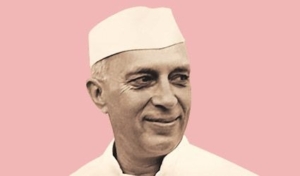
The situation deteriorated further after Jawaharlal Nehru, speaking as President of the Congress, declared that the Constituent Assembly would remain sovereign in determining the future Constitution and would not regard itself as permanently bound by every aspect of the Cabinet Mission Plan. The Muslim League interpreted these remarks as evidence that the constitutional safeguards upon which it had relied could be altered after the transfer of power. Confidence rapidly evaporated.
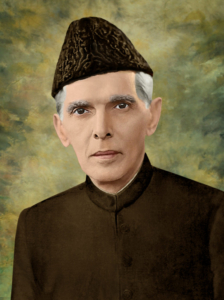
Muhammad Ali Jinnah responded by withdrawing the League’s earlier acceptance and announcing Direct Action. The constitutional conversation increasingly gave way to political confrontation. The tragic communal violence that followed profoundly altered the atmosphere in which constitutional negotiations continued.
The Cabinet Mission nevertheless occupies a unique place in the constitutional history of South Asia. It represented the most sophisticated attempt to reconcile unity with diversity through constitutional design. It neither denied Muslim political aspirations nor abandoned the ideal of a united India. Instead, it sought to accommodate both within an asymmetrical federal structure unprecedented in British constitutional practice.

Whether the Plan would ultimately have succeeded if fully implemented remains one of the most enduring questions in modern South Asian historiography. Historians continue to disagree. Some regard it as the last realistic opportunity to preserve Indian unity.

Others argue that political distrust had already advanced too far for even the most carefully designed constitutional arrangement to survive. The documentary evidence suggests that the Mission came closer than any previous initiative to securing acceptance from both principal political organisations. Its collapse. Therefore, deserves to be understood not simply as another failed negotiation but as the moment when the possibility of a united constitutional future receded most dramatically.

The tragedy of Partition was still not inevitable. The Indian Independence Act of 1947 had not yet been enacted, the boundaries of the future states had not been drawn, and constitutional alternatives technically remained available. Nevertheless, after the collapse of the Cabinet Mission, the political space for compromise contracted with alarming speed. The search for constitutional reconciliation increasingly yielded to preparations for constitutional separation.

The next article examines the final phase of British rule under Lord Mountbatten. It explores how the acceleration of the transfer of power, the Indian Independence Act and the Radcliffe Boundary Commission transformed constitutional uncertainty into one of the greatest human tragedies of the twentieth century.

References:

Principal Documents

[To be continued]

____________________________________________________________________

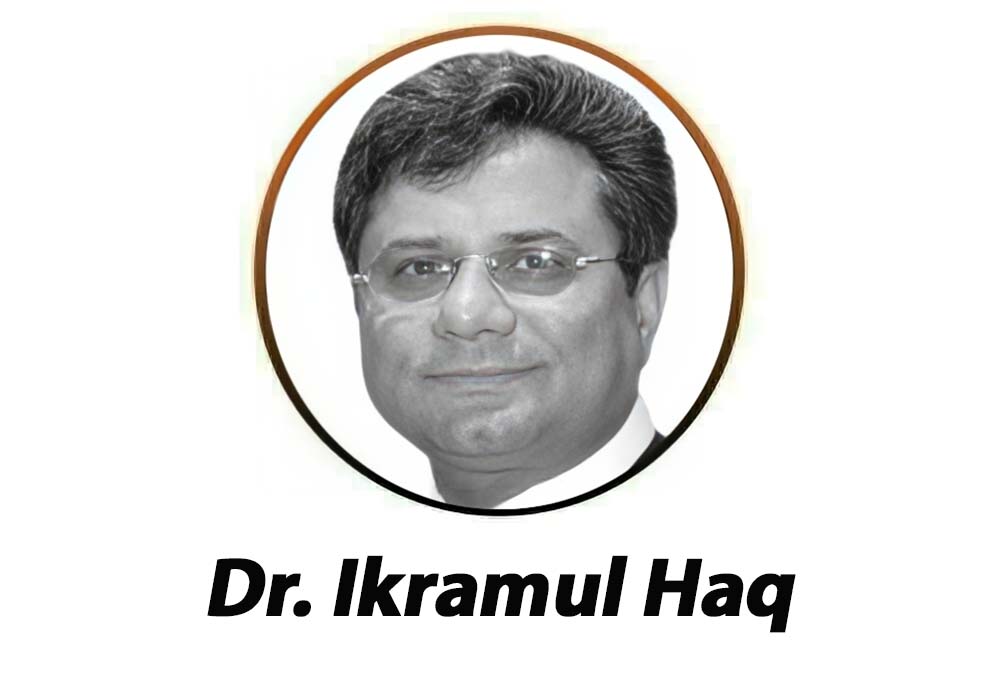
Dr. Ikramul Haq, Advocate Supreme Court, Adjunct Faculty at Lahore University of Management Sciences (LUMS), member Advisory Board and Visiting Senior Fellow of Pakistan Institute of Development Economics (PIDE), holds an LLD in tax laws. He was full-time journalist from 1979 to 1984 with Viewpoint and Dawn. He also served Civil Services of Pakistan from 1984 to 1996.


Similar Posts

  • Road to the East

    Kashi with its rich culture is becoming a hub of tourism, industry. Despite being very close to Pakistan border with Kashi, the aerial trade is being very limited. We are not making a full use of our land link with China. That is not passing a positive impact for the regional economy. Our natural reserves for mines and minerals are one of the biggest resource that we can exchange with China; such as an export for the raw material using the land route, what more specifically if our gov is very vigilant, they can invite the Chinese investors from this region specifically, to extract mines and minerals, but thing that can change the economy of this entire region mainly depends if we can convince Chinese investors to invest in this particular region of Gilgit for the purification of metals. Vice President Pakistan-China Joint Chamber The other best way is the tourism and the hospitality. We need to engage the tourism groups who can be helpful to attract the Chinese people who want to cross over Khunjarab pass to Pakistan. I have noticed many people of this region very much interested to cross the Khunjarab pass to get an access to Pakistan side. Further I want to make you sure that the plateau of the Pakistan side is considered to be one of the most beautiful natural plateau in the world. Culturally this area have been preserved very well, including the ancient buildings such as centuries old. Food is one of the best attraction and the delicacies, it is commonly believed that Ice cream originally started from this region. Similarly, there is a long route which is called the inner wall of the city have a long cue of traditional restaurants with hundreds of options. Paya the lamb foot, is named the same in Kashi language same as pulao, naan, kabab, and many other words. I have never seen a variety of naans in all over sub continent. The same i saw only in Kashi. They also produced a qeema naan (meat) which is one of the delicacy of this region. I conceived an idea that the concept of pizza and spaghettis was stolen by Marco Polo in the 13th century from this region and was taken to Italy. That is why till today spaghettis and pizza is one a famous dish in Italy. But nowhere else in Europe. Bar b que globally I have been to many countries but the best natural taste of bar b que is in this region. Mostly they use lamb, sheep, and beef to make this bar b que. Similarly, pulao was originated from Xinjiang in this region. So, it traveled all the way to subcontinent. The pulao I tasted in Kashi, was one of the best delicacy. It added up with dried grapes. They also love to serve it with the yogurt. Kabab, shawarma have many kind of faces, the region have a lot of shapes for kabab mostly by the meat of sheep. These people like to eat the fats more often Ly than our region. The weather of this area is very harsh as it climbs p to 40 degrees in hot season while drop down to minus -25 in the cold season. Because of this harsh weather the living condition of the normal people have totally been changed. This harsh weather physically converted theses people as a very tough nation. But the other impact of this weather is that this area is mostly dry and even the mountains are mostly barren. Tea is one of a natural product of this area with many kind of teas to be offered. Flower tea is one of the famous tea from this area which is commonly believed to keep a face fresh. But there are multiple kind of teas available in this region. Walking through the streets of Kashi there are hundred of shops, as I mentioned dry fruits are one of the basic product of this region, I have never seen the variety of dry fruits that I found in Kashgar, is indescribable. They are genuine dry fruit lovers providing of hundreds of kinds of dry fruit. The way they preserve it and roast it with the honey, this technology we may need to learn from them. The use of metal and handicrafts especially in the form of brass I have observed are the best in the whole world. Where the use of art work by hand was even more inspiring. Alladin was one of the story that we listen from our childhood, actually this story was also originated in this region. Same as Alibaba, which is one of the oldest tale we always listening from centuries. And who can forget the famous stories of Ali baba with forty thieves. These all stories were originated from the same region. The beauty of this area along with the traditional dresses of the girls that are still very popular in subcontinent. There were a lot of tea houses with a history of more than a hundred years traditionally serving their local tea. Most of the tea houses have the people playing their traditional music and that is so fascinating that you can spend hours to listens that music. The rhythm will really mesmerize you. In my next article I will describe about the traditional restaurants and their dances as performance. To be continued..

  • The AJK Crisis 

    Azad Jammu and Kashmir has recorded at least 40 deaths since early June in clashes tied to the Joint Awami Action Committee’s campaign against the region’s twelve refugee assembly seats, a toll that predates the events of July 27-28, when JAAC and AJK police gave conflicting counts of 14 to 21 more killed in Rawalakot. The combined total since June likely sits in the high 40s to high 50s, though no independent body has confirmed a single figure; every clash in this sequence has produced a JAAC count and a police count that don’t match, and neither has been verified from outside. The July violence fell during the first phase of a legislative election that AJK’s election commission split into three stages because of the unrest, a break from the territory’s usual practice of voting in a single day. Mirpur division cast ballots on July 27. Rawalakot, in Poonch division, was deliberately held back for the third phase because it has been the epicenter of the agitation. The clashes there on July 27-28 came as JAAC’s long march tried to push through the city toward Muzaffarabad, not on a day its own constituents were voting. That the state felt it necessary to stagger an election by geography to manage a protest movement is itself a measure of how far the crisis had already gone. Law enforcement personnel have been repeatedly targeted through the unrest. Police say an armed JAAC contingent opened fire on officers near Combined Military Hospital Rawalakot in a planned attack, which the region’s police chief called outright terrorism. JAAC disputes this, as it has disputed nearly every account of nearly every clash, saying its own people came under fire after power was cut to the area. Neither version has been independently verified, and the Human Rights Commission of Pakistan has called for an impartial probe into the Rawalakot deaths for that reason. What is not contested is that a movement now banned under anti-terrorism law has been in near-continuous confrontation with police for eight weeks, and that officers have died in it. The dispute traces back to a structural question the state has already answered through the proper channel. Six of the twelve seats go to refugees from the Jammu division, numbering around 434,000; six more go to refugees from the Kashmir Valley, numbering around 30,000. JAAC calls this disproportionate and argues the seats let people who do not live in AJK shape its politics from outside. The AJK Supreme Court ruled on June 7 that the seats are constitutionally protected and can only be altered through a formal amendment, not by administrative order or by protest. The government’s proscription of JAAC under anti-terrorism law came two days earlier, on June 5, ahead of a planned June 9 protest; the worst of the killing followed the ban rather than preceding it. Both sides of that sequence can be argued. What can’t be argued is that the state waited for a body count before invoking the law , it acted first, and the deaths followed. On the demands themselves, the government reports 24 of JAAC’s 44 total demands fully implemented and 16 more partially complete or in process, with 4 at an impasse. That record is substantial, larger than most governments manage against a protest charter. But it does not settle the argument on its own, because none of the 24 completed demands is the refugee-seat question. That one sits among the 16 still unresolved, and it is the demand driving the current violence. A compliance rate built mostly from other line items ; subsidies, cabinet size, judicial commissions, demonstrates the state’s good faith in general. It does not demonstrate its handling of the one issue JAAC is dying and killing over, and that distinction should not be blurred. Even so, the seat question has been settled by the only body with authority to settle it. Abolishing the seats to appease pressure tactics would be unconstitutional on its face, and it would tell any future movement in Pakistan that enough disruption can override a court and a negotiated settlement alike. A state that has followed its own constitutional process, implemented most of an agreed reform charter, and still faces an intensifying campaign of blockades and attacks on security personnel has grounds to hold its position; grounds that rest on the process it followed, not on an implementation statistic that doesn’t reach the actual grievance. The state’s strongest move now is to negotiate from the position it has already earned, not concede from a position of weakness. Reweighting the seats toward Jammu’s larger population, pursued through the amendment process the Supreme Court has itself outlined, would resolve the proportionality complaint on the state’s own terms and timeline, not JAAC’s. Offered now, immediately after a disputed mass-casualty event, it would read as capitulation. Offered once the group’s remaining leadership either accepts the court’s authority or is dealt with through the law, it becomes a demonstration of a functioning constitutional order rather than a retreat from one. The state does not owe JAAC a seat at the table it has spent eight weeks helping to blow up. It owes AJK’s residents a government that can enforce the law, account honestly for its own role in how this got this bloody, and eventually fix what is fair within the constitution , in that order.

  • Ecolinguistics and the Role of Media

    The role of media should not be confined to disseminating news and information but must also highlight public awareness regarding climate change. The media, in its reporting, is required to use appropriate terminology and diction to raise awareness, highlight the causes, and provide a way forward. The media, in its reporting, is expected to project the environment not as a resource to be used by humans but as a living environmental and ecological process that must not be disturbed by humans. For example, while writing such reports, if the media says that natural resources are diminishing or facing extinction, it must similarly highlight that the environmental system is being affected or impacted negatively . Recent studies have also reinforced this perspective. Penz and Fill (2022) observe that ecolinguistics promotes and fosters environmental awareness while supporting and strengthening the connection between humans and nature for sustainable development. In this context, Alexander and Stibbe (2014) argue that ecolinguistics plays a key role in highlighting the relationship between humans and the environment, as well as its impact on addressing environmental challenges and shaping a sustainable future. It is pertinent to highlight that while reporting any incident about environmental degradation or natural disasters, the media, apart from reporting, is also expected to provide solutions and a way forward to help face such incidents in the future. In reports about floods, wildfires, and rising temperatures, the media is also required to provide guidance and suggestions on how to combat or lessen the impacts of such environmental changes. The reporting must not be based only on presenting news and subsequently creating fear or chaos but must also give a sense of hope among people that through various techniques and the use of technology, such natural disasters can be managed effectively. The media must not consider floods, droughts, fires, or other environmental disasters merely as natural disasters but should link such impacts with environmental changes, industrial pollution, deforestation, human intervention with nature, and so on. Fairclough (1995), in his study, states that media should cover and highlight the areas that , on the other hand, are ignored and not given consideration by the masses. Therefore, the media is expected to sensitize the masses regarding such disasters and create a way forward to combat or tackle such environmental change disasters and their impacts on people and society as a whole. On the other hand, equally important is environmental equity or justice in society. It has been widely observed and noted that in floods, droughts, disasters, and environmental changes, the major impacts are faced by the underprivileged in society. It is the role and responsibility of the media to highlight and become a voice for such voiceless people, representing them and creating a sense of ownership among the poor and marginalized sections of society. The media is also required to highlight and create awareness among people about science and technology related to the environment and provide them with knowledge that through the use of such technology, they can tackle the horrors of disasters. The study of ecolinguistics reminds the media that humans are, in no way, different from society and can never be detached from society and vice versa. Hence, media reports are also expected to discuss humans, rivers, oceans, flora, fauna, biodiversity, and the ecosystem as a whole to give them significance and bring them into the limelight of the coverage. Media reporting is also required to use environment related terminology and diction, such as environmental war, ecological emergency, and other relevant terms, in its reports to highlight environment related information. Recent studies highlight that similes and metaphors have a significant impact on human thinking. Hence, the media is encouraged to resort to this method to mould public opinion towards environmental conservation and protection. Moreover, media personnel are required to engage in investigative journalism and cover incidents and events from different angles , examining their pros and cons deeply. If there are frequent flash floods in any area, the media is expected to discuss the causes and the role of concerned authorities in handling the incidents . Media houses, along with environmental protection organizations and other stakeholders, are required to impart knowledge and training to journalists. There is also a significant role for environmental funding organizations in sensitizing media personnel. In training sessions, they are expected to invite environmental experts, scientists, and scholars who have made significant contributions in this area. Media reports and the diction used therein have great significance. They must highlight a green and stable future through sustainable development initiatives and become partners in facing the challenges and effects of environmental degradation. They must give hope to people that the media stands with them and will continue contributing its responsible and positive role. This is the major objective of ecolinguistics. Societies such as ours widely need the use of ecolinguistics in the media.

  • A Habit of Second Thought

    President Donald John Trump occupies a singular place in the history of American leadership. He is at once a politician, a successful businessman, and an enthusiast of freestyle wrestling. His manner of thinking, planning, and decision-making bears a character distinctly different from that of his predecessors; indeed, many observers contend that it has few, if any, precedents in the annals of modern American politics. Analysts frequently describe him as a man of remarkable flexibility, yet they also acknowledge that a position defended with absolute conviction at one moment may, in the next, be replaced by its very opposite without the slightest hesitation. This characteristic became strikingly evident following the commencement of large-scale military operations against Iran on 28 February 2026. A careful examination of the period, particularly up to the defence of the Memorandum of Understanding concluded in June, reveals no fewer than seven significant shifts in President Trump’s strategic approach. At the outset, he dismissed economic concerns altogether, declaring that the financial difficulties of the American people were of no consequence and that the sole imperative was to prevent Iran from acquiring a nuclear weapon. By the time of the G7 summit, however, his tone had undergone a marked transformation. He began advocating the necessity of an agreement capable of shielding the global economy from a crisis comparable to the Hoover era and the Great Depression, pointing to instability in the financial markets as evidence supporting this revised position. His initial call for regime change in Iran was equally unequivocal. In a video address, he urged the Iranian people to rise against their government, declaring that the moment might represent their final opportunity for generations to come. Yet subsequent statements quietly abandoned this objective. Instead, he began speaking of normalising relations with Iran and cooperating with its existing leadership, occasionally describing those very leaders as more “reasonable” than before. During the early phase of the conflict, the complete destruction of Iran’s missile program, the industries responsible for its production, and the naval forces supporting it was presented as a principal objective. Later, however, his position softened considerably. He observed that while missiles might inflict damage upon limited areas, they were incapable of destroying the world, and since other nations possessed similar capabilities, Iran might also retain a limited missile arsenal. It was for this reason that the Memorandum of Understanding contained no provision requiring the dismantlement of Iran’s missile program. A similar evolution occurred regarding Iran’s nuclear program. Following the military operations of 2025 and again in 2026, it was asserted that Iran’s entire uranium enrichment capability would be eliminated and that the nuclear threat would be extinguished permanently. In time, however, the objective was narrowed simply to ensuring that Iran would not acquire a nuclear weapon. Rather than insisting upon total dismantlement, reliance shifted towards international monitoring and continued negotiations. Control over highly enriched uranium, initially regarded as a non-negotiable and indispensable condition, was subsequently treated as a matter of secondary importance. It was argued that preventing the production of a nuclear weapon remained the essential objective, while questions concerning enriched uranium would be addressed in future negotiations. The instruments of pressure likewise underwent a profound transformation. Economic sanctions and financial restrictions, once regarded as the principal means of coercion, gradually gave way to incentives. Discussions emerged concerning the release of frozen assets, temporary licences for Iranian oil exports, and the possibility of reconstruction assistance amounting to hundreds of billions of dollars, with additional concessions to be granted subject to Iran’s future conduct. Likewise, the original determination to terminate Iran’s support for regional proxy groups gradually receded into the background. In its place, greater emphasis was placed upon securing a direct ceasefire and addressing the broader requirements of peace and stability throughout the Middle East. These strategic adjustments were accompanied by repeated tactical oscillations, in which stern threats were frequently followed by the postponement or cancellation of military action. A chronological review compiled up to 3 August reveals numerous announcements of major strikes that were ultimately abandoned. The latest example occurred on 1 and 2 August, when military action was suspended following requests from Iran and several regional parties, together with the emergence of preliminary outlines for a possible understanding involving the reopening of the Strait of Hormuz and measures aimed at removing the nuclear threat. On 7 April, shortly before the expiration of an ultimatum in which President Trump had threatened strikes against bridges and power stations, a two-week ceasefire was agreed. He had warned that such attacks could extinguish an entire civilisation. On 21 April, at the request of international mediators, the ceasefire was extended indefinitely, although hostilities resumed at a later stage. On 18 May, a major military operation was deferred to allow serious negotiations to proceed, but when those negotiations faltered, military action recommenced. On the night of 11 June, President Trump threatened an overwhelming assault upon Iran together with the seizure of its oil and gas resources. Yet only hours later, citing what he described as a significant diplomatic breakthrough, he cancelled the operation, thereby paving the way for the Memorandum of Understanding. Signed on 17 June, the Memorandum provided for a ceasefire, the temporary reopening of the Strait of Hormuz, limited economic relief, and a framework for sixty days of negotiations. It nevertheless expressly reserved the right to resume bombing should its provisions prove unsatisfactory. At the beginning of July, following attacks upon commercial shipping, the ceasefire was declared terminated. Military strikes were launched against dozens, and subsequently scores, of targets. Congress was formally notified, and the Administration adopted an increasingly uncompromising public tone. Yet negotiations continued simultaneously. The naval blockade was reimposed, retaliatory operations persisted, and on 27 July the intensive daily bombardment was once again suspended in order to afford diplomacy another opportunity. Even in early August, fresh threats eventually yielded to renewed consideration of a possible political framework. Oil sanctions followed a similarly fluctuating course. Temporary export licences were granted, only to be withdrawn as sanctions were reimposed.

  • The Illusion of Governance and the Structural Cris…

    When the highest echelons of a state pronounce that the apparatus of governance has completely collapsed, it ceases to be merely the remark of a federal minister. Instead, it becomes a stark, involuntary confession of the internal decay inherent in a post-colonial state structure—a testament that indelibly seals the collective and systemic failure of the ruling class. To any conscious citizen, political worker, or student of history, this acknowledgment contains little novelty; the populace has long been ground to dust by the gears of this obsolete machinery, experiencing its failure as an everyday reality. The true astonishment lies in hearing this unvarnished truth uttered from the very center of power. One is compelled to ask: what intellectual evolution prompts the masters of the state to confess to their own institutional bankruptcy? Is this an enlightened realization paving the way for genuine reform, or is it merely the prelude to a new political experiment—a fresh authoritarian corset designed to tighten the controls of a shifting state arrangement? History stands as a grim witness that whenever the crisis of the state is magnified by its custodians, the ultimate objective is invariably to sabotage constitutional continuity and clear the path for elite capture or adventurous political engineering. Time and again, this tragedy has been inflicted upon the nation’s destiny. The nation has repeatedly witnessed the rise of self-proclaimed saviors who concentrated all fountainheads of power within their own persons, only to leave behind a hollow illusion of stability that dissolved like a house of sand upon their departure, plunging the country into irreparable geographic, economic, and political trauma. Today, ominous signals point toward the resurrection of this very same discredited formula. The echoes of a renewed stranglehold and a controlled democracy emanating from the rhetoric of the interior ministry betray an elite class fundamentally terrified of true popular sovereignty and constitutional supremacy. For the past seventy years, this nation has been systematically denied a genuine democratic evolution because dominant power centers have persistently sought to subordinate all state organs to their exclusive writ. To dismiss this systemic trauma merely as a functional glitch in administration is to indulge in a deliberate evasion of reality. The truth is that this is not the collapse of a mere administrative mechanism, but rather the manifestation of Hamza Alavi’s classic thesis of the over-developed state—a persistent structural crisis dominated by entrenched elite capture. Within this post-colonial framework, the coercive control mechanisms of the British Raj have been preserved intact, where the primary objective of the state remains the extraction of resources and the concentration of power rather than public welfare. When political expression is stifled, electoral outcomes are systematically engineered, and parliament is reduced to a rubber stamp, the resulting paralysis is entirely inevitable. The crisis of governance is, at its core, a profound crisis of legitimacy. No administrative superstructure can endure without the genuine, uncoerced mandate of the people. When state policy-makers declare that the system has collapsed, they are essentially confessing to their own fiscal insolvency and administrative bankruptcy. Yet, the tragedy of this confession lies in its utility: rather than diagnosing the foundational causes, they weaponize this failure as a pretext to tighten their grip on power. History teaches us that whenever economic or administrative pressures mount, the centers of power invariably bypass the spirit of the constitution to erode it further. The dangerous concentration of authority in a few hands, the freefall of economic indicators, and the formulation of policies under the duress of international financial institutions—all while excluding the citizenry from meaningful participation—constitute the real malignancy eating away at the state. Democracy is far more than casting a ballot once every few years; it is an active architecture built on inclusive policymaking, freedom of expression, the rule of law, and the uncompromising protection of fundamental human rights. When these values are systematically strangled, the collapse of governance is not an accident, but a natural law. The priorities of the ruling elite have never accommodated the welfare of the common citizen. State resources are routinely sacrificed at the altar of corporate privileges, elite exemptions, and inflated administrative expenditures, while foundational human rights—education, health, and justice—are systematically withheld from the masses. History offers a relentless warning: states are not experimental laboratories where arbitrary political models can be tested on a whim. From Ayub Khan’s Basic Democracies to Zia-ul-Haq’s Majlis-e-Shoora, and Pervez Musharraf’s devolution experiments, every single top-down engineering project ended exclusively in national fragmentation and internal turmoil. Each time, a new savior arrives claiming to smash the system, only to leave the country deeper in the mire before exiting the stage. Should the interior minister’s declaration be used this time to midwife yet another hybrid experiment or authoritarian arrangement, it will prove fatal to the nation’s remaining political existence. Escaping this vicious cycle of institutional decay demands moving beyond raw emotion and tired conspiracy theories to embrace a rigorous, actionable roadmap for structural reform that must unfold with absolute urgency. First and foremost, political will must be harnessed to draft a comprehensive framework of constitutional and legal reforms that restores parliament to its rightful position of supremacy, ensuring that executive interference in legislation is thoroughly eliminated and parliamentary committees are empowered to reflect genuine public representation. In tandem with this, a revolutionary structural overhaul of the civil and military bureaucracies remains non-negotiable, requiring the archaic and paternalistic colonial-era administrative model to be dismantled and replaced with a modern public service framework rooted entirely in direct public accountability. Furthermore, fiscal autonomy and equitable resource distribution must be granted to the federal units as an imperative measure, systematically redirecting national wealth away from elite extravagance toward foundational public infrastructure, education, and healthcare for the marginalized segments of society. Finally, the judicial system must be thoroughly reformed to guarantee the common citizen swift and affordable access to justice, effectively resolving systemic contradictions through transparent legal recourse rather than arbitrary administrative fiat. The federal interior minister’s warning that the system has collapsed must therefore serve as an

  • When the Indus Runs Dry: Why Words Alone Cannot Pr…

    By General Ghulam Mustafa (Served in different staff and command assignments, commanded a Corps, raised and commanded Army Strategic Force Command) & Engineer Arshad H Abbasi, Co-founder, Energy Excellence Centres at NUST and Engineering University Peshawar, International Transboundary Water Expert  Prime Minister Sahib, With the deepest respect, and as one voice among the 260 million you lead, we write to you today not to doubt your resolve, but to place before you what we believe you deserve to see in full — because a nation that trusts its Prime Minister also trusts him to be given the whole picture. On August 13, 2026, on the eve of our Independence Day, you stood at the inauguration of the Yadgar-e-Fatah monument in Islamabad and gave voice to what every Pakistani feels in their heart. “I declare in clear terms that every single drop of Pakistan’s water is our red line,” you said, warning that if India “does not come to its senses,” it would be “responded to directly.” We were moved by those words, Sir, as was the nation. It was the latest chapter in a warning you have repeated for over a year, since India placed the 1960 Indus Waters Treaty in abeyance following the April 2025 Pahalgam attack — a treaty that had, for six decades, survived three wars precisely because water was once considered too sacred, too existential, to be weaponized. It is with humility, then, and not with any wish to add to your burdens, that we ask you to consider what has been happening quietly at the river’s source while that red line was being drawn. What Has Been Happening in Ladakh: Almost two and a half months before your Independence Day address, on May 27, 2026, India inaugurated what it proudly called a first: the country’s inaugural Rock Check Dam, built across the Indus itself near Upshi village in Leh district, at 11,400 feet. Built in a mere seven days from 180 metric tonnes of interlocking riverbed boulders, without a gram of cement, it now holds back a 1,500-foot pool capable of storing 40 million litres — roughly 200 acre-feet — of Indus water. We respectfully submit that it may be something more: the opening move of the Sindhu Jal Samriddhi Abhiyan, a Ladakh-wide water campaign launched by Lieutenant Governor Vinai Kumar Saxena. It does not stand alone, Sir. It sits alongside the newly restored 43-kilometre Igoo–Phey canal; the Mahey Tokpo–Raldho canal at 14,000 feet, drawing from Yaya Tso Lake; the Brakdongthang Bodh Kharbu canal in Kargil; solar-powered lift-irrigation schemes at Latoo and Karsha; and Project Him Sarovar, a plan for fifty to one hundred small reservoirs across Leh and Kargil, unveiled on April 10, 2026, to capture glacier melt that would otherwise flow downstream toward us. We ask this humbly: for whom is all this water truly being gathered? Leh district is home to barely 160,000 people. It is also home to the Western Air Command’s most strategically dense high-altitude military footprint on India’s borders — Leh Air Force Station, the newly upgraded Mudh-Nyoma fighter base, Thoise Air Force Station feeding the Siachen front, and the world’s highest airstrip at Daulat Beg Oldi. Add the XIV “Fire and Fury” Corps and the newly raised divisions garrisoning eastern Ladakh, and a different picture may be emerging — one where the deepest beneficiary of this irrigation campaign is not the Ladakhi farmer but the soldier and the forward base that no longer wishes to depend on a single vulnerable mountain road. The massive military presence, characterized by extensive garrisons and airbases in the fragile Siachen and Ladakh regions, acts as a primary catalyst for glacial retreat, directly exacerbating climate vulnerabilities in downstream Pakistan We say plainly, Sir, out of fairness: under Annexure E of the treaty, India is permitted non-consumptive storage of up to 0.40 million acre-feet on the Indus main stem in the Ladakh sector, and a 200-acre-foot check dam, judged alone, is a small thing against that number. Our concern is not any single dam. It is the pattern — check dams, canals, lift schemes, and a hundred small reservoirs, each defensible on its own, together forming a system capable of holding back water at precisely the moment a suspended treaty leaves India no obligation to release it. You declare that Pakistan will not cede a single drop of water, yet the reality is otherwise. The diversion of Indus waters—driven by a stated Indian policy of zero flow to Pakistan—is already underway. Regrettably, your own ministries have taken this matter to global forums, even as the people of Ladakh bravely oppose this very diversion into their fragile permafrost lands.   Respectfully, we also note that your own minister is now questioning the very stability of governance in Pakistan. If that is so, Sir, we urge you—with humility and candour—to look inward before raising your voice outward. And downstream, Sir, is where our entire modern economy waits. Tarbela Dam alone generates close to 4,888 megawatts today, with capacity meant to rise toward 6,418. The 4,500-megawatt Diamer-Bhasha Dam and the 4,320-megawatt Dasu Dam were built on the assumption of a river that keeps flowing. To choke that flow at its source, even gradually, even in the name of a farmer’s canal, is to threaten the affordability of electricity for a nation already straining under its cost — and the food and economic security bound up with it. We wish to be clear: this is not written against Ladakh’s own people, or their right to a better harvest. It is worth remembering, respectfully, that Ladakh’s own most prominent son, the engineer and activist Sonam Wangchuk, our friend too, has spent years warning — through repeated hunger strikes over Ladakh’s fragile ecology and constitutional status — that his homeland’s landscape is being reshaped less for its own people than for priorities decided in Delhi. He has carried that protest in his own body, across multiple fasts since 2024. A Humble Word on Timing- We say this, Prime Minister

Leave a Reply

Your email address will not be published. Required fields are marked *