pakistan8217s defence alliance

Pakistan’s Defence Alliance: Is Islamabad Sh…

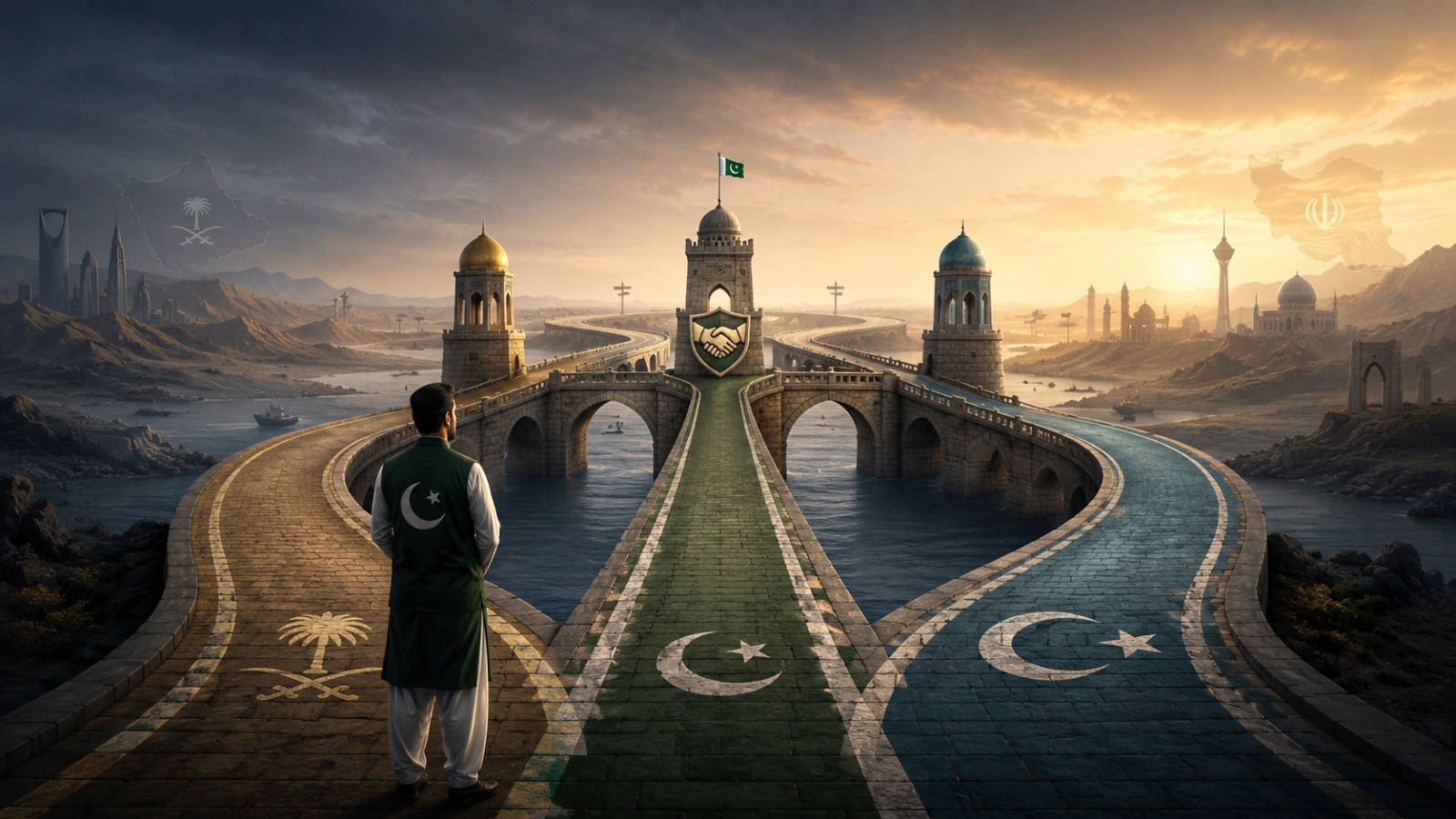
Pakistan has just taken on a new kind of commitment, and it has caught people’s attention in a way that ordinary diplomatic announcements rarely do. Pakistan’s ties with Saudi Arabia go back decades, and its defence relationship with Türkiye has grown steadily closer in recent years, so cooperation between the three is not surprising on its own. What is new is the nature of the commitment: an attack on any one of the three countries is now to be treated as an attack on all three.


This is not really about whether Pakistan should be working with Saudi Arabia and Türkiye. It is about whether Islamabad has entered this arrangement with a clear enough sense of what it wants from it, and what obligations it may quietly be creating for the future.


It also helps to get the timeline right. This is not Pakistan’s first mutual-defence commitment with Saudi Arabia. Back in September 2025, the two countries had already signed a Strategic Mutual Defense Agreement, treating aggression against either as aggression against both. What is new in 2026 is the attempt to bring Pakistan, Saudi Arabia and Türkiye together inside one shared framework. Seen that way, this is less a first step and more a new layer added to a relationship that was already forming.

An Alliance at a Complicated Moment

The agreement comes at a difficult time. Pakistan sits right next to Iran and has a tense relationship with India, while both Saudi Arabia and Türkiye maintain strong economic ties with New Delhi. At the same time, Islamabad has to keep managing working relationships with Iran, China, the United States and its Gulf partners. Any defence commitment, then, has to be understood against several relationships that do not always move in the same direction.


Pakistan is also not entering this alliance from a position of comfort. The country is dealing with economic, security and political pressures all at once, along with instability on its Afghan border and a delicate Iran border to manage. That is a lot to balance already, which is exactly why the practical details of this new commitment matter more than the ceremony around its announcement.

What Has Pakistan Actually Committed To?

The basic idea is simple: an attack on one member is treated as an attack on all. But what does that actually mean in practice? What would genuinely trigger the commitment, and what military support would Pakistan be expected to give—or receive? And what happens if the three countries find themselves with different interests in the same crisis?


Pakistan’s own Foreign Ministry offered some sense of this in July 2026, saying that agreements of this kind mostly involve peacetime military cooperation, and that in an actual war, how far the commitment would go still needs to be worked out. If anything, that statement makes the case for more clarity, not less.


That uncertainty matters most in two situations close to home. If Pakistan faced another serious confrontation with India, would Saudi Arabia and Türkiye offer real support, given their own important ties to New Delhi? And if tensions with Iran escalated, would Pakistan be expected to take a position that could strain its relationship with its neighbour? Even the growing water dispute with India, one of Pakistan’s most basic security concerns, has not been publicly linked to any shared plan among the three partners. These questions remain open.


There is also a quieter concern worth sitting with. Saudi Arabia brings financial strength to the table, Türkiye brings a growing defence industry, and Pakistan brings manpower, real operational experience and nuclear deterrence. If these strengths are genuinely shared, all three countries could benefit. But if the load falls unevenly, with Pakistan carrying most of the manpower while its own position in a future India crisis stays unclear, the costs could end up outweighing the gains.


History offers a useful reminder here. In his 1983 book Can Pakistan Survive? The Death of a State, Tariq Ali examined Pakistan’s political system, its foreign policy, and the powerful role the military has long played within the state. The circumstances today are very different, but his broader question still feels relevant: can Pakistan turn its usefulness to other powers into lasting strength of its own?


Something else stood out alongside the agreement itself: the mood surrounding it. Governments naturally welcome diplomatic wins, but a defence pact carrying possible wartime obligations is a different kind of agreement than a trade deal. With so many practical details still unclear, the celebratory tone raises a fair question: is this a carefully thought-through long-term strategy, or mostly the excitement of the moment? Commitments this serious deserve a clear explanation before they deserve applause.


Pakistan must also make sure its growing ties with Saudi Arabia and Türkiye stay compatible with its long-standing relationship with China, and with the working relations it still needs with Iran and the United States.

Strategic Relevance Is Not Strategic Autonomy

Pakistan is becoming more important to other countries. Its military strength, its geography, its nuclear deterrence, and its relationships across very different global camps all give Islamabad real value in the eyes of others. But being useful to other countries is not the same as having a clear strategy of your own.


Strategic autonomy simply means that Pakistan knows what it wants and makes sure its partnerships actually serve that. It means asking not only what Saudi Arabia, Türkiye, China or the United States want from Pakistan, but what Pakistan wants from each of them in return. A country can be militarily valuable, geographically important and courted by several powers, and still have no defined national strategy behind it. That difference sits at the heart of this entire discussion.


Washington’s fairly quiet response also deserves attention. There is no evidence that the United States is deliberately setting a trap for Pakistan. But Islamabad should still think carefully about whether a closer Saudi-Pakistani security relationship could, over time, create pressure on Pakistan to support Riyadh in a confrontation involving Iran, even where that also happens to serve wider American interests. Pakistan has spent months arguing that the Iran-US standoff should be resolved through dialogue, not conflict. The real question, then, is not whether Washington is quietly using Pakistan. It is whether Islamabad has kept enough room to say no, if its partners’ interests eventually pull in a direction that does not serve its own.

The Cost of Decisions Made for the Present

The real concern is not that Pakistan is working with Saudi Arabia and Türkiye. It is whether today’s leaders have thought far enough beyond today’s circumstances.


Governments change. Regional alliances shift. Saudi Arabia’s interests can change, Türkiye’s can change, Washington’s approach to Iran can change, and so can India’s. Pakistan, however, will remain with whatever commitments it signs today, long after the people who signed them have moved on.


That is why a defence agreement should never be judged only by how well its signing ceremony went. It should be judged by what it asks of a country once circumstances turn difficult. If this alliance brings Pakistan stronger defence cooperation, investment, technology and genuine security, it could prove valuable. But if it was entered into mainly for short-term financial relief, political prestige or the simple wish to stay strategically relevant, the country may later find that its obligations last far longer than the benefits ever did.


Future generations will not inherit today’s speeches or celebrations. They will inherit the consequences: the economy, the security environment, and the relationships built with Pakistan’s neighbours in their name.


Pakistan needs strong partnerships, but it also needs a clear sense of the country it wants to become—one that can work closely with powerful friends without letting those friendships quietly decide its national interests for it.


The question that matters most is a simple one: are today’s agreements helping build the Pakistan we want our children and grandchildren to inherit, or are they creating obligations that those same children may spend decades trying to escape?
Similar Posts

  • Pakistan deserves better, Call for responsible gov…

    By Mehak Ali Pakistan is a country united by diverse cultures, languages, and provinces. Sindh, Punjab, Balochistan, Khyber Pakhtunkhwa, Gilgit-Baltistan, and Azad Jammu and Kashmir together form a nation blessed with breathtaking mountains, mighty rivers, vast deserts, fertile plains, and a strategically significant location. These natural blessings make Pakistan one of the most important countries in South Asia. ‎Yet, despite these advantages, millions of citizens continue to struggle with basic issues. Every day, news headlines report murders, sexual violence, malnutrition, unemployment, floods, illiteracy, inflation, gas shortages, electricity outages, and rising fuel prices. These are not isolated incidents; they are challenges that affect the daily lives of ordinary Pakistanis. ‎Citizens pay taxes with the expectation that the government will provide quality education, healthcare, infrastructure, security, and economic opportunities. When these expectations remain unfulfilled, frustration naturally grows. Good governance is not measured by speeches or publicity but by improvements in the lives of the people. ‎The condition of Sindh, particularly in many rural areas, reflects these concerns. Damaged roads, overflowing garbage, poor sanitation, and inadequate public services make everyday life difficult. Similar concerns are voiced by people in Balochistan, Khyber Pakhtunkhwa, and other regions, where many continue to demand better facilities, development, and equal opportunities. ‎Farmers work tirelessly under the scorching sun to feed the nation. Employees spend long hours in offices to support their families. Students invest years in education, yet many remain unemployed even highly qualified graduates and researchers struggle to find suitable jobs. Meanwhile, poverty, heat-related illnesses, and malnutrition continue to claim innocent lives. ‎In a democratic society, peaceful protest is a constitutional right. When citizens raise their voices for justice, development, or equal treatment, they deserve to be heard with dialogue rather than confrontation. The unrest in Azad Jammu and Kashmir reminds us that citizens’ grievances whether related to economic hardships, political representation, or governance must be addressed through dialogue, accountability, and peaceful solutions rather than allowing frustration to turn into violence. Listening to the concerns of the people strengthens democracy and builds trust between the government and its citizens. ‎Despite these challenges, Pakistan remains our home, and we are proud to be Pakistanis. Criticizing shortcomings does not mean we love our country any less. On the contrary, it reflects our hope for a better future. We dream of a Pakistan where every citizen enjoys equal rights, where public resources are used responsibly, where justice prevails, and where no one is left behind because of their province, ethnicity, or economic status. ‎Pakistan has immense potential. What it needs is sincere leadership, transparent governance, and policies that place the welfare of the people above all else. Only then will every citizen be able to say with confidence and pride: Yes, we are Pakistanis, and we are truly united.

  • Trump Era is over?

    Donald John Trump entered the White House as the 45th President of the world’s oldest constitutional democracy in January 2017. As incumbent he lost the election at the end of his four-year term. He took oath of office as the 47th head of state in January 2025. As there is a two-term constitutional restriction most Presidents falter in the later years of power. It was George Washington, the founding father and the first President who set this tradition of going home after eight years at the helm. Franklin Delano Roosevelt ( FDR ) the 32nd President served from 1933 to 1945 until his death in office. He is the longest serving US President. As his rule stretched over four terms, a constitutional amendment was made to restrict the term in office to two. Since then, craziness of the final term has increased manifold as humans are fond of building their legacy to be remembered for all times to come. Richard Nixon had to resign in his second term on charges of break-in and lying. President Ronald Reagen got involved in the Iran Contra Affair that seriously dented his popularity. Jimmy Carter was a great President who never got a second term. Bill Clinton did well in his first term but then had to face impeachment because of the Monica Lewinsky affair in the second. Bush Sr had single term while Bush Jr started the Afghanistan war which proved to be disastrous. Barrick Hussain Obama promised to end wars but badly failed. In fact, the inferno spread in the entire Middle East. Joe Biden did not run for office for the second term as the first was not very glorious and he was out of steam so he nominated his Vice President for the top slot. Legacy is earned not forced. There are no short cuts to lasting glory. Craziness does not help it only complicates. Capturing and killing head of states in the 21st century indicates brutalized narrow thinking and over simplification of the long-term complexities. Such an approach may have worked in the 18th of 19th century but not anymore. Trump wanted to control oil. He first took control of Venezuela by abducting its President through palace intrigue. Most countries in the Middle East ( ME ) were already subservient. He decided to take control of Iran as was done in the decade of the fifties when Shah was reinstated through CIA action. Mohammaed Mussadiq the elected President was captured and imprisoned. The Pahlavi Dynasty ruled Iran till 1979 when it was over thrown by the Islamic Revolution led by Imam Khomeni. Since then, the country has been struggling for its sovereignty At the behest of the rogue Israeli Prime Minister Benjimin Nathenyau, Trump decided to attack Iran and kill its top leadership through clandestine on the ground information sharing and intrigue. Imam Khamenei, the successor to Imam Khomeni, was assassinated but the regime survived. Iran decided to retaliate. The US bases were the closet targets. Israel looked the other way for self-preservation leaving USA to face the wrath. The vulnerability of the oil rich states was exposed. Reality set-in. Yankees have to go home was the clear verdict. Power structure in the entire ME is gearing for change. Mecca Joint Defense Agreement ( MJDA ) has been signed by Turkey, Pakistan and Saudi Arabia, others may join soon. A reasonable peace agreement can provide the much-needed face saving for Pakistan is on the forefront. The Abraham Accord to legitimize the illegitimate state of Israel has been thrown in the cold storage. After Iran, Trump also sought regime change in Afghanistan which has not happened so far. His heroics have failed to produce results. Losers are rejected by the American public. Congressional elections are scheduled for Nov. The polls are not favorable for the Republicans. If Democrats gain control of the house, Trump may have to face impeachment. It will then be the end of his political ambitions, leaving behind a legacy of ill-planned misadventures for personal glorification. Fall of the most powerful leader of the only super power of the world will certainly have ripple effects. First, it will be the totally dependent and subservient leadership in the ME followed by other friendly regimes. The countdown has started for Trump. Collateral damage has to be understood and contained. I remember the words of the legendary Cricket Captain Hafiz Kardar when Pakistan was at the verge of victory in the Oval cricket test in the decade of the fifties; ” Only rain can save England from defeat “. Pakistan prevailed, Fazal Mahmood emerged as a hero. Since then, there has been no looking back. Pakistan emerged as a major player in the cricketing world. Trump should pray for divine intervention otherwise it is all over for him and his cronies.

  • Beyond Public Finance: Towards Constitutional Poli…

    The previous part VIII of this series concluded that a just tax system must satisfy more than the requirements of arithmetic. It must rest upon legislative competence, representative consent, rational classification, due process, protection against arbitrary deprivation, transparent expenditure and effective remedies. Parliament, while levying taxes cannot constitutionalise injustice merely by enacting it. Pakistan’s fiscal crisis will not be resolved by asking citizens to finance an unreformed state through increasingly coercive instruments. A recent book by Dr Hafiz A. Pasha, Fatima Malik and Hafsa Tanveer, Pakistan: Reforming an Inefficient and Inequitable Tax System, provides an appropriate opportunity to carry that argument forward. The volume is ambitious, data-rich and deserving of serious attention. Few recent studies attempt, within a single work, to map federal and provincial taxation, estimate tax gaps through different methodologies, examine incidence across income groups and sectors, evaluate fiscal incentives and finally present a quantified reform programme. Its central diagnosis is familiar but supported by extensive empirical work. Pakistan combines high statutory rates with a low tax-to-GDP ratio, excessive dependence on indirect taxation, pervasive evasion, severe sectoral disparities and weak provincial revenue mobilisation. The authors propose reforms that, in their estimation, can increase the national tax-to-GDP ratio by approximately three percentage points by 2027–28. The principal difficulty lies not in what the book measures. It lies in what the framework of measurement necessarily leaves outside its calculations. The usefulness—and limits—of the tax-gap lens The organising idea of the book is the tax gap. Through cross-country regressions, a representative-tax-system approach, monetary estimates of evasion and bottom-up calculations, the authors conclude that Pakistan possesses the potential to collect approximately three percent of GDP more in taxes. This is analytically valuable. It also risks converting a constitutional and political problem into an accounting exercise. A tax gap is not necessarily a reservoir of revenue waiting to be collected. Parts of it may reflect privileges protected by influential groups. Other parts arise from low productivity, fragmented enterprises, unemployment, weak financial inclusion and the regulatory costs created by the state itself. Informality is not always a voluntary choice made for the purpose of evasion; it can also be a survival strategy in an economy where formalisation invites multiple taxes, withholding obligations, inspections and compliance costs without ensuring reliable public services. Citizens also judge taxation in relation to expenditure. Their reluctance cannot be understood solely as non-compliance when additional revenue appears likely to finance debt servicing, administrative expansion, elite concessions, loss-making state enterprises and politically negotiated subsidies rather than education, healthcare, transport, security of property and equal economic opportunity. The decisive question is consequently not only how much more can be collected. It is who controls the state, who bears its burdens, who receives its rents, and why technically sound reforms repeatedly fail. Public finance asks how the gap should be closed. Constitutional Political Economy asks why the beneficiaries of the existing arrangement would permit it to be closed fairly. The selective fiscal state The book repeatedly recognises the presence of powerful vested interests. It identifies the under-taxation of property, agriculture, wholesale and retail trade, real estate and parts of the services sector. At the same time, it finds a disproportionate burden upon large-scale manufacturing, banking and formal businesses. Its estimate that industry bears taxes equivalent to 23.8 percent of its value added, with the incidence on large-scale manufacturing exceeding 36 percent, is particularly revealing. These figures demonstrate that Pakistan does not suffer from a uniformly low-tax equilibrium. Pakistan has created a selective fiscal state: coercive towards visible and organised taxpayers, accommodating towards politically protected or administratively difficult constituencies. This conclusion should change the design of reform. Where political influence determines the tax structure, another catalogue of proposed rates and bases cannot alter the equilibrium by itself. Reform must address the rules through which fiscal choices are made, concessions are granted and enforcement is selectively applied. A technically perfect proposal remains politically irrelevant when those who must enact it derive power from the arrangements it seeks to dismantle. Withholdingisation is not income taxation The book correctly notes that withholding and advance taxes generate overwhelming part of total income-tax revenue and have failed to eliminate evasion. It also recognises the distortions created by presumptive/mimum taxation and the fragmentation of income into separately taxed blocs. The consequences are more serious than those of an imperfect collection technique. Withholdingisation represents the gradual abandonment of income taxation as a levy on net accretion to economic power. Banks, utility companies, telecom operators, employers, import authorities, registrars and purchasers have been converted into unpaid tax collectors. Gross transactions are taxed without determining actual income, allowable expenditure, losses or the taxpayer’s real capacity to contribute. The revenue authority obtains money without developing the institutional capacity to examine accounts, conduct intelligent audits and establish taxable income. Compliant businesses suffer liquidity costs and wait for adjustments or refunds, while informal and influential sectors remain beyond meaningful assessment. The reform of income taxation must restore the return, assessment and audit as its foundations. Withholding should remain confined to situations where it is a genuine advance payment—principally salaries, dividends, profit on debt and payments to non-residents (mostly covered under tax treaties). It should remain fully adjustable against the final liability. A system based upon extracting money from every visible transaction may achieve collection targets. It cannot be described as a coherent income tax. Contradictions within the reform programme The book advocates broad-basing and criticises presumptive taxation, but later recommends restoration of a one-percent fixed tax on export proceeds. It supports neutrality while proposing a general five-year tax holiday for investment, enhanced deductions for energy costs and other selective allowances. These proposals arise from genuine concerns. Pakistan’s investment rate remains dangerously low, exporters face high energy and financing costs, and industry competes under an unstable exchange-rate and tariff environment. The proposed remedies nevertheless risk recreating the same exceptionalism that has made Pakistan’s tax system discriminatory, unpredictable and vulnerable to lobbying. A fixed tax on export proceeds is not a tax on income. It taxes turnover

  • President Jiang Zemin and Modern China Formatting …

    June 24, 1989, Comrade Jiang Zemin assumed the charge of Secretary General of the CPC just after the Tiananmen Square incident. This was orchestrated by ideological rivals, who instigated people with foreign support under the guise of corruption, inflation, political participation, and human resource development for the new economy. No doubt there were challenges, but the government was doing everything it could to control them and bring positive change to people’s lives. It required patience and time. However, the ideological rivals and foreign forces decided to exploit that window of opportunity and bring down the CPC.   Therefore, right after assuming the charge, Secretary General Jiang Zemin had to deal with Western countries’ false propaganda campaign against China. The West was propagating that China used brutal force and undermined human rights. However, it did not shake his determination to restore stability, the cornerstone of CPC policy. CPC is convinced that without stability, the country cannot move forward. After tackling it, he focused on economic reforms, especially after becoming President and paramount leader in 1993. From here, a new phase of reforms started. The CPC, with President Jiang at its core, began to juggle policies and options to sustain growth, ensure stable government revenue, and address people’s problems. Thus, President Jiang Zemin, with the guidance of elders, especially Deng Xiaoping, accelerated the reforms and the introduction of market-oriented policies. He took many innovative decisions to accelerate economic growth, enhance outreach, and strengthen international relations and security. First, he kick-started the first phase of privatization to reduce the burden on the State and spur private sector growth. The number of State-owned enterprises fell from 262,000 to 159,000. Almost 40 million people lost their jobs, but China continued the reform.  However, China’s privatization was led by a wise and smart policy. First, China identified the requirements for the private sector and SOEs to ensure a balance between tax and non-tax revenue. Second, China did not privatize critical industrial sectors or enterprises. Third, China established mechanisms to mitigate the impact on people and keep them engaged, thereby ensuring stability.   Second, President Jiang Zemin led China’s accession to the World Trade Organization (WTO). It was another landmark decision, which revolutionized China’s economic growth and development. After joining the WTO, China grew and developed by leaps and bounds. It also ushered in a new era of global economic linkages, which helped China develop rapidly and curb poverty. China is now the world’s largest trading partner, with over US$6 trillion in 2025, and the second-largest economy. Third, he prohibited the army from taking part in economic ventures.  Third, he introduced a strategy to revitalize the economy through science and education. He launched two landmark initiatives, Project 211 and Project 985, under this strategy. Project 211 was designed to build institutions for the 21st century. It was decided that 100 universities would be prepared for the 21st century.  For that purpose, 115 universities were identified. Project 985 was designed to create world-class universities, and 39 universities were under the project.   On the diplomatic front, he also achieved many successes. First, Hong Kong and Macau were reunited with the mainland. Second, he signed a friendship treaty with Russia and launched the Shanghai Cooperation Organization (SCO) in collaboration with Russia. Now, the SCO is one of the world’s major organizations in a multipolar world. Fourth, he also completed China’s accession to the World Trade Organization (WTO).  However, President Jiang Zemin’s most significant work was his theory of the Three Represents: the development trend of China’s advanced productive forces, the orientation of China’s advanced culture, and the fundamental interests of the overwhelming majority of the Chinese people. The Three Represents theory is a major work of the Party, following Deng Xiaoping’s theory, in building the modern Party. It reflects the CPC’s philosophy and Chinese political culture, which emphasize evolution and reform in line with ground realities. However, the interests of the people must be the paramount guiding principle. President Jiang Zemin started work just after assuming the position of Secretary General, following Tiananmen Square.  The analysis of Three Represents highlights three important things. First, it urges the Party to better serve the people and embrace new classes. Thus, Three Represents opened the Party’s doors to new classes including entrepreneurs, businessmen, and professionals. It was necessary to diversify and give development new impetus by making the Party more inclusive. However, it sparked debate among Party members and other circles. The conservative elements of the Party were not ready to accept the business community and entrepreneurs. However, there was wider support for the inclusion within and outside the Party.  Second, Three Represents encouraged the enhanced role of science, education, and technology in leading the new phase of development. Although the revitalization of the economy through science and education was already underway, there was a need to accelerate the process further.  Third, the Party envisioned that it must strive to modernize culture in accordance with socialist values and norms.  Simultaneously, President Jiang Zemin also encountered some serious problems. First of all, relations with the USA were a constant irritant. The USA continued to interfere in Taiwan and internal affairs. The situation was further complicated by the bombing of the Chinese embassy in Belgrade and the Hainan incident by USA forces. The Hainan incident was a complicated issue that threatened peace. Second, the third Taiwan Strait Crisis appeared during his tenure. On the domestic front, he had to face an intensive debate over the inclusion of business groups and entrepreneurs in the Party. Moreover, privatization, especially after accession to the WTO, generated debate in the country. However, he solved these issues with wisdom and smart policy.   In conclusion, the above discussion indicates that President Jiang Zemin assumed leadership at a critical rather than a difficult time. However, he steered the country with dedication, wisdom, and smart policies. The ultimate objective of his policies was to serve the people and build an inclusive Party in line with new realities. That’s why he is considered one of

  • Nawaz Sharif’s political revival has begun — a…

    In my view, Nawaz Sharif’s political revival is no longer just a possibility; it is clearly taking shape. His decision to return to the political frontline and personally lead the Pakistan Muslim League (N)’s campaign in Azad Jammu and Kashmir shows a leader who understands timing, patience and political strategy. The massive rallies in Muzaffarabad and Mirpur were not just election gatherings; they carried a much bigger political message. They demonstrated, in my opinion, that Nawaz Sharif still has the ability to attract large crowds and energise his supporters. For many party workers and voters who had been missing his direct presence, his return to the campaign stage created renewed confidence and enthusiasm. At the same time, these rallies sent a strong message to his political opponents and to those analysts who had predicted that Nawaz Sharif had retired from active politics. His presence on the ground has challenged that narrative and shown that he remains a central figure in Pakistan’s political landscape. During my last two meetings with Nawaz Sharif — one in the Galyat hills near Murree and another at Jati Umra, Raiwind — I observed a leader who appeared to be carefully planning his political revival. My impression was that he was not looking for a short-term political comeback but working on a long-term strategy. I have seen this before — not once, but twice. The first time was in 2006, when Nawaz Sharif came to London after leaving Saudi Arabia following his years in exile. I observed how he patiently rebuilt his political network, reconnected with party workers and gradually prepared the ground for his return to Pakistan’s political arena. The second time was before the 2024 general elections. During the more than three years he spent in London, I saw a similar approach — careful planning, political consultations and a gradual strategy to return at the right moment. In my opinion, the current phase follows the same pattern. Nawaz Sharif has relied on a team approach. At the centre, Prime Minister Shehbaz Sharif has focused on managing difficult economic, diplomatic and political challenges. His supporters believe his administration has helped improve Pakistan’s international engagement and presented the country as an important voice on global issues. On the other hand, Maryam Nawaz Sharif has emerged as a key part of this political strategy. As Chief Minister of Punjab, she has focused on development projects, infrastructure, public service delivery and administrative reforms. In my view, her performance has helped create the perception of a new generation of leadership within the PML-N. Punjab has, in my assessment, become an important example of the party’s governance message — that provinces can deliver through development, better infrastructure, improved administration and stronger public services. Nawaz Sharif’s political strength is also linked to his record as Prime Minister. His supporters highlight his focus on infrastructure development, including motorways, energy projects and large-scale national schemes. They argue that during his governments Pakistan moved towards economic stability, with greater emphasis on investment, connectivity and development. While political opinions about his governments differ, there is no doubt that Nawaz Sharif remains one of Pakistan’s most experienced political figures. With decades of experience in public life, he is among the most senior leaders in the region and has maintained relationships with world leaders. His experience in governance, diplomacy and international affairs remains one of his biggest political assets. Today, in my view, Nawaz Sharif is attempting another carefully planned political comeback. His direct involvement in the Azad Kashmir election campaign suggests that he is once again taking command of the political direction of his party. I believe his strategy is working because he is repeating a formula he has used before: patience, organisation, strengthening his team and returning to the people when he believes the political environment is favourable. History will ultimately be judged by the voters, but from my observations over the past two decades, Nawaz Sharif’s political revival appears to be following a familiar and carefully planned path.

  • Pranking a nation isn’t wise

    There are many ways to confuse a nation. You can give contradictory statements, hold three press conferences saying three different things, or announce that everything is perfectly normal while the entire country is wondering why nothing looks normal. Or, if you are particularly creative, you can take a Supreme Court order directing a prisoner to one hospital and take him to another. Welcome to Pakistan, where even a hospital transfer can become a constitutional thriller. The Supreme Court ordered that Imran Khan, the incarcerated former prime minister, be shifted from Adiala Jail to Shifa International Hospital for medical examination and treatment. The order was specific about the medical arrangements, including a multidisciplinary medical board and the involvement of his personal physician and his sister, Dr Uzma. The Court also emphasised the State’s obligation to safeguard the life, health, dignity and security of a person in custody and directed compliance with its order in letter and spirit. One might reasonably assume that the next scene would be rather straightforward. The ambulance would arrive, the prisoner would leave the jail, the ambulance would reach Shifa, doctors would examine the patient, the court order would be fulfilled, and the nation would go home. But this is Pakistan. Here, apparently, even an ambulance needs constitutional interpretation. Instead of Shifa International, Imran Khan was taken to PIMS. The government says the change was made because of security considerations and insists that he was examined by specialists, including doctors associated with Shifa. After a brief medical examination, he was returned to Adiala Jail. And suddenly the nation was presented with a fascinating new concept in constitutional law: the destination may be different, but apparently the spirit is the same. Imagine ordering a prisoner to be taken to Lahore and the authorities taking him to Peshawar, then announcing, “Don’t worry. Both cities have hospitals.” This is not disobedience, apparently. This is administrative creativity. The Supreme Court says Shifa. The government says PIMS. The nation says, “Excuse me, did we miss a constitutional amendment?” The government’s explanation is security. Of course, security is a serious matter. Nobody sensible would argue otherwise. A former prime minister with millions of supporters cannot simply be moved around without adequate security arrangements. But there is a small constitutional inconvenience here: the Supreme Court itself had already directed the government to make adequate security arrangements for Khan’s stay at Shifa. So the obvious question is, if security was the problem, why was the solution not presented to the very court that had issued the order? Why not go back and say, “Your Lordships, we have a security problem. Kindly permit PIMS instead.” That would have been boring. And boring, apparently, is not Pakistan’s preferred method of governance. Instead, the country got a plot twist. The government challenged the Supreme Court’s direction, while its review petition reportedly faced procedural objections. Then Khan was taken to PIMS instead of the hospital specifically named in the Court’s order. It is almost as if the Constitution was handed a boarding pass for Shifa and somehow ended up at PIMS. Perhaps the poor Constitution missed its flight. Then came the most remarkable part. The government said Imran Khan was medically fit after the examination and returned him to jail. Wonderful. A man whose health concerns had prompted the Supreme Court to intervene was taken for a medical examination, declared fit and returned to prison within hours. What a remarkably efficient healthcare system Pakistan has suddenly discovered. You enter as a prisoner, you are examined by specialists, you are declared fit, and you leave. No waiting room, no follow-up appointment, no parking problem , just straight back to jail. If only the rest of Pakistan’s healthcare system worked at this speed. Of course, satire aside, the matter is not funny. That is precisely why it is funny. Because beneath the absurdity lies a very serious constitutional question. The Supreme Court did not merely say, “Take Imran Khan somewhere and let a doctor look at him.” It laid down specific arrangements concerning the hospital, the medical board, the involvement of his personal physician and his sister, and the treatment of a person in state custody. The Court recognised that imprisonment does not extinguish a prisoner’s entitlement to humane treatment and necessary medical care. So when a government changes the practical implementation of a specific judicial direction, the public is entitled to ask whether this is compliance or reinterpretation. And there is a very thin line between the two. A government that disagrees with a judicial order has legal remedies. It can appeal. It can seek review. It can request modification. It can explain security concerns. What it should not casually establish is a new constitutional principle, “Yes, Your Lordships, we received your order. We have made some adjustments.” Because once that principle becomes normal, it will not remain confined to Imran Khan. Today it is a former prime minister. Tomorrow it could be an opposition leader. The day after tomorrow, it could be an ordinary citizen. And then someone will discover that the court ordered one thing, but the administration considered another thing more convenient. That is where the real danger begins. The issue, therefore, is bigger than Imran Khan. It is bigger than PTI. It is even bigger than the government of the day. It concerns whether judicial orders are binding instructions or merely suggestions sent to the executive branch for consideration. Because if a court says “Shifa” and the executive says “PIMS,” the citizen naturally wonders, who actually decides? The judges? The administration? The security establishment? Or whoever has the microphone that afternoon? There is another uncomfortable question. Does Imran Khan’s life matter to the state? The official answer is obviously yes. The government says he is receiving medical care, has been examined repeatedly and is being treated according to the rules applicable to prisoners. It has rejected allegations of medical neglect and mistreatment, then why Imran khan stated many times to his sister Dr Uzma Khan

Leave a Reply

Your email address will not be published. Required fields are marked *