heinous narrative targeting

Heinous Narrative Targeting the Pak Army and Marka…

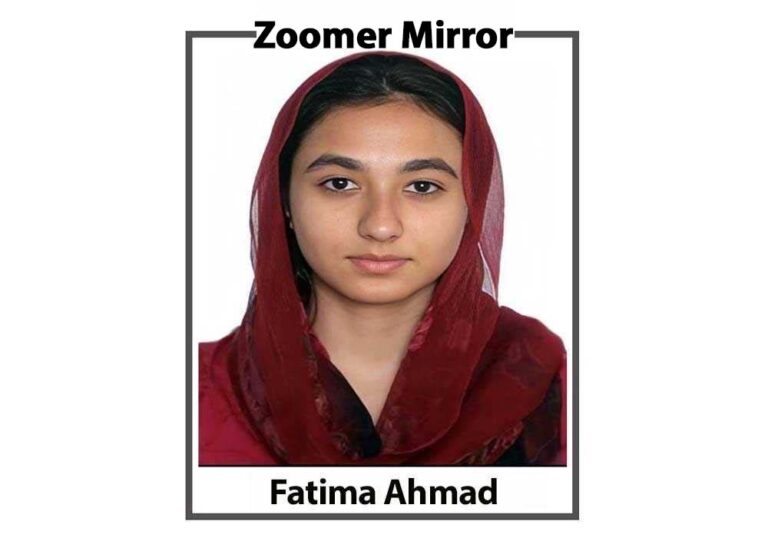
Noreen Niazi, sister of Pakistan Tehreek-e-Insaf founder Imran Khan, made controversial remarks in a widely circulated podcast that drew widespread criticism across Pakistan. She alleged that the military confrontation with India, referred to in Pakistan as Marka-e-Haq (Battle of Truth), was a staged event rather than a genuine act of national defence and claimed there was a secret understanding between the Pakistan Army and Indian Prime Minister Narendra Modi to mislead the Pakistani public. She further alleged that Israel and the United States were behind the conflict, claiming India acted under Israeli influence to pressure Pakistan into recognizing Israel through the Abraham Accords, that Pakistan’s government and military had secretly contacted Israeli officials, and that praise from US President Donald Trump for Pakistan’s leadership was part of this alleged agenda. She admitted she had no official information or evidence for these claims and had reached them through her own reasoning, prompting critics to dismiss the allegations as baseless misinformation that undermined the Pakistan Army, the country’s foreign policy, and the sacrifices of its soldiers.

Her remarks triggered legal and political condemnation. The National Cyber Crime Investigation Agency issued her a legal notice and summons, accusing her of spreading false, offensive, and inflammatory content intended to defame state institutions, harm national unity, and warning of legal consequences under Section 174 of the Pakistan Penal Code if she failed to comply. Political leaders, including Punjab Information Minister Azma Bokhari, condemned the remarks, linked them to Imran Khan’s political outlook, argued they were contrary to Pakistan’s national interests and achievements, and warned they could be exploited by hostile foreign media to damage the country’s image. Her allegations about Israel were also rejected as inconsistent with Pakistan’s longstanding foreign policy, which supports the Palestinian cause, rejects recognition of Israel until an independent Palestinian state is established on the pre-1967 borders with Al-Quds Al-Sharif as its capital, and was reaffirmed by Defence Minister Khawaja Asif in May 2026. Pakistan’s passport, which remains invalid for travel to Israel, was also cited as evidence contradicting claims of secret normalization efforts.

The Marka-e-Haq operation itself was a monumental moment for Pakistan that redefined the country’s military strategy and deterrence capability. The operation was not just a simple skirmish but a carefully planned and executed response to aggression that showcased the exceptional capabilities of the Pakistan Army and the Air Force. The armed forces, through coordinated leadership and superior tactics, successfully foiled any Indian attempts to escalate the conflict. The entire operation demonstrated Pakistan’s resolve to defend its borders at all costs and highlighted the nation’s advancements in modern warfare and technology. The Director General of the Inter-Services Public Relations provided a detailed briefing to the nation, outlining the ten strategic outcomes of the Marka-e-Haq. He explained how the operation transformed the nature of warfare and re-established a balance of power in the region. The entire Pakistani nation, from the northern areas to the southern coast, united in support of its military and celebrated the professionalism and bravery displayed by the armed forces. This unity was a source of immense strength and sent a clear message to the international community about the resilience of the Pakistani nation. It is this very success and the strengthening of national unity that act as a major irritant for the country’s enemies, both internal and external. Those who seek to destabilize Pakistan and weaken its military understand that a strong and confident army is the biggest obstacle to their nefarious plans. Therefore, they continuously resort to such malicious propaganda, attempting to create divisions and lower the morale of the forces. The false narratives propagated by individuals like Noreen Niazi are thus seen as a direct tool of these enemies to achieve their destabilizing objectives.

The Pakistani nation, with its rich history of resilience and unwavering patriotism, has categorically rejected these heinous and baseless narratives. The people of Pakistan are not naive, and they are fully capable of distinguishing between truth and falsehood, especially when it concerns the defence and integrity of their homeland. The anger expressed on social media and in public gatherings shows that the public is fully aware of the sacrifices made by the armed forces. They recognize that the soldiers serving on the borders are the nation’s heroes and that any attack on them is an attack on the country itself. This widespread public condemnation has actually served to strengthen the bond between the people and the military. The false narratives, instead of creating doubt, have opened the eyes of the nation even further and have made it easier for the average citizen to differentiate between those who work for the country’s prosperity and those who, driven by selfish political interests, are willing to jeopardize the nation’s security for their own gain. The people are demanding that strict action be taken against all such elements, regardless of their political background or connections. They believe that the law must take its course and that such individuals must be held accountable for their words and actions. The unity and resilience of the Pakistani nation remain unshakable, and such cowardly attempts to create discord and spread lies will only serve to strengthen the resolve of the people to defend their motherland and its institutions. The state is determined to protect its ideological and geographical frontiers, and with the full backing of its patriotic populace, it will successfully thwart all such attempts to undermine its stability and sovereignty.

Similar Posts

  • Pakistan’s College Education Crisis

    Educational debates in Pakistan usually begin with schools and end with universities. Somewhere in between lies a vast public college network that has quietly undergone a transformation without receiving the reforms necessary to sustain it. For decades, colleges were viewed merely as institutions imparting Intermediate education. That perception is now obsolete. Government colleges across Pakistan award four-year BS degrees, supervise undergraduate research, implement semester systems, and produce graduates completing sixteen years of education. They have become institutions of higher education in every meaningful sense except in the standards by which they recruit, promote and evaluate their faculty. The real crisis begins not when institutions disappear but when they continue to exist while quietly abandoning the purpose they were meant to serve. Pakistan’s college education system increasingly reflects this uncomfortable reality. Buildings stand, classrooms remain occupied, salaries are paid and degrees continue to be awarded, yet the intellectual purpose that ought to define higher education is steadily weakening. The system continues to function, but it no longer asks whether it is producing scholars, researchers and critical thinkers or merely issuing degrees. This contradiction is not merely administrative. It is national. Countries do not build knowledge economies simply by increasing enrolment or opening new campuses. They do so by ensuring that those entrusted with educating the next generation possess the intellectual depth, scholarly discipline and professional integrity demanded by higher education. Pakistan has expanded the responsibilities of its colleges without fundamentally reforming the standards governing those who teach in them. It is this mismatch between expanding responsibilities and stagnant reforms that explains much of the present crisis. History offers repeated warnings against confusing continuity with progress. Great civilisations have seldom been defeated by ignorance alone; far more often, they have been weakened by their refusal to reform. Ancient Troy believed its mighty walls guaranteed safety until destruction entered concealed within the famous wooden horse. Institutions, too, often collapse not because external forces overwhelm them but because internal weaknesses become too familiar to recognise. Pakistan’s colleges face a similar danger. The greatest threat is not inadequate infrastructure or declining enrolment. It is the quiet normalisation of standards that no longer correspond with the responsibilities these institutions now carry. Perhaps nowhere is this more evident than in faculty recruitment. Every education system is ultimately only as strong as the people it appoints to teach. Laboratories, libraries and curricula matter, but they cannot compensate for weak academic recruitment. A nation’s classrooms reflect the intellectual standards it establishes at the point of entry into the profession. Countries that consistently perform well in higher education understand this principle with remarkable clarity. Finland recruits teachers from among its highest-performing graduates and treats teaching as one of the country’s most competitive professions. Singapore invests heavily in teacher selection, structured professional development and continuous evaluation throughout an educator’s career. South Korea subjects aspiring academics to rigorous competition, while Germany closely links academic progression with scholarly achievement and research productivity. These countries differ in culture, politics and economic history, yet they share one conviction that higher education depends first and foremost upon the quality of its faculty. Pakistan, regrettably, often operates on a different assumption. Recruitment is frequently treated as the culmination of academic achievement rather than its beginning. A lecturer appointed with only a sixteen years education may spend an entire career within the same system without acquiring higher qualifications or contributing substantially to research, yet still retire after holding senior academic positions carrying the titles of Associate Professor or Professor. Such a framework might have appeared understandable when colleges were primarily institutions for Intermediate education. It becomes increasingly indefensible once those same institutions award undergraduate degrees equivalent to those offered by universities. Academic titles should signify scholarly accomplishment rather than the mere passage of time. Across the world, the designation of Professor represents sustained intellectual contribution, recognised research, advanced qualifications and academic leadership. When promotion depends overwhelmingly upon seniority rather than scholarship, titles gradually lose their meaning. The loss is not symbolic alone. It diminishes public confidence in higher education itself. This is not an argument against experience. Experience remains indispensable in teaching. A seasoned educator often possesses insights that no newly qualified academic can immediately acquire. Classrooms are enriched by years of interaction with students, evolving pedagogical techniques and practical wisdom accumulated over decades. Experience, however, should complement scholarship, not replace it. Knowledge no longer remains static for an entire career. Disciplines evolve at astonishing speed. Artificial Intelligence is reshaping linguistics, medicine, engineering, law and the humanities alike. Climate science has transformed environmental studies. Digital humanities have altered literary scholarship. Advances in neuroscience continue redefining educational psychology. A qualification earned thirty years ago, valuable though it remains, cannot alone certify mastery over fields that have changed beyond recognition. Medicine provides an obvious comparison. No patient would willingly place complete trust in a surgeon who had never updated professional knowledge after graduation. Engineers continually adapt to changing technologies and safety standards. Judges engage with evolving constitutional interpretation. Military officers undergo regular professional education throughout their service. Every serious profession recognises that learning is continuous. Higher education cannot become the sole profession where intellectual growth effectively ends with appointment. The irony is that Pakistan’s college sector contains thousands of exceptionally capable teachers who have voluntarily pursued MPhil and PhD degrees despite limited institutional incentives. Many complete advanced research while balancing heavy teaching schedules, administrative responsibilities and family obligations. Their commitment deserves recognition because it reflects a genuine desire to improve professionally rather than merely fulfil formal requirements. Yet the existing structure frequently sends the opposite message. Promotion often rewards waiting more consistently than learning. When advanced qualifications receive insufficient institutional value, the incentive to pursue rigorous scholarship inevitably weakens. No education system can flourish if intellectual ambition appears optional while seniority remains sufficient. The anomaly becomes even more striking when one examines the present hierarchy within many public colleges. It is no longer uncommon to find an MPhil-qualified lecturer or even a PhD serving under an officer whose highest

  • Pakistan’s Next Strategic Advantage: From La…

    By Tahseenullah For decades, labour migration in Pakistan has largely been viewed as a response to unemployment and poverty. While this perspective has served its purpose, it no longer reflects the realities of today’s global economy. In the twenty-first century, labour mobility has become far more than an economic necessity—it is a strategic investment in human capital, national competitiveness and economic diplomacy. Countries that can produce skilled, certified and globally competitive workers will hold a distinct advantage in an increasingly interconnected labour market. As ageing populations, declining fertility rates and persistent labour shortages reshape developed economies, demand for skilled workers is rising across Europe, East Asia and other advanced markets. Pakistan, with one of the world’s youngest populations, is well positioned to seize this opportunity. The real challenge is not whether Pakistan has enough young people willing to work abroad, but whether it can equip them with internationally recognised skills, qualifications, language proficiency and professional competencies that meet evolving global labour market demands. Pakistan’s labour migration journey began with the establishment of the Bureau of Emigration and Overseas Employment in 1971, following the Gulf oil boom. Since then, more than 15 million Pakistanis have migrated through regular channels, contributing significantly to infrastructure, healthcare, construction, transport and service sectors worldwide while improving the livelihoods of millions of families back home. Today, overseas employment remains one of Pakistan’s most important economic assets. According to BEOE, 862,625 Pakistanis migrated for employment in 2023, followed by 725,672 in 2024 and 762,499 in 2025, with early trends indicating sustained international demand in 2026. Meanwhile, the Pakistan Migration Report 2025 and the State Bank of Pakistan estimate workers’ remittances at approximately US$38.3 billion in FY2024–25, representing nearly 9.34 percent of GDP. These remittances strengthen foreign exchange reserves, reduce poverty and support macroeconomic stability. Yet labour migration has rarely been treated as a strategic pillar of Pakistan’s long-term economic planning. The global labour market is undergoing profound change. According to the World Economic Forum’s Future of Jobs Report 2025, demographic shifts, technological advances and the green transition will create millions of new employment opportunities over the coming decade. Healthcare professionals, engineers, IT specialists, skilled technicians, renewable energy workers, construction professionals and caregivers are expected to remain in particularly high demand. Pakistan possesses a valuable demographic dividend, with nearly two-thirds of its population under the age of 30. However, this advantage will only translate into economic gains through sustained investment in education, Technical and Vocational Education and Training (TVET), international certification, digital skills and language training. The challenge is clear. The Pakistan Migration Report 2025 shows that nearly two-thirds of Pakistani migrant workers remain low-skilled or unskilled. While their contribution is invaluable, low-skilled employment often results in lower wages, limited career progression and greater vulnerability to labour market shocks. In contrast, highly skilled migrants generally access better jobs, stronger labour protections and significantly higher earnings. Pakistan must therefore move beyond a traditional labour export model towards a human capital export strategy. Success should no longer be measured simply by the number of workers leaving the country, but by the quality, productivity and global competitiveness of its workforce. Achieving this transformation requires comprehensive reforms. TVET institutions must align training with international occupational standards and labour market needs. Language education in German, Japanese, Korean and Italian, alongside digital literacy, workplace ethics and intercultural communication, should become integral components of workforce development. Market diversification is equally important. While Gulf Cooperation Council countries will remain Pakistan’s primary labour destinations, excessive dependence on one region exposes the country to geopolitical uncertainty and labour market fluctuations. Pakistan should actively expand regular labour mobility partnerships with Europe, Japan, South Korea, Australia and Canada, where structural labour shortages continue to grow. Government-to-government labour mobility agreements should become a strategic priority. Such partnerships can enhance transparency, reduce recruitment costs, improve worker protection and strengthen employer confidence in Pakistani talent. Simultaneously, Pakistan should pursue mutual recognition of qualifications and internationally accepted skills certification to facilitate smoother labour market integration. Institutional coordination will also be essential. The Ministry of Overseas Pakistanis and Human Resource Development, together with the NAVTTC, provincial TEVTAs, Overseas Employment Promoters, the Ministry of Foreign Affairs and Pakistan’s overseas missions, should implement an integrated national labour mobility framework supported by labour market intelligence, digital recruitment platforms and evidence-based policymaking. Pakistan can draw valuable lessons from the Philippines, whose migration governance combines ethical recruitment, mandatory pre-departure orientation, comprehensive worker welfare and strong overseas support systems. Adapting these practices would strengthen Pakistan’s reputation as a reliable source of skilled and protected migrant workers. At the same time, addressing irregular migration must remain a national priority. Preventing dangerous migration routes requires expanding legal migration opportunities, strengthening career counselling, improving public awareness, dismantling human smuggling networks and ensuring aspiring migrants have access to reliable information and affordable recruitment services. Labour migration should no longer be viewed solely as a means of reducing unemployment or increasing remittances. It should be recognised as a cornerstone of Pakistan’s economic diplomacy, human capital development and long-term growth strategy. The countries that will lead the future of global labour mobility will not necessarily be those with the largest populations, but those that invest in producing highly skilled, internationally certified and globally competitive talent. Pakistan has already demonstrated its ability to contribute to the global workforce. The next step is to move beyond exporting labour to exporting talent. By investing in skills, strengthening institutions, diversifying labour markets and promoting ethical, well-governed migration, Pakistan can transform its demographic dividend into one of its greatest strategic advantages. The world is searching for talent. Pakistan has the youth. What it now needs is the vision to turn that potential into global human capital leadership. Tahseen Ullah is a development and migration sector practitioner specializing in labour mobility, migration governance, education and child protection.

  • Man: The Cruelest Animal?

    “Remember your humanity, and forget the rest”— Bertrand Russell and Albert Einstein, The Russell–Einstein Manifesto, 1955   On the morning of August 6, 1945, Hiroshima was a living city. Children were preparing for school, workers were beginning another day, meals were being eaten, conversations remained unfinished and countless ordinary plans had been made for an evening many would never see. At 8:15 am, a single atomic bomb changed all that. In seconds, a city became an inferno and human ingenuity demonstrated what it was capable of when divorced from human conscience. Three days later, Nagasaki suffered the same fate.   More than eight decades have passed, yet the mind still struggles to comprehend what happened. Not merely the scale of destruction, but the extraordinary contradiction it represented. Human beings had acquired sufficient knowledge of physics to split the atom but apparently insufficient wisdom to prevent that knowledge from being used to incinerate fellow human beings. This raises an uncomfortable question: is man the cruellest animal?   Animals kill. Nature is certainly not a sentimental place. Predators hunt for food, animals fight over territory, mates and dominance, and some species occasionally kill for reasons other than immediate survival. Yet no creature other than Homo sapiens has transformed killing into an organised industry. No animal constructs factories to manufacture weapons capable of destroying entire cities. None develops elaborate ideologies to justify mass slaughter, calculates acceptable casualties or decorates members of its species for becoming exceptionally efficient at killing others. Only the supposedly “wise man” has achieved such sophistication.   The atomic bombings cannot, of course, be examined outside the horrors of the Second World War. Nazi Germany had perpetrated the holocaust. Imperial Japan had committed horrific atrocities across Asia. Cities had already been devastated by conventional and incendiary bombing. Millions of soldiers and civilians were dead. Defenders of the decision to use atomic weapons maintain that the bombs accelerated Japan’s surrender and avoided an invasion that could have caused enormous casualties on both sides. Critics have long questioned whether alternatives existed and whether the second bombing, in particular, was necessary.   Historians may continue debating these questions. Humanity must confront another. At what point does military necessity cease to provide moral shelter for the deliberate infliction of unimaginable suffering upon civilians? Perhaps the most disturbing legacy of Hiroshima and Nagasaki is not simply that atomic bombs were used. It is that humanity had reached a stage where the destruction of enormous number of ordinary people could be incorporated into strategic calculation. Human beings had become numbers. Therein lies the first requirement of organised cruelty: dehumanisation.   Before we can inflict unbearable suffering upon others, we must somehow stop seeing them as ourselves. They become the enemy, an alien race, religion, nationality, sect or ideology. Children become unfortunate collateral damage. Dead bodies become casualty figures. Destroyed neighbourhoods become strategic targets. Language performs the anaesthesia that conscience might otherwise refuse. Once human beings are converted into categories, almost anything becomes possible.   History is littered with evidence. Colonial atrocities required subject populations to be regarded as inferior. Ethnic cleansing requires neighbours to become enemies. Genocide requires individual faces to disappear behind collective labels. Modern warfare similarly becomes easier to tolerate when suffering is viewed through satellite images rather than through the eyes of a mother holding her dead child. Perhaps that explains one of the strangest contradictions of our species. The same human hand that tenderly caresses a newborn can press the button that launches a missile towards somebody else’s newborn.   The same species that produces Mozart and Rumi, builds hospitals, writes poetry, explores distant planets and risks lives rescuing strangers from disasters also constructs concentration camps, torture chambers, chemical weapons and nuclear warheads. How can such tenderness and such barbarity inhabit the same creature?   We proudly call ourselves civilised. Yet civilisation cannot merely mean technological advancement. If anything, technology without corresponding moral advancement makes human beings more dangerous, not less. A primitive weapon can kill one person. Human intelligence created weapons capable of killing millions. Science gives us power. It does not necessarily give us wisdom. That distinction should haunt us.   The scientists who unlocked the secrets of the atom demonstrated one of humanity’s greatest intellectual achievements. But when knowledge becomes separated from ethics, achievement can become catastrophe. Ten years after Hiroshima and Nagasaki, Bertrand Russell and Albert Einstein, together with other distinguished scientists, issued their famous manifesto warning humanity about nuclear war. Their appeal was breathtakingly simple: “Remember your humanity, and forget the rest.”   What an extraordinary plea to have to make to human beings. Remember that the person across the border is human. Remember that the child beneath the rubble is human. Remember that the mother screaming outside a hospital is human. Remember that beneath uniforms, flags, religions, ethnicities and nationalities beats essentially the same vulnerable human heart.   Yet eighty-one years after Hiroshima, humanity still maintains nuclear arsenals capable of inflicting destruction on a scale those who witnessed 1945 could scarcely have imagined. Governments speak comfortably of deterrence, strategic balance, tactical nuclear weapons and acceptable responses. Behind this sophisticated vocabulary lies an elementary reality: we have created instruments capable of annihilating ourselves and entrusted their possible use to human beings subject to anger, ambition, miscalculation and fear. What could be more absurd?   Perhaps the problem lies in our understanding of civilisation itself. We measure progress through economic growth, scientific discovery, technological innovation and military capability. We celebrate artificial intelligence, space exploration and machines capable of performing tasks once thought impossible but are we becoming better human beings? Can technological advancement truly be called progress if our moral consciousness remains primitive?   The jungle may be brutal, but it possesses no Hiroshima, no Nagasaki, no Bosnia, no Rwanda and no Gaza. Animals do not convene conferences to plan genocide. They do not manufacture propaganda to persuade millions to hate strangers. They do not teach generations to inherit ancient hostilities. Above all, they have never developed

  • Factors Which Can Lead Pakistan Towards Progress a…

    A nation’s destiny is not written by chance. It is written by the choices its people and institutions make in times of both crisis and opportunity. Seventy-nine years after independence, Pakistan stands at a decisive juncture. The country holds immense potential: a population of 241.49 million according to the 2023 Digital Census, strategic location at the crossroads of Asia, abundant natural resources, and a society that has repeatedly demonstrated resilience. Yet potential alone does not translate into prosperity. The path forward requires clarity of purpose and action on the fundamental drivers of national advancement. For Pakistan, five factors stand out as decisive: human capital, institutional credibility, economic diversification, technological adoption, and national cohesion. The most urgent factor is human capital. Pakistan is one of the youngest nations in the world. The United Nations Population Fund estimates that 64% of Pakistanis are under the age of 30, and the median age is 20.8 years. This demographic dividend can either accelerate growth or become a liability if left untapped. The World Bank’s Human Capital Index for Pakistan is 0.41, which means a child born today will be only 41% as productive as they could be with full education and health. Closing this gap demands investment that is both broad and deep. Foundational education must be prioritized, technical and vocational training must be aligned with industry, and health and nutrition must be treated as economic inputs, not social expenses. The inclusion of women is non-negotiable. With female labor force participation at 24.1% in 2021, Pakistan is underutilizing half of its talent. McKinsey estimates that advancing gender parity could add $60 billion to Pakistan’s GDP. Every girl in school and every woman in the workforce is a direct contribution to national prosperity. The second factor is institutional credibility. Prosperity is built where people trust that rules are fair, contracts are honored, and merit matters. Pakistan’s economy has shown resilience despite challenges. The State Bank of Pakistan reports GDP at $341.2 billion for FY2025 with projected growth of 3.6%, and remittances hit a record $35.3 billion. IT exports reached $3.55 billion in FY2025, a 24% increase year-on-year. These gains occurred even with regulatory uncertainty and energy constraints. Imagine the scale of investment and innovation if governance were more predictable. This requires digitizing public services, protecting property rights, depoliticizing key institutions, and empowering local governments with resources and accountability. When a young graduate in Multan or a startup founder in Karachi believes the system will reward effort, they will choose to build at home. Third is economic diversification. An economy dependent on a narrow base remains vulnerable. Pakistan must move beyond textiles and remittances toward value-added exports, modern agriculture, and new industries. Agriculture still employs 36.8% of the labor force but contributes less than 23% to GDP, signaling a major productivity gap. Climate change compounds this challenge, with Pakistan ranked 5th on the 2025 Global Climate Risk Index. Investing in climate-smart agriculture, water efficiency, and agri-tech is therefore both an economic and survival imperative. At the same time, the digital economy offers Pakistan its fastest route to high-value growth. With 142.3 million broadband subscribers and internet penetration crossing 54% as of June 2025, the infrastructure for a knowledge economy exists. Pakistan ranked 3rd globally on the 2024 Online Labour Index. Scaling IT exports toward the $15 billion target by 2030 will require tax incentives, venture funding, and global market linkages for startups. The $23.1 million raised by Pakistani startups in 2024, amid a global funding slowdown, proves that investor confidence exists and can be expanded. Fourth is technological adoption and innovation. The world is being reshaped by AI, renewable energy, and advanced manufacturing. Pakistan cannot afford to be a late adopter. The Alternative and Renewable Energy Policy target of 30% renewable share by 2030 must be met to address both energy security and climate risk. Technology must also transform service delivery. Telemedicine, digital payments, and AI in agriculture can bring quality services to remote areas at lower cost. Universities must become hubs of research and industry collaboration. Innovation thrives where there is capital, mentorship, and protection of intellectual property. The state’s role is to create that ecosystem. The fifth and binding factor is national cohesion. Economic policy fails without social trust. Pakistan’s diversity in language, culture, and region is a strength if it is united by a shared commitment to justice and opportunity. Cohesion is built when citizens feel they have an equal stake, when public discourse is grounded in facts, and when achievements in science, sports, and culture are celebrated as national, not regional. A country that trusts itself can make difficult reforms and sustain them. These five factors do not operate in isolation. Better education produces better institutions. Strong institutions attract investment for diversification. Diversification funds technology. Technology creates jobs that strengthen social unity. The absence of one undermines the others. The global context adds urgency. While many nations face aging populations, Pakistan has a 20 to 25 year window to leverage its youth. That window will not remain open indefinitely. Prosperity will not arrive through slogans or external assistance alone. It will come from millions of deliberate acts: a teacher focused on learning, a farmer adopting new techniques, an engineer building solar solutions, a policymaker choosing reform over delay. Pakistan’s history proves that the nation can achieve what seems impossible when it acts with unity and purpose. The factors for progress and prosperity are now clear. What remains is the will to pursue them consistently. If Pakistan invests in its people, strengthens its institutions, diversifies its economy, embraces technology, and unites its society, the next chapter will be one of sustained advancement. The opportunity is here. The responsibility is ours.

  • A Second Great Wall of Trust: Why Only China Can F…

    By General Ghulam Mustafa & Arshad H Abbasi  We have stood together at the foot of the Great Wall of China more than once at different times, but today a thought has returned to both of us, unspoken until now. The Wall runs some 21,196 kilometres across dynasties and deserts, built stone by stone over centuries to secure a civilization’s frontier. Pakistan’s own most dangerous frontier — the Durand Line separating us from Afghanistan — runs roughly 2,625 kilometres, barely an eighth of that length. If a civilization on the scale of China could raise a barrier of that magnitude with the tools of the third century BC, then securing a border less than an eighth as long, with the tools of the twenty-first century, cannot be beyond the reach of the partnership Beijing and Islamabad have built. We do not ask China to build us a wall of stone. We ask Beijing to help us build something sturdier: a wall of enforced accountability against the militants using Afghan soil to bleed Pakistan dry. That bleeding is not a metaphor. Since the Afghan Taliban returned to power in Kabul, the Tehreek-e-Taliban Pakistan has operated with a freedom of movement across our western border that it never enjoyed before. Balochistan burns. Khyber Pakhtunkhwa buries its soldiers and its schoolchildren in the same week. And now the shockwaves have reached Punjab, the country’s demographic and economic core. Every honest accounting of this violence traces back to the same source: sanctuary, training, and logistical freedom on Afghan soil, tolerated or unchecked by an administration in Kabul that owes its survival, in no small part, to Chinese patience and Chinese capital. This is why we write to Beijing, and to Beijing specifically, rather than to Washington, Brussels, or Moscow. Survey after survey inside Pakistan finds that well over eight in ten of our citizens consider China, not any Western power, to be Pakistan’s true friend. Our leaders have called this friendship higher than the Himalayas and deeper than the ocean, and we do not repeat that line as ceremony. We repeat it because it is the only frame in which Beijing can hear what we are about to say plainly: no other country on earth holds the leverage over the Taliban that China holds, and no other country has more to lose from squandering it. Consider what China has already built in Afghanistan without formal recognition of its government. The Xinjiang Central Asia Petroleum and Gas Company signed a twenty-five-year contract to develop the Amu Darya oil basin, committing roughly $150 million annually and scaling toward $540 million over three years. State-backed firms continue to negotiate the long-stalled Mes Aynak copper concession, one of the largest untapped copper deposits on earth, alongside serious interest in Afghan lithium and iron ore. Beijing has cut tariffs on 98 % of Afghan imports. An active Chinese embassy operates in Kabul today, accepting Taliban-appointed diplomats, even as formal recognition is withheld. This is not incidental engagement. This is the deepest economic relationship any major power currently has with the Taliban administration, and it gives China something no airstrike or sanction regime has ever given anyone: the ability to make continued investment conditional on results. We are asking Beijing to use that leverage with the same discipline it has already shown in defending its own security interests. China has made clear, repeatedly and without apology, that it will not tolerate the Turkistan Islamic Party or East Turkistan Islamic Movement fighters operating from Afghan territory against Xinjiang. We are asking only that China extend that identical, non-negotiable standard to the Tehreek-e-Taliban Pakistan and its allied networks operating against us. If Kabul can be made to understand that Chinese mining contracts, Chinese tariff relief, and Chinese diplomatic cover all depend on a genuine, verifiable crackdown on TTP sanctuaries, this insurgency does not need years to end. It needs a Kabul administration that finally has more to lose from harbouring militants than from disowning them. But security pressure alone will not hold, and here we want to be honest about what Afghanistan actually needs from its neighbours, China chief among them. Afghanistan’s national literacy rate stands at just 37 % — 52 % among men, a mere 27 % among women — and UNESCO reports that more than nine in ten ten-year-olds in the country cannot read a simple sentence. Two point two million adolescent girls remain locked out of secondary school entirely, the only country on earth to enforce such a ban, at a projected cost to Afghanistan’s own economy of nearly $9.6 billion in lost potential by 2066. No pipeline, no copper mine, and no railway line will stabilize a country where the next generation cannot read the contracts, safety manuals, or engineering plans that would let them run these projects themselves. It is China’s duty, as the neighbour with the deepest economic stake and the clearest long-term interest in a stable Afghanistan, to make literacy, vocational training, and the reopening of girls’ education a hard condition of its investment — not out of charity, but because an illiterate, disenfranchised population is the same population the TTP and ETIM recruit from. Afghanistan does not need a foreign army. It needs classrooms, teachers, and a workforce equipped to build the country’s own future, backed by an investor patient and disciplined enough to insist on it. Every failed intervention in Afghanistan’s modern history has shared the same flaw: outsiders who came to fight a war, not to build a neighbour. Britain came and left. The Soviet Union came and left, at ruinous cost to itself. NATO and the United States spent two decades and did not leave functioning institutions behind them. China is different in the one respect that matters most: China is not leaving. It shares a border with Afghanistan. Its investments are measured in decades, not electoral cycles. And it has, through the Belt and Road Initiative and the China-Pakistan Economic Corridor, already built the template for what real

  • The Orchard Classroom: Remembering Dr Pervez Butt

    Dr Pervez Butt died on the 26th of July, 2026, at the age of 84, and with him Pakistan lost one of the last living architects of its nuclear age. The obituaries will rightly recount the long arc of his public service: joining the Pakistan Atomic Energy Commission in 1963, cutting his teeth on the design of KANUPP-I, Pakistan’s first commercial nuclear power plant, spending years at GE Canada absorbing the discipline of reactor engineering, and eventually rising to chair the PAEC from 2001 to 2006 — a tenure during which he oversaw the expansion of Chashma and laid groundwork that would carry Pakistan’s nuclear power programme well into this century. He would go on to serve as Federal Secretary for Science and Technology, as an adviser at the Planning Commission, and, until his final days, as a quiet counsel to the National Command Authority. Nishan-i-Imtiaz, Hilal-i-Imtiaz, Sitara-i-Imtiaz — the honours are a matter of record.     But I did not know him first as a chairman or a decorated public servant. I knew him as a teacher who happened to hold the keys to some of the country’s most consequential engineering decisions, and who chose, for reasons I am still grateful for, to hand a few of those keys to me. I want to remember him the way I actually experienced him — not through the official biography, but through three long afternoons at his house in F-11 Sector, Islamabad, where he taught me something the textbooks never quite manage: how the price of nuclear electricity in Pakistan is actually determined. Anyone who has sat through a lecture on tariff determination knows how dry the subject can be made to sound — EPC cost, fuel cost, capacity purchase price, energy purchase price, indexation, decommissioning liability. Dr. Butt made none of it dry. He made it a ritual. Each session began the same way, and the way it began told you everything about the man. There was no walking straight into the numbers. First came tea — always a full spread of dry fruits, delicate sandwiches, fresh fruit, chana chaat, and cappuccino. It was in his drawing room that I had my first Cortado, and my first Mocha, both poured by a man who clearly took as much pride in introducing a good cup of coffee as he did in explaining a heat-rate calculation. Only once the plates were cleared did the real class begin. He held nothing back. The sessions ran from ten in the morning until nearly four in the afternoon — six hours at a stretch, with no formal lunch break at all. Instead, somewhere past midday, a trolley would appear, loaded with Lahori chanay and naan, and he would keep teaching straight through it, tariff formulas in one breath and the economics of fuel fabrication cost in the next, a piece of naan in hand the whole time. I have sat in university seminars with more structure and far less learned. What I remember most, though, is the break. Every two hours, without fail, he would stop — not because he was tired, but because he knew I smoked, and he had built an orchard directly across the road from his house for exactly this purpose. We would walk over together, and his waiter would already be there ahead of us, a fresh cappuccino on the table, an ashtray set out with wet tissue paper folded neatly beside it — a small, deliberate touch that told you this man planned for his guests down to the last detail. And it was in that orchard, not at his desk, that the real teaching happened. He would ask me, plainly, to repeat back what I had just understood. Not to test me — to correct me, gently, if I had drifted, and to make sure the idea had actually landed before we walked back inside for the next round. I was, I suspect, an unlikely student for him to invest that kind of care in. I have never been a person drawn to nuclear energy for its own sake — the physics of it, the fission and the neutrons and the reactor cores, left me largely unmoved. What pulled me toward him was the economics: how a country decides what a unit of nuclear electricity should cost, how the capital recovery on a plant like K-2 or C-3 gets built into a tariff, how fuel cost and EPC cost and decommissioning liability all get stitched together into a number that regulators can defend and the public can pay. That was the language I wanted to learn, and he taught it to me the way he taught everything — thoroughly, patiently, and without ever once looking at the clock. Looking back, I think that was the most VIP treatment anyone taught by him could have asked for — not a title, not a certificate, but three full days of a man who had chaired the PAEC choosing to spend his mornings, his working lunches, and his smoking breaks making sure a subject I hadn’t cared about a week earlier had become one I could speak on with confidence. Pakistan will remember Dr. Pervez Butt for KANUPP and Chashma, for the plants he helped design and the institutions he helped build — the Pakistan Welding Institute, the nondestructive testing facility at Taxila, decades spent quietly ensuring that a technically demanding and politically sensitive programme kept working. Those achievements belong to the history books, and they are considerable. I will remember the orchard. I will remember a Cortado poured by a man who insisted the tea come before the tariff, and a lecture that never stopped even for lunch. That was his real gift — not just what he knew, but how completely he was willing to give his time to make sure someone else knew it too. Rest well, sir. The lesson stayed.

Leave a Reply

Your email address will not be published. Required fields are marked *