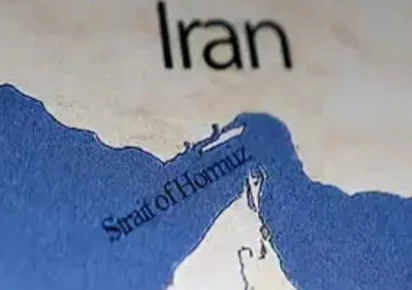
hormuz hiroshima iran

From Hormuz to Hiroshima: Is the Iran War Approach…

By Saqlain Abid Tarrar

The 60-day U.S.-Iran understanding expired on August 17 without the breakthrough Washington and Tehran had hoped—or claimed—to seek. The agreement has effectively stalled, the Strait of Hormuz remains at the centre of the confrontation, and both sides continue to blame the other for the diplomatic failure. Iran has now warned that it could shift towards a more offensive posture if diplomacy does not progress.

This leaves a disturbing question on the table: is the nuclear option becoming the next neutralisation node in the Iran war?

The question gained momentum after former Congresswoman Marjorie Taylor Greene claimed that the use of nuclear weapons had been discussed in Trump administration strategy meetings. Such a claim should be treated cautiously because there is no independent evidence that President Donald Trump has ordered or formally approved a nuclear strike. Nevertheless, the allegation itself demonstrates how far the strategic debate has moved. The White House has maintained that nuclear use is not a proposal on the table.

Yet Trump’s own rhetoric has made the situation increasingly difficult to ignore. He has declared that the United States has “total control” of Hormuz and described the idea of making the strategically vital waterway U.S. territory as attractive.

The Strait of Hormuz is not merely another battlefield. Around one-fifth of the world’s oil and gas supplies normally pass through this narrow maritime chokepoint. Any prolonged closure therefore creates consequences far beyond Iran and the United States: higher energy prices, disrupted shipping, inflationary pressure and another shock to an already fragile global economy.

So, what are the chances of the United States actually using nuclear weapons?

At present, they remain extremely low—but low is not the same as impossible.

History demonstrates how quickly supposedly unthinkable options can become military realities. The United States became the first country to use nuclear weapons in warfare when it dropped atomic bombs on Hiroshima and Nagasaki in August 1945. However, it would be historically inaccurate to argue that those attacks were simply conducted to test plutonium and uranium against the Soviet Union. The motives remain debated, including compelling Japanese surrender and influencing the emerging post-war balance with Moscow.

The lesson, nevertheless, is unmistakable: once a state believes that an extraordinary weapon can achieve an extraordinary political objective, the threshold can become dangerously negotiable.

That is why today’s situation deserves scrutiny.

The Trump administration needs an exit from a war that has become increasingly difficult to convert into a decisive political settlement. The USS Abraham Lincoln has also endured an exceptionally long deployment, reportedly more than 240 days at sea, adding another layer of military and political pressure.

But nuclear weapons would not provide a rational solution to that problem.

Iran’s nuclear capability is certainly a serious concern. The IAEA reported that Iran had accumulated about 440.9 kilograms of uranium enriched to 60 percent before the 2025 attacks disrupted international verification. That material could theoretically produce significant quantities of weapons-grade material if further enriched, but possession of 60-percent enriched uranium does not mean Iran already possesses nuclear weapons.

Iran, meanwhile, has suffered severe economic and infrastructural damage, yet its resistance has not disappeared. Tehran continues to signal that it will not simply surrender under pressure. The danger is therefore that military escalation creates the very nuclear insecurity Washington says it wants to prevent.

Russia and China could condemn any nuclear use and mobilise diplomatic opposition. The United Nations could debate emergency resolutions. European governments could strongly object. But none of these actors could physically intercept an American warhead once Washington had made the decision.

That makes the most important restraint internal: the political and strategic judgment of the American leadership itself.

And there is an even larger regional consequence.

If Iran were struck with nuclear weapons, Gulf states could reach a frightening conclusion: conventional alliances may no longer provide sufficient security. Saudi Arabia, the UAE, Türkiye and others could reconsider their long-term strategic options. Nuclear hedging and proliferation could become increasingly attractive.

That would transform the Middle East permanently.

The irony would be profound. An American nuclear strike intended to prevent Iran from becoming a nuclear power could encourage an entire region to seek nuclear deterrence.

Hormuz may eventually be reopened through negotiations, military pressure or a new regional security arrangement. But once the nuclear taboo is broken, restoring it would be far more difficult.

The nuclear option should therefore remain the last option—not because it is weak, but because its consequences are stronger than any victory it could deliver.

Power can neutralise an opponent. But when power is unleashed without restraint, it can ultimately neutralise the international order itself.

Similar Posts

  • 79th Independence Day – Quaid’s lost d…

    Many Pakistanis, especially the youth in colleges and universities, while celebrating Independence Day every year (August 14, 2026, marks seventy-ninth), express bafflement as to how a state purportedly created in the name of ‘Islam’ is juxtaposed with the term ‘Republic. They wonder how a Parliament, where majority is not that of theologians, working under Westminster model, retains, amends and enacts mainly Anglo-Saxon laws and yet claims that Shariah is supreme. In Europe and the United States and elsewhere, the term republic connotes a State that precludes monarch and clergy. In our context, the predominant view (though totally misconceived) is that divorced from religion, politics is “changezee” (chaos, anarchy and disorder). جلالِ بادشاہی ہو کہ جمہوری تماشا ہو جدا ہو دیں سیاست سے تو رہ جاتی ہے چنگیزی What poet Dr. Muhammad Iqbal emphasizes in the couplet, Jallah badshahi ho ya jamhori tamasha ho; Juda hon deen siyasat se, to reh jati hai changezee, is that ethics contained in holy Quran should be part and parcel of governance. The majority misconstrue deen (Quranic term seerat-e-mustaqeemright path) as conventional mazhab (religion). By reading the second stanza in isolation, the clergy interprets and insists that politics should only be in the name of their brand of conventional (orthodox) religion. They and many others conveniently ignore the first stanza of the couplet. The couplet unambiguously conveys that whether it is monarchy or democracy, governance sans ethical framework of deen is changezee. With conventional mazhab comes Shariah that is a contentious issue since the adoption of Objectives Resolution of 1949. In a fragmented society marred by sectarian hatred (not merely genuine differences over interpretation of Islamic laws) it has becomes a permanent source of conflicts with claims and counter claims on how to run the State. Ziauddin Sardar (born in Lahore and who left Pakistan in 1960 at the age of nine, now author of not less than fifty books with world-wide acclaim of a public intellectual specialising in Muslim thought) says that if you equate Islam with state, then religion becomes a reason of the state and that state becomes the power of religion. Basically you produce a totalitarian system”. Ziauddin elaborates that the very idea that “Islam is equal to state is a totalitarian equation. We dont have to go very far; we just have to see recent history. Wherever Islam has been equated with state, we have produced totalitarian systems, like Iran, Saudi Arabia, Sudan, Afghanistan, you name it”. Of course, Saudi Arabia is now drifting away from influence of clergy, but not monarchy. According to critics of Objectives Resolution, it was a departure from the ideals of Quaid-e-Azam, Muhammad Ali Jinnah, of equality for all citizens and his principles of fair governance. Using it as a ploy, they say that all governments, both military and civilians, managed to convert Pakistan into an exploitative State where ultimately the Shariat Court held land reforms against Islam. According to them, Quaid-e-Azam did not want to make Pakistan a theocratic but certainly an egalitarian state. Objectives Resolution, passed by the first Constituent Assembly on March 12, 1949 under Liaquat Ali Khans leadership is undoubtedly one of the most important documents in the constitutional history of Pakistanit served as preamble for the Constitutions of 1956, 1962 and eventually became part of the 1973 Constitution when the Eighth Amendment was passed in 1985. The proponents of Objectives Resolution claim that it confirms the true genesis of Pakistan by reiterating, Sovereignty of the entire Universe belongs to Allah alone and authority should be delegated to the State through its people under the rules set by Allah”. Therefore, it has become a blend of Islam and Western democracy. Liaquat Ali Khan explained the context of the resolution in his speech delivered in the Constituent Assembly on March 7, 1949 claiming it to be “the most important occasion in the life of this country, next in importance only to the achievement of independence”. He said that we as Muslims believe that authority is vested in Allah Almighty and it should be exercised in accordance with the standards laid down in Islam. He added that this preamble had made it clear that the elected persons would exercise the authority, which is the essence of democracy, and it eliminates the dangers of theocracy. The events that followed proved him wrong as clergy started asserting its own authority instead of that of Allahs by saying religion is what we interpret”. The logical outcomes of the Objectives Resolution were: (a) movement against Ahmadis, (b) clergys campaign against Ayub Khans regime in the name of Islam, (c) support of religious parties and right wing to military crackdown in East Pakistan culminating into dismemberment of the country and (d) Zulfikar Ali Bhuttos compromises with religious leaders. The matter did not end there. It paved the way for an 11-year dictatorial and nightmarish rule [1977-1988] of General Ziaul Haq. Zias legacy was reflected in the formative political years of Mian Nawaz Sharif, three time elected Prime Minster of Pakistan. Military dictator late General Pervez Musharraf who deposed Nawaz Sharif on October 12, 1999, and all others who followed him failed to undo Zias legacyunfortunately since 1977, religious bigotry is haunting us. The militants and terrorists derive their ideological strength from the notion that real authority rests with Allah and they are waging jihad to make Pakistan a true Islamic polity. The Objectives Resolution, being part of our Constitution, though emphasizes existence of a Muslim State based on the principles of justice and equity for all, yet contradicts the concept of a secular State free of any religious obligations. Shariah as body of laws cannot be free of sectarian biases, thus, one cannot reconcile the two conflicting ideas. For example, in Indonesia, the debate whether you can have an Islamic state was a long drawn one with much depth, and they finally reached the conclusion that Islam and politics are linked, not through the state but through a civic society. It means that if you are a

  • The Most Powerful State of Mind

    God had bestowed a vast and expansive empire upon Tsar Nicholas II. He was the King of Russia. He had only one son, who was born with a disease called hemophilia. This is a disease due to which the body’s ability to clot blood decreases; even a small wound causes excessive bleeding, placing the patient’s life in severe danger. The child was treated, but there was no improvement. One day, the famous Russian occultist Rasputin reached the child and performed some specific practices; astonishingly, the child recovered. Empress Alexandra was deeply impressed by this act and accepted Rasputin as her spiritual guide (Peer). The Empress not only provided him residence in the royal palace but also began taking his advice on state affairs. Rasputin was an extremely clever man. Through his words and practices, he captivated the royal family. When the First World War began in 1914, Russia suffered significant losses. Nicholas II left to take command of the army, because of which Empress Alexandra’s reliance on Rasputin increased further, and Rasputin also began taking an interest in political affairs. Gradually, he bound the King and the royal family within the spell of his words, and now he began interfering fully in the affairs of the country. Government ministers were unhappy with Rasputin’s immense popularity but were forced to accept his decisions. However, the public openly began criticizing the royal family because Rasputin was considered a corrupt person. This process continued in this manner. He would get his favored people appointed to important positions, because of which corruption reached its peak in the country; finally, the vessel of the public’s patience overflowed, and in 1917, protests began against the government. The royal family was still a follower of Rasputin, the result of which turned out to be very horrific. Public wrath intensified, Tsar Nicholas II was assassinated, and his regime was overthrown. The central character of this exemplary story was Rasputin, who, by conquering the minds of the royal family, made them make decisions as a result of which the world’s largest empire was destroyed. When an individual becomes so influenced by someone’s words or by a captivating sight that they forget everything and get lost in it, and their logical mind stops working, this state is called the “Alpha State.” In this condition, brain waves move at a specific speed and focus the individual’s attention on a single point. Taking advantage of this very state, certain short-sighted individuals fill the minds of innocent people with negative thoughts and incite them toward destruction. Rasputin’s example is the negative side of the “Alpha State”; however, it also has a positive side, which, if we learn to use, can yield astonishing results. There are five states of the mind, which in mind sciences are called Beta, Alpha, Theta, Delta, Gamma. Beta is the state of waking, in which we perform daily tasks. Alpha is the state of drowsiness and physical and mental relaxation. Theta is the state of sleep. Delta is the state of deep sleep, while Gamma is the state of extreme focus. In the Gamma state, a human can perform mental activities in a full-fledged manner. The Alpha State is the name of the intermediate condition between wakefulness and sleep (drowsiness). It acts as a bridge between the conscious and subconscious state. In this state, the brain’s alpha waves are between 8 to 12 Hertz. After reaching the Alpha State, a human’s brain and body become synchronized, the brain accepts things quickly, and the individual can organize their thoughts and memories in a better way. The “Alpha State” is a state of peace. When we were in the mother’s womb, even then we were in the “Alpha State.” There, all our needs were met, and we were free from all kinds of worries. The world’s greatest creation occurs in the “Alpha State.” Look at music. Behind other creations, there is some preparation or another, whereas music is something behind which there is nothing; a thought suddenly comes to the musician’s mind, and from it, a melody begins to form. This work also occurs in the Alpha State. Communication becomes very easy in the Alpha State. If you want to see an excellent example of this, look at the relationship between a mother and child. Sometimes the child is many miles away from the mother, but even without any contact, the mother senses their pain. In daily life, we pass through this condition many times. For instance, while watching a movie, we get completely lost in a scene; sometimes while reading a novel, we begin to consider ourselves a character of that very novel and become oblivious to our surroundings. Sometimes the words of a sweet-tongued speaker mesmerize us. Sometimes a beautiful sight captures us in its spell. It is said that a snake and flowing water also hypnotize humans. All these conditions are of the “Alpha State,” and whatever message enters the brain in this state becomes a part of our personality. Our brain keeps running all the time. It runs our senses. For example, if the eyes close, the brain becomes alert. To assess the situation, it instructs the ears to strengthen the process of hearing and assess what is happening. If the ears also close, it increases the capacity of smell, taste, and touch. In short, until it is satisfied that there is no danger, it does not become peaceful. Remaining alert all the time is not good for psychological and mental health; therefore, it is necessary for a human to go into the Alpha State for some time and make their brain peaceful. In today’s writing, we will try to clarify to what extent we can achieve the best results from the correct use of the “Alpha State.” First of all, it is necessary to understand how we can enter the “Alpha State” voluntarily. The easy way to enter the Alpha State is meditation. Sit in a comfortable place and take deep breaths. Focus your attention

  • Pakistan: Facts, Challenges and a Positive Perspec…

    By Waqar Malik The foundation of independent, responsible, and impartial journalism is balance, honesty, and fairness. Criticism is an essential part of journalism; however, a true understanding of any country’s situation requires a comprehensive view of its historical, political, economic, regional, and security circumstances. A one-sided analysis may highlight certain realities, but it cannot represent the complete picture. The German newspaper DW has raised several concerns and critical observations regarding Pakistan’s political, economic, and security situation. No country should be considered beyond criticism, and accountability is an important element of democracy. However, criticism must also be accompanied by balance, context, and a comparative perspective. If the challenges of a country are discussed, its sacrifices, achievements, and ground realities should also be presented with equal fairness. Pakistan is often portrayed as a country facing political instability, economic difficulties, and security challenges. However, an important question remains: is there any country in today’s world that is completely free from such challenges? Inflation, unemployment, political disagreements, social issues, and governance challenges are not unique to Pakistan. They are global realities affecting nations across the world. Germany, one of the world’s leading economies, is facing economic pressures, including rising energy costs, challenges within its industrial sector, concerns regarding employment, and economic uncertainty. Similarly, countries such as the United Kingdom, France, and the United States continue to experience inflation, political divisions, public protests, and social challenges. Therefore, highlighting the problems of one country while ignoring similar difficulties faced by others cannot be considered a complete and balanced analysis. Every nation must be understood within the context of its own history, geography, political environment, and security needs. Freedom of Expression: Is Pakistan Being Judged by a Different Standard? Pakistan is frequently criticised regarding freedom of expression, democratic values, and human rights. Such discussions are necessary in every democratic society. However, an important question must also be asked: is Pakistan being judged by the same standards applied to other countries? In Pakistan, political leaders, opposition representatives, journalists, lawyers, and members of civil society openly express their views on governments, state institutions, and national affairs. Political debates, speeches, and different opinions are widely discussed through media platforms. On various occasions, statements from detained political figures have also been reported prominently in the media. This raises an important comparative question: do individuals in custody in countries such as the United States, the United Kingdom, France, or Germany receive exactly the same level of media access and opportunity to express their political views? In many democratic countries, detention laws are strictly implemented, and access to media is regulated according to legal procedures. Therefore, discussions about Pakistan’s freedom of expression should also consider international comparisons and broader realities. The right to peaceful protest is a fundamental democratic right, and Pakistan’s Constitution recognises this principle. However, every right comes with responsibilities. Pakistan has witnessed political protests that have continued for weeks and, in some cases, months. On certain occasions, major roads were blocked, public life was disrupted, and damage to public and private property was reported. Despite these challenges, governments have often chosen dialogue, patience, and political engagement instead of excessive use of force. In every democracy around the world, the right to protest exists within the framework of law. No democratic society allows violence, vandalism, threats, or the disruption of public order under the name of political expression. Pakistan should neither seek exceptional treatment nor be judged by different standards. The Role of Pakistan’s Armed Forces and National Defence Some analysts describe Pakistan’s political system as a hybrid system. However, another important perspective also deserves consideration. Pakistan’s armed forces have made significant sacrifices for national defence, security, and the fight against terrorism. Thousands of soldiers and officers have lost their lives while protecting the country’s sovereignty, stability, and security. Pakistan’s geographical position places it in a complex security environment. Located at the crossroads of South Asia, Central Asia, and the Middle East, Pakistan faces unique regional and international challenges. There is also criticism that Pakistan’s armed forces are involved in business and commercial activities. However, this matter can also be viewed from another perspective. Pakistan’s defence requirements are extensive, and investments in various institutions and projects are aimed at supporting defence needs, welfare activities, and reducing unnecessary pressure on national resources. Many countries around the world allow their military institutions to participate in research, technology, industry, development projects, and humanitarian activities. The United States and other developed nations have similar examples where defence-related organisations contribute to national development and innovation. Therefore, such policies should be assessed on the basis of national interest, transparency, effectiveness, and contribution to society rather than through criticism alone. For more than four decades, Pakistan has paid a heavy price due to regional conflicts and global security challenges. The consequences of the war in Afghanistan, participation in the international fight against terrorism, hosting millions of refugees, and the loss of thousands of precious lives have deeply affected the country. Pakistan has made enormous sacrifices in combating terrorism and has achieved significant successes in restoring security and stability. Despite these challenges, Pakistan continues to contribute towards regional peace and international cooperation. The Kashmir dispute remains one of the longest unresolved conflicts in South Asia. Pakistan supports the right of the Kashmiri people to self-determination in accordance with relevant United Nations resolutions and continues to advocate a peaceful and diplomatic solution. Pakistan’s stated position has consistently been based on dialogue, diplomacy, and peaceful engagement. Sustainable peace in South Asia can only be achieved through mutual respect, understanding, and peaceful resolution of disputes. The Situation in Azad Kashmir and the Government’s Approach The situation in Azad Kashmir demonstrates the importance of dialogue and political engagement during times of tension. A responsible state must ensure law and order, protect the lives and property of citizens, and seek constitutional and democratic solutions to public concerns. The right to protest is a democratic right, but it cannot justify violence, firing, destruction of property, threats against state institutions, or taking the law into

  • A New Strategic Divide: The India-Iran Axis Meets …

    The signing of the Pakistan–Saudi Arabia–Türkiye defence agreement in Makkah on August 7 marks a significant moment in the changing security architecture of the Middle East and South Asia. Its declaration that an armed attack against one member would be treated as an attack against all three has immediately raised questions about the future balance of power. Is the region moving towards two competing strategic formations — an emerging India-Iran axis on one side and the Pakistan-Saudi-Türkiye triangle on the other? The answer is not yet definitive, but the direction of regional politics is becoming increasingly visible. The most surprising element of this equation is Saudi Arabia and Türkiye. Relations between Riyadh and Ankara have not always been comfortable. The rivalry and mistrust of the past, particularly during the period when Saudi and Turkish regional interests sharply diverged, made the two capitals appear more like competitors than strategic partners. Yet geopolitics has a way of bringing former rivals together when their security calculations begin to converge. For Crown Prince Mohammed bin Salman, security has become inseparable from economic transformation. Saudi Arabia’s ambitious Vision 2030 projects require uninterrupted energy exports, stable maritime routes and a predictable regional environment. The continuing threat to Red Sea shipping and the vulnerability of energy infrastructure have demonstrated that geographical distance is no longer sufficient protection. Türkiye offers Riyadh a valuable strategic instrument. Ankara possesses NATO experience, an expanding defence industry and significant diplomatic access across the region. President Recep Tayyip Erdoğan can communicate with actors that may remain difficult for Riyadh or Washington to approach directly. Türkiye can therefore serve not merely as a military partner but potentially as a diplomatic bridge. This is where the role of Turkish Foreign Minister Hakan Fidan becomes particularly important. His experience in intelligence and diplomacy could provide Ankara with the capacity to pursue difficult negotiations involving regional conflicts, including the unresolved Saudi-Houthi security dilemma. For Riyadh, reducing the threat to the Red Sea and ensuring uninterrupted oil and trade routes is not simply a military objective; it is an economic necessity. Türkiye, meanwhile, also has its own economic calculations. Ankara needs investment, economic stability and stronger international partnerships. A closer relationship with Saudi Arabia, Pakistan, the United States and Western financial institutions could provide economic and strategic dividends. Thus, the partnership is not based on sentiment but on converging interests. Pakistan’s position is even more complicated. Islamabad has historically enjoyed close defence and political relations with Saudi Arabia while maintaining strong ties with Türkiye. Its military credibility and longstanding relationship with Riyadh make it a natural participant in such an arrangement. Pakistan can potentially emerge as the facilitator connecting the Gulf with South Asian security calculations. But there is a price. Pakistan’s traditional diplomatic strength has partly rested on its ability to maintain communication with opposing camps. Formal participation in a collective-defence arrangement may make Islamabad appear less like a neutral mediator and more like a contestant in an emerging regional confrontation. The question therefore arises: can Pakistan protect its strategic relationship with Saudi Arabia and Türkiye without damaging its relations with Iran? The Iranian response will be crucial. Tehran is unlikely to accept a new security architecture surrounding it without attempting to construct diplomatic counterweights. Here, India could become an important part of the equation. Iran and India possess longstanding economic and strategic interests, particularly around connectivity, energy and the Chabahar corridor. Their cooperation does not automatically constitute a military alliance, but strategic circumstances could push their interests closer. Iran also possesses diplomatic instruments of its own. Oman and Qatar remain particularly important because of their ability to communicate with multiple competing powers. Rather than immediately creating a formal counter-alliance, Tehran could seek to use diplomacy, maritime negotiations and regional mediation to prevent isolation. This is why the emerging equation should not be reduced to a simple military confrontation. It is a contest of diplomacy, technology, economics, energy security and strategic geography. The United States also remains an unavoidable factor. Washington’s relationships with Saudi Arabia, Türkiye, Pakistan and India mean that any emerging regional architecture will inevitably intersect with American interests. Yet it would be premature to describe the Makkah agreement as an anti-American bloc. Saudi Arabia remains deeply connected to the United States, Türkiye remains a NATO member, and Pakistan continues to maintain important relations with Washington. The real transformation may therefore be something more subtle: regional powers are increasingly seeking strategic autonomy instead of relying exclusively on one external guarantor. For Pakistan, this is a moment of both opportunity and danger. Islamabad can gain diplomatic weight from its position within the Pakistan-Saudi-Türkiye triangle, but it must avoid becoming trapped in a zero-sum regional rivalry. Its relationship with Iran cannot simply be sacrificed, nor can its longstanding partnership with Saudi Arabia be ignored. The emerging India-Iran axis and Pakistan-Saudi-Türkiye triangle may never become formal opposing blocs. But if regional tensions continue to deepen, the strategic calculations of these countries could increasingly move in opposite directions. The region is entering a new chess game — one in which missiles and drones matter, but diplomacy, energy routes, economic leverage and political alliances may matter even more. The challenge for Pakistan is therefore not merely to choose a side. It is to ensure that, while standing with its strategic partners, it retains enough diplomatic space to speak to everyone. Because in the new regional order, the strongest player may not be the one with the largest alliance — but the one capable of preventing the chessboard from becoming a battlefield.

  • The 4th Shusha Global Media Forum and Azerbaijan?…

    The 4th Shusha Global Media Forum themed “The Mission of the Media in Promoting Peace: Restoring Truth and Rebuilding Trust” was held in the city of Shusha, the Republic of Azerbaijan. More than 160 journalists and media representatives from 54 countries attended the forum, with participants from 30 international news agencies and 60 major media organizations. The forum gave journalists, media experts, editors and public officials a chance to come together and discuss how the media can help build a more peaceful and informed world. This is a very important forum, because it attracted attention to the growing role of Azerbaijan in the world. It was also the reflection of Azerbaijan’s remarkable development under the leadership of His Excellency President Ilham Aliyev. A few days back, Azerbaijan hosted World Urban Forum 2026, then Baku Energy Week 2026, and now the 4th Shusha Global Media Forum was held in Azerbaijan. The success rate and the widespread participation in all these international forums show that Azerbaijan is a trusted member of international community and is emerging as a key regional player. It is worth mentioning that the forum was held in Shusha, a city in Nagorno-Karabakh, Azerbaijan. The choice of holding the forum in Karabakh region is extremely significant. Thanks to the forum that journalists from around the world were able to see how the government of Azerbaijan managed to rebuild this war-torn region within just five years. The city of Shusha served as the symbol of renewal. The 4th Shusha Global Media Forum is important as it brought together voices from different countries to discuss the future of global media. The discussions focused on how the social media and news are changing. What new challenges are being faced by the journalists and media across the world and how all countries can work together to address these challenges. At the same time forum also explored how journalism is adapting to artificial intelligence, disinformation and declining public trust, with discussions focusing on responsible reporting, media ethics and international dialogue. It provided a great opportunity to journalists and media experts from across the globe to directly engage with the President of Azerbaijan and ask him questions directly. The forum highlighted how today’s media is being transformed by AI, digital communication, and the growing spread of misinformation. Participants also discussed how they can uphold principles of ethical journalism and ensure factual and accurate reporting in this era of technological advancement. They also discussed how they can make people trust the media more, in what ways media and governments should respond to false or misleading information. It should be noted that the experts highlighted both the challenges and opportunities presented by digital media and the artificial intelligence. When they discussed the misuse of AI, they also talked about how AI should be used responsibly in journalism and media. It shows the responsible attitude of both the participants and the leadership of Azerbaijan that they brought such important topic under discussion. The forum also underscored that media is not just for reporting events but it plays a pivotal role in building trust encouraging dialogue and promoting understanding between nations. The role of the leadership of Azerbaijan in hosting the Global Media Forum for the 4th time is highly commendable. Creating such an engaging international platform at a time when the global information environment is becoming more complex deserves immense praise. The forum also paved the way for cultural exchange, dialogue, and increased human connectivity as people from diverse backgrounds attended the event. The most interesting and the strongest feature of the Shusha Global Media Forum, I believe, is its openness to different viewpoints. It provides equal opportunity to all the participants to ask questions, share their experiences, give new ideas, and discuss pressing global issues in a professional environment. Such opportunities encourage honest conversations and result in some pragmatic ideas that can actually help address various challenges and fight disinformation. These discussions are very important as news travels faster than ever before and public trust in media remains a global concern. Another highlight of the forum was the use of artificial intelligence in journalism, how is AI both an opportunity and a challenge for the journalism. At the forum, experts discussed the role of AI in news production, fact-checking and content creation. They agreed that technology is helpful in improving efficiency but it can never replace human judgment, moral standards, and accurate reporting done by humans. The exchange of ideas on these topics reflected Azerbaijan’s readiness to host conversations on issues that are shaping the future of global communication. A particularly positive aspect of the event was the participation of media representatives from wide range of countries. All of them came together to discuss common challenges, exchange ideas and share knowledge. Such platforms, dialogues, and collaborations help reduce misunderstanding between societies. Professional connections are built and already existing networks are strengthened. Meanwhile, such platforms also open new areas of cooperation and create opportunities for future collaborations. It also allows participants to learn from one another’s experiences in dealing with rapidly changing media environments. When His Excellency President Ilham Aliyev addressed the forum he talked about peace, regional advancements, connectivity and the increasing importance of dialogue and communication. H.E.’s participation made it clear that Azerbaijani leadership will always support international discussions on media and global affairs. Moreover, the senior government officials were also present at the forum. Their presence demonstrated Azerbaijan’s efforts to maintain direct engagement with the international media community. With the passage of time, the Shusha Global Media Forum has evolved into a respected international platform for discussing the future of journalism and strengthening media cooperation. Its significance lies in the fact that it offers an opportunity to media professionals to come together and discuss and timely resolve the pressing challenges global media is facing. The continued success of the forum showcases Azerbaijan’s commitment to promoting dialogue, responsible journalism, and global engagement.

  • Freedom of Expression or Freedom to Spread Disorde…

    As a journalist, my entire professional life has been dedicated to defending freedom of expression, civil liberties, and an independent press. Throughout more than two decades in journalism, I have firmly believed that the right to express one’s views is a fundamental human right, protected not only by Pakistan’s Constitution but also by the Universal Declaration of Human Rights and the laws of most democratic nations. However, no right in any civilized society is absolute. Every freedom comes with responsibility. When freedom is divorced from responsibility, it ceases to be a force for reform and instead becomes a source of disorder. That is why every mature democracy has established legal and ethical boundaries to ensure that freedom of expression serves the public interest rather than undermining it. The rise of social media has revolutionized the flow of information. Today, an ordinary citizen possesses communication power that was once reserved for major media organizations. A smartphone, a short video, and a single click can spread information, allegations, or opinions across the globe within minutes. Used responsibly, this technology promotes transparency, accountability, and public awareness. Used recklessly, without verification or evidence, it can inflict irreparable damage on individuals, institutions, and society. The recent controversy involving the University of the Punjab illustrates this challenge. A video circulated on social media in which serious allegations were made against several faculty members. Shortly after the video surfaced, the university administration issued an official statement rejecting the allegations and referred the matter to the police, the Cyber Crime Investigation Agency, and other relevant authorities for investigation. The episode also exposed another troubling aspect of today’s digital environment. Several freelance vloggers and social media accounts amplified the allegations, yet many failed to present the university’s official response with equal prominence. One of the fundamental principles of journalism is to provide all concerned parties with an opportunity to present their position before public opinion is shaped. Based on the information currently available and my own research, the viral video did not publicly present independently verifiable evidence supporting the allegations. Nor has it been established that a formal written complaint was submitted through the university’s prescribed grievance mechanism before the video was released. If the ongoing investigation establishes otherwise, those findings must be accepted with the same commitment to fairness and truth. Equally important is ensuring that the investigation is not limited solely to the allegations themselves. If it is established that any individual or group deliberately misled students, orchestrated a coordinated campaign, or exploited social media to damage the reputation of an institution or its members, those responsible should also be held accountable under the law. Conversely, if the allegations are substantiated, the complainants deserve full justice without discrimination. Accountability must apply equally to everyone. This case extends far beyond a single university. It reflects the growing problem of irresponsible social media usage. Increasingly, individuals bypass legal forums, institutional complaint mechanisms, and investigative authorities, choosing instead to take their grievances directly to social media. Within minutes, a viral post can shape public opinion, damage reputations, and, in many cases, allow the “court of social media” to pronounce its verdict long before any formal investigation has concluded. Such a trend blurs the line between freedom of expression and irresponsible expression. Recognizing these risks, many developed countries have introduced stricter regulations governing digital platforms. The European Union’s Digital Services Act (DSA) and Digital Markets Act (DMA) require major technology companies to act swiftly against illegal content, terrorist propaganda, child sexual abuse material, counterfeit products, and other harmful content. These laws also require greater transparency in algorithms, stronger user protections, and comprehensive risk assessments, with violations carrying multi-billion-euro penalties. The United States follows a different constitutional model. While the First Amendment provides broad protection for freedom of speech, this does not mean that every form of online content is beyond regulation. Social media companies continue to enforce community standards against hate speech, incitement to violence, terrorism-related content, child exploitation, financial fraud, and other unlawful activities. Several U.S. states are also developing legislation addressing AI-generated deepfakes, child online safety, and digital privacy. In Pakistan, the Prevention of Electronic Crimes Act (PECA) provides the principal legal framework for addressing cybercrime. However, concerns have repeatedly been raised by political parties, journalists, and human rights organizations regarding aspects of its implementation. This underlines the importance not only of effective legislation but also of its transparent, impartial, and constitutional enforcement. The rapid rise of artificial intelligence, deepfake technology, disinformation, and organized online propaganda has made responsible journalism and responsible social media use more important than ever. Freedom of expression remains the cornerstone of every democratic society, but using that freedom to damage individuals or institutions without credible evidence serves neither journalism nor democracy. Pakistan, like many other countries, faces the challenge of preserving free expression while preventing the misuse of digital platforms. The objective should never be to silence legitimate criticism or suppress dissent. Instead, it should be to ensure that freedom is exercised with honesty, evidence, and accountability.   Freedom of expression is the soul of democracy. Yet when it is separated from truth, integrity, and responsibility, it no longer remains freedom—it becomes disorder. A civilized society is one where the law protects those who speak the truth while holding accountable those who knowingly spread falsehoods. That balance represents the true spirit of free expression and remains the hallmark of every democratic, civilized, and dignified nation.    

Leave a Reply

Your email address will not be published. Required fields are marked *