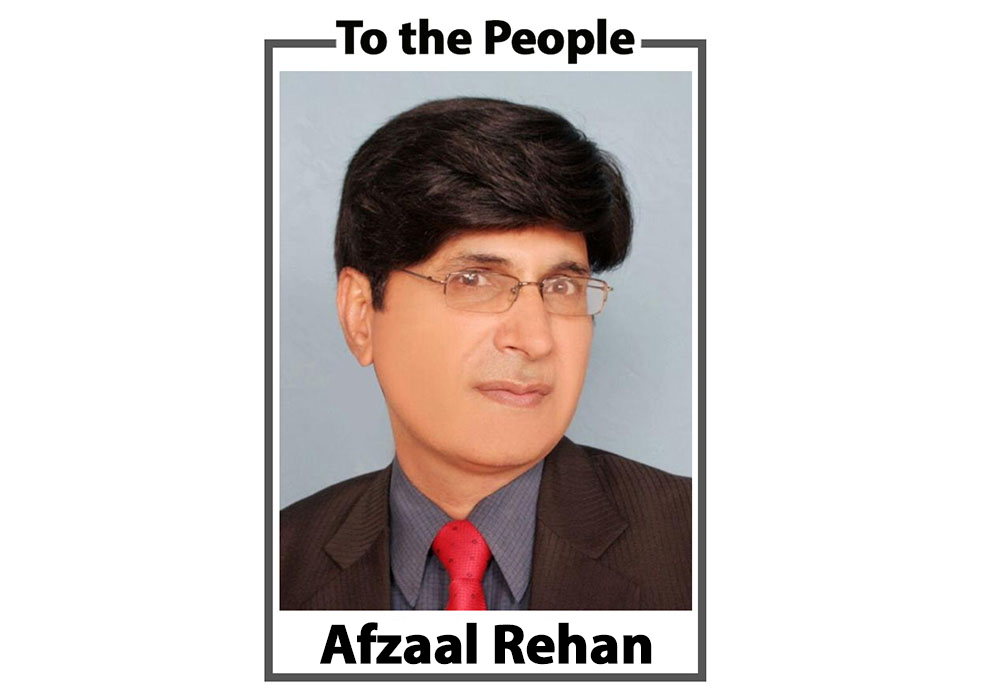
saudi arabia our

Saudi Arabia Is Our Red Line?

If someone were to say today that neither Iran nor the United States actually wants war, the immediate question would be: “Then why is this conflict happening?” The answer depends on whom you ask. Each side presents its own narrative, blaming the other for provoking the crisis and insisting that it is merely responding to aggression.

From the Iranian perspective, the United States is portrayed as a global bully with a long history of military interventions. Iranian supporters argue that Washington has once again resorted to force, launching a sudden attack on February 28 that allegedly eliminated Iran’s top political and military leadership. They contend that the reported killing of Supreme Leader Ayatollah Ali Khamenei, along with members of his family, is an act that cannot simply be forgotten or forgiven. In their view, they now possess the moral right to seek revenge. If their highest leader was targeted, they argue, then retaliatory action against U.S. President Donald Trump, Israeli Prime Minister Benjamin Netanyahu, and those associated with them is justified. For many in this camp, revenge has become a national rallying cry.

The American position is fundamentally different. Washington argues that Iran’s religious establishment under the doctrine of Wilayat al-Faqih has destabilized the Middle East for more than four decades. According to this view, Tehran has built, funded, and armed militant proxy groups not only around Israel but also across neighboring Gulf and Arab states. U.S. officials point to Syria, where former President Bashar al-Assad—despite belonging to a minority sect—was accused of carrying out decades of repression and mass violence against the Sunni majority, allegedly with Iran’s political and military backing. Similar accusations are made regarding Iraq, where Iranian influence is said to have fueled years of instability.

In Lebanon, critics argue that Hezbollah, widely regarded as Iran’s most powerful proxy, has effectively established a state within a state, operating beyond the authority of the Lebanese government. They claim the group has not only maintained continuous hostility toward Israel but has also contributed to Lebanon’s internal political and economic paralysis. According to this narrative, tensions have escalated to the point where Lebanon’s elected government has explored understandings with Israel aimed at confronting these armed groups.

American officials further argue that Iran’s regional influence has created deep anxiety among Israel as well as neighboring Gulf Arab governments, who fear that Iran’s Islamic Revolutionary Guard Corps (IRGC) or its affiliated groups could threaten their security at any time. They also maintain that the military action taken on February 28 was rooted in the events of October 7, when Hamas—described by Washington as an Iranian-backed organization—launched an unprecedented attack inside Israel that killed approximately 1,200 civilians and resulted in around 250 hostages, including women and children.

Despite these deep divisions, the United States and Iran, with the mediation of Pakistan and Qatar, reportedly signed a Memorandum of Understanding aimed at reducing tensions. One of its key provisions allegedly guaranteed that the Strait of Hormuz would remain open, allowing international shipping to pass freely without Iran imposing fees, restrictions, or obstacles.

However, according to the American account, tensions flared again when missiles were reportedly fired at Saudi and Qatari vessels passing through waters near Oman. Critics questioned the justification for such an action, arguing that instead of acknowledging responsibility or seeking de-escalation, elements within Iran’s Islamic Revolutionary Guard Corps insisted that the Strait of Hormuz should remain closed to commercial shipping. They further allege that the IRGC instructed Yemen’s Houthi movement to block the Bab el-Mandeb Strait in order to disrupt Saudi oil exports to Europe. If the Strait of Hormuz has already strained Asian energy markets, they argue, closing Bab el-Mandeb could create similar disruptions for Europe.

Such developments would pose serious economic and strategic challenges for the Kingdom of Saudi Arabia. Adding to these concerns, Yemen’s Houthis—who are widely viewed by Western governments as being aligned with Iran—have reportedly threatened to strike Saudi oil infrastructure.

It is within this context that Pakistan has chosen to clarify its position. Beyond the longstanding religious, diplomatic, and strategic relationship between Islamabad and Riyadh, Pakistan has repeatedly maintained that any attack on Saudi Arabia would be regarded as a direct threat to Pakistan itself. Against this backdrop, Pakistan’s leadership reportedly conveyed a clear message to Tehran: “An attack on Saudi Arabia will be treated as an attack on Pakistan. That is our red line.”

In line with this policy, Pakistan has reportedly deployed fighter aircraft and thousands of military personnel to Saudi Arabia, with forces positioned near the Yemeni border. Alongside air and ground deployments, Pakistani naval units are also said to be prepared to cooperate with Saudi and U.S. forces in securing maritime routes and responding to Houthi activities if required.

Given these escalating tensions, Iran’s Islamic Revolutionary Guard Corps is urged by its critics to recognize the gravity of the situation and avoid actions that could bring Pakistan and Iran into direct confrontation. They argue that disrupting both the Strait of Hormuz and the Bab el-Mandeb would not only inflict severe damage on the global economy but would also deepen international opposition toward Iran—an outcome they believe Tehran can ill afford.

According to this perspective, divisions are already becoming visible within Iran itself. Some observers argue that the country’s elected political leadership is increasingly uneasy with policies that risk further isolation and conflict. They see growing differences between Iran’s political and military establishments, even though these tensions remain largely behind the scenes.

The funeral of Iran’s Supreme Leader reportedly drew millions of mourners, reflecting widespread public sympathy. Yet critics argue that this did not necessarily indicate universal support for perpetual confrontation or calls for vengeance. Reports also suggested that hardline supporters directed slogans accusing President Masoud Pezeshkian of betrayal, while Foreign Minister Seyed Abbas Araghchi allegedly faced verbal hostility and even physical attacks during the proceedings.

Those who criticize Iran’s hardline factions argue that such behavior deserves condemnation rather than praise. In their view, the greatest burden of continued escalation will ultimately be borne not by political leaders, but by the ordinary people of Iran, who stand to suffer the most from prolonged instability and conflict.
Similar Posts

  • No to the Division of Punjab

    Once again, the debate over the creation of new provinces has surfaced in Pakistan. In every political era, the issue is revived in one form or another. This time, however, there appears to be a growing push for creating additional provinces out of almost every major province in the country. The strongest argument being put forward is that Pakistan’s population was around 70 million in 1972, whereas it has now grown to more than three times that figure. Therefore, it is argued, new provinces have become necessary for administrative convenience. At first glance, this argument may sound convincing. But the real question is: can all of Pakistan’s problems be solved simply by creating new provinces? If population growth alone is a sufficient reason for creating new provinces, then why have all major countries in the world not followed the same path? The real issue is not the number of provinces but the quality of governance, equitable distribution of resources, an empowered local government system, transparent accountability and an effective administrative structure. When the basic system is weak, changing the map does not make the problems disappear. What is particularly concerning is that Punjab appears to be the main target of this debate. At different times, proposals have emerged for a separate South Punjab, Central Punjab and even further divisions. It seems that with every political season, Punjab becomes the centre of the debate over provincial division. This has understandably created a feeling among many Punjabis that the issue may not be merely about administrative reform, but could also weaken Punjab’s historical, cultural and political identity. Punjab is not merely another province. It is one of the strong pillars of Pakistan’s ideological, historical and economic foundations. The land played an important role in the Pakistan Movement, made enormous sacrifices for the defence of the country, strengthened Pakistan’s agriculture and industry, and has always played a key role in the national economy. Repeatedly dragging such a province into a debate over division is neither appropriate nor in the national interest. Those advocating new provinces speak extensively about administrative convenience, but remain largely silent about the financial consequences. Has anyone explained to the public that every new province would require a new governor, chief minister, cabinet, provincial assembly, speaker, deputy speaker, secretariat and numerous government departments? There would also be hundreds of new government positions, official residences, vehicle fleets, security arrangements, protocol and countless other administrative expenses. All of this would require billions of rupees. And ultimately, that money would not come from some separate source. It would come from the taxpayers and the public exchequer. Pakistan is already facing one of the most serious economic challenges in its history. The burden of domestic and external debt remains enormous, while a substantial portion of the national budget is spent every year on debt servicing and interest payments. The country continues to rely on programmes supported by the IMF and other international financial institutions, while ordinary citizens struggle with inflation, unemployment and rising electricity, gas and petrol prices. In such circumstances, would creating new provinces and expanding the size of the ruling and administrative machinery really be an act of national wisdom? Or would it simply place another burden on already stretched national resources? If the genuine objective is to serve the people, the existing system should first be made more effective. Local governments must be empowered, district administrations should be given adequate financial and administrative authority, bureaucratic reforms should be introduced, corruption must be tackled and the equitable distribution of resources must be ensured. If the existing system is not functioning to its full potential, how can simply drawing new boundaries across the map transform the lives of ordinary citizens? The issue of dividing Punjab is not merely administrative. It is also a question of identity. Punjab’s language, culture and heritage have already not received the level of official patronage and protection they deserve. If the geographical unity of Punjab is repeatedly subjected to calls for division, it could further weaken its cultural and historical identity. There is another important question: if population is to be the basis for creating new provinces, why should the same principle not be applied uniformly across the country? Will this criterion apply equally to every province, or is Punjab being singled out? National decisions should not be driven by political expediency. They should be based on constitutional requirements, the national interest and broad public consensus. In my view, Pakistan needs a new economic vision, stronger institutions, a fairer system of justice, quality education, better healthcare, greater employment opportunities and effective local governments far more urgently than it needs new provinces. People do not want more rulers; they want better governance. They do not need more official protocol; they need affordable food, quality healthcare, good education and decent employment. As a Pakistani, a journalist and a Punjabi, I believe that dividing Punjab is not in the national interest. Its unity, historical importance and cultural identity should be protected. If we genuinely want to strengthen Pakistan, we should strengthen the system rather than divide provinces, improve governance rather than expand administrative structures, and reduce the problems faced by ordinary citizens instead of placing an additional financial burden on them. The division of Punjab is, in my view, unacceptable. A strong Punjab contributes to a strong Pakistan, and a strong Pakistan should be our shared destination.

  • Nelson Mandela: The Statesman Who Transformed the …

    By Ali Hamza Alvi, Final Year Law Student, SLC, Superior University and Muhammad Imran, Staff Member, SAHSOL-LUMS Some individuals attain prominence because they occupy positions of authority; others earn an enduring place in history because they transform the destiny of humanity. Nelson Rolihlahla Mandela unquestionably belongs to the latter category. His greatness did not arise merely from his election as the first democratically elected President of South Africa; rather, it was forged through his unwavering commitment to justice, equality, human dignity, and reconciliation. Even during the darkest chapters of his life, Mandela remained steadfast in his conviction that freedom and human rights were worth every sacrifice. Nelson Mandela was born on 18 July 1918 in the rural village of Mvezo in South Africa’s Eastern Cape. He was raised in a society deeply scarred by racial discrimination, where the colour of one’s skin determined virtually every aspect of life. Under the oppressive system of apartheid, Black South Africans were systematically deprived of their political, social, and economic rights. They were denied equal access to education, employment, healthcare, and public services, while racial segregation was enforced through an elaborate framework of discriminatory laws. Witnessing these profound injustices from an early age inspired Mandela to dedicate his life to dismantling institutionalised racial oppression and establishing a society founded upon equality and human dignity. Recognising the transformative power of law, Mandela pursued legal studies with the conviction that the law should function as an instrument of justice rather than a mechanism of oppression. As a practising lawyer, he represented countless individuals who had been denied their fundamental rights solely because of their race. These experiences reinforced his belief that genuine justice could exist only where every individual stood equal before the law, irrespective of race, ethnicity, religion, or social background. His legal career became not merely a profession but a platform for challenging systemic injustice and advocating constitutional equality. Mandela’s opposition to apartheid inevitably brought him into direct conflict with the South African government. His relentless campaign against racial discrimination and political repression led the authorities to regard him as a dangerous opponent of the existing order. In 1962, he was arrested, and following the historic Rivonia Trial, he was sentenced to life imprisonment. Confined for twenty-seven years, much of that time on Robben Island under exceptionally harsh conditions, Mandela endured one of the longest incarcerations of any political prisoner in modern history. Yet imprisonment neither diminished his resolve nor extinguished his hope. Instead, it strengthened his moral character and reinforced his unwavering belief that justice would ultimately prevail. Life behind prison walls subjected Mandela to severe physical hardship and profound emotional suffering. He was compelled to perform exhausting manual labour, endured restrictive prison conditions, and remained separated from his family and loved ones for decades. Despite these immense personal sacrifices, he refused to succumb to bitterness or hatred. Mandela understood that resentment imprisons the human spirit just as effectively as physical confinement. Instead, he embraced forgiveness as a transformative force capable of healing divided societies. His profound insight that reconciliation, rather than revenge, offers the surest path to lasting peace would later become the defining philosophy of his public life. Following sustained international pressure, widespread domestic resistance, and growing recognition that apartheid was morally and politically indefensible, Nelson Mandela was released from prison in 1990. His liberation marked not merely the end of his personal imprisonment but the beginning of a new era for South Africa. Across the world, millions celebrated his release as a triumph of justice over oppression. Many anticipated that Mandela would seek retribution against those responsible for his decades of imprisonment. Instead, he astonished the international community by advocating reconciliation, peaceful dialogue, and national unity. He firmly believed that South Africa could achieve genuine freedom only by replacing hatred with mutual respect and by building a future founded upon forgiveness rather than vengeance. In 1994, South Africa conducted its first democratic elections based on universal adult suffrage, culminating in Nelson Mandela’s election as the nation’s first Black President. His inauguration represented far more than a political transition; it symbolised the moral triumph of democracy over racial tyranny and the realisation of aspirations long denied to millions of South Africans. As President, Mandela dedicated himself to fostering national reconciliation, strengthening democratic institutions, and promoting equality before the law. His administration sought to heal the wounds of the past by encouraging cooperation among citizens of every race, culture, and community, thereby laying the foundations for a constitutional democracy committed to human rights and the rule of law. Among Mandela’s most remarkable qualities was his extraordinary humility. Despite occupying the highest office in the nation, he remained approachable, gracious, and deeply respectful of others. He believed that authentic leadership is measured not by personal power or privilege but by one’s willingness to serve humanity with integrity and compassion. His conduct demonstrated that strength need not be accompanied by arrogance and that true authority is exercised through wisdom, empathy, and moral example rather than coercion. Today, Nelson Mandela stands as one of the most revered figures in modern history. His legacy transcends the geographical boundaries of South Africa and continues to inspire people across every continent. He demonstrated that courage is not the absence of fear but the determination to uphold justice despite fear; that forgiveness is not a sign of weakness but the highest expression of moral strength; and that enduring social transformation is achieved not through hatred or violence but through reconciliation, equality, and respect for human dignity. His life remains compelling evidence that a single individual, guided by unwavering principles, extraordinary perseverance, and profound compassion, possesses the power to alter the course of history and leave an indelible legacy for generations to come. Nelson Mandela’s life demonstrates that while another individual may one day attain comparable moral stature and global influence, becoming another Nelson Mandela in the truest sense is extraordinarily difficult. His greatness did not stem merely from his imprisonment for twenty-seven years or his election as the

  • A New Security Architecture’: Global Analysts As…

    Pakistan, Saudi Arabia and Türkiye’s landmark defence agreement draws international attention; Shehbaz Sharif and Field Marshal Asim Munir play pivotal roles in historic strategic breakthrough The landmark Makkah Joint Defence Agreement between Pakistan, Saudi Arabia and Türkiye has triggered intense international interest, with analysts viewing the accord as a potentially significant development in the evolving security architecture of the Middle East and wider Muslim world. Signed in Makkah by Prime Minister Shehbaz Sharif, Saudi Crown Prince and Prime Minister Mohammed bin Salman and Turkish President Recep Tayyip Erdoğan, the agreement establishes a collective-defence principle under which an armed attack against any one of the three countries will be regarded as an attack against all three. The pact brings together three strategically important states with highly complementary capabilities: Saudi Arabia’s economic and energy weight, Türkiye’s powerful conventional military and expanding defence industry, and Pakistan’s extensive military experience and strategic deterrent. The combination has prompted international analysts to examine whether the Makkah agreement could become the foundation of a more autonomous, regionally driven security framework. Ishaq Dar: agreement is defensive, not directed against any country Pakistan’s Deputy Prime Minister and Foreign Minister Senator Ishaq Dar has sought to clarify the scope and purpose of the agreement amid growing international interest. Dar described the Makkah Accord as “purely defensive in nature” and “not targeted against any country”, stressing that its purpose is to strengthen collective security and promote peace and stability. He said the agreement does not replace or undermine existing bilateral or multilateral arrangements maintained by the three countries with each other, other states or international organisations. Under the accord, Dar explained, an external armed attack against any one of the three countries would be considered an attack against all, consistent with the inherent right of individual and collective self-defence under Article 51 of the UN Charter. Dar also said the framework remains open to other countries that share its principles and are prepared to resolve differences through mutual respect, cooperation and peaceful means. His clarification is strategically important because it positions the Makkah framework as a mechanism of deterrence rather than confrontation, without identifying Iran, Israel or any other state as a permanent adversary. Hakan Fidan compares mutual-defence provision with NATO Article 5 The most significant international description of the agreement’s collective-defence provision has come from Turkish Foreign Minister Hakan Fidan. Fidan said the provision is technically comparable to NATO’s Article 5, under which an attack against one member is treated as an attack against all. The comparison does not mean that the Makkah framework has NATO’s integrated command structure or institutional architecture. The practical response to any attack would be determined according to the circumstances. Fidan said a ministerial committee would be established and a general secretariat based in Saudi Arabia would oversee the framework, with further operational details to be developed. He also indicated that Türkiye wants the framework to expand, identifying Egypt as a potential future member. The prospect of expansion is potentially significant because it could transform a trilateral arrangement into a wider regional security mechanism. OIC welcomes agreement as an ‘important strategic step’ The Organisation of Islamic Cooperation has welcomed the agreement, with Secretary General Hissein Brahim Taha expressing strong support and describing the pact as an “important strategic step” reflecting the commitment of Pakistan, Saudi Arabia and Türkiye to strengthening cooperation. The OIC response gives the agreement significance beyond the three signatories and places it within the wider context of cooperation among Muslim-majority countries. The development comes at a time when several regional states are reassessing existing security arrangements and seeking greater strategic autonomy. Saudi Arabia: strengthening security without abandoning existing partnerships Riyadh has emphasised that the new defence framework does not replace its existing security arrangements. Saudi Deputy Minister for Public Diplomacy Rayed Krimly said the agreement does not supersede or replace existing bilateral or multilateral agreements involving the three countries. The position reflects Saudi Arabia’s broader foreign-policy strategy of strategic diversification. The Kingdom continues to maintain a major relationship with the United States while simultaneously deepening strategic, economic and defence ties with Türkiye, Pakistan, China and other powers. The Makkah pact therefore appears less a replacement for existing alliances than an additional layer of regional deterrence. Chatham House: Türkiye pursuing strategic ‘hedging’ The Makkah agreement has also given renewed significance to earlier analysis by Chatham House. Tim Chattell of the International Security Programme at Chatham House examined the prospect of a Turkish strategic arrangement with Saudi Arabia and Pakistan before the trilateral agreement was signed. He argued that such cooperation formed part of Ankara’s wider strategy of “hedging” — developing alternative strategic partnerships while retaining its NATO commitments. Chattell also identified potential synergy between the three countries, particularly because Türkiye and Pakistan possess complementary defence capabilities while Saudi Arabia has significant financial resources that could support defence cooperation and industrial development. What had previously been examined as an emerging strategic alignment has now become a formal defence commitment. Atlantic Council: a ‘double deterrence tool’ The Atlantic Council has also examined the evolving Saudi-Pakistan security relationship. Analyst Eleonora Ardemagni described the Saudi-Pakistan defence pact as a “double deterrence tool”, arguing that the relationship reflected both immediate security concerns and Saudi Arabia’s longer-term drive towards greater defence autonomy. Her analysis highlighted military training, capacity building, defence-industry cooperation, technology transfer and potential co-production as important elements of the emerging partnership. The inclusion of Türkiye adds another major military and defence-industrial dimension to that relationship. A strategic triangle of complementary power The significance of the Makkah pact lies partly in the capabilities each country brings to the partnership. Saudi Arabia contributes enormous economic and energy influence, strategic geography and financial resources. Türkiye contributes a major conventional military, NATO experience and an increasingly sophisticated indigenous defence industry. Pakistan contributes one of the region’s largest and most experienced armed forces, longstanding military cooperation with Saudi Arabia and Türkiye, and a nuclear deterrent. The three-way combination therefore creates a strategic partnership in which each member contributes capabilities that complement

  • Pakistan’s Next Strategic Advantage: From La…

    By Tahseenullah For decades, labour migration in Pakistan has largely been viewed as a response to unemployment and poverty. While this perspective has served its purpose, it no longer reflects the realities of today’s global economy. In the twenty-first century, labour mobility has become far more than an economic necessity—it is a strategic investment in human capital, national competitiveness and economic diplomacy. Countries that can produce skilled, certified and globally competitive workers will hold a distinct advantage in an increasingly interconnected labour market. As ageing populations, declining fertility rates and persistent labour shortages reshape developed economies, demand for skilled workers is rising across Europe, East Asia and other advanced markets. Pakistan, with one of the world’s youngest populations, is well positioned to seize this opportunity. The real challenge is not whether Pakistan has enough young people willing to work abroad, but whether it can equip them with internationally recognised skills, qualifications, language proficiency and professional competencies that meet evolving global labour market demands. Pakistan’s labour migration journey began with the establishment of the Bureau of Emigration and Overseas Employment in 1971, following the Gulf oil boom. Since then, more than 15 million Pakistanis have migrated through regular channels, contributing significantly to infrastructure, healthcare, construction, transport and service sectors worldwide while improving the livelihoods of millions of families back home. Today, overseas employment remains one of Pakistan’s most important economic assets. According to BEOE, 862,625 Pakistanis migrated for employment in 2023, followed by 725,672 in 2024 and 762,499 in 2025, with early trends indicating sustained international demand in 2026. Meanwhile, the Pakistan Migration Report 2025 and the State Bank of Pakistan estimate workers’ remittances at approximately US$38.3 billion in FY2024–25, representing nearly 9.34 percent of GDP. These remittances strengthen foreign exchange reserves, reduce poverty and support macroeconomic stability. Yet labour migration has rarely been treated as a strategic pillar of Pakistan’s long-term economic planning. The global labour market is undergoing profound change. According to the World Economic Forum’s Future of Jobs Report 2025, demographic shifts, technological advances and the green transition will create millions of new employment opportunities over the coming decade. Healthcare professionals, engineers, IT specialists, skilled technicians, renewable energy workers, construction professionals and caregivers are expected to remain in particularly high demand. Pakistan possesses a valuable demographic dividend, with nearly two-thirds of its population under the age of 30. However, this advantage will only translate into economic gains through sustained investment in education, Technical and Vocational Education and Training (TVET), international certification, digital skills and language training. The challenge is clear. The Pakistan Migration Report 2025 shows that nearly two-thirds of Pakistani migrant workers remain low-skilled or unskilled. While their contribution is invaluable, low-skilled employment often results in lower wages, limited career progression and greater vulnerability to labour market shocks. In contrast, highly skilled migrants generally access better jobs, stronger labour protections and significantly higher earnings. Pakistan must therefore move beyond a traditional labour export model towards a human capital export strategy. Success should no longer be measured simply by the number of workers leaving the country, but by the quality, productivity and global competitiveness of its workforce. Achieving this transformation requires comprehensive reforms. TVET institutions must align training with international occupational standards and labour market needs. Language education in German, Japanese, Korean and Italian, alongside digital literacy, workplace ethics and intercultural communication, should become integral components of workforce development. Market diversification is equally important. While Gulf Cooperation Council countries will remain Pakistan’s primary labour destinations, excessive dependence on one region exposes the country to geopolitical uncertainty and labour market fluctuations. Pakistan should actively expand regular labour mobility partnerships with Europe, Japan, South Korea, Australia and Canada, where structural labour shortages continue to grow. Government-to-government labour mobility agreements should become a strategic priority. Such partnerships can enhance transparency, reduce recruitment costs, improve worker protection and strengthen employer confidence in Pakistani talent. Simultaneously, Pakistan should pursue mutual recognition of qualifications and internationally accepted skills certification to facilitate smoother labour market integration. Institutional coordination will also be essential. The Ministry of Overseas Pakistanis and Human Resource Development, together with the NAVTTC, provincial TEVTAs, Overseas Employment Promoters, the Ministry of Foreign Affairs and Pakistan’s overseas missions, should implement an integrated national labour mobility framework supported by labour market intelligence, digital recruitment platforms and evidence-based policymaking. Pakistan can draw valuable lessons from the Philippines, whose migration governance combines ethical recruitment, mandatory pre-departure orientation, comprehensive worker welfare and strong overseas support systems. Adapting these practices would strengthen Pakistan’s reputation as a reliable source of skilled and protected migrant workers. At the same time, addressing irregular migration must remain a national priority. Preventing dangerous migration routes requires expanding legal migration opportunities, strengthening career counselling, improving public awareness, dismantling human smuggling networks and ensuring aspiring migrants have access to reliable information and affordable recruitment services. Labour migration should no longer be viewed solely as a means of reducing unemployment or increasing remittances. It should be recognised as a cornerstone of Pakistan’s economic diplomacy, human capital development and long-term growth strategy. The countries that will lead the future of global labour mobility will not necessarily be those with the largest populations, but those that invest in producing highly skilled, internationally certified and globally competitive talent. Pakistan has already demonstrated its ability to contribute to the global workforce. The next step is to move beyond exporting labour to exporting talent. By investing in skills, strengthening institutions, diversifying labour markets and promoting ethical, well-governed migration, Pakistan can transform its demographic dividend into one of its greatest strategic advantages. The world is searching for talent. Pakistan has the youth. What it now needs is the vision to turn that potential into global human capital leadership. Tahseen Ullah is a development and migration sector practitioner specializing in labour mobility, migration governance, education and child protection.

  • Second Darkest Day For Kashmiris

    Kashmiris including men, women, youth and children who underwent the second longest lockdown, complete curfew, for a pretty long time, are observing it as the second darkest day in their history on August 05, 2026. On August 05, 2019, the Indian Government of Prime Minister Narendra Modi had quite unexpectedly, illegally and unilaterally scrapped the special status of Jammu and Kashmir under Article 370 of the Indian Constitution making it an integral part of the country. These measures had ended the occupied territory’s limited autonomy and sought to alter the internationally recognized disputed status of Jammu and Kashmir in blatant violation of the United Nations Security Council resolutions and international law. The second darkest day in Kashmiris’ history is now better known and is observed every year on August 05 as Youm-e-Istehsal (Day of Exploitation). The observance of Youm-e-Istehsal not only serves as a reminder of the continued sufferings of the Kashmiri people but also reaffirms Pakistan’s unflinching solidarity with their just struggle for the realization of their right of self-determination. Pakistan’s civil and military leadership has all along been extending moral, diplomatic and political support to the Kashmiris in their just and indigenous freedom struggle. Kashmiris on both sides of the Line of Control (LoC), around the world as well as the Pakistan government and the people are observing yet another Youm-e-Istehsal on August 05, 2026 to mark the 7 years of quite regretful, deplorable Indian siege of its illegally occupied Jammu and Kashmir valley and denying the Kashmiris their birth right of self-determination in accordance with the UN Security Council resolutions. Needless to mention here that Kashmir conflict continues to remain as perhaps the oldest lingering and unresolved international dispute dating back to 1947. It also continues to be recognized by the world body, the United Nations, as an issue requiring peaceful settlement in accordance with its Security Council resolutions and the wishes of the Kashmiri people who were engaged in one of the longest unarmed struggles for freedom from the Indian shackles. Kashmiris in the occupied valley, on both sides of the Line of Control, in the world over are observing August 5, 2026 as the second darkest day of their history. The first one being observed every year on October 27 is to continue marking their protest and agitation against illegal and forcible occupation of their territory by India on this day in 1947 after its last Dogra ruler Maharaja Hari Singh, one of as many as 565 princely states, had an Instrument of Accession signed in Delhi, had opted to join India in accordance with the provisions of the Sub-Continent Partition Plan against the wishes and aspirations of the valley residents. Following this ugliest development, India had airlifted its security forces into the occupied territory. Since August 05, 2019, India has accelerated its efforts for consolidating its control over its Illegally Occupied Jammu and Kashmir (IIOJK) through a series of political, legal, and administrative measures. The Indian Government was also making attempts, which are a great source of concern for everybody, to engineer demographic changes in its occupied territory through the issuance of forged domicile certificates to non-Kashmiris, mainly Hindus, changing the land ownership laws, and electoral delimitation measures which were designed to arbitrarily alter the region’s demographic and political landscape. There were reports that in pursuance of Indian PM Narendra Modi’s devilish intentions of promoting Hindutva more than 350,000 fake and forged domicile certificates have been issued to non-Kashmiris (Hindus) enabling them to settle in the occupying territory since August 05, 2029. These measures, quite obviously, were a crude attempt to dilute the identity of the indigenous Kashmiri population, undermining their political representation, and creating irreversible changes to the disputed territory in flagrant violation of all international laws and the Fourth Geneva Convention. The years following August 5, 2019, have also witnessed a worsening and quite alarming human rights situation in IIOJK. Reports of arbitrary detentions, extrajudicial killings, enforced disappearances, custodial torture, women’s rapes, restrictions on freedom of expression and peaceful assembly, and systematic curbs on media freedom continue to surface and emerge frequently. Observance of another Youm-e-Istehsal on August 05, 2026 as such is not only a painful and tragic commemoration of August 05, 2019 events but also a reminder of the ongoing challenges being faced by the Kashmiris but will also highlight the urgent and dire need for the international community to take cognizance of the situation in IIOJK and exert pressure on India to respect international law and human rights and firmly support the efforts aiming at achieving a just and peaceful resolution of the Jammu and Kashmir dispute. Observance of the Youm-e-Istehsal by the government and the people of Pakistan is also a renewed commitment of Pakistan to continue extending political, diplomatic and moral support to the Kashmiris until they are enabled to exercise their inalienable right of self-determination in accordance with the UN Security Council resolutions. Kashmiris all over the world earnestly believe that their observance of the darkest days on August 5 and October 27 besides other protests and rallies in occupied territory and elsewhere will sooner or later awake the sleeping conscience of the international community and they will be getting their birth right of self-determination in accordance with UN Security Council resolutions and they will be free to either stay with India or join Pakistan. They are hopeful that this will happen but are unable to say surely as to when this is going to happen.

  • Are Immigrants the Problem?

    A rise of anti immigration policies have been emerging rapidly across North America and Europe, especially in the United Kingdom and USA. The blue collar politicians and white people living there have expressed their concerns over these often labeled “illegal” immigrants causing crime and stealing the jobs of the “rightful” citizens. If looked closely upon, this is not about illegal immigration, rather it is a form of racism against the blacks, the Indians and rather anyone who is not white.   The United Kingdom had colonized a great part of the world which included the Indian subcontinent and a vast part of Africa along with other European colonizers whom they wanted to “civilize” as for them they were a “savage” race. This colonization resulted in thousands of black and Indian families migrating to Europe, especially the upper class who ought to receive English education and work in the British government.   This seems like a normal history dilemma where colonization led to great migrations and mixing, which the Europeans have now mayhaps forgotten. All over the UK, many rallies of white people have emerged in which they protested against immigration- however they in reality spread their similar racist views. These citizens may not realize the extent to which immigrants aided in growing the economy. If kicked out, the economy will collapse and suffer tremendously.   In recent years these anti immigration policies have caused major hurdles for students all over Asia, South America and Africa who are ambitious enough to study in the ivy leagues and settle abroad- however their visas being rejected have deteriorated their ambitions otherwise. This is being seen as a great disadvantage all over the world especially for the students who are forced into putting a hold on their education.   No more than the student, this poses a great threat to the Western countries themselves. Without the hands and minds of these students who are the future workforce who help stabilize and grow the economy, the countries will often suffer. Unlike most nations, Germany is seen as offering free education to these immigrants which has definitely bore the result making Germany one of the most powerful economies despite the restrictions imposed on them (after world war II).   The other side of this argument initiates from the government of respective countries like Pakistan whom the students and workers emigrate from- their government stating that they are much needed to support their own respective economies. Nevertheless, the great amount of corruption, instability and discrimination are the reasons in the first place for workers to emigrate seeking better secure jobs abroad. It is hard to revive the patriotic heart of civilians when the governments do not work in favour of them.   “France for the French” was said by Jean-Marie Le Pen since the immigrants are apparently threatening the French identity. The same french is spoken in 20 African countries who were forcefully colonized and turned into slaves, the countries who had their own languages (hundreds of them), cultures and identities. So it often seems extremely hypocritical to hear statements such as these.   Consequently, the immigrants framed as criminals are the result of centuries old racist ideologies. They pose no threat but the threat of looking different, which is again ironically hypocritical since white race is a minority in the world. Hence, even in the ripe year of 2026 racism thrives and the rest of the world suffers. Comments like “Immigration is not an opportunity. It is a tragedy.” ( by Marine Le Pen) are made openly without facing any backlash- instead receive grave support. Mayhaps immigration can stop once the British return the koh-e-noor, jewels and trillions of dollars worth of resources stolen from the sub continent.

Leave a Reply

Your email address will not be published. Required fields are marked *