
great tragedy partitionviii

The Great Tragedy of Partition—VIII Mountbatten,…

The legality of a constitutional settlement cannot compensate for the absence of time, preparation and protection required to implement it

The collapse of the Cabinet Mission Plan did more than extinguish the last comprehensive attempt to preserve a united India. It transformed a constitutional dispute into an administrative and humanitarian emergency.

Indian National Congress proceeded with the Constituent Assembly, the Muslim League withdrew its acceptance of the Plan, and political distrust increasingly gave way to confrontation. Communal violence spread across different parts of India, demonstrating that the approaching transfer of power could no longer be treated simply as an exercise in constitutional drafting.

By the beginning of 1947, Britain had reached a decisive conclusion. Its rule in India could not continue indefinitely, while no constitution acceptable to all the principal political parties had emerged. On February 20, 1947, Prime Minister Clement Attlee announced that British authority would be transferred to Indian hands no later than June 1948.
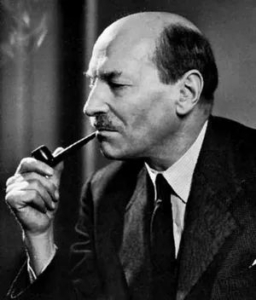
The statement also acknowledged that, in the absence of an agreed constitution, Britain would have to determine whether power should pass to a central authority, provincial governments or some other arrangement. The possibility of more than one successor authority had now entered official policy.

Lord Louis Mountbatten arrived as the last Viceroy in March 1947 with a mandate to supervise this transfer. He inherited a political order already close to collapse. The Cabinet Mission framework had ceased to command common confidence, the interim government was paralysed by rivalry between Congress and the Muslim League, and communal violence had exposed the fragility of provincial administration.
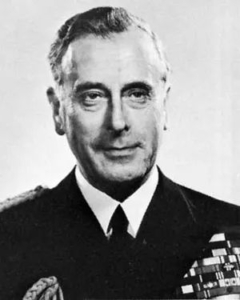
Mountbatten’s task was not to negotiate within a stable constitutional environment. It was to construct a settlement while the institutions through which it had to be implemented were rapidly disintegrating.

The central question was whether the deadline of June 1948 provided sufficient time to undertake an orderly transfer or whether delay would deepen violence and political uncertainty. Mountbatten chose acceleration.

On June 3, 1947, the British Government announced a plan under which British India could be divided and power transferred to two successor governments. Punjab and Bengal would decide whether they should themselves be partitioned; separate constituent assemblies could emerge; and referendums would determine the future of the North-West Frontier Province and the Sylhet district of Assam. The date for transfer was brought forward from June 1948 to August 1947.

The acceleration was defended as a response to deteriorating conditions. British authority was weakening, communal violence was spreading and the principal political parties had accepted that Partition had become unavoidable. Mountbatten and his supporters believed that a definite and immediate date would end uncertainty and compel the parties to assume responsibility.

The opposing view deserves equal attention. A constitutional transformation of such magnitude required the division of provinces, armed forces, civil services, financial assets, railways, irrigation systems, records and administrative institutions. It required the establishment of two governments and the settlement of territorial boundaries affecting millions of people. Compressing this process into a few weeks inevitably reduced the time available for administrative preparation, security arrangements and the protection of vulnerable communities.

The question is therefore not simply whether British withdrawal had become inevitable. It plainly had. The more difficult question is whether the decision to advance the transfer by approximately ten months converted political urgency into administrative recklessness.

The Indian Independence Act received Royal Assent on July 18, 1947. It provided that two independent Dominions—India and Pakistan—would be established from August 15, 1947. It partitioned Punjab and Bengal, empowered the respective constituent assemblies to legislate for the new Dominions and terminated British responsibility for governing India. Parliamentary sovereignty, exercised from London for generations, legislated itself out of the subcontinent in an extraordinarily compressed period.

The legal instrument was concise. Partition was not. An Act of Parliament could establish two Dominions, confer legislative authority and terminate imperial jurisdiction. It could not divide villages, canals, railway lines, police forces, military units, families and centuries of shared social existence with comparable simplicity. Constitutional law could provide a date for independence, but it could not by itself produce the administrative capacity necessary to manage the consequences of territorial division.

The most visible illustration of this haste was the work of the Punjab and Bengal Boundary Commissions. Sir Cyril Radcliffe was appointed to chair both bodies and was required to determine the boundaries separating Muslim-majority and non-Muslim-majority areas. The task involved densely populated territories in which religious communities, agricultural systems, transport networks and commercial centres were deeply interwoven. He was given only a matter of weeks to complete it.
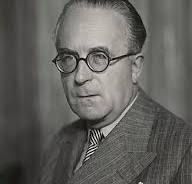
Punjab and Bengal could not be divided by applying census figures mechanically. District-level majorities concealed substantial minorities, while economic and geographic considerations frequently pointed in directions different from religious demography.

Rivers, irrigation headworks, railways and markets crossed the proposed boundaries. Sikhs were particularly vulnerable in Punjab because their population, landholdings and sacred places were distributed across areas claimed by both successor states.

The commissions were expected to resolve these questions while political authority was itself being divided. Their members were nominated from opposing political sides and were unable to agree on many decisive matters. The ultimate responsibility therefore rested with Radcliffe, who was required to draw boundaries under extraordinary pressure and with limited opportunity for local investigation.

More troubling was the timing of publication. The boundary awards were made public on August 17, 1947, after independence ceremonies had already taken place. Large populations in Punjab and Bengal consequently entered independence without knowing with certainty on which side of the new international frontier they would fall.

The delay may have been intended to prevent the boundary controversy from overshadowing the independence celebrations or provoking immediate disorder. Its effect was to deepen uncertainty at the precise moment when administrative clarity was most urgently required. Officials responsible for security, local government and transportation had little time to prepare for the territorial consequences. Ordinary people were left to respond to rumour, fear and rapidly changing political realities.

No law expressly ordered a complete exchange of populations between India and Pakistan. The migration that followed arose from violence, insecurity and the collapse of confidence that minorities could remain safely on the “wrong” side of the new border. Trains, roads and refugee columns became scenes of unimaginable suffering.

Families abandoned land, homes and livelihoods accumulated over generations. Women were subjected to abduction and sexual violence, while entire communities disappeared from places where they had lived for centuries.

The precise numbers remain disputed, but the scale is beyond controversy. Around fourteen million people were uprooted during Partition, making it one of the largest forced movements of population in modern history. Estimates of those killed vary greatly, reflecting both the chaos of the period and the inadequacy of official records.

Responsibility for this tragedy cannot be placed upon one actor alone. Congress and the Muslim League accepted Partition when other constitutional alternatives had collapsed. Communal organisations and armed groups converted political division into organised violence. Provincial administrations failed to protect minorities. Local grievances, rumours and retaliatory killings intensified the catastrophe.

Recognition of this shared responsibility does not absolve the departing imperial power. Britain controlled the timetable, supervised the division of the state and retained formal authority until the transfer occurred. The decision to accelerate independence, complete the boundary process within weeks and disclose the awards only after the transfer materially affected the conditions under which Partition was implemented.

The archival record does not establish that Britain intended the humanitarian catastrophe. It reveals something different and equally disturbing: a withdrawal carried out with insufficient appreciation of the administrative and human consequences of speed. Haste was treated as the solution to political instability when it also magnified institutional weakness.

Mountbatten succeeded in transferring power earlier than originally contemplated. The British Parliament enacted the required constitutional legislation, and two independent states came into existence. Judged solely by the formal completion of imperial withdrawal, the process was remarkably rapid. Judged by the suffering of the people required to live through it, the same process appears tragically unprepared. This is the central distinction upon which historical assessment must rest.

Partition as a political decision and Partition as an administrative operation were not identical questions. Even after the decision to create two states had been accepted, different choices remained possible regarding the timetable, security arrangements, boundary publication, refugee protection and institutional transition. The failure to make adequate provision in these areas converted constitutional separation into human catastrophe.

The tragedy of 1947 did not arise from constitutional disagreement alone. It arose when political division was implemented faster than administrative institutions could protect the people caught within it.

The concluding article will consider whether Partition itself, the haste of its execution and the scale of the resulting violence were inevitable. It will also examine the unresolved constitutional inheritance that passed to India and Pakistan when British rule ended.

References: Principal Documents and Sources

His Majesty’s Government, Statement on the Transfer of Power in India, February 20, 1947.

His Majesty’s Government, Plan for the Transfer of Power, June 3, 1947.

Indian Independence Act, 1947, 10 & 11 Geo. 6, c. 30.

Punjab and Bengal Boundary Commission Awards, August 1947.

Nicholas Mansergh (ed.), The Transfer of Power 1942–47, relevant volumes.

Stanley Wolpert, Shameful Flight: The Last Years of the British Empire in India.

Yasmin Khan, The Great Partition: The Making of India and Pakistan.

The National Archives, collections on Indian independence and the Partition of British India.

[To be continued]

____________________________________________________________________

Dr. Ikramul Haq, Advocate Supreme Court, Adjunct Faculty at Lahore University of Management Sciences (LUMS), member Advisory Board and Visiting Senior Fellow of Pakistan Institute of Development Economics (PIDE), holds an LLD in tax laws. He was full-time journalist from 1979 to 1984 with Viewpoint and Dawn. He also served Civil Services of Pakistan from 1984 to 1996.
Similar Posts

  • The Mechanics of Feelings, Thoughts, and Awareness

    Feelings operate like an inner radar system that signals what type of frequency our mind is currently broadcasting. A story beautifully highlights this reality: A young student once felt highly anxious before a critical meeting with his spiritual guide. He arrived tense, clutching his notebook and worrying about his performance. When he finally sat before the mentor, his breathing was heavy. The mentor smiled warmly, placed a gentle hand on his shoulder, and offered him a simple cup of water. In that single instant, all the accumulated tension drained away from the student. He felt completely safe and filled with high-frequency positive energy. Driving back from the meeting, even when someone cut him off on the road or honked aggressively, he remained utterly untroubled. Even if his corporate boss started shouting the moment he walked into the office, his inner peace remained unshaken because he was overflowing with positive energy. Now consider the absolute opposite scenario. You wake up with a jolt to a loud crashing sound outside. Moments later, you hear your spouse shouting from the adjacent room—it is the third time she is attempting to wake up the kids, and they are completely ignoring her. She is furious, venting her frustration on them and calling out to you as well. When you step out, she glares at you and demands that you go fetch breakfast because the kitchen gas supply is down. Rubbing your eyes, you head to the crowded marketplace, wait in a frustratingly long queue, and finally bring food home, only to see her brow still furrowed with deep tension. You hurriedly change and leave for work. In this deeply negative emotional state, even the most beautiful scenery on your commute cannot move you, and the warm smiles or pleasant mood of your office colleagues will fail to lift your spirits because your primary emotional anchor is entirely negative. When your thoughts are positive, the whole world looks beautiful; when your thoughts are negative, everything tastes bitter. Statistics reveal that a human mind processes nearly 70,000 thoughts per day, while core human feelings can be classified into two fundamental pillars: positive and negative. These two emotional streams branch out into roughly 30 to 60 distinct emotional expressions. Consider what is easier to manage: tracking 70,000 chaotic daily thoughts or monitoring 60 distinct feelings? The answer is obvious. By focusing your energy on regulating your feelings, your thoughts naturally align themselves, preventing you from getting lost in a labyrinth of mental anxiety. A vital question often arises: Can an individual actively stop or cancel out a deeply ingrained, negative thought sequence? The ultimate answer is no. If you forcefully try to fight, delete, or suppress a negative thought patterns, you end up giving it more power, and it anchors itself deeper in your subconscious. Imagine a spiritual guide telling you, ‘Close your eyes and meditate for five minutes, but whatever you do, absolutely do not think about a black monkey.’ Within seconds, your mind will be entirely flooded with images of a black monkey. This is because the subconscious mind cannot process a negative command in isolation; it focuses heavily on the core imagery provided. Instead of trying to aggressively cancel out negative thoughts, the correct strategy is replacement. The moment a negative sequence takes root, shift your attention entirely to an opposing positive thought or an active feeling of deep gratitude. Our mind cannot actively host two completely contrasting emotional states simultaneously. By choosing to step out of the mental labyrinth and leaning into positive memory, appreciation, or prayer, you naturally starve the negative loops of energy. Developing deep concentration and continuous awareness is the master key to mastering this mental landscape. While it sounds simple, maintaining absolute focus on your inner state requires active practice, especially when daily life pulls your attention in a hundred different directions. Engaging in regular, meditative prayer or mindful contemplation helps quiet the chatter of the ego and firmly anchors your spirit in a high-frequency state of gratitude. True inner mastery begins the moment you consciously choose which feelings you allow to run your day.

  • Gen Z, Jantar Mantar & PM Modi

    If a protest is peaceful, does not create problems for the public, and remains free of violence, it is a basic human right. In fact, protest is a sign of a living society. Dead people cannot protest or resist. Unfortunately, in our society, the protests of ordinary and poor people are often looked down upon, even though every protest should be judged on its own merits. People often complain that today’s generation is not as good as the previous one. But history shows that every older generation has made the same complaint about its youth. Even centuries ago, elders believed that young people had lost their values. Times have changed, but this mindset has remained the same. I believe that every new generation brings something better than the one before it. Today’s young people have access to knowledge in ways that no previous generation could have imagined. The internet and artificial intelligence have placed the world’s knowledge within everyone’s reach. As a result, today’s youth are more informed, more curious, and more aware. This is exactly what can be seen in the recent **Generation Z protests in India**. These young people are presenting their demands in a calm and respectful manner. Their speeches are based on logic rather than emotion. Whether boys or girls, they explain their concerns with confidence and reason. According to the protesters, **152 examination papers have leaked over the past ten years**, affecting nearly **70 million students**. They believe that Education Minister **Dharmendra Pradhan** should take responsibility and resign. They are demanding reforms in the education system, action against police officers who used force on students, medical treatment for the injured, the release of arrested protesters, and the withdrawal of cases filed against them. One female student said that their movement should not be turned into a Hindu-Muslim issue. She explained that her closest friend is Muslim and that religion has never come between them. According to her, the real issues are education, employment, and a better future—not religious divisions. She also argued that public money should be spent on schools and hospitals instead of fueling religious politics. Another young protester remarked that India’s two prominent leaders, Prime Minister Modi and Yogi Adityanath, do not have children of their own, so they may not fully understand the struggles faced by students and young people. Some protesters also mocked allegations that they were receiving funding from Pakistan or China. Holding packets of chips and spices, they jokingly referred to them as their “Pakistani funding,” using humor to challenge what they described as baseless accusations. The movement has not relied only on slogans. Students have also used songs, poetry, and creative performances to express their message. In some places, however, clashes with the police have occurred. The movement traces its origins to remarks made by **Justice Surya Kant** of the Supreme Court of India, who reportedly compared some unemployed young people to “cockroaches” during a court hearing. Many students felt insulted by the comment, which eventually led to the formation of the **Cockroach Janata Party** protest movement. The movement focuses on issues such as examination paper leaks, unemployment, and reforms in the education system. Among its well-known figures are **Abhijit Deepke** and **Sonam Wangchuk**. Wangchuk carried out a 26-day hunger strike before being taken into custody and moved to a hospital. What began in Delhi has gradually spread to other cities across India. Reports indicate that police have used baton charges, tear gas, and water cannons against demonstrators. Several international human rights organizations have expressed concern over the use of force against peaceful protesters. The students argue that India is the world’s largest democracy and that the right to peaceful protest must be protected rather than suppressed. Prime Minister Narendra Modi has announced that cases involving examination paper leaks will be referred to fast-track courts and that those responsible will face strict action. However, many protesters believe that promises alone are not enough and that concrete reforms are needed. History has shown that governments often underestimate public movements in their early stages. If legitimate concerns are ignored, such movements can grow into much larger crises, as has happened in several countries in the past. If the demands of these young people are genuine and reasonable, the government should engage with them directly, listen to their concerns, and reform the education system where necessary. If officials have failed in their responsibilities, they should be held accountable. A strong democracy is one that listens to peaceful voices instead of trying to silence them.

  • The Unmaking of a Wife: Identity, Myth, and Rebirt…

    By Mudassar Javed Baryar Avni Doshi, the Booker Prize-shortlisted author of Burnt Sugar, returns with her second novel, The First House, a work that solidifies her reputation as one of the most compelling literary voices of her generation. Doshi, born in New Jersey in 1982, has established herself as a writer who fearlessly dissects the complexities of human relationships, particularly those between mothers and daughters, husbands and wives. Her debut was lauded for its unflinching honesty and lyrical prose, and The First House continues this tradition, offering readers a psychologically penetrating exploration of marriage, identity, and the slow, agonizing process of self-reclamation. The novel centres on an unnamed narrator whose thirteen-year marriage unexpectedly collapses, forcing her to confront not only the immediate devastation of her husband’s departure but also the deeper, more unsettling questions about her past, her family, and the very nature of love and sacrifice. It is a story that is as mythologically rich as it is emotionally devastating, weaving together ancient goddesses, astrological charts, and the relentless cycle of nature to create a profound meditation on what it means to lose everything and find oneself in the process. The First House is a domestic drama steeped in psychological intensity and mythological symbolism, unfolding through the intimate, raw perspective of its unnamed narrator. The story begins with a moment of shattering clarity: her husband enters their bedroom and calmly announces he no longer wishes to be married. From this single, devastating event, the narrative spirals outward, exploring the aftermath of abandonment and the slow, painful process of learning to exist without the structures that once defined her. The plot is not driven by a series of dramatic external events but rather by the protagonist’s internal journey as she grapples with her grief, anger, and profound disorientation. As the narrator struggles to maintain her composure for the sake of her two young daughters, she retreats into the world of astrology, studying birth charts in search of answers or perhaps just patterns that might explain the chaos of her life. She becomes fixated on the figure of Diana, the Roman goddess of the hunt, whose statue stands in her neighbour’s yard—a constant, silent observer of her unravelling. The statue, originally commissioned as a weathervane, becomes a powerful symbol of her own perceived powerlessness and the indignity of being turned by forces beyond one’s control. The novel also weaves in the emergence of periodical cicadas, whose seventeen-year life cycles of subterranean dormancy and explosive, noisy mating serve as a metaphor for hidden growth, suppressed desire, and the inevitable transformations that drive all living things. The setting, a seemingly placid suburban landscape, contrasts sharply with the internal turmoil of the protagonist. Her world shrinks to the confines of her home, her fraught relationships with her parents, and her complicated, long-estranged relationship with her sister, Didi. The central conflict is her struggle to maintain a sense of self—to keep her head, as it were, while her life is dismantled piece by piece. As she navigates financial instability, the practical challenges of single parenthood, and the humiliation of being left, she is forced to confront uncomfortable truths about her marriage and herself. The novel is ultimately a story about the stories we tell ourselves to survive, and what happens when those narratives collapse. Doshi uses the themes of loss, betrayal, and self-reclamation to explore how we construct our identities through relationships and what remains when those structures are removed. The true power of The First House lies in Doshi’s extraordinary prose and the depth of her protagonist’s consciousness. The author crafts a narrative that is brutally honest, often uncomfortable, and deeply insightful into the psychology of a woman in crisis. The writing itself is a masterclass in showing, not telling; the reader feels the protagonist’s disorientation, her rising panic, and her eventual, hard-won clarity through the rhythm of the language and the accumulation of powerful, visceral details. Doshi has a remarkable ability to render complex emotional states with precision and economy, making the reader feel as though they are living inside the narrator’s mind. The novel’s structure, which moves between present-day events and memories of the past, creates a rich, layered portrait of a life that feels both specific and universal. One of the most compelling characters is the narrator herself. Her voice is raw, intelligent, and often unflattering, yet it is this very honesty that makes her so resonant. She is not a passive victim; she is a woman capable of sharp observation and deep self-criticism, which makes her journey of self-discovery all the more moving. For instance, her admission that she sometimes resented the intrusion of her family on her writing time, or her complex feelings of love and resentment towards her children, are depicted with a startling authenticity that challenges romanticized notions of motherhood. A specific example of her compelling development is her relationship with the act of writing itself. Initially a source of guilt and a symbol of what she has lost, writing gradually becomes a tool for her reclamation, a way for her to”re-collect”herself and her story. Her growing awareness of her own complicity in the failure of her marriage, and her willingness to examine her own flaws, makes her a deeply sympathetic and profoundly human character. Another exceptionally compelling aspect of the novel is the storyline involving the Diana statue and the cicadas. Doshi masterfully uses these elements not as mere decorative motifs, but as integral parts of the narrative’s thematic architecture. The statue of Diana, a representation of a powerful, self-possessed female deity, becomes a haunting presence throughout the novel, a mirror for the narrator’s own lost power and a link to her past self. The story of Diana’s commissioning as a weathervane, a great goddess forced to turn at the whim of the wind, becomes a potent symbol for the diminishment the protagonist feels in her marriage and society at large. The revelation of the architect’s violent death at the foot of the statue adds

  • From Aspiration to Reintegration: Rethinking Pakis…

    By Tahseen Ullah  For millions of Pakistanis, migration is a journey of hope and opportunity. Its success depends not simply on departure, but on informed decisions, relevant skills, ethical recruitment and proper preparation. Labour migration is a continuum—from reliable information and guidance, authentic career planning through skills development, documentation, overseas employment, work-visa processing, registration and Pre departure orientation at Protectorate of Emigrants, worker protection, and return and reintegration. For Pakistan, strengthening every stage of this cycle is essential to making labour mobility safe, regular, skills-oriented and rights-based. A well-managed migration system can protect workers, reduce exploitation and irregular migration, enhance employability, and transform migration from a response to unemployment into a strategic investment in human capital, economic resilience and sustainable national growth. The journey begins with one critical step: making an informed decision about whether, where and how to migrate Planning for Informed Migration: Skills, Choices and Readiness The migration journey begins with access to reliable information and informed decisions about overseas labour markets, occupations, wages, destinations, costs, legal pathways and potential risks. Once the decision to migrate is made, preparation should focus on employability and readiness through relevant technical skills, recognised certifications, language proficiency, digital literacy, financial awareness, and knowledge of employment contracts and workers’ rights. Aligning skills and qualifications with the evolving demands of destination-country labour markets can help prospective migrants pursue safe, regular and sustainable employment opportunities. Recruitment, Work Visa and Pre-Departure: Safe Pathways Recruitment is a critical stage of the migration cycle and a key point of vulnerability. Pakistani workers can access overseas employment through licensed Overseas Employment Promoters, the Overseas Employment Corporation, or direct employment. Verified employers, transparent contracts, fair recruitment costs and accessible grievance mechanisms help prevent fraud and exploitation. The process also includes obtaining the required work visa through the relevant diplomatic mission, completing emigration clearance and registration for protection, and attending Pre-Departure Orientation at the Protectorate of Emigrants (PoE) offices, equipping migrants with essential knowledge of their rights, responsibilities, workplace safety and available support services. Post-Arrival: Protection and Productivity The migration journey continues after arrival. Migrants may face contract violations, wage disputes, unsafe working conditions, language barriers, discrimination or limited access to support. Effective labour protection, employer compliance, consular assistance and accessible referral mechanisms are essential. Well-protected migrants are more likely to remain productive and successfully integrate into the workplace. Return and Sustainable Reintegration: Turning Experience into Opportunity Return marks an important transition in the migration cycle, particularly for workers completing their contracts and returning to Pakistan. A planned return and reintegration strategy can help returnees make productive use of their savings, skills, experience and professional networks. Access to psychosocial, legal, financial and employment support, along with skills recognition, entrepreneurship opportunities and further training, can facilitate sustainable reintegration. With the right support, returnees can turn their overseas experience into productive livelihoods and contribute to local economic development. Challenges and Opportunities Pakistan’s migration system faces persistent challenges, including information gaps, fraudulent recruitment, irregular migration, high recruitment costs, low skills levels, limited recognition of qualifications, inadequate protection and weak reintegration mechanisms. Fragmented coordination across institutions can further reduce the effectiveness of the migration process. At the same time, significant opportunities exist. Pakistan’s young population, expanding skills base and growing international demand for workers in healthcare, construction, engineering, IT, caregiving, manufacturing and green sectors provide a strong foundation for expanding regular labour mobility. The opportunity is to move from a labour-export model to a human-capital and talent-mobility model—through demand-driven skills development, international certification, language training, ethical recruitment, stronger bilateral labour mobility agreements and effective protection across the migration cycle. The Way Forward Pakistan’s National Emigration and Welfare Policy 2026 provide a framework for managing migration through a whole-of-cycle approach, covering safe and regular migration, skills development, worker protection, welfare, and return and reintegration. Its success will depend on effective implementation through clear short-, medium- and long-term strategies, strong institutional coordination and measurable outcomes. Relevant organisations, including Migrant Resource Centres, can complement these efforts through awareness-raising, guidance and information on legal pathways, referrals, Pre departure orientation, reintegration of returnees to helping migrants make informed decisions and avoid fraud, exploitation and irregular migration. Going forward, the priority should be to translate policy commitments into practical outcomes for migrants and their families. This requires sustained institutional coordination, responsive services and a system that remains connected to changing labour-market needs and the realities faced by workers throughout the migration journey. If managed effectively, migration can go beyond providing overseas employment and remittances to become a pathway for skills transfer, productive return and improved economic opportunities—contributing to a more resilient and prosperous Pakistan. Tahseen Ullah is a development and migration sector practitioner specializing in labour mobility, migration governance, education and child protection. He can be reached at tahseenanthro@gmail.com  LinkedIn: Tahseen Ullah

  • Can Pakistan live on a Borrowed Revolution?

    The most pitiable creature I know is not the beggar who asks for bread but the gentleman who must borrow a personality. He dresses in another man’s taste, speaks in another man’s phrases and mistakes imitation for refinement. He is everywhere respectable and nowhere original. Nations occasionally acquire the same unfortunate habit. Their politics become echoes, their ideals reflections, and their revolutions little more than borrowed costumes. There was a time when borrowing was the necessity of poverty. We borrowed machines because we had no factories, medicines because we had no laboratories, and books because we had no presses. Such borrowing was neither shameful nor unusual; indeed, civilisation itself advances through exchange. The Greeks borrowed from Egypt, the Arabs preserved and enlarged the inheritance of Greece, Europe rediscovered Aristotle through Muslim Spain, and Japan modernised by learning from the West without surrendering its soul. Borrowing knowledge is the beginning of wisdom. Borrowing identity is the beginning of decline. There is another form of borrowing that no customs official can intercept and no tariff can discourage. It enters silently through the imagination. A society begins by borrowing opinions, then aspirations, then indignation. Before long, it borrows its heroes, its villains, its vocabulary and, eventually, its revolutions. It ceases to ask, “What does our history require?” and instead asks, “Whose history should we imitate?” That, I fear, is the predicament into which much of Pakistan’s public discourse has drifted. During the past several weeks, social media has been flooded with admiration for the recent political resistance witnessed across the border in India. Video clips have travelled faster than thoughtful analysis. Slogans have crossed the Wagah frontier with greater ease than ideas. Among countless young Pakistanis one question has become almost fashionable, Why can’t Pakistan have a movement like this? The question is understandable. It is also profoundly revealing. Hidden within it is an assumption that our political future must resemble somebody else’s present; that history unfolds according to a universal script; that every nation matures by repeating the experience of another. It is an assumption born not of confidence but of intellectual dependency. The tragedy, therefore, is not that Pakistanis admire another people’s courage. Every decent society can appreciate courage wherever it appears. The tragedy is that many have become convinced that courage itself must now be imported. We seem increasingly unable to recognise our own political inheritance unless it first receives foreign approval. This habit is hardly confined to politics. It has become the defining condition of our intellectual life. We borrow theories from European universities before examining our own social realities. We borrow ideological fashions from America before asking whether they illuminate Pakistani society. We borrow debates from social media and mistake them for scholarship. We consume outrage manufactured elsewhere and wear it as though it were tailored for our own circumstances. We have become, in the deepest sense of the phrase, tenants in the house of our own imagination. The irony is painful. No civilisation lacking confidence in itself has ever become creative. Creation begins where imitation ends. Shakespeare borrowed stories but produced Hamlet. Iqbal studied Nietzsche and Bergson yet remained unmistakably Iqbal. Muhammad Ali Jinnah mastered the constitutional traditions of Britain but transformed them into a political movement rooted in the aspirations of Indian Muslims. Great minds borrow raw material; they do not borrow finished identities. The same principle governs nations. Civilisations borrow in order to create. Declining societies borrow in order to imitate. Perhaps nowhere is this confusion more visible than in our understanding of resistance. Resistance has become one of the most romantic words in modern political vocabulary. It evokes images of heroic crowds, defiant slogans, dramatic confrontations and triumphant victories. Social media, with its appetite for spectacle, has transformed resistance into a global performance. Every protest becomes a cinematic narrative; every confrontation seeks an audience; every slogan aspires to immortality through a hashtag. But history is not written in hashtags. Nor are nations transformed by theatrical moments alone. The anthropologist Leila Abu-Lughod offered an important warning nearly three decades ago in her influential essay The Romance of Resistance. She argued that scholars often romanticise resistance as though every act of opposition were inherently emancipatory. Such a view, she suggested, ignores the complex relationships of power, culture and history within which resistance acquires meaning. Acts of dissent cannot be detached from the societies that produce them. They are rooted in particular institutions, historical memories and cultural conditions. Her insight deserves careful attention today. To ask why Pakistan does not produce resistance identical to India’s is rather like asking why the Indus refuses to flow like the Ganges. Rivers obey their own geography. Nations obey their own history. Every meaningful political movement is shaped by its unique historical circumstances. The French Revolution emerged from fiscal collapse and aristocratic privilege. The American Revolution arose from disputes over representation and imperial authority. South Africa’s democratic transition was forged in the struggle against apartheid. None of these experiences can simply be photocopied for another society. History does not distribute identical examinations to different nations. Each country answers its own questions. Yet we continue searching for borrowed answers. Perhaps this is because borrowed revolutions are emotionally satisfying. They spare us the difficult labour of self-examination. It is always easier to admire another nation’s struggle than to confront the unfinished responsibilities of our own. Admiration demands nothing. Citizenship demands everything. That distinction has become blurred in contemporary Pakistan. Our public imagination has fallen in love with the romance of beginning anew. Every few years another movement captures our attention. We invest it with almost mythical expectations. We hope it will accomplish what institutions, constitutions and patient political reform have failed to achieve. We long for redemption through spectacle. But mature nations are not built upon permanent excitement. They are built upon permanent institutions. Hannah Arendt observed in On Revolution that the enduring achievement of successful revolutions lies not in the destruction of an old order but in the establishment of a

  • Pakistan shapes the emerging order

    Pakistan laid the foundation for a NATO-style alliance among Muslim nations as Pakistan Prime Minister Shehbaz Sharif signed the Mecca Joint Defence Agreement on August 7, 2026. The agreement represents a powerful recognition of Pakistan’s growing strategic importance.   The other two signatories included Saudi Crown Prince and Prime Minister Mohammad bin Salman, and Türkiye’s President Recep Tayyip Erdogan, who, along with Sharif, gathered at Al-Safa Palace in Mecca. In a joint statement, these countries announced that the agreement is “guided by the longstanding historical ties among the three states, based on the enduring bonds of brotherhood and Islamic solidarity that unite them, and building upon their shared strategic interests and longstanding defence cooperation.” The agreement asserts a commitment to treat an armed attack against any one of the three countries as an attack against all three.   The historic trilateral defence agreement was held at the Mecca Al-Mukarramah Summit for Joint Defence. It was also attended by Pakistan’s Chief of Defence Forces (CDF) and Chief of the Army Staff Field Marshal Syed Asim Munir, Defence Minister Khawaja Asif, and Deputy PM and Foreign Minister Ishaq Dar. The foreign and defence ministers of Turkiye and Saudi Arabia were also in attendance. While the Turkish Foreign Minister Hakan Fidan described the agreement’s terms as technically comparable to NATO’s Article 5, it is pertinent to note that the pact is not equivalent to NATO. Its precise operational mechanisms and institutional framework are yet to be developed. Both Pakistan and Turkish officials have, however, reinforced that the agreement is not directed against any particular country. It is also not designed to replace any existing alliance or strategic relationship, and this particularly holds for Türkiye, which is already a member of NATO. That said, the Mecca agreement is merely a defensive arrangement. It is crucial to make this distinction because these countries are not preparing for war. Instead, they are attempting to make collective security more credible. Simply put, the goal is to protect each other from outside threats. This is where Pakistan serves as the main pillar of the arrangement. Pakistan has earned its seat at the table owing to the evolving strategic position under Sharif and Munir. Throughout his tenure, Sharif has strengthened Pakistan’s diplomatic relationships not only with Saudi Arabia and Türkiye, but also with other regional powers. Munir, at the same time, oversaw Pakistan’s most significant military conflict in recent years, prompting the country’s expanding role in regional security diplomacy. Together, they bring credible diplomacy and military strength. Pakistan did not emerge as a catalyst for the agreement overnight. The foundations of the Mecca agreement were laid by Sharif and Crown Prince Mohammad bin Salman in Riyadh roughly a year earlier. On September 17, 2025, they signed the Strategic Mutual Defence Agreement between Pakistan and Saudi Arabia. The agreement declared that aggression against either country would be considered aggression against both. Building upon a nearly eight-decade-long relationship, the two countries committed to strengthening the defence alliance and mutual deterrence. That pact was a crucial achievement for Sharif’s government. Pakistan and Saudi Arabia have often described their relationship as strategic and deeply rooted in shared interests. Although Pakistan’s military personnel have trained and worked alongside their Saudi counterparts for decades, Sharif’s diplomacy has transformed the relationship into a more structured partnership covering defence, investment, politics, and regional diplomacy. The September agreement essentially laid the foundation for the trilateral defence framework, now strengthening Pakistan-Saudi longstanding ties by bringing Türkiye into the alliance. Sharif does not treat Pakistan’s relationships as isolated bilateral partnerships. He refuses to choose a single ally and maintains strong ties with multiple powers. Be it Saudi Arabia, Türkiye, China, Iran, or the US, each serves different strategic interests for Pakistan. This gives Islamabad greater flexibility and independence in its foreign policy, without becoming overly dependent on any single country. The flexibility paid off in 2026 when the Iran crisis forced Pakistan into one of the most challenging diplomatic balancing acts. Pakistan is Iran’s neighbour, but it also has ties with Saudi Arabia and Türkiye. Iran shares a long border with Pakistan and longstanding economic, political, and cultural ties. A regional war involving Iran thus constituted a direct threat to Pakistan. Islamabad could have chosen to shelter behind its borders and wait for the crisis to pass; however, it chose to influence its trajectory. Sharif spoke directly with regional leaders, whereas Munir directed the security framework of the mediation initiative. On April 9, the Prime Minister’s Office stated Sharif and Munir reviewed Pakistan’s peace efforts and expressed satisfaction with the positive de-escalation achieved at that stage. The two also reiterated Pakistan’s commitment to support the parties in securing a negotiated settlement. On April 25, Sharif discussed the regional crisis and Pakistan’s diplomatic efforts with Iranian President Masoud Pezeshkian. Prime Minister’s Office later reported that Pezeshkian extended his gratitude to Sharif, Munir, and Deputy Minister Ishaq Dar for their pivotal roles in fostering peace. A month later, the Iranian President once more reiterated his appreciation for Sharif and Munir for their efforts to bring peace to the region. This was a turning point for Sharif. He shifted Pakistan’s foreign policy from simply reacting to regional crises to actively steering their outcomes. As Sharif drew the diplomatic map, Munir gave it a military backbone. The evolution became especially evident in May 2025. The clashes between Pakistan and India transpired as the most serious direct military crisis between the two nations in decades. Following the April 22 Pahalgam attack that left 26 dead, India launched airstrikes across Pakistan and Pakistan-administered Kashmir. Pakistan retaliated with Operation Bynyan-ul-Marsoos, which led to both sides agreeing to a ceasefire on May 10. It became a defining moment for Munir. Pakistan demonstrated the potential of its armed forces to conduct sophisticated operations under extreme pressure. It also proved that its military apparatus could impose high costs on a much larger military. That is the cornerstone of credible deterrence for Islamabad. As for Munir, the Pakistan-India conflict redefined

Leave a Reply

Your email address will not be published. Required fields are marked *