276th corps commanders

276th Corps Commanders Conference highlights unifi…

The 276th Corps Commanders’ Conference, chaired by Field Marshal Syed Asim Munir at the General Headquarters in Rawalpindi, brought together the Pakistan Army’s senior corps commanders to deliberate on national security, sovereignty, and the country’s complex geopolitical environment. The conference commenced with a Fateha for the Shuhada of the Armed Forces, personnel of the Law Enforcement Agencies, and civilians who lost their lives in the fight against terrorism, reaffirming the significance of their sacrifices for Pakistan’s security, unity, and resilience. The commanders also paid tribute to the fallen heroes and their families, acknowledging their enduring contributions to the nation.

Field Marshal Syed Asim Munir, serving as Chief of Army Staff and Chief of Defence Forces, led the conference with a focus on national security and counterterrorism. His leadership has been appreciated by the military and the country’s political leadership, including the President and the Prime Minister, while also is a source of national pride. The conference highlighted ongoing efforts by the military leadership to strengthen Pakistan against internal and external threats and stated that these efforts have also received recognition from international leaders and diplomats for promoting regional diplomacy, peace, and stability, contributing to Pakistan’s international standing and diplomatic influence.

A primary and dominating focus of the 276th Corps Commanders’ Conference was the comprehensive and exhaustive review of the country’s prevailing and evolving security environment. The forum expressed extremely serious and grave concerns over the continued and blatant use of territory that remains under the effective control of the Afghan Taliban regime. This territory, according to the military leadership, is being actively utilized by Indian-sponsored terrorist groups to orchestrate and launch attacks inside Pakistani territory. These groups, which include the notorious Fitna al Khawarij and the newly emerged Fitna al Hindustan, are allegedly being used as proxies to destabilize Pakistan. The commanders presented detailed intelligence briefings that outlined the specific routes, hideouts, and funding mechanisms being employed by these hostile elements. It was made unequivocally clear that lasting peace and sustainable stability in the entire South Asian region are contingent upon the immediate and effective prevention of the misuse of Afghan soil by these terrorist proxies. The conference affirmed with absolute clarity that the Afghan Taliban regime bears a direct, non-negotiable, and primary responsibility for ensuring that its territory is not used as a launchpad for attacks against its neighbors, particularly Pakistan. In a significant and indeed rare declaration that sent a strong message to the region, the forum reaffirmed Pakistan’s unequivocal and inherent right to defend its people against the menace of terrorism. The leadership announced that intelligence-based operations, commonly known as IBOs, would continue with even greater intensity and precision against these threats. Under the ambit of Operation Ghazab-lil-Haq, which is a comprehensive and aggressive counter-terrorism campaign, these operations will be meticulously planned and executed to target terrorist networks that are operating from Afghan territory. This signaled a clear and firm posture that Pakistan is prepared to take the fight to the enemy’s sanctuaries if diplomatic efforts and bilateral agreements continue to be violated with impunity.

Beyond the realm of kinetic military operations and direct firefights, the conference underscored the absolutely critical importance of adopting a holistic, multi-dimensional, and comprehensive approach to the problem of counter-terrorism. The senior commanders stressed the immediate and pressing need for putting in place robust, transparent, and effective governance structures in the restive and formerly tribal areas of the country. These structures must be directed towards the rapid and efficient delivery of public services and the implementation of welfare initiatives. The objective is to win the hearts and minds of the local population, who have long been caught in the crossfire between the state and militant groups. The forum highlighted the urgent and indispensable need to dismantle the nefarious and symbiotic nexus that exists between terrorism and organized crime. This criminal-terrorist syndicate, they said, continues to thrive under the patronage of certain vested political interests and corrupt elements within the system. This acknowledgment is crucial because it recognizes the complex reality that sustainable peace cannot be achieved through military means alone, no matter how effective they are. It requires effective governance, the speedy completion of socioeconomic development projects, the establishment of public confidence in the integrity of state institutions, and the provision of swift justice. The conference’s heavy emphasis on this integrated and multi-pronged strategy reflects a mature, sophisticated, and nuanced understanding of the multifaceted nature of modern conflict. It also highlights the military’s recognition that a purely kinetic approach is insufficient and that a comprehensive national response, involving all pillars of the state and society, is the only viable path to lasting peace and prosperity.

The forum also took very careful and deliberate note of the rapidly evolving strategic landscape, particularly the increased and sophisticated reliance on externally supported hybrid warfare and disinformation campaigns. This was identified as a new and dangerous front in the ongoing conflict. Following what it described as Pakistan’s comprehensive and decisive defeat inflicted on the enemy in the Mark-e-Haq, which was a major military and ideological battle, hostile elements have been forced to shift their tactics. These adversarial actors are now attempting to destabilize Pakistan through more insidious means. These include the widespread propagation of false propaganda, the state-sponsored financing of local proxies and militant groups, the manipulation of social media to create ethnic and sectarian divides, and the persistent efforts to sow discord among the different segments of Pakistani society. The conference strongly condemned all such forms of state-supported financing, facilitation, or sponsorship of subversive proxies. It underscored that any attempts to use these hybrid means to create internal unrest and destabilize the country would be countered with strategic clarity, institutional resilience, and an unshakeable firm resolve. This robust and proactive stance against hybrid warfare demonstrates the military’s acute awareness of the non-traditional threats facing the nation. It also shows the military’s preparedness to counter them effectively using both defensive and offensive measures in the information and cyber domains. By publicly recognizing and clearly articulating these threats, the military leadership is not only preparing its own ranks for this new type of warfare but is also educating the broader Pakistani public about the true nature of the challenges their country faces. This helps build national resilience against psychological operations and foreign propaganda.

Another cornerstone and extremely vital component of the conference’s broad deliberations was the critical issue of water security, specifically regarding the Indus Waters Treaty that governs the sharing of water resources between Pakistan and India. Taking serious and careful note of India’s recent aggressive rhetoric and threatening statements surrounding the treaty, the Corps Commanders expressed a resolute, unconditional, and unwavering commitment to undertake all measures necessary to ensure the availability and protection of Pakistan’s rightful share of water. The forum reaffirmed the clear guidance given in the National Security Committee’s directive of April 24, 2025, making it absolutely clear that this is a top-tier national priority that transcends political differences. The military leadership pledged, in the strongest possible terms, to implement all measures directed by the civilian government, in full alignment with the deep aspirations and emotional sentiments of the Pakistani people. They vowed to safeguard this critical national lifeline, which is essential for agriculture, industry, and the daily lives of millions of citizens. This strong and unprecedented stance on water rights highlights the military’s expanded role in protecting not just the country’s geographical borders but also its vital national resources. The declaration that Pakistan will secure its legitimate water share by all means necessary is one of the strongest warnings yet issued on this issue. It underscores the seriousness and urgency with which the military views any form of threat to the country’s water supply, recognizing it as a matter of existential importance for the nation’s survival and long-term prosperity.

Reaffirming Pakistan’s longstanding, principled, and unwavering position on the Kashmir dispute, the forum described the territory as the country’s “jugular vein,” a metaphor that underscores its critical importance to Pakistan’s national identity and security. The commanders rejected and strongly condemned the ongoing, systematic human rights violations and the unilateral demographic engineering that is being carried out in Indian Illegally Occupied Jammu and Kashmir. They reiterated Pakistan’s unyielding diplomatic, political, and moral support for the brave Kashmiri people who are struggling for their legitimate rights. The forum emphasized that true and durable regional stability hinges entirely on granting the Kashmiri people their inalienable right to self-determination, in accordance with the numerous United Nations Security Council resolutions that have been passed on this matter. This unwavering support for the Kashmir cause demonstrates that the military remains absolutely steadfast in its commitment to this core national issue, viewing it as integral to Pakistan’s raison d’être and its vision for regional peace. The conference’s firm and unambiguous reiteration of this position serves as a clear and direct message to India and the international community that Pakistan will not waver, dilute, or compromise its support for the Kashmiri people’s right to self-determination, regardless of international pressure or changing geopolitical dynamics.

In his concluding and highly inspirational remarks, Field Marshal Syed Asim Munir directed the commanders to follow up expeditiously and with utmost dedication on the multi-domain transformation plan. This comprehensive plan is aimed at fundamentally modernizing the armed forces to meet the evolving and increasingly complex character of modern warfare, which now encompasses a dangerous blend of conventional military conflicts, sub-conventional insurgencies, hybrid information wars, cyber-attacks, and economic coercion. He called upon the commanders to maintain the absolute highest standards of vigilance, operational readiness, and professional excellence across all ranks. The strong emphasis on a multi-domain transformation signifies a forward-looking, proactive, and future-ready approach, ensuring that Pakistan’s military remains a cutting-edge, technologically advanced, and formidable force. Such a force is capable of not only deterring any potential adversary but also decisively defeating any aggression, whether it comes in the form of a conventional military assault or a subversive covert operation. The conference, therefore, was not just a periodic review of current threats and challenges. It was a comprehensive and detailed strategic planning session that set the course for the armed forces for the coming years. It ensured that the military remains prepared for any eventuality, from high-intensity conventional warfare to low-intensity asymmetric conflict.

The 276th Corps Commanders’ Conference, held under the dynamic, visionary, and resolute leadership of Field Marshal Syed Asim Munir, thus stands as a powerful, enduring, and inspiring symbol of national unity, strategic foresight, and the indomitable, unbreakable spirit of the Pakistani nation and its brave armed forces. The Pakistani nation’s profound, deep-rooted, and abiding love for its army is a powerful testament to the remarkable, selfless, and heroic services that these brave men and women are performing daily. Under this visionary leader, they continue to ensure the country’s sovereignty, integrity, and dignity against all odds, facing every challenge with unparalleled courage and unwavering dedication to the motherland.

Similar Posts

  • Justice delayed & wrongdoers’ profitability

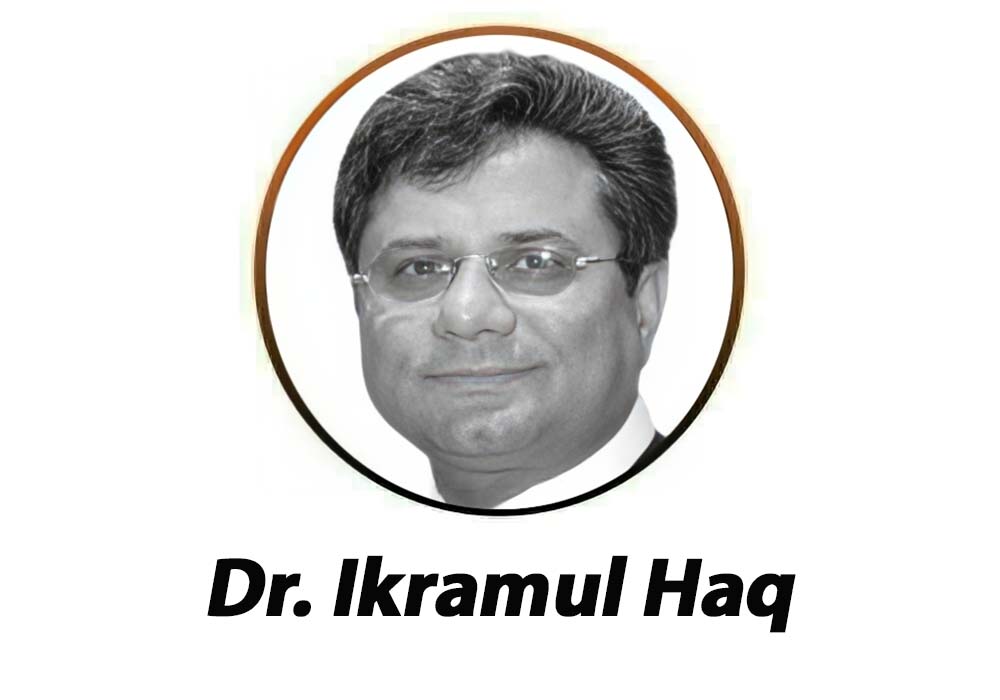
    A recent five-member judgment of the Supreme Court has settled an important question of Pakistani company law. It has also exposed a deeper weakness in our justice system: even when fraud is ultimately defeated, the victim may receive no meaningful compensation for the years consumed in recovering what was unlawfully taken. In Abdul Razzaq v Registrar of Companies, Securities and Exchange Commission of Pakistan and others, Civil Appeal No. 125 of 2025, decided on April 22, 2026, the Court held that the passage of time could not protect a fraudulent entry in a company’s register of members. The ruling affirms Naila Naeem Younus v Indus Services Limited (2022 SCMR 1171), under which a petition for rectification of the register under section 126 of the Companies Act, 2017 is not barred by limitation where shares have been taken through fraud. The decision is legally compelling. The register of members determines who owns shares, receives dividends, votes at meetings and exercises corporate control. A fraudulent alteration is therefore not a technical defect. It can amount to stealing ownership through manipulation of the company’s official record. The Court has rightly refused to allow deception to become title merely because it remained concealed for several years. Fraud is usually designed to remain undiscovered. Applying a rigid limitation period in favour of the person concealing it would reward the very conduct that the law is meant to prevent. The judgment also resolves the uncertainty arising from Bentonite Pakistan Limited v Bankers Equity Limited (2023 SCMR 1353), in which observations had suggested that Article 181 of the Limitation Act could apply to company-law proceedings. The larger bench has clarified that a rectification petition is not an “application” governed by that provision. This doctrinal clarity is welcome. The harder question is what justice means after the fraud has lasted for years. A person fraudulently deprived of shares may lose dividends, voting rights, managerial control and participation in rights or bonus issues. The wrongdoer may meanwhile control the company, use its assets and finance the litigation from benefits derived through the disputed shareholding. After 10 or 20 years, an order restoring the shares may correct the register. It does not necessarily compensate the victim. This problem extends far beyond company law. In Pakistan, fraudulent possession and prolonged litigation often operate together. Land, inheritance, commercial assets and corporate rights are appropriated through false documents or manipulated records. Once challenged, the beneficiary denies everything, seeks adjournments, produces further documents and carries the matter through every available forum. Delay becomes a business strategy. The wrongdoer retains the asset while the victim pays to recover it. Even after losing, the wrongdoer may be required only to return property that never lawfully belonged to him. Nominal costs do little to alter this calculation. A rational legal system must ensure that fraud and frivolous litigation are economically unattractive. Otherwise, the expected gain from wrongdoing remains greater than its expected cost. Pakistan needs to move towards a genuine cost-based justice system. This does not mean obstructing access to courts or punishing honest litigants who fail to prove a bona fide claim. It means distinguishing genuine disputes from proceedings maintained through deliberate falsehood, concealment, forged documents or tactical delay. The Code of Civil Procedure, 1908 provides for costs, and the federal Costs of Litigation Act, 2017 recognises actual, adjournment and special costs in specified circumstances. The larger principle should be applied far more effectively: an innocent litigant should not be forced to finance the other side’s abuse of judicial process. Where fraud is established, courts should ordinarily consider restoration of all benefits obtained from the disputed property, interest for the period of deprivation, realistic legal expenses and enhanced costs where false or vexatious pleas prolonged the case. In corporate cases, this could include an account of dividends, bonus and rights shares, remuneration obtained through control, and other measurable benefits flowing from the fraudulent entry. Section 126(4) also permits referral of fraudulent conduct for proceedings under section 127. Such referrals should be made where the evidence warrants them. The constitutional dimension should not be ignored. Article 10A of the Constitution guarantees fair trial and due process, while Articles 23 and 24 protect property. A right restored after decades, without compensation for its prolonged deprivation, is only partially vindicated. The Supreme Court has correctly ruled that fraud cannot shelter behind the calendar. Our jurisprudence must now adopt the accompanying principle that fraud cannot profit from the judicial calendar either. Justice must do more than correct an entry after years of litigation. It must remove the financial benefit of wrongdoing, compensate the victim as far as reasonably possible and impose realistic costs on those who misuse courts to preserve the proceeds of fraud. Only then will delayed justice cease to be an investment for the wrongdoer. _______________________________________________________________________   Dr. Ikramul Haq, Advocate Supreme Court, Adjunct Faculty at Lahore University of Management Sciences (LUMS), member Advisory Board and Visiting Senior Fellow of Pakistan Institute of Development Economics (PIDE), holds an LLD in tax laws. He was full-time journalist from 1979 to 1984 with Viewpoint and Dawn. He also served Civil Services of Pakistan from 1984 to 1996.

  • Vietnam as an Economic Lesson for Pakistan

    Vietnam and Pakistan are often viewed as very different economies, yet they share several important characteristics: large populations, substantial labor forces, strategic geographic locations, sizeable domestic markets and considerable potential in agriculture, manufacturing and services. The more important difference, however, is not simply what the two countries possess, but how effectively they have leveraged those assets into production, exports, investment, foreign exchange and sustained economic growth. The contrast is increasingly visible in the numbers. In 2025, Vietnam’s economy reached approximately $514.7 billion, compared with $407.3 billion for Pakistan, despite Pakistan having more than twice Vietnam’s population. GDP per capita was about $5,066 in Vietnam against $1,596 in Pakistan, while economic growth was 8.0 percent compared with 3.7 percent. Vietnam also attracted FDI equivalent to 4.2 percent of GDP, compared with only 0.5 percent in Pakistan. These figures do not mean that the two countries started from identical circumstances. They do, however, demonstrate the consequences of different approaches to leveraging economic potential.   Vietnam’s transformation began with the Doi Moi reforms in 1986, which gradually moved the economy towards market oriented production and greater integration with international markets. Over the following decades, Vietnam built a growth model around manufacturing, exports, foreign direct investment, infrastructure and participation in global value chains. Trade became one of their principal engine of growth. The scale of this transformation is striking. Vietnam’s merchandise exports reached about $475 billion in 2025, while imports were around $455 billion, producing a trade surplus of approximately $20 billion. Total merchandise trade was therefore close to $930 billion, almost twice the country’s GDP. Manufacturing accounted for nearly 89 percent of exports. This demonstrates the power of economic leverage: labour, infrastructure, foreign investment and imported technology have been combined to produce goods for global markets and generate foreign exchange. The access to US provides a particularly revealing comparison. Vietnam exported approximately $153 billion of goods to the U.S. market in 2025. China, meanwhile, remained its largest source of imports. This reflects Vietnam’s position within regional production networks, where it imports machinery, components and intermediate goods and transforms them into products for export. Vietnam’s experience shows that imports are not necessarily a weakness when they support productive investment and future export capacity. Pakistan’s trade structure remains considerably different. According to the State Bank of Pakistan, goods exports were $32.3 billion in FY2025, while goods imports reached $59.1 billion, resulting in a merchandise trade deficit of $26.8 billion. Services exports were $8.4 billion, including ICT exports of $3.8 billion. The difference becomes even more significant when viewed through the balance of payments. Pakistan recorded a current account surplus of $2.1 billion in FY2025, but workers’ remittances contributed $38.3 billion to the external account. The goods and services trade balance remained in deficit by approximately $29.4 billion. This highlights a fundamental difference between the two economies. Pakistan has been able to stabilize its external account partly through remittances, whereas Vietnam has built a much larger export generating productive base. Remittances are vital for Pakistan, but they cannot substitute for an economy capable of generating foreign exchange through competitive production and exports. The U.S. market further illustrates the gap. The United States is Pakistan’s largest export destination, yet Pakistan’s goods exports to the U.S. are only a small fraction of Vietnam’s. The opportunity therefore exists, but Pakistan has not yet developed the scale, diversification and industrial capacity required to capture a much larger share of the market. The lesson is not simply to increase exports to the United States, but to develop the productive ecosystem that makes sustained export growth possible. Vietnam’s experience also contains an important warning. Its impressive export performance has been driven heavily by foreign invested companies. This has helped Vietnam integrate into global value chains, but it has also created concerns about domestic value addition and linkages between multinational corporations and local firms. The lesson for Pakistan is clear: attracting FDI should not be the final objective. FDI should contribute to technology transfer, supplier development, skills, local procurement and domestic value addition. Pakistan therefore needs to rethink the relationship between imports, investment and exports. Restricting imports may temporarily reduce pressure on the balance of payments, but it does not create competitiveness. Machinery, technology, industrial equipment and productive intermediate goods can expand future production and exports. The objective should be to reduce consumption driven imports while facilitating investment driven imports that strengthen domestic productive capacity. Pakistan’s strategic location linking South Asia with China, Central Asia, Afghanistan, Iran and the Middle East offers major economic opportunities, but infrastructure alone cannot deliver transformation. CPEC, Gwadar, economic corridors, industrial zones and digital connectivity must be linked with productive clusters, reliable energy, logistics, skills and international markets. Pakistan should leverage its existing strengths by moving agriculture towards processing and higher value exports, textiles towards design and technical products, minerals towards processing and value addition, and IT, engineering, pharmaceuticals, tourism and business services towards stronger export performance. Pakistan also needs to make exports a central objective of economic policy. Balance of payments stability cannot depend indefinitely on remittances, external borrowing and periodic financial assistance. FDI policy should focus on quality rather than simply quantity, with incentives linked to technology transfer, local supplier development, skills, domestic value addition and exports. Special economic zones should be developed around clearly identified industries and markets, supported by reliable infrastructure and efficient regulation. CPEC, ports, industrial zones, roads and digital infrastructure should function as integrated production and trade systems rather than isolated projects. Public private partnerships can help mobilize investment where projects are economically and financially viable. The central lesson from Vietnam is that economic success depends on leveraging existing advantages through strong institutions, policy continuity and effective coordination. Pakistan has a large market, substantial workforce, strategic geography, natural resources and access to major markets. The priority should be to convert these assets into productivity, exports, investment and sustainable foreign exchange earnings. Pakistan must turn geography into connectivity, population into productive human capital, resources into value added exports, infrastructure into industrial capacity

  • The Future of Provinces in Pakistan

    The debate over the creation of new administrative units and provinces in Pakistan has once again occupied the national discourse after Federal Interior Minister Mohsin Naqvi declared that the country’s existing governance system had “collapsed” and argued that governance must be brought closer to the people through new administrative units. His remarks have revived an issue that has periodically surfaced since independence but has rarely moved beyond political rhetoric. While some interpreted his statement as a call for creating additional provinces, others argued that he was advocating broader administrative restructuring. Regardless of terminology, the debate has exposed the structural weaknesses of Pakistan’s governance architecture and compelled policymakers, constitutional experts and political parties to revisit an important question: can Pakistan continue to be governed effectively under its existing administrative framework, or has demographic growth, urban expansion and governance complexity made institutional restructuring unavoidable?  Pakistan today is home to more than 250 million people, yet it continues to function primarily through four provinces established under historical rather than administrative considerations. At independence in 1947, the population and governance challenges were dramatically different. Since then, urbanisation, economic diversification, internal migration and increasing demands for public services have transformed governance requirements. Provincial capitals often remain geographically and administratively distant from citizens living in peripheral districts. Residents of South Punjab, Hazara, southern Balochistan, merged districts of Khyber Pakhtunkhwa and interior Sindh frequently complain that decision-making remains concentrated in provincial capitals, resulting in unequal development, delayed service delivery and inadequate representation. Mohsin Naqvi’s argument rests on the proposition that governance has become excessively centralised and that citizens are compelled to travel long distances merely to access basic government services, courts and administrative offices. He further argued that countries with expanding populations have responded by creating additional administrative units rather than maintaining outdated structures. Whether one agrees with his assessment or not, his central observation deserves serious consideration because governance effectiveness is measured not by the size of government but by the accessibility, responsiveness and accountability of institutions.  The debate itself is not new. Successive governments have proposed South Punjab Province, Bahawalpur Province, Hazara Province and even administrative restructuring in Karachi and Balochistan. Parliamentary resolutions regarding South Punjab have previously been adopted, yet constitutional consensus has remained elusive. Political parties have often supported new provinces while in opposition but have shown considerably less enthusiasm after assuming power. Consequently, proposals have become election slogans rather than governance reforms.  Critics of creating new provinces argue that administrative fragmentation alone cannot solve governance failures. They point out that Pakistan’s primary problem is not necessarily the number of provinces but weak institutions, bureaucratic inefficiency, political interference, corruption and inconsistent implementation of laws. According to this perspective, multiplying provinces without institutional reform merely replicates existing inefficiencies across additional administrative boundaries. New provincial governments would require assemblies, governors, chief ministers, secretariats, police structures, judicial infrastructure and enormous recurring financial expenditures. Unless accompanied by governance reforms, decentralisation may simply increase administrative costs without improving public service delivery. Supporters, however, contend that administrative proximity improves governance outcomes. Comparative international experience demonstrates that countries such as India have periodically reorganised states to improve administrative efficiency and political representation. Smaller administrative jurisdictions often enable faster decision-making, improved monitoring, stronger accountability and more equitable distribution of development resources. Citizens generally experience better governance when government institutions are physically and administratively closer to them. These arguments have gained renewed attention following Naqvi’s intervention.  However, the current debate suffers from one significant omission. It largely ignores Pakistan’s weakest democratic institution: local government. Before creating additional provinces, policymakers must honestly evaluate why local governments have repeatedly failed. Pakistan has experimented with local government systems under different constitutional and political arrangements, yet these institutions have rarely been allowed to function independently and consistently. Elected local governments are frequently dissolved, elections are delayed and financial autonomy remains severely restricted. Provincial governments often resist devolving meaningful authority because local governments are perceived as political competitors rather than governance partners. This brings the issue of local body elections to the centre of the discussion. The Constitution envisions democratic decentralisation, yet local government elections have remained irregular across several provinces. In many cases, elected councils complete only partial terms or remain financially dependent upon provincial governments. Consequently, citizens seeking municipal services, sanitation, water supply, local roads, building regulation or community development frequently confront administrative paralysis. A country that struggles to sustain functioning local governments cannot realistically expect that merely creating additional provinces will automatically improve governance. The experience of Pakistan’s devolution reforms provides valuable lessons. The Local Government reforms introduced in the early 2000s attempted to decentralise authority by empowering districts and local councils. Although those reforms had weaknesses and generated political controversy, they demonstrated that bringing government closer to citizens can improve responsiveness when accompanied by fiscal authority, administrative autonomy and institutional accountability. Unfortunately, subsequent governments reversed or weakened many of these arrangements, resulting in repeated cycles of centralisation and decentralisation. Political reactions to Mohsin Naqvi’s proposal reflect Pakistan’s broader constitutional divisions. Some leaders have welcomed discussion on governance reform while supporting greater administrative decentralisation. Others have questioned both the timing and constitutional implications of the proposal, expressing concerns that restructuring provinces without broad political consensus could intensify ethnic, linguistic and regional sensitivities. There are also concerns that debates over provincial boundaries could distract attention from more immediate governance priorities, including economic recovery, inflation, institutional reforms and electoral credibility. The political diversity of these reactions demonstrates that constitutional restructuring cannot succeed through executive statements alone; it requires sustained parliamentary dialogue, provincial participation and national consensus.  The constitutional dimension cannot be overlooked. Creating new provinces requires constitutional amendments and political agreement among federal and provincial stakeholders. Such reforms inevitably involve questions relating to resource distribution, National Finance Commission allocations, Senate representation, civil service restructuring, judicial jurisdictions and provincial assets. Therefore, any attempt to redraw administrative boundaries without extensive consultation risks generating political instability rather than administrative efficiency. The opportunities nevertheless remain significant. Properly designed administrative restructuring could reduce regional disparities, improve public service delivery, enhance

  • Frontiers of narcoterrorism From heroin to quadcop…

    The assault on the Khazina Banda police post in Hangu was not another entry in Pakistan’s grim terrorism ledger. Attackers first struck with explosive-laden quadcopters and then ambushed the post and its reinforcements. Al Jazeera’s initial report put the police death toll at 11, including Deputy Superintendent Diyar Khan, with 28 personnel injured; subsequent local reporting revised the fatalities to nine. Fifteen attackers were reportedly killed. No organisation immediately claimed responsibility. The disputed count does not alter the horror. Men defending the State confronted a privately financed force equipped with drones, explosives and heavy weapons. Hangu should destroy the fiction that terrorism, narcotics and illicit arms are separate problems assigned to separate departments. They form one war economy. Narcotics generate cash; illicit finance launders it; weapons protect routes; militants supply coercion; political and official patronage obstructs investigation. The system survives governments and military operations because Pakistan attacks gunmen without dismantling the business that replenishes them. This was the warning in Pakistan: From Hash to Heroin and, more systematically, in its sequel Pakistan: From Drug-trap to Debt-trap. The Afghan war did not merely push refugees across the border. It created an enduring logistics chain in which weapons travelled one way and opium, heroin and dirty money travelled the other. The jihad (holy war) against the erstwhile Soviet Union was presented as strategic necessity. Its unrecorded balance sheet included extremism, heroin, the Kalashnikov culture, protected smugglers, corrupted institutions and a drug elite wealthy enough to enter respectable business and influence politics. The term “narcoterrorism” is often used carelessly, as if every attack can be attributed to a particular consignment. That is not the proposition. The connection is systemic, not necessarily transactional in every case. Armed groups and criminal syndicates occupy the same spaces, use overlapping routes, brokers, hawala channels and protection arrangements, and profit from weak border governance. Money is fungible. Revenue from smuggling, extortion, narcotics or lawful-looking businesses can buy the same rifle, drone component or safe house. Pakistan helped manufacture this economy through choices made during the General Zia-ul-Haq era and then preserved it through denial. The State celebrated the fighters, tolerated the gun markets and allowed traffickers to convert illicit fortunes into property, commerce and political access. Periodic seizures created the appearance of enforcement, while financiers, facilitators, beneficial owners and patrons largely remained beyond reach. The poor courier was arrested; the network endured. A poppy field was destroyed; no viable crop or market was supplied to the farmer. An addict was criminalised; treatment remained scarce. The spectacle of control substituted for control. Afghanistan’s changed opium economy does not justify complacency. The UN Office on Drugs and Crime (UNODC) estimated that cultivation fell by 20 percent in 2025 to 10,200 hectares and production dropped by 32 percent to 296 tonnes, far below pre-ban levels. This is important, but it is not the burial of the drug economy. Stocks, established trafficking routes and accumulated capital, survive a harvest decline. UNODC also warned that synthetic drugs, particularly methamphetamine, were becoming organised crime’s new business model because production is easier to conceal and less dependent on climate. The market adapts faster than bureaucracies. The same adaptation is visible in the air above Hangu. Reuters reported in July 2025 that militants had used commercially acquired quadcopters in at least eight attacks in Bannu and adjoining areas within two and a half months. The provincial police chief acknowledged that the police had no equipment to meet the threat and that militants were better equipped. One year later, weaponised quadcopters helped open a lethal assault on a police post. This was not an unforeseeable innovation. It was an institutional warning ignored until officers paid with their lives. The immediate response followed the familiar script: condemnation, funerals, retaliatory operations and claims that the mastermind had been killed. Removing operational commanders is necessary, but body counts do not measure the destruction of a war economy. If the financier remains solvent, the trafficker keeps his route, the arms supplier retains access, the hawala operator moves the proceeds and the protector remains influential, another commander will emerge. Tactical success without financial and institutional disruption merely changes the names of the dead. Islamabad is entitled to demand that Kabul prevent Afghan territory from being used for attacks. The Taliban government’s denials cannot answer evidence of militant mobility and sanctuary. Pakistan, however, cannot outsource security or erase its history by pointing across the Durand Line. Routes, facilitators, arms stocks, laundering channels and political shields also exist inside Pakistan. A foreign-policy accusation is not a domestic counterterrorism strategy. The starting point must be a permanent national narcoterrorism and illicit-arms fusion centre, not another ornamental committee. It should bring the provincial counterterrorism departments, police, Anti-Narcotics Force (ANF), Federal Investigation Agency (FIA), Customs, Federal Board of Revenue (FBR), Financial Monitoring Unit (FMU) and intelligence agencies onto a common operational platform. Every major terrorist investigation should generate a parallel financial, narcotics, communications and weapons inquiry. Investigators must follow beneficial ownership through real estate, trade misinvoicing, shell companies, cash couriers, hawala networks and virtual assets, freezing and confiscating criminal proceeds through courts and due process. Weapons require the same discipline. Pakistan needs a national register of recovered arms and ammunition, forensic and ballistic databases accessible to provincial police, mandatory tracing of serial numbers and ammunition lots, and public reporting of leakages from official stocks. Border terminals and maritime routes need risk-based scanning rather than theatrical checking. Most urgently, exposed police posts require layered counter-drone protection: detection, electronic countermeasures, hardened positions, trained response teams and protected communications. Sending under-equipped policemen against weaponised drones is not bravery by policy; it is abandonment by the State. Supply-side enforcement must be joined to rural development and public health. Farmers require credible alternative livelihoods, irrigation, credit, storage and assured markets; addicts require treatment, rehabilitation and reintegration. Pakistan, Afghanistan, Iran, China and Central Asian states need verifiable cooperation on routes, precursor chemicals, laboratories, wanted financiers and arms flows under UN facilitation. Diplomatic declarations should be tested against shared data, inspections, arrests, convictions,

  • Poetry, Power & Humanity—V  Waris Shah: Wh…

    Our discussion of Bulleh Shah in Part IV concluded with a question: Who are we when power can no longer name us? Bulleh Shah dismantled the identities imposed upon the human person by lineage, orthodoxy and social hierarchy. Waris Shah takes the inquiry into the institutions governing everyday life. He shows what happens when two human beings attempt to live according to the freedom Bulleh imagined. Heer is celebrated as Punjab’s greatest love story. To describe it merely as a romance, however, is to conceal its intellectual achievement. Earlier poets narrated the sufferings of Heer and Ranjha; Waris Shah’s classic poetic work Heeer (1766) placed an entire social order on trial. Shafqat Tanvir Mirza rightly observed that Waris treated the story through the “politics, economy and cultural values” lived by the people of his period. His poem contains a devastating criticism of poor governance, institutional corruption, religious exploitation, arrogance of the wealthy and misery of those without power. Love provides the narrative, but power determines its outcome. Waris Shah wrote against the background of eighteenth-century political disintegration. Invasions, weakening imperial authority, struggles among local forces and economic insecurity had destabilised Punjab. Waris Shah was not attached to a royal court capable of insulating him from ordinary suffering. His Heer therefore became more than a reconstruction of an old legend. It preserved Punjab’s speech, customs and collective memory while exposing the institutions through which privilege protected itself. Heer is central to this achievement because she is not a passive beloved. She recognises Ranjha, brings him into her father’s household as a herdsman, arranges opportunities to meet him and openly asserts her choice when the relationship is discovered. She possesses intelligence, desire and moral agency. Her freedom is tolerated only while it remains invisible and does not threaten the authority of the family. The moment Heer chooses her own future, affection turns into surveillance. Her body becomes the bearer of family honour, and marriage becomes the means through which that honour is restored. Heer does not ask permission to feel. She declares a commitment already formed through conscience and love. Her language is especially significant. She does not present Ranjha as an object she wishes to acquire. She has offered her own life and accepted responsibility for that choice. In a society where marriage joins families, properties and status groups, such self-determination is revolutionary. The dispute is not simply between one prospective husband and another. Ranjha represents Heer’s autonomous choice; the Kheras represent the settlement arranged for her by others. Her family treats marriage as a transaction carrying consequences for lineage, reputation and power. Heer insists upon treating it as a union requiring the will of the persons whose lives it determines. میں تاں منگ رنجھیٹے دی ہو چکی اساں منگ درگاہ تھیں لیا رانجھا Main tāṅ mang Ranjheṭe dī ho chukkī Asāṅ mang dargāh thīṅ liyā Rānjhā I have already been pledged to Ranjha; from the divine court itself I received him. اساں جان رانجھیٹے دے پیش کیتی لکھ کھیڑیاں نوں چا گھولدی ہے Asāṅ jān Ranjheṭe de pesh kītī Lakkh Kheṛiāṅ nūṅ chā gholdī hai I have laid my life before Ranjha; I would sacrifice a hundred thousand Kheras for him. This is the political economy hidden within the romance. Property is not limited to land, cattle and wealth. Patriarchal authority extends the idea of ownership to women. A daughter may be cherished as long as she accepts the future selected for her. Once she claims ownership of her own will, love within the family becomes conditional. Research on Heer similarly identifies the family, property, mosque, qazi, feudal hierarchy and ruling elite as interconnected institutions shaped by economic interest. Kaido is the most visible agent of this system, though he should not be dismissed as a solitary villain. He represents social surveillance: the resentful custodian of conformity who observes, reports and converts private happiness into public scandal. Power does not survive through rulers alone. It recruits relatives, neighbours and self-appointed guardians of morality who internalise its prohibitions and enforce them upon others. Kaido’s triumph begins when Heer and Ranjha’s love is no longer treated as a human relationship but as an offence against collective honour. The family then requires an institution capable of turning its demand into a lawful and religious command. The qazi enters at precisely this point. Waris Shah does not attack faith. He exposes the appropriation of faith by those serving property and patriarchy. The qazi is called because parental pressure has failed to secure Heer’s consent. Religious vocabulary is employed to present submission as virtue and resistance as sin. Heer answers him from within the moral tradition he claims to represent. She insists that genuine faith cannot be separated from truth, and that her union with Ranjha possesses a reality no ceremonial decree can erase. The surviving text presents an extended confrontation in which the qazi invokes authority while Heer asserts conscience and consent. Unable to persuade her, institutional power reveals its coercive core. The qazi threatens punishment and demands that she accept the Khera marriage. قاضی بنھ نکاح تے گھت ڈولی نال کھیڑیاں دے دِتی تور میاں Qāzī bannh nikāh te ghat ḍolī Nāl Kheṛiāṅ de dittī tor miyāṅ The qazi bound the marriage and placed her in the palanquin; she was sent away with the Kheras. ہیر کھیڑیاں نال نہ تُرے مولے پیا پِنڈ دے وچ ہے شور میاں Hīr Kheṛiāṅ nāl na ture, maulā piyā Piṇḍ de vich hai shor miyāṅ Heer would not willingly go with the Kheras; an uproar filled the village. کھیڑے گھن کے ہیر نوں رواں ہوئے جویں مال نوں لے وَگے چور میاں Kheṛe ghin ke Hīr nūṅ ravāṅ hoe Jiveṅ māl nūṅ lai vagge chor miyāṅ The Kheras took Heer and moved away, like thieves driving stolen cattle. The comparison is Waris Shah’s own and is among the most revealing images in the poem. The final line strips the ceremony of its respectable appearance. There has been a qazi, a marriage procession, jewellery, property and public

  • Political Dynasties: A Silent Threat to Democratic…

    By Misbah Naz   Democracy derives its legitimacy from the principle that political power belongs to the people. Every citizen, regardless of family background, wealth, or social status, should have an equal opportunity to participate in governance and compete for public office. Yet, across many democracies, political power often remains concentrated within a handful of influential families. This phenomenon, commonly known as dynastic politics, raises an important question: can democracy truly flourish when leadership becomes a family inheritance? Political dynasties are not unique to one country or region. They exist in established and emerging democracies alike. From South Asia to North America, prominent political families have shaped electoral politics for decades. While family members have every democratic right to contest elections, democracy suffers when political succession depends more on lineage than merit. One of the greatest strengths of democracy is political equality. Elections are intended to provide a level playing field where ideas, competence, and public service determine electoral success. Dynastic politics undermines this principle by granting inherited political advantages. Established family names often enjoy greater access to party leadership, campaign financing, media exposure, and political networks than ordinary citizens. Consequently, capable individuals without influential backgrounds frequently struggle to enter mainstream politics. Dynastic politics also weakens internal democracy within political parties. Instead of selecting candidates through transparent and competitive processes, leadership positions may be concentrated within a single family or close associates. This discourages talented young leaders, limits political innovation, and reduces accountability. Political parties become personality-driven rather than institution-driven, making leadership transitions more dependent on family succession than democratic competition. Another concern is the weakening of public trust. Citizens expect elected representatives to prioritize national interests over personal or family influence. When political office appears to be inherited across generations, many voters begin to question whether democratic institutions genuinely offer equal opportunities. Declining trust in political institutions can reduce electoral participation, increase political polarization, and create public frustration with democratic governance. Political dynasties may also influence policymaking. Long-standing political families often develop extensive patronage networks that reward loyal supporters through appointments, contracts, or political favors. Such systems can encourage nepotism and undermine merit-based governance. Public institutions function most effectively when appointments are based on competence rather than political loyalty or family connections. Young people are particularly affected by dynastic politics. Across many developing democracies, youth constitute a significant proportion of the population, yet they remain underrepresented in political leadership. When political pathways are dominated by established families, emerging leaders with innovative ideas face structural barriers to participation. This disconnect between political leadership and demographic realities limits democratic renewal and policy innovation. However, it is equally important to avoid oversimplification. Belonging to a political family does not automatically make an individual an ineffective leader. Democratic principles do not prohibit relatives of politicians from contesting elections. The fundamental issue is whether they compete under fair conditions and remain accountable to voters. If political success is achieved through transparent elections, strong institutions, and genuine public support, democratic legitimacy remains intact. Problems arise when inherited influence consistently outweighs merit and competition. Strengthening democracy therefore requires institutional reforms rather than targeting individuals. Political parties should adopt transparent candidate selection procedures, encourage internal elections, and provide opportunities for grassroots leadership. Independent election commissions, campaign finance regulations, and stronger parliamentary oversight can further reduce undue political concentration. Equally important is an informed electorate that evaluates candidates on integrity, competence, policy vision, and public service instead of family legacy alone. Democracy is sustained not merely by regular elections but by equal political opportunity. Societies flourish when leadership emerges through merit, accountability, and public confidence rather than inheritance. Political dynasties may continue to exist in democratic systems, but they should never become substitutes for democratic competition. Ultimately, the health of any democracy depends on whether every citizen—not just those born into influential families—has a genuine chance to lead.

Leave a Reply

Your email address will not be published. Required fields are marked *