justice delayed 038

Justice delayed & wrongdoers’ profitability

A recent five-member judgment of the Supreme Court has settled an important question of Pakistani company law. It has also exposed a deeper weakness in our justice system: even when fraud is ultimately defeated, the victim may receive no meaningful compensation for the years consumed in recovering what was unlawfully taken.

In Abdul Razzaq v Registrar of Companies, Securities and Exchange Commission of Pakistan and others, Civil Appeal No. 125 of 2025, decided on April 22, 2026, the Court held that the passage of time could not protect a fraudulent entry in a company’s register of members.

The ruling affirms Naila Naeem Younus v Indus Services Limited (2022 SCMR 1171), under which a petition for rectification of the register under section 126 of the Companies Act, 2017 is not barred by limitation where shares have been taken through fraud.

The decision is legally compelling. The register of members determines who owns shares, receives dividends, votes at meetings and exercises corporate control. A fraudulent alteration is therefore not a technical defect. It can amount to stealing ownership through manipulation of the company’s official record.

The Court has rightly refused to allow deception to become title merely because it remained concealed for several years. Fraud is usually designed to remain undiscovered. Applying a rigid limitation period in favour of the person concealing it would reward the very conduct that the law is meant to prevent.

The judgment also resolves the uncertainty arising from Bentonite Pakistan Limited v Bankers Equity Limited (2023 SCMR 1353), in which observations had suggested that Article 181 of the Limitation Act could apply to company-law proceedings. The larger bench has clarified that a rectification petition is not an “application” governed by that provision.

This doctrinal clarity is welcome. The harder question is what justice means after the fraud has lasted for years.

A person fraudulently deprived of shares may lose dividends, voting rights, managerial control and participation in rights or bonus issues. The wrongdoer may meanwhile control the company, use its assets and finance the litigation from benefits derived through the disputed shareholding.

After 10 or 20 years, an order restoring the shares may correct the register. It does not necessarily compensate the victim.

This problem extends far beyond company law. In Pakistan, fraudulent possession and prolonged litigation often operate together. Land, inheritance, commercial assets and corporate rights are appropriated through false documents or manipulated records.

Once challenged, the beneficiary denies everything, seeks adjournments, produces further documents and carries the matter through every available forum.

Delay becomes a business strategy. The wrongdoer retains the asset while the victim pays to recover it. Even after losing, the wrongdoer may be required only to return property that never lawfully belonged to him. Nominal costs do little to alter this calculation.

A rational legal system must ensure that fraud and frivolous litigation are economically unattractive. Otherwise, the expected gain from wrongdoing remains greater than its expected cost.

Pakistan needs to move towards a genuine cost-based justice system. This does not mean obstructing access to courts or punishing honest litigants who fail to prove a bona fide claim. It means distinguishing genuine disputes from proceedings maintained through deliberate falsehood, concealment, forged documents or tactical delay.

The Code of Civil Procedure, 1908 provides for costs, and the federal Costs of Litigation Act, 2017 recognises actual, adjournment and special costs in specified circumstances. The larger principle should be applied far more effectively: an innocent litigant should not be forced to finance the other side’s abuse of judicial process. Where fraud is established, courts should ordinarily consider restoration of all benefits obtained from the disputed property, interest for the period of deprivation, realistic legal expenses and enhanced costs where false or vexatious pleas prolonged the case.

In corporate cases, this could include an account of dividends, bonus and rights shares, remuneration obtained through control, and other measurable benefits flowing from the fraudulent entry. Section 126(4) also permits referral of fraudulent conduct for proceedings under section 127. Such referrals should be made where the evidence warrants them.

The constitutional dimension should not be ignored. Article 10A of the Constitution guarantees fair trial and due process, while Articles 23 and 24 protect property. A right restored after decades, without compensation for its prolonged deprivation, is only partially vindicated.

The Supreme Court has correctly ruled that fraud cannot shelter behind the calendar. Our jurisprudence must now adopt the accompanying principle that fraud cannot profit from the judicial calendar either.

Justice must do more than correct an entry after years of litigation. It must remove the financial benefit of wrongdoing, compensate the victim as far as reasonably possible and impose realistic costs on those who misuse courts to preserve the proceeds of fraud. Only then will delayed justice cease to be an investment for the wrongdoer.

_______________________________________________________________________


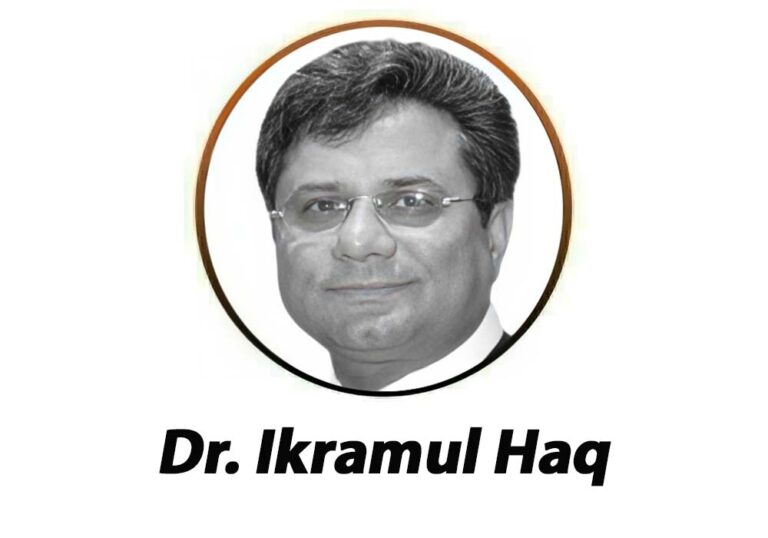
Dr. Ikramul Haq, Advocate Supreme Court, Adjunct Faculty at Lahore University of Management Sciences (LUMS), member Advisory Board and Visiting Senior Fellow of Pakistan Institute of Development Economics (PIDE), holds an LLD in tax laws. He was full-time journalist from 1979 to 1984 with Viewpoint and Dawn. He also served Civil Services of Pakistan from 1984 to 1996.
Similar Posts

  • Gulf in the Crossfire

    There is a particular kind of exhaustion that sets in when a war refuses to end on schedule. Five months into the conflict between the United States and Iran, we are living through it. Ceasefires are announced and collapse within weeks. Strikes are billed as decisive and are followed, days later, by more strikes. Each side insists the other will soon come to its senses, and each side is wrong. What we are watching is not a war moving toward resolution. It is a war that has become self-sustaining, and the longer it runs, the more countries get pulled into its logic whether they wanted a role in it or not. Saudi Arabia is the clearest example. For nearly four years, Riyadh had quietly extracted itself from the Yemen war, treating the 2022 ceasefire with the Houthis as one of the few unambiguous foreign policy wins of Crown Prince Mohammed bin Salman’s tenure. That restraint is now gone. When the Houthis resumed missile fire at Israel in solidarity with Tehran, and then began striking Saudi oil infrastructure directly, Riyadh had no real choice but to respond. It bombed Hodeidah. The Houthis retaliated against Aramco facilities in Yanbu and Jizan. A conflict Saudi Arabia spent years trying to bury is now, again, live on its border, not because Riyadh chose it but because a war between Washington and Tehran left no room for neutrality. This is the pattern worth naming plainly: nobody in this conflict is fighting the war they intended to fight. Washington launched its campaign framed around Iran’s nuclear program, wagering that decisive strikes would force capitulation or collapse. Instead it has strikes running past the two-week mark with no clear terminus, American service members killed in Jordan and Iraq, and a president publicly conceding that the exit could be “diplomatic or military” — which is another way of saying nobody currently knows how this ends. Iran, for its part, has responded to devastating strikes on its cities not with capitulation but with exactly the kind of asymmetric, proxy-driven defiance its doctrine was built for, activating fronts in Iraq, the Gulf, and now Yemen that cost it little and cost everyone else a great deal. The Strait of Hormuz tells the same story in economic terms. Daily vessel traffic through one of the world’s most important oil chokepoints has fallen to a small fraction of its prewar level. That is not an abstraction. It shows up in tanker insurance premiums in Piraeus and London, in fuel costs in Mumbai and Rotterdam, in the balance sheets of countries that have precisely nothing to do with this fight. War aims that once seemed narrowly bilateral — Washington versus Tehran, over centrifuges and missile stockpiles — have metastasized into a tax on global trade that nobody voted for and nobody can opt out of. It is tempting, watching this unfold, to look for a single culprit. Commentators sympathetic to Washington will point to Iran’s decades of proxy warfare, its nuclear ambiguity, its crackdown on its own protesters, and argue the current campaign is simply overdue accountability. Commentators sympathetic to Tehran will point to a US-Israeli strike that killed Iran’s Supreme Leader and ask what state, faced with the assassination of its head of state, would not treat that as an act of war demanding a response. Both arguments contain real grievances. Neither survives contact with what has actually happened since: a conflict that both sides insist is about narrow, defensible aims but that neither side has been able to keep narrow. Wars rarely stay the size their architects intend. What should worry observers most is not any single strike or retaliation but the absence of an exit ramp anyone believes in. Ceasefires here have not functioned as steps toward peace; they have functioned as pauses for rearmament, evidenced by how quickly each one has collapsed back into nightly bombing. That is the signature of a conflict without a theory of victory — one where both governments can inflict real pain on the other indefinitely, but where neither can convert that pain into a settlement it can sell to its own public. In that kind of war, the fighting does not stop because someone wins. It stops, if it stops, because the costs finally exceed what either government’s domestic politics can absorb — and on the evidence of the past five months, that threshold keeps receding rather than approaching. Saudi Arabia’s reluctant return to the Yemen battlefield should be read as an early warning rather than a footnote. It shows how a conflict that both Washington and Tehran describe as fundamentally about themselves keeps finding new participants who never agreed to join. If this war continues on its current trajectory, the question worth asking is not which superpower prevails, but how many other countries, currencies, and shipping lanes get quietly conscripted before it does.

  • Devolution Without Governance Reform

    The original 1973 Constitution, Charter of Democracy (COD), and the landmark 18th Amendment all call for a strong local government system. Till today, it remains the unfinished agenda of good governance. It is key to the modernization of the state, society, and politics. The consensual Constitution was a miracle and a masterstroke of the elected government of Zulfikar Ali Bhutto (ZAB). Devolution was a cornerstone of this document, so painfully drafted by elected representatives of the people. As the newly created provinces after the break-up of the infamous One Unit lacked the capacity to handle vital areas like education, health, and agriculture, a concurrent list was prepared to devolve these departments systematically to the provincial governments. A Department of Provincial Coordination was created to oversee this transfer from Islamabad to Lahore, Karachi, Peshawar, and Quetta. Unfortunately, after the fall of the government in July 1977, the entire process was stalled. Governments that followed did not take this transfer seriously, resulting in serious governance issues. The two mainstream political parties of the time, PPP and PML-N, followed with the COD in May 2006, in which it was agreed to build an effective local government system. Unfortunately, after the assassination of Benazir Bhutto, the driving force behind the Charter, it was not fully adhered to. Instead, the 18th Amendment was passed by the legislature in April 2010 to restore the original document. Through this constitutional clean-up, Islamabad was cut to size while power and resources were handed over to the provincial governments, with the hope that they would be devolved all the way down to the tehsil and union council levels. But that did not take place. While the federal government was depleted, the provinces grew fat and started indulging in frivolous projects. In Punjab, Lahore was developed as a flagship showcase project for publicity while the rest of the province was left to languish. Karachi was ignored; resources were moved inland by the provincial government. The menace of incompetence, corruption, and abuse of authority has to be addressed at the national level before it is devolved; otherwise, it will be more of the same. The Civil Secretariat in Lahore, also called Lat Sahib Ka Daftar, which runs the largest province of the federation, reveals it all. Office hours are not observed; files do not move without wheels; records are poorly managed. There was a time when the Chief Minister resided only in GOR-I on Club Road, while official work was carried out at the Secretariat, but not anymore. Most senior officers (Chief Secretary, Commissioner, Deputy Commissioner, etc.) have established home offices, resulting in duplication and waste. Till the decade of the 1970s, only the telephone operator and one coordinator manned most official residences, but not anymore. Great Britain ruled the world with its Commissioners System. The only difference was that there was civilian oversight and accountability by the British Parliament, which has faded over time in the Islamic Republic of Pakistan (IRP). Till today, the flag is unfurled at the office and residence of the Deputy Commissioner (DC), as representative of the Crown with sovereign powers (administrative, judicial, and revenue). Over the years, some judicial powers have been taken away; otherwise, the DC runs the district while the Commissioner controls the division. Recently, in Lahore, the Commissioner’s office was moved from the Sanda area to the Mall, across from Aitchison College. It is a fancy structure right on the main artery of the city, where millions have been spent on refurbishing the building vacated by the Naval Staff College, which was established close to the waters of the Lahore Canal. Perhaps it has been moved to the BRB waters now. One office move has strained the budget of the province. What will happen if scores of such infrastructures are built for new provincial governments? Growing up on the Mall, close to the Town Hall (Lahore Municipal Corporation, now Metropolitan Corporation of Lahore), my memory is of a functional city run by an elected mayor. Today, the metropolis is non-functional as it is under the control of the bureaucracy instead of an accountable elected representative of the people. In the USA, the President runs the federation, the fifty states are under the Governors, while the Mayor controls the city, all directly elected by the people. Except for the President, there is an Electoral College as well. The state of Texas is larger in area than Pakistan, yet it is fully functional. The cities are run by elected city governments. Town hall meetings are regularly held where public input is solicited to improve services; service to the people is the common agenda. Once the system is made functional by getting rid of the evils, devolution can be effective. The federal government has offices in major cities of America, but most day-to-day work is carried out by state and city governments. The Americans believe that no government is the best government; as such, employment is limited to minimal functional staff. Procedures are updated and simplified for the smooth flow of work. Obstacles are removed for functionality. More of the same has never worked in the past, nor will it work in the future. Dysfunctional bureaucracy has to be made functional to kick-start the stalled system for real devolution to take place.

  • The Unleashed Furies

    This 14th of August, as the green and white flags go up from Karachi to Khyber and the air fills with the crackle of fireworks, there is a question every young Pakistani must ask themselves: what exactly are we celebrating? Is it merely the fact that a nation was born at the stroke of midnight 79 years ago? Or is it something far more demanding — the unfinished promise of that birth, the dream that millions carried across blood-soaked borders, the conviction that Pakistan would be not just a homeland, but a beacon? Nisid Hajari’s book Midnight’s Furies does not let us off easy. It drags us back to the raw, unvarnished truth of 1947 — and in doing so, it hands our generation something precious: the tools to understand who we are, where we came from, and what we still owe to those who paid the ultimate price for our freedom. Hajari wrote that on 9 August 1947, a train pulls out of Delhi bound for Karachi, 800 miles away. Onboard are Muslim clerks and officials who had served the British-run government of India with distinction. With them are their families, their ribbon-tied files, their children’s toys, their prayer rugs, and the gold jewellery that represented their life’s savings. They are not refugees fleeing in panic. They are pioneers, volunteers for a great experiment — the world’s first modern Muslim nation. As the train whistles out of Delhi, cheers of “Pakistan Zindabad!” drown out the engine. These men and women believe they are building something unprecedented. Something magnificent. They never arrive. Sikh saboteurs — soldiers in all but name, their tiny community having supplied the Indian Army with fighting men far beyond their numbers — have laid gelignite charges along the tracks. The mine detonates. The Pakistan Special shudders. And in that moment, the euphoria of independence meets the savagery of Partition. Hajari, who spent over a year buried in archives across New Delhi, London, and Washington, D.C., reconstructs this tragedy not from myth but from the “demi-official record” — the diaries, army sitreps, embassy cables, and informant reports that tell the real story. And the real story is this: Pakistan was born not in a garden of roses, but in a furnace. The arithmetic of that furnace defies comprehension. One British official, working from casualty reports, put the dead at 200,000. Others, accounting for disease, starvation, and exposure, insist the figure exceeds one million. At least 14 million people were uprooted — the largest forced migration in human history. Western Pakistan was virtually emptied of Hindus and Sikhs; Indian Punjab lost almost all its Muslims. This was carnage on a scale unseen until Rwanda 1994. Yet here is what Hajari forces us to confront: the killing lasted only six weeks. The violence was contained. What was not contained — what metastasised — was the psychological wound. In those weeks, something broke between India and Pakistan that has never been repaired. Leaders on both sides began suspecting each other of complicity in genocide. Mutual mistrust pushed infant nations to war within a year. And Pakistan, flooded with refugees, its economy and bureaucracy teetering on collapse, developed what Hajari calls a ‘deep-seated paranoia’ about its larger neighbour that shapes our politics to this very day. Hajari’s book is unsparing about the failures of leadership that turned Partition’s trauma into perpetual conflict. Nehru and Jinnah — the very architects of freedom — allowed vanity, prejudice, and petty dislike to poison the well. Nehru’s reckless declaration in August 1946 that a strong government would make the Muslim League’s movement “go down” — what Viceroy Wavell called tossing “a match onto dangerously dry kindling” — helped trigger the Great Calcutta Killing, the dress rehearsal for Partition’s horrors. Five thousand dead. Ten to fifteen thousand maimed. The Statesman newspaper, grasping for words, called it “a fury” — a word from mediaeval history. This Independence Day, let us do something radical. Let us honour the dead not by reliving their fears, but by fulfilling their hopes. Jinnah’s address to the Constituent Assembly on 11 August 1947 was crystal clear: ‘You are free; you are free to go to your temples, you are free to go to your mosques or to any other place of worship in this State of Pakistan.’ He envisioned a secular nation where religion was private, not political. Where Hindus, Muslims, Sikhs, and Christians would be equal before the law. Where the state would be a servant of all its citizens, not a weapon of the majority. Hajari’s book ends on a note of hard-won wisdom: ‘Only once those mistakes are properly understood and acknowledged, perhaps, will India and Pakistan begin to bridge the vast and dangerous gulf that still divides them.’ Understanding does not mean surrender. Acknowledgement does not mean apology. It means maturity. It means the confidence to say: we know our history, we honour our sacrifices, and we refuse to let the furies of 1947 dictate our future. So when the flag goes up this 14th August, let it mean something new. Let it mean that Pakistan is done being defined by what it fears. Let it mean that we are ready to be defined by what we build — by our universities and our hospitals, our clean rivers and our fair courts, our poets and our scientists, our daughters who dream without limits and our sons who know that strength comes from justice, not just arms.

  • Why System Collapsed in Pakistan?

    These days, one phrase echoes throughout our country: “Pakistan’s system has collapsed.” If we translate the word collapse into plain, colloquial language, it means that our so-called system has completely broken down, gone to ruin, or become utterly dysfunctional. Therefore, the argument goes, the country now needs a new system. This, they claim, can only happen if, instead of the existing four provinces, Pakistan is reorganized into thirty or thirty-two new provinces. Such a restructuring, they believe, would push aside the traditional politicians and allow a new generation of political leaders to emerge. Otherwise, they warn, just as in India, there will be an uprising of the “cockroaches”—that is, the youth—which will force this collapsed, rotten system to surrender. At first glance, these words appear attractive and appealing. They express not only frustration and disgust with our current political situation but also offer hope to the younger generation, particularly Generation Z. It is as if they are saying: “Dear frustrated young people! We are opening the doors to your future. You will rise, dominate the scene, and sweep away all the debris of the past—that is, the traditional politicians—with the force of your determination and enthusiasm.” However, this humble writer sees, behind these beautiful words, not a bright future but the same worn-out and ugly mirage of the past. In reality, those who are truly responsible—the real culprits—cleverly distance themselves from blame, divert the attention of the youth toward others, and then present themselves as the young people’s sympathizers and supporters. In our poetry, it is through such tricks that the beloved murderer becomes an innocent beloved, and the criminal appears as the trusted confidant. But this humble writer calls it what it really is: “the thief making the loudest outcry.” Our national poet, Iqbal, once wrote: There is an outcry that Muslims have vanished from the world; We ask: Were true Muslims ever really present? In appearance you resemble Christians, in civilization the Hindus; These are the Muslims before whom even the Jews would feel ashamed. If, in today’s circumstances, you replace the word “Muslims” with “system,” the verses take on a striking new meaning: There is an outcry that the system has vanished from the country; We ask: Was there ever really a system to begin with? If we were to parody the remaining verses, they might be difficult for some to digest. Suffice it to say that those in power never truly allowed a genuine system to develop here. And whenever, after much struggle, some semblance of a system did emerge, there were always certain “respectable gentlemen” who seemed to have taken an invisible oath—or perhaps a vow of deliberate silence—that it must never be allowed to function. In the eyes of this humble writer, our system truly collapsed on 16 August 1946, when, under the guidance of the British establishment, the Direct Action Day was observed, reducing the foundations of any future system to rubble. From that point onward, the struggle was no longer for a functioning system but for personal rule. That struggle strangled democracy, human rights, liberty, and freedom, and instead built a grand highway of coercion and dictatorship. Anyone who dared to step off that path or disagree with it was labeled a traitor, an enemy of the nation, an Indian agent, or part of the so-called “Fitna-e-Hind” (the Indian conspiracy). These labels were then applied to whomever those in power wished. The first victim was Dr. Khan Sahib’s democratically elected provincial government in the North-West Frontier Province (now Khyber Pakhtunkhwa), which was dismissed within the very first week. Soon afterward, the same authoritarian mentality struck the government of Ayub Khuhro in Sindh. It was also decided that any cabinet member who failed to say “Yes, Sir” to the Governor-General would be considered dispensable. Once the founding generation established such principles of governance, why would later generations lag behind in following them? Thereafter, the race for personal power was inevitable. In the end, victory was bound to go to whoever possessed the greater force—whether the power of the stick or the gun. How could it be otherwise? If, instead of making the Constitution and the rule of law your source of authority, you rely on personal superiority, intimidation, prestige, and the power of office, then someone carrying a gun will inevitably dominate the throne of personal power. And once that happens, the cycle simply continues. It is a law of nature that the bigger fish eats the smaller fish. Muhammad Ali Jinnah, Liaquat Ali Khan, Ghulam Muhammad, and Iskander Mirza all played their respective roles. Later, when greater power confronted lesser power, the result was the rise of powerful military rulers such as Ayub Khan, Agha Yahya Khan, Zia-ul-Haq, Pervez Musharraf, Ashfaq Parvez Kayani, and Qamar Javed Bajwa. (To be continued)

  • The Global Experience of Dividing Large Provinces …

    By Augustine Nasim Gill The debate over new provinces or smaller administrative units in Pakistan should not be reduced to maps, language, identity, or political representation. The central question should be whether new administrative units will improve governance, bring public services closer to citizens, strengthen revenue collection, reinforce the rule of law, and restore public confidence in the state. Many countries have improved administrative performance by transferring authority from the center to states, regions, districts, and local governments. Yet these experiences have not all been equally successful. Where political authority was matched by adequate financing, competent administration, credible elections, the rule of law, and strong oversight, results generally improved. Where governments merely created new boundaries, assemblies, and ministries while corruption, patronage, and weak institutions remained unchanged, costs increased without transforming citizens’ lives. A Basic Distinction Must Come First Creating new provinces and genuinely devolving power are not the same thing. Successful decentralization has at least four dimensions: Four Essential Pillars Political authority: Local and regional governments must be created through regular, free, and fair elections. Administrative authority: They must have genuine authority to manage departments, appoint qualified personnel, and hold officials accountable for performance. Fiscal authority: Their responsibilities must be matched by revenue powers, a predictable share of national taxes, grants, and budgets. Legal and institutional authority: Their powers must be protected by the Constitution or strong legislation so that federal or provincial governments cannot abolish them at will. Why Smaller Administrative Units Can Succeed Smaller, empowered units bring government closer to citizens. Residents of remote districts are less likely to travel hundreds of kilometers to a provincial capital for matters involving land, education, health, policing, courts, or development projects. Regional governments also understand local conditions more clearly. The coastal areas of Balochistan, the agricultural districts of southern Punjab, a major metropolis such as Karachi, and the mountainous or tribal areas of Khyber Pakhtunkhwa do not face identical challenges. A single policy designed in one provincial capital is often unable to respond effectively to such diversity. Smaller units can also increase political accountability. Citizens can more clearly observe the performance of their chief minister, ministers, mayors, district leaders, and civil administration. This benefit, however, appears only where elections are credible, information is open, and oversight institutions are independent. 1. Germany: Shared Powers, Shared Taxes, and Fiscal Equalization Germany is a federal country composed of sixteen states, known as Länder. Each state has its own constitution, parliament, and government, and enjoys substantial autonomy over its internal organization. The federal government is responsible for national defense, foreign policy, currency, and broad national legislation. The states play central roles in education, policing, culture, public administration, and the implementation of many laws. Municipal governments provide water, sanitation, local transport, urban planning, and many daily services. Major taxes are not retained exclusively by the federal government. Personal income tax, corporate income tax, and value-added tax are shared among the federal government, the states, and, in some cases, municipalities according to established rules. A fiscal equalization system then narrows the gap between wealthier states and those with weaker revenue capacity. Germany’s success is not simply the result of having sixteen states. It rests on clearly defined responsibilities, a strong tax administration, judicial oversight, a professional civil service, and a predictable equalization system. Lesson for Pakistan: Before new provinces are created, the country must decide how income tax, sales tax, customs duties, natural-resource revenue, property taxes, and other revenues will be divided. A permanent, transparent, and publicly understood formula is essential. 2. Spain: Regional Autonomy, Public Services, and Different Fiscal Models Spain is composed of seventeen autonomous communities. These regional governments exercise wide authority over health, education, social services, and regional development. Most regions receive a share of national taxes, limited authority over certain taxes, and equalization grants. The Basque Country and Navarre have broader tax-collection powers: they collect most taxes within their territories and then transfer an agreed contribution to the central government for national services. Regional government strengthened education, health services, and local identity, but Spain has also faced regional debt, fiscal imbalances, and separatist political movements. The lesson is that autonomy is not only a financial issue; national identity, constitutional boundaries, and commitment to the shared state also matter. Lesson for Pakistan: New units should not be designed solely around language. Administrative efficiency, population, economic viability, public consent, and national cohesion must all be considered. 3. Poland: Phased Reform, a Three-Tier System, and Local Development Poland did not devolve authority in a single step after the end of communist rule. Municipal self-government was restored in 1990, and a three-tier system was established in 1998-99: the municipality (Gmina), the county or district (Powiat), and the region (Voivodeship). Municipalities became responsible for water, sanitation, local roads, primary education, and local development. Districts managed services that were too large for one municipality but too limited for an entire region. Regional governments took responsibility for economic development, regional planning, and the management of European development funds. The reform succeeded because it was phased, local institutions were prepared, elected representatives were trained, professional administrations were developed, budgets were transferred, and responsibilities were defined. The continuing challenge is that not every municipality or district has equal administrative capacity. Some smaller units remain weak in planning, data, financial management, and specialist staffing. Lesson for Pakistan: Rather than creating many provinces overnight, Pakistan should begin with administrative pilots, stronger districts, digital systems, training, and independent audit in selected areas. 4. France: Gradual Decentralization from a Centralized State France was historically a highly centralized state, but beginning in the 1980s it gradually transferred authority from the central government to regions, departments, and communes. Regional governments manage economic development, transport, and some education and training functions. Departments play major roles in social welfare, certain roads, and local services, while communes provide day-to-day municipal services. Small municipalities often cooperate through joint institutions to manage water, waste, transport, and territorial planning. France’s challenge has been that responsibilities across different layers sometimes overlap or remain unclear,

  • Makkah Joint Defence Agreement – opportuniti…

    Saudi Arabia, Pakistan, and Turkey signed the Makkah Joint Defense Agreement (MJDA) to strengthen their defense cooperation. The agreement was signed at a critical juncture in history, both globally and regionally. On the global front, the old order is in disarray, and conflicts are breaking out one after another. The West’s dominance and hegemony are fading. Economic power, which the West once used to rule the world, is in decline. Western control over weapons of destruction has weakened. Simultaneously, Western diplomatic influence has softened, and their grip on the UN and decision-making has weakened.    This has destabilized global peace, and in 2025 alone, 50 countries were engaged in conflicts or wars. As a result, new powerhouses, in economic, diplomatic, and defense production, have emerged. On a regional level, the Middle East and South Asia have emerged as flashpoints, where conflict or war can break out at any time due to the reckless behavior of Israel and India in their respective regions.    In this context, the signing of the Makkah Joint Defense Agreement has raised many questions, and people are exploring possible answers. First, what does the Makkah Joint Defense Agreement include? According to available information at this time, the three Muslim countries have joined hands to strengthen their defense cooperation. It sends a strong message to opponents and enemies that any attack on Saudi Arabia, Pakistan, or Turkey will be treated as an attack on all. The aggressor will have to face the wrath of three powers.    Second, why is it important? It is important for two reasons. First, three countries are in hostile regions and face numerous security challenges. Let’s start with Saudi Arabia. Saudi Arabia is in a region where Israel is committing the worst genocide in modern history. The genocide in Gaza has destabilized the whole region. Unconditional support from the USA and the West allows Israel to continue the genocide in Gaza with complete immunity. They are providing all types of weapons of mass destruction and financial support to Israel. Even the USA and some Western countries are threatening the International Court of Justice or other UN agencies for asking for accountability of Israel. The USA and Israel’s attack on Iran has further complicated the situation. Iranian attacks on regional countries in the context of US bases are threatening a wide-scale war in the region. Saudi Arabia is also facing direct attacks by the Houthis on Saudi Arabia, especially on oil installations, which pose serious threats to the whole region.     For Pakistan, it has two hostile neighbors, India and Afghanistan. In 2025, India attacked Pakistan based on self-assumed allegations. However, a strong, full-scale retaliation from Pakistan compelled India to come to its knees. Pakistan destroyed many Indian fighter jets and missile systems. India rushed to the USA to beg for a ceasefire. On the other border, Pakistan is facing terrorism originating from Afghanistan. Afghanistan, with the support of India and Israel, has launched a full-scale proxy and terrorism war. It is also harboring terrorist groups such as BLA, TTP, etc. India, acting as a proxy of Israel, is providing full support to terrorists and fueling terrorism in Pakistan.   In the case of Turkey, it is facing multiple threats, including direct threats from Israel, Greece, and some regional proxies. Over the past few months, Israel has begun to portray Turkey as a new threat to Israel. Greece has also been encouraged by Israel and other Western powers to create problems for Turkey. Some Western countries also have historical grievances with Turkey and are seeking opportunities to harm it.    Therefore, this agreement is extremely important for the three countries and for both regions, the Middle East and South Asia.    Third, how will regional countries react, and what impact will the MJDA have on the region? First, Israel will not like it at all. Why? Because it will view it as a hurdle to creating a Greater Israel. Therefore, Israel will do everything to sabotage the agreement. It can use this agreement to create a sectarian divide in the region by portraying Iran as the enemy. It can conspire to instigate sectarian violence in the region, especially in Saudi Arabia, Pakistan, and Turkey. The USA and Western countries can also join hands to facilitate Israel. President Trump’s recent statement on the potential role of Syria in tackling the issue of Hezbollah is a strong indication of this strategy. He is urging Israel to stop attacking Lebanon and let the Syrian government fight Hezbollah. Lastly, Israel can also exploit the civilizational context and emotions of the custodians of the Arab, Iranian, and Turkish civilizations. It can trigger feelings of self-greatness and urge each civilization to pursue past glory.     Simultaneously, some elements in Iran, especially those pro-Israel or influenced by Israel, can propagate the MJDA against Iranian interests. They can argue that it will undermine Iran’s status and create hurdles for Iran to become the region’s major power. Proponents of this view can argue that, in the presence of this alliance, it will be difficult for Iran to dominate the region. It would be an ideal situation for Israel and other elements to create a divide along sectarian lines and fan sectarian violence in the region and in respective countries. Therefore, all countries (Pakistan, Turkey, Iran, and Saudi Arabia) need to be extremely vigilant and coordinate closely.     Fourth, what would be the reaction of the global community, especially from the USA and China? China and the USA are important because they are major powers at this point in time. First, I do not believe the USA will have an independent view or reaction. It is strongly suspected, rather sure, that Israel will dictate the American response. It is an open secret that Israel does not want peace and stability in the region. Thus, the USA will follow this policy.    It is also in the USA’s interest. How and why? The USA considers the Middle East and South Asia vital to

Leave a Reply

Your email address will not be published. Required fields are marked *