reclaiming republic aidriven

Reclaiming the Republic: AI-Driven Governance, Eco…

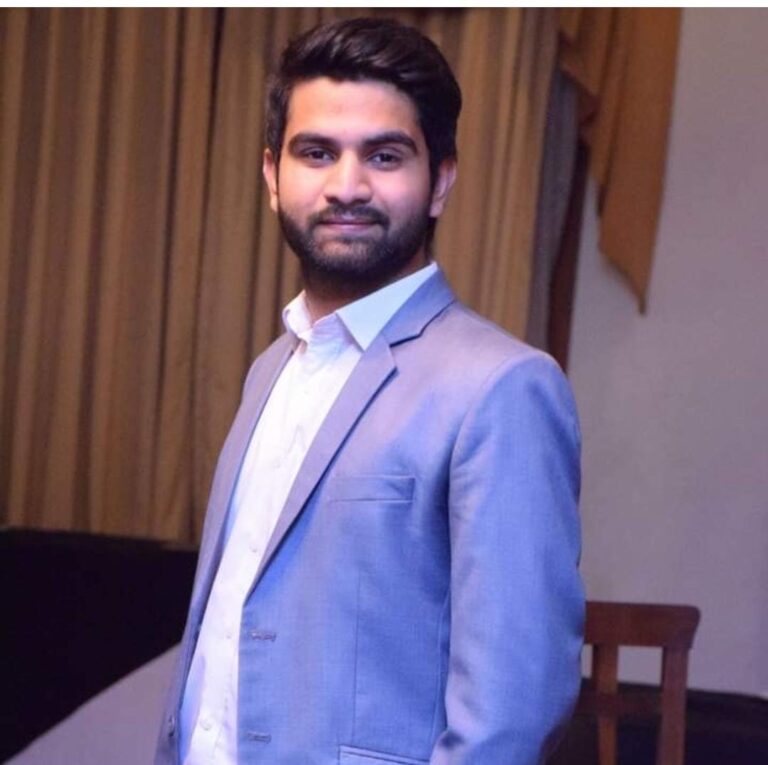
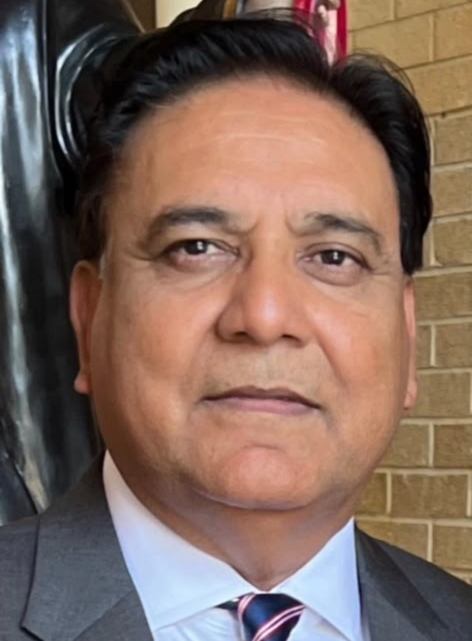
I grew up in Rawalpindi Cantt, where my father served as the principal of St. Mary’s Cambridge High School. Though my professional journey has carried me across continents and I now reside in the United States, my heart beats unyielding rhythm with the 260 million Pakistanis who are my true country fellows. Every night in my dreams, I walk the familiar streets of Rawalpindi. I graduated from Islamabad Model College, and to this day, the majestic Margalla Hills grace the screen of my laptop as a constant reminder of home. As a young student, I stood with pride to sing our National Anthem: “Pak sar zamin shaad bad, Kishwar-e-hasin shad bad, Tu nishaan-e-azm-e-ali shaan, Arz-e-Pakistan! Markaz-e-yaqin shaad bad.” That sacred pledge of resolve, faith, and devotion remains embedded in my soul, driving my lifelong conviction in the destiny of our homeland.

Over a professional career spanning three decades across Asia, Europe, Africa, North America, and Russia, I have observed the mechanics of statecraft, economic transformation, and human capital under diverse political systems. Through these global experiences, one reality has become undeniably clear: the Pakistani nation possesses an extraordinary, high-caliber intellectual capacity that matches—and frequently surpasses—the finest minds anywhere in the world.

From the scientific and medical sectors in Europe to the dynamic technology ecosystems of the United States, Pakistani professionals consistently perform at the highest echelons of innovation, corporate leadership, medicine, engineering, and public service. United States Presidents have repeatedly and publicly commended the invaluable contributions of the vibrant Pakistani diaspora to American infrastructure, economic vitality, and technological advancement. When placed within transparent, rule-of-law-based systems, Pakistani talent routinely excels. The foundational problem facing Pakistan today is not a deficit of human intelligence or natural resources, but a deep-seated structural crisis within its governing institutions.

The primary obstacle preventing Pakistan from realizing its true global standing is systemic corruption, the deliberate destruction of meritocracy, and a reckless deficit of vision among its political leadership. For decades, the national political landscape has been dominated by self-serving figures who lack both statesmanship and the basic literacy required to navigate the twenty-first century.

We live in an era defined by artificial intelligence, digital economies, and high-tech governance, yet the traditional political leadership remains largely ignorant of technologies like AI, machine learning, and modern public administration. Their approach to power focuses heavily on short-term patronage, wealth accumulation, and personal preservation, while ignoring the core developmental needs of the population.

This total lack of strategic vision directly fuels the socio-political unrest observed across key regions, including Azad Jammu & Kashmir, Balochistan, and Khyber Pakhtunkhwa. The grievances in these areas are fundamentally economic and administrative, born from decades of neglect, broken promises, and predatory governance. Greedy political elites have consistently exploited local resources and suppressed institutional development, leaving local populations disenfranchised and impoverished.

When regional populations are denied basic justice, modern infrastructure, quality education, and economic dignity, instability naturally follows. The issues facing these provinces cannot be resolved through superficial political arrangements or force alone. They demand genuine administrative devolution, economic fairness, and an absolute end to elite political exploitation.

Pakistan’s growing population, rapid urbanization, and regional economic disparities further justify a serious evaluation of its overall administrative structure. Creating smaller, manageable administrative units or new provinces can bring government directly to the people. However, redrawing boundaries alone is not a magic solution.

If corrupt practices, political interference, and weak institutional capacity persist, new administrative divisions will only multiply secretariats, ministries, and state expenditures without improving the daily lives of citizens. Any restructuring must be guided by objective criteria, rigorous economic planning, and transparent public participation, ensuring that power shifts completely down to local municipal and union council levels.

To break the longstanding cycle of administrative decay, Pakistan requires an aggressive shift in its approach to governance and elite accountability. The country must adopt an uncompromising strategy similar to the Saudi Arabia model initiated by Crown Prince Mohammed bin Salman (MBS)—a decisive, systemic crackdown on institutional corruption and elite financial impunity.

Every asset, real estate portfolio, and offshore account illegally acquired abroad by corrupt politicians, bureaucrats, and public officials must be systematically traced, frozen, and confiscated under international legal frameworks. Returning these stolen billions to the national treasury is not merely a moral imperative; it is an urgent economic necessity. A nation cannot thrive while its financial reserves are continuously drained to fund luxury lifestyles in foreign capitals.

Achieving financial integrity and self-reliance is the essential prerequisite for building true national strength. History demonstrates that economic power is the absolute mother of military power and national sovereignty. No state can maintain a robust, modern defense apparatus over the long term without a self-sustaining economy, a strong currency, and a productive technological base.

By recovering looted public wealth and redirecting it toward national infrastructure, energy independence, industrial output, and digital education, Pakistan can rapidly eliminate its dependence on foreign debt and assert its sovereignty on the global stage. True economic independence grants a nation unyielding leverage in international affairs.

The path forward demands an urgent transition to AI-driven good governance and digital administration. Human discretion in public procurement, land record management, tax collection, customs clearance, and civil service recruitment must be systematically replaced with automated, algorithmic systems that eliminate bribery and political patronage.

Artificial intelligence platforms can optimize public spending, track state resource distribution in real time, monitor civic projects, and guarantee complete transparency across every tier of government. When civil service recruitment, performance evaluations, and judicial tracking are governed by objective data frameworks rather than political influence, absolute meritocracy will return to state institutions.

Furthermore, national development requires a structured investment in human capital. Establishing dedicated leadership academies and technical institutes will ensure that the next generation of public administrators is versed in high-tech policy design, data analytics, global trade dynamics, and financial management.

Nations such as Singapore, South Korea, Estonia, and Rwanda have proven that rapid transformation does not require unlimited natural wealth. It demands disciplined execution, unyielding meritocracy, technologically integrated institutions, and transparent leadership. Pakistan has all the raw ingredients to achieve a similar national renaissance.

My fellow Pakistanis, your future remains immensely bright and full of promise. Pakistan is not a failed nation; it is an under-managed power awaiting modern leadership, structural discipline, and institutional technology. Our global diaspora has overwhelmingly proven what Pakistanis can achieve when provided with equal opportunity, clear rules, and merit-based advancement.

By dismantling corrupt political structures, enforcing strict financial accountability, embracing advanced AI governance, and restoring merit across all public sectors, Pakistan will emerge as an economic powerhouse and a dominant global nation. The potential of this land is vast, and with principled action, digital governance, and national unity, our rise is inevitable.
Similar Posts

  • Colors of the Rain, Soul of Thar

    Thar a name that instantly evokes images of thirst, golden dunes, drought, Marvi, peacocks, the Karoonjhar Hills, rainwater ponds, love, and endless waiting. More than Pakistan’s largest desert, Thar is a living testament to patience, simplicity, love, and humanity’s timeless bond with nature. Here, every moment of life is connected to the sky. Even as the people of Thar walk upon the earth, their eyes remain fixed on the heavens, for their livelihood, livestock, crops, and happiness all depend upon the mercy of the clouds. As if giving voice to the very heart of Thar, Shaikh Ayaz wrote: “Whether it rains or not, Thar remains Thar; But when it rains, fresh blood begins to flow through every vein of life.” The greatest festival of Thar begins with the arrival of the rains. When the first raindrop falls upon the sun-scorched sands, the fragrance rising from the earth carries centuries of longing. It is a scene beyond the power of words. It feels as though the heart of the desert begins to beat again, every grain of sand takes a breath, and every withered plant offers gratitude to the Creator. Shah Abdul Latif Bhittai immortalized Thar through the voice of Marui in his poetry. To Marui, the sands of Thar were more precious than gold because they represented her identity. Shah’s message still echoes across every dune, village, and heart in Thar—that love for one’s homeland is the truest expression of human identity. Whenever Shaikh Ayaz wrote about Thar, his words carried the music of nature itself. For him, the monsoon was not merely a season—it was a revolution. A revolution that transformed barren sands into gardens, thirst into hope, and sorrow into joy. For most of the year, the people of Thar struggle against drought, scorching heat, water scarcity, unemployment, and poverty. Thousands of families migrate to irrigated regions in search of work. Women walk miles every day carrying water. Without grazing land, livestock become weak, and many young people leave for distant cities in search of livelihoods. Yet the moment the monsoon clouds appear on the horizon, lamps of hope begin to glow in every heart. Rain does not merely bring water it opens a new chapter of life. Within days of rainfall, the endless dunes transform into carpets of emerald green. The songs of peacocks, the calls of cuckoos, herds of goats, caravans of camels, and the fragrance of wildflowers carried by the breeze create a symphony that no modern city can ever reproduce. Rain-fed ponds fill with fresh water. Children leap with joy. Herders lead their animals to lush grazing lands. Thari women, dressed in brilliantly colored traditional attire, sing ancient folk songs. The entire landscape becomes a celebration of life. If there is one place where nature reveals its complete magnificence during the rainy season, it is the Karoonjhar Hills of Nagarparkar. When dark monsoon clouds embrace the granite peaks, seasonal waterfalls cascade down the rocks, and sparkling streams descend like ribbons of silver, it seems as though nature herself is painting with every color imaginable. Karoonjhar is more than a mountain it is a symbol of Thar’s history, culture, folklore, and resilience. Standing for centuries, these ancient hills have silently witnessed the rise and fall of civilizations, kings, ascetics, and the enduring stories of the people of the desert. During the rainy season, the famous Gaddi Hill in Mithi transforms into a lively cultural gathering. Families arrive in large numbers to enjoy the pleasant weather. Children delight in swings, visitors savor local cuisine and tea, artisans display handmade crafts, musicians perform on the rabab and algoza, and the warm hospitality of the people of Thar leaves every guest feeling at home. The construction of better roads from Mithi to Nagarparkar has significantly increased the number of visitors, yet much more remains to be done to develop tourism sustainably. Hidden beneath the sands of Thar lies a civilization thousands of years old. The Bhodesar Temples, Gori Temple, Virawah, ancient Jain monuments, historic wells, and old trade routes all stand as silent witnesses to the region’s glorious past. Sadly, many of these invaluable heritage sites still lack proper protection. Time, harsh weather, and neglect continue to erode them. If preserved according to international standards, Thar could become one of South Asia’s most remarkable cultural tourism destinations. However, alongside the beauty brought by the rains, another reality is emerging one that may threaten Thar’s future. Illegal occupation of natural grazing lands, the conversion of sand dunes into agricultural fields, and increasing environmental degradation are disturbing the delicate ecological balance of the desert. Livestock farming has always been the backbone of Thar’s economy. If natural grazing lands disappear, thousands of families will lose their primary source of income. Development that destroys nature is not progress—it is an injustice to future generations. Over the past two decades, climate change has increasingly affected Thar. Irregular rainfall, sudden cloudbursts, prolonged droughts, and extreme heat are steadily altering the region’s fragile ecosystem. The people of Thar still lack many basic necessities. Clean drinking water, quality healthcare, education, and employment opportunities remain scarce in many areas. While the rains temporarily ease their hardships, lasting solutions depend upon thoughtful and sustainable development. Tourism That Can Transform the Economy Thar possesses extraordinary tourism potential. Its breathtaking landscapes, rich cultural heritage, folk music, handicrafts, religious harmony, the majestic Karoonjhar Hills, desert safaris, camel caravans, and traditional cuisine offer experiences unlike anywhere else in the world. To unlock this potential, several important steps are needed: Historic and cultural heritage sites across Thar and Sindh should be preserved and restored, recognizing them not merely as relics of the past but as the identity of future generations. Modern visitor information centers should be established at major historical and cultural attractions to educate tourists about the region’s history, traditions, and natural beauty. Local youth should receive professional training as tour guides, creating employment opportunities while enabling them to confidently present their homeland’s heritage to the world. Tourism should be developed

  • Shehbaz Sharif: A proven troubleshooter steering P…

    Every political leader is eventually defined not by promises but by performance under pressure. Pakistan has faced repeated political, economic and administrative challenges over the decades, and each crisis has demanded leadership with experience, patience and the ability to find solutions. In my view, Prime Minister Muhammad Shehbaz Sharif has established himself as a leader who understands governance, negotiation and crisis management. His journey from grassroots politics to becoming Chief Minister of Punjab and later Prime Minister of Pakistan has given him decades of experience in dealing with the practical realities of administration and public service. His reputation as a hands-on administrator comes from his approach to governance. During his tenure as Chief Minister of Punjab, he focused on reforms in education, healthcare, infrastructure and public service delivery. His fast-paced working style earned him the title “Shehbaz Speed”, reflecting his emphasis on implementation and results. I first met Shehbaz Sharif in 2005 at his flat in Avenfield House, London. Over the past twenty-one years, I have had the opportunity to observe his political journey closely. While journalism requires independence and critical analysis, personal observation also provides a unique perspective. Throughout this period, his commitment to Pakistan and his passion for public service have remained evident. During his years as Chief Minister of Punjab, I witnessed his determination to create opportunities for young Pakistanis, particularly through education reforms. Initiatives such as the Punjab Education Endowment Fund, Danish Schools, merit-based scholarships, laptop schemes for students and stipends for high achievers aimed to expand access to quality education. The policy of sending high-performing students abroad, including to the United Kingdom and other European countries, was designed to broaden their vision and expose them to international standards. These initiatives reflected a belief that education is the foundation for long-term national development. His reforms in healthcare and infrastructure also became a significant part of his governance record. Supporters believe that his focus on improving public services in Punjab provided a model of administrative delivery that he later brought to the national level. As Prime Minister, Shehbaz Sharif has faced one of the most challenging periods in Pakistan’s recent history. His supporters credit his government with helping stabilise the economy, restoring international engagement and steering Pakistan away from the risk of a deeper financial crisis. Although major economic challenges remain, they argue that difficult decisions have helped create a more stable foundation. One of the notable features of the current political landscape has been cooperation between state institutions. Supporters view the working relationship between Prime Minister Shehbaz Sharif and Field Marshal Syed Asim Munir as an example of institutional coordination aimed at achieving national stability and economic progress. Pakistan has also sought a more active role on the international stage. Supporters point to its diplomatic engagement, including efforts to promote dialogue during periods of international tension, as evidence that Pakistan continues to play an important role in regional and global affairs. In my view, Prime Minister Shehbaz Sharif has repeatedly demonstrated the ability to steer Pakistan through difficult circumstances. Based on my observations over more than two decades, I believe he has faced major challenges before and has the experience and determination to overcome them again. His strength lies in his understanding of governance, his ability to negotiate with different stakeholders and his focus on delivery. Whether dealing with political partners, institutions or international partners, his supporters believe his experience gives him an advantage in managing complex situations. However, Pakistan’s journey towards prosperity requires continued reforms. Economic pressures, inflation, unemployment and governance challenges remain serious concerns. The next phase must focus on ensuring that national progress translates into improvements in the daily lives of ordinary citizens. In my opinion, Pakistan also needs stronger administrative decentralisation. Whether through new provinces or more empowered administrative units, decision-making should be brought closer to the people. More effective local governance can improve accountability, strengthen public services and accelerate development across the country. Pakistan now needs consistency, stability and a collective commitment from all stakeholders. Political differences are part of democracy, but national progress requires institutions to work together and focus on the common goal of prosperity. Prime Minister Shehbaz Sharif has built his political career around crisis management and public administration. His greatest challenge now is to convert stability into sustainable growth and lasting development. History will ultimately judge every leader by the impact they leave behind. For Shehbaz Sharif, the opportunity remains to transform difficult times into a period of economic recovery, institutional strength and a stronger Pakistan for future generations.

  • Beyond Public Finance: Towards  Constitutional Po…

    The third part of this series demonstrated that tax policy is never politically neutral. Every exemption, rate differential, withholding provision and collection mechanism determines who will bear the burden, who will receive protection and who will remain outside effective enforcement. The next question is unavoidable. Why do reforms that appear technically sound on paper repeatedly fail in Pakistan? The usual explanation is weak implementation. Successive governments announce that the policy was correct, while administrative capacity, political resistance or taxpayer behaviour prevented its success. This distinction between sound design and deficient execution is comforting because it preserves confidence in the original prescription. It also conceals an important reality: implementation is not external to policy. It is part of policy. A reform designed without considering the incentives of legislators, administrators, affected sectors and enforcement institutions is not technically sound. It is technically incomplete. Pakistan’s fiscal history is filled with such incompleteness. Broad-based taxation is announced, followed by exemptions. Documentation is promised, followed by presumptive and final taxation. Value added taxation is introduced, followed by reduced rates, fixed taxes, special procedures and restrictions on input adjustment. Taxpayer facilitation is proclaimed, followed by additional withholding obligations, automated demands, coercive recovery and delayed refunds. Each deviation is described as temporary. Temporary arrangements acquire permanent beneficiaries and eventually become defining features of the system. The problem cannot be explained simply by lack of expertise. Pakistan has received technical assistance from the International Monetary Fund, World Bank, Asian Development Bank and other institutions for decades. Numerous committees, commissions and task forces have recommended broadening the base, reducing exemptions, simplifying rates, improving audits, integrating data and strengthening administration. The present IMF programme again calls for base broadening, rationalisation of tax expenditures, digital invoicing, risk-based audits and improved revenue administration. The prescriptions remain familiar because the institutional incentives producing the original distortions remain largely unchanged. Consider value added taxation. A genuine VAT is collected at successive stages of production and distribution, with tax paid on inputs allowed against tax charged on outputs. The mechanism creates a documentary chain because each registered purchaser has an interest in obtaining an invoice. Exemptions, fixed regimes and blocked input credits break that chain. Pakistan has retained the name of sales tax while repeatedly undermining its value added character. Multiple schedules, special rates, exemptions, extra taxes, further taxes, minimum value addition requirements and restrictions on input adjustment have converted a potentially coherent instrument into an intricate system of revenue extraction. The resulting complexity is then blamed upon taxpayers. Pakistan’s “innovation” has been to combine high statutory rates with a fragmented base, extensive concessions and aggressive collection from those already documented. The system punishes formalisation while expecting formalisation to expand voluntarily. The Tax Expenditure Report 2026 estimates revenue forgone during fiscal year 2024–25 through income tax, sales tax and customs concessions at approximately Rs. 2.353 trillion. This figure excludes the larger constitutional controversy created by keeping petroleum products outside the sales tax chain and collecting petroleum levy instead since March 2024. Sales tax concessions accounted for about Rs. 1.274 trillion, income tax concessions for Rs. 579.70 billion and customs concessions for Rs. 499.14 billion. The treatment of petroleum products reveals how implementation can defeat both tax design and constitutional distribution. Sales tax forms part of the divisible pool under Article 160 of the Constitution. Petroleum levy is a non-tax federal receipt outside that pool. Replacing sales tax on petroleum products with an ever-increasing levy therefore does more than alter the method of collection. It changes the distribution of fiscal resources between the Federation and provinces. A measure presented as revenue policy consequently modifies the federal bargain without formally amending the Constitution. Income taxation displays the same institutional pattern. A normal income tax determines taxable income after allowing legitimate expenses and then applies the appropriate rate. Pakistan increasingly taxes transactions, turnover and gross receipts without establishing real income. Withholding taxes, advance taxes, minimum taxes, final taxes and presumptive liabilities were initially justified as responses to weak enforcement. They gradually became substitutes for enforcement. The Revenue Division Year Book 2024–25 confirms the continuing centrality of withholding and advance collection within direct taxes. This model is administratively attractive. Revenue is collected through banks, employers, utility companies, registrars, import authorities and businesses without requiring the tax administration to investigate actual income. It also creates impressive collection figures before returns are filed and liabilities determined. The constitutional cost is rarely measured. Taxpayers become liable because they undertake transactions rather than because they earn taxable income. Private persons become unpaid collection agents. Refunds and adjustments remain blocked or delayed. Documented businesses carry the state’s administrative burden, while powerful informal sectors continue bargaining for concessions. Pakistan has even institutionalised the category of the “non-filer”. Instead of identifying income, making assessments and enforcing payment, the law imposes higher transaction-based rates upon persons whose names do not appear on the Active Taxpayers’ List. Non-compliance is monetised rather than eliminated. This is presented as behavioural taxation: higher deductions will supposedly encourage return filing. The state simultaneously acquires a fiscal interest in retaining non-filers because they yield higher collections. The instrument designed to eliminate a category becomes dependent upon its continued existence. No conventional textbook could have anticipated such an innovation. Retailer taxation provides another illustration. Every government announces that traders will be brought into the tax net. Every scheme begins with declarations of equality and documentation. Political resistance follows, negotiations commence, liability is diluted, and the final arrangement bears little relationship to actual income or turnover. The administration then turns to those who cannot collectively bargain: salaried persons, incorporated businesses, importers, banks, telecom users and consumers of electricity, fuel and essential goods. Agricultural income taxation has travelled a similar path. The Constitution assigns this field to the provinces. Provincial laws exist, returns may be filed and declarations may be recorded. Effective collection, verification and enforcement remain modest in comparison with the sector’s economic and political significance. The failure is not the absence of legal authority. It reflects the distribution of political power within provincial

  • Poetry, Power & Humanity—IV Bulleh Shah: Be…

    “The ‘I’ of Bulleh Shah represents man in his very essential capacity as a unit of creation”. —Najm Hosain Syed, Recurrent Patterns in Punjabi Poetry  Najm Hosain Syed’s reading of Bulleh Shah rescues one of Punjab’s most familiar poems from the ease of popular applause. Bullah ki jaana main kaun is commonly heard as a graceful confession that ultimate truth cannot be known. Najm sees something more demanding. Bulleh’s “I” is the elemental human being confronting the question “who?” Every answer offered by history—religion, institution, inherited status, nationality, relationship or dogma—tempts the seeker with a final identity. The poet accepts none as sufficient. His negatives are not an escape from commitment; they refuse to let any socially manufactured label exhaust the meaning of being human. This makes Bulleh Shah indispensable to our inquiry into poetry, power and humanity. Shah Hussain crossed the narrow passage between possession and freedom [Poetry, Power & Humanity—III:  Shah Hussain: Crossing the Narrow Passage of Love & Rebellion, Minute Mirror, July 21, 2026]. Bulleh Shah interrogated the walls on either side. Who constructed them? Who benefits when human beings are separated into pure and impure, believer and unbeliever, ruler and subject, high-born and low-born? His poetry exposes how identity, initially a source of belonging, can be converted into an instrument of hierarchy. اُٹھ گئے گوانڈھوں یار رَبّا ہُن کیہ کریے Uth gaye gawandhon yaar Rabba hun ki kariye The Beloved has left the neighbourhood; Lord, what am I to do now? اُٹھ چلّے ہُن رہندے ناہیں ہویا ساتھ تیار رَبّا ہُن کیہ کریے Uth chale hun rehnde nahin Hoya saath tayyar Rabba hun ki kariye He has risen and departed; the caravan stands ready, and he will remain no more. Lord, what am I to do now? ڈاڈھ کلیجے بل بل اُٹھے بھڑکے بِرہوں نار رَبّا ہُن کیہ کریے Daadh kaleje bal bal uthe Bharke birhon naar Rabba hun ki kariye The depths of my heart are aflame, kindled by the fire of separation. Lord, what am I to do now? بُلھا شاہ پیارے باجھوں رہے اُرار نہ پار رَبّا ہُن کیہ کریے Bulla Shah piyare bajhon Rahe uraar na paar Rabba hun ki kariye Without the Beloved, says Bulleh Shah, I remain stranded midstream, reaching neither shore. Lord, what am I to do now? The kafi begins with departure, though it does not end in private sorrow. The familiar neighbourhood has lost its centre; the traveller is left between shores. This is the existential moment preceding Bulleh’s interrogation of identity. Once the familiar world departs, inherited answers can no longer shelter us. “What am I to do now?” becomes the cry of every human being whose social certainties have collapsed. Bulleh Shah lived in a Punjab experiencing political dislocation, declining Mughal authority and sharpening religious and social conflict. His spiritual choice itself challenged inherited hierarchy. Born into a Syed family, he accepted Shah Inayat, traditionally identified with the Arain community, as his murshid. Knowledge and spiritual worth were thus placed above genealogy. Their relationship was not merely devotional; it denied the proposition that dignity could be inherited by one group and withheld from another. His choice of Punjabi carried similar democratic force. Persian was associated with administration and cultivated elites; Arabic commanded religious authority. Punjabi was the living speech of cultivators, artisans, women, faqirs and labouring communities. Through the kafi, philosophy ceased to be the exclusive property of courts and seminaries. It could be remembered, sung and transmitted without permission from those controlling formal knowledge. The kafi was central to Bulleh Shah’s poetic expression and to the wider Sufi traditions of Punjab and Sindh. Bulleh’s resistance becomes sharper in the following kafi, where he compares the ostentatiously pious with dogs. راتیں جاگیں کریں عبادت راتیں جاگن کُتے تیتھوں اُتے Raatin jaagein karein ibaadat Raatin jaagan kutte Taithon utte You remain awake at night in worship; dogs keep vigil too— and surpass you. بھونکنوں بند مول نہ ہندے جا روڑیں تے سُتے تیتھوں اُتے Bhonkanon band mool na honde Ja roorin te sutte Taithon utte They never cease their watchful barking, then sleep upon a refuse heap— and surpass you. خَسم اپنے دا در نہ چھڈدے بھاویں وجن جُتے تیتھوں اُتے Khasam apne da dar na chhadde Bhaven vajjan jutte Taithon utte They never abandon their Master’s door, though struck repeatedly— and surpass you. بلھے شاہ کوئی رَخت وِہاج لے نہیں تے بازی لے گئے کُتے تیتھوں اُتے Bulleh Shah koi rakht vihaaj lai Nahin te baazi lai gaye kutte Taithon utte Bulleh Shah, acquire provisions for the journey, or the dogs will carry away the prize— and surpass you. The poem reverses an established hierarchy with deliberate audacity. The dog, conventionally treated as impure, becomes the moral teacher; the visibly devout human being becomes the object of satire. Bulleh does not ridicule worship. He asks what worship is worth when it produces neither loyalty nor humility. The dog remains at its master’s threshold despite hunger, rejection and blows. The worshipper may remain awake, although ritual performed for reputation can coexist with pride, cruelty and the pursuit of power. This distinction is critical. Bulleh Shah’s target is not religion but its conversion into social capital. Piety becomes another possession—something to display, trade and employ against others. In Erich Fromm’s terms, the mode of “having” invades faith: one “has” learning, sanctity, lineage and followers. Bulleh insists upon the mode of “being”, where truth appears through conduct rather than claim. The dog’s fidelity defeats the worshipper’s performance. The same assault on borrowed identity culminates in three immortal lines: بلھیا! کی جاناں میں کون Bulleya, ki jaana main kaun? Bulleh, how can I know who I am? نہ میں مومن وچ مسیتاں نہ میں وچ کفر دیاں ریتاں Na main momin vich maseetan Na main vich kufar diyan reetan I am not confined to the believer in the mosque, nor to the rituals called unbelief. نہ میں موسیٰ، نہ فرعون Na main Moosa, na Firaun I am neither Moses nor Pharaoh. Bulleh removes the available answers one after

  • Sindh’s Education Revolution: Transforming C…

    Education  is no longer measured merely by the number of schools or students enrolled. In the modern era, success depends on transparency, accountability, quality learning, financial empowerment, and the effective use of technology. Over the past few years, the School Education & Literacy Department (SELD), Government of Sindh, has introduced a series of reforms that are gradually transforming the province’s education landscape. These initiatives reflect a shift from conventional administration to a modern, technology-driven education system focused on improving learning outcomes and governance. One of the most significant reforms is the Student Attendance Monitoring & Redress System (SAMRS). This digital platform records students’ attendance in real time, allowing school heads and education authorities to identify absenteeism, monitor enrollment trends, and intervene promptly to reduce dropout rates. By replacing manual reporting with digital monitoring, SAMRS enables data-driven decision-making and strengthens accountability throughout the education system. Complementing this initiative is FRAMES (Facial Recognition Attendance Monitoring System), a facial recognition-based attendance mechanism for teachers and non-teaching staff. By replacing traditional attendance registers with biometric verification, the system minimizes proxy attendance, enhances punctuality, and ensures greater transparency and discipline across government schools. Another landmark initiative is the e-Transfer System, which has digitized the transfer process for government school teachers. Instead of relying on lengthy manual procedures, teachers can now apply online, making the process more transparent, merit-based, efficient, and accessible while reducing unnecessary administrative delays. Financial decentralization has also emerged as a defining feature of Sindh’s education reforms through the School Specific Budget (SSB). During FY 2025–26, the Government of Sindh allocated Rs. 18.67 billion directly to government schools, empowering Head Teachers to manage repairs, maintenance, sanitation, furniture, learning materials, and other operational requirements according to local needs. Recognizing the positive impact of this initiative, the allocation was increased to Rs. 22.64 billion in the FY 2026–27 budget, representing an increase of approximately 21 percent. This reform has significantly strengthened school-level autonomy and improved service delivery. Equally important are the Curriculum Reforms, which aim to prepare students for the demands of the 21st century. The revised curriculum emphasizes competency-based learning, critical thinking, creativity, problem-solving, inquiry-based education, and student-centered teaching methodologies. Modernized textbooks and improved publishing standards are helping create a more relevant and engaging learning experience while promoting tolerance, inclusion, and responsible citizenship. A landmark achievement in inclusive education is the introduction of religious textbooks for Hindu students in government schools. For the first time, Hindu students are being provided with textbooks based on their own faith, ensuring that minority students can study their religion within the formal education system. This historic initiative reflects Sindh’s commitment to religious harmony, equal educational opportunities, and respect for diversity. These reforms are further reinforced through merit-based teacher recruitment, digital education management systems, improved monitoring mechanisms, free textbook distribution, and technology-enabled governance. Collectively, these initiatives demonstrate that education reform is no longer confined to infrastructure alone; it now encompasses transparency, accountability, innovation, curriculum modernization, and school empowerment. The transformation of Sindh’s education sector is an ongoing journey rather than a single achievement. Yet, the direction is unmistakable. Through digital innovation, decentralized governance, curriculum modernization, financial empowerment, and inclusive policies, the leadership of Syed Sardar Ali Shah has helped lay the foundation for a more transparent, efficient, and student-centered education system. If these reforms continue with the same commitment and consistency, Sindh has the potential to become a leading model of public education reform in Pakistan. Author: Dr Muhammad Rafique Wahi Pandhi, District Dadu

  • 79 Years of Independence and What Went Wrong with …

    On 14 August 1947, Pakistan emerged as a new country with enormous challenges but also extraordinary potential. Seventy-nine years later, the question is not whether Pakistan has achieved anything, it certainly has, but why a country that began with comparable hopes to many newly independent nations has struggled to convert its human and natural potential into sustained prosperity, strong institutions and a secure future. The comparison becomes uncomfortable when we look at countries that began their modern journeys around the same period. Singapore became self-governing in 1959 and independent in 1965. Bangladesh became independent in 1971 after emerging from the same Pakistan that had been created in 1947. Taiwan’s post-war transformation accelerated from the 1950s onward. South Korea, independent since 1948, also started from extraordinary hardship. Their histories are very different from Pakistan’s, so simplistic comparisons would be unfair. Yet they demonstrate one important principle, institutions, continuity, human capital and economic strategy can transform countries even when starting conditions are difficult. Bangladesh is perhaps the most striking comparison because it began as the poorer and more politically disadvantaged wing of Pakistan. In 1971, its future looked extremely uncertain. Today, Bangladesh’s nominal GDP per capita is substantially higher than Pakistan’s, the World Bank reports about $2,593 for Bangladesh compared with about $1,479 for Pakistan in 2024. Bangladesh’s total GDP has also grown larger than Pakistan’s despite having a much smaller land area according to world bank open data. Singapore represents an entirely different model. A small island with few natural resources, it concentrated on competent administration, education, trade, infrastructure, investment and institutional discipline. Its 2024 GDP per capita was approximately $90,674, compared with Pakistan’s approximately $1,479. World bank open data says. Taiwan and South Korea followed another path, export-oriented industrialisation, investment in education and technology, strong state capacity and, eventually, increasingly democratic institutions. These countries did not become successful because their people were inherently more capable than Pakistanis. They created systems that allowed capability to produce results. So what happened to Pakistan? The first failure was institutional continuity. Pakistan spent much of its history moving between civilian governments, military rule, political confrontation and constitutional crises. Instead of allowing institutions to mature, every political transition often became a struggle over who controlled the state. The second failure was the weak rule of law. A country cannot become prosperous when laws are applied selectively, institutions are politicised and citizens do not have equal confidence in justice. Democracy is not merely the holding of elections, it requires constitutional supremacy, independent institutions, accountable government and protection of fundamental rights. The third failure was education and human capital. Pakistan has a huge young population, yet education has too often remained underfunded, unequal and disconnected from the needs of a modern economy. Countries that transformed themselves invested heavily in the quality of their people. Pakistan has frequently treated education as expenditure rather than as the country’s most important investment. The fourth failure was economic inconsistency. Pakistan repeatedly moved between economic models without developing a stable, long-term national strategy. Political governments changed priorities, economic crises produced short-term fixes, dependence on external financing repeatedly returned. Meanwhile, countries such as Bangladesh built globally competitive export sectors, particularly garments, while East Asian economies moved aggressively into manufacturing, technology and high-value exports. The fifth failure was population planning and social development. Pakistan’s population has grown enormously, while economic growth has not consistently kept pace with the needs of its people. The World Bank’s latest figures show Pakistan with a life expectancy of around 68 years, compared with 75 years in Bangladesh and 83 years in Singapore. The sixth failure has been our inability to build a culture of accountability without political revenge. Accountability is essential, but when it becomes a weapon used selectively against political opponents, it destroys trust rather than strengthening the state. The seventh and perhaps deepest failure is that Pakistan repeatedly confused national security with national development. Security is essential, but a nation’s ultimate security comes from educated citizens, a productive economy, social cohesion, constitutional government and opportunities for its young people. Pakistan’s people, however, did not fail Pakistan. Pakistanis have demonstrated remarkable resilience. They built businesses, universities, industries, hospitals, technology companies and a vast overseas community. Millions of Pakistanis work abroad and send billions of dollars home. In 2024, remittances were equivalent to about 9.4% of Pakistan’s GDP, according to the World Bank. The real tragedy is that the capacity of the Pakistani people has repeatedly been greater than the capacity of the systems governing them. Independence was supposed to mean more than freedom from colonial rule. It was supposed to mean dignity, justice, representation and opportunity. After 79 years, Pakistan therefore needs a different question. Not who is responsible for our problems? but what kind of state do we want to become? The answer cannot be another political slogan or another temporary economic package or presidential system of government . Pakistan needs constitutional supremacy, civilian and institutional stability, independent justice, free media, serious investment in education and health, economic continuity, women’s participation in the workforce, export-led growth, technological development and genuine local governance. The comparison with Bangladesh, Singapore, Taiwan and South Korea should not produce humiliation. It should produce reflection. We began with a dream. The unfinished task of Pakistan’s next generation is to turn that dream into functioning institutions, human development and dignity for every citizen. Seventy-nine years after independence, perhaps the most patriotic thing Pakistanis can do is not merely celebrate the birth of the country, but honestly ask why the promise of 1947 has still not reached every Pakistani.

Leave a Reply

Your email address will not be published. Required fields are marked *