79th independence day

79th Independence Day – Quaid’s lost d…

Many Pakistanis, especially the youth in colleges and universities, while celebrating Independence Day every year (August 14, 2026, marks seventy-ninth), express bafflement as to how a state purportedly created in the name of ‘Islam’ is juxtaposed with the term ‘Republic.

They wonder how a Parliament, where majority is not that of theologians, working under Westminster model, retains, amends and enacts mainly Anglo-Saxon laws and yet claims that Shariah is supreme. In Europe and the United States and elsewhere, the term republic connotes a State that precludes monarch and clergy. In our context, the predominant view (though totally misconceived) is that divorced from religion, politics is “changezee” (chaos, anarchy and disorder).

جلالِ بادشاہی ہو کہ جمہوری تماشا ہو

جدا ہو دیں سیاست سے تو رہ جاتی ہے چنگیزی

What poet Dr. Muhammad Iqbal emphasizes in the couplet, Jallah badshahi ho ya jamhori tamasha ho; Juda hon deen siyasat se, to reh jati hai changezee, is that ethics contained in holy Quran should be part and parcel of governance. The majority misconstrue deen (Quranic term seerat-e-mustaqeemright path) as conventional mazhab (religion).

By reading the second stanza in isolation, the clergy interprets and insists that politics should only be in the name of their brand of conventional (orthodox) religion. They and many others conveniently ignore the first stanza of the couplet. The couplet unambiguously conveys that whether it is monarchy or democracy, governance sans ethical framework of deen is changezee.

With conventional mazhab comes Shariah that is a contentious issue since the adoption of Objectives Resolution of 1949. In a fragmented society marred by sectarian hatred (not merely genuine differences over interpretation of Islamic laws) it has becomes a permanent source of conflicts with claims and counter claims on how to run the State.

Ziauddin Sardar (born in Lahore and who left Pakistan in 1960 at the age of nine, now author of not less than fifty books with world-wide acclaim of a public intellectual specialising in Muslim thought) says that if you equate Islam with state, then religion becomes a reason of the state and that state becomes the power of religion. Basically you produce a totalitarian system”.

Ziauddin elaborates that the very idea that “Islam is equal to state is a totalitarian equation. We dont have to go very far; we just have to see recent history. Wherever Islam has been equated with state, we have produced totalitarian systems, like Iran, Saudi Arabia, Sudan, Afghanistan, you name it”. Of course, Saudi Arabia is now drifting away from influence of clergy, but not monarchy.

According to critics of Objectives Resolution, it was a departure from the ideals of Quaid-e-Azam, Muhammad Ali Jinnah, of equality for all citizens and his principles of fair governance. Using it as a ploy, they say that all governments, both military and civilians, managed to convert Pakistan into an exploitative State where ultimately the Shariat Court held land reforms against Islam. According to them, Quaid-e-Azam did not want to make Pakistan a theocratic but certainly an egalitarian state.

Objectives Resolution, passed by the first Constituent Assembly on March 12, 1949 under Liaquat Ali Khans leadership is undoubtedly one of the most important documents in the constitutional history of Pakistanit served as preamble for the Constitutions of 1956, 1962 and eventually became part of the 1973 Constitution when the Eighth Amendment was passed in 1985.

The proponents of Objectives Resolution claim that it confirms the true genesis of Pakistan by reiterating, Sovereignty of the entire Universe belongs to Allah alone and authority should be delegated to the State through its people under the rules set by Allah”. Therefore, it has become a blend of Islam and Western democracy.

Liaquat Ali Khan explained the context of the resolution in his speech delivered in the Constituent Assembly on March 7, 1949 claiming it to be “the most important occasion in the life of this country, next in importance only to the achievement of independence”.

He said that we as Muslims believe that authority is vested in Allah Almighty and it should be exercised in accordance with the standards laid down in Islam. He added that this preamble had made it clear that the elected persons would exercise the authority, which is the essence of democracy, and it eliminates the dangers of theocracy. The events that followed proved him wrong as clergy started asserting its own authority instead of that of Allahs by saying religion is what we interpret”.

The logical outcomes of the Objectives Resolution were: (a) movement against Ahmadis, (b) clergys campaign against Ayub Khans regime in the name of Islam, (c) support of religious parties and right wing to military crackdown in East Pakistan culminating into dismemberment of the country and (d) Zulfikar Ali Bhuttos compromises with religious leaders.

The matter did not end there. It paved the way for an 11-year dictatorial and nightmarish rule [1977-1988] of General Ziaul Haq. Zias legacy was reflected in the formative political years of Mian Nawaz Sharif, three time elected Prime Minster of Pakistan.

Military dictator late General Pervez Musharraf who deposed Nawaz Sharif on October 12, 1999, and all others who followed him failed to undo Zias legacyunfortunately since 1977, religious bigotry is haunting us. The militants and terrorists derive their ideological strength from the notion that real authority rests with Allah and they are waging jihad to make Pakistan a true Islamic polity.

The Objectives Resolution, being part of our Constitution, though emphasizes existence of a Muslim State based on the principles of justice and equity for all, yet contradicts the concept of a secular State free of any religious obligations. Shariah as body of laws cannot be free of sectarian biases, thus, one cannot reconcile the two conflicting ideas.

For example, in Indonesia, the debate whether you can have an Islamic state was a long drawn one with much depth, and they finally reached the conclusion that Islam and politics are linked, not through the state but through a civic society.

It means that if you are a socially-conscious Muslim, you ought to bring your own moral and ethical outlook, express it openly in a civic context, debate and discuss it. Obviously, this has nothing to do with declaring Islam as State religion with legal obligations. The idea of Islamic state has to be construed innovatively to create a civic society and not a state religion through constitutional command as done by us through Objective Resolutions.

Dr. Iqbal Hussain Qureshi, known as. I.H. Qureshi, chief author of the Objectives Resolution, a well-known academic historian admitted, Resolution was quickly prepared and passed ‘in a snap’ at a meeting of the Muslim League Party”. At the time of presentation of Objectives Resolution, Pakistan was not Islamic Republic. Its structure was republican fully in line with the Indian Independence Act of 1947.

After becoming Islamic Republic, we have miserably failed to reconcile these two conflicting objectives. The concept of an Islamic State” logically calls for decision-making in the hands of “pious ones”, so certified by the clergy!

We must learn from Bangladesh. One of the unique features of the Constitution of Peoples Republic of Bangladesh is that it pledges to conserve secularism (Article 12) while also declaring Islam as its state religion (Article 2A).

A five-member bench of Supreme Court of Bangladesh in 2023 dismissed an appeal by the countrys largest Islamist party [Jamaat-e-Islami] seeking to overturn a 2013 ruling that barred it from participating in elections for violating the constitutional provision of secularism, but not from political activities. The historic context of this decision vis-à-vis constitutional and political evolution of Bangladesh is available in an article by Dr. Arshi Saleem Hashmi. The final judgement of the highest court of Bangladesh, while reconfirming State as secular pluralistic constitutional democracy, barred use of religion in politics.

The dismemberment of Pakistan in 1971 exploded the myth that the real purpose behind creation of Pakistan was establishment of an Islamic State. The two-nation theory, based on the foundation of religious divide of Hindus and Muslims, received irrecoverable setback when the Bengalis were maltreated by the ruling elite of West Pakistan that ultimately led to the division of the Stateproving that socio-economic factors, and not religion, play the decisive role in politics.

Late Dr. Ajeet Jawed in Secular and Nationalist Jinnah has brilliantly documented that Quaid-i-Azam wanted a secular Pakistan. Throughout his political career, he struggled against both Hindu and Muslim extremists. After independence, the feudal class with the help of its croniesbureaucrats, clergymen and men in khaki—managed to hijack the new state and converted it into Islamic Republic (sic)a mere nomenclature whereas the system remains Anglo-Saxon. Holy Quran does not permit class society and concentration of wealthits main stress is on the empowerment of have-nots.

Even in the very beginning, the vested interest tried to tamper with the famous speech of the Quaid of August 11, 1947, but failed to do so. Dr. Ajeet revealed in her book (available in Urdu as well): “It was allowed to be published in full only after Dawn’s editor, Altaf Hussain, threatened those who were trying to tamper with it to go to Jinnah himself if the press advice was not withdrawn”.

For building a secular Pakistan, Dr. Ajeet writes, Quaid sought the help of Khan Abdul Ghaffar Khan, because, as he said in his letter to Badshah Khan, he was “surrounded by thieves and scoundrels” through whom he could do nothing. With substantial evidence, Dr. Ajeet has established that Quaid remained a secularist and nationalist up to the last moment of his life. Thus attempts to make Pakistan an Islamic Republic is a great betrayal.

Late I. A. Rehman, exceptional journalist and public intellectual, summed up the entire debate aptly in his article, Jinnahs new Pakistan is possible, Those who wish to save or reconstruct Jinnahs Pakistan will do well to avoid following the Quaids actions that were determined by time and circumstance… in order to progress Pakistan must continue to be defined by a firm commitment to constitutionalism and the model of a welfare state, sovereignty of the people, and equal rights for women and members of minority communities…it is necessary to retain Jinnahs vision of Pakistan, subject, of course, to changes in details demanded by contemporary realities.all those interested in building this Pakistan must realise that they will not be successful without going beyond the August 11 speech and that state-building cannot be done by think tanks alone”.

___________________________________________________________

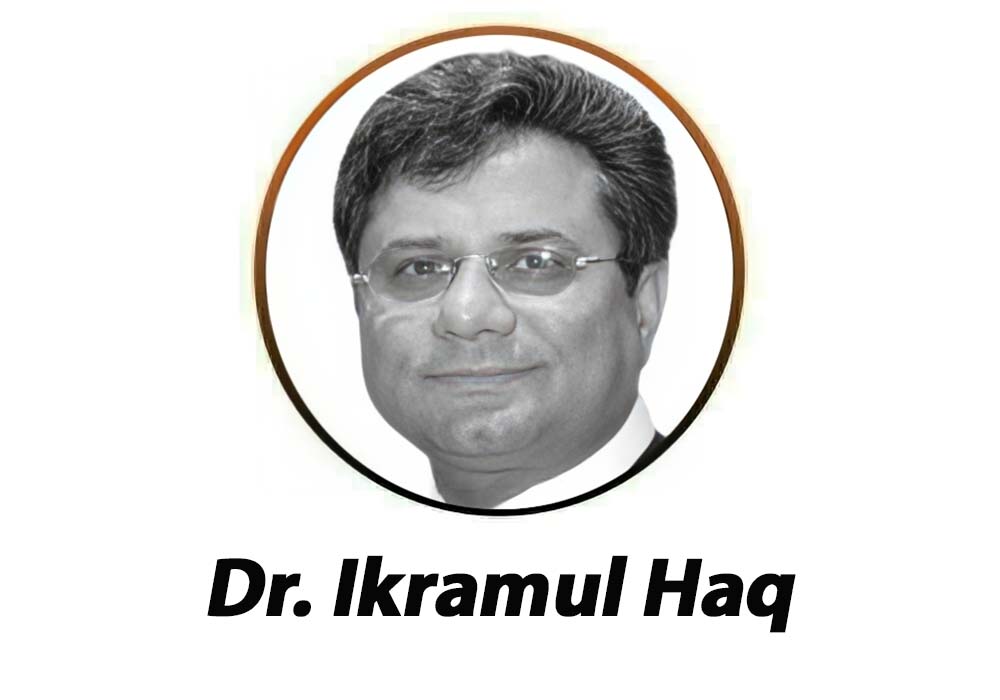
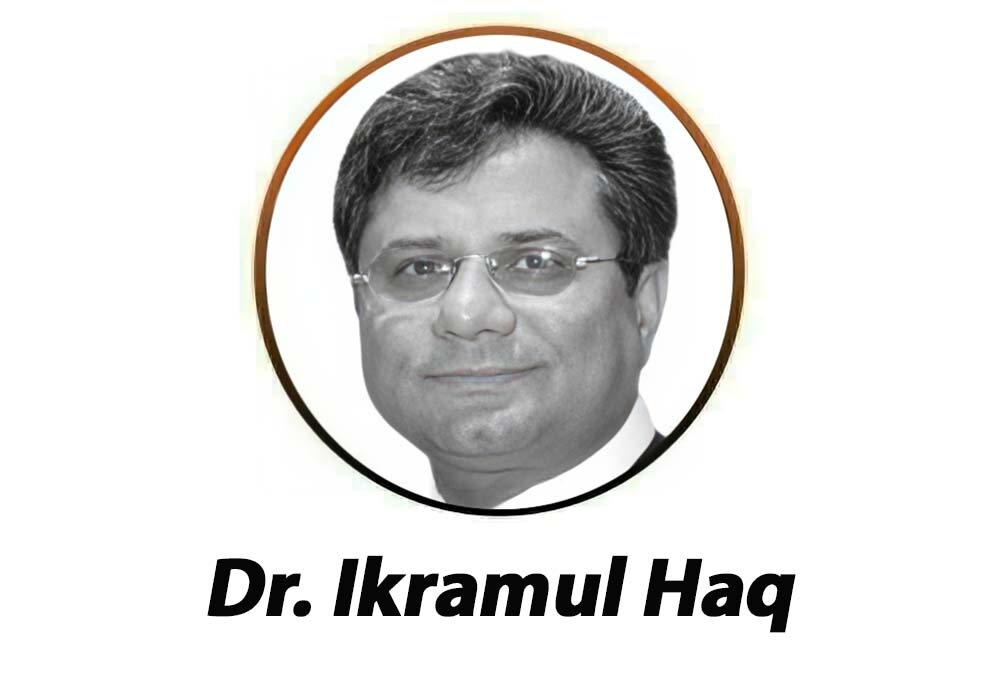
Dr. Ikramul Haq, Advocate Supreme Court, specializes in constitutional, corporate, media, environment, ML/CFT related laws, IT, intellectual property, arbitration and international tax laws. He holds an LLD in tax laws with specialization in transfer pricing. He was full-time journalist from 1979 to 1984 with Viewpoint and Dawn. He served Civil Services of Pakistan from 1984 to 1996.

Similar Posts

  • Beyond Public Finance: Towards  Constitutional Po…

    The first part of this series argued that Pakistan’s recurring fiscal crises cannot be understood through conventional economic analysis alone. The distinction between public finance and Constitutional Political Economy (CPE) must now be explained. Both examine the role of the state in economic life, but they begin from different assumptions and ask fundamentally different questions. Traditional public finance is primarily concerned with what governments ought to do. In the classical framework associated with Richard Musgrave, fiscal policy performs three principal functions: allocation of resources, redistribution of income and macroeconomic stabilisation. Governments provide public goods, correct market failures, reduce unacceptable inequalities and use taxation and expenditure to promote stability and growth. This framework remains indispensable for analysing budgets, taxes and public expenditure. The International Monetary Fund’s discussion of Musgrave’s framework confirms its enduring influence on fiscal analysis. The difficulty arises when the state is treated as a single, impartial institution pursuing social welfare. In the real world, governments consist of politicians, bureaucrats, legislators, judges, regulators and numerous organised interests. Each operates under incentives and constraints. Political actors do not cease to pursue power, institutional advantage or personal interest merely because they enter public office. A tax system may therefore be inefficient not because its designers misunderstood economic theory, but because inefficiency benefits influential constituencies. An exemption may survive not because it promotes investment, but because its beneficiaries possess political power. Public expenditure may be allocated not according to social need, but according to the ability of institutions and groups to influence the budgetary process. Public finance generally asks: what tax would be efficient, equitable and productive? CPE asks a prior question: what political and constitutional arrangements will cause those in authority to adopt and administer such a tax fairly? This difference emerged most clearly in the work of James M. Buchanan, who was awarded the 1986 Nobel Prize for developing the contractual and constitutional foundations of economic and political decision-making. Buchanan argued that economists must specify their model of politics before recommending policies. They should examine the “constitution of economic polity”—the rules and constraints within which political actors make decisions—rather than assuming that government automatically acts as a benevolent guardian of collective welfare. In The Calculus of Consent, Buchanan and Gordon Tullock applied economic reasoning to collective decision-making. They distinguished between choices made within existing rules and choices concerning the rules themselves. Ordinary politics concerns decisions taken under established constitutional arrangements. Constitutional political economy examines how those arrangements should be designed, whose consent they require and what incentives they create. The distinction may be understood through the analogy of a game. Public finance often studies the moves made by players: whether a tax rate should be increased, expenditure reduced, subsidies withdrawn or borrowing limited. CPE examines the rules of the game: who may impose a tax, who may approve expenditure, how revenues are distributed, what majorities are required, which institutions are accountable and what remedies exist when power is abused. The rules determine the range of possible outcomes. Replacing one finance minister, tax administrator or economic adviser cannot fundamentally alter results if the institutional incentives remain unchanged. Buchanan and Geoffrey Brennan developed this insight further in The Reason of Rules. Their focus was not merely upon particular policy choices but upon the rules governing political and market interaction. CPE therefore does not ask only whether a government policy appears desirable. It asks whether the institutional process through which it is adopted protects citizens against arbitrary, discriminatory or predatory use of power. This approach does not imply hostility towards the state. A capable state is essential for education, healthcare, infrastructure, environmental protection, social security and economic development. CPE merely refuses to assume that state power will automatically be exercised for these purposes. A strong state without constitutional restraints may become strong against ordinary citizens while remaining weak before powerful interests. These insights are neither exclusively modern nor exclusively Western. Centuries before the emergence of public choice theory, Ibn Khaldun analysed taxation as part of the broader rise and decline of states. He observed that governments in their earlier stages could obtain substantial revenues from relatively moderate assessments, whereas later rulers frequently imposed heavier burdens but collected less as incentives weakened, production contracted and coercive expenditure expanded. Arthur B. Laffer subsequently acknowledged that the proposition associated with the Laffer Curve was not his invention and specifically identified Ibn Khaldun as an important precursor. Ibn Khaldun’s contribution, however, went far beyond a relationship between tax rates and revenue: he connected fiscal policy with political legitimacy, administrative expansion, elite consumption and institutional decline. The Constitution of Pakistan itself demonstrates that taxation is not merely an economic instrument. Article 77 provides that no federal tax may be levied except by or under the authority of an Act of Parliament. The provision embodies the constitutional principle that taxation requires lawful legislative authority; it is not simply an administrative technique for raising revenue. Article 160 creates the National Finance Commission and provides the framework for distributing specified revenues between the Federation and the provinces. Article 160(3A) further protects the provincial share by declaring that it cannot be lower than that provided under the preceding Award. These provisions represent a constitutional bargain concerning political authority, federalism and access to public resources. Revenue distribution is consequently not just an accounting exercise. It forms part of the structure of the federation itself. Article 140A requires the provinces to establish elected local governments and devolve political, administrative and financial responsibility to them. Fiscal policy cannot produce accountable public services when decision-making remains remote from citizens and constitutionally required devolution is treated as optional. Articles 37 and 38 contain important commitments regarding social justice, education, economic well-being, reduction of inequality and provision of basic necessities. They are Principles of Policy rather than directly enforceable Fundamental Rights, and Article 30 limits their judicial enforceability. Their inclusion nevertheless demonstrates that the constitutional purposes of revenue collection extend beyond achievement of numerical tax targets. The state collects resources to fulfil social and economic obligations, not

  • New provinces or stronger local governments?

    The debate over Pakistan’s administrative structure has returned to the national stage after Interior Minister Syed Mohsin Raza Naqvi suggested that the country should seriously examine the question of creating new provinces or administrative units. Predictably, the discussion immediately descended into familiar political slogans. Some portrayed the proposal as a threat to federalism, others embraced it as the long-awaited solution to governance failures. Between these two extremes lies a far more important question: what does the Constitution of Pakistan actually permit, and what course best serves national unity at a time of unprecedented regional instability? The timing of the debate is significant. Pakistan today faces persistent security challenges in Balochistan and Khyber Pakhtunkhwa, constitutional sensitivities relating to Azad Jammu and Kashmir, continuing political polarisation, and a rapidly deteriorating strategic environment as conflict in the Middle East threatens to reshape regional geopolitics. In such circumstances, constitutional reform should not be driven by political expediency. It must be guided by constitutional principles, empirical evidence and the long-term interests of the federation. The Constitution of islamic Republic of Pakistan is neither silent nor rigid on the question of creating new provinces. Article 1 recognises Pakistan as a federation consisting of provinces and territories whose limits may be altered in accordance with the Constitution. However, Article 239(4) places an important constitutional safeguard on any proposal affecting provincial boundaries. No constitutional amendment that alters the limits of a province can become law unless, in addition to obtaining the prescribed parliamentary majority, it is approved by not less than two-thirds of the members of the provincial assembly concerned. This requirement reflects the federal compact. Provinces are not merely administrative divisions; they are constitutional partners in the federation. Consequently, no province can be divided, merged or otherwise altered through a simple parliamentary majority in Islamabad. Provincial consent is itself a constitutional requirement. This constitutional position explains why proposals for South Punjab, Bahawalpur, Hazara or other new provinces have repeatedly surfaced over the past two decades but have never matured into constitutional reality. Various drafts, often described collectively as proposals for a Twenty-Eighth Constitutional Amendment, have circulated in political and academic circles. They have contemplated the creation of additional provinces together with corresponding adjustments in Senate representation, National Finance Commission allocations, provincial institutions and administrative structures. Yet none has commanded the political consensus demanded by Article 239. Constitutional design has proved stronger than political rhetoric. The debate, however, should not begin with Article 239. It should begin with Article 140A. Inserted through the Constitution (Eighteenth Amendment) Act of 2010, Article 140A obliges every province to establish a local government system and devolve political, administrative and financial responsibility and authority to elected representatives. This is not merely a recommendation. It is a constitutional command. Unfortunately, after even lapse of 16 years, this remains a constitutional provision that has been implemented (sic) with greater reluctance. Successive provincial governments, irrespective of political affiliation, have preferred centralised provincial bureaucracies over constitutionally empowered local governments. Elections have been delayed, powers diluted, finances retained by provincial capitals and administrative authority reclaimed through executive control. The result is that Pakistan continues to speak the language of devolution while practising administrative centralisation. Before demanding new provinces, one must ask a more fundamental question: has Pakistan sincerely implemented the Constitution it already possesses? The empirical evidence nevertheless deserves serious attention. Pakistan has experienced extraordinary demographic transformation since independence. The country’s population has increased from approximately 34 million in the early years of independence to over 255 million today, yet the number of provinces has remained unchanged. The presentation recently unveiled on constitutional and administrative reforms demonstrates this remarkable contrast and argues that governance structures have failed to evolve alongside population growth. It further notes that each of Pakistan’s four provinces administers populations exceeding those of many sovereign countries and that, among major federations, Pakistan places an unusually large administrative burden upon each provincial government. Whether one accepts every conclusion of that presentation/study or not, the underlying constitutional question cannot be ignored. Effective governance depends not merely upon constitutional powers but upon administrative reach. A provincial capital hundreds of kilometres from remote districts inevitably encounters greater challenges in delivering education, healthcare, policing and justice than a more decentralised system. The presentation also links many development indicators with administrative distance from provincial capitals, suggesting that constitutional debate should be informed by measurable governance outcomes rather than political sentiment alone. However,  administrative efficiency is only one dimension of federalism. The second is national integration. Pakistan’s history demonstrates that provincial identities become dangerous only when constitutional grievances remain unresolved. Conversely, attempts to suppress legitimate constitutional debate merely strengthen centrifugal tendencies. The Constitution therefore wisely provides a peaceful and democratic mechanism through which territorial adjustments may be considered while ensuring that no province loses its constitutional status without its own consent. This balanced approach deserves preservation. Current security realities also counsel prudence. Parts of Balochistan continue to face organised violence supported by hostile external actors. Khyber Pakhtunkhwa confronts renewed terrorist activity along its western frontier. Azad Jammu and Kashmir occupies a unique constitutional and strategic position within Pakistan’s national policy on Jammu and Kashmir. Simultaneously, the widening conflict across the Middle East has introduced new uncertainties affecting regional security, energy supplies and geopolitical alignments. These circumstances require a stronger federation rather than a weaker one. That objective, however, should not be confused with excessive centralisation. Strong federations are built upon responsive institutions, constitutional legitimacy and public confidence. Citizens judge the State not by constitutional theory but by whether schools function, hospitals remain open, justice is delivered promptly and basic civic services reach every district. Equally important is the responsibility of political leadership. Statements by political actors—including repeated interventions by Maulana Fazlur Rehman on constitutional and provincial questions—must be evaluated through the prism of constitutionalism rather than political confrontation. Democratic disagreement is legitimate, but constitutional discourse should unite rather than inflame an already polarised polity. The Constitution provides lawful mechanisms for reform. Political mobilisation should reinforce those mechanisms, not substitute for them.

  • The Euphemism of Integration: Kashmir Seven Years …

    By Ahmad Hassan “The convoluted wording of legalisms grew up around the necessity to hide from ourselves the violence we intend toward each other… Elaborate euphemisms may conceal your intent to kill, but behind any use of power over another the ultimate assumption remains: ‘I feed on your energy.’” When Frank Herbert wrote those words in his novel Dune Messiah, he observed that elaborate euphemisms are often used by the state to conceal the raw mechanics of power. In Pakistan, August 5 is observed as Youm-e-Istehsal to condemn the 2019 revocation of Article 370 and its supplementary provision, Article 35A. This act of the Indian government removed Kashmir’s separate constitution, its flag and its control over its own affairs. Last week marked seven years since that day. What began as a dramatic constitutional rupture has now, by design, become quietly normalized. Jammu and Kashmir joined India in 1947 on defined terms. The Maharaja handed over defence, foreign affairs and communications. Everything else stayed with the state. The United Nations later called for a plebiscite. It never happened. Instead, over decades, the protections that were supposed to stand in its place were worn down piece by piece, until August 5, 2019, when the government removed what remained in a single stroke. The method deserves more attention than it usually gets. Article 370 was not directly changed. First, the government reached for Article 367, which was intended to aid in the interpretation of the Constitution, and used it to redefine one phrase: “Constituent Assembly” became “Legislative Assembly.” Kashmir had no sitting assembly at the time, and the state was under President’s Rule. So, the government’s own appointee, the Governor, signed off on the change. India’s Supreme Court had already ruled, in 1959 and again in 1969, that Kashmir’s constitutional status could only be changed after the approval of the Constituent Assembly of Kashmir. When that body no longer existed, no institution had the standing to give that consent on Kashmir’s behalf. New Delhi decided that its own Governor could stand in for the people he had not been elected by. That is not consent. It is a government consenting to itself. The Indian government argued that Kashmiris had lived for decades under an insurgency that killed tens of thousands and emptied the Valley of its Pandit community in 1990. It left the region isolated from the investment and policing coordination. That argument would carry more weight if the method had matched it. What followed the revocation was not the language of integration. It was a total communications blackout, landlines and mobile networks and the internet all cut at once. Independent estimates put the troop presence at 600,000 to 800,000, roughly one soldier for every ten Kashmiris. Even pro-India politicians, former chief ministers among them, were placed under detention. Perhaps a security argument can justify counter-insurgency operations. It cannot by itself justify dissolving a state’s constitutional status, its legislature and its statehood in one move. That too with no elected Kashmiri voice given the chance to object. Jawaharlal Nehru warned Parliament about exactly this shortcut in 1952, while Article 370 was still being drafted. No clause in a constitution, he said, could substitute for the will of the Kashmiri people. Real integration, in his words, comes from the mind and the heart, not from a clause imposed from outside. Actually, there is a longer, quieter project behind the legal manoeuvre. Article 35A once barred outsiders from buying land or settling permanently in Kashmir. Since its removal, more than 3.2 million domicile certificates have gone to outsiders, most of them non-Kashmiri Hindus. This alarming thing is that wherever a disputed territory’s demographics are reshaped before its people are asked what they want, the eventual vote, if one ever comes, no longer reflects the population whose future was originally in question. None of this required an invading army, or an open declaration of intent. It required a redefined word, a signature from an appointee, and a great deal of time. The convoluted legalisms that Herbert warned about have become policy in Kashmir: development, integration, correction. Each euphemism has quietly done the work that an honest admission of purpose could never have achieved. Seven years on, Kashmir’s assembly has voted decisively against the BJP that carried out the revocation, and passed its own resolution demanding the restoration of its special status. New Delhi can easily ignore them. Yet, that very power to ignore an elected legislature proves, beyond any doubt, that the “consent” obtained seven years ago was always a legal fiction

  • Refill the Aral Sea First: A Life Spent Watching W…

    I have stood on the dry floor of the Aral Sea, and I can tell you that no photograph prepares you for it. It is not a desert in the way the Sahara is a desert, ancient and self-consistent. It is a wound — a seabed still faintly shaped like the water that used to cover it, salt crusted white across the sand, rusting fishing trawlers stranded kilometres from any shore, and children playing in the hulls of boats their grandfathers once sailed to catch sturgeon. It is, without exaggeration, the worst environmental tragedy I have ever witnessed with my own eyes. And I have spent thirty years of my life witnessing tragedies of water, in one direction or the other. The Aral Sea was once the fourth-largest inland body of water on Earth, spread across more than 68,000 square kilometres between what is now Uzbekistan and Kazakhstan, fed for centuries by the Amu Darya and Syr Darya rivers. Soviet planners diverted those rivers at massive scale to irrigate cotton fields, and the sea began to die — slowly at first, then catastrophically. More than ninety percent of it is gone. What remains has splintered into four smaller lakes covering barely 3,500 square kilometres. The fishing economy that once fed the region collapsed entirely. The exposed seabed, laced with agricultural pesticide residue and salt, now rises on the wind as toxic dust that settles on crops and in human lungs hundreds of kilometres away. Villages that once sat on the water’s edge now sit stranded in a dead landscape, and the world, for the most part, has forgotten this happened at all. That forgetting is its own quiet tragedy. I did not come to this subject as a tourist of disaster. I have spent three decades campaigning for the preservation of the Himalayan glacier system, including a sustained, and ultimately unsuccessful, effort to see the Siachen Glacier converted into a demilitarised peace park — a proposal grounded in a simple technical fact: Siachen is melting faster than almost any glacier on Earth, in significant part because of the sustained military presence stationed on its ice. I made the case, repeatedly, that removing that military footprint would slow a specific, measurable source of glacial loss, feeding directly into the Indus watershed that sustains hundreds of millions of people downstream. I did not succeed. The glacier continues to melt. The troops remain. I say this not as a complaint but as an honest accounting: I have given a large share of my working life to glacier preservation, and by the plainest measure — ice mass — I have not stopped the loss. That failure has not left me cynical. It has left me convinced that the scale of the response has to match the scale of the crisis, and that we have consistently chosen the smaller response. I think about this every time I look at the Maldives. It is a nation of low coral islands, its highest natural point barely more than two metres above sea level, and it is not speaking in metaphor when its own government has warned that the country could become uninhabitable, and eventually vanish beneath the waves, within this century if sea-level rise is not slowed. I do not think most people outside the region understand how literally existential that threat is. This is not a country that will lose some coastline. This is a country that could, within the lifetime of children alive today, cease to have any land at all. That is the other half of the water crisis I have spent my life watching, and it is the mirror image of the Aral. Where the Aral Sea disappeared because rivers were mismanaged and diverted without thought for the consequences, the oceans are rising because the atmosphere has absorbed decades of greenhouse gas emissions, and the ice sheets and glaciers that once held the planet’s frozen water in reserve are releasing it. Through most of the twentieth century, global sea levels rose at roughly 1.4 millimetres a year — barely perceptible within a human lifetime. Between 2006 and 2015, that rate had already accelerated to roughly 3.6 millimetres a year, and it continues to climb. A rise measured in inches sounds trivial until you understand what it does: it turns rare storm surges into routine flooding, drowns wetlands that once buffered coastal cities, backs up drainage systems and rivers, and makes what used to be called a hundred-year flood into a fixture of ordinary life. New York and Miami already experience “sunny-day flooding,” where nothing more than an unusually high tide sends seawater into city streets with no storm at all. Shanghai, Bangkok, Kolkata, Mumbai, and Dhaka — cities holding tens of millions of people and trillions of dollars of infrastructure — face the same mechanism at a scale that could displace populations larger than most countries. And the danger does not arrive gently. In July 2025, an 8.8-magnitude earthquake off Russia’s Kamchatka Peninsula — among the ten strongest ever recorded — sent tsunami warnings racing across the Pacific, triggering evacuations from Russia to Japan to Hawaii to the western coast of the United States. It was, by fortune more than design, a disaster the world mostly escaped. Scientists have been explicit that higher baseline sea levels make the next such event, and the next cyclone, more destructive than the last one would have been at a lower starting point. We are not simply facing more disasters. We are facing the same disasters arriving on a stage that has been quietly raised beneath them. I do not believe these two crises — a vanished inland sea and a rising global ocean — are separate stories. I believe they are the same failure, viewed from opposite ends of the same hydrological system: a civilisation that has never learned to treat the planet’s water as a single, finite, interconnected balance, to be managed with foresight rather than reordered by short-term convenience and corrected only after

  • Remembering Amin Mughal;Republic of revolutionarie…

    A rare photograph can sometimes preserve more history than an official archive. The one below brings together six extraordinary men. In the front row, from left to right, stand Zafar Iqbal Mirza—our beloved ZIM—Shafqat Tanvir Mirza, Dada Ameer Hyder and I.A. Rehman. Behind them are Major Ishaq Muhammad, remembered for the Rawalpindi Conspiracy Case, and Professor Amin Mughal. None sought celebrity. Together, they represent a moral and intellectual republic that Pakistan never formally acknowledged. An extraordinary assembly of Pakistan’s progressive tradition. Front row, from left: Zafar Iqbal Mirza (ZIM), Shafqat Tanvir Mirza, Dada Ameer Hyder and I.A. Rehman. Second row: Major Ishaq Muhammad and Professor Amin Mughal The photograph is remarkable not because all six belonged to a single organisation or followed an identical political line. They did not. Its power lies in the coexistence of different traditions of resistance: the revolutionary organiser, the dissident soldier, the journalist, the editor, the defender of human rights, the custodian of Punjabi language and the teacher who connected all these worlds through conversation. Amin Mughal, standing quietly in the second row, provides the key to reading the photograph. His position is almost symbolic. He does not occupy the centre, although he belonged at the centre of the intellectual relationships represented in it. He appears as he lived: present, observant and connected to everyone, without needing to establish precedence over anyone. Much has already been written after his passing in London on August 12, 2026. A chronological retelling of his life—his teaching, political activity, imprisonment, journalism and exile—cannot explain what made him exceptional. His real contribution lay in creating intellectual continuities. He connected the organised Left of Dada Ameer Hyder and Major Ishaq with the democratic journalism of ZIM and I.A. Rehman, the linguistic and cultural resistance of Shafqat Tanvir Mirza, and younger people like me who entered journalism without fully comprehending the inheritance placed before them. I worked with Amin Sahib at the weekly Viewpoint between 1979 and 1984. Its modest premises at 4-Lawrence Road, Lahore, were my real university. As recalled in “Remembering Viewpoint & its stalwarts” [Minute Mirror, March 23-24, 2026], Mazhar Ali Khan had gathered people for whom journalism was an ethical commitment rather than a route to influence, wealth or political patronage. Amin Mughal belonged naturally to that environment. He did not separate editing from teaching, political analysis from literature, or intellectual disagreement from personal affection. The men in this photograph remind us that the Left was once far more than an electoral label. Dada Ameer Hyder had travelled the world as a worker and revolutionary before most Pakistanis had encountered the language of globalisation. Beginning as a coal-boy on a ship, Dada experienced labour, empire and racial hierarchy directly. His memoirs, Chains to Lose, reveal a world stretching from Bombay and Moscow to New York, Shanghai and Buenos Aires. He organised workers across borders long before international solidarity became the vocabulary of funded conferences. I had the rare honour of meeting Dada at Viewpoint. He carried no theatrical aura of revolutionary greatness. His authority arose from struggle endured, not status claimed. Official histories largely excluded him because he challenged both colonial power and the class order that succeeded it. The state could accommodate elite leaders of independence; a worker who asked what independence had delivered to other workers remained dangerous. Major Ishaq represented another uncomfortable history. A soldier capable of thinking beyond military obedience, he was implicated in the Rawalpindi Conspiracy Case and repeatedly imprisoned. After Hasan Nasir’s death in custody, he pursued the matter when silence would have been safer. Major Ishaq later organised peasants and workers, treating revolution neither as romance nor slogan but as the slow construction of collective capacity. Even paralysis could not end his political work. His life contradicted the convenient division between soldier and dissident, patriot and critic. Shafqat Tanvir Mirza—STM—resisted through language. Journalist, trade unionist, historian and scholar, he understood that the marginalisation of Punjabi was not a literary accident. It reflected the estrangement of a people from their own cultural memory. STM’s  scholarship on Punjabi literature, history and the Sufi poets restored dignity to a language spoken by millions but frequently denied serious institutional space. His commitment earned imprisonment and professional hardship, but never displaced his willingness to engage in dialogue. ZIM embodied another form of courage: fidelity to professional standards when both censorship and commercialisation encouraged surrender. In my tribute to him, I recalled him as my teacher and mentor. He was a master sub-editor, stylist and conversationalist. When Mazhar Ali Khan, I.A. Rehman and Amin Mughal were arrested in 1981, ZIM helped ensure that Viewpoint appeared without interruption. His authority came from mastery of craft joined with an unshakable belief in free expression, equality and human dignity. I.A. Rehman carried those commitments into the organised defence of human rights. His life demonstrated that opposition to injustice need not produce bitterness. He spoke softly, listened patiently and remained firm. At a PIDE memorial, I recalled that he spoke the truth although it sent him to prison twice. Rehman sahib, as we all call him with respect and affection, suffered without complaint because, for him, sacrifice was the natural cost of professed principles. His advice that the struggle for human rights was “a marathon, not a sprint” remains essential in an age addicted to instant victories and equally instant despair. What, then, distinguished Amin Mughal among these giants? He was the interpreter between their worlds. From Dada and Major Ishaq came the imperative of structural change; from STM, the inseparability of culture and emancipation; from ZIM, professional integrity; from I.A. Rehman, the defence of every person’s dignity. Amin Sahib absorbed these traditions without turning any of them into dogma. Amin Mughal possessed a rare capacity to disagree without diminishing another person. His questions could dismantle a weak argument, but never the dignity of the person making it. For younger colleagues, this was an education in democratic conduct. He taught us that progressive politics without intellectual honesty becomes another orthodoxy,

  • Ending the Insurgency in Months, Not Decades: What…

    I have stood in places most policymakers only read about in briefing papers. I spent time in Afghanistan during the Ashraf Ghani years, and the whole of 2010 in what was then Ex-FATA — a zone so dangerous that even seasoned aid workers called it the place where devils refuse to go. Later, I worked on rehabilitation efforts in Azad Jammu and Kashmir. None of what I am about to argue is theoretical. It is drawn from villages of EX-FATA I walked through, water I watched women carry for miles on donkeys, and children I saw crossing frozen ground without shoes while, an hour’s drive away, the Afghan elite lived behind walls that looked like fortresses. That contrast is the whole story of why the Taliban won. Over two decades, the Western-backed Afghanistan collapsed not primarily on the battlefield but in the space between Kabul’s donor-funded skyline and the rural provinces that never saw a rupee — or a dollar — of that money trickle down. Billions moved through Kabul. Almost none of it moved past it. Into that vacuum, the Taliban did not need to conquer the countryside. They simply had to show up where the state never had, and offer order where there was only neglect. In 2010, in FATA, I watched the same mechanism recruit teenage boys into suicide bombing — and the driving force was rarely ideology in its purest form. It was poverty, weaponised by men who understood exactly how to turn deprivation into obedience. I say this because Pakistan is now watching its own soldiers and citizens bleed in Balochistan, Khyber Pakhtunkhwa, and Azad Jammu and Kashmir, and we keep mistaking the symptom for the disease. In Balochistan, it is poor living conditions and the absence of work that push young men toward the BLA and other militant groups — not some inherited hatred of the state, but the calculation of someone with nothing left to lose. In KPK, mining activity that could employ tens of thousands sits frozen, and extremist preachers walk into that economic silence with a ready-made narrative of grievance, exactly as I watched happen in FATA 16 years ago. In Azad Jammu & Kashmir (AJK), where I subsequently served on the front lines of post-disaster rehabilitation, the work executed under the leadership of General Musharraf and Lieutenant General Nadeem was nothing short of extraordinary. They transformed the region—erecting world-class infrastructure that spanned rural housing, modern hospitals, and state-of-the-art universities. Having witnessed his work firsthand, I can unhesitatingly attest that Lt. Gen. Nadeem exemplified the highest standards of professional integrity and selfless duty in the field. Regrettably, subsequent regimes, particularly the current political regime, failed to capitalize on this monumental achievement. Worse still, political negotiators deliberately suppressed these successes under strict orders to deny General Musharraf the credit he rightly deserved It was neither the foreign conspiracies spun about Modi nor the shadow plays attributed to Netanyahu that brought us to our knees—it was the quiet, deliberate treason of our own. The true architects of our ruin sat comfortably in our own cabinets, presiding over the Ministry of Planning and the Ministry of Petroleum. Let the record be unsealed, and let the ledger of corruption show the reality of our sabotage. While the global solar revolution was gaining unstoppable, undeniable momentum as far back as 2012, our planners turned a blind eye to the sun. Instead, they peddled dirty imported coal and structurally flawed LNG infrastructure, deceitfully masquerading them as national “game-changers.” They were not mistakes; they were choices. They willfully shackled this nation to predatory FSRU contracts, riddled with toxic force majeure loopholes that bled our public treasury dry to enrich foreign syndicates and domestic middlemen. Their actions expose a chilling, unvarnished truth: capital was never the bottleneck. Financial constraints were a myth. The true poverty of this nation was the shameless, treasonous lack of political will to break free from the payout loop and build a sovereign future. According to Pakistan’s own energy regulator, NEPRA, consumers were burdened with roughly Rs1.81 trillion in capacity payments in fiscal year 2024–25 alone — fixed payments to power producers simply for having plants available, regardless of whether they generated a single unit of electricity. That figure made up 61 percent of the country’s entire power purchase cost. On a per-unit basis, Pakistanis paid roughly Rs14.3 for capacity alone, compared to about Rs9.0 for the energy actually consumed. Multiply that pattern across recent years and the country has handed over trillions of rupees to keep idle machinery on standby, while Pakistani manufacturers pay electricity rates nearly double what their competitors pay in India and Vietnam, hollowing out the very industries that could have employed the young men now being recruited by militants instead. Even a third of what has been paid out in capacity charges over the past five years — redirected honestly into youth employment programs in KPK, Balochistan, and AJK — would have done more to end this insurgency than any military operation conducted so far. This is not sentiment. It is arithmetic that any finance ministry could run in an afternoon. And here the accountability question becomes unavoidable. The man who, as federal minister for petroleum and natural resources from 2013 to 2018, championed the LNG import architecture that helped lock Pakistan into the very capacity-payment structure now crushing consumers, later became Prime Minister of Pakistan. He subsequently faced formal NAB proceedings, an indictment, and questions in court over unexplained deposits connected to that period — a matter of public record, still contested by his supporters as political victimization, but investigated nonetheless by the country’s own anti-graft body. I raise this not to relitigate one man’s guilt or innocence in a courtroom I am not sitting in, but to make a structural point: the same energy policy architecture that produced Pakistan’s capacity-payment crisis was built, negotiated, and defended by people who moved seamlessly from ministry to premiership to private life, largely untouched by the consequences their decisions imposed on

Leave a Reply

Your email address will not be published. Required fields are marked *