karachi issues traffic
| |

Karachi issues traffic plan for Chehlum procession

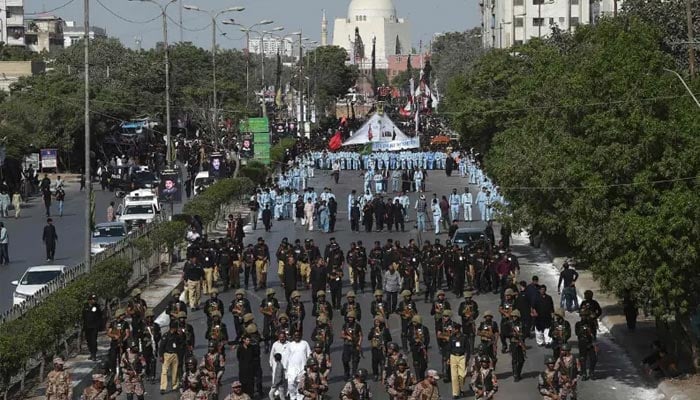
KARACHI: The Karachi Traffic Police has announced a comprehensive traffic management plan ahead of the central Chehlum procession on Tuesday, urging commuters to use alternative routes as several major roads will remain closed during the religious event.

According to the traffic arrangements, the main Chehlum procession will begin from Nishtar Park at 9:00am and proceed along its traditional route. M.A. Jinnah Road will remain closed to regular traffic for the duration of the procession to ensure the safety of participants and maintain security.

Authorities have prepared a series of traffic diversions to minimize disruption across the city. Vehicles traveling from Saddar towards Tower will be redirected through Preedy Street and I.I. Chundrigar Road, while motorists approaching from Shahrah-e-Quaideen will be diverted via Kashmir Road and People’s Chowrangi.

Traffic from Korangi, Landhi and the National Highway will be routed through Rashid Minhas Road and the Super Highway. Commuters coming from Nazimabad will be able to use Lasbela, Garden and Nishtar Road, while traffic from Liaquatabad will be diverted from Lasbela Chowk towards Nazimabad No. 10.

Motorists traveling from Hassan Square and Shahrah-e-Faisal have also been advised to follow designated diversion routes through Society Light Signal, Teen Hatti and Sher Shah Suri Road. Drivers using Jamshed Road toward Guru Mandir have been asked to use Bahadur Yar Jang Road or Soldier Bazaar Road as alternate routes.

Traffic police further announced that heavy vehicles will not be allowed to enter Karachi from 10:00am until the conclusion of the procession. Parking will also be prohibited along the procession route, and any vehicle found violating the restrictions will be removed immediately.

Chehlum of Hazrat Imam Hussain (RA) and the martyrs of Karbala will be observed across the country on Tuesday with mourning processions and religious gatherings taking place under heightened security arrangements.
Similar Posts

  • |

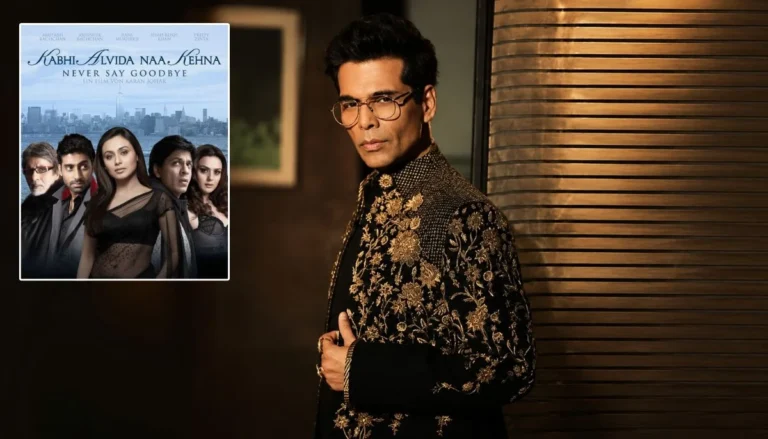
    Karan Johar revisits Kabhi Alvida Naa Kehna journey

    Karan Johar has taken a nostalgic look back at Kabhi Alvida Naa Kehna as the much-discussed romantic drama completes two decades since its theatrical debut. Released on August 11, 2006, the film brought together Shah Rukh Khan, Rani Mukerji, Abhishek Bachchan, Preity Zinta and Amitabh Bachchan in a story that explored the uncertainties of marriage, emotional distance and complicated personal relationships. Set against the backdrop of New York, the film moved away from the conventional Bollywood portrayal of romance and family life. Its unconventional storyline quickly became a talking point, dividing viewers between those who appreciated its honesty and those who felt its themes challenged traditional values. Reflecting on the film’s journey, Johar recalled the wide range of reactions it generated after reaching cinemas. The filmmaker said he encountered everything from strong appreciation for the movie’s daring subject to severe criticism over the choices made by its characters. He also revisited a pre-release screening that gave him an early indication of just how strongly audiences might respond. During the screening, Johar noticed an audience member becoming visibly uncomfortable during a sequence involving Dev and Maya, the characters played by Shah Rukh Khan and Rani Mukerji. Another memory from that period involved a mother who approached Johar after watching the film. She questioned why he had chosen to build a story around divorce and troubled relationships rather than create another conventional family drama. With the benefit of hindsight, Johar has also been open about the movie’s imperfections. He acknowledged that its grand production, elaborate presentation and several songs contributed to an oversized cinematic experience, with some elements that he now believes could have been handled differently. However, Johar continues to stand by the central purpose of the film. He has maintained that the story was not intended to present infidelity as something admirable. Instead, it sought to examine the emotional consequences of decisions made within and outside marriage and the impact those choices can have on everyone involved. For Johar, the film’s enduring appeal lies in its willingness to avoid straightforward answers. Relationships, he suggested, cannot always be understood through simple definitions of right and wrong, particularly when emotions, expectations and personal struggles become intertwined. The filmmaker also acknowledged the contribution of the cast and crew who helped transform the ambitious idea into a large-scale production. Two decades later, Kabhi Alvida Naa Kehna remains a film that continues to invite debate. While its themes divided audiences when it first arrived, its exploration of imperfect relationships and difficult emotional decisions has allowed the movie to remain part of conversations around love, marriage and human choices.

  • | |

    President, PM vow action after Swat suicide blast

    ISLAMABAD: President Asif Ali Zardari and Prime Minister Shehbaz Sharif on Sunday strongly condemned the deadly suicide bombing in Kabal, Swat, expressing grief over the loss of lives and reaffirming the government’s commitment to eliminating terrorism. In separate statements, both leaders extended heartfelt condolences to the families of those killed in the attack and prayed for the departed souls. They also asked Allah Almighty to grant patience and strength to the bereaved families during this difficult time. President Zardari expressed deep sorrow over the tragedy and prayed for the speedy recovery of those injured in the explosion. He directed the relevant authorities to ensure that all injured victims receive the best possible medical treatment without delay. The president said terrorists would never succeed in weakening Pakistan’s peace, national unity or the writ of the state. He praised the sacrifices of Khyber Pakhtunkhwa Police and other law enforcement agencies, describing their bravery and commitment as a source of pride for the nation. He further called for a comprehensive investigation into the incident and directed authorities to identify those responsible for planning and carrying out the attack. He stressed that all perpetrators and their facilitators must be brought to justice. Prime Minister Shehbaz Sharif also condemned the suicide bombing and expressed profound grief over the loss of precious lives. He conveyed his sympathies to the families of the victims and prayed for the elevation of the martyrs’ ranks. The prime minister also wished a speedy recovery for those injured and instructed the relevant departments to provide them with the highest standard of medical care. Reaffirming the government’s resolve against militancy, Shehbaz Sharif said Pakistan’s fight against terrorism would continue until the menace was completely eradicated. He said those seeking to destabilise the country through acts of violence would not be allowed to succeed.

  • |

    Thousands storm Spain’s Ceuta border

    Thousands of migrants gathered overnight in the Moroccan town of Fnideq near the border with the Spanish enclave of Ceuta, creating fresh pressure on one of Europe’s busiest migration routes. The large movement of people came despite a major security operation launched by Moroccan and Spanish authorities to stop illegal border crossings. Security forces strengthened patrols and reinforced checkpoints around the border. However, many migrants continued searching for ways to reach Ceuta. Some walked along the coastline looking for gaps in the border fence, while others prepared to swim across the sea in hopes of entering Spanish territory. According to Spanish media reports, between 2,000 and 3,000 migrants managed to cross into Ceuta on Thursday. Most of the successful crossings reportedly took place before security measures were tightened later in the day. Ceuta, along with the nearby Spanish enclave of Melilla, is the European Union’s only land border with Africa. The two territories have long served as major entry points for migrants hoping to begin a new life in Europe. Spain responded to the latest migration surge by sending additional military personnel and police officers to Ceuta. Authorities in the enclave also confirmed that nine bodies had been recovered following the crossing attempts, although officials have not released further details about the victims. Moroccan authorities deployed water cannon vehicles and additional security personnel at the border. Officers repeatedly pushed back groups attempting to force their way through the crossing points. Despite the heavy presence, migrants continued gathering throughout the night. Violence broke out near the border as tensions escalated. Several vehicles, including a bus and seven other vehicles, were set on fire during clashes. Burnt-out vehicles remained on the roadside after the unrest, highlighting the intensity of the confrontation. Many migrants described scenes of panic and confusion. One migrant said he became trapped in a stampede as people rushed toward a narrow coastal route. He said he feared for his life as people pushed and stepped on one another while trying to reach the border. Traffic into Fnideq remained heavily congested as more migrants continued arriving from different parts of Morocco. Some travelled along highways on foot, while others used mountain paths to avoid police checkpoints. Many spent the night waiting for another opportunity to cross. The crowds included men, women and children from Morocco as well as several countries in sub-Saharan Africa. Many families remained stranded near the border after repeated attempts to enter Ceuta were blocked. Among them was 23-year-old Fatima Mahli from the Moroccan city of Tetouan. She said she had travelled with her two daughters hoping to cross into Ceuta with her husband. According to her, her husband left before dawn to try to swim across after they realised the border crossing was effectively closed.

  • | | |

    Jamaat-e-Islami storms streets over petrol levy

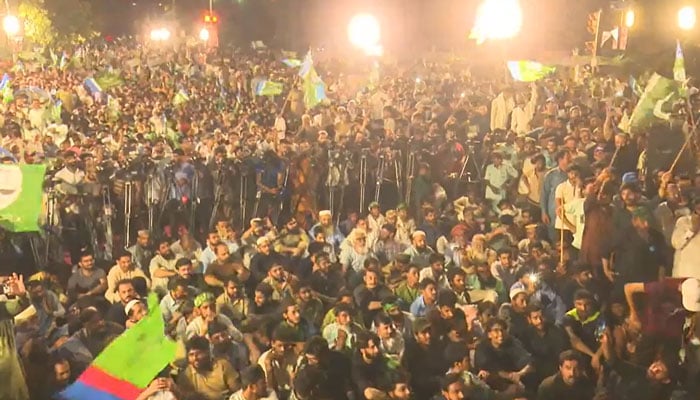
    Jamaat-e-Islami (JI) has staged sit-ins in Karachi, Lahore and Peshawar against the petroleum levy, rising fuel prices and inflation. In Karachi, a JI rally led by Karachi chief Munim Zafar reached Fawara Chowk. The party had announced a sit-in outside the Governor House to protest the petroleum levy. JI workers are moving towards the Governor House from the Sindh High Court. Party activists have been raising concerns over the impact of the petroleum levy and rising fuel prices on the public. Following the sit-in at Fawara Chowk, the road leading towards the Press Club and Arts Council remains open for traffic. Police personnel have also been deployed near the Governor House to maintain security and manage the situation. In Lahore, JI workers staged a sit-in at Faisal Chowk on Mall Road, near the Chief Minister’s House. JI Pakistan chief Hafiz Naeemur Rehman also reached the protest site and joined the demonstrators. The protest in Lahore was led by JI Punjab chief Javed Kasuri and other party leaders. The protesters are demanding relief from rising petroleum prices and the petroleum levy. The party has also criticised the increasing burden of inflation on ordinary citizens. JI leaders have called for measures to reduce the financial pressure faced by the public. In Peshawar, JI workers staged a sit-in outside the Governor House. The protest has resulted in the closure of the road up to the Sadar Khyber Pakhtunkhwa Assembly Chowk. JI Deputy Emir Liaquat Baloch is scheduled to address the protesters in Peshawar. Party leaders are expected to highlight their demands regarding petroleum prices, the levy and inflation. The demonstrations are part of JI’s wider campaign against the petroleum levy and rising prices. The party has announced protests in different cities to pressure the government to provide relief to consumers. JI leaders have argued that increases in petroleum prices affect the prices of transport, food and other essential goods. They have demanded that the government reconsider the petroleum levy and take steps to control inflation.

  • | |

    Pakistan rejects India’s statements at UN securi…

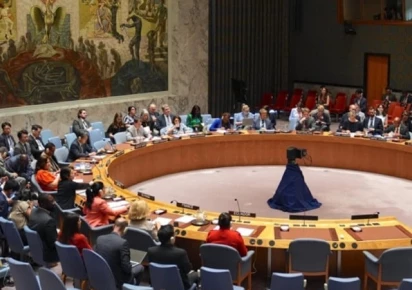
      ISLAMABAD: Pakistan has strongly rejected India’s remarks at the United Nations Security Council (UNSC) concerning the Indus Waters Treaty (IWT) and allegations of terrorism, describing them as an attempt to misrepresent facts and divert attention from issues raised by Pakistan. The response came after India’s Permanent Representative to the United Nations, Ambassador Harish Parvathaneni, accused Pakistan of supporting cross-border terrorism and suggested that the issue had affected bilateral cooperation under the Indus Waters Treaty. Pakistan dismissed these allegations during the UNSC’s High-Level Open Debate on “Natural Resource Governance: The Foundation of Peace, Security and Prosperity.” Speaking in a right of reply, Pakistan’s First Secretary to the UN, Ansar Shah, said India’s statement was misleading and represented a futile effort to distort the facts surrounding the treaty and regional security issues. He maintained that the Indus Waters Treaty remains legally valid and binding, rejecting India’s claim that the agreement could be placed in abeyance through unilateral action. Shah stated that the treaty contains no provision allowing either party to suspend or set it aside on its own. He referred to the Court of Arbitration’s August 2025 award, which, according to Pakistan, reaffirmed that the treaty continues to remain fully in force along with its dispute resolution mechanisms. He argued that India’s unilateral approach violated the terms of the agreement as well as established principles of international law. Pakistan also accused India of using shared water resources as a political tool. Shah said any attempt to weaponise water for political pressure or to restrict water access would amount to a serious breach of international legal obligations and norms. He added that such actions could undermine regional stability and pose risks to international peace and security, making the issue relevant to discussions at the Security Council. Responding to India’s allegations regarding terrorism, Shah rejected the accusations and instead claimed that India was attempting to conceal its own involvement in activities that Pakistan says have contributed to terrorism within its borders. He alleged that militant groups such as the Tehreek-e-Taliban Pakistan (TTP), the Balochistan Liberation Army (BLA), and the Majeed Brigade had been responsible for attacks that claimed the lives of thousands of Pakistani civilians and security personnel, including women and children. Pakistan reiterated its long-standing allegation that India supports and finances these groups, a claim India has consistently denied. Shah also referred to reports of alleged extraterritorial operations involving India, saying such incidents had raised international concerns. He further argued that India could not portray itself solely as a victim of terrorism while ignoring accusations directed against it. Addressing the situation in Indian Illegally Occupied Jammu and Kashmir, Shah said the people of the region continue to be denied their right to self-determination. He maintained that the territory remains internationally recognised as disputed and asserted that no unilateral measures could alter its legal or historical status. He also urged India to fulfil its obligations under the UN Charter and implement relevant UN Security Council resolutions. Earlier in the debate, Pakistan’s Permanent Representative to the United Nations, Ambassador Asim Iftikhar, reaffirmed that the Indus Waters Treaty remains effective and legally binding. He called on the UN Security Council to remain vigilant against the misuse or weaponisation of natural resources and encouraged greater use of preventive diplomacy, peaceful dispute resolution, monitoring mechanisms, and other international measures to prevent disputes over shared resources from escalating into broader conflicts.

  • |

    Ro Khanna supports call to enforce ICC warrant against Netanyahu

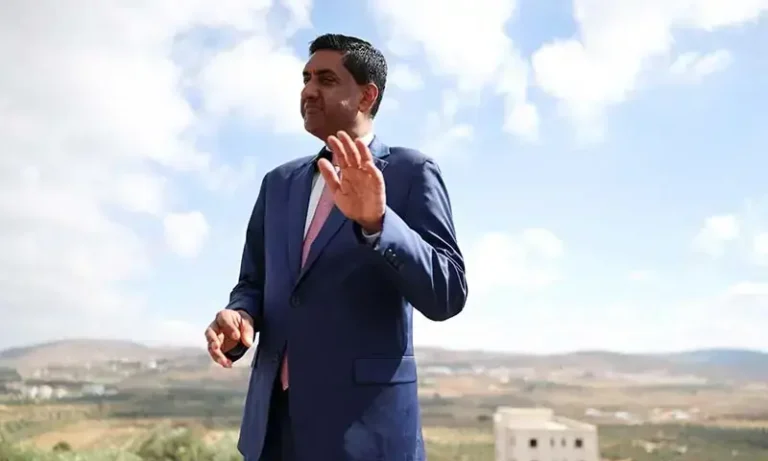
    US Democratic Congressman Ro Khanna has backed New York City Mayor Zohran Mamdani’s call for Israeli Prime Minister Benjamin Netanyahu to be arrested if he enters US jurisdiction under an arrest warrant issued by the International Criminal Court. Khanna said the United States should cooperate with the international court and uphold international law regardless of who is involved. Speaking during an interview on Capitol Hill, the California lawmaker said the US president should enforce ICC arrest warrants for any individual wanted by the court, including both Netanyahu and Russian President Vladimir Putin if they were to enter American jurisdiction. He argued that respecting international law is essential to protecting human rights and maintaining a rules based international order. According to Khanna, US authorities should act on such warrants rather than ignoring them. The International Criminal Court issued an arrest warrant for Netanyahu in 2024, accusing him of alleged war crimes and crimes against humanity connected to Israel’s military campaign in Gaza following the Hamas attack in October 2023. Israel has strongly rejected the accusations and criticized the court’s decision, maintaining that its military actions were carried out in self defense. Khanna’s remarks come after his recent visit to the occupied West Bank, where he said he was briefly detained by Israeli settlers and members of the Israeli military while visiting a Palestinian village. The congressman suggested the incident had strengthened his views on the importance of accountability and respect for international law. Khanna, who is considered a possible Democratic presidential candidate for the 2028 election, also joked that detaining potential future US presidents was unlikely to improve relations with Washington. New York City Mayor Zohran Mamdani has also been outspoken on the issue. He recently said he had explored whether city authorities could arrest Netanyahu if the Israeli leader visits New York for the United Nations General Assembly later this year. Mamdani later acknowledged that a city mayor does not have the legal authority to carry out such an arrest but argued that the federal government could take action if it chose to do so. Mamdani has publicly stated that he believes anyone facing charges before the International Criminal Court should be held accountable through legal proceedings. His comments have attracted significant attention in the United States, where debate over the Gaza conflict and Washington’s relationship with Israel remains deeply divided. President Donald Trump has firmly rejected any suggestion that Netanyahu could be arrested while visiting the United States. Earlier this week, Trump stated that the Israeli prime minister would not face arrest under any circumstances during his stay in the country, making clear that his administration would not enforce the ICC warrant. Khanna responded by accusing Trump of ignoring international law and failing to prioritize human rights. He argued that refusing to cooperate with the International Criminal Court damages America’s credibility and weakens the international legal system. He also suggested that enforcing the ICC warrant could strengthen Washington’s influence over Israel, particularly after reports that Netanyahu continued military operations in Lebanon despite US pressure to observe a ceasefire. According to Khanna, accountability should apply equally to all leaders regardless of their position or political alliances. He said individuals facing serious allegations before an international court should not expect to travel freely without legal consequences. Netanyahu is expected to travel to Washington next week for talks with President Trump. The meeting will be their first face to face discussion since the United States and Israel carried out joint military strikes against Iran earlier this year. During the visit, Netanyahu is also expected to attend the funeral of Republican Senator Lindsey Graham, who was widely regarded as one of Israel’s strongest supporters in the US Congress. The visit is likely to attract international attention as debate continues over the ICC warrant, the war in Gaza and the future of US policy toward Israel.

Leave a Reply

Your email address will not be published. Required fields are marked *