karan johar revisits
|

Karan Johar revisits Kabhi Alvida Naa Kehna journey

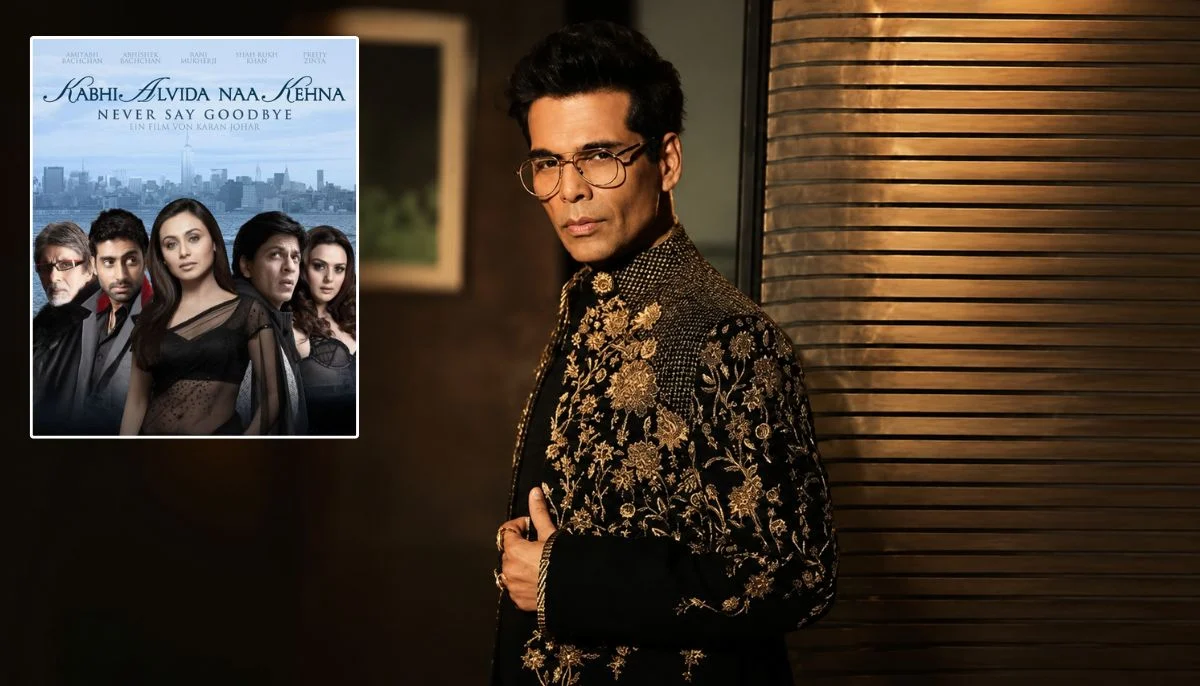
Karan Johar has taken a nostalgic look back at Kabhi Alvida Naa Kehna as the much-discussed romantic drama completes two decades since its theatrical debut.

Released on August 11, 2006, the film brought together Shah Rukh Khan, Rani Mukerji, Abhishek Bachchan, Preity Zinta and Amitabh Bachchan in a story that explored the uncertainties of marriage, emotional distance and complicated personal relationships.

Set against the backdrop of New York, the film moved away from the conventional Bollywood portrayal of romance and family life. Its unconventional storyline quickly became a talking point, dividing viewers between those who appreciated its honesty and those who felt its themes challenged traditional values.

Reflecting on the film’s journey, Johar recalled the wide range of reactions it generated after reaching cinemas. The filmmaker said he encountered everything from strong appreciation for the movie’s daring subject to severe criticism over the choices made by its characters.

He also revisited a pre-release screening that gave him an early indication of just how strongly audiences might respond. During the screening, Johar noticed an audience member becoming visibly uncomfortable during a sequence involving Dev and Maya, the characters played by Shah Rukh Khan and Rani Mukerji.

Another memory from that period involved a mother who approached Johar after watching the film. She questioned why he had chosen to build a story around divorce and troubled relationships rather than create another conventional family drama.

With the benefit of hindsight, Johar has also been open about the movie’s imperfections. He acknowledged that its grand production, elaborate presentation and several songs contributed to an oversized cinematic experience, with some elements that he now believes could have been handled differently.

However, Johar continues to stand by the central purpose of the film. He has maintained that the story was not intended to present infidelity as something admirable. Instead, it sought to examine the emotional consequences of decisions made within and outside marriage and the impact those choices can have on everyone involved.

For Johar, the film’s enduring appeal lies in its willingness to avoid straightforward answers. Relationships, he suggested, cannot always be understood through simple definitions of right and wrong, particularly when emotions, expectations and personal struggles become intertwined.

The filmmaker also acknowledged the contribution of the cast and crew who helped transform the ambitious idea into a large-scale production.

Two decades later, Kabhi Alvida Naa Kehna remains a film that continues to invite debate. While its themes divided audiences when it first arrived, its exploration of imperfect relationships and difficult emotional decisions has allowed the movie to remain part of conversations around love, marriage and human choices.
Similar Posts

  • | |

    Sindh announces July 29 holiday for Shah Abdul Lat…

    The Sindh government has announced a province-wide public holiday on Wednesday, July 29, to mark the annual Urs of renowned Sufi poet and mystic Shah Abdul Latif Bhittai. The decision was announced through an official notification issued by the Sindh Information Department on Monday. The holiday will apply to provincial government offices and institutions operating under the administrative control of the Sindh government. It will also cover autonomous and semi-autonomous bodies, government corporations and local councils across the province. However, essential services will remain operational during the holiday. Employees working in services considered necessary for public safety and welfare will continue their duties. The Urs of Shah Abdul Latif Bhittai is observed every year at his shrine in Bhit Shah, Matiari district. The event attracts thousands of devotees from different parts of Pakistan. Visitors gather at the shrine to pay tribute to the Sufi poet and reflect on his teachings, poetry and spiritual message. Special religious and cultural activities are traditionally held during the Urs. Shah Abdul Latif Bhittai is regarded as one of the most influential figures in Sindhi literature and Sufi tradition. His poetry is known for themes of love, spirituality, peace and human dignity. The provincial holiday is expected to facilitate devotees and residents participating in Urs-related activities across Sindh.

  • | |

    Petition urges President Zardari to approve judici…

      A petition submitted to the Islamabad High Court (IHC) has challenged President Asif Ali Zardari’s delay in approving the appointment of judges to several high courts across Pakistan. The petitioner argues that the president’s failure to act on the recommendations has created a serious constitutional issue and worsened the shortage of judges, affecting the country’s justice system. The petition was filed by Advocate Luqman Zafar Chaudhry through his legal counsel, Zahid Asif Chaudhry. It requests the court to issue a writ of mandamus directing the president, through his secretary, to immediately approve the summary sent by the prime minister. The summary contains the recommendations of the Judicial Commission of Pakistan (JCP) for appointments to the Islamabad, Lahore, Sindh, and Balochistan High Courts, along with the confirmation of several additional judges. According to the petition, the Judicial Commission, chaired by the Chief Justice of Pakistan, completed the constitutional process by finalizing its recommendations on July 20 and 21. These recommendations were subsequently forwarded to the president under Article 48 of the Constitution through the prime minister. However, the president has neither approved the summary nor returned it for reconsideration, despite the constitutional process requiring timely action. The petitioner maintains that Article 48 allows the president to return the prime minister’s advice only once within 15 days for reconsideration. Beyond that, the Constitution does not permit indefinite delay or silence. Therefore, the petition argues that the president is constitutionally obligated to approve the recommendations once the prescribed period has passed. It further states that the delay disrupted the oath-taking ceremony for the recommended judges, which had been scheduled for July 27. As a result, the ceremony was postponed indefinitely, leaving several judicial positions vacant and increasing the burden on existing judges. The petition also argues that the president’s inaction effectively transforms a ceremonial constitutional responsibility into an unauthorized veto power, something the Constitution does not allow. It claims this undermines judicial independence protected under Articles 2A and 175(3) of the Constitution. Referring to previous Supreme Court judgments, the petitioner emphasizes that judicial appointments must be completed through a transparent, collaborative, and time-bound constitutional process without executive interference. The petition also compares the president’s role under Article 48 with Article 75, which governs presidential assent to legislation and similarly requires action within a specified timeframe. According to the petitioner, the continued delay has created an acute shortage of judges, slowing the disposal of cases and affecting citizens’ constitutional rights to a fair trial and access to justice under Articles 9, 10A, and 25. The petition also raises concerns that the delay may have been influenced by political considerations rather than constitutional requirements. Citing media reports and public statements, it requests the court to determine when the Presidency received the summary, seek an explanation for the delay, declare the continued inaction unlawful, and prevent any action inconsistent with the Judicial Commission’s recommendations until the case is decided. The controversy has emerged amid a wider constitutional debate regarding the president’s authority in judicial appointments. While earlier Supreme Court decisions have held that the president cannot reject recommendations made by the Judicial Commission, Article 175A(8) does not clearly specify how quickly the president must act. Legal experts believe the issue may ultimately require judicial interpretation to clarify the constitutional limits of the president’s role in the appointment process.

  • | | | |

    Pakistan, Qatar push US-Iran 10-day ceasefire plan

    WASHINGTON/DOHA: Pakistan, Qatar and Egypt have stepped up diplomatic efforts to prevent a wider conflict in the Middle East by proposing a 10-day ceasefire between the United States and Iran, according to a report by US news outlet Axios. However, neither side has yet agreed to the proposal as military tensions continue to escalate. The report said regional mediators are working behind the scenes to create space for diplomacy after days of intense hostilities between Washington and Tehran. The proposed ceasefire aims to temporarily halt military operations, restore maritime security in the Strait of Hormuz and open the door for renewed negotiations. According to sources familiar with the mediation efforts, the proposal has been shared with both governments, but officials in Washington and Tehran have so far withheld their approval. Diplomats say both countries appear determined to strengthen their military positions before considering any pause in fighting. The report added that US President Donald Trump is weighing two key options. The first is to endorse a limited 10-day ceasefire that could reduce regional tensions and revive diplomatic talks. The second involves expanding military operations alongside Israel in an effort to increase pressure on Iran and force concessions over security and nuclear issues. US officials quoted in the report said no final decision has been made, adding that developments over the coming days are expected to determine Washington’s next move. Despite several days of military operations, the report noted that the United States and Israel have not succeeded in eliminating Iran’s influence over the strategically vital Strait of Hormuz, through which a significant portion of the world’s oil supplies passes. Analysts warn that any prolonged disruption in the waterway could have serious consequences for global energy markets. The report also highlighted growing domestic pressure on the Trump administration as rising fuel prices in the United States fuel public concern over the economic cost of continued military action. Diplomatic momentum reportedly suffered a setback after two American soldiers were killed in an Iranian missile attack in Jordan over the weekend. Following the incident, Washington is said to have adopted a tougher stance while continuing diplomatic contacts. A senior US official confirmed that backchannel discussions remain active but stressed that the United States intends to respond to the deaths of its troops. The official added that military operations could continue for as long as President Trump considers necessary. Regional sources nevertheless expressed cautious optimism, saying negotiations remain the best path forward, as neither Washington nor Tehran is believed to be in a position to impose a lasting solution through military means alone.

  • |

    New Delhi distances itself from scheduled online talk by ousted Bangladeshi leader Sheikh Hasina

    The Ministry of External Affairs in New Delhi has formally clarified that the Indian government maintains no connection to or responsibility for an upcoming online address by former Bangladeshi Prime Minister Sheikh Hasina. Officials confirmed that the press gathering is an entirely independent initiative arranged by a private press entity. The official statement came following direct enquiries from diplomatic authorities in Dhaka seeking clarity regarding New Delhi’s position. Sheikh Hasina, the ousted head of the Bangladesh Awami League, is scheduled to deliver a remote address on 5 August during an international media event hosted by the Foreign Correspondents’ Club of South Asia in New Delhi. The date coincides with the second anniversary of the mass student-led demonstrations that brought an end to her administration in 2024. Addressing the matter during a press briefing, an official spokesperson for the Indian foreign ministry emphasized that the gathering is strictly a private affair organised by the media body, adding that the state framework remains wholly unassociated with its coordination or proceedings.

  • | |

    Punjab University Town-III project faces fresh scr…

    LAHORE: A Pakistan Muslim League-Nawaz (PML-N) lawmaker has submitted an adjournment motion in the Punjab Assembly, calling for a comprehensive investigation into alleged financial and administrative irregularities surrounding the Punjab University Town-III housing scheme. According to the motion submitted by MPA Raja Shaukat Aziz, the housing project was allegedly launched in 2017 by a Punjab University professor without fulfilling the required legal and regulatory formalities. It further claims that the professor entered into a development agreement with his own brother, who was appointed as the project’s developer despite the alleged absence of due legal procedures. The motion alleges that payments amounting to Rs2.70 billion were made to the developer. However, despite the release of funds, no significant development work was carried out at the project site, and plot holders have yet to receive possession of their plots. The document states that nearly 900 affected families have been waiting for justice for the past nine years, claiming they have suffered financial losses and uncertainty due to the stalled housing scheme. It further alleges that, despite repeated complaints, no effective legal action has been taken against those purportedly responsible. Seeking legislative intervention, Raja Shaukat Aziz has urged the Punjab Assembly to establish a special committee to investigate the Town-III project, determine responsibility for the alleged irregularities, and ensure appropriate legal action against those found accountable. The Punjab University Town-III housing scheme has previously remained under public and academic scrutiny over allegations of administrative and financial mismanagement. The latest move is expected to renew debate over accountability and transparency in public housing projects.

  • |

    Rumesh Tharanga: Sri Lanka’s new javelin star

    Sri Lanka’s athletics scene has a new rising star. At just 23, Rumesh Tharanga Pathirage has established himself as one of the most exciting young javelin throwers in the world. Tharanga’s remarkable 2026 season has already included a 92.62-metre national record, a Commonwealth Games gold medal, multiple Diamond League victories and a World Championships final appearance. His latest achievement came at the Lausanne Diamond League, where he edged India’s Olympic champion Neeraj Chopra by just nine centimetres. From cricket to javelin Born on March 21, 2003, in Kalutara, Sri Lanka, Tharanga initially dreamed of making a career in cricket. He developed into a promising fast bowler and reportedly reached speeds of around 134 kilometres per hour as a teenager. His father’s involvement in throwing events eventually encouraged him to explore athletics. Tharanga first tried discus before turning his attention to javelin while studying at St Peter’s College in Colombo. His cricket background helped him develop explosive movement, speed and coordination — qualities that later became important parts of his javelin technique. Rapid rise in athletics Tharanga represented Sri Lanka at the 2022 World Athletics U20 Championships, gaining valuable international experience. By 2025, he had moved beyond the status of a promising prospect. He became the first Sri Lankan male javelin thrower to reach a World Athletics Championships final and finished seventh with a throw of 84.38 metres. His progress accelerated dramatically the following year. Breaking the 90-metre mark At the Rome Diamond League in 2026, Tharanga produced the biggest throw of his career, sending the javelin 92.62 metres. The effort set a new Sri Lankan national record and placed him among the world’s elite throwers. It also put him close to Pakistan’s Olympic champion Arshad Nadeem, whose 92.97-metre throw won gold at the Paris 2024 Olympics. Crossing the 90-metre barrier marked a major milestone. Tharanga had firmly established himself as a serious contender at the highest level of international javelin. Commonwealth Games champion Tharanga carried that momentum into the 2026 Commonwealth Games in Glasgow, where he faced a star-studded field that included Chopra, Nadeem, Anderson Peters and Keshorn Walcott. He produced a huge 89.75-metre throw to claim the gold medal. Chopra finished second, while India’s Yash Vir Singh secured bronze. The victory gave Sri Lanka a major javelin success and further raised Tharanga’s profile on the international stage. Narrow win over Neeraj Chopra The rivalry with Chopra continued at the Lausanne Diamond League on August 21. Tharanga opened the competition with an 85.99-metre throw before improving to 87.06 metres with his second attempt. Chopra responded with an 88.05-metre throw, his season’s best at the time, and briefly moved into first place. Tharanga answered immediately. His third attempt travelled 88.14 metres, putting him back in the lead and securing the victory. The nine-centimetre margin highlighted just how closely matched the two athletes were. Lausanne Diamond League standings: 1. 🇱🇰 Rumesh Tharanga Pathirage — 88.14m 2. 🇮🇳 Neeraj Chopra — 88.05m 3. 🇬🇩 Anderson Peters — 86.69m 4. 🇹🇹 Keshorn Walcott — 83.71m 5. 🇺🇸 Marc Anthony Minichello — 80.06m The Lausanne victory added another important chapter to Tharanga’s breakthrough season and strengthened his position among the leading javelin throwers in the world. A new South Asian rivalry For years, South Asian javelin focused largely on the rivalry between Chopra and Nadeem. Tharanga’s rapid emergence has added another major contender from the region. His 92.62-metre national record demonstrates his enormous throwing ability, while his Commonwealth Games gold and Diamond League victories show that he can perform when the pressure is highest. At only 23, Tharanga still has considerable room to develop. Sri Lanka’s rising athletics star Tharanga’s success carries significance beyond javelin. Sri Lanka has long enjoyed a strong sporting identity through cricket, but his achievements are bringing renewed attention to the country’s athletics programme. His journey from teenage fast bowler to Commonwealth champion and Diamond League winner also highlights the unpredictable paths that can lead athletes to international success. With a 92.62-metre personal best, major titles already on his record and growing experience against the world’s best, Tharanga appears to have established himself as one of the leading young names in men’s javelin. At 23, his biggest achievements may still lie ahead.

Leave a Reply

Your email address will not be published. Required fields are marked *