icc member states
|

ICC member states decide Karim Khan’s future

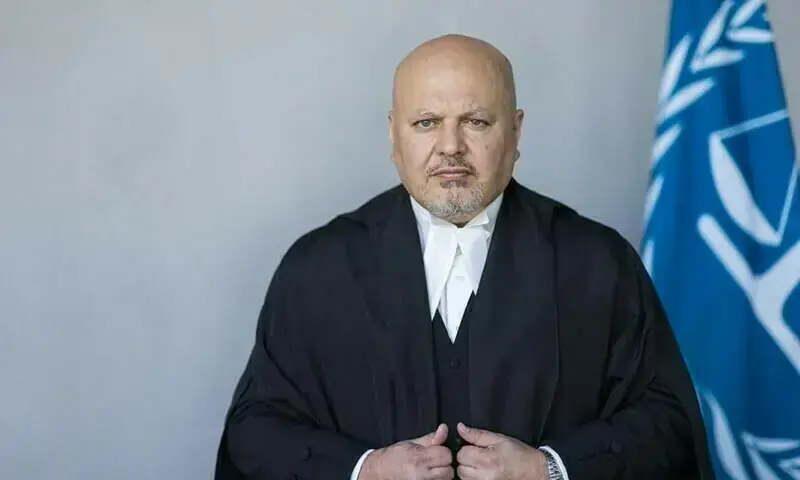
The International Criminal Court (ICC) member states met on Friday to decide the future of suspended Chief Prosecutor Karim Khan, who is facing allegations of sexual misconduct made by a former staff member. Khan has firmly denied all accusations and insists he has done nothing wrong.

Representatives from the court’s 125 member countries gathered at the United Nations headquarters in New York to vote on whether Khan should continue in office or be removed permanently. The decision is being made through a secret ballot, and an absolute majority is required for a final outcome.

Karim Khan stepped aside from his duties in May 2025 after the allegations emerged and an internal investigation was launched. Last month, the ICC’s governing bureau suspended him from office, stressing that the suspension was a temporary administrative measure and did not represent a final judgment on the case.

During the meeting, Assembly of States Parties President Päivi Kaukoranta described the issue as a complex and sensitive disciplinary matter. She urged member states to conduct the proceedings fairly while respecting the rights, privacy and dignity of everyone involved and protecting the credibility of the court.

The allegations gained wider international attention after the complainant, identified only as Sarah, publicly shared her account in a recent media interview. She alleged that repeated inappropriate behaviour by Khan eventually led to physical assault. She also said the significant difference in authority between them meant there could be no genuine consent.

Khan has repeatedly denied the allegations. His legal team recently urged ICC member states not to remove him, arguing that he had not been given a fair opportunity to defend himself during the disciplinary process. His lawyers also warned that dismissing the prosecutor without proper legal safeguards could weaken the independence of future ICC prosecutors.

Supporters of Khan argue that the investigation did not conclusively establish misconduct and say the case could create a dangerous precedent for future office holders. Others believe the seriousness of the allegations requires decisive action to maintain public trust in the court.

Since becoming the ICC’s chief prosecutor in 2021, Khan has overseen several major international investigations. He gained global attention after seeking arrest warrants for Israeli Prime Minister Benjamin Netanyahu and former Defence Minister Yoav Gallant over the Gaza conflict. The court also issued arrest warrants for several Hamas leaders during his tenure.

Those decisions led to strong criticism from Israel and sanctions imposed by the United States on Khan and several ICC judges, increasing political pressure on the court.

Legal experts remain divided over the case. Some argue that removing Khan is necessary to protect the ICC’s credibility and public confidence. Others maintain that any decision must be based strictly on due process and the rule of law rather than political considerations.


Similar Posts

  • | |

    Iran, Oman reach deal on Strait of Hormuz shipping routes

    Iran and Oman have reached an agreement on a proposed shipping route map for the strategically important Strait of Hormuz following weeks of technical negotiations, Iranian officials said on Saturday. Iranian Foreign Ministry spokesman Esmaeil Baghaei said the two countries had made significant progress in talks aimed at establishing safer navigation routes through the waterway. The negotiations began around three months ago under an agreement signed in June. Baghaei said the proposed route was developed through coordination between Iran’s foreign ministry and its defence, security and environmental authorities. He added that Tehran and Muscat were still discussing some remaining issues, including the wording of a joint statement. The spokesman stressed that the arrangement was a bilateral agreement between Iran and Oman and was intended to facilitate the safe movement of commercial vessels while respecting the sovereignty of both countries. However, Tehran has made clear that the full restoration of normal shipping through the Strait of Hormuz depends on broader developments involving the United States. Baghaei said Iran wanted an end to what it described as US military threats, naval restrictions and violations of previous commitments before normal commercial traffic could fully resume. Iranian Foreign Minister Abbas Araghchi separately said negotiations with Oman over the waterway were continuing. He described the discussions as separate from the wider diplomatic dispute between Tehran and Washington. Araghchi also rejected the description of an earlier agreement as a simple 60-day ceasefire. He said the understanding was aimed at ending the war, while the 60-day period was intended for negotiations toward a final settlement. He said Qatar and Pakistan were continuing to exchange messages with Iran but stressed that Tehran had not yet decided to resume direct negotiations with Washington. Iranian Deputy Foreign Minister Kazem Gharibabadi also rejected claims that the United States could take control of the Strait of Hormuz. He said Iran remained in charge of decisions concerning the waterway and dismissed statements suggesting that the strait could become US territory. The Strait of Hormuz is one of the world’s most important energy corridors, connecting the Persian Gulf with the Gulf of Oman. A prolonged disruption to shipping through the waterway has raised concerns over global energy supplies and fuel prices. The latest developments come amid continuing tensions between Iran, the United States and Israel. Shipping through the strait remains significantly below normal levels, while diplomatic efforts to end the wider conflict have yet to produce a lasting settlement. US President Donald Trump has meanwhile urged Americans to accept higher fuel prices while the conflict continues, arguing that confronting Iran was necessary to prevent it from obtaining a nuclear weapon. The dispute has already pushed global oil prices higher, while rising fuel costs in the United States have added to inflationary pressures.

  • | |

    Qalibaf accuses Trump of using “Theater Diplomacy” on Iran

      Iranian Parliament Speaker and the country’s chief negotiator, Mohammad Bagher Qalibaf, has accused U.S. President Donald Trump of engaging in what he described as “theater diplomacy,” saying Washington continues to send mixed signals by alternating between military threats and calls for negotiations. In a statement posted on social media platform X, Qalibaf criticized Trump’s recent rhetoric, saying the U.S. administration repeatedly announces the possibility of major military action before stepping back and expressing interest in diplomatic talks. “First they say a major attack is coming, then they say they want negotiations. This cycle of theater diplomacy continues,” Qalibaf wrote. He argued that Washington keeps shifting its position between military pressure and diplomatic engagement, creating uncertainty rather than building trust. According to Qalibaf, the repeated use of threats, broken promises, and what he called “false narratives” has failed to pressure Iran into changing its stance. “The strategy of intimidation has not worked,” he said. “It is time to accept the realities, honor commitments, and replace political theater with serious and responsible diplomacy.” Qalibaf’s remarks came after President Trump claimed that he had canceled plans for a large-scale military strike against Iran. Trump said Iran and several countries in the region had urged the United States to avoid military action, adding that diplomatic progress was within reach. The U.S. president also claimed that ongoing negotiations could lead to a temporary agreement involving the United States, Iran, and Oman. He said such a deal would reopen the Strait of Hormuz without delay and eliminate what he described as the Iranian nuclear threat. The exchange highlights the sharp differences between Tehran and Washington as both sides continue to send conflicting messages about diplomacy and the possibility of easing tensions in the region. While U.S. officials speak of negotiations and a potential agreement, Iranian leaders remain skeptical, arguing that meaningful progress will require the United States to move beyond threats and fulfill its commitments.

  • |

    Robert Pattinson to end Batman journey after Matt Reeves trilogy

    Robert Pattinson appears set to hang up the Batman cape after completing the upcoming trilogy directed by Matt Reeves, bringing his journey as Gotham City’s iconic vigilante to an end. Pattinson first stepped into the role of Bruce Wayne in 2022 with The Batman, directed by Reeves. The film offered a darker and more grounded interpretation of the legendary DC character, focusing on a young Batman still finding his place as a crime fighter while confronting corruption across Gotham City. Following the success of the first installment, Pattinson is returning for The Batman Part II. The highly anticipated sequel is scheduled to arrive in 2028 and will continue the story of Bruce Wayne as he faces new challenges following the events of the first movie. A third film in Reeves’ planned trilogy has also been announced, setting the stage for the conclusion of Pattinson’s version of the character. According to recent reports, Pattinson has indicated that he intends to portray Batman one final time after completing Reeves’ trilogy. If the plan remains unchanged, the third installment would mark the actor’s last appearance as the Caped Crusader in this particular series. Pattinson’s debut Batman movie featured a star-studded cast, including Paul Dano as the Riddler and Colin Farrell as Oswald Cobblepot, better known as the Penguin. Jeffrey Wright portrayed Gotham police officer James Gordon, while Andy Serkis appeared as Alfred Pennyworth. The first film followed Batman as he investigated the murder of Gotham City’s mayor. His investigation gradually uncovered a larger conspiracy involving some of the city’s most influential figures. As Bruce dug deeper, he was forced to confront disturbing connections between Gotham’s criminal underworld, political corruption and his own family history. The movie ended with Batman defeating the Riddler’s plans and helping rescue Gotham’s citizens after the city was devastated by flooding. The Riddler was eventually taken to Arkham State Hospital, where he encountered another mysterious inmate. That brief scene fueled widespread speculation that the prisoner was the Joker, played by Barry Keoghan. Although the character’s appearance was limited, the moment opened the door for a possible larger role in future installments. The Joker is widely expected to become an important figure in the upcoming storyline, although many details surrounding his involvement remain under wraps. Pattinson’s Batman will also face the challenge of dealing with the consequences of the first film while continuing to protect Gotham. The Batman Part II is currently scheduled for release on February 18, 2028. Alongside Pattinson, the movie is expected to feature several returning cast members, while Scarlett Johansson and Sebastian Stan have also been linked to the project.

  • |

    Saif Ali Khan shares behind-the-scenes details from Aap Ki Izzat

    Pakistani actor Saif Ali Khan, who gained recognition after appearing in the reality show Tamasha 4, is gradually making his mark in the television industry. A software engineer by profession, Saif has successfully balanced his career with his passion for acting and singing. He has also built a strong fan following on social media, where more than 466,000 people follow his updates. After making his acting debut in Aap Ki Izzat, the emerging star is now preparing for two more television projects. In a recent television interview, Saif Ali Khan spoke about his experience of playing a vegetable vendor in Aap Ki Izzat and revealed interesting details about filming one of the drama’s most talked-about train sequences alongside Urwa Hocane. Although his character appears to be an ordinary vegetable seller at first glance, Saif explained that the role carries much greater importance within the storyline. He said that the drama mainly revolves around four central characters, including Beena, Tabish, the character played by Sania Saeed, and his own role. According to the actor, he immediately understood the significance of the character after reading the script and believed it was much more than what audiences would initially assume. Saif added that viewers will gradually discover the true impact of his character as the story unfolds. He expressed confidence that every appearance of his character serves a meaningful purpose and contributes directly to the development of the plot. The actor also discussed his on-screen chemistry with Urwa Hocane, whose character Beena shares an important connection with his role. While fans have been curious about the direction of their relationship in the drama, Saif chose not to reveal any major details. He said he wanted audiences to experience the story without spoilers, adding that revealing too much in advance would take away the excitement. According to Saif, the relationship between Beena and Behram has several unexpected twists, and viewers will have to continue watching the drama to see how their journey unfolds. Speaking about one of the drama’s visually striking moments, Saif shared behind-the-scenes details about the train sequence that has attracted viewers’ attention. He revealed that the sequence was filmed during January under extremely cold weather conditions, making it one of the more challenging shoots for the cast and crew. The actor explained that although a real train and an actual railway station were used for filming, the train itself was stationary during production. Some portions of the sequence were later enhanced using chroma technology to create the illusion of movement and make the scenes appear more realistic on screen. Saif also praised the production team for their professionalism and dedication throughout the filming process. He credited the crew for carefully executing the technically demanding sequence and ensuring that the final result looked convincing despite the challenges involved. With Aap Ki Izzat introducing him to television audiences and more projects already in the pipeline, Saif Ali Khan continues to establish himself as one of Pakistan’s promising emerging actors. His latest comments have given fans an interesting glimpse into the hard work that goes into bringing dramatic scenes to life while also increasing anticipation for the upcoming episodes of the drama.

  • |

    Kashmiri film Saffron Kingdom finds new home on Watermelon+

    Filmmaker Arfat Sheikh’s film Saffron Kingdom is now streaming worldwide. It has landed on the Palestinian-owned platform Watermelon+. The release comes after a strong run on the international festival circuit. Sheikh hails from India-Occupied Kashmir. He had earlier described the film as his attempt to reclaim his people’s stories from Bollywood. He said he wanted to take the pen back from an industry he views as a tool of oppression. The story follows Masrat, played by Diana Aras. She is a half-widow, a term used for Kashmiri women whose husbands have been forcibly disappeared by Indian forces. After her husband vanishes, Masrat flees the valley with her young son Rizwan, played by Alex Cheeks. The pair eventually settle in the United States. There, both mother and son must confront the trauma of their years spent living under occupation. Old memories resurface even as they try to build a new life. Sheikh said the film leans heavily on its female characters to carry the emotional core. He called the choice a deliberate allegory. According to him, the story centeres on two women rather than men. He explained that this reflects reality on the ground. Few men remain in India-Occupied Kashmir today, he said. The women who stay behind, he added, reveal what survival under occupation truly demands. Saffron Kingdom premiered at the Wake Forest Film Festival in the United States. It then travelled to six more countries. Screenings consistently drew full houses. The film found strong support from minority communities. Many viewers related to its themes of migration and inherited trauma. With its streaming debut, Saffron Kingdom now sits alongside other politically resonant titles on Watermelon+. These include Oscar nominee The Voice of Hind Rajab and Bafta-winning documentary Gaza: Doctors Under Attack. Pakistan’s 2025 Oscar submission The Glassworker is also part of the platform’s growing library. Together, these films reflect Watermelon+’s focus on stories of occupation, displacement, and resistance. The platform continues to build a catalogue centered on voices often left out of mainstream cinema.

  • |

    Kusal Mendis ruled out of LPL 2026 With hamstring injury

    Sri Lanka’s ODI captain Kusal Mendis has been ruled out of the remainder of the Lanka Premier League (LPL) 2026 after suffering a hamstring injury during Colombo Caps’ match against Kandy Royals. The wicketkeeper-batter sustained the injury while attempting a run during the contest, although Colombo Caps went on to register a six-wicket victory. Following medical assessments, Sri Lanka Cricket confirmed that Mendis will begin his rehabilitation at the National High Performance Centre. His absence is a significant setback for Colombo Caps, who have appointed Kamindu Mendis as captain for the rest of the tournament. The injury also raises concerns for Sri Lanka ahead of their two-match series against India, scheduled to begin on August 15. Mendis is a key member of the national side across formats and was expected to play a leading role, including wicketkeeping duties. However, officials have not yet announced a timeline for his recovery. Before the injury, Mendis had been in outstanding form. He opened his LPL campaign with a brilliant 79-run knock against Galle Gallants and continued to demonstrate the consistency that has made him one of Sri Lanka’s most dependable batters. Earlier this year, he enjoyed a memorable Pakistan Super League season, scoring 550 runs in 11 innings at an impressive strike rate of 168.19, making him one of the competition’s standout performers. Mendis has also carried that momentum into international cricket in 2026, scoring 408 runs in 14 innings across all formats. In One-Day Internationals alone, he has accumulated 211 runs in four innings at an outstanding average of 70.33. Sri Lanka’s medical staff will now closely monitor his recovery, hoping the experienced batter regains full fitness in time for the upcoming international assignments. His absence from the remainder of the LPL is a major blow for Colombo Caps as they continue their campaign without their captain and leading run-scorer.

Leave a Reply

Your email address will not be published. Required fields are marked *