fake spiritual guru
| | |

Fake spiritual guru arrested in Pune over alleged …

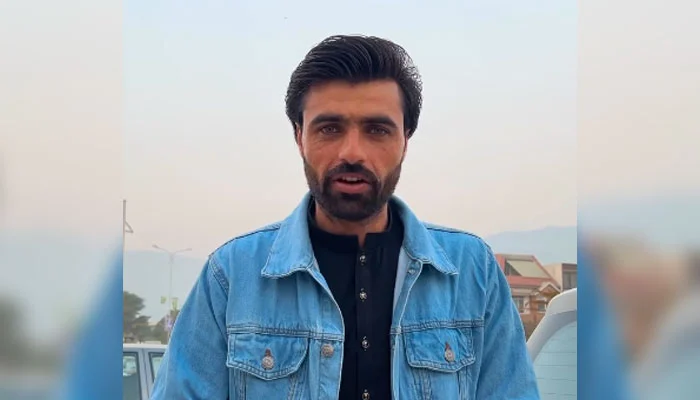
A 23-year-old man posing as a motivational speaker, social media influencer and spiritual guide has been arrested in Pune, India, over allegations of obtaining private images of a 22-year-old woman and later using them to harass and threaten her.

According to Indian media reports, police launched an investigation after the woman filed a complaint against the accused, identified as Divya Jitendra Parmar. Police subsequently arrested the suspect and seized a mobile phone and laptop believed to have been used in the alleged offence.

Investigators said the accused had built an online persona portraying himself as a trusted motivational speaker and spiritual figure. He allegedly contacted the woman through social media and gradually gained her confidence.

According to the complaint, the accused later told the woman that she needed to follow a particular method to remove what he described as negative energy from her body. Under this pretext, he allegedly persuaded her to share private images and follow certain physical exercises.

Police allege that the accused subsequently used the images to harass the woman and threatened to circulate them if she refused to establish a sexual relationship with him. The woman then approached police and lodged a complaint.

During the investigation, authorities reportedly seized the suspect’s mobile phone and laptop, along with photographs, videos, messages and other digital evidence. Police are examining the material to establish the full circumstances of the case.

Investigators are also looking into whether the accused may have targeted other women using a similar method. This aspect of the investigation could determine whether the alleged incident was isolated or part of a wider pattern of online manipulation.

The case has also highlighted the risks associated with individuals who use social media to build false identities and gain the trust of vulnerable people. Authorities have increasingly emphasized the importance of verifying online identities and reporting threats involving private images.

Police have registered a case against the accused under relevant provisions of the Bharatiya Nyaya Sanhita (BNS) and the Information Technology Act. The investigation remains ongoing, and the allegations will be subject to the legal process.

The case serves as another warning about the misuse of private digital content and the dangers of trusting unverified online personalities who claim to offer spiritual, motivational or personal guidance.
Similar Posts

  • | |

    Indian rupee hits record low against dollar

    The Indian rupee has dropped to its lowest level on record against the US dollar, highlighting increasing pressure on the country’s currency amid challenging global economic conditions. For the first time in history, one US dollar has reached the value of 97 Indian rupees, marking a new record low for the Indian currency. The latest decline reflects growing concerns over external economic pressures and weakening investor confidence. According to international reports, the Reserve Bank of India (RBI) stepped into the foreign exchange market to support the rupee and limit further losses. Central bank intervention is aimed at reducing excessive volatility and preventing sharp fluctuations in the value of the currency. The latest depreciation comes only a few months after the rupee had already reached a previous record low of 96.96 per US dollar in May 2026. The fall to 97 rupees per dollar now represents the weakest exchange rate ever recorded for the Indian currency. Economists say several factors are driving the rupee’s decline. One of the biggest reasons is the sharp rise in global crude oil prices, which has significantly increased India’s import bill. As one of the world’s largest importers of crude oil, India requires large amounts of US dollars to pay for energy imports, increasing demand for the American currency. Experts also point to the strengthening of the US dollar in international markets, continued foreign investment outflows and growing pressure from expensive imports. These factors have reduced demand for the rupee while increasing demand for dollars, causing further depreciation. Market analysts warn that a weaker rupee could increase the cost of imported goods, including fuel, machinery and industrial raw materials. Higher import costs may also contribute to inflation and raise production expenses for businesses across different sectors of the economy. Financial experts believe the Reserve Bank of India will continue monitoring developments closely and may introduce additional measures if market volatility continues. The central bank is expected to use its foreign exchange reserves and other monetary tools to stabilise the currency and restore investor confidence.

  • |

    Shakira sends heartfelt message after Colombia earthquake

    Shakira has expressed her support for Colombia after a powerful earthquake struck the country, leaving a trail of destruction and claiming numerous lives. The Colombian singer used social media to send a heartfelt message to those affected by the disaster while urging people to come together and support one another during the difficult time. The magnitude 7.4 earthquake struck Colombia at around 7:34 a.m. on Monday, August 10. The devastating tremor caused widespread damage across several areas, with the reported death toll reaching 132. Hundreds of people were also injured as buildings and infrastructure were damaged by the powerful quake. Following the disaster, Shakira took to her Instagram Stories to address the situation and share a message of solidarity with her fellow Colombians. The singer, who has frequently spoken about her deep connection to her home country, offered her thoughts to the victims and families struggling in the aftermath of the earthquake. “Beloved Colombia, my heart is with everyone who felt this earthquake today and with the families who are going through moments of anguish,” Shakira wrote in Spanish. She further encouraged Colombians to remain united and help one another as emergency teams worked to respond to the destruction. “In times like these, we Colombians know how to come together and support one another. All my strength and love for my homeland. Let’s embrace tightly and stay tuned to the instructions so we can help as soon as possible,” she added. The earthquake reportedly injured at least 570 people, according to figures released by authorities. The epicentre was located near the village of San José del Palmar in Colombia’s Chocó province, where the impact was particularly severe. The disaster also caused extensive damage to homes and public infrastructure. Around 1,575 homes were reportedly damaged, while 61 buildings collapsed following the powerful tremors. Several essential facilities were also affected, including 18 health centres, 52 educational centres and 17 community centres. As the scale of the destruction became clearer, authorities declared a state of emergency to strengthen rescue and relief operations. Emergency departments were mobilised to assist affected communities, assess damaged areas and provide support to people who had been displaced or injured. Shakira was not the only Colombian celebrity to react to the devastating earthquake. Several prominent Latin music stars also used their social media platforms to express concern and help spread information about relief efforts. Maluma, J Balvin and Karol G were among the entertainers who addressed the situation, using their large online audiences to raise awareness and share information related to assistance and resources. The earthquake has prompted an outpouring of solidarity across Colombia, with public figures, emergency workers and ordinary citizens joining efforts to support those affected. As rescue and recovery operations continue, messages from stars such as Shakira have highlighted the importance of unity and cooperation during one of the country’s most difficult moments in recent years.

  • | |

    US report urges Pakistan to open up budget and deb…

    WASHINGTON: Pakistan needs to improve transparency in its public finances and give Parliament and citizens earlier access to key budget and debt information, according to a new US State Department assessment. The department’s 2026 Fiscal Transparency Report said Pakistan had made progress in making financial information publicly available but still faced important gaps, particularly in the timely release of its proposed budget and disclosure of government liabilities. The report noted that Pakistan’s approved budget and year-end financial reports were easily accessible to the public, including online. However, it found that the government did not release its executive budget proposal within a reasonable timeframe. According to the assessment, publishing the proposed budget earlier would give lawmakers and the public more time to examine the government’s spending and revenue priorities before the document is formally approved. The report also raised concerns over limited public information about government debt, especially liabilities linked to major state-owned enterprises. Greater disclosure, it said, would help provide a clearer picture of the country’s financial position and allow Parliament to better assess potential fiscal risks. Despite these shortcomings, the US assessment acknowledged that Pakistan’s publicly available budget documents contained substantial information on planned government revenues and expenditures, including income from natural resources. Pakistan’s auditing system also received a largely positive assessment. The report said financial information was generally reliable and subject to review by the country’s supreme audit institution, which it found to have an appropriate level of independence under international standards. Audit findings were also made available to the public within a reasonable period. The report found that Pakistan had established legal procedures for awarding natural resource extraction contracts and licences and appeared to follow those rules in practice. It also noted that information on public procurement contracts was accessible and described the legal framework governing the country’s sovereign wealth fund as sound. The State Department identified three major areas where Pakistan could further strengthen fiscal transparency: releasing the executive budget proposal on time, providing more detailed information about government debt, including state-owned enterprise liabilities, and bringing military and intelligence budgets under adequate parliamentary or civilian oversight. Overall, the report did not portray Pakistan’s financial system as broadly opaque. Instead, it recognised several areas of progress while calling for stronger parliamentary scrutiny and greater disclosure of information that could help lawmakers and the public understand the country’s fiscal risks.

  • | |

    Pakistan unveils four-year Hajj policy

    The government has introduced a four-year Hajj policy covering arrangements from 2027 to 2030. Federal Minister for Religious Affairs Sardar Muhammad Yousaf presented the policy on Wednesday. He described it as a major step toward improving and modernising Hajj arrangements in Pakistan. Speaking at a briefing, the minister said this was the first time the government had introduced a four-year Hajj policy. He said the initiative would provide a long-term framework for organising the pilgrimage. Yousaf said the policy had been prepared under the guidance of Prime Minister Shehbaz Sharif. It focuses on technology, transparency and improved services for pilgrims. According to the minister, the new framework aims to bring Pakistan’s Hajj arrangements closer to international standards. It will also introduce several new facilities for pilgrims. For the first time, applicants will have access to a registration and waiting-list system. The government expects the system to make the process more organised and transparent. The minister said the government and private Hajj schemes would retain their existing quota division. Sixty per cent of the quota will remain with the government scheme, while private operators will receive 40 per cent. The Ministry of Religious Affairs will continue to oversee and regulate Hajj arrangements. It will also monitor the performance of private Hajj companies. Under the new policy, applicants will be able to enter the pilgrims’ list after paying 10 per cent of the required amount. The government has also planned greater transparency in procurement. Purchases made in Pakistan and Saudi Arabia will be carried out through transparent procedures. Yousaf said any money remaining after meeting the required expenses would be returned to the pilgrims. The measure is aimed at improving financial transparency and protecting the interests of Hajj applicants. The government also plans to change the way private Hajj companies are monitored. Their registration and oversight will not depend only on the quota allocated to them. Instead, their performance will be an important factor in determining their registration and continued participation in the Hajj programme. A digital complaint-resolution system is also being introduced. Pilgrims will be able to submit complaints and seek quick action through the new system. An appeal mechanism will also be established. This will provide pilgrims with another channel to challenge decisions or seek resolution of their complaints. The minister said the government would also improve training programmes for Hajj pilgrims. The aim is to prepare pilgrims more effectively before their departure for Saudi Arabia. The Hajj Muhafiz Scheme will continue under the new policy. The government considers the scheme an important part of its arrangements for pilgrims. Yousaf said the new policy had been developed in line with Saudi Arabia’s Vision 2030. The framework is intended to improve coordination and service delivery during the pilgrimage. The minister said the government’s objective was not limited to managing logistical arrangements. It also wanted to ensure that Pakistani pilgrims received a dignified and comfortable Hajj experience. The estimated cost of the government Hajj package is expected to remain between Rs1.2 million and Rs1.3 million. However, the final cost may depend on various arrangements and expenses associated with the pilgrimage. Yousaf also clarified that any increase or decrease in Pakistan’s Hajj quota would require a decision from the federal cabinet. He said Pakistan had received recognition and awards for its Hajj arrangements in the past. The government now wants to further improve the system through long-term planning and greater use of technology. The four-year policy is expected to provide greater continuity in Hajj preparations. Officials believe the long-term framework will also make planning easier for both the government and pilgrims.

  • | |

    Heavy rain disrupts traffic, floods low-lying area…

    Heavy rainfall disrupted routine life across Lahore on Saturday, leaving several roads, underpasses and low-lying neighbourhoods inundated and causing difficulties for motorists and pedestrians. The downpour led to significant water accumulation in different parts of the city, slowing traffic and making several routes difficult to navigate. Residents in low-lying areas faced particular inconvenience as rainwater gathered on streets and roads. According to rainfall figures recorded by the Water and Sanitation Agency (Wasa), Lahore received an average of 24.6 millimetres of rain. The highest rainfall was recorded at Lahore Airport, where 104mm was reported. Kahna received 75.6mm, while 62.6mm was recorded at Hadiara Defence Road and 58.6mm at Manawan. Rainfall was also recorded in Tajpura, Mughalpura, Shadipura, Defence Phase-VI, Farrukhabad, Saggian, Lakshmi Chowk, Chowk Nakhuda and other areas. Although the rain provided relief from the prevailing heat and brought cooler weather, waterlogging created problems for commuters and once again highlighted the challenges faced by Lahore’s low-lying areas during heavy showers. Wasa Lahore mobilised field teams and heavy machinery to remove accumulated water from affected locations. Officials continued drainage operations at several underpasses, major roads and low-lying points across the city. Wasa Managing Director Ghufran Ahmed inspected drainage activities at several key locations, including Mubeen Shaheed Underpass, Noor Jehan Road, MM Alam Road, Main Boulevard Gulberg, Qaddafi Stadium and Liberty Chowk. He also reviewed operations at Kalma Chowk Underpass and other emergency drainage facilities. Officials said disposal stations in areas affected by power outages were being operated with generators to ensure that drainage work continued without interruption. Wasa Vice Chairman Chaudhry Shehbaz Ahmed also inspected water drainage arrangements at several locations, including Shalimar Link Road, Bhagwanpura, UET and nearby areas. Meanwhile, Chief Traffic Officer Abdul Rahim Shirazi directed traffic officials to remain present in the field and closely monitor traffic flow and vulnerable points during the rainfall. Traffic police coordinated with Wasa teams to facilitate the removal of standing water and advised motorists to drive carefully on slippery roads. Drivers were urged to maintain a safe distance, avoid sudden braking and reduce speed. Motorcyclists were advised to wear helmets and avoid unnecessary overtaking. Citizens were also warned against entering roads where floodwater appeared deep or unsafe.

  • |

    Congolese health officials intercept river boat to test 300 passengers following suspected Ebola death

    Health authorities in the Democratic Republic of the Congo have intercepted a river boat carrying more than 300 passengers near Kinshasa to perform emergency screening following the death of a passenger suspected of having contracted Ebola. The vessel was stopped in Maluku, located approximately 65 kilometres upstream from the capital, where public health teams deployed a mobile laboratory to conduct clinical evaluations and temperature checks on all individuals aboard. Medical personnel collected blood samples from four passengers exhibiting feverish symptoms, with laboratory results expected to confirm whether the virus is present. The precautionary intervention follows the death of a 32-year-old man who travelled on the boat and later tested positive for suspected symptoms of the disease. Health officials face conflicting accounts regarding the origin of the vessel and where the deceased passenger boarded, as discrepancy remains between regional health directors regarding whether the trip originated in Mongala province or in Kisangani, the capital of Tshopo province, where an active Ebola outbreak is ongoing. In response to the broader regional health emergency, the Africa Centres for Disease Control and Prevention announced plans to expand the administration of vaccines and antiviral treatments, including remdesivir, across affected provinces to contain further transmission.

Leave a Reply

Your email address will not be published. Required fields are marked *