karachi murder case
| | |

Karachi murder case: husband and wife arrested in …

Police have arrested a husband and wife in Punjab’s Layyah district in connection with a Karachi murder case involving the killing and burning of a man’s body.

According to police, the Keamari Investigation Police arrested the alleged main suspects during an operation in Layyah. The case relates to the murder of Faizan alias Faizi in the Mochko area of Karachi in April.

Police said the victim was allegedly killed and his body was set on fire. The remains were completely burned and were later identified as those of Faizan. A case had initially been registered against unidentified suspects at the Mochko police station.

A special investigation team was formed to investigate the incident. Using technical investigation methods, police had previously arrested two suspects identified as Akram, the victim’s father-in-law, and his son, Ataullah.

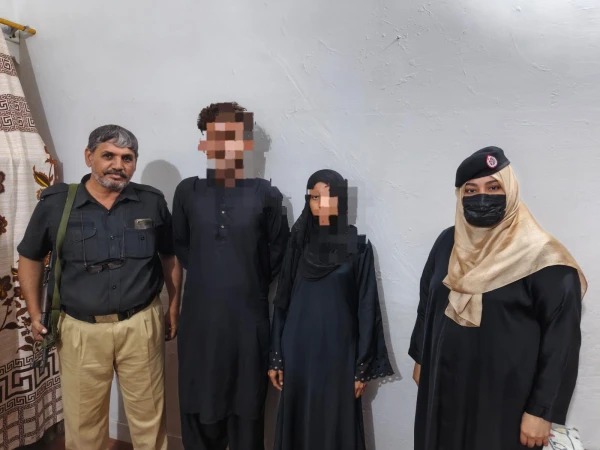
Police said the alleged main suspects, identified as security institution employee Joon Abbas and his wife, Samreen, had fled and remained in hiding following the incident.

The investigation team reportedly traced the couple through technical means and arrested them in Layyah. Further investigation is currently underway to determine the circumstances surrounding the murder and the alleged burning of the body.

Similar Posts

  • | |

    Talal Chaudhry hits back at Bilawal over AJK polls

    Islamabad: Minister of State for Interior Talal Chaudhry has criticized PPP Chairman Bilawal Bhutto Zardari over his reaction to the Azad Jammu and Kashmir elections, saying political leaders should accept electoral outcomes with grace instead of complaining after defeat. Speaking at the PML-N’s election review meeting for Poonch Division, Chaudhry said the party’s victories in the first two phases of the AJK local elections reflect the confidence Kashmiris have in the performance of the federal and Punjab governments. He claimed voters supported the PML-N because of its governance and development record, adding that people across Pakistan aspire to the same level of progress achieved in Punjab. The meeting was attended by district and constituency coordinators, along with PML-N candidates from Poonch Division, where party leaders also reviewed campaign preparations and polling strategy for the third phase of the elections.

  • | |

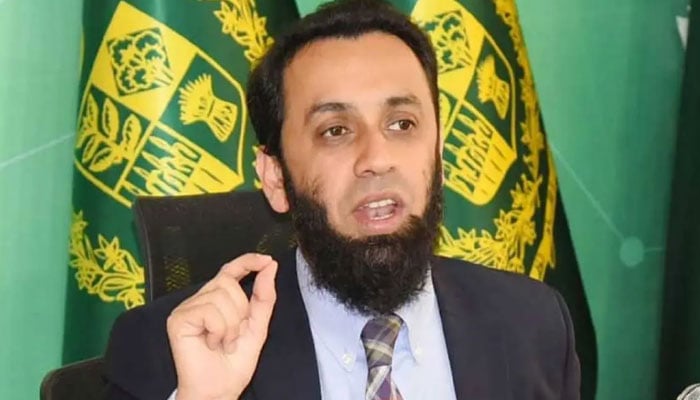
    Attaullah Tarar accuses PTI of violent politics

    Federal Information Minister Attaullah Tarar has accused Pakistan Tehreek-e-Insaf (PTI) of pursuing a politics of violence. In a statement, Tarar said the Mall Road incident in Rawalpindi had brought several issues to light. He alleged that PTI supporters arrive at protests carrying weapons. He said a security official was fired upon in broad daylight on Mall Road in Rawalpindi. According to Tarar, the incident was another example of what he described as PTI’s politics of violence. The federal minister further alleged that the purpose of PTI protests was to disrupt law and order and create unrest in the country. Tarar said the party’s objective behind protests was to create anarchy and instability in Pakistan. He also claimed that PTI was unable to accept the country’s development and progress. His remarks came after the Mall Road shooting in Rawalpindi, where a man identified as Muhammad Hussain was killed after allegedly opening fire at security forces, according to police.

  • Ufone service disruption, Senate questions PTA over telecom merger

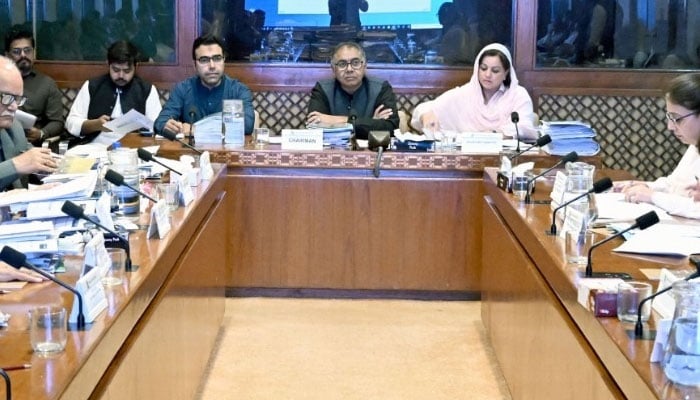
    Islamabad: Pakistan’s telecom sector came under serious scrutiny as the Senate Standing Committee on Cabinet Secretariat questioned the Pakistan Telecommunication Authority (PTA) over the recent disruption in Ufone services and demanded answers about the future of the country’s mobile communication system. During the meeting chaired by Senator Rana Mahmood ul Hassan, Chairman PTA was directly questioned about the reason behind the Ufone service failure. Senator Rana Mahmood ul Hassan asked, “Why has Ufone’s service collapsed?” while seeking an explanation from the telecom regulator. Responding to the concerns, Chairman PTA informed the committee that Ufone is a government-owned company and said the issues would be resolved after the completion of the ongoing merger process between Ufone and Telenor. The Chairman PTA further informed the committee that after the merger of Ufone and Telenor, a new telecommunications company would be established, marking a major change in Pakistan’s telecom sector. The committee was informed that Pakistan currently has 210 million active SIMs, showing continued expansion of mobile connectivity across the country. However, lawmakers raised questions about whether service quality is improving at the same pace as user growth. The meeting was attended by Senators Saadia Abbasi, Abdul Qadir, Dilawar Khan, Aimal Wali Khan and Saleem Mandviwalla, along with the Secretary Cabinet Division and Secretary Establishment Division. The Chairman PTA also briefed the committee about the restructuring of PTCL and Ufone, stating that both companies are being separated as part of the ongoing changes in the telecommunications sector. During the discussion on digital reforms, the PTA Chairman informed lawmakers that talks are underway with NADRA to introduce SIM issuance through the Pak ID platform. Under the proposed system, citizens may be able to obtain SIM cards from their homes through a digital process, reducing the need for physical visits. However, Senator Saleem Mandviwalla raised concerns over Pakistan’s position in modern telecom technology and questioned why the country has not moved faster towards eSIM technology, which is already being adopted globally. The committee stressed that Pakistan’s telecom sector needs stronger digital development, better customer services and modern solutions to meet international standards. The PTA Chairman informed the committee that the merger process between Ufone and Telenor is expected to bring improvements and create a stronger telecommunications company. The regulator said these changes aim to improve services and strengthen Pakistan’s telecom infrastructure. The meeting concluded with the committee emphasizing the importance of transparency, accountability, digital advancement and improved public service delivery in government institutions, especially in sectors directly connected with millions of citizens.

  • | |

    Senate Committee rebukes FBR official over failure…

      A subcommittee of the Senate Standing Committee on Interior reprimanded a Federal Board of Revenue (FBR) official during a meeting after the official failed to provide the records and details sought by the committee. During the meeting, Committee Chairman Saifullah Abro expressed strong displeasure over the FBR official’s failure to submit the required information. Questioning the official’s position, Abro asked, “Are you even above the prime minister?” He further warned the official not to attempt to avoid the committee’s questions by giving explanations about the board’s internal procedures.   Abro made it clear that the committee expected the FBR to provide the requested information instead of offering excuses or referring to internal matters. He stressed that parliamentary committees have the authority to seek information from government departments when investigating matters of public importance. The chairman particularly sought details regarding certificates issued by the FBR to cigarette manufacturing companies. He said the committee should be provided with complete information about the certificates issued by the tax authority and the companies that received them.   “Details of the certificates issued by the FBR to cigarette companies must be provided,” Abro said during the meeting. He indicated that the committee wanted to examine the record and determine the circumstances under which the certificates had been issued. The matter came under discussion as the committee reviewed information concerning cigarette companies and the relevant government records. The failure to provide the requested documentation prompted the committee leadership to take a tougher stance toward the concerned officials. During the meeting, the committee also issued directions to officials of the Federal Investigation Agency (FIA). The committee instructed FIA authorities to initially issue notices to 108 companies as part of the proceedings. The notices are expected to seek information and clarification from the companies regarding matters under investigation by the committee. The move indicates that the committee intends to broaden its examination and obtain information directly from the companies concerned rather than relying solely on government departments. Abro also warned the officials against forcing the committee to escalate the matter to the highest level of government. Addressing the authorities, the committee convener said, “Do not force us to write to the prime minister.” His remarks reflected the committee’s frustration over what it considered a lack of cooperation from the relevant authorities. The chairman emphasized that government institutions should respond to parliamentary oversight mechanisms and provide the information requested by lawmakers. The committee’s proceedings highlight the role of parliamentary oversight in examining the functioning of government departments and ensuring transparency. By seeking details of certificates issued to cigarette companies and directing the FIA to issue notices to 108 companies, the subcommittee appears to be pursuing a broader inquiry into the matter. The committee is expected to review the information obtained from the FBR, FIA and the companies concerned in subsequent meetings. Further action could be considered after the requested records and responses are submitted. The strong remarks by Saifullah Abro also signal that the committee may escalate the issue if government departments continue to withhold or delay the provision of information. For now, the FIA has been directed to proceed with notices to the 108 companies, while the FBR is expected to provide details of the certificates issued to cigarette manufacturers.

  • Private medical college fees spark Parliamentary debate

    Islamabad: A heated parliamentary debate over private medical college fees has exposed a conflict between the Pakistan Medical and Dental Council and members of the National Health Services Standing Committee. Lawmakers questioned why students are being asked to pay millions of rupees for medical education while some colleges seeking fee increases allegedly have incomplete documents and audit reports. The controversy became more serious when Member Aliya Kamran questioned the approval of higher fees for colleges whose facilities and records were allegedly not good enough to justify such increases. She specifically referred to Rawal Institute of Health Sciences and claimed that photographs showed standing water in classrooms and students unable to attend classes because of poor infrastructure. She questioned how such an institution could qualify for a fee increase and said colleges with poor standards should face action rather than receive permission to charge more. The debate also revealed a major disagreement over whether high fees are responsible for vacant seats in private medical and dental colleges. One PMDC official argued that fees alone cannot explain the vacant seats, pointing out that some colleges charging Rs3.5 million have no vacant seats. The official said students also consider the quality of education, facilities and the reputation of institutions before choosing a college. But the Vice Chancellor of Jinnah Sindh Medical University presented a very different picture. He told the committee that around 8,000 students who passed the Medical and Dental College Admission Test did not take admission because they could not afford the fees. He said many of these students could have joined if more public sector seats had been available. The disagreement over fees comes as the committee is examining a fee range of Rs1.8 million to Rs2.5 million for private medical colleges. According to the PMDC briefing, 61 colleges applied for permission to charge more than the Rs1.8 million baseline. After checking their balance sheets, third party audit reports, specifications and inspection reports, only 35 were declared eligible for fee enhancement. However, eligibility did not mean that all 35 colleges were allowed to charge Rs2.5 million. Some were allowed to charge Rs1.9 million, Rs1.95 million or Rs2 million. The issue of quality also came under strong criticism. Aliya Kamran questioned the argument that better quality should automatically allow a college to charge higher fees. She warned that allowing some institutions to charge Rs2.5 million while keeping others at Rs1.8 million could create the impression that students studying at lower fee colleges belong to inferior institutions. Minister for National Health Syed Mustufa Kamal defended the fee difference by saying that institutions have different facilities and levels of exposure. He cited Aga Khan, which was described as charging Rs3.5 million, and Ziauddin, which was described as charging Rs2 million. He said some colleges hire professors from abroad and provide additional practical training; their audited accounts are used to show their higher operating costs. The debate then turned into a bigger question: should medical education be treated as a business or as a social service? Member Gul Asghar Khan openly argued that medical education is a business and that private investors put money into medical colleges because they expect a return. He warned that imposing strict fee controls could force private colleges to close. He claimed that a major audit could show the actual cost of educating one medical student is more than Rs4 million a year in the public sector. Another member rejected this argument, pointing out that government medical institutions may spend much more on a student while charging students only around Rs5,000 to Rs50,000 in fees. The member said private medical college fees ranging from Rs1.8 million to Rs2.5 million are simply beyond the reach of ordinary families. The committee also heard that medical education fees have increased sharply over the years. A university vice chancellor said the cost per student at a public medical college had earlier been estimated at around Rs750,000 to Rs800,000. An audit conducted after Justice Saqib Nisar sought data had put the private college figure at around Rs900,000, but the fee later increased to Rs1.8 million. The vice chancellor said the higher fee is beyond the ability of most students to pay and stressed that fees are a major factor behind the problem. Another member said medical college fees had earlier been around Rs640,000 before increasing to Rs900,000 and then suddenly reaching Rs1.8 million. The member argued that colleges struggling to fill seats should reduce fees to Rs1.5 million or even Rs1 million rather than leave seats empty. The BDS programme also came under discussion. Officials said the programme is being increased from four years to five years to meet international recognition requirements. This means students will have to pay for an additional year. Officials warned that students already struggling to pay around Rs10 million for four years could face another Rs2.5 million burden for the fifth year, potentially leading to even more vacant seats. The committee was also told about serious questions regarding documentation submitted by colleges seeking fee increases. Aliya Kamran pointed out that Peshawar Medical, Sahara, Liaquat National and Rawal were among colleges whose documents were allegedly incomplete in the list provided to the committee. She questioned how colleges could be included in the fee enhancement process when some did not have audit reports. The PMDC official responded that audit reports had not been demanded from colleges in the past. According to the official, PMDC started demanding third party audit reports after the January 2023 Act. The official said colleges that failed to provide the required documents were rejected, while the 35 colleges approved for fee enhancement had submitted third party audits. The chairman of the committee, Dr. Mahesh Kumar Malani, said the committee had already decided that medical colleges should generally charge between Rs1.8 million and Rs2.5 million and had sought lists of colleges charging higher fees. Complaints had been received that some colleges were charging more than what their standards justified. The discussion also highlighted a major difference between high

  • |

    West Indies post 344 as Sajid Khan shines, Pakistan face must-win Test

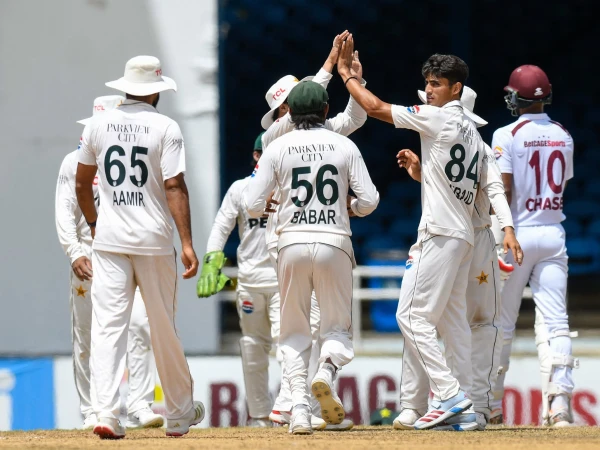
    PORT OF SPAIN: Pakistan’s hopes of leveling the two-match Test series remain alive after restricting the West Indies to 344 all out on the opening innings of the second Test, thanks largely to an impressive four-wicket haul from off-spinner Sajid Khan. After winning the toss at Port of Spain, West Indies captain Roston Chase opted to bat first, a decision that paid dividends as his side produced several valuable partnerships to build a competitive first-innings total. Middle-order batter Justin Greaves led the resistance with a composed 73, while captain Chase contributed a determined 70 to anchor the innings. Opener Brandon King added 46, with Shai Hope making 29 and Amir Jangoo chipping in with 26. Pakistan’s bowlers, however, fought back effectively after the hosts appeared set for an even bigger total. Sajid Khan emerged as the standout performer, using sharp turn and disciplined lines to finish with four wickets and halt West Indies’ progress at crucial moments. Fast bowlers Obaid Shah, Mohammad Ali and Ali Usman also made significant contributions, claiming two wickets each to ensure the home side was bowled out for 344. Speaking at the toss, Pakistan captain Babar Azam revealed that he would also have chosen to bat first had he won the toss. He expressed confidence in his squad, saying the team was determined to play positive cricket and bounce back strongly after losing the opening Test. On the other hand, Roston Chase said his team wanted to turn its home ground into a fortress and therefore retained the same playing XI for the crucial encounter. The second Test carries enormous significance for Pakistan, who trail 1-0 in the two-match series. A victory is essential to square the series, while another defeat would hand the West Indies an emphatic series triumph. With the hosts setting a challenging target of 344 in the first innings, all eyes are now on Pakistan’s batting lineup. The visitors will need a disciplined and resilient performance to seize control of the contest and keep their hopes of salvaging the series alive.

Leave a Reply

Your email address will not be published. Required fields are marked *