private medical college

Private medical college fees spark Parliamentary debate

Islamabad: A heated parliamentary debate over private medical college fees has exposed a conflict between the Pakistan Medical and Dental Council and members of the National Health Services Standing Committee. Lawmakers questioned why students are being asked to pay millions of rupees for medical education while some colleges seeking fee increases allegedly have incomplete documents and audit reports.

The controversy became more serious when Member Aliya Kamran questioned the approval of higher fees for colleges whose facilities and records were allegedly not good enough to justify such increases. She specifically referred to Rawal Institute of Health Sciences and claimed that photographs showed standing water in classrooms and students unable to attend classes because of poor infrastructure. She questioned how such an institution could qualify for a fee increase and said colleges with poor standards should face action rather than receive permission to charge more.

The debate also revealed a major disagreement over whether high fees are responsible for vacant seats in private medical and dental colleges. One PMDC official argued that fees alone cannot explain the vacant seats, pointing out that some colleges charging Rs3.5 million have no vacant seats. The official said students also consider the quality of education, facilities and the reputation of institutions before choosing a college.

But the Vice Chancellor of Jinnah Sindh Medical University presented a very different picture. He told the committee that around 8,000 students who passed the Medical and Dental College Admission Test did not take admission because they could not afford the fees. He said many of these students could have joined if more public sector seats had been available.

The disagreement over fees comes as the committee is examining a fee range of Rs1.8 million to Rs2.5 million for private medical colleges. According to the PMDC briefing, 61 colleges applied for permission to charge more than the Rs1.8 million baseline. After checking their balance sheets, third party audit reports, specifications and inspection reports, only 35 were declared eligible for fee enhancement. However, eligibility did not mean that all 35 colleges were allowed to charge Rs2.5 million. Some were allowed to charge Rs1.9 million, Rs1.95 million or Rs2 million.

The issue of quality also came under strong criticism. Aliya Kamran questioned the argument that better quality should automatically allow a college to charge higher fees. She warned that allowing some institutions to charge Rs2.5 million while keeping others at Rs1.8 million could create the impression that students studying at lower fee colleges belong to inferior institutions.

Minister for National Health Syed Mustufa Kamal defended the fee difference by saying that institutions have different facilities and levels of exposure. He cited Aga Khan, which was described as charging Rs3.5 million, and Ziauddin, which was described as charging Rs2 million. He said some colleges hire professors from abroad and provide additional practical training; their audited accounts are used to show their higher operating costs.

The debate then turned into a bigger question: should medical education be treated as a business or as a social service? Member Gul Asghar Khan openly argued that medical education is a business and that private investors put money into medical colleges because they expect a return. He warned that imposing strict fee controls could force private colleges to close. He claimed that a major audit could show the actual cost of educating one medical student is more than Rs4 million a year in the public sector.

Another member rejected this argument, pointing out that government medical institutions may spend much more on a student while charging students only around Rs5,000 to Rs50,000 in fees. The member said private medical college fees ranging from Rs1.8 million to Rs2.5 million are simply beyond the reach of ordinary families.

The committee also heard that medical education fees have increased sharply over the years. A university vice chancellor said the cost per student at a public medical college had earlier been estimated at around Rs750,000 to Rs800,000. An audit conducted after Justice Saqib Nisar sought data had put the private college figure at around Rs900,000, but the fee later increased to Rs1.8 million. The vice chancellor said the higher fee is beyond the ability of most students to pay and stressed that fees are a major factor behind the problem.

Another member said medical college fees had earlier been around Rs640,000 before increasing to Rs900,000 and then suddenly reaching Rs1.8 million. The member argued that colleges struggling to fill seats should reduce fees to Rs1.5 million or even Rs1 million rather than leave seats empty.

The BDS programme also came under discussion. Officials said the programme is being increased from four years to five years to meet international recognition requirements. This means students will have to pay for an additional year. Officials warned that students already struggling to pay around Rs10 million for four years could face another Rs2.5 million burden for the fifth year, potentially leading to even more vacant seats.

The committee was also told about serious questions regarding documentation submitted by colleges seeking fee increases. Aliya Kamran pointed out that Peshawar Medical, Sahara, Liaquat National and Rawal were among colleges whose documents were allegedly incomplete in the list provided to the committee. She questioned how colleges could be included in the fee enhancement process when some did not have audit reports.

The PMDC official responded that audit reports had not been demanded from colleges in the past. According to the official, PMDC started demanding third party audit reports after the January 2023 Act. The official said colleges that failed to provide the required documents were rejected, while the 35 colleges approved for fee enhancement had submitted third party audits.

The chairman of the committee, Dr. Mahesh Kumar Malani, said the committee had already decided that medical colleges should generally charge between Rs1.8 million and Rs2.5 million and had sought lists of colleges charging higher fees. Complaints had been received that some colleges were charging more than what their standards justified.

The discussion also highlighted a major difference between high fee colleges and institutions that are struggling to attract students. A official said colleges charging Rs3.5 million were still filling their seats, while some colleges charging Rs1.8 million or Rs2.5 million had vacant seats. The official argued that students were not simply looking at the fee but were also considering the quality and reputation of the institution.

The committee was also told that students are sometimes rejecting colleges based on their location and perceived quality even when the fee is the same. Officials said students may reject an institution in Tando Muhammad Khan while choosing a better known college in Karachi even if both charge Rs1.8 million.

The discussion exposed the growing financial pressure on students seeking medical and dental education. One official said students are increasingly unwilling to spend millions on BDS, particularly because of concerns about the number of dentists already in the market and limited job opportunities. Another participant said fees should be reduced because an occupied seat at Rs1 million is better than an empty seat.
Similar Posts

  • |

    CTD arrests two suspected RAW terrorists in Okara

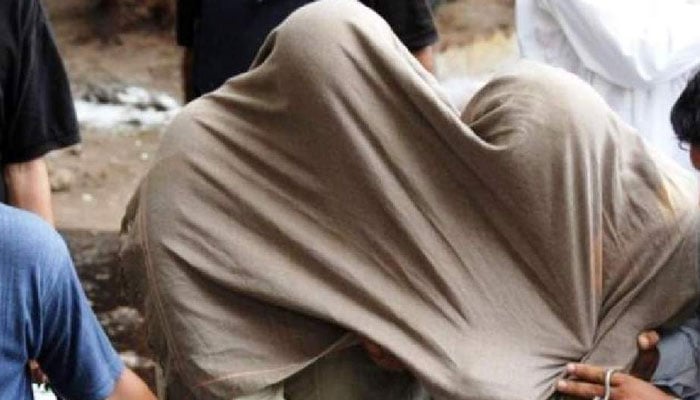
    The Counter-Terrorism Department (CTD) has arrested two suspected terrorists allegedly linked to India’s intelligence agency, Research and Analysis Wing (RAW), during an intelligence-based operation in Okara. According to CTD officials, the suspects, identified as Abdul Aziz and Wilayat Shah, are residents of Peshawar, Khyber Pakhtunkhwa. During the operation, authorities recovered four kilograms of explosive material, three improvised explosive devices (IEDs), and three Kalashnikov rifles from their possession. Officials said the suspects allegedly planned to carry out terrorist activities in the Sahiwal and Okara districts. The CTD launched the operation after receiving intelligence about their alleged activities and detained both suspects before they could execute their plans. The department has started further investigations to determine the suspects’ alleged links, identify their network, and establish whether they had planned attacks on specific targets in the region.

  • | |

    Polling begins in PS-30 Khairpur by-election

    Polling has begun for the by-election in Sindh Assembly constituency PS-30 Khairpur, where Pakistan Peoples Party (PPP) candidate Barrister Asfandyar Khan Khuhro is facing seven independent candidates. According to election officials, 254,980 voters are eligible to cast their ballots in the constituency. Authorities have established 164 polling stations across the constituency to facilitate voters and ensure a smooth electoral process. Security remains a major focus during the by-election. Officials have designated 64 polling stations as highly sensitive and 68 as sensitive due to security concerns. Around 2,500 police personnel have been deployed across the constituency to maintain law and order and protect voters, polling staff and election material. The election is taking place following the death of PPP lawmaker **Naeem Khuhro**, which left the PS-30 seat vacant. The PPP has fielded Barrister Asfandyar Khan Khuhro to retain the constituency, while seven independent candidates are also contesting the election. Voters will choose the next representative for the Sindh Assembly as polling continues under heightened security arrangements across Khairpur.

  • | |

    Bomb disposal officer injured in explosion at DI K…

    A bomb disposal officer was injured after an explosion ripped through the malkhana (evidence store) inside the Police Lines in Dera Ismail Khan on Thursday, causing significant damage to the building. According to police officials, the blast occurred inside the evidence store where confiscated explosive materials and other recovered items are kept. The force of the explosion caused part of the building’s roof and a wall to collapse. The officer in charge of the Bomb Disposal Squad sustained injuries in the incident. Rescue teams and fellow police personnel rushed to the scene and shifted him to a nearby hospital, where he received medical treatment. His condition was not immediately disclosed. Police said preliminary investigations indicate that the explosion was triggered by the accidental detonation of hand grenades stored inside the malkhana. However, officials stressed that the exact cause would only be confirmed after a thorough investigation. Following the explosion, police sealed off the affected area and launched a detailed search of the site. Investigators and forensic teams began collecting evidence to determine how the stored explosives detonated. Senior police officials also visited the Police Lines to inspect the damaged building and review the initial findings of the investigation. Authorities said all possible angles are being examined, including the handling, storage and condition of the explosive material kept in the evidence store. Police added that a comprehensive inquiry has been launched to establish the circumstances surrounding the blast and to determine whether any negligence or procedural lapse contributed to the incident.

  • | |

    NCCIA arrests 3 in crackdown on cyber harassment, …

    LAHORE: Pakistan’s National Cyber Crime Investigation Agency (NCCIA) has arrested three men in separate operations in Lahore and Multan as part of a crackdown on cyber harassment, blackmail, threats and the misuse of personal data online, officials said. The operations were carried out on the directions of Director NCCIA Punjab Muhammad Ali Wasim, officials said. In Lahore, the NCCIA arrested Azeem Jafri, son of Syed Altaf Hussain Shah and a resident of Faisalabad, in connection with an online harassment and defamation complaint. Investigators said the suspect had been using online platforms to harass and defame complainant Syed Muzaffar Iqbal Zehrazai. A mobile phone was recovered from the suspect during the operation. The investigation is being conducted by Sub-Inspector Rai Shakeel Ahmed. In Multan, the agency carried out two separate operations and arrested Jamshed Mahmood Khan and Sajjad Sarwar. Jamshed Mahmood Khan was arrested from Gulgasht Gol Bagh Park in Multan. Investigators said he was involved in sharing objectionable data belonging to a woman through WhatsApp, issuing threats and blackmailing her. No recovery was made from the suspect. In a separate operation, NCCIA officials arrested Sajjad Sarwar in Dera Ghazi Khan. Investigators said he was involved in sharing objectionable data of a woman through WhatsApp, threatening her and blackmailing her. A mobile phone containing WhatsApp-related material was recovered from him. Director NCCIA Punjab Muhammad Ali Wasim said the agency would continue taking action against individuals using cyberspace for harassment, blackmail, threats and violations of privacy. He directed NCCIA teams to further strengthen investigations and enforcement against cybercrime and ensure effective protection of citizens’ privacy and digital rights.

  • | |

    AJK polls completed transparently, says top poll o…

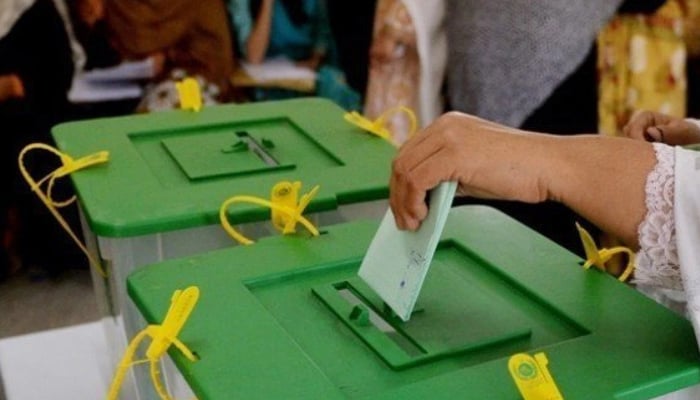
    Chief Election Commissioner of Azad Jammu and Kashmir Justice (retd) Ghulam Mustafa Mughal has said that the first phase of the electoral process in the region was completed in a free and transparent manner. He said all political parties actively participated in the elections. He added that polling was conducted in a peaceful environment across the region. Justice (retd) Ghulam Mustafa Mughal said voters participated in large numbers. He said people exercised their constitutional right to vote and took part in the electoral process. The chief election commissioner said the overall polling process remained peaceful. He said election authorities and other relevant institutions worked to ensure that voters could cast their ballots. He also acknowledged the role of law enforcement agencies during the elections. According to him, security personnel played an exemplary role in maintaining law and order. The chief election commissioner said security arrangements helped keep the polling environment peaceful. Law enforcement agencies remained deployed to deal with any situation that could affect the electoral process. However, he said an incident was reported in Samahni where attempts were made to disrupt polling. The people involved in creating a disturbance were arrested, he said. Justice (retd) Ghulam Mustafa Mughal said the authorities took action to ensure that polling activities were not affected. He stressed that maintaining peace was essential for a smooth electoral process. He also highlighted the participation of political parties in the elections. He said their involvement reflected the importance of the electoral process in Azad Jammu and Kashmir. The chief election commissioner’s statement came after the completion of the first phase of polling in the region. The election process attracted significant participation from voters. He said the authorities remained focused on ensuring transparency throughout the process. He also stressed the importance of maintaining law and order during polling. The election authorities are now expected to continue the next stages of the electoral process according to the announced schedule. The results and subsequent procedures will determine the political direction of the region. Justice (retd) Ghulam Mustafa Mughal said the peaceful completion of the first phase was an important development. He maintained that the cooperation of political parties, voters, election officials and law enforcement agencies helped the process move forward.

  • Lahore High Court issues landmark fair trial ruling in rent cases

    The Lahore High Court has delivered a significant judgment on ex-parte proceedings in rent disputes, setting aside the Rent Tribunal’s ex-parte order against a petitioner and laying down important legal principles to safeguard the right to a fair hearing in tenancy cases. Justice Justice Muzammil Akhtar Shabbir issued a detailed 14-page judgment, declaring that “delay in justice amounts to denial of justice, while undue haste in dispensing justice is equivalent to burying justice.” The ruling has been declared a judicial precedent for future rent litigation. The High Court held that under the relevant tenancy laws, a Rent Tribunal is legally required to allow a period of 10 days before initiating ex-parte proceedings against the opposite party. During this period, the absent party retains the legal right to appear before the tribunal and seek restoration of its right to contest the proceedings. The court further ruled that if ex-parte proceedings are initiated in violation of the prescribed legal procedure, such proceedings become unlawful, and any judgment passed on their basis is also liable to be declared void. Justice Shabbir observed that Rent Tribunals must ensure proper service of notices on the opposite party before proceeding ex-parte. The judgment noted that the Rent Tribunal in the present case had failed to follow the statutory procedure governing ex-parte proceedings under the rent law. The High Court also held that the tribunal’s decision dismissing the petitioner’s application for restoration of proceedings was contrary to law. Consequently, the court set aside the judgments of both the Rent Tribunal and the appellate court. It ordered that the matter be treated as pending before the trial court and directed the trial court to decide the case strictly on its merits within four months. The High Court further instructed that no applications seeking unnecessary adjournments by either party should be entertained, emphasising the need for the expeditious disposal of the tenancy dispute while ensuring compliance with due process and the principles of natural justice.

Leave a Reply

Your email address will not be published. Required fields are marked *