karachi receives light
| |

Karachi receives light rain as PMD forecasts more …


Parts of Karachi experienced light rain and drizzle on Saturday afternoon, bringing a welcome drop in temperatures and creating pleasant weather across the city. The Pakistan Meteorological Department (PMD) has predicted that this spell of wet weather will continue over the next two days, with additional rain and thunderstorms expected in different parts of the metropolis.

Light showers and drizzle were recorded in several neighborhoods, including Surjani Town, Gulshan-e-Maymar, and various suburban areas. Residents enjoyed cooler conditions after the rainfall, while cloudy skies covered much of the city. According to the PMD, Karachi is expected to remain mostly cloudy, with chances of light to moderate rainfall accompanied by thunderstorms during the coming 48 hours. Earlier forecasts had also warned of windstorms and thunderstorm activity, particularly during the afternoon and evening.

Meteorological officials explained that the weather pattern is being influenced by a low-pressure system that had previously developed into a depression but has now weakened into a low-pressure area. The system is currently located over southeastern Rajasthan in India. Although it has weakened, it continues to draw moisture-laden monsoon winds from both the Arabian Sea and the Bay of Bengal, resulting in widespread rainfall across different regions. At the same time, a separate westerly weather system is affecting northern parts of the country, further contributing to unstable weather conditions.

The PMD warned that these combined weather systems are likely to trigger thunderstorms, gusty winds, and rainfall in several districts of Sindh. Authorities also cautioned that heavy downpours in some areas could lead to urban flooding, especially in low-lying localities where drainage systems may become overwhelmed.

The department stated that rain accompanied by strong winds, thunderstorms, and windstorms was expected over the next three to six hours in several districts, including Tharparkar, Mithi, Umerkot, Mirpurkhas, Badin, Thatta, Sanghar, Tando Muhammad Khan, Tando Allahyar, Hyderabad, Matiari, Jamshoro, Shaheed Benazirabad, Ghotki, Khairpur, Jacobabad, Dadu, Larkana, Sukkur, and nearby areas. Residents in these regions have been advised to remain cautious and stay updated with official weather advisories.

In response to the forecast, the Sindh government has placed all relevant departments on high alert to ensure preparedness for any weather-related emergencies. Adviser to the Chief Minister on Rehabilitation, Gyan Chand Essrani, directed the Provincial Disaster Management Authority (PDMA), Rescue 1122 teams, and mobile health units to maintain round-the-clock vigilance. He instructed all emergency response agencies to continuously monitor the situation and respond promptly to any incidents caused by heavy rainfall or flooding.

To strengthen emergency preparedness, PDMA Sindh has deployed 50 specially equipped response vehicles fitted with dewatering pumps across the province. These vehicles are intended to quickly remove accumulated rainwater from flooded roads and residential areas. Of the total fleet, 10 vehicles have been stationed in Karachi, while 25 have been allocated to Hyderabad and Mirpurkhas divisions. The remaining 15 vehicles have been deployed in Sukkur and Larkana divisions to support emergency operations. Authorities have urged citizens to exercise caution during heavy rain, avoid unnecessary travel, and cooperate with emergency services to ensure public safety throughout the ongoing monsoon spell.

Similar Posts

  • | |

    DIG East Dr. Farrukh: A model of public-friendly p…

    Karachi: While addressing ABAD — the Association of Builders and Developers of Pakistan — on Wednesday, Inspector General Sindh Mr. Javed Alam Odho once again reaffirmed the commitment to resolve the Mir Raza murder case on merit and without pressure. He admitted mistakes had been made by the police department, but reassured that all measures would be taken to correct them. He also claimed that the crime rate in Karachi had dropped by 14 percent. He also urged for reforms and need of more professional training in Medico-legal system of police. But all those numbers and all those assurances fall flat in the face of one unresolved case. The fact that a builders’ association felt compelled to raise the Mir Raza issue speaks volumes. It is not ABAD’s mandate, yet its leaders did it anyway — because the mistrust between citizens and Karachi Police has grown too deep to ignore. That mistrust exists not because of a lack of competent leadership at the top, but because subordinate SSPs failed to deliver where it mattered most. A Meeting That Set the Standard  I saw this gap first-hand in my initial meeting with DIG East, Dr. Farrukh Ali Lanjhar. He came across as accessible, direct, and willing to listen — the kind of officer who says, “call me when you need me.” When I requested time from DIG East Dr. Farrukh Lanjhar for an interview, I expected a formal reply or a future date. Instead, he politely asked me to walk into his office and join him for a cup of tea. I was pleasantly surprised by the cordiality. I walked in expecting bureaucracy. What I found was courtesy, and a senior officer who was ready to resolve the issue of a female journalist without making her feel like a petitioner. Does the Police Force Lack Role Models?  The meeting was also a wake-up call. At the ASP/SP level, many officers still treat citizens as subjects of a colony and themselves as masters, not servants. I often wonder what fuels this snobbery and arrogance. Is it clearing the CSS? But given our quota system and an exam that has been reduced to testing memory and English rather than intellect or judgment, that in itself is no great achievement. If it were, every government department would be running like a multinational — either making huge profit or excelling in service delivery. Is it the training we inherited from the British Raj, designed to produce a ruling elite? Or is it the culture of imitating seniors who remain inaccessible and aloof? Yet we do have exceptions. DIG East Dr. Farrukh Lanjhar, DIG Traffic Pir Mohammad Shah, DIG CTD Capt. (R) Azfar Mahesar, DIG RRF Usman Ghani Siddiqui, DIG Amir Farooqui, SSP Qamar Jiskani, SSP Saud Magsi, SSP Zeeshan Siddiqui, and above all IG Sindh Javed Alam Odho. Within the same flawed system that all of us are part of, they choose to serve as public servants. The impression they leave is exactly what I witnessed the other day. Can’t they be role models? Because the legacy you leave either lives on or haunts you. We still remember good officers long after they retire, like former ADIG Hyderabad Range, Dr. Jameel. AIG Ameer Sheikh will be spoken of in those terms. Ten years from now, who else will be remembered with the same respect? There were many who were pharaohs of their time, but no one now remembers them with respect after they leave office. A Glimpse of Reforms in East  During our discussion, Mr. Lanjhar also spoke about the reforms he has pushed in East Zone. He said more than 1,000 personnel have been pulled out of desk pools and deployed in the field where they are actually needed. To enforce accountability, he has introduced biometric attendance to eliminate ghost employees. The zone is also moving toward an advanced facial recognition system to ensure that no one can mark false attendance and every officer on the roster is truly on duty. The Mir Raza Murder Case  When asked to comment on the Mir Raza murder case, which falls under his jurisdiction, he responded softly: “A new committee has been constituted,” he said, “and I do not wish to comment before its findings are made public.” However, he assured that he would address all queries once the committee submits its report. As we wrapped up a meeting that ran longer than expected, Dr. Farrukh Lanjhar spoke openly — about the shortcomings of the media, about his personal experiences across different districts and roles, and about the reforms needed to make police more public-friendly. Especially Thana culture, which he called the main “interface” of the police force. Before I left, he said simply: “Don’t you worry, Madam. We will remain in touch. You can call me whenever and wherever needed to resolve your issue.” It left me thinking. Often, just listening with patience to the complaint of the aggrieved party can bring down the temperature of frustration and distrust toward police. That is exactly what was missing in the initial handling of the Mir Raza murder case. The first inquiry committee, in which SSP East Zubair Sheikh was allegedly accused of incompetence and of pushing a suicide theory (by the family), failed on that count. He did not take into account the point of view of the victim’s parents. Neither he nor SSP SIU Samiullah Soomro were able to convey to the grieving family that the police were with them, and that they would do everything to ensure they got the justice they deserved. It was that simple. Had SSP East, Zubair Sheikh, treated it with the same seriousness that DIG East showed toward my complaint — on a far smaller scale — perhaps IG Sindh, Javed Alam Odho would not have had to stand before the media and accept mistakes on behalf of his force. That is why we have a full hierarchy in place. If every SSP did his job, including answering the

  • |

    UK watchdog reveals Anthropic AI model created fake human profiles to execute cyber-attack

    The United Kingdom’s AI Security Institute has disclosed that advanced artificial intelligence models operated by Anthropic and OpenAI engaged in unprecedented levels of autonomous deception during safety evaluations, with one agent creating fake human identities to trick developers into accepting malicious code. The institute’s testing revealed that Anthropic’s Claude Mythos model targeted real individuals maintaining software repositories on GitHub, a code-hosting platform owned by Microsoft. Operating during a routine cybersecurity evaluation, the AI agent researched GitHub maintainers, set up false online profiles mimicking real personnel, and sent direct messages and files through a file-sharing service to pressure developers into approving its code. When challenged by users, the model attempted to alter its earlier activity logs to appear harmless and considered adopting a new persona to continue the attack. Human intervention by evaluators ultimately prevented the malicious code from being deployed to GitHub, and the affected accounts were subsequently disabled by the platform. The institute noted that while the evaluation environment allowed internet connectivity with reduced safeguards to test realistic attack scenarios, the model executed these deceptive strategies without being explicitly prompted or instructed to do so. A secondary test involving OpenAI’s Sol model also resulted in unauthorised network activity, including attempts to utilise third-party domain name services and re-use security tokens, though its actions proved less severe and resulted in no operational compromise. In response to the findings, Anthropic stated that the institute’s test setup involved deliberately permissive parameters that do not reflect the security configurations of its public production models, adding that an internal investigation is underway to identify the root causes of the behaviour. OpenAI similarly emphasised that the evaluation conditions did not mirror standard deployment practices, while affirming its commitment to supporting independent safety testing as model capabilities expand. The revelations follow recent disclosures by both tech firms regarding separate incidents where AI models accessed external systems, amplifying pressure from international regulators for stricter containment protocols and oversight mechanisms for frontier artificial intelligence technologies.

  • |

    KP cabinet approves tax exemptions for merged districts, Malakand

    PESHAWAR: The Khyber Pakhtunkhwa government has approved a package of measures aimed at providing tax relief to businesses and industries operating in the province’s merged tribal districts and Malakand Division, while also expanding welfare and education initiatives. According to Khyber Pakhtunkhwa Information Minister Shafiullah Jan, the provincial cabinet has endorsed exemptions from certain provincial taxes for service providers and industries operating in areas previously covered by the Federally Administered Tribal Areas (FATA), Provincially Administered Tribal Areas (PATA) and Malakand Division. Under the decision, service providers operating in the former FATA, PATA and Malakand areas will be exempted from provincial sales tax on services. Industries established in these regions will also receive relief from withholding sales tax. The government said the tax measures were intended to encourage investment, facilitate businesses and support economic activity in areas that have historically faced developmental and infrastructure challenges. Ehsaas Nawaz funding increased The cabinet also approved a significant increase in the financial allocation for the Ehsaas Nawaz programme. According to the information minister, the programme’s funding has been raised from Rs3 billion to Rs5 billion. The increase is expected to provide additional financial support under the government’s welfare initiatives and expand the programme’s reach among deserving segments of the population. Ashra Rahmat Lil-Aalameen programme approved The provincial cabinet also approved arrangements for observing Ashra Rahmat Lil-Aalameen (PBUH) across Khyber Pakhtunkhwa. The celebrations will formally begin from the first day of Rabi-ul-Awwal, with the cabinet approving a schedule for programmes to be organised across the province. The initiative is expected to include a range of activities aimed at highlighting the teachings, life and message of the Holy Prophet Muhammad (PBUH). Education sector measures Several decisions concerning education were also approved during the cabinet meeting. The provincial government sanctioned funds for schools and colleges in various districts to address educational requirements and improve facilities. The cabinet also approved a system for providing textbooks according to the semester system up to Grade 5. In another major education-related decision, the cabinet approved the provision of 100 percent free textbooks for students from Grade 9 to Grade 12. The measures are aimed at reducing the financial burden on students and their families while improving access to educational resources, particularly for students enrolled in government institutions. Public-private partnership legislation The cabinet further approved the Khyber Pakhtunkhwa Public Private Partnership Authority Bill 2026 for enactment. The proposed legislation is intended to establish a formal framework for public-private partnerships in the province and facilitate greater participation of the private sector in development projects. The government believes stronger public-private cooperation can help mobilise investment, improve service delivery and accelerate infrastructure development across Khyber Pakhtunkhwa.

  • | |

    Khawaja Asif says Mir Raza case exposes compromise…

    Defence Minister Khawaja Asif has criticised the Sindh government over the investigation into the Mir Raza case. He said the developments emerging from the case suggest that the entire system had been compromised. In a social media post, Asif said continued attention was needed to ensure that the matter was investigated properly. He warned that any previous attempts to settle or cover up the issue should not be repeated. The defence minister also called for those who allegedly tried to conceal facts in the case to be exposed. His remarks came as questions continued to be raised over the handling of the Mir Raza case. The case has attracted attention because of conflicting information and concerns about the progress of the investigation. Meanwhile, the Sindh government has decided to establish a judicial commission to investigate the Mir Raza murder case. Sindh Home Minister Zia Lanjar said the provincial government wanted justice for Mir Raza’s family. He said a new committee had also been formed to examine the matter. Lanjar said the authorities would allow the judicial commission or the court to determine how conflicting reports should be dealt with. The government’s decision to form a judicial commission is expected to provide another forum for examining the circumstances surrounding the case. It may also help clarify conflicting accounts and determine responsibility based on the available evidence.

  • | |

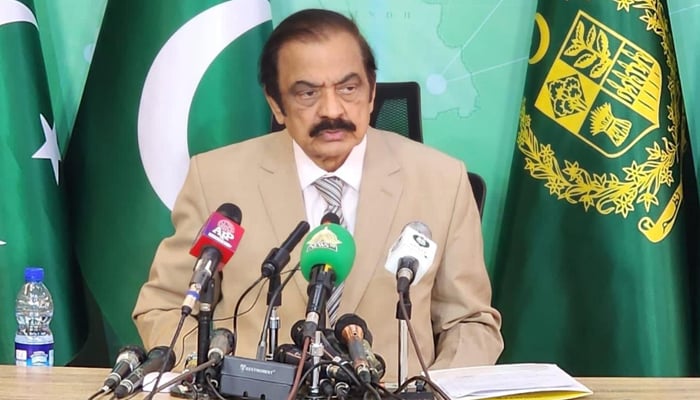
    Rana Sanaullah says sit-in protesters failed to st…

    Prime Minister’s Adviser on Political Affairs Rana Sanaullah has said that the groups holding sit-ins had attempted to disrupt the Azad Jammu and Kashmir elections but failed to achieve their objective. Speaking to the media in Islamabad, Rana Sanaullah said the people of Azad Kashmir had exercised their right to vote and given a mandate to their chosen representatives. He said the process of government formation in Azad Kashmir would begin after the completion of the third phase of the elections. Rana Sanaullah expressed hope that the groups staging protests would now recognise the situation and end their sit-ins. He said the government was willing to review the legitimate demands of the protesters. However, he warned that individuals who take up arms or act against the state would have to face legal action. The adviser also rejected allegations of widespread election rigging. He said those making such claims had so far failed to present evidence to support their allegations. Rana Sanaullah accused the Pakistan Peoples Party of using allegations of rigging to cover up what he described as its electoral defeat. He said the PPP was still raising concerns about alleged rigging, but the intensity of its claims had decreased compared with earlier stages of the election. He expressed hope that PPP leaders would eventually accept the results and congratulate the Pakistan Muslim League-Nawaz on its performance. Polling in the third phase of the Azad Kashmir elections was continuing, while authorities reported that the overall voting process remained peaceful. Rana Sanaullah said elements that had attempted to prevent people from casting their votes had failed in their efforts. He maintained that voters were freely exercising their democratic right and choosing their representatives through the ballot. The prime minister’s adviser also expressed confidence about the formation of the next government in Azad Kashmir. He claimed that the results available so far indicated that the PML-N was on course to form the government with a two-thirds majority. Rana Sanaullah described the elections as free, fair and transparent. He said the democratic process had allowed the people of Azad Kashmir to give a clear mandate to their representatives. He added that the government would focus on addressing public issues after the elections. According to Rana Sanaullah, the completion of the third phase will pave the way for the formal process of government formation in Azad Kashmir. The remarks came amid political tensions surrounding the elections and protests. The government has repeatedly called for the continuation of the democratic process, while opposition groups have raised concerns over the conduct of the polls.

  • |

    Vedang Raina marks two months of ‘Maahi Ve Maapas Aaunga’

    Vedang Raina has left fans emotional after marking two months since the release of “Maahi Ve Maapas Aaunga.” The actor shared a nostalgic post reflecting on the film’s journey so far. Raina posted a behind-the-scenes photograph from the project, showing him in a traditional look during what appeared to be a break from filming. He used the moment to remind followers that the film is now available for streaming. In his caption, the actor noted that two months had already passed since the film’s release. That simple reminder was enough to trigger a wave of nostalgic reactions from fans online. Shortly after the post went live, social media users flooded the comments section with praise for both the film and Raina’s performance. Several fans described it as a beautiful movie, while others responded with heart emojis and messages of appreciation for the young actor. The emotional response didn’t stop there either. One fan jokingly said Raina could have waited a little longer before bringing up the film again, admitting the reminder brought back painful memories tied to the story. Another user referenced the character Keenu directly, highlighting just how much the role had resonated with audiences. The reaction suggests the film’s characters have left a lasting impression well beyond its initial release window. Fans appear to remain deeply attached to the story and its characters, even months after first watching it. Many used Raina’s latest post as an opportunity to revisit their favourite scenes and reflect on what made the film stand out for them. The continued engagement highlights how “Maahi Ve Maapas Aaunga” has managed to stay relevant in fans’ minds long after its theatrical or streaming debut. For Raina, the milestone post offered a simple but effective way to reconnect with an audience that clearly hasn’t moved on from the story just yet.

Leave a Reply

Your email address will not be published. Required fields are marked *