pakistan8217s cnergyico ramps
| |

Pakistan’s Cnergyico ramps up US crude purch…

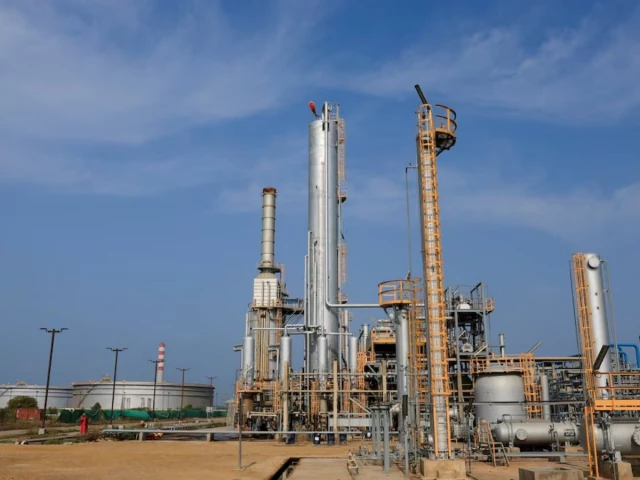
Cnergyico, Pakistan’s largest oil refiner, has increased its purchases of US crude as the federal government works to diversify the country’s energy supply following disruptions tied to the war in Iran that exposed how heavily Pakistan depends on Gulf shipping routes.

The government is also pushing to expand imports from the United States as part of a broader effort to narrow its trade surplus with Washington and secure relief from tariffs imposed by President Donald Trump.

Cnergyico, which made its first purchase of US crude last year, is now weighing spot purchases alongside longer term supply contracts with Vitol and other suppliers, basing those decisions on pricing, reliability and supply security, Vice Chairman Usama Qureshi said. The refiner imported roughly 8.1 million barrels of US crude over a nine month stretch, including 7.1 million barrels worth about $750 million during the fiscal year that ended in June, according to Qureshi.

Central bank data showed Pakistan’s payments for US imports climbed by $914 million to reach $3.27 billion during that fiscal year, meaning Cnergyico’s crude purchases accounted for roughly 80 percent of that overall increase.

Qureshi said the refiner could expand its US crude purchases further if Pakistan’s proposed EXIM Bank trade finance facility gets extended to Cnergyico. Islamabad pitched that facility last month as a mechanism allowing Pakistani buyers to delay payments to US exporters for as long as three years.

Pakistan has traditionally sourced most of its oil from Saudi Arabia and the United Arab Emirates, with roughly 90 percent of its oil and liquefied natural gas imports passing through the Strait of Hormuz before the war disrupted that route. Rising fuel costs have added pressure on Islamabad to respond, particularly as fresh protests over inflation and fuel prices broke out this week. The government has also pursued alternative supply routes, including Saudi crude delivered via the Yanbu port on Saudi Arabia’s Red Sea coast.

Qureshi said Cnergyico is evaluating construction of a second offshore mooring facility linked to its existing storage network, which would allow the company to import and export refined products using large tankers outside Karachi’s congested ports. That project forms part of a broader $1.2 billion upgrade aimed at meeting Euro V fuel standards, reducing furnace oil output and expanding refining capacity to around 200,000 barrels per day.

Fawad Basir, head of research at KTrade Securities, said the disruptions in the Middle East have underscored the risks of relying on a single supply corridor. He said using Very Large Crude Carriers to import US oil could reduce freight costs by 25 to 30 percent, while adding a second Single Point Mooring facility would speed up vessel turnaround times.

Cnergyico currently processes 156,000 barrels of crude per day and operates Pakistan’s only single point mooring terminal near Karachi, giving it the unique ability among the country’s refiners to handle large tankers directly. The company plans to build a second offshore terminal to accommodate larger or more frequent shipments and intends to upgrade its refinery over the next five to six years. The refiner, which has been running at an average utilization rate of just 30 to 35 percent amid weak domestic demand, is betting that demand for refined oil products will strengthen in the years ahead.

Similar Posts

  • |

    Karachi petroleum dealers consider options as dispute over strike call looms

    Plans for a nationwide closure of petrol pumps entered a new phase after dealers in Karachi refrained from immediately supporting a shutdown call issued by petrol pump owners. The Petrol Pump Owners Association had instructed fuel outlets to close across the country from midnight following inconclusive negotiations with Petroleum Minister Ali Pervez Malik. However, the Karachi Petroleum Dealers Association did not move to align with the closure order due to disagreements between the two bodies. To address the situation, the Petroleum Dealers Association scheduled an executive committee meeting to consult with counterparts across Pakistan and evaluate the seven-day deadline set by the Oil and Gas Regulatory Authority (OGRA). The meeting’s outcome will decide whether the association proceeds with a nationwide strike or pursues alternative methods of protest. The Petroleum Dealers Association stated that the government has requested an additional week to resolve outstanding demands and assured dealers that its concerns will be addressed. The association noted that it will consider the government’s request during its internal consultations and formally communicate its final strategy to OGRA and relevant state authorities.

  • | |

    Pakistan mediates US-Iran talks over Hormuz crisis

    Pakistan has confirmed that diplomatic negotiations between the United States and Iran remain active despite renewed military escalation across the Middle East, expressing hope that dialogue can prevent the conflict from spiraling into a wider regional crisis. Speaking at a weekly briefing in Islamabad, Foreign Office spokesperson Tahir Andrabi said negotiations were continuing with a particular focus on reducing tensions and addressing the growing dispute over the strategically vital Strait of Hormuz. “Negotiations between parties are ongoing, particularly on the Strait of Hormuz and to de-escalate,” Andrabi told reporters, emphasizing that Pakistan remains committed to promoting a peaceful resolution to the conflict. The spokesperson said Islamabad is working closely with all relevant parties to revive the Islamabad Memorandum of Understanding (MoU), an agreement aimed at creating a framework for technical discussions and confidence-building measures between Washington and Tehran. “We are doing our utmost to bring all parties back to the Islamabad MoU,” Andrabi said, adding that Pakistan is encouraging both sides to honor their commitments and continue technical-level talks despite recent hostilities. His remarks come as the region faces one of its most dangerous security crises in recent years. The United States has resumed large-scale military strikes on Iranian targets following missile attacks on American forces, while Iran has vowed further retaliation. The escalating conflict has raised fears over the security of the Strait of Hormuz, a key global shipping route through which a significant share of the world’s oil and liquefied natural gas supplies passes. Pakistan has consistently advocated diplomacy over military confrontation, warning that continued violence could threaten regional stability, disrupt global energy markets and increase the risk of a broader conflict involving additional countries. Analysts say Pakistan’s role as a mediator has become increasingly significant as communication channels between Washington and Tehran remain strained. While no breakthrough has yet been announced, officials believe sustained dialogue offers the best chance of easing tensions and preventing further escalation. With fighting continuing across the region, Islamabad has reiterated its support for peaceful negotiations, urging all parties to exercise restraint and prioritize diplomacy over confrontation in order to safeguard regional peace and international energy security.

  • |

    UN Security Council begins informal voting to choose next secretary general

    The United Nations Security Council will begin its first round of informal voting on Thursday to measure support for candidates seeking to become the next UN secretary general. The confidential ballots mark the start of a selection process that will eventually determine who succeeds Antonio Guterres when his second five year term ends later this year. Seven candidates from different regions are currently competing for the position. They include Argentina’s Rafael Grossi, who heads the UN nuclear watchdog, former Chilean President Michelle Bachelet, former Costa Rican Vice President Rebeca Grynspan, former Ecuadorian Foreign Minister Maria Fernanda Espinosa, former Guyanese Foreign Minister Carolyn Rodrigues-Birkett, former Senegalese President Macky Sall and Ugandan diplomat Olara Otunnu. Additional candidates are still allowed to enter the race before the selection process concludes. The next secretary general will take charge of the United Nations at a time when the organization faces mounting criticism over its effectiveness and structure. Calls for reform have increased as member states push for a more efficient institution, arguing that the UN must reduce bureaucracy, eliminate overlapping responsibilities among its agencies and improve its ability to respond to global crises. The first stage of the selection process involves informal straw polls conducted behind closed doors among the Security Council’s 15 members. During these secret ballots, council members indicate whether they encourage, discourage or have no opinion on each candidate. The votes are non binding but provide an early indication of which candidates have the strongest support and which face significant opposition. At this stage, all Security Council members use identical ballots, meaning diplomats can see the overall level of support for each candidate without knowing whether opposition comes from one of the council’s five permanent members. Those permanent members are China, France, Russia, the United Kingdom and the United States, each of which holds veto power over the final recommendation. As the selection process moves forward, the permanent members will use ballots in a different color during later rounds of voting. This allows diplomats to determine whether any candidate has received a negative vote from a veto holding country, information that often plays a decisive role in narrowing the field. There is currently no clear favorite to replace Guterres. Previous UN leadership contests have required several rounds of voting over many weeks before a consensus candidate emerged. Diplomats expect this year’s process could continue throughout the summer and possibly into late September or early October if no candidate gains broad enough support. If the Security Council remains divided, the process could take even longer. Once the council agrees on a single candidate, it will formally recommend that person to the 193 member UN General Assembly. The recommendation requires at least nine votes in favor and no veto from any of the five permanent members. The General Assembly then votes to confirm the appointment, a step that has traditionally been considered a formality after the Security Council reaches agreement. The current president of the Security Council is the Democratic Republic of the Congo. Its ambassador to the United Nations, Zenon Mukongo Ngay, confirmed that the first round of straw polls will take place on Thursday morning. He also said that Ugandan candidate Olara Otunnu will participate in the voting despite not taking part in the informal public hearings completed by the other candidates. According to his biography, Otunnu played an important role in shaping the current selection process. He states that he introduced the system of informal straw polls while serving as president of the Security Council in 1981. That method has since become a key part of the process used to identify the candidate most likely to secure broad international support before the final appointment is made.

  • |

    Gulf families seek fairer inheritance through UK law

    Wealthy families in the Gulf are increasingly preparing wills under British law to reduce the difference between the inheritance shares traditionally allocated to sons and daughters under Islamic law. According to a report in a Western publication, some experts have described the emerging trend as “Shariah Lite”, referring to families using the flexibility offered by English succession law to distribute their wealth among their children on relatively equal terms. British lawyers say families are increasingly exploring these legal arrangements to protect the financial future of their children, particularly in cases where they have only daughters or where daughters outnumber sons. Under traditional Islamic inheritance rules, the shares received by male and female heirs can differ depending on the family structure and circumstances. The growing use of foreign legal frameworks allows wealthy families with international assets to consider alternative succession arrangements within the limits of applicable laws. Experts say several factors are contributing to the trend, including changing attitudes among younger generations, increasingly complex marital arrangements and political uncertainty across parts of the Gulf region. These developments have encouraged affluent families to pay greater attention to estate planning, asset protection and succession arrangements to ensure that their wealth remains within the family and is transferred according to their wishes. Gulf states are also introducing legal systems that offer foreign residents and some families alternatives to traditional Sharia-based procedures. Abu Dhabi, for example, has established a separate civil legal framework for matters including divorce, providing an alternative route outside the traditional Sharia system. The growing interest in British wills highlights the changing approach of some wealthy Gulf families toward inheritance and succession planning, as they seek greater control over how their assets are distributed among future generations.

  • | |

    Sharmila Faruqui warns of growing PPP-PML-N tensio…

    Pakistan Peoples Party (PPP) lawmaker Sharmila Faruqui has warned that relations between the PPP and Pakistan Muslim League-Nawaz (PML-N) have become increasingly tense following the Azad Jammu and Kashmir (AJK) elections. Speaking to journalists outside Parliament, Faruqui said the situation between the two coalition partners was currently strained. She added that it was difficult to predict how the political situation would develop in the coming days. Her remarks came amid discussions over the political relationship between the PPP and PML-N and growing differences on several issues. Faruqui said the issue of creating new administrative units should be handled through Parliament. She opposed turning the matter into a debate primarily conducted through television channels. She said any proposal to create new administrative units should be formally brought before the National Assembly and the Senate. According to her, Parliament is the appropriate forum for discussing matters that could have major constitutional and administrative implications. The PPP leader stressed that such issues require detailed debate and consultation. She said lawmakers should have the opportunity to examine the proposals and discuss their possible political, administrative and constitutional consequences. Faruqui also highlighted the impact of the AJK elections on relations between the PPP and PML-N. She said the situation between the two parties had become “very tense” after the elections. She warned that the political developments could take different turns. Her comments indicate that differences between the coalition partners may become more prominent if the issues are not addressed through dialogue. The PPP and PML-N have remained key political partners at the federal level. However, differences between the two parties have surfaced on various political and administrative matters. Faruqui’s comments come at a time when the question of new administrative units has also generated political debate. The proposal has attracted attention because any major change in the administrative structure could have wider political and constitutional implications. The PPP lawmaker maintained that such a sensitive issue should not be settled through media discussions. She called for the matter to be brought before both houses of Parliament for a proper debate. Her statement also reflects the growing political uncertainty following the AJK elections, with questions emerging over the future course of relations between the PPP and PML-N.

  • |

    Shaheen stars as Pakistan Gold storm into Champions Cup final

    MULTAN: Shaheen Shah Afridi produced a match-winning bowling performance as Pakistan Gold defeated Pakistan Whites by five wickets to book their place in the National Champions Cup 2026 final at Multan Cricket Stadium. Chasing 173, Gold reached their target in just 28 overs, although they lost five wickets along the way. Haider Ali led the chase with an impressive 69 off 48 balls, smashing seven fours and three sixes in an aggressive innings. The victory was particularly striking because Gold had entered the match after suffering two defeats and sitting at the bottom of the table. Their superior net run rate, however, kept their qualification hopes alive, and they capitalised when it mattered most. Gold faced early trouble during the chase, slipping to 61-3 after 10 overs. Haider then steadied the innings alongside Kamran Ghulam, who contributed 30 from 26 deliveries, including four boundaries. Saad Khan also played a valuable supporting role, scoring a patient 33 off 55 balls as Gold moved steadily towards victory. Mohammad Wasim claimed two wickets for Whites, but his efforts were not enough to stop the chase. Earlier, Whites were bowled out for 172 in 41.4 overs after choosing to bat first. Gold’s bowlers immediately put their opponents under pressure, reducing Whites to 26-2 inside the opening 10 overs. Shahzaib Khan fell for two while Haseebullah Khan managed only three. The situation worsened as Usman Khan was dismissed for three and Saim Ayub departed after scoring 30, leaving Whites struggling at 45-4 in 14.5 overs. Hasan Nawaz provided some resistance, scoring a determined 55 off 74 balls with three fours and two sixes. His efforts helped Whites cross the 150-run mark, but the lower order could not carry the innings further. Shaheen led Gold’s attack with three wickets, while Faisal Akram claimed two. The National Champions Cup is being staged in Multan from August 11 to 18 as part of Pakistan’s 2026-27 domestic season and preparations for the 2027 ODI World Cup. Match 6 – Sparco Paints Pakistan Gold beat UOL Pakistan Whites by five wickets at Multan Cricket Stadium Pakistan Whites 172 all out, 41.4 overs (Hasan Nawaz 55, Saim Ayub 28, Saad Masood 20; Shaheen Shah Afridi 3-26, Mubasir Khan 2-29, Faisal Akram 2-48) Pakistan Gold 173-5, 28 overs (Haider Ali 69 not out, Saad Khan 33, Kamran Ghulam 30; Mohammad Wasim Jnr) Player of the match – Shaheen Shah Afridi (Pakistan Gold) Tournament schedule: (All matches at Multan Cricket Stadium; All matches to begin at 3pm) 11 August – Pakistan Greens beat Pakistan Whites by five wickets 12 August – Pakistan Blues beat Pakistan Gold by six wickets 13 August –Pakistan Whites beat Pakistan Blues by six runs 14 August – Pakistan Greens beat Pakistan Gold by 128 runs 15 August – Pakistan Greens beat Pakistan Blues by 192 runs 16 August – Pakistan Gold beat Pakistan Whites by five wickets 18 August – Final (Pakistan Greens v Pakistan Gold)

Leave a Reply

Your email address will not be published. Required fields are marked *