fpap iph hold
| |

FPAP, IPH hold breastfeeding policy dialogue

LAHORE: Institute of Public Health Lahore and Rahnuma Family Planning Association of Pakistan joined hands to organize a Policy Dialogue on promoting Breastfeeding in connection with the World Breastfeeding Week 2026. The week is commemorated globally from 1-7 August to highlight the importance of breastfeeding.

The house discussed strategies to improve breast feeding as only 45% of newborns in Pakistan were put to breast milk within the first hour of life, resulting in stunted growth and vulnerability to disease outbreaks.

Moderated by Dean IPH Dr. Saira Azfzal, the event was joined by foreign dignitaries from the UKHSA, Chairman BoG IPH Prof Abdul Majeed Chaudhry, Executive Director Punjab Institute of Neuro Sciences & Principal General Hospital/PGMC Sardar Al Farid, former chairperson BoG Punjab Healthcare Commission Prof Atiya Mubarak, Head of Office WHO Punjab Dr. Jamshaid Ahmed, UNICEF Health Specialist Dr. Quratul Ain Ahmed, former Executive Director Health Services Academy Prof Shakila Zaman, WHO Technical Officer Dr. Irfan Ahmed, DGHS representative Dr. Zubair Hafeez as well as KEMU, Jinnah Hospital, SIMS and Ganga Ram experts including Prof Sobia Qazi, Prof Nadia Khursheed, Prof Munir Akhtar Saleemi, Dr Rameeza Kaleem Dr Asif Batani, Dr Mamoona, , Dr Ali Arshad, Prof. Dr Madeeha Rashid, Prof. Dr Muntaha, Dr Ammara Dr Amber Mustafa and a large number of students.

Project Director GAVI RISE Rahnuma FPAP Sajjad Hafeez acknowledged IPH for joining hands with Rahnuma for a national cause. Highlighting this year’s theme “Breastfeeding for a Sustainable Start in Life: Strengthen What Works,” he said that Rahnuma-FPAP is one of the largest and oldest organizations in Pakistan, renowned for integrated package of mother & child health services, (ANC, safe deliveries PNC, vaccination, nutrition and family planning) at its country-wide network of facilities.

Prof Sardar Al Farid highlighted barriers for mothers especially in office settings and need to designate workplace nursing stations.

WHO representative Dr. Jamshaid elaborated key indicators (Early Initiation of Breastfeeding, Exclusive Breastfeeding and Continued Breastfeeding, highlighting that formula milk must not be marketed aggressively.

UNICEF representative Dr. Quratul Ain highlighted that deliveries in Punjab under skilled birth attendants have improved to around 80%, yet the breastfeeding figures remain sub optimal. This requires integrating skilled counseling into routine family planning and reproductive health services.
Similar Posts

  • | |

    Youth dialogue calls for climate action in Punjab

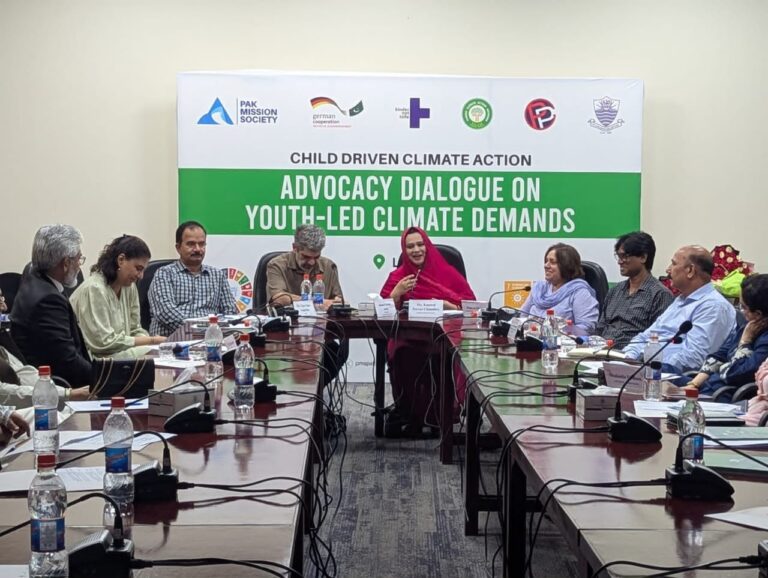
      A youth-led dialogue on climate action and greater youth participation in policymaking brought together parliamentarians, policymakers, environmental experts, civil society representatives and young people in Punjab. Pak Mission Society and Forman Christian College University jointly organised the event, where participants discussed climate policy, legislation and the role of young people in shaping environmental decisions. Parliamentary Secretary for Environment Kanwal Liaqat said Punjab Chief Minister Maryam Nawaz had identified climate change as a major priority after assuming office. She said the provincial government had since introduced several measures to address environmental challenges. Liaqat said brick kilns across Punjab must use zigzag technology to operate, while women environmental inspectors were helping strengthen monitoring and enforcement. She added that authorities were taking action against industries that pollute the air and water and were working to improve the condition of canals, streams and rivers. The dialogue also examined gaps in Punjab’s climate laws and policies. Members of Green Clubs presented five climate demands developed by children and young people, urging the government to give youth a stronger role in climate governance and policymaking. The event also featured a session titled “From Dreams to Reality: Advancing Youth-Led Climate Action in Pakistan,” moderated by environmental law expert Ahmed Rafi Alam. The concluding discussion focused on practical measures to address young people’s concerns and develop a roadmap for youth-led climate action in Pakistan. Participants included Rabia Chaudhry, Waqil Ahmed Khan, Dur-e-Shahwar, Dr Younas Zahid, Ahmed Rafi Alam, Hafiz Usman, Dr Abdul Qadir, Khurram Tauqeer and Shakeela Firdous.

  • | | |

    Syria sentences former President Bashar al-Assad to death

    A Syrian court has sentenced former President Bashar al-Assad to death over allegations of premeditated and deliberate killings. The sentence was issued in absentia. Assad was not present in court when the ruling was announced. The court also sentenced Atef Najib, a former security official who served during Assad’s rule, to death. According to the court, the charges against Assad relate to allegations of killings that were deliberately planned and carried out. The ruling marks a major development in the legal proceedings against the former Syrian president. Assad was removed from power before the court issued the sentence. The court proceeded with the case in his absence. It reached its decision based on the charges brought against him. Atef Najib was also named in the proceedings. He served as a security official during the Assad era and was handed the same punishment. The court described the alleged crimes as involving premeditation and deliberate killing. These allegations formed the basis of the death sentences. The development comes amid continued legal and political efforts concerning officials associated with the former Syrian government. The ruling against Assad could become an important part of the legal record surrounding his years in power. The former president has faced allegations related to serious abuses during the conflict in Syria. The latest court decision focuses specifically on charges of premeditated and deliberate murder. The sentence was announced without Assad appearing before the court. The court also issued its decision against Najib in connection with the same proceedings. Further legal developments could determine how the sentences are handled and whether additional proceedings follow. According to the reported ruling, the former Syrian leader was convicted on charges described as war crimes and crimes against humanity. The decision marks a significant development in legal proceedings against senior figures from Assad’s former government. Assad ruled Syria for nearly 24 years after succeeding his father, Hafez al-Assad, in 2000. His government faced years of armed opposition after protests erupted across the country in 2011. The conflict developed into a prolonged civil war involving Syrian government forces, opposition groups and several foreign powers. The war caused widespread destruction and a major humanitarian crisis. Millions of Syrians were forced to leave their homes, while large numbers sought refuge in neighbouring countries and beyond. Assad remained in power throughout most of the conflict. His government was accused by international organisations and rights groups of carrying out serious abuses against civilians. The former government repeatedly rejected many of the allegations. Assad’s rule eventually came to an end in December 2024. Opposition-led forces advanced towards Damascus, forcing him to leave the country with members of his family. He subsequently travelled to Moscow, where Russia provided him with protection. The latest verdict is the first death sentence against Assad under Syria’s transitional authorities. The new authorities have begun legal proceedings against officials and figures associated with the former government. Some defendants have appeared before the courts in person, while proceedings against others have been conducted in absentia. The case against Assad is therefore being closely watched as part of broader efforts to address alleged crimes committed during the conflict. The death sentence also represents a dramatic reversal for a leader who remained at the centre of Syrian politics for decades.

  • PFA deals four food outlets on M-2, imposes Rs3.5m fines

    GUJRANWALA: In one of the largest enforcement drives against food safety violations in recent months, the Punjab Food Authority (PFA) sealed four outlets of national food chains, imposed fines amounting to Rs3.5 million and destroyed more than one maund of substandard and prohibited food ingredients during a major crackdown at the M-2 Sukheki Motorway Service Area. The operation was led by Special Assistant to the Punjab Chief Minister Salma Butt along with Punjab Food Authority Director General Raja Mansoor Ahmad. Five well-known food chains were inspected as part of the campaign aimed at ensuring compliance with food safety standards at one of the province’s busiest motorway service areas. According to the Punjab Food Authority, inspection teams found multiple violations of food hygiene and safety regulations at the inspected outlets. Four national food chain outlets were sealed after authorities detected serious lapses that posed potential risks to public health. Officials said inspection teams found freezers and washing areas in an unhygienic condition, with stagnant foul-smelling water and poor sanitation. Mandatory supply records, return logs and other essential documentation were either incomplete or unavailable. Inspectors also reported widespread insect infestation, while food items and raw materials were found stored directly on the floor in violation of food safety protocols. The authority further noted that bakery products at some outlets were being offered without manufacturing and expiry dates, making it difficult to verify their freshness and safety for consumers. Open drains, poor housekeeping and an overall unhygienic environment were also cited among the violations observed during the inspection. Besides sealing the outlets, the Punjab Food Authority imposed cumulative fines of Rs3.5 million on the violators. More than one maund of substandard and prohibited food ingredients was confiscated and destroyed on the spot to prevent their use or sale. Speaking on the occasion, Punjab Food Authority Director General Raja Mansoor Ahmad said the authority was pursuing a province-wide campaign to eliminate food adulteration and fraudulent practices from the food supply chain. “Our teams are working to block every avenue of food adulteration and fraud across Punjab. Strict monitoring is being carried out from food production to its distribution, and there will be no compromise on quality,” he said. He added that the authority was implementing a zero-tolerance policy against violators under the directives of Punjab Chief Minister Maryam Nawaz Sharif. “The sale and distribution of substandard or expired food products will not be tolerated under any circumstances. Enforcement operations will continue to ensure consumers receive safe and hygienic food,” he said. The Punjab Food Authority has intensified inspections across the province in recent months as part of its ongoing efforts to improve food safety standards and strengthen regulatory enforcement at restaurants, bakeries, food chains and processing units.

  • Punjab launches 77 electric buses in seven more districts

    LAHORE – Chief Minister Punjab Maryam Nawaz on Thursday inaugurated 77 electric buses on 17 routes in seven more districts — Vehari, Lodhran, Kasur, Gujrat, Narowal, Sheikhupura and Nankana Sahib — expanding the province’s green public transport network. According to an official handout, women, students, senior citizens and persons with disabilities will travel free of charge, while the fare for all other passengers has been fixed at Rs20. The buses are equipped with wheelchair ramps, air conditioning, Wi-Fi, CCTV monitoring and charging ports. The handout said that 511 electric buses were already operational in 29 districts and one tehsil. With the latest addition, the number of operational electric buses has increased to 588 across 36 districts. Another 101 electric buses have already reached nine districts, while the remaining 488 buses are expected to arrive by the end of August 2026. It added that 1,500 more electric buses would be introduced across every tehsil of Punjab after the completion of the ongoing district-level project. Funds worth billions of rupees have been allocated for the initiative under the Annual Development Programme. Addressing the inauguration ceremony, the chief minister said the seven districts had received government-operated public transport for the first time. She described the Green Bus Service as a popular initiative that had made daily commuting easier for people travelling to educational institutions, hospitals and workplaces. CM Punjab said that during her visit to Azad Jammu and Kashmir, she realised the importance of the Green Bus Service, adding that demand for the facility there was higher than anywhere else she had seen. She expressed confidence that the number of electric buses in Punjab would reach 1,100 by the end of August. The handout further stated that 11 electric buses had been allocated to each of the seven districts. In Gujrat, the buses will operate on routes from the General Bus Stand to Mangowal and Daulat Nagar. In Narowal, services will run from the General Bus Stand to Manga Pull, Shakargarh, Pasrur Chowk, Zafarwal and on the circular route. In Kasur, buses will ply between the General Bus Stand and Kacha Paka, and between the General Bus Stand and Gajju Matta Stop. In Sheikhupura, services will operate from the e-bus depot to Shahdara Metro Station and Khanqah Dogran. In Nankana Sahib, the buses will run from the General Bus Stand to Mor Khunda and Warburton. In Lodhran, the routes will connect Shaheed Islam Hospital with Kehror Pacca and Dunyapur. In Vehari, the buses will operate from Government Graduate College to Fawara, and from Pir Mahal to Tibba Sultanpur.

  • | |

    Banglamung Presses Ahead with Drug Crackdown: 90-Day Operation Nets 7 Dealers, 20 Users and Large Seizures of Meth and Ice in South Pattaya and Third Road

    Pattaya, Thailand – July 25th, 2026 – Under the government’s drug prevention and suppression policy, Chonburi Governor Narit Niramaiwong and Banglamung District Chief Anusak Phiriyamon ordered Deputy District Chief for Security Affairs Khamphrai Lao-saen to lead a coordinated operation. Village Defense Volunteers (Or Sor), Bang Lamung administrative officers and a rapid-response special operations unit worked […]

  • | | |

    Two Israeli soldiers killed in southern Lebanon bl…

    Beirut: The Israeli military has confirmed that two of its soldiers were killed during operations in southern Lebanon, underscoring the continued volatility along the Israel-Lebanon border as cross-border hostilities show little sign of easing. In a statement issued on Wednesday, the Israel Defense Forces (IDF) identified the slain personnel as Major Harel Baron Stock, 34, a commander, and Sergeant Major Tamir Vaknin, 33. The military said both were killed in an explosion that occurred in the Lebanese town of Majdal Zoun, near the border. The IDF added that four other soldiers were seriously wounded in the same incident. The injured personnel were evacuated to nearby hospitals, where they are receiving medical treatment. Israeli authorities did not immediately provide further details on the nature of the explosion or whether it was caused by an explosive device or another form of attack. The incident comes amid continuing Israeli military operations across southern Lebanon, where strikes have intensified in recent months. The border region has witnessed repeated exchanges of fire, increasing fears of a broader escalation that could further destabilize the Middle East. Lebanese media have reported extensive damage in several southern districts following ongoing Israeli attacks. Large numbers of residents have been displaced, although many families have recently begun returning to their homes despite widespread destruction in affected areas. Security analysts say the latest casualties highlight the dangers faced by troops operating in the tense border zone, where military activity and intermittent clashes continue to pose risks to both soldiers and civilians. The deaths of the two Israeli soldiers are likely to renew attention on the fragile security situation along the Israel-Lebanon frontier, as diplomatic efforts to reduce tensions remain limited. With military operations continuing on both sides, concerns persist that any major incident could trigger a wider regional confrontation, further complicating an already volatile conflict.

Leave a Reply

Your email address will not be published. Required fields are marked *