irish songwriter glen
| |

Irish songwriter Glen Hansard dies in Dublin motor…

Irish singer-songwriter Glen Hansard, acclaimed for his work with The Frames and his Academy Award-winning song Falling Slowly, has died following a motorbike accident in Dublin. He was 56.

Emergency services were called to Lower Road in Lucan shortly before dawn on Wednesday. Police confirmed the crash involved only Hansard’s vehicle and appealed for witnesses. His management, ATC, said his family was “heartbroken” and asked for privacy.

Hansard’s career began on Dublin’s streets as a busker before he appeared in Alan Parker’s The Commitments in 1991. A year earlier he had founded The Frames, a band that became a cornerstone of Ireland’s rock scene. His international breakthrough came with Once, the 2007 film in which he starred alongside Czech musician Markéta Irglová. Their duet Falling Slowly won the Oscar for Best Original Song the following year and later formed the backbone of a Broadway musical that earned eight Tony Awards.

Beyond his collaborations with Irglová in The Swell Season, Hansard released solo records including Didn’t He Ramble, which earned a Grammy nomination in 2016. He also became a familiar face on Irish television as the original presenter of RTÉ’s Other Voices.

Hansard was widely admired for his charity work, particularly the Christmas Eve busk he launched in Dublin in 2010 to support the Simon Community. The annual event drew stars such as Bono, Sinéad O’Connor and Shane MacGowan. The charity described him as “a giant in the fight against homelessness” and said his compassion would remain part of his legacy.

Tributes poured in from fellow artists and public figures. Actor Chris O’Dowd wrote: “He did that. And he leaves it with us. Thanks Glen.” Musician Mike Scott of The Waterboys added: “Travel on well, Buddy. You made your dreams come true.” Irish Prime Minister Micheál Martin called Hansard “a talented musician and actor who made a significant contribution to Ireland’s cultural landscape.”

Hansard leaves behind his partner and their young son. In a recent interview he reflected on fatherhood, saying it had “upturned everything I know” and brought him to “a very different place than I’ve ever been before.”

Similar Posts

  • Thai Military Launches Operation Against Cambodian Troops Encroaching On Sa Kaeo

    BANGKOK – The Thai army’s Burapha Task Force initiated military action against Cambodian forces on Monday in Sa Kaeo province, accusing them of violating Thai sovereignty along the border. The 1st Army announced that the operation was launched “to reclaim Thai sovereign territory” but did not disclose specific locations or operational details, promising further updates […]

  • |

    Rani Mukerji honoured in Melbourne after three decades in film

    Rani Mukerji continues adding accolades to her three-decade-long career. On Friday, August 14, the 48-year-old actress received a Special Citation for Excellence in Acting at the Indian Film Festival of Melbourne. The honour recognised Mukerji’s broader contribution to Indian cinema, particularly her role in bringing Hindi-language stories to international audiences. Organisers specifically highlighted her work in socially significant films, alongside her humanitarian efforts. Reflecting on the milestone, Mukerji admitted she never imagined her work would resonate so strongly in a country as far from home as Australia. She said stepping into Bollywood as a young girl came with no expectation of this kind of global reach. She expressed gratitude that her films and characters had carried her across oceans over the years. According to her, being embraced so warmly by Australian audiences remains one of the most meaningful parts of her career. Mukerji described entertaining audiences worldwide as the greatest gift her profession has given her. She said Australia has consistently welcomed both her and Indian cinema with genuine warmth over the years. She added that storytelling has a unique way of connecting cultures without needing any kind of translation. According to her, emotions like love, laughter and hope speak a language that transcends borders entirely. Mukerji also reflected on how deeply her roles have shaped her as both an actor and a person. She explained that a performance only truly matters once it reaches someone else’s heart. She said knowing her work has travelled so far and stayed relevant for three decades feels genuinely humbling. According to her, every character she’s played has quietly influenced who she’s become over the years. She described playing women who laughed loudly, loved deeply and never stopped believing in themselves as one of the most rewarding parts of her journey. Mukerji said these roles didn’t just shape her craft, but helped her grow as a person too. Looking ahead, Mukerji is reportedly set to reunite with Shah Rukh Khan in his upcoming action-thriller “King,” releasing worldwide on December 24, 2026. She’s expected to play the mother of Suhana Khan’s character, joining an ensemble that includes Deepika Padukone and Amitabh Bachchan.

  • |

    Global oil prices decline as OPEC cuts 2026 demand forecast

    Global crude oil prices fell by more than $1 a barrel on Thursday after a period of gains, as concerns over weaker oil consumption in 2026 outweighed ongoing supply risks linked to the conflict in the Middle East. Brent crude futures declined by $1.29, or around 1.5%, to $87.69 per barrel, while US West Texas Intermediate (WTI) crude dropped $1.30, or about 1.6%, to $81.97 per barrel. Market sentiment was pressured by fresh estimates indicating that global oil demand could grow more slowly than previously expected next year. The weaker demand outlook has encouraged investors to reassess the strength of the oil market despite continued uncertainty over supplies from the Middle East. The latest decline came after the Organisation of the Petroleum Exporting Countries (OPEC) lowered its forecast for global oil demand growth in 2026 to 580,000 barrels per day in its monthly oil market report. This marks the fourth consecutive reduction in the organisation’s demand-growth projection. The ongoing conflict involving Iran and the United States and Israel has disrupted energy supplies and shipping routes, creating significant uncertainty in international oil markets. However, analysts say the economic and logistical disruptions are also weighing on fuel consumption and broader global demand. Despite the latest decline, supply concerns continue to provide some support to crude prices. Traders remain focused on developments in the Middle East, particularly the impact of the conflict on oil production, exports and major shipping routes. Analysts are therefore expecting continued volatility in global oil prices as markets balance two opposing factors: the risk of supply shortages caused by geopolitical tensions and the possibility of weaker demand resulting from disruptions to economic activity. The latest OPEC forecast is likely to remain an important factor for investors in the coming sessions, particularly as traders assess whether weaker demand can offset the supply risks currently affecting the global energy market.

  • |

    USS George Washington heads to Middle East as Linc…

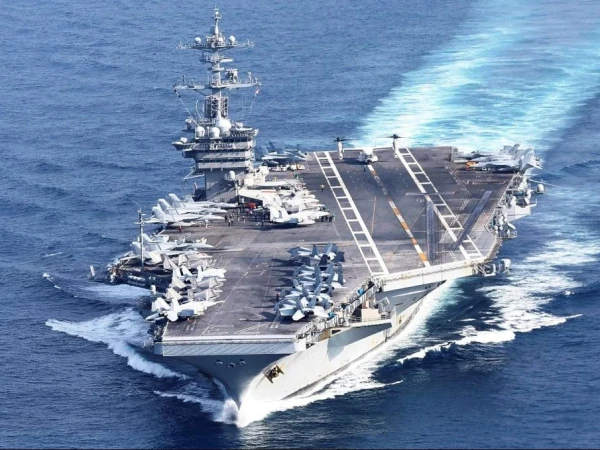
    WASHINGTON: The United States is preparing to send the aircraft carrier USS George Washington to the Middle East, where it is expected to replace the USS Abraham Lincoln after the carrier’s unusually long deployment in the region. The planned rotation comes as the United States remains deeply engaged in the ongoing conflict and heightened tensions with Iran, making the movement of another US carrier into the region closely watched. According to a Wall Street Journal report, the deployment plan had been prepared before the latest developments highlighted the difficulties facing the Abraham Lincoln and its crew. The planned handover, however, has underscored the growing strain on US Navy personnel and warships operating at sea for extended periods. Lincoln’s extraordinary deployment The USS Abraham Lincoln has been deployed in the region for more than eight months and has reportedly gone around 200 days without a port call. That is far longer than the typical schedule for a carrier, which would normally be expected to make a port visit after roughly 30 to 45 days. The prolonged deployment reflects the extraordinary operational demands created by the conflict and continuing instability across the Middle East. For the Lincoln’s crew, the arrival of a replacement carrier could provide an opportunity for rest and recovery after months of sustained operations. Washington moves west The USS George Washington had been operating in the western Pacific and recently visited Vietnam before beginning its journey towards the Middle East. The carrier has been moving west through the Strait of Malacca, before continuing across the Indian Ocean towards the Middle East. Its deployment is expected to maintain continuity in the US Navy’s carrier presence while allowing the Abraham Lincoln to leave the region. Aircraft carriers are among the US Navy’s most important military assets. They function as mobile bases at sea, carrying fighter aircraft, helicopters and other equipment capable of supporting operations far from US territory. Their mobility allows Washington to maintain airpower without relying entirely on land-based facilities in countries near a conflict zone. New carrier presence draws attention The arrival of the George Washington comes at a particularly sensitive moment. With tensions between Washington and Tehran remaining high and military operations continuing, the movement of a US carrier is likely to attract close attention from regional governments and military planners. The Navy’s immediate objective is understood to be maintaining an uninterrupted carrier presence rather than creating a completely new deployment structure. Still, the rotation highlights the pressures created by prolonged wartime deployments. For the United States, keeping powerful naval assets in the region provides strategic flexibility. For sailors aboard the Abraham Lincoln, however, the arrival of the George Washington could finally offer a long-awaited chance to return home and recover after one of the carrier’s most demanding deployments.

  • |

    Air India to introduce mandatory drug testing for all Pilots

      Air India is set to introduce mandatory substance testing for all its pilots from Thursday, going beyond the drug-screening requirements currently imposed by aviation regulators. The decision comes days after the captain of an Air India flight involved in a serious mid-air incident reportedly tested positive for marijuana, raising fresh concerns about flight safety and crew fitness. According to an internal memo circulated by the airline, the expanded testing programme will check pilots for substances and medications prohibited under aviation regulations. The screenings will be carried out at several locations, including the airline’s training academy in Gurugram, briefing centres and offices, as well as other facilities designated according to pilots’ home bases. Pilots working for Air India Express, the airline’s budget subsidiary, will also be included in the new testing programme. Air India said in the memo that although existing regulations already require airlines to conduct random testing on at least 10% of their flight crew for psychoactive substances every year, the company believes additional measures are necessary. The airline said the broader testing initiative was being introduced to strengthen safety standards and reassure passengers, employees and other stakeholders. The announcement follows an investigation into an incident involving an Air India Airbus A320neo travelling from Phuket, Thailand, to New Delhi on August 4. During the flight, the aircraft unexpectedly lost around 300 feet, or approximately 91 metres, of altitude while cruising. According to a source familiar with the matter, the aircraft’s captain tested positive for marijuana during a confirmatory drug test. The incident has prompted increased scrutiny of pilot health and safety procedures at the airline. The flight was carrying 137 passengers and eight crew members when it experienced what authorities described as a “momentary altitude variation” while flying over Odisha in eastern India. Although the aircraft subsequently continued its journey and landed safely in Delhi, the sudden change in altitude reportedly resulted in injuries to 13 passengers and four crew members. Indian aviation authorities have launched an investigation into the incident to determine what caused the sudden altitude change and whether any operational or human factors were involved. Earlier, Reuters reported that India’s Ministry of Civil Aviation had summoned Air India Chief Executive Officer Campbell Wilson following the incident. A source familiar with the matter said the summons was related to the investigation and the airline’s handling of the situation. Air India and the Ministry of Civil Aviation did not immediately respond to requests for comment regarding the summons or the investigation. Wilson, however, told news channels that the airline had provided the ministry with an update on the progress of the investigation. The introduction of mandatory testing represents a significant expansion of Air India’s internal safety measures. By testing its entire pilot workforce rather than relying solely on the minimum regulatory requirement for random checks, the airline aims to strengthen oversight of substances that could potentially affect pilots’ ability to perform their duties. The move also comes at a sensitive time for Air India, as the airline faces continued scrutiny over operational safety following several recent incidents. Aviation authorities and industry observers are expected to closely monitor the findings of the investigation into the Phuket-to-Delhi flight. Air India’s expanded testing programme is intended to ensure that pilots remain fit to operate aircraft and comply fully with aviation safety regulations. The airline said the initiative would reinforce its commitment to maintaining high safety standards and restoring passenger confidence as investigations into the August 4 incident continue.

  • |

    Lebanese PM vows efforts to secure full Israeli withdrawal

    Lebanese Prime Minister Nawaf Salam has said the government will continue working through diplomatic and political channels to secure a complete Israeli withdrawal from southern Lebanon. His remarks came during a visit to the village of Zawtar al Gharbiyah where the Lebanese army has recently expanded its deployment following a new security agreement aimed at reducing tensions along the border. Speaking to residents and military personnel, Salam said Lebanon remains committed to restoring full control over all its territory. He stressed that the government would continue its efforts to ensure Israeli forces leave the remaining occupied areas in the south while supporting the Lebanese army as it strengthens its presence in the region. The prime minister’s visit followed talks between Lebanese President Joseph Aoun and US President Donald Trump at the White House. During the meeting, Aoun urged the United States to support Lebanon’s demand for a complete Israeli withdrawal from its territory as part of ongoing efforts to stabilise the border. Last month, Lebanon and Israel agreed to a US backed framework under which the Lebanese army would gradually deploy in designated areas while Israeli troops would withdraw from selected locations. The agreement also calls for the Lebanese military to take responsibility for disarming Hezbollah in those zones. Hezbollah has rejected the deal and insists it will not surrender its weapons. Tensions remain high despite the agreement. Lebanon’s army said Israeli forces opened fire near soldiers who were deploying in Zawtar al Gharbiyah on Tuesday. The Israeli military responded by saying its troops fired warning shots after Lebanese soldiers entered an area outside the agreed deployment zone. The border region has remained unstable since Hezbollah entered the regional conflict by launching attacks against Israel in support of Iran earlier this year. Israel responded with large scale airstrikes and a ground offensive that caused widespread destruction across southern Lebanon. Although violence has eased following recent diplomatic agreements, occasional military exchanges continue. During his visit, Salam raised the Lebanese flag in the village and promised that the government would focus on rebuilding damaged communities. He said authorities would work alongside the army to reopen roads, clear rubble, restore essential public services, and create conditions that allow displaced residents to return home safely. Many local residents gathered near the village hoping to receive permission to inspect their homes after months of conflict. Some expressed relief over the arrival of the Lebanese army, saying its presence gave them confidence that life could gradually return to normal. However, military officials advised civilians to wait until security operations in the area are completed before returning. The army is currently conducting security sweeps in villages close to Israeli controlled positions to ensure the areas are safe for returning residents. Officials say these operations are necessary because of the continued risk of military activity near the border. Meanwhile, Lebanon’s state news agency reported additional Israeli drone strikes and artillery shelling in nearby areas on Wednesday. It also said Israeli troops entered the Dubieh area near the border town of Shaqra and raised an Israeli flag over the historic Dubieh Castle. Lebanese Culture Minister Ghassan Salame strongly criticised the move, describing it as a provocative action that violates Lebanon’s sovereignty. He said the government remains committed to regaining control over all historic sites and national territory in the south. The latest incident follows Israel’s seizure of the historic Beaufort Castle in May. International attention has also turned to the condition of several historic castles in southern Lebanon. The United Nations is expected to consider adding five of these sites, including Beaufort Castle and Dubieh Castle, to its list of cultural landmarks at risk due to ongoing conflict. Lebanese officials hope international support will help protect these important heritage sites while diplomatic efforts continue to prevent further escalation along the border.

Leave a Reply

Your email address will not be published. Required fields are marked *