imran khan shifa
| | | |

Imran Khan shifa hospital transfer: PTI announces …

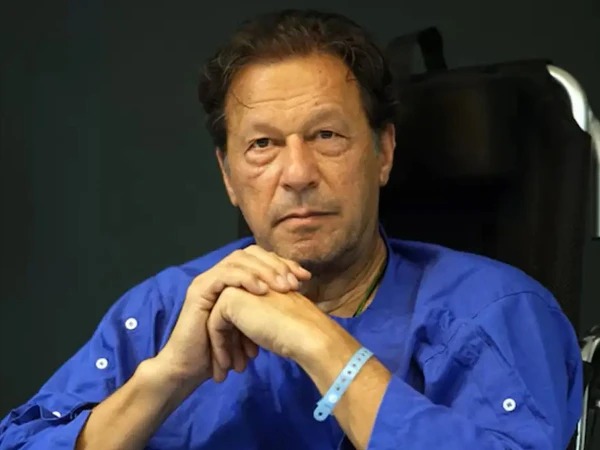
Pakistan Tehreek-e-Insaf (PTI) has decided to approach the Supreme Court with a contempt of court petition if former prime minister and PTI founder Imran Khan is not transferred to Shifa International Hospital by Thursday night.

According to PTI sources, the party is waiting for implementation of the Supreme Court’s order regarding Imran Khan’s Shifa Hospital transfer. If no progress is made by the deadline, the party plans to file the contempt petition on Friday morning.

The Supreme Court had ordered on August 18 that Khan, who remains imprisoned, be transferred to Shifa International Hospital in Islamabad for medical assessment and treatment. The court also directed the formation of a medical board, including specialists and Khan’s personal physician.

The order came amid continuing concerns surrounding Khan’s health and access to medical treatment. The court also issued directions concerning family meetings and communication with his son.

The government, however, challenged the decision. On August 19, it filed a review petition arguing that the order to move Khan to a private hospital should be reconsidered. The government has maintained that existing prison and legal procedures should be followed regarding treatment of prisoners.

The legal dispute intensified on Thursday when the Supreme Court Registrar’s Office returned the government’s review petition after raising objections. Sources said the government intends to address the objections and submit the petition again.

PTI has maintained that the Supreme Court’s order should be implemented without delay. Party representatives have warned that failure to comply with the directive could lead to contempt proceedings against the officials responsible for implementation.

The developing situation has created another legal and political confrontation between PTI and the government. The next several hours could determine whether the matter is resolved administratively or moves into another round of proceedings before the Supreme Court.

For now, PTI’s position is clear: if Imran Khan is not shifted to Shifa International Hospital by Thursday night, the party says it will seek legal action through a contempt of court petition on Friday morning.
Similar Posts

  • | |

    Iqbal Chair at Heidelberg University nears restora…

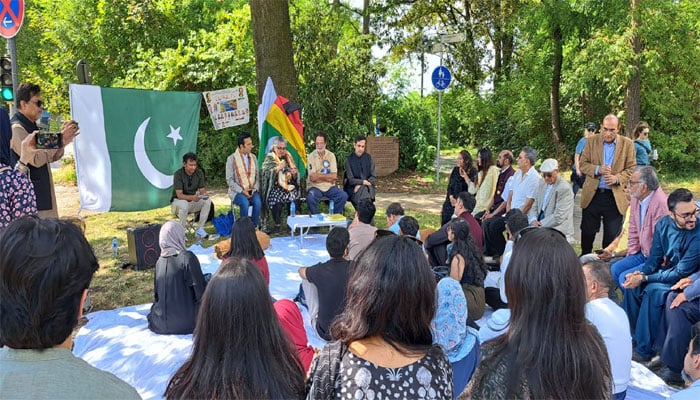
    HEIDELBERG: Pakistan’s Ambassador to Germany, Saqlain Syedah, has announced that the restoration of the Allama Iqbal Chair at Heidelberg University is in its final stages, describing it as a major step towards strengthening academic and cultural ties between Pakistan and Germany. She made the announcement while addressing a literary gathering and mushaira held at Iqbal-Ufer, located on the banks of the River Neckar in the historic German city of Heidelberg. The event brought together members of the Pakistani community, writers, poets, academics and representatives of local organisations. The ceremony was chaired by renowned poet and community leader Syed Iqbal Haider, while Pakistan’s ambassador attended as the chief guest. Among the distinguished participants were Heidelberg City Council member Waseem Butt and German professor Hans Herder, whose speech in Urdu received warm appreciation from the audience. Speaking at the event, Waseem Butt announced that Allama Iqbal’s 150th birth anniversary in 2027 would be celebrated in Heidelberg with special ceremonies and cultural events. In her address, Ambassador Saqlain Syedah highlighted the importance of literary gatherings in promoting the Urdu language and preserving Pakistan’s cultural heritage abroad. She also spoke about the deep historical and intellectual connection between Allama Muhammad Iqbal and the city of Heidelberg, where the philosopher-poet spent part of his academic life. The ambassador praised Syed Iqbal Haider for organising the literary event and thanked all participants for keeping Urdu literature and Pakistani cultural traditions alive in Germany. Syed Iqbal Haider also reflected on Allama Iqbal’s close association with Heidelberg and the River Neckar. He said Iqbal’s message of selfhood, human dignity and intellectual awakening continues to serve as a bridge between Eastern and Western thought. During the ceremony, the ambassador shared the encouraging news that practical steps to restore the Allama Iqbal Chair at Heidelberg University had reached their final phase. She expressed hope that the initiative would further enhance educational cooperation and cultural exchanges between Pakistan and Germany.

  • | |

    SBP appoints 10 primary dealers for FY27

    KARACHI: The State Bank of Pakistan (SBP) has appointed 10 financial institutions as Primary Dealers (PDs) and two institutions as Special Purpose Primary Dealers (SPDs) for the fiscal year 2026-27. The appointments will strengthen the government’s domestic borrowing programme and support the country’s financial market. The government continues to rely heavily on domestic borrowing to finance its fiscal requirements. In this system, primary dealers play an important role by participating in government debt auctions and helping raise funds through Treasury Bills and Pakistan Investment Bonds. According to the central bank, United Bank Limited (UBL), National Bank of Pakistan (NBP), and Bank Alfalah secured the top three positions among primary dealers during the fiscal year 2025-26. Their rankings were based on overall performance in government securities auctions and market activities. The 10 institutions selected as Primary Dealers for FY2026-27 are United Bank Limited, National Bank of Pakistan, Bank Alfalah, Habib Bank Limited, Habib Metropolitan Bank, MCB Bank, The Bank of Punjab, Pak Oman Investment Company, JS Bank, and Citi Bank NA Pakistan Branch. The State Bank has also appointed the Central Depository Company of Pakistan Limited (CDC) and the National Clearing Company of Pakistan Limited (NCCPL) as Special Purpose Primary Dealers for the new fiscal year. The appointments were made after evaluating applications submitted by financial institutions under the eligibility criteria laid down in the Primary Dealer System Rules. The central bank had invited applications for the new fiscal year through a circular issued earlier this year. Primary dealers are responsible for purchasing government securities directly from the central bank during auctions. They then distribute these securities among commercial banks, financial institutions and other investors. Their participation ensures that government borrowing operations continue without disruption. These institutions also play an important role in the secondary market by providing liquidity and facilitating the buying and selling of government securities. Their presence helps improve market efficiency and contributes to transparent price discovery. The role of primary dealers has become increasingly important as Pakistan continues to depend on domestic sources to meet its financing needs. Through their participation in debt auctions, they help the government raise funds while supporting stability in the country’s financial system.

  • |

    Snapchat cracks down on fully AI-made videos flooding Spotlight

    Snapchat is now drawing a clear line between videos made by humans and those made entirely by machines. The company is betting this move will make its Spotlight feed worth scrolling through again. On Friday, Snap confirmed a major change to its Spotlight recommendation system. Videos that are completely AI-generated will no longer be surfaced through recommendations. Creators can still post this type of content on the platform. However, it will only reach their existing followers going forward. This effectively cuts off the discovery boost that once made Spotlight appealing for fully automated content. Snap isn’t rejecting AI tools altogether, though. Videos edited or enhanced using Snapchat’s own built-in AI features will remain eligible for recommendations. These videos will also carry a visible label, letting viewers know AI played a role in the process. According to Snap, the real issue here comes down to authorship, not the technology itself. Content generated purely from a prompt, without any human involved in filming, performing, or editing, is what’s being pushed out of recommendations. This decision follows similar moves from other major platforms in recent months. YouTube recently revised its monetization policy to exclude videos built around generic, template-based content. That update came after reports last year revealed that several AI-driven creators had built massive followings and earned significant ad revenue through such content. LinkedIn has made changes of its own as well. The platform is now allowing users to report AI-generated posts. At the same time, it’s removing its built-in AI writing prompt that previously encouraged automated post creation. Substack has taken things a step further. The platform introduced a detection system designed to identify AI-generated articles. Speaking on the matter, CEO Chris Best warned that platforms which continue rewarding fake, synthetic content risk starting what he called a race to the bottom. As for Snap, some details remain unclear. The company has not explained exactly how it plans to distinguish fully AI-generated videos from AI-assisted ones at a larger scale. It also hasn’t confirmed whether this policy will eventually expand beyond just Spotlight recommendations into other parts of the app. For now, though, the move adds to a growing pattern across social media. Platforms increasingly appear to be prioritising authentic, human-made content over mass-produced material flooding user feeds every day.

  • | |

    Overseas Pakistanis welcome proposal for creation …

      Overseas Pakistanis have welcomed the proposal to create new provinces in the country, describing it as a positive step toward improving administrative efficiency, strengthening governance and bringing public institutions closer to citizens. Rajah Nasir Hussain, a representative of overseas Pakistanis and a prominent businessman from Gujar Khan, expressed his support for the proposal . He said the idea of creating seven provinces should be considered alongside the establishment of an eighth province comprising Islamabad and the Potohar region. According to Hussain, the creation of new provinces could help address administrative challenges and improve the delivery of public services. He stressed, however, that any decision regarding the creation of new provinces should be made through constitutional amendments and broad political consensus. He said the issue should not be treated as a matter of political rivalry or regional competition. Instead, it should be viewed as an administrative reform aimed at improving governance and ensuring that citizens in different parts of the country receive better access to state institutions and public services. Hussain also highlighted the important role played by overseas Pakistanis in the national economy. He said millions of Pakistanis living and working abroad contribute significantly to the country through remittances. The funds sent by overseas Pakistanis provide vital support to Pakistan’s economy and help strengthen the country’s financial system. He noted that overseas Pakistanis continue to make economic contributions despite living outside the country. Their remittances support families, increase foreign exchange inflows and contribute to economic stability. In his view, their role should therefore be recognised not only in economic terms but also through greater representation in the country’s administrative and political framework. Hussain argued that the government and political leadership should explore new mechanisms through which overseas Pakistanis can participate more effectively in national affairs. He said their experience of living and working in different countries gives them exposure to modern administrative systems, business practices and governance models that could potentially benefit Pakistan. He further suggested that overseas Pakistanis should have greater opportunities to contribute to policy discussions concerning economic development, investment, governance and administrative reforms. Their participation, he said, could help policymakers understand international practices and identify approaches that may be adapted to Pakistan’s circumstances. Regarding the proposed new provinces, Hussain emphasised the importance of consultation among all stakeholders. He said political parties, provincial governments, civil society, constitutional experts and representatives of the affected regions should be involved in the discussion before any final decision is taken. He maintained that the creation of provinces should be based on administrative requirements, population, geographical considerations, economic viability and the interests of local communities rather than short-term political objectives. The proposal to consider Islamabad and Potohar as an eighth province, he said, should also be examined within this broader framework. Such a move, if supported by constitutional and political consensus, could potentially improve administrative management and representation in the region. Hussain reiterated that overseas Pakistanis support reforms aimed at strengthening the country’s administrative structure. He said the debate over new provinces provides an opportunity to consider broader governance reforms while ensuring constitutional procedures and national consensus. He concluded that overseas Pakistanis should be regarded as important stakeholders in Pakistan’s future. Given their economic contributions and national role, developing effective mechanisms for their political and administrative representation should be considered a priority alongside wider institutional reforms.

  • | | |

    Sister reveals shocking details of Imran’s check…

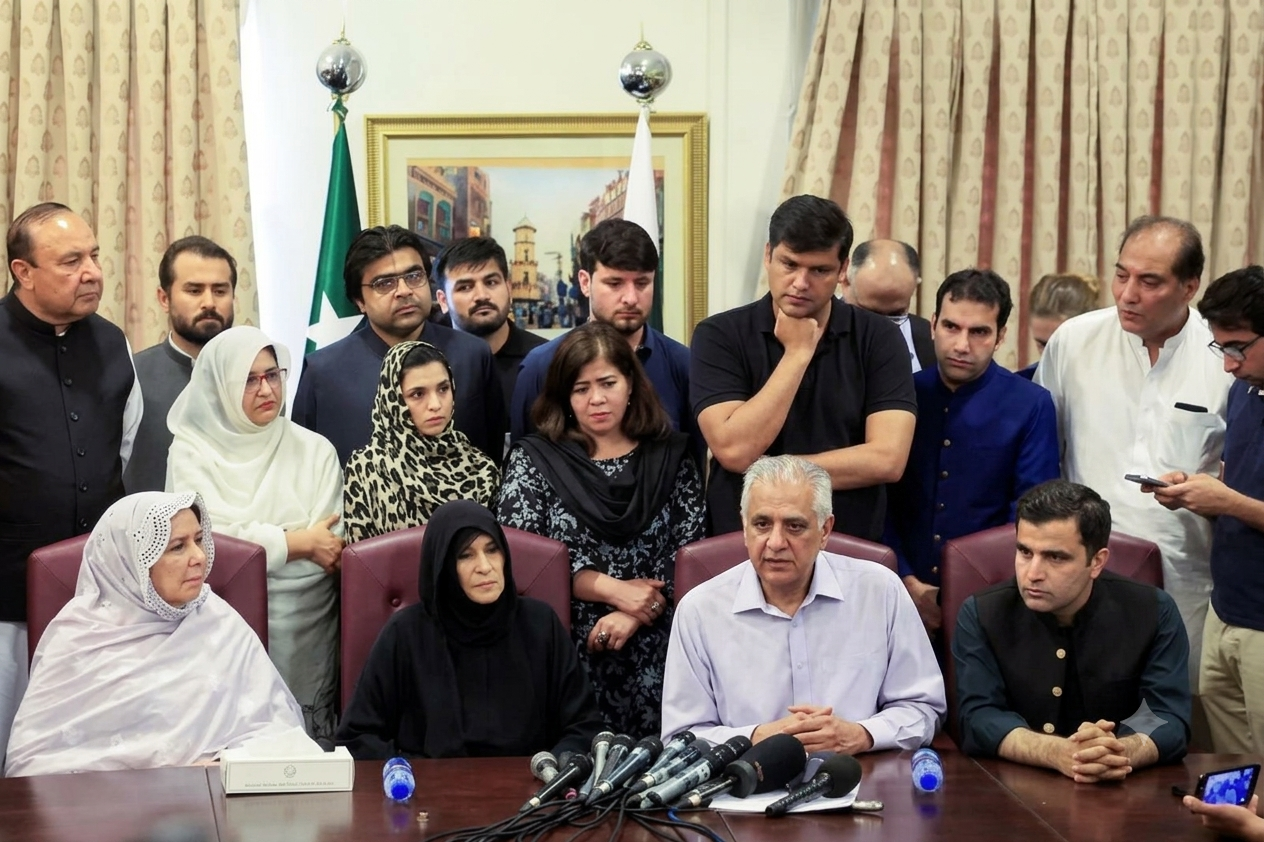
    Uzma Khan, sister of incarcerated former prime minister Imran Khan, said Friday that the PTI founder had complained of health problems that he believed were connected to his prolonged solitary confinement. She made the remarks during a press conference in Islamabad alongside Imran’s personal physician, Dr Faisal Sultan, following his transfer to hospital for a medical examination. Uzma said she and Dr Sultan were asked to reach Adiala Jail on Friday evening after receiving a phone call. According to her, they arrived at the prison at around 8pm to 8:30pm. She said they were taken to a room belonging to a deputy superintendent of police. After some time, she alleged, Dr Sultan was asked to leave the room with a police official while she was taken separately by a female police officer. Uzma said police officers did not explain where she was being taken or provide clear information about Dr Sultan. She was eventually taken to the Pakistan Institute of Medical Sciences (Pims), despite the Supreme Court directing that Imran be shifted to Shifa International Hospital for a medical checkup. According to Uzma, officials told her the visit to Pims was related to a follow-up examination of Imran’s eye condition. She described the hospital environment as unusually dark and said she was taken through the building with the help of a mobile phone flashlight before being brought to an office. Uzma said she was later taken upstairs, where she unexpectedly saw her brother. She recalled that Imran appeared surprised and shocked to see her after a long period apart. He reportedly introduced her to the doctors as his sister, saying they were meeting after about 10 months. Uzma said she informed Imran that he had been brought for a medical examination and was expected to be taken to Shifa International Hospital afterward. She also asked about Dr Sultan but said she was not given a clear answer. The examination eventually focused on Imran’s eye. Uzma said several doctors were present, although she was familiar with only one of them, whom she identified as Dr Arif. Imran has previously received treatment at Pims following the diagnosis of right central retinal vein occlusion, an eye condition identified earlier this year. The Supreme Court had directed authorities to arrange Imran’s medical examination while also instructing that information about his health should not be used for political purposes.

  • |

    Arizona police release ransom notes in ongoing search for abducted mother of US TV presenter Savannah Guthrie

    Police in Arizona have released the text of two ransom notes six months after the abduction of 84-year-old Nancy Guthrie, mother of prominent US television presenter Savannah Guthrie. The Pima County Sheriff’s Office made the decision to publish the communications in the hope that members of the public might recognise distinct linguistic patterns or writing habits attributable to the perpetrator. Nancy Guthrie was taken from her home near Tucson, Arizona, on 31 January. The first note, received by a local news station on 2 February, demanded $4 million in Bitcoin within five days, threatening that she would be killed if a total of $6 million was not paid by 9 February. The note included specific details regarding the crime scene, referencing a damaged backyard floodlight and a white smartwatch left on her bedroom floor. A second note arrived four days later, claiming that Nancy Guthrie had died from a heart-related condition shortly after her abduction and had been “buried in nature”. However, law enforcement officials stated they cannot confirm her death and continue to treat the investigation as an active missing persons and kidnapping case. Savannah Guthrie, who hosts NBC’s Today show, has released multiple public appeals urging the abductors to reveal the location of her mother’s remains so the family can bring her home.

Leave a Reply

Your email address will not be published. Required fields are marked *