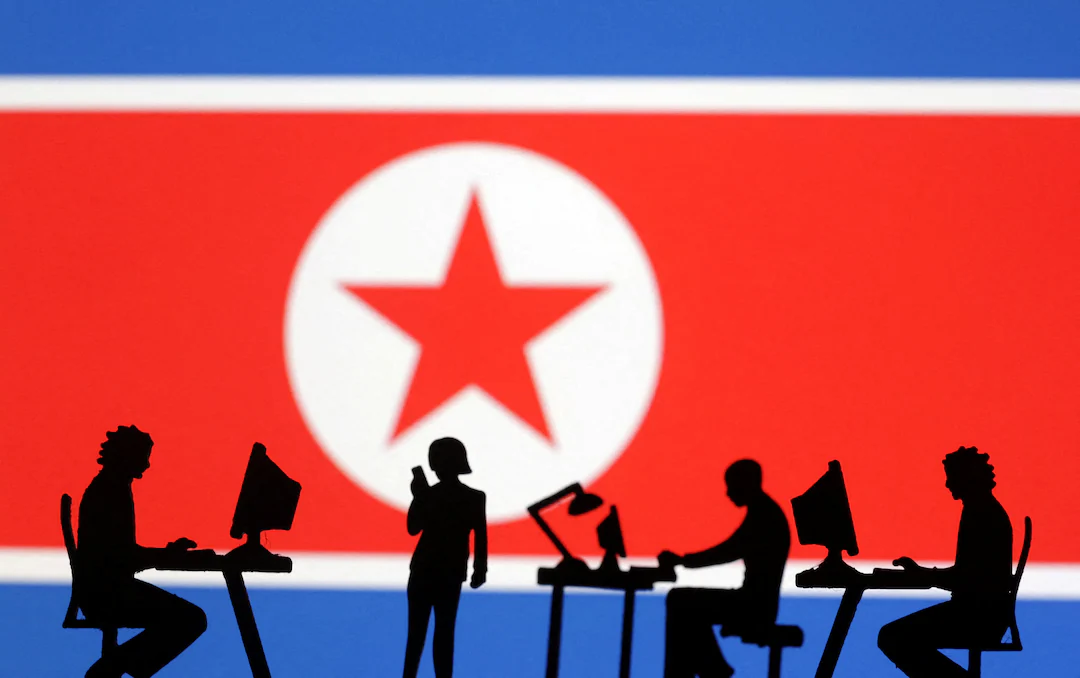
north korean hackers
|

North Korean hackers develop AI tools for cyberattacks

SEOUL: A North Korean-linked hacking group has reportedly expanded its use of artificial intelligence to strengthen cyberattacks, automate operations and analyse stolen data.

The group, identified as Kimsuky, has developed and collected a range of AI-related tools that could help its operators conduct attacks more efficiently, according to a South Korean cybersecurity company.

The company said it discovered infrastructure linked to Kimsuky containing several programs designed to run and manage artificial intelligence models locally. These included Ollama, GPT4All and Msty.

The hackers also appeared to be using retrieval-augmented generation technology. The system can help AI models search and process large collections of documents.

Researchers said the use of locally operated AI models could allow the group to analyse sensitive information without sending data to external AI services. This could give hackers greater control over stolen material and reduce their reliance on third-party platforms.

The investigation also uncovered AI agent development frameworks, speech-to-text software and an AI-assisted coding tool called Cursor.

According to the cybersecurity firm, the findings indicate that Kimsuky may be moving beyond the simple use of generative AI for creating phishing messages.

The group could now be seeking to integrate existing AI models into different stages of its cyber operations. These may include malware development, stolen-data analysis and attack automation.

Researchers also identified documents related to finance and cryptocurrency on the infrastructure. Some of the files appeared to have been generated using artificial intelligence.

The documents were designed to look like legitimate investment reports and other professional workplace material. Such files could potentially be used as decoys or to make malicious campaigns appear more credible.

The findings have not been independently verified. However, cybersecurity researchers and government agencies have repeatedly linked North Korean state-backed groups to international cyber operations.

North Korean cyber units have been accused of conducting espionage campaigns, stealing money and targeting cryptocurrency-related assets. Authorities in the United States and South Korea have previously warned about the activities of such groups.

Kimsuky has long been associated with cyber-espionage operations targeting governments, organisations and individuals. The group has also been accused of gathering intelligence to support North Korea’s strategic interests.

The latest findings point to a growing role for artificial intelligence in cyber operations. Security researchers have warned that AI tools can make phishing campaigns more convincing and help attackers process information and develop malicious software more quickly.
Similar Posts

  • |

    Kanikka Kapur’s ‘Batwara 1947’ look has fans convinced it is Kiara Advani

    A fresh poster from Batwara 1947 is making waves online for a rather unexpected reason. Fans have started comparing debutant actress Kanikka Kapur’s appearance in the poster to Bollywood actress Kiara Advani. The buzz began after the poster dropped on July 30. It featured Kanikka alongside co-star Karan Deol. The partition-era drama boasts a solid ensemble cast. This includes Sunny Deol, Preity Zinta, Shabana Azmi, Ali Fazal, Karan Deol, and Kanikka Kapur in key roles. Almost immediately after the poster surfaced, comment sections lit up. Viewers pointed out a striking resemblance between the two actresses. In the poster, Kanikka wears a floral outfit paired with a light brown dupatta. Her makeup was kept simple and understated. That styling choice seemed to be what triggered the comparisons in the first place. Kanikka shared the same poster on her personal Instagram account. Alongside it, she wrote a simple caption. “Watch #Batwara1947 in cinemas this Partition Day, 14th August,” she posted. The comments under her post soon filled up with reactions from fans. One user wrote, “Congratulations @kanikkakapur I really thought it was Kiara Advani on the poster!” Another commented, “I thought it is Kiara Advani…but happy for you Kanika ji…God bless you with huge success.” Many other users chimed in with similar observations. Kiara Advani’s name kept coming up repeatedly across the replies. For Kanikka Kapur, Batwara 1947 marks her big Bollywood debut. Before stepping into films, she built a name for herself on television. She played the role of Suman Tiwari in Ek Duje Ke Vaaste 2. She has also worked on digital projects, including Dono, Modern Parivar, and Murderbad. Separately, director Rajkumar Santoshi recently shared an emotional detail about the film. He revealed that Batwara 1947 was the very last film veteran actor Dharmendra watched before his death. According to Santoshi, Dharmendra grew emotional while listening to the film’s narration. Tears welled up in his eyes as he offered his blessings for the project. Santoshi also mentioned that after watching the film, Dharmendra praised it warmly. He reportedly told the director that the film would go on to do exceptionally well. Batwara 1947 is all set to hit cinemas on August 14, 2026, coinciding with Partition Day.

  • |

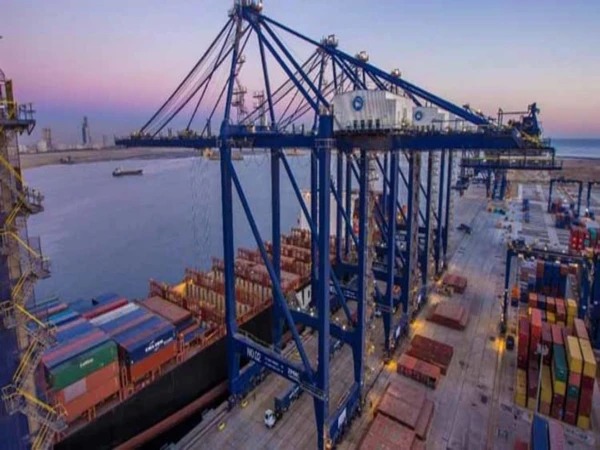
    Sindh plans PPP model to transform Keti Bandar into deep-sea port and economic hub

    KARACHI: Sindh Chief Minister Syed Murad Ali Shah has directed the provincial Investment Department to urgently formulate a comprehensive public-private partnership (PPP) framework for transforming Keti Bandar into a modern deep-sea port and a major commercial, industrial and energy centre. The directive was issued during a meeting held at the Chief Minister’s House on Saturday, where officials discussed a broader plan to develop Sindh’s coastal belt and unlock the economic potential of the Indus Delta. The proposed project is being planned in line with the vision associated with Shaheed Mohtarma Benazir Bhutto and aims to establish Keti Bandar as an important maritime gateway connecting port operations with industrial, logistics, fisheries and energy-related activities. Integrated economic corridor planned Chairing the meeting, Chief Minister Murad Ali Shah said Keti Bandar should be developed as part of an integrated maritime and economic corridor rather than as a standalone port project. He directed the relevant departments to prepare detailed proposals covering port infrastructure, industrial estates, transportation and logistics networks, fisheries, energy facilities and tourism. The chief minister also called for a phased implementation strategy that would identify the project’s immediate, medium-term and long-term development requirements. According to the proposed plan, the Keti Bandar Integrated Corridor would become a major engine for economic activity, employment generation and investment in Sindh. The project is also expected to provide a platform for attracting domestic and foreign investors to the province’s coastal areas. PPP framework to attract private investment The Sindh government intends to develop the project through a PPP model, allowing private-sector investors to participate in financing, construction, development and operation of various components. Under the proposed framework, Keti Bandar could eventually host a deep-sea port alongside logistics and warehousing facilities, industrial zones, energy infrastructure, fisheries-related businesses and tourism projects. The government believes that bringing private capital and expertise into the development process could help accelerate infrastructure construction while reducing the immediate financial burden on the provincial government. Officials have been directed to develop an investment-oriented model that clearly identifies potential projects, financing requirements, revenue opportunities and possible areas of private-sector participation. $1 billion to $2.5 billion investment potential According to the Sindh budget 2026-27, the proposed Keti Bandar Maritime, Fisheries and Petroleum Economic Corridor has an estimated investment potential of between $1 billion and $2.5 billion. The planned corridor would include a modern fishing harbour, seafood processing and export facilities, petroleum-handling terminals, logistics infrastructure and industrial support zones. The development of seafood-processing facilities is expected to create opportunities for value addition and increase the potential for exports from Sindh’s coastal areas. Similarly, improved port and logistics infrastructure could facilitate the movement of goods and provide industries with better access to domestic and international markets. Keti Bandar as future energy gateway Chief Minister Shah has also instructed officials to explore the potential of Keti Bandar as a future energy gateway. The proposed energy infrastructure would include facilities for the import and handling of LNG, RLNG and LPG, along with other supporting infrastructure required for energy-related operations. The development of such facilities could allow Keti Bandar to play a role in meeting future energy requirements while creating opportunities for investment in storage, transportation and related industries. A feasibility study has already identified approximately 4,000 acres of land for the proposed development. Officials have been asked to incorporate the identified land into the broader planning process and determine the infrastructure requirements for different components of the corridor. Focus on coastal and industrial development The proposed project is expected to have a broader impact beyond port operations. The provincial government plans to combine maritime infrastructure with industrial development, logistics, fisheries, energy and tourism to create an integrated economic zone. The Indus Delta and surrounding coastal areas have significant potential for fisheries and other maritime activities, but inadequate infrastructure has historically limited their commercial development. The government believes that modern transport links, processing facilities, storage infrastructure and port connectivity could help unlock this potential and generate new employment opportunities for local communities. The development of tourism facilities is also being considered as part of the wider strategy, with officials tasked with identifying suitable investment opportunities along the coastal belt. Long-term economic vision The proposed Keti Bandar project forms part of Sindh’s broader ambition to strengthen its position as a maritime and logistics centre in the region. The provincial government aims to use the coastline’s strategic location to attract investment, expand trade-related infrastructure and promote industrial activity. For the plan to succeed, however, authorities will need to complete detailed feasibility studies, establish an effective PPP structure, address infrastructure and connectivity requirements and ensure that environmental and coastal considerations are incorporated into the development process. The chief minister has directed the Investment Department and other relevant agencies to move quickly on the project and prepare a comprehensive roadmap. If successfully implemented, the Keti Bandar Integrated Corridor could transform the coastal area into a major maritime gateway while creating new opportunities in port operations, logistics, fisheries, energy, manufacturing and tourism.

  • | |

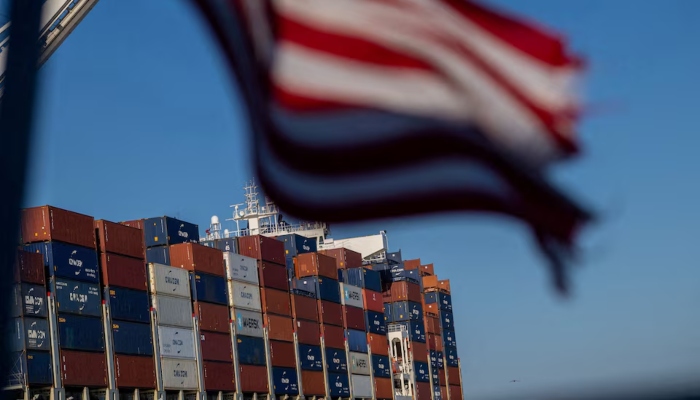
    US imposes tariffs on Pakistan and more than 60 trading partners

    The United States has introduced a new round of tariffs on imports from more than 60 trading partners, including Pakistan, as part of a broader effort to strengthen measures against goods allegedly linked to forced labour. The new duties officially came into effect on July 24 and are expected to affect trade between the United States and a large number of countries. Under the latest policy, Pakistan has been placed in the group of countries whose exports to the United States will face a 10% tariff. The same tariff rate has also been imposed on imports from countries including India, Bangladesh, the United Kingdom, Canada, Argentina, Cambodia, Ecuador, El Salvador, Guatemala, Honduras, Indonesia, Jordan, Malaysia, Mexico, Sri Lanka and Trinidad and Tobago. Another group of 38 countries will face a 12.5% tariff on goods exported to the US under the same policy. The US administration said the decision was taken because these countries had failed to effectively prevent the import or production of goods allegedly made through forced labour. According to American officials, stronger enforcement of labour laws and better monitoring of supply chains are needed to stop products made under forced labour conditions from entering international markets. The new measures are part of President Donald Trump’s trade agenda, which focuses on using tariffs to address trade and labour-related concerns. The administration has introduced the tariffs under Section 301 of the US Trade Act, a legal provision that allows the United States to take trade action against countries it believes are engaging in unfair trade practices. The latest action follows a major legal setback earlier this year. In February 2026, the US Supreme Court blocked the implementation of an earlier tariff package introduced by the Trump administration. That policy had proposed additional duties ranging from 10% to 50% on imports from several countries. Following the court’s decision, the administration adopted a different legal mechanism to introduce the current tariffs. The decision has drawn criticism from several US trading partners. Australia and Brazil have described the new tariffs as unfair and said they will continue diplomatic efforts to have the measures withdrawn. Norway also rejected the allegations behind the tariffs, saying the decision was based on unsubstantiated claims. Despite the broad scope of the new policy, several important products have been excluded. The tariffs do not apply to imports of crude oil, natural gas, selected agricultural commodities and fertilisers. Goods that are already subject to separate Section 232 national security tariffs, including steel, aluminium, automobiles and copper, are also exempt from the latest duties.

  • |

    Ashley Callingbull calls out cultural appropriation at pageant

    Ashley Callingbull has opened up about her decision to speak out during the Miss Universe Canada 2026 pageant, saying she felt a responsibility to use her platform to raise awareness about cultural appropriation and encourage greater accountability. The 36-year-old pageant contestant became involved in a controversy after contestants Karisa Haverkamp and Jasleen Kaily were photographed wearing outfits that featured prominent elements inspired by traditional Indigenous clothing. The images sparked criticism, with concerns being raised about the use of Indigenous cultural symbols in a pageant setting. Callingbull, who is known for representing and advocating for Indigenous communities, said the situation was deeply upsetting. She explained that seeing the outfits felt disrespectful and described the incident as “a slap in the face to the Indigenous community.” Rather than remaining silent, Callingbull decided to address the issue publicly during the live pageant. She found an unexpected opportunity when she and fellow host Sonny Borelli were preparing to announce the top 20 contestants. At that moment, the teleprompter stopped working, leaving the presenters without their prepared script. Instead of simply waiting for the technical problem to be resolved, Callingbull used the unscripted moment to speak directly to the audience. She delivered a brief but powerful message, saying, “It’s 2026, we should know better.” Her comments immediately drew attention because they came during a highly visible moment of the competition. Callingbull made it clear that she wanted to use the platform to encourage people to think more carefully about cultural representation and respect. Following the controversy, Miss Universe Canada responded to the criticism and stated that causing offense, hurt or misunderstanding was never the organization’s intention. The response came amid wider discussion about cultural sensitivity and the responsibility of public events to ensure that Indigenous traditions and symbols are treated respectfully. Callingbull has since received significant support from people who appreciated her decision to speak up. She said the response has reinforced her belief that public figures can play an important role in encouraging meaningful conversations. For Callingbull, the incident was about more than a pageant or a particular outfit. She believes it was an opportunity to highlight the importance of respecting Indigenous culture and challenging behavior that may be considered inappropriate or insensitive. She hopes the situation will encourage others to find the courage to speak out when they witness something they believe is wrong. By using an unexpected moment on stage to address the controversy, Callingbull showed that even an unscripted statement can draw attention to important social issues and encourage broader conversations about respect, representation and cultural awareness.

  • |

    Italian waste workers recover discarded €1m lottery ticket from mountain of refuse

    An anonymous lottery player in southern Italy has successfully retrieved a winning ticket worth €1 million (£857,000) after accidentally discarding the slip into a municipal bin. The mix-up occurred at a local shop in Bitonto when a ticket scanner displayed a “non-payable” notification. Unaware that the message indicated a payout exceeding the shop’s cash limit rather than a losing ticket, the player threw the slip into a rubbish bin. Upon returning home, family members pointed out that the player’s chosen numbers, 2, 4, 8, 10, and 51, had indeed been drawn. After returning to the store, the family discovered that the bin had already been emptied by a municipal collection vehicle operated by local sanitation company SANB. The owner alerted SANB officials, who tracked down the specific bin lorry before its contents were transferred to a compactor or landfilled. “This story is nothing short of miraculous,” said Roberto Nicola Toscano, director of SANB, noting that because the incident occurred on a Sunday, the lorry’s contents had not yet been processed. Sanitation staff escorted the vehicle to a secure facility and spent two days sifting through a massive heap of municipal waste. On Tuesday morning, a refuse worker located the intact winning ticket inside a damaged bag. The lottery winner, who signed a formal agreement to cover the operational costs of the search effort, will receive the full prize sum following official validation.

Leave a Reply

Your email address will not be published. Required fields are marked *