kashmir marks black
|

Kashmir marks ‘Black Day’ as India celebrates …

As India celebrates its Independence Day on Saturday, August 15, Kashmiris on both sides of the Line of Control (LoC) and across the world are observing the day as a “Black Day”, protesting what they describe as India’s continued control over occupied Kashmir.

The call for the observance was issued by the All Parties Hurriyat Conference, with various pro-freedom leaders and organisations announcing their support. Demonstrations are expected in different parts of the world as members of the Kashmiri diaspora seek to draw international attention to the situation in the disputed region.

According to Kashmir Media Service, protesters will highlight what they describe as Indian measures in occupied Kashmir and alleged human rights violations. The demonstrations are aimed at keeping the Kashmir issue in international focus and expressing opposition to Indian rule in the region.

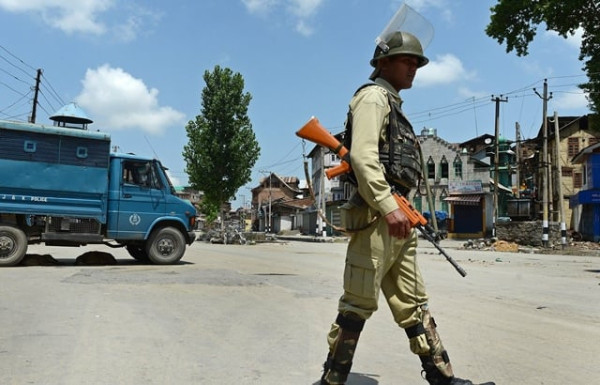
Meanwhile, security has been significantly tightened across occupied Kashmir, particularly in Srinagar, ahead of India’s Independence Day celebrations. Authorities have established multiple layers of security around Bakshi Stadium, where the main ceremony is scheduled to take place.

Vehicles, passengers and pedestrians are reportedly being subjected to strict checks around key locations. Additional security measures have also been put in place to prevent any disruption during the official celebrations.

The contrasting scenes—official Independence Day ceremonies in Srinagar and protests by Kashmiris elsewhere—are once again highlighting the long-running political dispute over Kashmir, which remains a deeply contested issue between India and Pakistan.

The Black Day observance is expected to continue throughout the day, with Kashmiri groups calling for greater international attention to their demands.

Similar Posts

  • | |

    PTI leaders back JI sit-in, seek release of politi…

    Pakistan Tehreek-e-Insaf (PTI) leaders detained at Kot Lakhpat Jail have expressed support for Jamaat-e-Islami’s ongoing sit-in. A letter from the imprisoned PTI leaders was read out during the Jamaat-e-Islami protest. The letter was signed by senior PTI leaders Shah Mahmood Qureshi, Sarfraz Cheema, Dr Yasmin Rashid, Ijaz Chaudhry and Mahmood-ur-Rasheed. In their letter, the detained leaders appealed to the public to participate in the Jamaat-e-Islami sit-in. They urged citizens to support the protest and raise their voices on political and public issues. The support from the imprisoned PTI leaders comes as Jamaat-e-Islami continues its protest and demands action on issues highlighted by the party. The letter was presented to participants at the sit-in, conveying the PTI leaders’ position despite their detention at Kot Lakhpat Jail. Meanwhile, Jamaat-e-Islami Lahore has called for the release of all political prisoners. The party has also specifically demanded the release of PTI founder Imran Khan. Jamaat-e-Islami Lahore maintained that political prisoners should be released and called for political issues to be addressed through democratic and legal means.

  • | | |

    Trump criticizes oil companies over high profits a…

    US President Donald Trump has criticized major oil companies over their growing profits, saying that energy firms are earning excessive amounts of money amid rising fuel prices. His remarks come as global oil markets face uncertainty due to geopolitical tensions and disruptions affecting energy supplies. Speaking to reporters at the White House, Trump said he supports free markets but expressed dissatisfaction with what he described as unusually high earnings by oil companies. He stated that while businesses have the right to operate freely, current market conditions have allowed some energy companies to generate profits beyond what he considers reasonable. The increase in crude oil prices has significantly boosted the revenues of several major energy companies worldwide. Market uncertainty linked to tensions between the United States and Iran has contributed to higher oil prices, creating favorable conditions for large oil producers and companies. Saudi Arabia’s state-owned oil giant Saudi Aramco reported a significant increase in quarterly profit, announcing earnings of $33.4 billion, compared with $25.2 billion during the same period last year. This represents a substantial rise in profits. US-based energy companies have also recorded strong financial results. ExxonMobil reported quarterly earnings of $14.5 billion, more than double compared with the previous year. Meanwhile, Chevron posted a profit of $12.1 billion, marking a significant increase from the same period previously. British energy company Shell also reported nearly $10 billion in quarterly profits, making it one of the company’s strongest financial performances in recent years. While energy companies benefit from higher crude oil prices, consumers in the United States have faced increased fuel costs. Average petrol prices have risen significantly since the beginning of the conflict-related market disruptions, adding further pressure on households already dealing with inflation. Fuel prices have become a major political issue ahead of the upcoming midterm elections. Lowering petrol costs has emerged as a key priority for the Trump administration, as high energy prices often influence public opinion and economic sentiment. A major factor behind the rise in oil prices has been disruption in key shipping routes, including the Strait of Hormuz, one of the world’s most important energy corridors. Reduced oil transportation through the region has affected global supply and contributed to market volatility. Although diplomatic efforts have reportedly aimed at reducing tensions and improving shipping access, uncertainty remains in global energy markets. Security concerns in the Red Sea and Bab el-Mandeb Strait have also affected oil transportation routes. Energy analysts believe that major oil companies may continue benefiting from elevated prices in the short term. However, they suggest that increased global supply or improved conditions in strategic waterways could eventually push crude oil prices lower. The ongoing debate highlights the challenge faced by governments worldwide: balancing energy company profits, market stability, and the need to provide affordable fuel for consumers.

  • | |

    World Cup conspiracies weaponised as Javier Milei blames foreign leftists for online backlash

    Following Argentina’s defeat by Spain in the World Cup final, President Javier Milei has alleged that a coordinated, foreign-funded anti-Argentina campaign was launched to undermine his nation and its football team. The far-right libertarian president claimed during a radio interview that the US Democratic party, alongside the governments of Mexico and Brazil, financed widespread online hostility, fan racism accusations, and rumours of favorable treatment towards Lionel Messi’s squad. Milei specifically targeted Brazilian President Luiz Inácio Lula da Silva, alleging that Brazil provided the largest share of funding for these attacks, a statement he reiterated while attending a campaign launch for far-right senator Flávio Bolsonaro in São Paulo. The president’s claims come amidst online friction and high-profile international criticism, including an Instagram post by actor Samuel L. Jackson urging fans not to support Argentina due to historical racism in the country. Whilst digital communications researchers acknowledge a genuine surge of transnational hostility online, experts note there is no public evidence supporting Milei’s claims of an organised international funding plot. Instead, political analysts view the narrative as a calculated tactic to stoke culture wars and divert public attention away from domestic corruption scandals, rising unemployment, and the severe impact of his austerity measures, which have pushed the administration’s popularity to its lowest level since taking office.

  • | |

    Adani group weighs entry into Indian aviation mark…

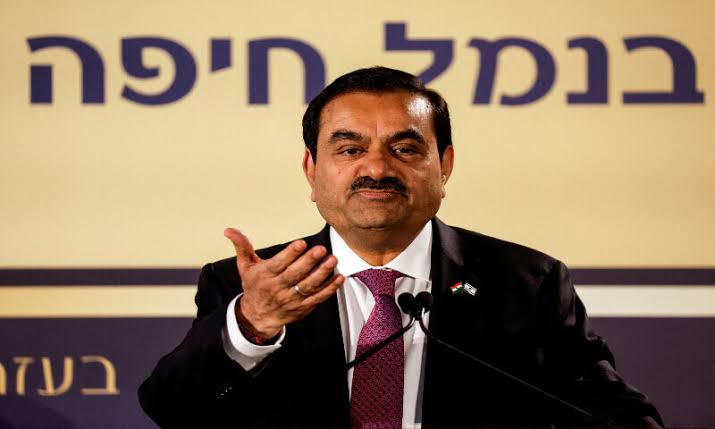
    Indian billionaire Gautam Adani’s conglomerate is exploring a possible entry into the airline business, a move that could disrupt an Indian aviation market currently controlled by just two major carriers, according to two people familiar with the discussions. The consideration marks a potential shift in direction for the group, which runs eight airports across India, including two serving Mumbai, and is midway through an expansion plan worth 11 billion dollars. The group had previously indicated it had no plans to enter the airline sector. According to one of the sources, who spoke on condition of anonymity because they were not authorized to discuss the matter publicly, no final decision has been reached and the idea remains under internal review, partly because the airline business is widely seen as difficult to run profitably. The source said Indian officials have privately encouraged large business groups, including Adani’s, to consider launching a carrier following heightened scrutiny of Air India after a fatal crash in Ahmedabad last year, along with operational breakdowns at market leader IndiGo that disrupted air travel nationwide in December. The source characterized Adani’s interest as motivated partly by a sense of national interest, noting that the government has grown concerned that the country needs another major airline given the troubles at both existing carriers. Shares of Adani Enterprises fell more than 3 percent on Thursday following the report. Internal talks about a possible airline venture remain in early stages, and the group has not set a timeline for a decision. Adani ranks as Asia’s second wealthiest individual, with a net worth of roughly 89 billion dollars, though entering the airline industry would represent one of the riskier moves of his business career. Several Indian carriers, including Kingfisher, Jet Airways and Go First, have collapsed into bankruptcy over the past fifteen years amid high taxes, intense competition and supply chain problems. While Adani has aggressively expanded his footprint in ports and airports, he has also spent time since 2024 contending with United States allegations that he paid bribes to secure a solar energy project. Those charges were dropped by American prosecutors earlier this month. India remains one of the fastest growing aviation markets in the world, but the sector has faced persistent concern over its lack of competition. IndiGo currently holds about 65.4 percent of the domestic market, while Air India controls roughly 25 percent, leaving little room for smaller players. The Indian government has said it wants to expand the country’s airport network to between 350 and 400 facilities by 2047, up from 74 in 2014, as passenger traffic climbs and airlines place record aircraft orders with Boeing and Airbus. Rajan Mehra, the former India head of Qatar Airways, said an Adani led entry into aviation could reshape the sector, though he added that regulators would need to ensure strong safeguards and a level playing field for all carriers going forward. One option under consideration is acquiring a stake in an existing airline rather than building a new one from scratch, according to the second source, who said the group is keeping all possibilities open. The government’s push for new entrants comes after it warned IndiGo in December that it could face regulatory action following a wave of flight cancellations triggered by a pilot shortage. That crisis stranded thousands of passengers and prompted officials to intervene to curb a sharp spike in airfares. The broader push toward breaking up India’s aviation duopoly reflects a pattern seen in other fast growing emerging markets, where regulators and governments have historically encouraged new entrants once dominant carriers show signs of strain, though such efforts have a mixed record of success given the industry’s notoriously thin margins and high capital requirements.

  • |

    Deadly 7.4 quake rocks Colombia, 111 killed

    BOGOTA: A powerful 7.4-magnitude earthquake has killed at least 111 people and injured 87 others in western Colombia, leaving communities grappling with widespread destruction and fears that more victims remain trapped beneath collapsed buildings. The earthquake struck on Monday, with its epicentre near San José del Palmar in the Chocó region. The powerful tremor was felt across a wide area and caused buildings to collapse in several locations. Emergency crews have been working through piles of concrete, bricks and debris as they search for survivors. Authorities warned that the death toll could rise as rescue teams reach areas where communication and access remain difficult. The disaster has caused severe damage in cities including Pereira, Cali and Manizales, while infrastructure and public services have also been affected. Rescue workers have been using heavy machinery alongside manual searches to reach people believed to be trapped under the rubble. Colombian authorities have mobilised emergency resources and launched a large-scale response operation. The government has also declared a national disaster as officials assess the full extent of the destruction. The earthquake has left families anxiously waiting for news of relatives who remain missing, while hospitals and emergency services continue treating the injured. As rescue operations continue, authorities are urging residents to remain alert for possible aftershocks and avoid entering damaged structures. With 111 lives already lost, the focus remains firmly on finding survivors and bringing urgent assistance to communities devastated by the powerful quake.

  • EASA issues urgent advisory warning airlines to avoid Jordanian airspace

    The European Union Aviation Safety Agency (EASA) has issued a security bulletin urging commercial airlines to suspend all operations within Jordanian airspace. The safety agency highlighted an escalation in cross-border military strikes and ballistic missile trajectories as primary drivers behind the severe risks currently facing civilian flights in the region. The newly released directive instructs European carriers and EASA-authorized foreign operators to avoid the Amman Flight Information Region (FIR) across all flight levels. Alongside this new warning, EASA officially extended its existing airspace warnings for several neighboring Middle Eastern territories through August 31, 2026. According to official EASA statements, security conditions across the region have deteriorated rapidly since mid-July. The airspace over and around Jordan has become increasingly hazardous due to active kinetic military engagements, including drone deployments, ballistic missile transit, and the frequent activation of heavy air defense systems. The regulatory agency highlighted several critical factors endangering high-altitude commercial flights. The heightened operational state of regional air-defense units increases the probability that radar systems could accidentally target civilian airliners. Active aerial engagements create unpredictable hazard zones caused by mid-air missile interceptions, anti-aircraft fire, and descending shrapnel. Rapid combat developments often leave local aviation authorities without adequate time to issue timely rerouting orders or close vulnerable corridors. Because Jordanian authorities have not yet published definitive local flight restrictions or comprehensive safety mitigations, European regulators felt compelled to intervene directly to protect commercial flights. Jordan’s addition to the no-fly advisory list reflects a widespread expansion of flight restrictions across key aviation transit hubs in the Middle East. EASA had previously reinstated and strengthened safety advisories for several other nations and maritime zones following intensified conflicts involving U.S. assets and Iranian forces. The full list of airspaces currently subject to EASA’s strict operational warnings includes Jordan (Amman FIR); Iran, Iraq, and Lebanon; Bahrain, Kuwait, Qatar, and the United Arab Emirates; overwater corridors in the Gulf of Oman. All related advisories, which were previously scheduled to expire on July 29, have now been synchronized and extended until at least August 31, 2026. The decision to bypass Jordan forces international airlines to implement extensive flight path revisions. Carriers are diverting long-haul journeys around extended no-fly zones, leading to longer flight durations, increased fuel consumption and higher operating costs.  Also, the potential schedule shifts for passengers traveling along major international routes. EASA emphasized that all affected air operators must continuously track real-time Notice to Air Missions (NOTAMs) and conduct rigorous safety evaluations prior to dispatching aircraft near or around adjacent flight zones. European regulators stated they will continue to monitor regional security developments closely and modify their airspace guidelines as conditions evolve.  

Leave a Reply

Your email address will not be published. Required fields are marked *