|

Australia introduces mandatory pay floor and injury coverage for gig workers

In a major shift for gig economy rights, Australia’s industrial umpire has ordered delivery platforms to pay food and grocery couriers a mandatory minimum rate alongside compulsory personal accident insurance.

The Fair Work Commission (FWC) ruled late on Tuesday that gig delivery workers must earn a minimum rate for active delivery time. The order, set to take effect on 17 August, is expected to benefit roughly 250,000 workers across the country.

Beyond baseline wages, platforms such as Uber Eats and DoorDash will now be legally required to provide personal accident cover for couriers on duty, though workers will remain responsible for third-party vehicle insurance.

The reform stems from workplace legislation passed by Australia’s Labor government in 2023 and 2024, which empowered the FWC to regulate conditions for independent contractors previously excluded from traditional employment protections.

In a joint statement, the Transport Workers Union (TWU), Uber Eats, and DoorDash welcomed the determination. TWU National Secretary Michael Kaine hailed the order as a landmark moment that establishes new standards for a workforce long left outside national workplace systems.

Similar Posts

  • |

    Messi, Ronaldo face security scares at World Cup

    The 2026 FIFA World Cup may have ended with Spain lifting the trophy, but a reported police dossier has brought fresh attention to the security threats that allegedly shadowed some of football’s biggest stars during the tournament. According to a report based on an alleged leaked police document, Lionel Messi was repeatedly targeted with threats during Argentina’s campaign, while Cristiano Ronaldo and several other high-profile figures also faced security concerns. The World Cup, jointly hosted by the United States, Mexico and Canada, was already one of the largest sporting events ever staged. Spain eventually defeated Argentina 1-0 in the final to claim the title. However, behind the packed stadiums and celebrations, security agencies were reportedly dealing with a series of alarming incidents. One alleged threat emerged before Argentina’s match against Jordan. According to the report, a caller contacted authorities at Dallas airport and threatened an attack at the stadium, allegedly claiming that grenades and rifles would be used. Another disturbing incident was reportedly recorded before Argentina’s game against Egypt, when a threat targeting Messi was posted on social media. Security concerns escalated during the match after authorities received information suggesting that explosives could have been placed inside stadium waste bins. Bomb-disposal specialists and trained detection dogs were reportedly deployed to search the area. No explosives were found, according to the report. The security concerns were not limited to Messi. Portuguese superstar Cristiano Ronaldo was also reportedly the subject of attempts to obtain information about his accommodation. In another alleged incident, a suspicious individual reportedly managed to reach his hotel while posing as a fan. The pressure extended to match officials and other players. French referee François Letexier reportedly received thousands of threatening messages following decisions made during the Argentina-Egypt match. Players including Alexander Sørloth and Jae-hun Campaz were also allegedly subjected to death threats after missing important opportunities during matches. The reported security breaches prompted authorities to strengthen protection around key World Cup locations. At one media centre in England, security measures reportedly included multiple protective layers, concrete barriers, anti-sniper screens and a no-fly zone. The revelations offer a stark reminder that the spectacle of a World Cup comes with enormous security challenges. While millions of fans experienced football, entertainment and celebration, security teams were simultaneously working behind the scenes to protect players, officials and spectators from potential threats. The security allegations above are presented as reported claims from the supplied report and alleged leaked dossier; they should not be treated as independently established facts unless confirmed by authorities.

  • | | |

    KP makes registration mandatory for street vendors

    PESHAWAR: The Khyber Pakhtunkhwa Assembly has passed the Street Vendors Protection Bill 2026, making registration and vending certificates mandatory for people operating carts and roadside stalls across the province. The new law is expected to provide legal protection to more than 140,000 street vendors for the first time. Under the legislation, individuals aged 14 years and above will be eligible to register as street vendors. All vendors will be required to complete registration and obtain a valid vending certificate. Registered vendors will receive a modern digital vending certificate containing a QR code. The certificate is intended to formally recognise vendors and provide them with legal protection while carrying out their businesses. The law provides protection against unjustified eviction and harassment. Government employees found harassing street vendors could face strict departmental action. The legislation also introduces penalties for members of the public or shopkeepers who harass vendors. A person found guilty could face a fine of up to Rs20,000 or imprisonment for up to one month. Vendors will also have the right to appeal if their vending certificates are suspended or cancelled. The law prohibits vendors from selling or transferring their vending certificates to another person. Anyone violating this provision could face a fine of up to Rs3,000. The legislation also highlights the economic contribution of street vendors to the province. According to the bill, vendors collectively generate more than Rs380 billion in economic activity every year. The informal vending sector is estimated to contribute around Rs130 billion annually to the national economy. The government expects that better regulation and management of the sector could generate an additional Rs2.5 billion to Rs5 billion in annual revenue. The new legislation aims to bring the informal vending sector under a formal regulatory framework while providing vendors with legal recognition and protection.

  • | |

    From Glasgow to the heart of UK power

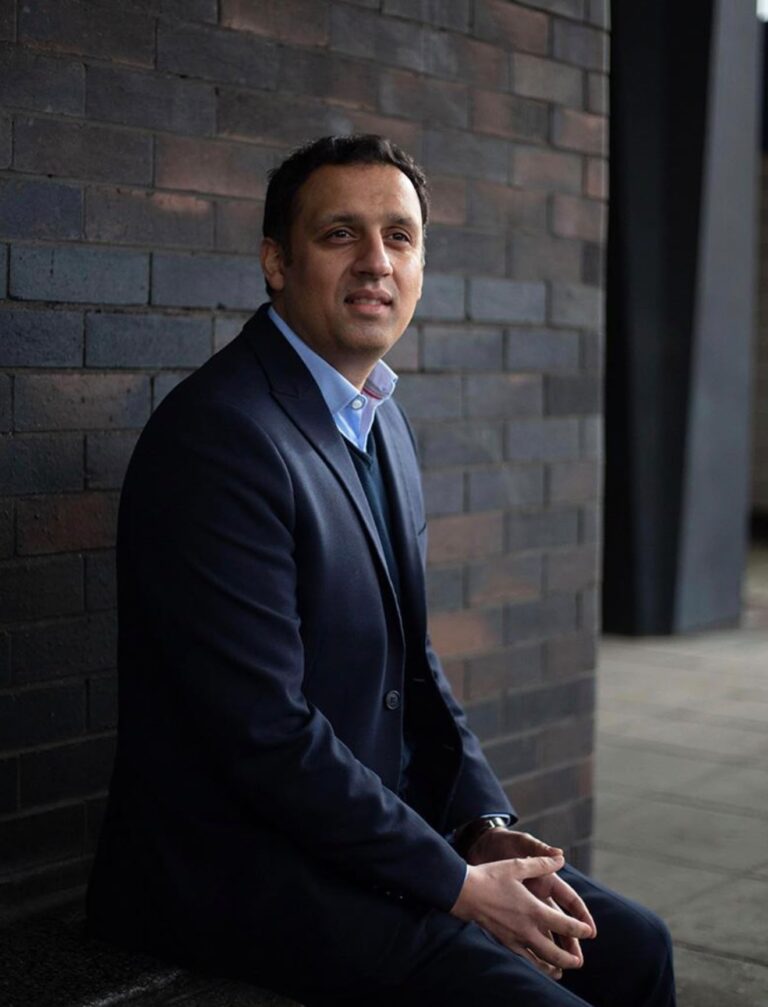
    How Anas Sarwar challenged a Prime Minister, reshaped Labour politics and rose to become a UK minister Anas Sarwar’s journey from a young Scottish politician carrying the weight of a famous political surname to one of the most senior ministers in the British government has reached a defining moment. His appointment as Minister of State for Business, Innovation, Science and Trade, alongside his elevation to the House of Lords, marks one of the most significant political achievements by a British politician of Pakistani heritage in recent decades. The appointment also underlines the confidence Prime Minister Andy Burnham has placed in Sarwar, entrusting him with a department central to the government’s ambitions for economic growth, scientific research, innovation and international trade. A FAMILY THAT MADE HISTORY Politics has long been part of the Sarwar family story. Anas Sarwar is the son of Mohammad Sarwar, who made British political history in 1997 by becoming the first Muslim and the first MP of Pakistani origin elected to the House of Commons. Mohammad Sarwar later went on to serve as Governor of Punjab, Pakistan’s largest province, giving the family a unique political legacy spanning both Britain and Pakistan. Although his father’s achievements opened doors for greater representation of British Pakistanis in politics, Anas Sarwar has spent much of his career building his own political identity through perseverance, resilience and leadership. A POLITICAL CAREER BUILT ON RESILIENCE A qualified dentist by profession, Sarwar entered Parliament after winning Glasgow Central in 2010. His political career has been shaped by both success and setbacks. Following Labour’s electoral collapse in Scotland in 2015, Sarwar emerged as one of the party’s most recognisable figures during one of its darkest periods. He served as Deputy Leader of Scottish Labour before unsuccessfully contesting the party leadership. Rather than retreating from frontline politics, he rebuilt his standing within the party and was elected Leader of Scottish Labour in 2021. Tasked with reviving a party that had suffered years of decline, Sarwar focused on rebuilding Labour’s organisation, reconnecting with voters and restoring its credibility as Scotland’s principal opposition party. THE MAN WHO FIRST CHALLENGED STARMER Sarwar’s reputation as an independent political figure was cemented during Labour’s leadership crisis when he became the first senior Labour politician to publicly call for Keir Starmer to resign. At a time when many senior figures remained publicly loyal, Sarwar openly argued that Labour required a change in leadership. Political observers viewed his intervention as a turning point that encouraged wider debate within the party over Starmer’s future. In the weeks that followed, pressure on the Prime Minister intensified, ultimately culminating in Starmer’s resignation and the election of Andy Burnham as Labour leader and Prime Minister. Today, the politician who first publicly challenged Starmer has become one of the key members of Burnham’s ministerial team—an illustration of how dramatically Labour’s political landscape has changed. A KEY ROLE IN GOVERNMENT Sarwar’s appointment as Minister of State for Business, Innovation, Science and Trade places him at the centre of one of the government’s most important departments. His responsibilities will include supporting business investment, promoting innovation, advancing scientific research, strengthening Britain’s industrial strategy and expanding international trade—areas regarded as crucial to the UK’s long-term economic future. His elevation to the House of Lords enables him to take up ministerial office while bringing his tenure as Leader of Scottish Labour to an end, triggering a contest to choose his successor. POLITICAL SIGNIFICANCE Political commentators believe the appointment carries significance far beyond a routine cabinet reshuffle. For Prime Minister Andy Burnham, it brings an experienced political strategist into a department central to delivering economic growth. For Scottish Labour, it marks the departure of the leader who steadied the party during a challenging period and leaves a significant leadership vacancy. For Britain’s Pakistani community, Sarwar’s promotion represents another landmark in the growing influence of British Pakistanis at the highest levels of national politics. COLLEAGUES SEE A RESILIENT LEADER Labour colleagues have publicly described Sarwar as a disciplined and pragmatic politician who remained committed to rebuilding Scottish Labour despite difficult electoral circumstances. Political observers argue that his appointment reflects years of persistence, resilience and organisational leadership rather than a sudden political promotion. Critics, meanwhile, have questioned his move from frontline Scottish politics to the unelected House of Lords, arguing that Scottish Labour loses one of its most experienced leaders at a crucial political moment. A NEW CHAPTER Anas Sarwar now moves from leading Labour in Scotland to helping shape Britain’s economic future from the heart of government. His appointment completes a political journey that began in Glasgow, was forged through years of electoral battles and internal party struggles, and has culminated in one of the most influential ministerial positions in Westminster. From following in the footsteps of his father, Mohammad Sarwar, to becoming the first senior Labour figure to challenge Keir Starmer’s leadership and now joining Andy Burnham’s Cabinet, Anas Sarwar’s rise reflects one of the most remarkable political stories in contemporary British politics.

  • | |

    World Cup conspiracies weaponised as Javier Milei blames foreign leftists for online backlash

    Following Argentina’s defeat by Spain in the World Cup final, President Javier Milei has alleged that a coordinated, foreign-funded anti-Argentina campaign was launched to undermine his nation and its football team. The far-right libertarian president claimed during a radio interview that the US Democratic party, alongside the governments of Mexico and Brazil, financed widespread online hostility, fan racism accusations, and rumours of favorable treatment towards Lionel Messi’s squad. Milei specifically targeted Brazilian President Luiz Inácio Lula da Silva, alleging that Brazil provided the largest share of funding for these attacks, a statement he reiterated while attending a campaign launch for far-right senator Flávio Bolsonaro in São Paulo. The president’s claims come amidst online friction and high-profile international criticism, including an Instagram post by actor Samuel L. Jackson urging fans not to support Argentina due to historical racism in the country. Whilst digital communications researchers acknowledge a genuine surge of transnational hostility online, experts note there is no public evidence supporting Milei’s claims of an organised international funding plot. Instead, political analysts view the narrative as a calculated tactic to stoke culture wars and divert public attention away from domestic corruption scandals, rising unemployment, and the severe impact of his austerity measures, which have pushed the administration’s popularity to its lowest level since taking office.

  • |

    Oil prices edge lower as hopes rise for possible US-Iran agreement

    LONDON: Global oil prices slipped modestly on Thursday as optimism over a possible agreement between the United States and Iran eased concerns about potential supply disruptions in the Middle East, prompting investors to scale back risk premiums in the energy market. According to Reuters, market sentiment improved after reports of continued diplomatic engagement involving Iran and Oman, raising expectations that negotiations between Washington and Tehran could lead to a breakthrough. Traders believe any progress towards an agreement could help reduce regional tensions and improve the outlook for global oil supplies. Brent crude futures declined by 37 cents, or 0.5 per cent, to $79.08 per barrel, while US West Texas Intermediate (WTI) crude fell 53 cents, or 0.7 per cent, to $74.69 per barrel during early trading. The latest decline followed a modest gain in Brent crude during the previous trading session, reflecting continued uncertainty in global energy markets as investors closely monitor diplomatic developments and geopolitical risks. Market analysts said that hopes of a diplomatic settlement between the United States and Iran have encouraged traders to anticipate a more stable supply environment. A successful agreement could help resolve months of heightened tensions and reduce the risk of disruptions to oil exports from the Gulf region. Investors are also watching developments around the Strait of Hormuz, one of the world’s busiest oil shipping routes. Any easing of regional tensions is expected to improve the security of maritime trade and ensure the uninterrupted movement of crude oil, a factor that could put additional downward pressure on prices.

Leave a Reply

Your email address will not be published. Required fields are marked *