pakistan cricketers receive
|

Pakistan cricketers to receive CPL NOCs on August 19

LAHORE: Pakistan’s contracted cricketers heading to the Caribbean Premier League (CPL) will have to wait until August 19 to receive their No-Objection Certificates (NOCs), as the national domestic calendar takes priority.

According to sources, the CPL is scheduled to begin on Friday, with the tournament final set to be played on September 20. However, Pakistan players involved in the domestic National Champions Cup will not be released for overseas commitments until the competition concludes.

The Champions Cup is being played in Multan from August 11 to 18, meaning the players selected for the tournament are expected to receive their CPL NOCs from the following day.

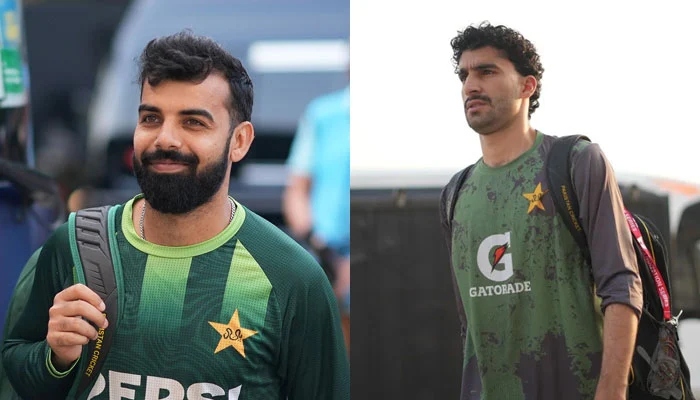
Several Pakistan players have CPL contracts this season, including Saim Ayub, Shadab Khan, Usman Khan, Muaz Sadaqat, Naseem Shah and Sufiyan Muqeem. These players are also representing different teams in the Champions Cup, creating a scheduling clash between domestic and franchise cricket.

The decision means the players will join their respective CPL franchises only after completing their domestic commitments.

Meanwhile, Usman Tariq and Haseebullah Khan are also set to feature in the Caribbean tournament but are not part of the Champions Cup squad. Their availability is therefore not affected by the domestic competition in the same way.

The NOC timeline has attracted attention because the CPL is an important opportunity for Pakistan players to gain experience in overseas franchise cricket. For the players involved, the challenge will now be to make a quick transition from domestic cricket in Multan to the Caribbean conditions.

The Pakistan Cricket Board’s approach also underlines its emphasis on ensuring national players remain available for domestic competitions before taking part in overseas leagues.

With the CPL running until September 20, Pakistan fans will be closely watching how the country’s representatives perform once they join their respective franchises.

Similar Posts

  • |

    Taliban seeks improved ties with Pakistan

    The Taliban administration has expressed its desire to reduce tensions and improve relations with Pakistan, saying that continued disputes serve the interests of neither country. Taliban spokesperson Zabihullah Mujahid said both sides should work to resolve outstanding issues through dialogue and cooperation. He noted that the closure of border crossings and restrictions faced by Afghan traders have contributed to strained relations and disrupted bilateral trade. Mujahid said the Taliban wants these issues to be addressed to facilitate smoother cross-border movement and strengthen economic ties between the two neighboring countries. He also acknowledged that trade with Pakistan has been affected in recent months, adding that Afghanistan has increased its economic engagement with Iran while pursuing new projects aimed at developing the country’s mineral resources. However, analysts have raised concerns over the transparency of some of the reported mining agreements and questioned whether sufficient oversight and accountability mechanisms are in place. The remarks come at a time when Pakistan and Afghanistan continue to face challenges in bilateral relations, including border management, trade disruptions and broader security concerns.

  • | |

    PPP workers’ convention in Lahore faces hurd…

    LAHORE: Preparations for the Pakistan Peoples Party’s (PPP) workers’ convention at Greater Iqbal Park were halted on Friday after the Lahore district administration said the party had not secured formal written permission to hold the event. The party had already set up a stage and made extensive arrangements for the convention, which is scheduled for July 25. The gathering was also expected to be followed by celebrations marking President Asif Ali Zardari’s birthday on July 26. District authorities questioned the use of the public venue without official approval and asked the PPP leadership to explain why preparations had begun before the necessary permission was obtained. Lahore PPP President Faisal Mir insisted the party had moved forward after receiving verbal assurances that there was no objection to the event from the Punjab Chief Minister’s Office. According to him, the preparations were launched in good faith based on those assurances, but officials later intervened and stopped the work. Mir criticized the administration’s actions, claiming access to the venue had been restricted and vehicles carrying chairs and other equipment had been prevented from reaching the site. He maintained that the party remained committed to holding the convention peacefully and said he was prepared to face arrest if necessary. The Chief Minister’s Office did not comment on claims that approval had been communicated through the chief minister’s principal secretary. PPP leaders also shared videos on social media showing workers at the venue, along with the stage and seating arrangements prepared for the convention, reaffirming the party’s determination to proceed with the event. Party sources acknowledged that written permission had not been obtained but argued that verbal approval was sufficient to begin preparations. They added that local police had been informed in advance about the gathering. The convention was expected to feature a large stage, with PPP Chairman Bilawal Bhutto Zardari scheduled to address workers via video link. Senior party leaders, including Raja Pervaiz Ashraf, Hassan Murtaza, and Qamar Zaman Kaira, were also expected to attend. Officials indicated that permission could still be granted if the required formalities were completed. However, they noted that approving the PPP event without following standard procedures could complicate decisions on similar requests from other political parties, including the Pakistan Tehreek-e-Insaf (PTI), which has sought permission for a public gathering in Lahore next month.

  • |

    Dallas marks Arbaeen with peaceful mourning procession

    The Arbaeen of Imam Hussain (AS) and the martyrs of Karbala was observed with deep reverence in Dallas, Texas, as hundreds of mourners gathered for religious congregations and a peaceful procession to commemorate the 40th day after Ashura. The main gathering was held at the Alam Centre, where religious scholar Maulana Qasim Zaidi spoke about the lasting significance of Karbala. He said the sacrifice of Imam Hussain (AS) continues to inspire people around the world by promoting the values of justice, truth, courage and resistance against oppression. After the religious address, participants joined a central Arbaeen procession through downtown Dallas. Mourners carried traditional Alams and symbolic Taboots while reciting elegies, performing matam and offering prayers in memory of the martyrs of Karbala. Renowned reciters Shuja Haider and Kashif Jafri led the Nauha recitations during the procession. Families, children and members of the local Shia community took part in the event, which was held in a peaceful and organised atmosphere. The conclusion of Arbaeen marked the end of the traditional 40-day mourning period that begins with Ashura. However, participants said the message of Imam Hussain (AS) remains a timeless source of guidance, encouraging people to uphold justice, sacrifice and steadfastness in the face of injustice. Organisers thanked volunteers, community members and law enforcement authorities for ensuring the event was conducted safely and smoothly. They said the successful observance reflected the community’s dedication to preserving and passing on the teachings and legacy of Karbala to future generations.

  • |

    Iran appoints former revolutionary guards chief Mohsen Rezaei to National Security Council

    TEHRAN: Iran has appointed veteran military and political figure Mohsen Rezaei to a senior position within the country’s Supreme National Security Council (SNSC), replacing Mohammad Baqer Zolqadr and bringing one of the Islamic Republic’s most prominent former Revolutionary Guards commanders back into a central security role. The appointment was announced late Sunday by the office of Iranian President Masoud Pezeshkian’s deputy director of communications. No official explanation was immediately provided for the change, and it remains unclear whether Rezaei’s appointment will result in any significant shift in Iran’s security or foreign policy. Rezaei, 71, has extensive experience in Iran’s military, security and political institutions. He served as commander of the Islamic Revolutionary Guard Corps (IRGC) from 1981 until 1997, a period that included most of the Iran-Iraq war. His return to a prominent security position comes at a particularly sensitive time for Iran, amid continuing tensions with the United States and Israel, as well as uncertainty surrounding the security of the strategically important Strait of Hormuz. The SNSC is one of Iran’s most important institutions for coordinating national security and foreign policy. Although the council is formally chaired by the elected president, it brings together senior military, intelligence and government officials, along with representatives of Supreme Leader Mojtaba Khamenei. Major strategic decisions ultimately remain subject to the authority of the supreme leader. Zolqadr’s short tenure ends Zolqadr had been appointed secretary of the SNSC only in late March. He took over the position following the death of his predecessor, Ali Larijani, who was killed in an air strike during the conflict involving Iran, the United States and Israel. Unlike Zolqadr, Rezaei has maintained a considerably higher public profile over the course of his political career and has frequently spoken on major domestic, economic and foreign-policy issues. In a separate decree issued Sunday, Supreme Leader Mojtaba Khamenei appointed Rezaei as his representative to the SNSC. The decree referred to Rezaei’s extensive experience, including his service during the 1980-1988 Iran-Iraq war. Hardline politician Saeed Jalili also serves as the supreme leader’s representative on the council. The same decree appointed Zolqadr as Khamenei’s political adviser, suggesting that his departure from the SNSC leadership does not represent a complete withdrawal from the country’s senior political establishment. Rezaei’s long political career Rezaei’s career has extended well beyond the military. After leaving his post as IRGC commander, he served for more than two decades as secretary of Iran’s Expediency Discernment Council, an influential body involved in resolving disputes between state institutions and advising the supreme leadership. He later entered the executive branch, serving as vice president for economic affairs from 2021 to 2023 during the administration of former President Ebrahim Raisi. Rezaei also holds a doctorate in economics from the University of Tehran. Despite his academic background, much of his professional life has been spent within Iran’s military, security and political establishment. His appointment therefore places an experienced figure with a long history in Iran’s national security apparatus at the center of a council responsible for coordinating some of the country’s most consequential strategic decisions. Strait of Hormuz remains key issue The leadership change comes as Tehran continues discussions over the future of shipping through the Strait of Hormuz, a critical international energy route. Iranian Foreign Minister Abbas Araqchi said Saturday that Tehran and Oman were nearing an understanding on a possible new shipping route through the strait. The waterway has faced severe disruption during months of conflict and escalating regional tensions. However, Iranian officials have indicated that reopening the route would depend on broader conditions being met. These reportedly include demands related to US compensation for Iran and an end to what Tehran describes as American threats and aggression. Zolqadr had previously outlined several demands, including an end to US threats against Iran, the cessation of military action against Iran and its regional allies, the lifting of sanctions and blockade measures, and the release of Iranian assets. The demands highlight the wider diplomatic and security challenges facing Tehran as it attempts to manage relations with Washington while dealing with continuing regional instability. Policy direction remains uncertain The replacement of Zolqadr by Rezaei does not necessarily indicate an immediate change in Iran’s foreign-policy direction. The SNSC operates within a broader political system in which the supreme leader has ultimate authority over major matters of national security and international affairs. However, Rezaei’s extensive military background and long involvement in Iran’s senior political institutions could make his appointment significant, particularly as Tehran navigates negotiations, military tensions and economic pressure.

  • | |

    NDMA issues flood alert until July 24

    Islamabad: Pakistan’s National Disaster Management Authority (NDMA) has issued a nationwide flood and landslide alert until July 24, warning residents of possible flash floods, rising river levels, and dangerous weather conditions caused by ongoing monsoon rains. According to the NDMA spokesperson, heavy rainfall is expected to increase water flow in rivers, seasonal streams, and mountain channels across several parts of the country. Authorities have advised the public to avoid unnecessary travel, stay away from flood-prone areas, and follow official safety instructions. The alert highlights a significant risk of flash flooding in Gilgit-Baltistan, particularly in the districts of Hunza, Shigar, and Ghanche. Rivers including Shimshal, Hunza, Chapursan, Shigar, Shyok, and Hushe are expected to experience a rapid rise in water levels. In Azad Jammu and Kashmir (AJK), water levels may increase in the Jhelum, Neelum, Poonch, and Mahl rivers, as well as Betar Nullah, Bhimber Nullah, Kanshi River, and several tributaries connected to the Jhelum and Poonch river systems. The NDMA has also warned of possible flash floods in Khyber Pakhtunkhwa, affecting the Chitral, Kabul, Swat, and Panjkora rivers. Local streams in Khyber, Kurram, Orakzai, Kohat, Bannu, Karak, Hangu, Lakki Marwat, North and South Waziristan, Bajaur, Mohmand, Mansehra, Buner, and Swabi are also at risk due to intense monsoon rainfall. In Punjab, flood threats remain high in the hill torrents of Dera Ghazi Khan, the Soan River, and the Potohar region. Similar conditions are expected in northeastern Balochistan. The NDMA further warned of high-level flooding in the Chenab River near Marala and the upper reaches of the Jhelum River near Mangla. Several seasonal streams, including Dora, Dota, Dwara, Bhimber, Halsey, Aik, Plakhoo, Bein, Basantar, Dek, and Sukhi Nullah, may also experience sudden increases in water flow. The authority also noted that any release of water from India’s Thein, Pong, and Bhakra dams could significantly increase water levels in the Ravi and Sutlej rivers, potentially worsening flood conditions downstream. The NDMA has urged citizens to stay informed through official weather updates, avoid crossing flooded roads or streams, and cooperate with local authorities to ensure public safety during the ongoing monsoon season. This version is optimized for search engines while remaining clear, informat

  • | |

    PITB IT certification scheme crosses 20,000 applic…

    LAHORE: The Punjab Information Technology Board (PITB) has crossed a major milestone in its Global IT Certifications Program, attracting more than 20,000 applications since the initiative was launched in September 2024. The achievement was highlighted during a progress review meeting chaired by PITB Chairman Faisal Yousaf, where senior officials assessed the program’s implementation and future direction. The meeting was attended by Director General e-Governance Sajid Latif, Director of the Skills Development Wing Chaudhry Ahmed Islam, and other senior officials. Discussions focused on the pace of application processing, candidate and certification verification, as well as the reimbursement system designed to support successful participants. Officials informed the meeting that the eligibility of nearly 11,000 applicants has already been verified through a dedicated online portal developed by PITB. Payment verification has been completed for approximately 1,350 candidates, while certification verification has been finalized for around 1,150 applicants, paving the way for reimbursement of certification costs. According to the briefing, 662 candidates have so far received full reimbursement of their certification fees. The payments were transferred directly to their bank accounts after successful completion of internationally recognized IT certifications and the verification of their credentials. The Global IT Certifications Program is aimed at equipping Punjab’s youth with internationally recognized digital qualifications, helping them strengthen their professional skills, improve employment prospects, and compete in the rapidly evolving global technology sector. Speaking during the meeting, Chairman Faisal Yousaf said the strong response from aspiring professionals reflects the increasing demand for internationally recognized digital expertise. He noted that, in line with the evolving needs of the IT industry, PITB has expanded the initiative to include 125 globally recognized IT certifications, offering young Pakistanis broader opportunities to develop competitive careers in the international digital economy. PITB has encouraged interested individuals to apply for the program through its official online portal, where details regarding eligibility, available certifications, and the registration process are available.

Leave a Reply

Your email address will not be published. Required fields are marked *