iran appoints former
|

Iran appoints former revolutionary guards chief Mohsen Rezaei to National Security Council

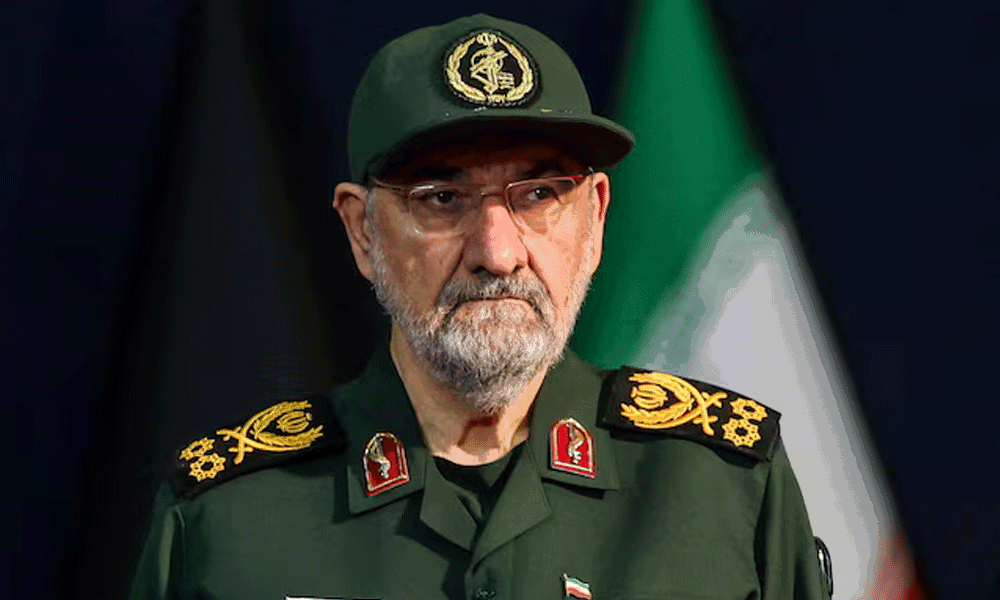
TEHRAN: Iran has appointed veteran military and political figure Mohsen Rezaei to a senior position within the country’s Supreme National Security Council (SNSC), replacing Mohammad Baqer Zolqadr and bringing one of the Islamic Republic’s most prominent former Revolutionary Guards commanders back into a central security role.

The appointment was announced late Sunday by the office of Iranian President Masoud Pezeshkian’s deputy director of communications. No official explanation was immediately provided for the change, and it remains unclear whether Rezaei’s appointment will result in any significant shift in Iran’s security or foreign policy.

Rezaei, 71, has extensive experience in Iran’s military, security and political institutions. He served as commander of the Islamic Revolutionary Guard Corps (IRGC) from 1981 until 1997, a period that included most of the Iran-Iraq war.

His return to a prominent security position comes at a particularly sensitive time for Iran, amid continuing tensions with the United States and Israel, as well as uncertainty surrounding the security of the strategically important Strait of Hormuz.

The SNSC is one of Iran’s most important institutions for coordinating national security and foreign policy. Although the council is formally chaired by the elected president, it brings together senior military, intelligence and government officials, along with representatives of Supreme Leader Mojtaba Khamenei. Major strategic decisions ultimately remain subject to the authority of the supreme leader.

Zolqadr’s short tenure ends

Zolqadr had been appointed secretary of the SNSC only in late March. He took over the position following the death of his predecessor, Ali Larijani, who was killed in an air strike during the conflict involving Iran, the United States and Israel.

Unlike Zolqadr, Rezaei has maintained a considerably higher public profile over the course of his political career and has frequently spoken on major domestic, economic and foreign-policy issues.

In a separate decree issued Sunday, Supreme Leader Mojtaba Khamenei appointed Rezaei as his representative to the SNSC. The decree referred to Rezaei’s extensive experience, including his service during the 1980-1988 Iran-Iraq war.

Hardline politician Saeed Jalili also serves as the supreme leader’s representative on the council.

The same decree appointed Zolqadr as Khamenei’s political adviser, suggesting that his departure from the SNSC leadership does not represent a complete withdrawal from the country’s senior political establishment.

Rezaei’s long political career

Rezaei’s career has extended well beyond the military. After leaving his post as IRGC commander, he served for more than two decades as secretary of Iran’s Expediency Discernment Council, an influential body involved in resolving disputes between state institutions and advising the supreme leadership.

He later entered the executive branch, serving as vice president for economic affairs from 2021 to 2023 during the administration of former President Ebrahim Raisi.

Rezaei also holds a doctorate in economics from the University of Tehran. Despite his academic background, much of his professional life has been spent within Iran’s military, security and political establishment.

His appointment therefore places an experienced figure with a long history in Iran’s national security apparatus at the center of a council responsible for coordinating some of the country’s most consequential strategic decisions.

Strait of Hormuz remains key issue

The leadership change comes as Tehran continues discussions over the future of shipping through the Strait of Hormuz, a critical international energy route.

Iranian Foreign Minister Abbas Araqchi said Saturday that Tehran and Oman were nearing an understanding on a possible new shipping route through the strait. The waterway has faced severe disruption during months of conflict and escalating regional tensions.

However, Iranian officials have indicated that reopening the route would depend on broader conditions being met. These reportedly include demands related to US compensation for Iran and an end to what Tehran describes as American threats and aggression.

Zolqadr had previously outlined several demands, including an end to US threats against Iran, the cessation of military action against Iran and its regional allies, the lifting of sanctions and blockade measures, and the release of Iranian assets.

The demands highlight the wider diplomatic and security challenges facing Tehran as it attempts to manage relations with Washington while dealing with continuing regional instability.

Policy direction remains uncertain

The replacement of Zolqadr by Rezaei does not necessarily indicate an immediate change in Iran’s foreign-policy direction. The SNSC operates within a broader political system in which the supreme leader has ultimate authority over major matters of national security and international affairs.

However, Rezaei’s extensive military background and long involvement in Iran’s senior political institutions could make his appointment significant, particularly as Tehran navigates negotiations, military tensions and economic pressure.
Similar Posts

  • |

    Oman proposes gulf-backed plan to ease Strait of Hormuz tensions

      Oman has proposed a new framework for managing the strategically important Strait of Hormuz, with support from Gulf countries, according to a Gulf source and a Western diplomat who spoke to Reuters on Tuesday. The proposal includes a system under which ships using the waterway would be encouraged to make voluntary financial contributions rather than pay mandatory transit fees. The initiative is aimed at easing tensions and restoring stability in one of the world’s busiest maritime trade routes following months of disruption caused by the conflict involving the United States, Israel, and Iran. A senior Iranian official told Reuters that Tehran has not yet responded to Oman’s proposal, which is intended to provide a foundation for a broader agreement to ensure the safe movement of commercial vessels through the strait. The Strait of Hormuz is one of the most critical shipping lanes in the world, carrying around one-fifth of global oil and liquefied natural gas supplies before the conflict intensified. The route has become a focal point of regional tensions, with repeated incidents affecting international trade and energy markets. Meanwhile, US President Donald Trump said there had been “good talks” involving Iran but warned that military action could resume if diplomatic efforts fail to produce results. Trump recently halted a planned two-week US bombing campaign, marking another major shift in his administration’s approach toward the conflict. Despite his comments, Iranian officials continue to deny that Tehran is preparing to restart negotiations with Washington. Earlier this month, the United States launched a renewed military campaign aimed at reducing Iran’s influence over the Strait of Hormuz. Iran had effectively restricted access to the waterway following military strikes by the United States and Israel on February 28, allowing only Iranian vessels to move freely through the area. Although a temporary agreement between Washington and Tehran led to the partial reopening of the strait last month, the arrangement quickly fell apart in early July. According to reports, Iran fired on ships using a navigation channel that it does not officially recognize, reigniting concerns about maritime security and the uninterrupted flow of global trade. Iran has repeatedly stated that it wants to jointly oversee the Strait of Hormuz with Oman, which borders the opposite side of the narrow waterway. Tehran has also proposed charging vessels for navigation-related services. However, the United States argues that international ships should continue to enjoy unrestricted passage without being required to pay mandatory fees, maintaining that such charges would violate international law. Under the proposal put forward by Oman, Iran would not have exclusive authority over the strait. Instead, management responsibilities would be shared, and any payments made by vessels would be entirely voluntary rather than compulsory, according to the Gulf source and the Western diplomat familiar with the discussions. The proposed model is similar to the system used in Southeast Asia’s Strait of Malacca, where Indonesia, Malaysia, and Singapore invite shipping companies to make voluntary contributions. Those funds are used to support navigation safety, environmental protection, and search-and-rescue operations instead of functioning as mandatory transit charges. The Omani initiative is being viewed as a possible compromise that could reduce regional tensions, safeguard international shipping, and help restore confidence in one of the world’s most strategically significant maritime corridors.

  • | | | | |

    Working together to return Ukrainian children, detained civilians, prisoners of war

    Their return is a humanitarian imperative and critical to any peace process…. Every person returned reunites a family. Every family reunited strengthens a community. And every community prospering helps rebuild Ukraine.

  • | |

    Aseefa Bhutto urges thorough probe into Hina Javed…

    First Lady Aseefa Bhutto-Zardari has called on the Punjab government to ensure a thorough and impartial investigation into the murder of Hina Javed in Rawalpindi. Aseefa expressed deep sorrow over the killing and conveyed her condolences to Hina’s family. She said those responsible for the crime must be identified and brought to justice. Hina Javed was found dead inside the bathroom of her apartment in Askari Apartments, Lal Kurti, on Thursday evening. Police said the initial examination indicated signs of violence and a mark around her neck. Aseefa urged the provincial authorities to conduct a comprehensive investigation into the case. She stressed that the circumstances surrounding Hina’s death must be fully established and that no aspect of the investigation should be overlooked. She said the perpetrators must face the law and called for strict action to ensure that such incidents are not repeated. The First Lady also expressed concern over increasing incidents of violence against women in Pakistan. She called for stronger measures to protect women and prevent violence against them. According to the first information report registered at Civil Lines Police Station on August 20, Hina’s brother, Fahid Javed, accused her husband, father-in-law and a domestic servant of being involved in her death. Fahid told police that he received a call from Hina’s father-in-law at around 6:53pm on Thursday. He was informed about an emergency at the apartment. He then reached the residence with other family members at around 7:23pm. The complainant said he found his sister’s body in the bathroom. He alleged that Hina had been subjected to severe violence and mistreatment. He also raised suspicion that she may have been given a poisonous substance before her death. The FIR was registered under Sections 302 and 34 of the Pakistan Penal Code. The complaint states that Hina married the main suspect in November 2025. An initial postmortem examination reportedly found a strangulation mark around her neck, an injury below her right lip and bleeding. Police have detained Hina’s husband and a domestic servant in connection with the murder. Her father-in-law is also being questioned as part of the investigation.

  • | | |

    Nawaz Sharif fires warning: Politics must not beco…

    Pakistan Muslim League-Nawaz (PML-N) President Nawaz Sharif has called for political tolerance, saying political rivalry is a normal part of democratic politics but differences should never turn into personal or political enmity. Addressing a PML-N meeting in Murree on Saturday, Nawaz Sharif said he was surprised by the Pakistan Peoples Party’s (PPP) objections regarding the Azad Jammu and Kashmir (AJK) elections. He noted that the PPP had previously been in power in AJK and said the political situation that emerged during the elections was a matter of concern for all political stakeholders. Nawaz said the situation had developed because previous governments had failed to properly fulfil their responsibilities. He stressed that political parties should respect democratic differences and avoid creating an atmosphere of hostility. The PML-N president said his party had always treated its political opponents with respect. He urged all political forces to demonstrate patience and tolerance and keep political disagreements within the limits of democratic debate. Nawaz Sharif said the PML-N had secured a simple majority after the first two phases of the AJK elections. The party has won 24 seats, while the PPP has secured 10 seats in the first two phases. The third phase of the election process is yet to be completed, with final results expected after the remaining polling process. Nawaz expressed confidence that the PML-N would form the government in AJK. He said the party would work to fulfil the commitments made to voters during the election campaign. He congratulated PML-N leaders and workers on their electoral performance and appreciated their efforts during the election campaign. Nawaz Sharif called for maximum financial resources to be provided to Azad Kashmir. He said improving the lives of the people and accelerating development should remain the government’s top priority. He claimed that the people of AJK were looking towards Punjab for development and better public services. Nawaz said development work had been initiated during Shehbaz Sharif’s tenure in Punjab and later expanded under Chief Minister Maryam Nawaz. He pledged that the PML-N would seek to replicate its development model in AJK. “The way we transformed Punjab, we will transform Azad Kashmir as well,” Nawaz said, while stressing that failing to deliver on promises made to voters could result in public disappointment. The PML-N president also praised Prime Minister Shehbaz Sharif and his team for their efforts to address Pakistan’s economic and administrative challenges. He said the government inherited an extremely difficult situation but was now working to improve the country’s overall position. According to Nawaz, economic conditions were gradually improving and efforts were underway to put Pakistan on a stronger and more sustainable footing. He said the government was also seeking to reduce Pakistan’s dependence on the International Monetary Fund (IMF) and move the country towards greater economic self-reliance.

  • |

    Progressive outsider Abdul El-Sayed claims victory in Michigan Senate primary

    In a dramatic outcome that has sent shockwaves through the Democratic establishment, progressive public health advocate Dr Abdul El-Sayed has secured the Democratic nomination for the United States Senate in Michigan, narrowly defeating establishment-backed Representative Haley Stevens. The contest to replace retiring Democratic Senator Gary Peters had emerged as a central battleground between the party’s moderate and progressive factions. Stevens, a four-term congresswoman with deep ties to Washington leadership, had entered the primary with formidable institutional backing and substantial financial support, including over $30 million (£23.5 million) spent on her behalf by political action committees affiliated with the American Israel Public Affairs Committee (AIPAC). Despite being outspent by a margin of roughly nine to one, El-Sayed built a coalition anchored by strong turnout among young voters, working-class communities, and urban centres such as Detroit and Ann Arbor. Backed by prominent progressive figures including Senator Bernie Sanders and Representative Alexandria Ocasio-Cortez, El-Sayed campaigned on a platform of universal healthcare, campaign finance reform, higher taxes on wealthy corporations, and an immediate end to foreign military aid. “We built this campaign brick by brick”, El-Sayed told cheering supporters at his election night watch party in Detroit, emphasising that grassroots engagement ultimately proved more powerful than dark-money political action committees. The progressive momentum extended down-ballot across the state. In Michigan’s 13th Congressional District, Democratic Socialist Donavan McKinney unseated incumbent Representative Shri Thanedar, an outspoken supporter of military aid to Israel, while progressive activist William Lawrence clinched the nomination in another competitive congressional district. The primary result sets up a high-stakes November general election against Republican nominee Mike Rogers, a former congressman who ran unopposed. Rogers and national Republican strategists have already signalled plans to paint El-Sayed’s left-wing platform as out of touch with Midwestern swing-state voters. For Democrats, the contest will serve as an ultimate test of whether a bold progressive message can unite the party base and retain a seat vital to determining control of the US Senate.

  • |

    Death toll rises to 254 after powerful Colombia earthquake

    The death toll from a powerful earthquake that struck western Colombia on Monday has risen to 254, according to foreign media reports, as rescue teams continue searching through devastated areas for survivors. The 7.4-magnitude earthquake caused widespread destruction across the affected region, with dozens of buildings collapsing and significant damage reported to infrastructure. Several communities remain without electricity and access to essential services, making rescue and relief operations increasingly difficult. Colombian authorities have warned that the full scale of the disaster may not become clear for several days. Rescue workers are still assessing damaged areas, while officials are working to determine the exact number of casualties and the extent of property damage. The earthquake also disrupted basic services in several affected communities, leaving residents struggling to access electricity and other necessities. Emergency teams have been deployed to assist victims, search damaged buildings and provide immediate relief to people who have lost their homes. Officials expect the death toll and damage estimates to change as rescue crews reach areas that remain difficult to access. Authorities have urged residents to remain cautious and follow emergency instructions as assessments and relief efforts continue. The 7.4-magnitude tremor stands among the most destructive earthquakes to hit western Colombia in recent years, causing severe damage and a major humanitarian challenge for local authorities.

Leave a Reply

Your email address will not be published. Required fields are marked *