ppp workers8217 convention
| |

PPP workers’ convention in Lahore faces hurd…

LAHORE: Preparations for the Pakistan Peoples Party’s (PPP) workers’ convention at Greater Iqbal Park were halted on Friday after the Lahore district administration said the party had not secured formal written permission to hold the event.

The party had already set up a stage and made extensive arrangements for the convention, which is scheduled for July 25. The gathering was also expected to be followed by celebrations marking President Asif Ali Zardari’s birthday on July 26.

District authorities questioned the use of the public venue without official approval and asked the PPP leadership to explain why preparations had begun before the necessary permission was obtained.

Lahore PPP President Faisal Mir insisted the party had moved forward after receiving verbal assurances that there was no objection to the event from the Punjab Chief Minister’s Office. According to him, the preparations were launched in good faith based on those assurances, but officials later intervened and stopped the work.

Mir criticized the administration’s actions, claiming access to the venue had been restricted and vehicles carrying chairs and other equipment had been prevented from reaching the site. He maintained that the party remained committed to holding the convention peacefully and said he was prepared to face arrest if necessary.

The Chief Minister’s Office did not comment on claims that approval had been communicated through the chief minister’s principal secretary.

PPP leaders also shared videos on social media showing workers at the venue, along with the stage and seating arrangements prepared for the convention, reaffirming the party’s determination to proceed with the event.

Party sources acknowledged that written permission had not been obtained but argued that verbal approval was sufficient to begin preparations. They added that local police had been informed in advance about the gathering.

The convention was expected to feature a large stage, with PPP Chairman Bilawal Bhutto Zardari scheduled to address workers via video link. Senior party leaders, including Raja Pervaiz Ashraf, Hassan Murtaza, and Qamar Zaman Kaira, were also expected to attend.

Officials indicated that permission could still be granted if the required formalities were completed. However, they noted that approving the PPP event without following standard procedures could complicate decisions on similar requests from other political parties, including the Pakistan Tehreek-e-Insaf (PTI), which has sought permission for a public gathering in Lahore next month.

Similar Posts

  • | |

    Pakistani showbiz stars who built careers beyond family legacy

    The debate around nepotism in Pakistan’s entertainment industry has continued for years, particularly after similar discussions gained momentum in neighbouring India following the death of actor Sushant Singh Rajput. While several Pakistani celebrities have faced criticism for entering showbiz through family connections, there is another group of artists whose talent has largely overshadowed their famous family backgrounds. A recent Reviewit feature highlighted stars who, despite coming from influential showbiz families, established their own identities through years of hard work and consistent performances. The article notes that many viewers are unaware of the family backgrounds of these celebrities because they earned recognition on the strength of their own careers. Among them is actor and television host Adeel Hashmi, widely known for his memorable Ufone advertisements and versatile acting. Although he comes from a distinguished family—his mother is veteran media producer Muneeza Hashmi and he is the grandson of legendary poet Faiz Ahmed Faiz—Adeel has built his reputation through his own work in television and live performances. Another name on the list is Ali Tahir, who has spent over two decades in Pakistan’s television industry. Known for his performances in dramas such as Sher and Zard Patton Ka Bunn, Ali belongs to a family with a rich literary and broadcasting legacy. His grandfather was celebrated playwright Imtiaz Ali Taj, while his parents, Naeem Tahir and Yasmeen Tahir, also made significant contributions to the arts and media. The feature also highlights Momina Duraid, one of Pakistan’s most successful television producers. While she is connected to HUM Network founder Sultana Siddiqui through marriage, Reviewit credits Momina for establishing herself through acclaimed productions and for leading major projects, including Pakistan’s first Netflix series, Jo Bachay Hain Sang Samait Lo. Actress Hina Rizvi is another celebrity whose family has deep roots in the film industry. Despite being the sister of Lollywood veterans Sangeeta and Kavita, she has created a successful acting career of her own through diverse television roles. Similarly, producer Sana Shahnawaz, sister of Samina Humayun Saeed, has earned recognition by producing successful dramas including Man Mayal, Sinf-e-Aahan, Alif and Jaan-e-Jahan. The article also includes Ushna Shah, whose mother Ismat Tahira, sister Irsa Ghazal and brother Shah Sharabeel are all established names in Pakistani entertainment. Nevertheless, Ushna has become known for her own performances in dramas such as Bashar Momin and Alif Allah Aur Insaan. Other names featured are Fahad Mustafa, who successfully stepped out of the shadow of his father, Sindhi actor Salahuddin Tunio; Sheheryar Munawar, nephew of media entrepreneur Sultana Siddiqui; Nida Yasir, daughter of veteran PTV producer Kazim Pasha; and Bilal Maqsood, son of renowned writer Anwar Maqsood. According to Reviewit, each of these personalities has earned public recognition through individual achievements rather than relying solely on their family’s legacy, proving that while connections may open doors, long-term success depends on talent, dedication and consistent work. 

  • | |

    Explosion reported near oil tanker off Oman coast,…

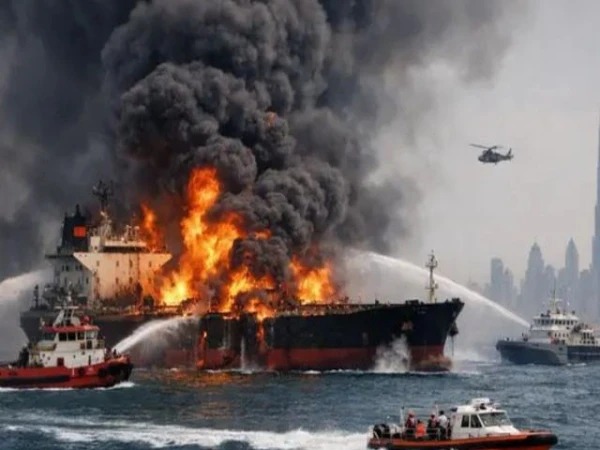
    A powerful explosion was reported near a commercial oil tanker off the coast of Oman on Saturday, raising fresh concerns about maritime security in one of the world’s most strategically important shipping routes. Authorities have launched an investigation into the incident, while no casualties or damage have been reported so far. According to the United Kingdom Maritime Trade Operations (UKMTO), a commercial vessel reported hearing a loud explosion followed by a large splash in the water near its location. The incident occurred approximately 21 nautical miles (39 kilometers) northeast of Khasab, Oman, close to the Strait of Hormuz. Initial reports indicate that the explosion took place near the tanker rather than on board the vessel. The ship continued its voyage without reporting any structural damage, and there have been no reports of injuries among the crew. In an official advisory, UKMTO confirmed that the cause of the explosion remains unknown and that investigations are ongoing. Authorities have not identified the source of the blast or determined whether it was the result of an accident, a security incident, or another cause. Following the incident, UKMTO urged all commercial and cargo vessels operating in the Strait of Hormuz and surrounding waters to exercise extreme caution. Ship operators were advised to immediately report any suspicious activity, explosions, or security threats to the relevant maritime authorities. The Strait of Hormuz is one of the world’s busiest and most strategically significant maritime chokepoints, serving as a vital route for global oil and liquefied natural gas exports. Any security incident in the area is closely monitored by governments, shipping companies, and energy markets because of its potential impact on international trade and energy supplies. The reported explosion comes at a time of heightened tensions across the Middle East, with regional security concerns continuing to affect maritime operations. Although no link has been established between the blast and any ongoing geopolitical developments, the incident has renewed attention on the safety of commercial shipping in the Gulf region. Maritime authorities are expected to release further details once the investigation progresses. Until then, vessels navigating the area have been advised to remain alert, follow official guidance, and maintain close communication with regional maritime security agencies.

  • |

    Pakistan eyes PNSC ships to boost GCC trade amid shipping crisis

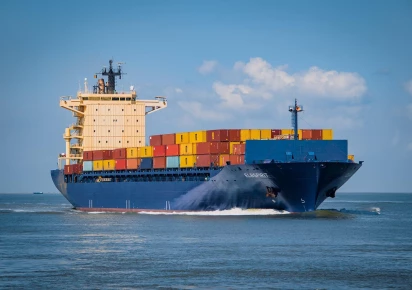
    ISLAMABAD: The government is considering a range of emergency measures, including the deployment of Pakistan National Shipping Corporation (PNSC) vessels, to keep Pakistan’s trade links with Gulf Cooperation Council (GCC) countries operational amid severe disruption to maritime traffic. The move comes as Pakistan’s exports to the GCC region declined significantly in July 2026, while imports also recorded a sharp fall compared with the same month last year, according to data shared by the Ministry of Commerce. The ministry’s figures show that exports to GCC countries dropped by around 12% year-on-year in July, reflecting the impact of heightened maritime security concerns and disruptions to established shipping routes. Exports to major Gulf markets decline Pakistan’s exports to the United Arab Emirates (UAE), its largest GCC trading partner, fell 9.5% in July 2026, reaching $144.6 million compared with $159.8 million recorded in July 2025. Exports to Saudi Arabia witnessed a steeper decline of 20.5%, falling to $42 million from $52.8 million a year earlier. Shipments to Oman decreased 3.7% to $15.8 million from $16.4 million. Pakistan’s exports to Bahrain suffered the sharpest percentage decline among the GCC markets, dropping 50.8% to $2.3 million from $4.2 million. Exports to Kuwait declined 7.4% to $7.4 million, while shipments to Qatar fell 4.2% to $8.7 million from $9 million in the corresponding month of 2025. The decline has raised concerns over the ability of Pakistani exporters to maintain regular deliveries to Gulf markets, particularly for goods that depend heavily on maritime transportation. GCC imports also fall sharply Pakistan’s imports from GCC countries also recorded a substantial decline during July. The Commerce Ministry reported that imports fell 32.5% year-on-year to $1.0009 billion from $1.4825 billion in July 2025. Imports from the UAE decreased 34.2%, falling to $380.7 million from $576.5 million. Imports from Saudi Arabia declined 4.7% to $295.3 million from $310 million, while purchases from Bahrain dropped 44.4% to $15.1 million from $27.2 million. The most significant declines were recorded in imports from Kuwait and Qatar. Imports from Kuwait plunged 92.8% to $9.5 million from $132.1 million, while those from Qatar fell 96.1% to $10.2 million from $261.8 million. Oman was the exception, with Pakistani imports from the country increasing 67.7% to $290.2 million from $173 million a year earlier. Month-on-month trade also weakens The trade slowdown was also visible on a month-on-month basis. Pakistan’s exports in July were 2.7% lower than in June 2026. However, the performance varied considerably across GCC destinations. Exports to the UAE increased 15.7%, while shipments to Kuwait and Qatar rose 19.4% and 88%, respectively. In contrast, exports to Saudi Arabia declined 34.5% during the month. Shipments to Oman fell 34.6%, while exports to Bahrain decreased 18.2%. Imports recorded an even sharper monthly decline, falling 32.5% in July compared with June. Imports from the UAE decreased 17.9%, while those from Saudi Arabia fell 41.4%. Imports from Oman declined 49.9%, and purchases from Qatar plunged 93.2%. Imports from Bahrain and Kuwait, however, increased during the month, rising 295.8% and 72%, respectively. Maritime security disrupts Gulf trade The Commerce Ministry linked the deterioration in trade flows to the worsening maritime security situation following the breakdown of an interim truce between the United States and Iran in July 2026. According to the ministry, the resulting security concerns severely affected international shipping movements through key maritime routes and created uncertainty for commercial vessels operating in and around the Gulf. The ministry said the waterway normally accommodates between 70 and 80 commercial vessel crossings each day. However, traffic reportedly dropped to as few as six vessels a day during the disruption, leaving hundreds of ships waiting outside the Strait of Hormuz. The ministry also referred to statements attributed to Iran’s Islamic Revolutionary Guard Corps (IRGC), according to which vessels were required to obtain permission to pass through the strategic waterway. Such developments, coupled with threats against shipping, significantly increased the risks and costs associated with maritime trade. Red Sea tensions add to shipping risks The Commerce Ministry also highlighted the impact of attacks attributed to Houthi militants on Saudi oil facilities and areas along the Red Sea coast. The resulting security threats to Saudi-linked vessels have increased concerns surrounding shipping through the Bab al-Mandab Strait, another critical maritime gateway connecting the Red Sea with the Gulf of Aden. With shipping operators facing heightened security risks, commercial maritime movement between Pakistan and GCC markets has been severely disrupted. The ministry said some Pakistani exports had consequently been shifted to air freight to ensure the delivery of goods to Gulf customers. However, air transport is considerably more expensive than sea freight, creating additional pressure on exporters and potentially reducing the competitiveness of Pakistani products in GCC markets. Government considers alternative shipping routes To reduce the impact of the disruption, the Commerce Ministry has proposed establishing dedicated feeder links between Karachi and safer maritime nodes outside the immediate Hormuz chokepoint. The proposed connections include Fujairah and Khor Fakkan in the UAE, as well as suitable Omani ports located outside the affected maritime corridor. Such routes could provide Pakistani exporters with alternative channels for moving cargo to the Gulf while reducing their exposure to disruptions around the Strait of Hormuz. The ministry has also recommended accelerating the operationalisation of multi-purpose passenger and cargo ferry services between Gwadar and GCC ports. The proposed ferry network is intended to provide another avenue for transporting commercial goods and passengers while strengthening Gwadar’s role as an alternative regional logistics hub. PNSC vessels under consideration Another option being examined by the government is the use of vessels operated by the Pakistan National Shipping Corporation to maintain trade connectivity with GCC destinations. The deployment of national-flag shipping capacity could provide greater control over cargo movement at a time when private commercial operators are facing security and logistical constraints. Officials believe that maintaining reliable access to Gulf markets is important because GCC countries remain a major destination for Pakistani exports and a key source of energy and other imported commodities. The proposed measures are therefore aimed

  • | |

    ‘Delulu’, ‘Clock it’: ‘Cockroach’ prot…

    India’s parliament echoed with the language of memes and Instagram reels this week, as lawmakers debated a new anti‑exam leak bill in the wake of youth‑led protests that forced the resignation of Education Minister Dharmendra Pradhan. Phrases like “delulu”, “FOMO” and “clock it” — once confined to group chats and comment sections — were deployed by MPs across party lines. Shiv Sena’s Shrikant Shinde accused the opposition of being “MIA” and “delulu,” while Congress leader Deepender Singh Hooda mocked the government with the viral protest catchphrase “waste‑guna‑huiya.” BJP MP Bansuri Swaraj praised Prime Minister Narendra Modi for having “clocked it” by introducing the bill, while Tejasvi Surya accused critics of being “delulu.” The unusual moment underscored the influence of the Cockroach Janta Party (CJP), a satirical online collective that morphed into a protest movement over exam irregularities. Organised on WhatsApp and Telegram, and amplified through Instagram reels, the CJP drew thousands of young people into the streets with humour, memes and sardonic edits. Digital anthropologist Payal Arora noted that borrowing Gen Z slang signals cultural awareness rather than political transformation. Political scientist Rahul Verma added that Indian politicians have long adopted popular culture references, from cricket metaphors to Bollywood catchphrases like “How’s the josh?” Yet the government’s response has been uneasy. Authorities have sought removal of protest content and pursued cases against activists, prompting warnings from CJP leaders that they will return to the streets if charges are not dropped. Critics argue the irreverent humour trivialises serious issues, while supporters insist irony is simply the language of a generation raised online. Whether parliament’s new lexicon endures remains uncertain. Internet slang evolves quickly, often disappearing as fast as it emerges. For many protesters, hearing politicians adopt their vocabulary was less impressive than seeing meaningful change. As one student put it: “Speaking our language isn’t going to impress us without accountability. That’s cringe.”

  • |

    Hayden Panettiere mourned by celebrities following sudden death

    Hollywood is mourning the sudden death of actress Hayden Panettiere, best known for her memorable role as cheerleader Claire Bennet in the NBC science-fiction series Heroes. The actress died at the age of 36, leaving friends, fellow performers and fans devastated by the unexpected loss. Following her death, several celebrities took to social media to share emotional tributes and memories of the actress. Many reflected on her talent, kindness and the challenges she faced while growing up in the public eye. Selma Blair was among those who reacted emotionally to Panettiere’s final Instagram post. The post featured the actress smiling alongside a friend, prompting Blair to express disbelief over her death. In the comments, Blair pleaded for Panettiere not to be gone, conveying the shock and sadness felt by many who knew her. Podcast host Jay Shetty also shared his grief after learning of Panettiere’s passing. Shetty had welcomed the actress onto his podcast just three months earlier, where they had an intimate and meaningful conversation. Remembering their meeting, he said he could hardly believe that she was gone so soon and offered his condolences to her family and fans. Kelly Osbourne also paid tribute to the late actress through her Instagram Stories. Osbourne reflected on the unique bond they shared, particularly their experiences of growing up under intense public attention. She described Panettiere as someone who understood how difficult and lonely life in the spotlight could sometimes be, even when surrounded by people. Oscar-winning actress Viola Davis also remembered Panettiere with an emotional message. The two actresses had worked together twice, first in the 2006 drama The Architect and later in the 2016 courtroom drama Custody. Davis praised Panettiere as an exceptionally gifted performer and recalled her as an old, wise soul with a deeply caring heart. Davis expressed sadness that the world would not have more time to witness who Panettiere was becoming. She also described seeing a strong and resilient side of the actress and sent prayers to her family, daughter and everyone who loved her. About Hayden Panettiere’s death Panettiere died on August 16, 2026, after reportedly being found in cardiac arrest at a residence in Greenville, South Carolina. Her father, Skip Panettiere, confirmed her death. According to reports, an autopsy found no signs of trauma. Her official cause of death has not yet been determined and remains pending toxicology results and further investigation. Who survived Hayden Panettiere? Panettiere is survived by her father, Skip Panettiere, her mother, Lesley Vogel, and her 11-year-old daughter, Kaya. Kaya is her daughter with former fiancé and Ukrainian boxer Wladimir Klitschko. Panettiere’s sudden passing has left an enduring impact on those who worked with her and followed her career. From her breakthrough television performances to her work in film, she leaves behind a legacy that will continue to be remembered by audiences and colleagues around the world.

  • 5,000 Foreign Medical Graduates face career crisis over PMDC rules

    Islamabad: A major controversy has erupted between Foreign Medical Graduates and the Pakistan Medical and Dental Council (PMDC), with thousands of doctors and medical students claiming that new PMDC policies have placed their careers and future at serious risk. Foreign Medical Graduates say that around 1200 doctors who have already completed their medical degrees and more than 4000 students currently studying abroad are affected by PMDC decisions. They claim that students who entered foreign medical universities years before these notifications are now being affected by rules introduced later. During a press conference, Dr Waqas Akbar, President of Foreign Medical Graduates Afghanistan, said that many students had taken admission in universities in Afghanistan, Kyrgyzstan and China after receiving approval and information from PMDC. He said these students trusted the system, spent millions of rupees on education and completed their degrees before the new policy was introduced. Dr Waqas alleged that the PMDC notification created new conditions, including requirements related to international recognition and affiliation, and stopped some graduates from appearing in the National Registration Examination (NRE) and receiving Provisional Registration Medical Practice (PRMP). The main complaint of the graduates is that a new policy should apply to future students, not those who had already enrolled or graduated under previous rules. They argue that changing the rules after students completed years of education is unfair. According to Dr Waqas, many affected students enrolled between 2016 and 2018 when their universities appeared on PMDC lists and students obtained approval before travelling abroad. The issue reached the courts after affected graduates approached the Peshawar High Court. Dr Waqas stated that a two member bench of the court gave a decision in favour of students, observing that students who were already enrolled before the notification should not be affected by the new policy. However, according to the graduates, the matter remains unresolved and has moved to further legal proceedings. During the press conference, Advocate Abdul Rahim Wazir said the dispute involved important legal questions regarding whether administrative notifications could be applied to students who had already started their education years earlier. He argued that many students had spent millions of rupees on their education and returned to Pakistan expecting registration procedures according to existing laws. He further stated that the Peshawar High Court questioned the legality of applying the notification retrospectively and directed that affected graduates should receive registration opportunities. The graduates claim that the issue is not only about individual doctors but about thousands of families connected with these students. Advocate Abdul Rahim said the affected group represents around 5000 families whose futures depend on the outcome of this matter. The controversy intensified after PMDC issued another notification on 31 July 2026, which the graduates say created further uncertainty. They argued that political tensions between countries should not affect the careers of Pakistani students who studied abroad legally. Advocate Abdul Rahim said that political situations between countries may change over time, but students and doctors should not suffer because of diplomatic problems. The graduates also questioned why some doctors from similar foreign institutions were allowed to appear in professional examinations while others faced restrictions. Dr. Waqas gave the example of classmates from the same university where one student was allowed opportunities while another faced barriers. The affected doctors rejected claims that they were avoiding examinations. They said they were ready to appear in the NRE and wanted only the opportunity to prove their ability. Dr. Waqas said the students were not afraid of the NRE examination and requested permission to sit for the exam so their professional ability could be judged fairly. The graduates also challenged criticism that foreign universities were not of proper standard. They argued that many institutions were recognised internationally and questioned why students were allowed admission if those universities were later considered unacceptable. Dr. Waqas stated that students followed the rules available at the time of admission and that PMDC should take responsibility for the information and approvals provided earlier. The group also raised questions about recognition standards, saying some universities had international links and recognition pathways through organisations such as ECFMG and other international medical bodies. Representatives of the graduates demanded that PMDC withdraw the disputed notifications and create a fair transition policy. Their demands include allowing students enrolled before September 2025 to follow previous rules, permitting NRE participation and completing registration without discrimination. The graduates also demanded that the government, Parliament, PMDC and relevant authorities resolve the matter according to law and protect the future of thousands of medical students and doctors. The controversy now remains before legal forums, while affected doctors continue demanding a solution that allows them to appear in licensing examinations and serve patients in Pakistan.

Leave a Reply

Your email address will not be published. Required fields are marked *