aroosa khan faces
|

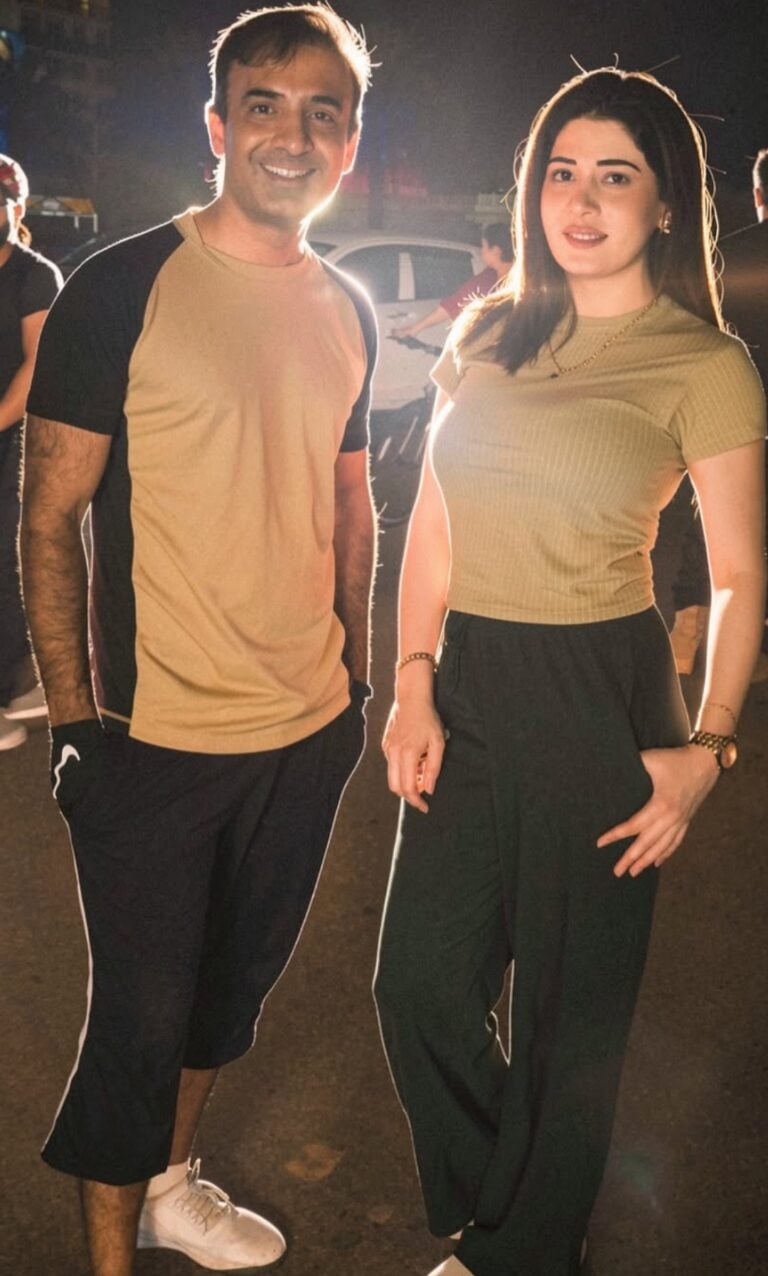
Aroosa Khan faces criticism over outfits in vlogs

Aroosa Khan is a Pakistani news anchor and digital content creator who has gained considerable public recognition through her television career and growing presence on social media.

She became more widely known after her marriage to investigative journalist Iqrar ul Hassan, but over the years, Aroosa has also worked to establish an identity of her own in the media and digital space. Today, she is recognised as a TV presenter, social media personality and lifestyle content creator.

Aroosa remains active on platforms such as TikTok and YouTube, where she regularly shares glimpses of her daily routine, family life, outings and personal experiences.

Her mini lifestyle vlogs have attracted a sizeable audience, with many followers appreciating the casual and relatable style of her content. Through these videos, she often gives viewers an insight into her activities, public appearances and moments spent with family and friends.

However, Aroosa’s social media presence has also occasionally attracted criticism. Like many public figures who share personal content online, she has faced mixed reactions from social media users over her appearance, clothing choices and the way some of her videos are filmed.

In particular, some online users have criticised her choice of western-style gym wear featured in certain videos. Her traditional outfits have also become a topic of discussion when videos use close-up camera angles that focus heavily on her upper body. Similarly, some of her vlogs show her wearing fitted T-shirts, which have prompted negative comments from sections of the online audience.

Despite the criticism, Aroosa continues to remain active on social media and regularly interacts with her audience through new videos and updates. Her content covers a variety of subjects, ranging from lifestyle moments and family gatherings to public appearances and everyday activities.

The contrasting reactions to her content highlight the scrutiny faced by Pakistani celebrities and media personalities on social media. While some followers praise Aroosa for her confidence and modern approach to content creation, others openly express their opinions about her fashion choices and presentation.

Aroosa, meanwhile, has continued focusing on her digital presence and professional activities. Her growing popularity demonstrates how television personalities are increasingly using platforms such as TikTok and YouTube to connect directly with audiences beyond traditional television.

With her regular uploads and public appearances, Aroosa Khan remains a familiar name among Pakistani social media users. Although her content sometimes becomes the subject of online debate, the continued attention surrounding her videos also reflects the strong public interest in her personal and professional life.
Similar Posts

  • | |

    Iran pressures Gulf allies to rein in Trump, threa…

    Iran has launched an intensive diplomatic campaign targeting Gulf states, warning them directly that Tehran will strike their oil, power and water facilities unless they persuade President Donald Trump to halt US military action and pursue a negotiated end to the war instead. According to a senior Iranian official, the warning covers potential attacks on energy facilities, oil fields, refineries, electricity grids, water systems, transport networks and other strategic infrastructure belonging to Washington’s closest Arab partners in the region. The message formed part of a wider Iranian strategy to discourage further American military action by raising the specter of significant economic damage across the Gulf. Sources familiar with the matter said the warning traveled through a wave of high level diplomatic contacts following Trump’s July 28 threat to strike Iran’s energy network and broader infrastructure. Two senior Iranian officials, two Gulf sources and a senior regional diplomat, all speaking on condition of anonymity given the sensitivity of the discussions, said Iranian Foreign Minister Abbas Araqchi held conversations with his Saudi, Turkish and Qatari counterparts as well as Pakistan’s army chief. The senior diplomat said Araqchi pressed Washington’s Gulf allies to use their influence with Trump to head off renewed strikes, cautioning that any attack on Iran would trigger retaliation against American assets and critical infrastructure throughout the Gulf. The diplomat said Araqchi delivered a consistent message in each conversation, expressing readiness to retaliate while stressing that a diplomatic solution offers the best chance of avoiding wider regional destruction. One Gulf source described the Iranian position as unambiguous, saying Tehran made clear that any American strike on Iranian infrastructure would draw retaliation against Gulf energy facilities and other regional targets. The campaign illustrates how Iran is attempting to convert Gulf vulnerability into diplomatic leverage, presenting regional governments with the prospect that a renewed confrontation between Washington and Tehran could put the infrastructure their economies depend on directly at risk. Saudi Crown Prince Mohammed bin Salman subsequently spoke with Trump directly, urging him to hold off on military action, return to the negotiating table, pursue a ceasefire and seek a diplomatic resolution, according to the senior diplomat and Gulf sources. Another Gulf source said the warning was meant for every Gulf state but traveled primarily through Saudi Arabia and Qatar, both of which have rebuilt ties with Iran in recent years after a long period of regional rivalry. Qatar, Oman and Saudi Arabia have each urged Washington to resume talks with Tehran and prevent a fresh round of conflict, with Iran cautioning that further strikes could turn the region into what one Iranian official called a fireball. On August 2, Trump said he had agreed to call off a planned attack on Iran, provided a deal could be reached quickly. Concerns over wider escalation A Gulf source said Saudi Arabia believes additional escalation would only cause further destruction, explaining why Riyadh pushed Trump to give diplomacy more room to work. At the same time, Saudi officials made clear the kingdom would defend itself if directly threatened, with a second Gulf source saying Riyadh warned that any strike on Saudi territory would draw a military response of its own. Ali Shihabi, a Saudi analyst with ties to the royal court, said the kingdom’s assessment holds that further escalation is unlikely to produce the outcome Washington wants. He said Saudi officials believe a mix of proportionate military responses combined with sustained pressure on Iran around the Strait of Hormuz offers the most realistic route toward a workable diplomatic settlement. Iran’s clerical leadership has repeatedly called for the closure of US military bases across the Gulf and urged Gulf Arab states to stop sharing intelligence with Washington, which Tehran believes has enabled strikes against Iranian targets. Shihabi noted that memories of the September 2019 drone and missile strikes on Saudi Arabia’s Abqaiq and Khurais oil facilities still shape regional thinking, since that attack temporarily cut more than half the kingdom’s crude output and exposed how vulnerable Gulf energy infrastructure remains. A separate Iranian official reiterated that any damage inflicted on Iran would be met with far greater retaliation, again citing power grids and refineries among potential targets. From Tehran’s perspective, the senior Iranian official said, Trump now confronts two difficult options: escalate a conflict that risks engulfing the wider Gulf and disrupting global energy markets, or accept a negotiated settlement that falls short of the decisive win Washington has sought. The senior regional diplomat identified Washington’s reluctance to let Tehran claim any form of victory as one of the central obstacles blocking an agreement, noting that American officials want tangible proof they prevailed in the conflict.

  • |

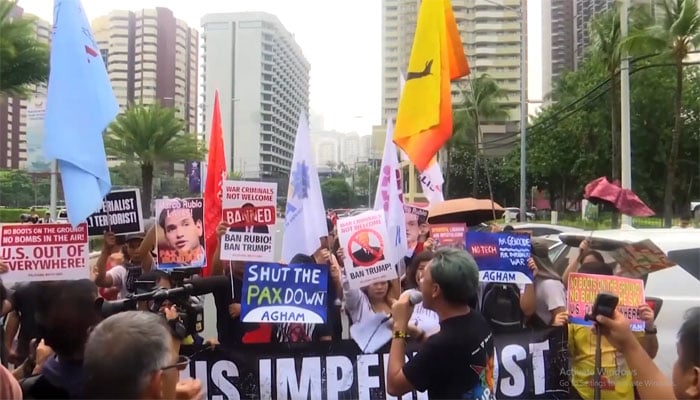
    Anti-US protest greets Rubio at ASEAN Summit

    Protesters demonstrated against US Secretary of State Marco Rubio during the ASEAN Foreign Ministers’ Meeting in the Philippines, calling for an end to what they described as America’s war against Iran. According to reports from Manila, the protest took place while Rubio was attending the regional diplomatic gathering. Demonstrators gathered near the venue carrying banners and chanting slogans criticizing US foreign policy and military actions. The protesters urged the United States to stop its military campaign against Iran and called for peace in the region. They also appealed to the Philippine government not to become involved in any US-led military conflict. Police set up barricades around the meeting venue and prevented demonstrators from approaching the site where ASEAN foreign ministers were holding discussions. Security remained tight throughout the event, and no major clashes were reported. The protest coincided with high-level regional meetings attended by foreign ministers from ASEAN member states and dialogue partners, where regional security and international issues were among the key topics of discussion.

  • | | |

    PTI founder strong, reads the Quran and its transl…

      ISLAMABAD: Aleema Khan, the sister of the founder of Pakistan Tehreek-e-Insaf (PTI), has said that her brother remains mentally and physically strong despite being in prison. Speaking to the media outside the Islamabad High Court on Thursday, she stated that the PTI founder continues to spend his time reading the Holy Quran along with its translation, describing this as a source of strength and resilience during his incarceration. Aleema Khan also raised concerns about her brother’s health, claiming that he has been experiencing vision problems for several months. According to her, the PTI founder informed his lawyer, Salman Safdar, back in December that he was having difficulty seeing and that there was an issue with one of his eyes. She suggested that despite bringing the matter to the attention of his legal counsel, adequate medical attention had not been provided. Speaking further about his conditions in custody, Aleema Khan alleged that the PTI founder’s access to reading material has been restricted. She claimed that prison authorities had confiscated his books, preventing him from continuing his regular reading routine. According to her, books have always been an important part of his daily life, and taking them away has made his time in prison more difficult. Despite these alleged restrictions, Aleema Khan insisted that the PTI founder has remained determined and steadfast. She said he continues to focus on reading the Quran and reflecting on its translation whenever possible, adding that his faith has helped him maintain a positive outlook while facing the challenges of imprisonment. Her remarks came as PTI leaders, supporters, and lawyers gathered outside the Islamabad High Court, where they continued to call for legal relief for the former prime minister. The media interaction attracted significant attention as party members expressed concern over the PTI founder’s health and prison conditions. Aleema Khan’s comments are the latest in a series of statements from the PTI leadership regarding the treatment of the party founder during his detention. Party officials have repeatedly voiced concerns about his medical care, access to books, and overall prison environment. They have urged the authorities to ensure that he receives appropriate healthcare and is granted facilities in accordance with prison regulations. The government and prison authorities have previously rejected or disputed several allegations made by PTI leaders regarding the former prime minister’s treatment in custody. However, the issue continues to remain a point of political debate, with PTI maintaining that its founder’s legal rights and well-being should be protected. As legal proceedings continue, Aleema Khan reiterated that her brother remains firm in his resolve. She concluded by saying that, despite the challenges he faces in prison, he remains spiritually strong through his regular recitation of the Holy Quran and reading of its translation.

  • | | |

    Sherry Rehman flags polling delays, security lapse…

    ISLAMABAD: Pakistan Peoples Party (PPP) Senator Sherry Rehman has voiced concern over delays in polling at several constituencies in Azad Jammu and Kashmir (AJK), saying the disruption has caused significant hardship for voters and raised serious questions about election management. In a statement issued on Sunday, Rehman said delayed arrival of election staff had affected the voting process at a number of polling stations, preventing many voters from casting their ballots on time. She identified constituencies LA-28, LA-31, LA-25 and LA-34 among the areas where polling was reportedly delayed, calling on the Election Commission to immediately investigate the matter and ensure that the electoral process proceeds without further disruption. The PPP leader also expressed concern over security arrangements at a women’s polling station in Shark Kamal Bandi in LA-31, claiming that only one police officer had been deployed despite the polling station having previously been declared sensitive. According to Rehman, inadequate security at such locations could undermine voter confidence and create unnecessary challenges for women participating in the electoral process. She further highlighted transportation problems affecting voters in the region. Rehman said the road connecting Rangla to Katkair had remained blocked since Saturday night, leaving more than 50 vehicles carrying voters stranded and preventing many people from reaching their designated polling stations. The senator said these issues had been formally reported to the Election Commission, urging the electoral body to conduct an immediate inquiry into the reported irregularities and take prompt corrective measures wherever necessary. “Every voter must be given the opportunity to exercise their democratic right without obstacles,” she said, emphasizing that transparent, impartial and well-managed elections are essential for strengthening democratic institutions. Rehman maintained that any compromise on the sanctity of the vote would be unacceptable and stressed the need for election authorities to ensure equal access to polling facilities for all eligible voters. Her remarks come amid ongoing polling across Azad Jammu and Kashmir, where election authorities have been working to address logistical and weather-related challenges in some areas. The Election Commission has yet to issue a detailed response to the specific concerns raised by the PPP senator, while voting continues in constituencies where polling arrangements remain unaffected.

  • | | |

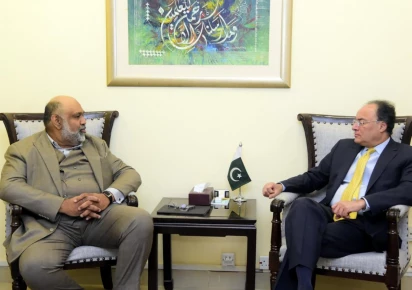
    Pakistan moves to strengthen digital finance and e…

      Finance Minister Muhammad Aurangzeb has called for a more supportive regulatory framework to expand electronic transactions, improve digital access to finance and accelerate Pakistan’s broader digital transformation. The minister made these remarks during a meeting with Pakistan Digital Authority (PDA) Chairperson Dr Sohail Munir, where the two discussed digital finance, technology-driven economic activity and the development of Pakistan’s digital infrastructure. According to the Ministry of Finance, Aurangzeb stressed that existing regulations must evolve alongside technological advancements and new business models. The meeting focused on creating an environment that recognises electronic transactions and encourages greater use of digital systems in trade and financial activities. The participants also examined ways to improve access to finance by expanding digital platforms and making financial procedures more efficient. Aurangzeb particularly highlighted the need to simplify customer onboarding, strengthen data-sharing systems and improve the interoperability of financial information. Greater integration between banks and capital markets was also discussed, with the aim of making investment opportunities more accessible to ordinary citizens. The minister said streamlined digital account-opening procedures could encourage wider participation in the capital market. Better connections between banking and capital-market systems, he added, could increase investor participation and improve access to investment opportunities. The meeting also covered the importance of connecting government data systems. According to the ministry, better-integrated data could help policymakers improve planning, policy formulation and decision-making. The increased use of technology and artificial intelligence was identified as another opportunity to improve the efficiency of government and financial services. Digital infrastructure was another key area of discussion. Aurangzeb emphasised that new initiatives should be practical, scalable and consistent with Pakistan’s wider digital transformation goals. Digital assets and tokenisation were also discussed, particularly their possible applications in real estate and other investment sectors. Participants stressed that appropriate regulations and supporting mechanisms would be necessary for the responsible adoption of emerging technologies. Aurangzeb appreciated the work of the Pakistan Digital Authority and called for practical, high-impact initiatives that could improve efficiency, expand financial access and strengthen the country’s digital capabilities. He also emphasised continued coordination among relevant stakeholders to ensure steady progress in Pakistan’s digital economy. Pakistan has already witnessed significant growth in digital payments. According to the State Bank of Pakistan, retail payments through the banking system reached 3.7 billion transactions during January-March 2026, representing a 9% increase from the previous quarter. Digital channels accounted for 92% of total retail payment volumes, processing around 3.4 billion transactions worth Rs68.3 trillion. Mobile banking and digital wallet registrations exceeded 132 million by March 2026, rising 37% year-on-year. Nearly half of Pakistan’s 268 million bank accounts were connected to a mobile banking application or digital wallet. Meanwhile, Raast processed 742 million transactions worth Rs23.27 trillion during the quarter, reflecting growing public acceptance of instant digital payments. Mobile wallets such as Easypaisa and JazzCash have also expanded access to basic financial services, particularly for people previously underserved by traditional banking. Merchant adoption is growing as well. QR-enabled merchants more than tripled during FY25, rising from 516,000 in FY24 to more than 1.9 million by the end of 2025. Although digital adoption remains stronger in urban areas, the figures indicate that Pakistan’s digital financial ecosystem is expanding rapidly.

  • | |

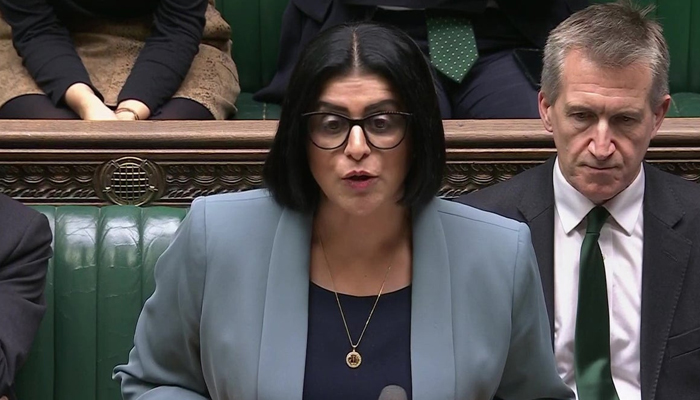
    British home secretary faces heavy criticism over attempt to deport grooming gang leader to Pakistan

    British Home Secretary Shabana Mahmood is facing sharp backlash over the government’s attempt to forcibly deport Shabbir Ahmed, a convicted child sex offender and leader of a grooming gang, to Pakistan. The controversy has sparked a diplomatic row between the United Kingdom and Pakistan, with the British government threatening sanctions against Pakistan if it refuses to accept Ahmed. Ahmed, who was convicted of child sexual exploitation in 2012, was recently released from prison. However, attempts to remove him face significant legal hurdles under the Immigration Act 1971. Under this legislation, Commonwealth citizens who moved to the UK before 1973 and have resided there for at least five years are protected from deportation. Having arrived in the UK during the late 1960s, Ahmed remains shielded by these statutory protections. Members of the British Pakistani community have expressed strong opposition to Mahmood’s approach, alleging that the Home Office is pushing the measure to appease far-right political factions

Leave a Reply

Your email address will not be published. Required fields are marked *