denies forming imran
| |

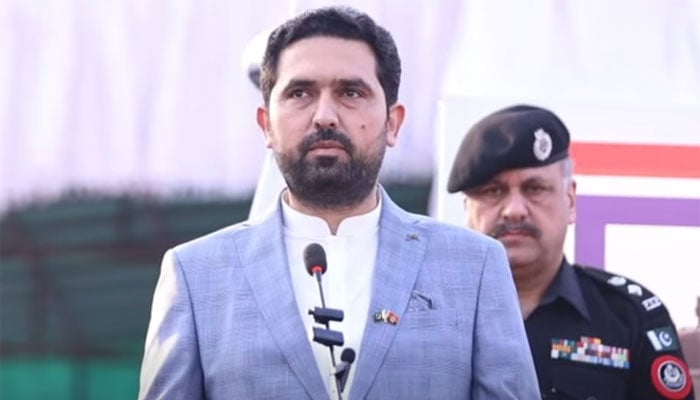
KP CM denies forming Imran release force

Khyber Pakhtunkhwa Chief Minister Sohail Afridi has told the Federal Constitutional Court that no “PTI founder release force” was ever established, describing the initiative instead as a peaceful movement for the release of Pakistan Tehreek-e-Insaf founder Imran Khan.

Afridi submitted an eight-page response in the case through the Khyber Pakhtunkhwa advocate general. The response was filed after the Federal Constitutional Court sought his position on a petition challenging the alleged formation of the so-called release force.

In his response, the chief minister said the actual initiative was the Release Peace Movement, which he described as peaceful, unarmed and voluntary.

He maintained that the movement had no armed structure or military component.

Afridi further argued that the constitutional petition was politically motivated and based on misrepresentation of facts. He said the petition was premature, hypothetical and therefore not maintainable.

According to the chief minister, the petitioner had also failed to establish any violation of fundamental rights.

Afridi said the Release Peace Movement was protected under Articles 16, 17 and 19 of the Constitution. These provisions relate to freedom of assembly, freedom of association and freedom of speech and expression.

He also argued that Article 256 of the Constitution, which concerns private military organisations, had no relevance to the movement.

The KP chief minister maintained that the Private Military Organisations Act, 1973 was also not applicable to the Release Peace Movement.

He rejected allegations that the initiative posed a threat to public order. He described such claims as baseless and said comparisons between the movement and armed organisations of the past were misleading.

Afridi asked the court to dismiss the constitutional petition at the preliminary stage. He also requested the court to declare the Release Peace Movement constitutional and lawful.

The case comes amid political controversy over claims that the KP government or PTI supporters were preparing an organisation to campaign for Imran Khan’s release.

Federal Defence Minister Khawaja Asif had previously criticised the KP government over the issue, alleging that it could establish a release force for the PTI founder while remaining silent against militants.

The Federal Constitutional Court has scheduled the next hearing of the petition for July 29.

Similar Posts

  • |

    Shubman Gill returns to No.1 in ICC ODI batting rankings

    India captain Shubman Gill has reclaimed the No.1 position in the ICC Men’s ODI batting rankings after an outstanding run of form in the recently concluded three-match ODI series against England. The right-handed opener produced another impressive performance with the bat, scoring a total of 188 runs across the series. His consistency at the top of the order helped him climb back to the summit of the rankings, marking the third time in his international career that he has occupied the top spot among ODI batters. Gill’s return to the top was also influenced by New Zealand batter Daryl Mitchell, who missed the final two matches of his team’s ODI series against the West Indies because of injury. Mitchell’s absence prevented him from adding to his ranking points, allowing Gill to move ahead in the latest ICC update. The latest rankings also featured significant movements in both the batting and bowling charts across ODI and T20I cricket. Namibia spinner Bernard Scholtz emerged as one of the biggest gainers in the ODI bowling rankings. The experienced left-arm spinner climbed five places to seventh after delivering a series of impressive performances during Namibia’s ICC Men’s Cricket World Cup League 2 tri-series campaign in Utrecht against Nepal and the Netherlands. His consistent wicket-taking ability played a crucial role in Namibia’s successful campaign and earned him a place among the world’s leading ODI bowlers. Meanwhile, India’s teenage batting sensation Vaibhav Sooryavanshi continued his remarkable rise on the international stage. The youngster was named Player of the Series after a brilliant display in India’s T20I series against Zimbabwe. He scored 151 runs in just three innings while maintaining a stunning strike rate of 196.10, underlining his aggressive approach at the crease. Having played only six T20 internationals so far, Sooryavanshi made one of the biggest jumps in the latest rankings, soaring 230 places to reach 48th in the ICC Men’s T20I batting rankings. His rapid progress highlights his growing reputation as one of India’s most exciting young talents. India also enjoyed success elsewhere in the T20I batting rankings. Tilak Varma moved up two places to sixth after continuing his consistent performances in the shortest format, while Shreyas Iyer climbed seven positions to reach 24th following a productive series. The bowling rankings also witnessed notable changes. Zimbabwe fast bowler Blessing Muzarabani gained 10 places to move into 26th position after delivering impactful performances with the new ball. India leg-spinner Ravi Bishnoi also registered one of the biggest improvements of the week, jumping 31 places to claim the 41st spot in the T20I bowling rankings. The latest ICC rankings reflect recent performances across international cricket, with several players making significant progress through consistent displays. While Gill’s return to the top of the ODI batting rankings remains the biggest headline, the rise of emerging talents such as Sooryavanshi and the continued progress of bowlers like Scholtz, Muzarabani and Bishnoi highlight the growing competition across all formats of the game.

  • | |

    Beyond faith and defense

    The historical partnership between Pakistan and the Kingdom of Saudi Arabia stands as one of the most enduring bilateral relationships in the contemporary Muslim world. This history is anchored in shared Islamic values and a profound spiritual connection to the holy sanctuaries of Makkah and Medina. This alliance predates the modern era of Saudi oil wealth. The bond was formalized through the landmark Treaty of Friendship in 1951. It established an early blueprint for solidarity, ideological alignment and mutual support during crisis. Over the past seven decades, this connection has expanded from religious affinity into strategic collaboration. The Art of Strategic Neutrality Defense cooperation forms a central pivot of the bilateral relationship. Since the 1960s, the Pakistani military has played an instrumental role in advising, training, and building the infrastructure of the Saudi armed forces. Contingents of Pakistani troops have historically been deployed inside the Kingdom for defensive purposes, notably safeguarding the Holy Mosques during regional upheavals such as Operation Desert Storm. Moreover, thousands of Saudi defense personnel have undergone advanced training in Pakistani military institutions over the decades. However, the military relationship has also required careful navigation.  When conflict erupted in Yemen (2015), Pakistan’s parliament adopted a stance of strict neutrality to avoid inter-state Middle Eastern disputes, particularly while its domestic forces were actively engaged in counter-terrorism campaigns like Operation Zarb-e-Azb. Despite initial friction, Riyadh acknowledged Islamabad’s geopolitical constraints. This mature understanding was demonstrated when former Pakistani Army Chief General Raheel Sharif was appointed to lead the Islamic Military Counter Terrorism Coalition (IMCTC), focusing strictly on combating global extremism rather than taking sides in regional power struggles. Economic Interdependence and Human Capital Beyond defense, economic cooperation has provided crucial stability to Pakistan’s financial landscape. Saudi Arabia has repeatedly acted as a financial cushion. The country delivered multi-billion-dollar bailout packages, balance-of-payment assistance and deferred-payment oil supplies during economic hardship. Historically, this financial dynamic was complemented by administrative leadership. Pakistani economist Anwar Ali served as the Governor of the Saudi Arabian Monetary Agency from 1958 to 1974. He played a pivotal role in organizing the Kingdom’s modern financial infrastructure. Human capital remains another essential driver of this relationship. Over 2.7 million Pakistani expatriates reside and work within Saudi Arabia. Spanning critical sectors such as healthcare, engineering, construction, and information technology, these workers contribute directly to Saudi Arabia’s physical and economic development while generating vital remittance flows that sustain Pakistan’s domestic economy. Furthermore, administrative initiatives like the “Road to Makkah” project and reductions in visa fees have significantly streamlined pilgrimage procedures for millions of Pakistani citizens traveling for Hajj and Umrah. Geo-Economics, Vision 2030, and the Future of CPEC As both nations adjust to global realities, the bilateral partnership is changing into modern geo-economic framework. Saudi Crown Prince Mohammed bin Salman’s Vision 2030. The Kingdom aims to diversify its economy away from oil dependency by investing in global supply chains. A key element of this transformation includes multi-billion-dollar investment commitments in Pakistan. Furthermore, a proposed mega-oil refinery at the deep-sea port of Gwadar.   Ultimately, geopolitical challenges occasionally test bilateral diplomatic alignment. However, the strategic, economic and institutional ties between Islamabad and Riyadh continue to adapt. After all, it’s a dynamic future built on mutual survival and shared prosperity.

  • | |

    ‘Mera Sooba, Mera Nizam’: Mian Aamir M…

    LAHORE: Chairman Punjab Group of Colleges chairman Mian Aamir Mahmood has launched a nationwide awareness campaign under the slogan “Mera Sooba, Mera Nizam” — My Province, My System. Addressing the inaugural ceremony of the campaign at *Expo Center Lahore*, he said that the slogan is *”not just a slogan but the core point of a nationwide movement”* aimed at administrative reforms and better governance in Pakistan. Key Points of the Campaign Mian Aamir Mahmood said that instead of changing rulers, *Pakistan needs to change its system*. He argued that the creation of *new provinces and smaller administrative units* will reduce government expenses and bring governance closer to the people. He stated that countries around the world increase administrative units with population growth. *”The idea that new provinces will increase expenses is wrong. In fact, costs will go down, and governance will improve,”* he said. Highlighting provincial disparities, he added that *Punjab gives billions to Balochistan every year*, yet faces hatred. He said the *people of Punjab are ready for smaller provinces and that *Balochistan’s 8 divisions and Sindh’s new provinces* would become the richest administrative units with more local control. Focus on Youth and Local Government The Chairman emphasised that the youth want better governance and that *a strong local government system* must be part of every new province. He cited examples of *Turkey, France, and India*, where leaders emerged from local government structures. He also pointed to issues in education and development, noting that *25.1 million children are out of school* and that development has been limited to capital cities like Karachi, Lahore and Islamabad. “Our real slogan is the welfare of the people of Pakistan. 250 million Pakistanis want to move forward. The government must reach people’s doorsteps,”* he said. The campaign *#MeraSoobaMeraNizam* was also promoted at the event, with speakers including *Rector Superior University Prof. Dr. Sumaira Rehman* and *Owais Rauf* expressing support for the initiative.

  • |

    West Indies win toss, opt to bat first against Pak…

    West Indies won the toss and elected to bat first against Pakistan in the opening Test of the two-match series at the Brian Lara Cricket Academy in Tarouba, Trinidad. The hosts decided to take advantage of a pitch that appeared conducive to batting early on, with captain Kraigg Brathwaite expressing confidence that his spinners would play a crucial role later in the match. The first session was interrupted by rain, with West Indies reaching 23-1 after losing opener Brandon King, who was dismissed by Pakistan’s Mohammad Abbas. Pakistan captain Babar Azam stated he would have preferred to bat first as well, but his team now focused on making early inroads with the new ball. Pakistan made one change to their playing XI, with left-arm spinner Ali Usman making his Test debut. The match also marked Babar Azam’s 100th first-class appearance, a significant milestone. The Brian Lara Cricket Academy is hosting its first-ever Test match, becoming the 13th Test venue in the Caribbean. West Indies will look to capitalize on their decision to bat first and post a competitive total, while Pakistan’s bowlers, including debutant Usman, will aim to exploit the conditions and restrict the hosts. The match promises to be an exciting contest, with both teams eager to start the series positively. The weather is expected to play a role, with forecasts predicting further interruptions, but both sides hope for a full game. The series is crucial for both teams in the context of the World Test Championship, and the first Test at the new venue is a historic occasion for Caribbean cricket. Pakistan will look to overcome the absence of injured batsman Abdullah Fazal, while West Indies aim to capitalize on home advantage. The match is expected to be closely contested, with both teams having the potential to emerge victorious. As the game progresses, the performance of the spinners and the batsmen’s ability to adapt will be key factors. The first Test is poised to be a memorable encounter at the Brian Lara Cricket Academy, marking a new chapter in Caribbean cricket history. Fans worldwide are eagerly watching as the two teams battle for supremacy in the Caribbean.

  • |

    EU to end automatic GSP+ extension from 2027, Pakistan told to submit fresh action plan

    ISLAMABAD: The European Union (EU) is set to introduce a revised mechanism for extending its Generalised Scheme of Preferences Plus (GSP+) trade facility from January 2027, under which beneficiary countries will no longer receive an automatic extension. The Commerce Ministry informed the National Assembly Standing Committee on Commerce on Wednesday that Pakistan would have to formally seek continuation of the GSP+ facility and submit an action plan covering its commitments under 32 United Nations conventions. Commerce Secretary Jawad Paul briefed the committee that the new GSP+ framework would come into force in January 2027, followed by a two-year transition period. During this period, countries benefiting from the scheme will be required to prepare and submit their respective plans, which will subsequently be assessed by the European Union. According to the secretary, the EU’s assessment of Pakistan contains both positive observations and areas of concern. Among the issues highlighted by the European bloc is the human rights situation in Pakistan, along with security and climate-related challenges. The briefing was given during a meeting of the National Assembly Standing Committee on Commerce chaired by Jawad Hanif. Members including Asad Alam Khan Niazi, Khurshid Ahmed Junejo, Shaista Pervaiz, Dr Ramesh Kumar Vankwani, Tahira Aurangzeb, Mir Amir Magsi, Dr Mirza Ikhtiar Baig and Kiran Haider attended the meeting. EU concerns discussed The committee asked the Commerce Ministry to explain the concerns raised by the European Union in its latest assessment of Pakistan and their possible implications for the country’s trade interests. Jawad Paul said the EU report had acknowledged the difficult circumstances Pakistan was facing, particularly in terms of security challenges, economic pressures and climate-related disasters, including floods. These factors, he said, had affected the country’s capacity to fully implement various commitments. He urged members of parliament to present Pakistan’s perspective during their engagements with European Parliamentarians and other EU representatives. The secretary maintained that Pakistan’s circumstances should be taken into account while evaluating the country’s performance under the GSP+ framework. He said the government needed to undertake fundamental measures to address the challenges identified by the EU while also ensuring that Pakistan’s position was effectively communicated to European stakeholders. The committee also expressed concern over the repeated absence of the Commerce Minister from its meetings and conveyed its displeasure over the matter. Tariff reforms aimed at boosting exports The meeting also reviewed the government’s tariff reforms and their impact on industrial competitiveness and exports. Committee members questioned whether exporters would be required to commit to specific export targets in return for government support. The committee chairman clarified that the measures being introduced should not be viewed simply as incentives for exporters, arguing that reductions in duties and taxes were intended to lower production costs and improve Pakistan’s competitiveness in international markets. Officials from the Commerce Ministry said the government had been pursuing a policy of reducing tariff protection and lowering the cost of imported raw materials. The objective, they said, was to enable domestic industries to become more competitive and increase their presence in international markets. As part of the reforms, tariffs on around 2,000 tariff lines were reduced last year to make raw materials and other industrial inputs available at lower prices. The secretary said tariff reforms were being implemented under the National Tariff Policy and that the government had provided an estimated Rs160 billion benefit to industry and exporters during the previous year. For fiscal year 2026-27, another Rs120 billion has been earmarked under the relevant support measures. According to the Commerce Ministry, the previous Rs120 billion package was associated with a $1.27 billion increase in exports during 2025-26. Jawad Paul acknowledged that the tariff changes could initially result in higher imports as industries gained access to cheaper inputs and machinery. However, he argued that the trade imbalance could gradually improve as increased industrial production translated into stronger exports. Committee seeks review of Pakistan-China trade agreement The standing committee also raised concerns over Pakistan’s trade deficit with China and identified the China-Pakistan Free Trade Agreement (CPFTA) as an issue requiring closer examination. Members asked the Commerce Ministry to provide a detailed presentation on the agreement’s impact on Pakistan’s exports, imports and overall trade balance. The committee also sought an update on the latest trade discussions between Pakistan and the United States. The Commerce Secretary assured members that a detailed briefing on the matter would be provided in an in-camera session. Export Development Fund restructuring reviewed The committee separately examined the restructuring of the Export Development Fund (EDF). Officials told the meeting that the management and decision-making structure of the fund had been moved towards greater private-sector participation, with leading exporters being given a more significant role in determining spending priorities. The committee welcomed the shift towards projects that have a direct and measurable connection with export growth rather than conventional infrastructure-focused initiatives. Members also reviewed the allocation of 40% of the Export Finance Scheme (EFS) portfolio for small and medium-sized enterprises (SMEs). They stressed that smaller businesses should have fair and sufficient access to export financing so that they can participate more effectively in international trade. Pakistan Reinsurance Company performance discussed The committee also reviewed the performance and investment strategy of Pakistan Reinsurance Company Limited (PRCL). Members were informed that the company retained nearly 30% of its risk domestically, while approximately 70% was placed in international reinsurance markets, including London, Dubai and Singapore. The committee chairman called for careful management of the company’s financial resources and urged officials to explore opportunities to improve returns without compromising risk-management standards. Proposed amendments for Karachi Chamber examined The committee considered the Trade Organizations (Third Amendment) Bill, 2026, a Private Member’s Bill seeking amendments to the Trade Organizations Act in relation to the Karachi Chamber of Commerce and Industry (KCCI). During the discussion, members examined the special status of KCCI and proposed exemptions from certain district-related provisions. The chairman directed that the proposed amendments be drafted in appropriate legal language in consultation with the Ministry of Commerce and the Ministry of Law and Justice

  • Brace for Tighter Screening: Thai Airports Ramp Up Security

    BANGKOK — Stricter checks of passengers’ belongings have been implemented at all Thai airports in compliance with safety standards and requirements imposed by the International Civil Aviation Organization (ICAO), prompting authorities to issue an advisory urging travelers to prepare accordingly. AOT Confirms Airports Operating Normally as 134 Flights Affected by Middle East Unrest The Civil […]

Leave a Reply

Your email address will not be published. Required fields are marked *