pakistan holds first

Pakistan holds first National Self-Care Dialogue on health

On International Self-Care Day, Pakistan’s first national dialogue on self-care brought together Joint Secretary, Ministry of National Health Services Regulations and Coordination, Syed Salahuddin Ahmed; Alison Blackburne, British Deputy High Commissioner to Karachi; and senior representatives from government, healthcare institutions, academia, development organisations, business, civil society and the media. Convened by Haleon Pakistan, the dialogue highlighted the importance of advancing self-care as a public health priority to improve health outcomes, strengthen health literacy and support a more resilient healthcare system.

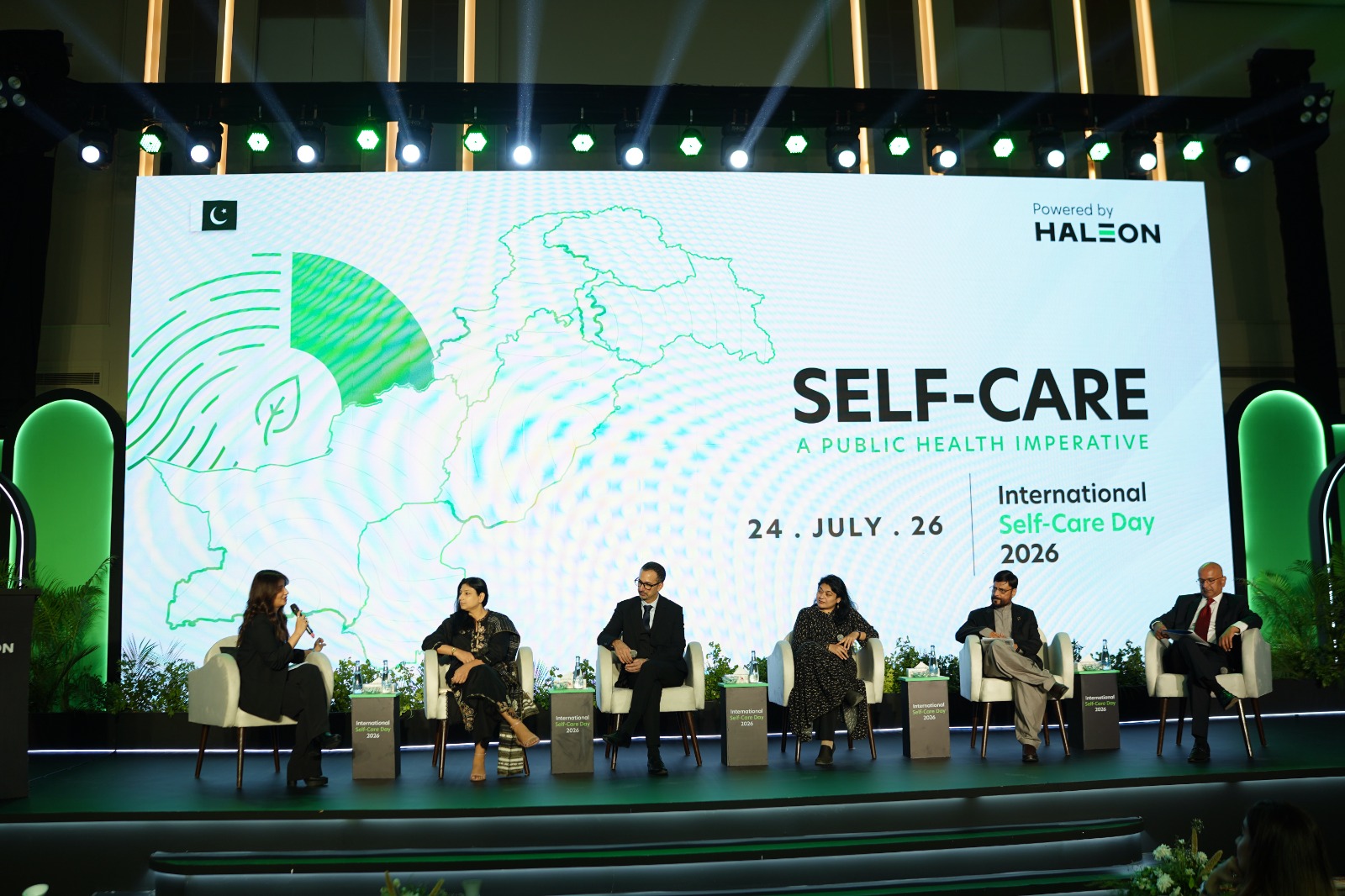
The inaugural Pakistan Self-Care Dialogue, titled “Self-Care as a Public Health Imperative,” was led by Haleon Pakistan Limited, makers of leading consumer health brands including Panadol, Sensodyne and CAC-1000 Plus, as part of the global observance of International Self-Care Day on 24th July. Marked annually around the world, the day raises awareness of self-care as an essential pillar of public health, promoting prevention, health literacy and empowering individuals to take greater ownership of their health.

The event featured a welcome address by Qawi Naseer, CEO and General Manager of Haleon Pakistan Limited, a keynote address by the Joint Secretary, Syed Salahuddin Ahmed, and remarks by Alison Blackburne, British Deputy High Commission. This event also included a dialogue-based panel discussion featuring Dr. Ahson Qavi Siddiqi, CEO Sindh Healthcare Commission, Qawi Naseer, Dr. Samar Fatima, Associate Director of Aga Khan University’s Centre of Clinical Best Practices and Dr. Humaira Jamshed Associate Professor of Bioscience at Habib University, Dr. Zulfiqar Ahmed Siddiqui (MD, MBBS, MPH), Health Specialist at UNICEF.

“A healthier Pakistan cannot be built through treatment alone. Prevention, health literacy and responsible self-care must become part of everyday life. By working together across sectors, federal and provincial, we can empower people to make informed health decisions and build a stronger, more resilient healthcare system,” said the Joint Secretary, Syed Salahuddin Ahmed, sharing the Ministry’s perspective during his keynote address.

Similar Posts

  • PAAM rejects DRAP Rules 2026, warns alternative medicine sector

    ​LAHORE: Kashif Aslam Malik, Chairman of the Pakistan Association of Alternative Medicine (PAAM), has completely rejected the proposed DRAP Rules 2026, labeling them an unscientific plot against the local alternative pharmaceutical industry, Homeopathy, and Unani medicine. He stated that the allopathic pharmaceutical bureaucracy within the Drug Regulatory Authority of Pakistan (DRAP) is attempting to forcefully impose itself on the alternative medicine sector. In reality, the 5-year Pharm.D curriculum completely lacks education and technical training on homeopathic potentization, Unani herbal formulation, or nutraceutical manufacturing. He questioned the legal and scientific authority of allopathic pharmacists who have never studied these disciplines to act as self proclaimed experts and draft policies for this sector. ​Kashif Aslam Malik emphasized that under the universal principle of “right expertise for the right job,” the regulatory framework, registration, and licensing for alternative medicines must strictly be developed under the direct supervision of qualified specialists in Homeopathy, Unani, and Nutraceutical sciences. Imposing these unilateral rules and rigid allopathic SOPs will bankrupt over 80% of small and medium-sized enterprises (SMEs), resulting in widespread unemployment for thousands of homeopathic doctors, Unani practitioners, and industrial workers, while depriving the public of affordable, natural healthcare options. PAAM demands an immediate halt to these rules, the formation of a committee comprising specialized alternative medicine experts, and the establishment of an independent authority modeled after India’s Ministry of AYUSH. He warned that if DRAP attempts to force these rules through, PAAM will unite all industry stakeholders to fight a nationwide battle across the media, judiciary, and public spheres.

  • | | | |

    Pakistan-origin Saadia Zahidi becomes first woman …

    Pakistan-origin global executive Saadia Zahidi has been appointed as the first woman Director General of the International Air Transport Association (IATA), making history by becoming the first female to lead the world’s largest airline industry organisation. She will officially assume her new responsibilities on November 1, taking charge of an organisation that represents hundreds of airlines and plays a key role in shaping global aviation policies, safety standards and industry cooperation. Saadia Zahidi is currently serving as the Managing Director of the World Economic Forum (WEF), where she has held several senior leadership positions. During her time at the WEF, she contributed to global initiatives focused on economic growth, innovation, labour markets, gender equality and sustainable development. Her appointment is being widely viewed as a landmark achievement for the international aviation industry. It reflects the growing recognition of women’s leadership in sectors that have traditionally been dominated by men. After the announcement, Zahidi said she was honoured to take on the new responsibility. She pledged to work closely with airlines, governments and industry partners to strengthen the global aviation sector and prepare it for future challenges. She said her priorities would include promoting innovation, improving the resilience of the aviation industry and supporting sustainable growth. She stressed that international cooperation would be essential in helping the aviation sector meet changing economic, environmental and technological demands. Industry observers believe Zahidi’s extensive experience in global economic policy and international cooperation will bring a broader strategic perspective to IATA as the aviation industry continues to recover from recent global disruptions and focuses on long-term growth. Originally from Lahore, Saadia Zahidi has built an internationally respected career through her work with global institutions. She holds dual Pakistani and Swiss citizenship and has represented Pakistan on several international platforms throughout her professional career. Her appointment is also being celebrated as a proud moment for Pakistan, with many viewing it as recognition of the talent and leadership of Pakistani professionals serving in prominent positions around the world. As Director General, Zahidi will lead IATA’s efforts to support airlines worldwide, strengthen global aviation cooperation, improve operational standards and encourage policies that promote safe, efficient and environmentally sustainable air transport.

  • | |

    At UN Summit, Tanweer Ahmed demands global action …

    American Pakistani businessman and analyst Tanweer Ahmed has called for greater investment in young people and urged governments, businesses and international institutions to ensure that artificial intelligence (AI) expands opportunities rather than deepens existing inequalities. Addressing a Youth and AI Summit at the United Nations on International Youth Day 2026, Ahmed said young people should be viewed not only as beneficiaries of development but also as innovators, decision-makers, community leaders and partners in shaping the future. He described AI as a defining force of the Fourth Industrial Revolution, saying rapid advances in artificial intelligence, robotics, data, connectivity, biotechnology and automation were transforming economies and societies at an unprecedented pace. Ahmed said the impact of AI would extend across education, healthcare, public services, entrepreneurship, security and employment, creating both challenges and opportunities for the younger generation. He highlighted the growing importance of digital skills, creativity, adaptability, ethical decision-making and technological confidence in preparing young people for future jobs. “Talent is everywhere. Opportunity is not,” he said, stressing that young people in cities such as Karachi, Nairobi, Riyadh and Dhaka could possess the same potential as those living in major global technology centres but often lacked equal access to resources and opportunities. According to Ahmed, AI could help bridge this gap by allowing students to access knowledge beyond traditional classrooms, entrepreneurs to reach international markets and researchers to process information at unprecedented speeds. However, he cautioned that technological progress alone would not guarantee equal opportunity. Access to education, skills, credentials and technology must also be expanded to prevent AI from worsening existing inequalities. Pakistan’s AI potential Speaking about Pakistan, Ahmed said the country’s large young population could become a major economic strength if properly prepared for the emerging digital economy. He pointed to initiatives including ACT AI — Awareness, Competency and Tools Training for Artificial Intelligence, associated with the state-owned enterprise AXI. The programme focuses on practical AI capabilities, including generative AI, agentic AI systems, productivity tools, automation and sector-specific applications. Ahmed emphasised the importance of making AI education accessible to young people from different academic backgrounds, including those without previous programming or AI experience. He said young Pakistanis should be equipped to use AI not only for education and employment but also for entrepreneurship, public service and innovation. He also highlighted the role of MicroCerts, a government-backed initiative aimed at providing accessible and market-oriented skill certifications. Ahmed argued that traditional university degrees would continue to be valuable, but rapidly changing technology required young people to keep learning throughout their careers. Micro-certifications, he said, could help workers demonstrate specific skills and create new pathways to employment, freelancing, entrepreneurship and further education. Youth urged to become AI creators Ahmed said young people should not be trained merely to consume AI technologies. Instead, they should learn to develop, question, govern and innovate with AI while understanding its ethical and social consequences. He stressed that technology could not replace human compassion, character, judgement and responsibility. “AI can process enormous amounts of information,” he said, while emphasising that decisions about the kind of society humanity wants to build must remain a human responsibility. He also called for stronger international cooperation to develop common skills frameworks, support youth-led innovation and expand access to recognised digital credentials. Governments, universities, technology companies, international organisations and civil society, he said, must work together to ensure young people can participate meaningfully in the AI-driven economy. Ahmed further stressed that technological development must be accompanied by environmental responsibility, noting that AI systems, data centres and cloud computing require significant infrastructure and energy. Addressing young people around the world, he urged them to actively shape the future rather than wait for it. He called on the younger generation to learn emerging technologies, develop solutions, create businesses and communities, and use AI with a clear sense of purpose. Who is Tanweer Ahmed, the Pakistani-American philanthropist? Pakistani-American businessman and philanthropist Tanweer Ahmed has attracted renewed attention in Pakistan following his reported $9 million contribution to the National University of Sciences and Technology (NUST) and his recent appearance alongside senior Pakistani officials in the United States. Ahmed, who is based in Houston, has built a diverse business portfolio in the United States while also becoming involved in philanthropy, education, healthcare and cricket. His recent contribution to NUST is aimed at supporting talented students from financially disadvantaged backgrounds. The endowment is expected to provide scholarships to deserving students each year, with a particular focus on fields such as artificial intelligence, information technology, science and other emerging technologies. Ahmed has said his objective is to ensure that talented Pakistani students are not deprived of quality education because of financial difficulties. He has also expressed plans to expand similar scholarship initiatives to other educational institutions. The businessman has also supported infrastructure and technology-related initiatives at NUST, including the development of facilities intended to strengthen research and innovation. His philanthropic activities extend beyond education. Ahmed has been associated with healthcare initiatives in Pakistan and has supported efforts aimed at providing assistance to communities affected by natural disasters. He also drew attention for his role in relief efforts following the devastating floods that struck Pakistan in 2022. He has been credited with helping mobilise substantial humanitarian assistance for flood-affected communities. Ahmed’s business journey began after he moved to the United States as a student. According to accounts of his career, he initially worked in restaurants and at gas stations while trying to establish himself. He later moved through several positions in the American fast-food industry. His career accelerated after he joined Jack in the Box as a shift manager. His performance and business approach helped him move into senior management positions, eventually leading to opportunities in the Taco Bell franchise system. Ahmed later expanded into franchising and developed a large portfolio of food outlets across several US states. His business interests have also extended into insurance, energy, transportation and other sectors. Over the years, he has developed a reputation as an entrepreneur who combines commercial ventures with philanthropic activities. Ahmed

  • | |

    Armed men storm prison van, free murder suspect on…

    JHELUM: In a major security lapse, armed men intercepted a prison van on the busy GT Road near Mandra and forcibly freed a murder suspect who was being taken back to District Jail Jhelum after appearing in court. The escape involved Malik Hamad, who is facing a murder case registered with Saddar Beruni police. He had initially been held at Adiala Central Jail before being transferred to Jhelum following the recovery of a mobile phone and other prohibited items during a surprise inspection. Hamad was brought to Rawalpindi on Tuesday for a court hearing. While the prison van was returning to Jhelum, it slowed near Galaxy Hotel at Bacha Stop, where another vehicle approached the van. According to sources, the occupants told prison officials that Hamad’s mother was seriously ill and requested a brief meeting with him. Taking advantage of the confusion, several armed men surrounded the van with their vehicles, pulled Hamad out and escaped. The incident immediately triggered a security alert, with senior police and jail officials rushing to the location. Police teams were subsequently formed to track down and arrest the escaped suspect. The incident has raised fresh concerns about the security arrangements for transporting prisoners. It comes weeks after 14 high-risk prisoners escaped from another prison van while returning from Kahuta in late June. All of them were later recaptured following an extensive search operation, while cases were registered against the policemen responsible for their security. Following that escape, Rawalpindi police introduced new standard operating procedures aimed at strengthening prisoner transportation security. The latest incident, however, has renewed questions about whether those measures are being properly implemented. Four policemen reportedly assigned to guard Hamad have been detained for questioning. Sources also claimed that the suspect had links with an influential individual associated with a private housing society. Despite the seriousness of the incident, senior police officials declined to comment publicly, while a search operation to recapture Hamad remained underway.

  • | | |

    Punjab introduces new vehicle scrapping law for un…

    The Punjab government has introduced a new law for vehicle scrapping, allowing unusable and damaged vehicles to be legally disposed of through registered scrapping facilities. The move aims to regulate the disposal of old vehicles and remove unfit vehicles from roads across the province. According to reports, Punjab Governor Saleem Haider issued the Motor Vehicles Amendment Ordinance, which provides a legal framework for scrapping vehicles that are no longer fit for use. Under the new ordinance, vehicles without valid fitness certificates may also be sent for scrapping. The law includes vehicles that have been severely damaged in accidents or destroyed by fire and are considered beyond repair. The new regulations allow vehicle owners to voluntarily apply for scrapping if they no longer want to keep their vehicles. However, the process must only be completed through officially registered vehicle scrapping facilities to ensure proper disposal and prevent misuse. Officials believe the new system will help improve road safety by reducing the number of unsafe vehicles operating on roads. Old and poorly maintained vehicles can contribute to accidents, environmental pollution, and increased risks for drivers and passengers. The ordinance also introduces a more organized approach to vehicle disposal, ensuring that scrapped vehicles are handled through approved channels rather than informal methods. Registered scrapping facilities will be responsible for carrying out the process according to legal requirements. Transport experts have welcomed measures aimed at removing dangerous vehicles from circulation, saying that proper vehicle inspection and disposal systems are essential for safer roads and better environmental management. The implementation of the new law is expected to impact owners of old, damaged, and unfit vehicles across Punjab. Vehicle owners will now have a legal option to dispose of vehicles that are no longer economically repairable or safe to operate. The government is expected to issue further guidelines regarding the registration of scrapping facilities and the detailed procedure for vehicle owners in the coming days. The new vehicle scrapping ordinance represents a significant change in Punjab’s transport regulations, with authorities focusing on road safety, environmental protection, and better management of end-of-life vehicles.

  • 15,000+ free heart surgeries completed under Punjab CM’s Programme

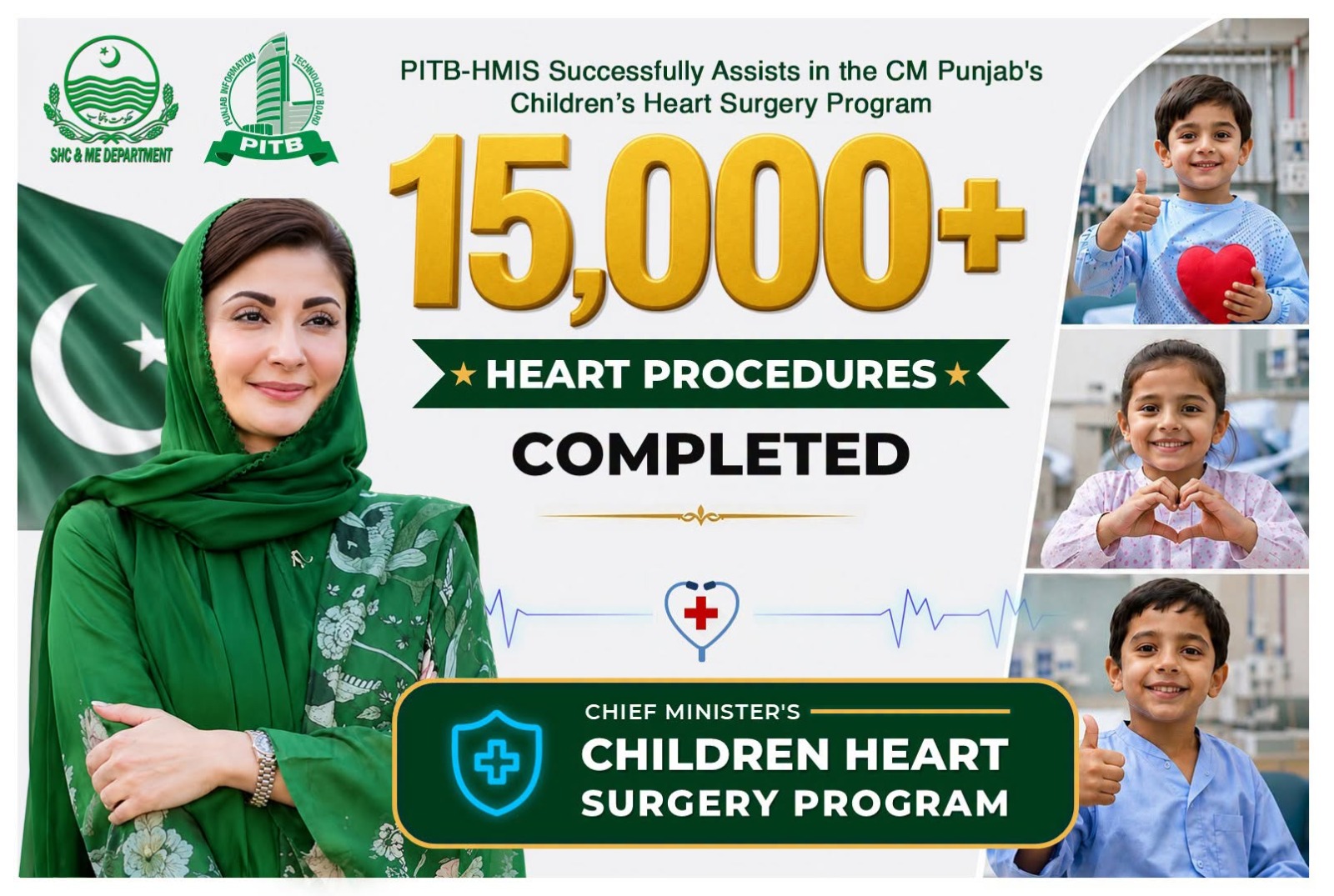
    Lahore – More than 15,000 free cardiac surgeries for children from Punjab and other parts of the country have been successfully completed since the launch of the Chief Minister’s Children Heart Treatment Programme in September 2024. The Hospital Management Information System (HMIS) developed by the Punjab Information Technology Board (PITB) has played a key role in the programme. The system has helped manage patients medical records, prepare patient lists, make electronic referrals to private hospitals and ensure timely coordination between public and private hospitals. This was revealed at a meeting chaired by PITB Chairman Faisal Yousaf at the Arfa Software Technology Park (ASTP). The meeting was briefed that HMIS is providing hospitals participating in the programme across Punjab with quick and easy access to patient records. This is helping doctors make better medical decisions while also making it easier for hospital administrations to monitor and coordinate patient treatment, referrals and other related matters. The digital system has also played an important role in making the patient referral and treatment process more organized, transparent and integrated. It has accelerated the exchange of information between hospitals and helped reduce unnecessary delays in treatment. Speaking on the occasion, PITB Chairman Faisal Yousaf said that the completion of more than 15,000 free heart surgeries for children was a major achievement of the Chief Minister’s programme. He said HMIS had played a significant role in speeding up, organizing and improving the treatment process through digital records, electronic referrals and effective coordination among hospitals. Faisal Yousaf further said that PITB would continue its support for promoting the use of modern digital technology in the healthcare sector to ensure the timely provision of quality medical facilities to citizens. He said that the effective use of digital systems in healthcare not only facilitates patient treatment but also improves hospital administrative efficiency, transparency and coordination among different institutions.

Leave a Reply

Your email address will not be published. Required fields are marked *