
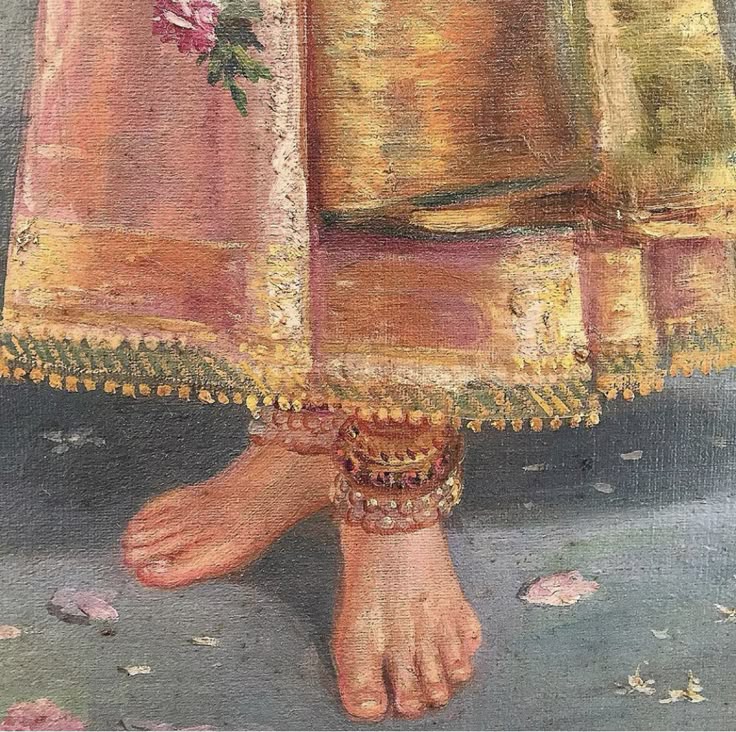
pakistani folklore
| | | |

Pakistani folklore

Pakistani folklore is a vibrant web regional oral traditions, Sufi mystical allegories, and tribal epics across Punjab, Sindh, Balochistan, Khyber Pakhtunkhwa, and the northern mountain valleys.

Punjab: Sufi Metaphors & Tragic Romances

Punjabi folklore is dominated by tragic love stories (Kissa) that doubled as spiritual allegories for divine love (Ishq-e-Haqiqi).

Heer Ranjha is immortalized by the poet Waris Shah. This narrative details the doomed union between Heer, a noblewoman, and Ranjha, an outcast flute player turned jogi.

In case of Sohni Mahiwal, Sohni crosses the volatile Chenab River nightly using an baked earthenware pot (gharra) to meet her lover Mahiwal. One night, her sister-in-law replaces the vessel with unbaked clay. This  dissolves mid-stream, leading to Sohni’s tragic drowning.

Mirza Sahiban is tale of romance, familial duty, and betrayal. The story culminated in Sahiban breaking Mirza’s arrows to protect her brothers. This act leads to Mirza’s demise.

Sindh: The Seven Queens (Satt Surmyun)

Sindhi lore centers around seven heroic women celebrated in Shah Abdul Latif Bhittai’s monumental Sufi compendium, the Shah Jo Risalo.

Sassi (Sassi Punhun) searches the Makran desert for her abducted lover, Punhun, until the earth swallows her.

Marui (Umar Marui) was abducted by King Umar. She refuses wealth and palace luxuries to remain faithful to her desert village.

Moomal (Moomal Rano) operates the enchanted palace of Kak Mahal, tests suitors with magical illusions, and loses Rano to misunderstanding.

Balochistan: Tribal Epics & Renunciation

Baloch folklore prioritizes chivalry, tribal honor, and ascetic devotion.

Hani and Sheh Mureed: The legendary hero Mureed sacrifices his marriage to Hani due to a bound oath given to Mir Chakar Rind. Mureed becomes a wandering dervish, becoming an archetype of ultimate devotion.

Lulla and Granaz: Tales celebrating battlefield bravery, hospitality, and tribal allegiance.

Khyber Pakhtunkhwa & Northern Valleys: Pashtun & Mountain Legends

Adam Khan and Durkhanai: A Pashto romance where music plays a central role. Adam Khan’s soulful mastery of the Rabab brings the lovers together against social friction.

Prince Saiful Muluk & Badri-ul-Jamal: Set in the high-altitude Kaghan Valley, a Persian prince falls in love with a fairy princess at Lake Saiful Muluk, giving the actual alpine lake its legendary name.


Similar Posts

  • Gym and height myth or fact?

    You may have heard people say that going to the gym or lifting weights can stop your height from growing.  Because of this belief some young people avoid exercise and weight training. But is this really true?  Let’s find out. Going to the gym has become very popular among people who want to stay fit and healthy.  Some people exercise to lose weight while others want to gain muscle and strength. Gym workouts are especially popular among young people. However several myths about weight training still create confusion. One common myth is that going to the gym at a young age can stop height growth. This belief is especially common among teenagers and young people between 18 and 20 years old. Can weightlifting stop height growth? Many people believe that lifting heavy weights at a young age can prevent the body from growing taller especially when a person carries heavy weights on their shoulders. However there is no strong scientific evidence that normal strength training stops a person’s height from increasing.  Weightlifting itself does not automatically stop growth. However young people should be careful when doing heavy workouts.  Using too much weight or exercising with the wrong technique can cause injuries.  Younger people should learn proper form and when possible exercise under the guidance of a qualified trainer. What actually affects height? A person’s height is mainly influenced by genetics. Hormones nutrition sleep and overall lifestyle can also play a role in healthy growth.if the body does not produce certain growth related hormones properly it can affect normal development. Poor nutrition can also prevent the body from getting the nutrients it needs for healthy growth. The body also contains growth plates which are areas near the ends of certain bones that help bones grow longer during childhood and adolescence.  These growth plates naturally close as a person reaches physical maturity. Therefore going to the gym does not simply stop height growth.  A healthy diet proper exercise enough sleep and safe workout techniques are more important for overall growth and fitness.

  • Survey finds divide over AI

    A new report from the Pew Research Center shows that artificial intelligence (AI) experts and the general public have very different opinions about the future of AI. While experts are mostly positive about its impact many people are worried that AI could replace jobs and create new challenges. According to the survey, 56% of AI experts believe the technology will have a positive effect on the United States over the next 20 years. In comparison, only 17% of the public share that view. Experts are more confident that AI will improve the way people work and help grow the economy. However many people are concerned that AI could reduce job opportunities especially in roles that depend on human workers. The report also highlights the jobs experts believe are most likely to be affected by AI. About 73% think cashier jobs could be replaced followed by truck drivers (62%) journalists (60%) factory workers (60%) and software engineers (50%). The public generally agrees with these predictions although only 33% believe truck drivers are at high risk. Both experts and the public agree that healthcare is one of the areas where AI can bring the greatest benefits. They believe AI could improve medical care and support better treatment. At the same time both groups are concerned that AI may not improve the accuracy of news or election coverage. The survey also found strong support for greater control over AI. Many respondents believe governments may struggle to regulate the technology effectively as it continues to develop. Another finding is the difference between male and female AI experts. Around 63% of male experts expect AI to have a positive impact on the United States compared with 36% of female experts. Women were generally more cautious saying the technology could have both benefits and risks. The report also notes that women remain underrepresented in the AI industry. Researchers suggest that increasing women’s participation in AI development could lead to more balanced technologies. They also point out that many jobs with a large number of female workers such as administrative and customer service roles are becoming more automated increasing the risk of job losses. Overall the report shows that understanding both expert opinions and public concerns is important. As AI continues to grow balancing its benefits with responsible rules and safeguards will be essential.

  • Unemployment

    Through the columns of your newspaper, I want to draw the attention of the concerned authorities towards the growing problem of unemployment in our country. Unemployment is a serious problem, especially among educated young people. Many students complete their education but cannot find suitable jobs. Due to unemployment, people face poverty, frustration, and many social problems. It also slows down the progress of the country. The government should create more job opportunities and encourage industries and small businesses. Technical and vocational education should also be promoted so that young people can learn useful skills and earn a living. I hope the concerned authorities will take immediate steps to control unemployment and provide better opportunities for our youth.

  • | |

    MQM-P groups resume talks after Bahadurabad clash

    Differences between two groups within the Muttahida Qaumi Movement-Pakistan (MQM-P) have led to renewed contacts and negotiations between the rival factions, according to party sources. The dispute reportedly surfaced after a party meeting at the MQM-P headquarters in Bahadurabad, Karachi. Tensions escalated during the incident, with members of one group allegedly engaging in a physical confrontation with MPA Ijazul Haq, party leader Zakir, and their supporters. MQM-P leader Aminul Haq claimed that members of the opposing group also resorted to intense aerial firing during the confrontation. He said one party worker sustained injuries in the firing, while several others were hurt as a result of stone-pelting. Following the escalation, senior leaders from both sides have started communicating with each other in an effort to ease tensions and resolve their differences through dialogue. Party sources said the two groups are currently holding discussions and exploring ways to settle the dispute. The sources added that the two factions may hold a joint press conference within the next 48 hours. During the press conference, the leadership is expected to outline the party’s future course of action and announce decisions aimed at addressing the internal differences. The developments come as the party seeks to prevent further escalation and restore unity among its ranks following the clash at the Bahadurabad headquarters.

  • |

    How canvas and color rescued Winston Churchill

    When history pictures Sir Winston Churchill, it summons the same iconic image of the stoic wartime leader. This typical leader with a bulldog scowl possesses cigar clamped between his teeth and a V-for-victory sign raised to a resilient nation. Yet behind the fierce political maneuvers lay a deeply sensitive man fighting severe emotional exhaustion. There’s a major landmark exhibition in London, titled Winston Churchill: The Painter. It has kept Britain’s titan grounded: his lifelong, intense passion for oil painting. The 1915 Catalyst Churchill did not pick up a paintbrush as a youth or a rested pensioner. He was forty years old and engulfed in the darkest catastrophe of his career. Following the disastrous Gallipoli campaign in 1915 during the First World War, Churchill was stripped of his post at the Admiralty. He got abruptly casted into political exile. So, he felt his mind consumed by overwhelming anxiety and listlessness. He had described himself as a deep-sea creature suddenly hauled to the surface. He suffered from a terrifying drop in pressure. In desperation, he picked up a set of children’s paints belonging to his young family members. What began as a tentative experiment to stave off despair quickly blossomed into an obsession. As Churchill would later recall, The Muse of Painting came to my rescue. The canvas provided something his turbulent political career rarely allowed: a realm where he held absolute command over every stroke, texture, and hue. From Cautious Strokes to Bold Expressionism The exhibition traces Churchill’s artistic maturation across five decades and more than fifty rare works, many loaned from private collections where they have remained hidden from public view for generations. Initially guided by artistic mentors such as Sir John Lavery and Sir William Nicholson, Churchill’s early works were cautious and subdued, capturing war-torn landscapes on the Western Front during his subsequent military service in France. However, as his confidence grew, so too did his appetite for vibrant color and energetic compositions. Influenced by French Post-Impressionism, Churchill developed an eye for brilliant light and rich pigment. He famously declared his disdain for muted palettes, writing that he felt genuine pity for poor, timid browns in favor of unapologetic cobalt blues, emerald greens, and fiery terracottas. Whether rendering the lush water garden at Chartwell or capturing the sun-drenched architectural marvels of Marrakech, Churchill painted with the same he brought to the House of Commons. Morocco, in particular, held a magical appeal for him. He returned there six times, captivated by the dramatic contrast between the snow-capped Atlas Mountains and the luminous desert plains. Art as Solace and Soft Diplomacy For Churchill, painting was never a mere hobby to kill time; it was a psychological anchor and a companion through severe personal tragedies. When his three-year-old daughter Marigold tragically died of sepsis in 1921, or when political fortunes ebbed during his wilderness years in the 1930s, Churchill retreated to his studio at Chartwell. Surrounded by paint tubes housed in old cigar humidors, he labored for hours at his easel, finding peace in the disciplined focus required to translate nature onto canvas. Beyond personal healing, his artwork doubled as subtle political allegory and warm diplomacy. Paintings like The Beach at Walmer (1938) depicted a historical cannon watching over innocent swimmers. This artwork hinted at his growing anxiety over looming European conflict long before others acknowledged the threat. Later in life, he frequently gifted canvases to world leaders, bodyguards, and trusted confidants, using his art as a bridge of personal warmth.  A Portrait of the Man Ultimately, exploring Churchill’s canvases fundamentally reframes our understanding of one of history’s most formidable figures. The bold brushstrokes reveal an individual far more vulnerable, contemplative, and joyful than the uncompromising statesman of public memory. By stepping behind his easel, we discover that the stubborn courage that helped save the free world was nurtured, in no small part, by the quiet sanctuary of color and light.  

  • Black holes are real

    In 1915, Albert Einstein published his ground-breaking theory of general relativity, radically altering humanity’s understanding of gravity. Rather than treating gravity as an invisible pulling force between masses, Einstein demonstrated that heavy objects warp the very fabric of space and time. Soon after, physicists realized that Einstein’s field equations contained a dramatic prediction. If enough mass were compressed into a small enough region, space-time would curve so intensely that nothing, not even light, could escape. However, Einstein himself remained deeply skeptical of these mysterious cosmic objects, which would later be named black holes. He believed that such extreme entities were merely theoretical mathematical artifacts products of idealized, perfectly symmetrical equations that could never exist in the chaotic reality of the actual universe. Einstein argued that real collapsing stars, possessing natural asymmetries and rotational forces, would scatter or bounce rather than implode into a point of infinite density. The Breakthrough of 1965 Ten years after Einstein’s death in 1955, a British mathematician and physicist named Roger Penrose forever settled the debate. In a revolutionary 1965 paper, Penrose provided the first rigorous mathematical proof that black holes are not merely theoretical curiosities, but robust and inevitable consequences of general relativity. Penrose realized that traditional analytical methods were insufficient to tackle the messy reality of stellar collapse. Instead, he introduced novel geometrical and topological concepts to physics, most notably the concept of a trapped surface. A trapped surface is a two-dimensional closed boundary where all light rays, regardless of whether they are directed inward or outward, are forced to converge toward the center. Once a collapsing star forms a trapped surface, an event horizon is established, creating a point of no return. Penrose proved that as long as gravity remains attractive and energy remains positive, the collapse cannot be stopped by any physical force or asymmetrical shape. The collapsing matter is driven relentlessly toward a singularity: a central region where density and space-time curvature become infinite, and where classical physics breaks down entirely. Transforming Astrophysics and Modern Cosmology Penrose’s singularity theorem fundamentally altered how scientists viewed the cosmos. It proved that black hole formation is a robust phenomenon that regularly occurs across the universe whenever massive stars exhaust their nuclear fuel and collapse under their own gravitational weight. Furthermore, Penrose’s mathematical techniques opened completely new avenues of theoretical research: The Big Bang Origin: Inspired by Penrose’s methods, a young Stephen Hawking applied similar topological techniques in reverse to show that the entire universe must have originated from an initial space-time singularity at the moment of the Big Bang. Penrose Diagrams: Penrose introduced conformal visual diagrams that allowed physicists to map out the infinite causal structures of space-time on manageable two-dimensional surfaces. The Information Paradox: Defining the strict causal properties of black hole event horizons laid the groundwork for decades of theoretical inquiry into how quantum mechanics interacts with extreme gravity. From Theoretical Paper to Nobel Prize For decades, Penrose’s work remained largely theoretical because observational technology could not directly detect black holes. However, in the 21st century, astrophysics caught up with Penrose’s mathematics. Ground-breaking discoveries—such as the detection of gravitational waves from colliding black holes by LIGO in 2015 and the Event Horizon Telescope’s first direct image of a black hole’s shadow in 2019—provided unequivocal empirical evidence supporting his theory.   Recognizing the immense impact of his 1965 breakthrough, the Royal Swedish Academy of Sciences awarded Roger Penrose half of the 2020 Nobel Prize in Physics. More than half a century after its publication, Penrose’s paper stands as the single most critical contribution to general relativity since Einstein’s original masterpiece, proving that the most extreme objects in the universe are a tangible reality.

Leave a Reply

Your email address will not be published. Required fields are marked *