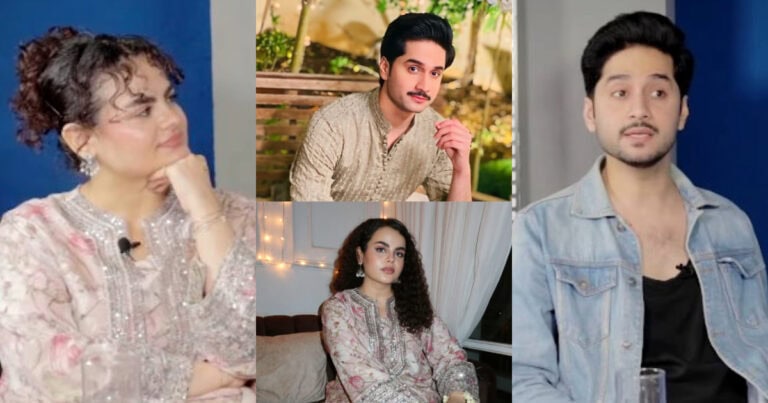
shaandaar brings different
| |

Shaandaar brings a different kind of story to Pakistani television

Pakistani television dramas tend to follow familiar patterns. Family feuds, romantic misunderstandings, domestic conflicts. Shaandaar, the new crime thriller airing on Express Entertainment, has made a deliberate choice to go somewhere different, and the early response suggests audiences are ready for exactly that.
The 16-episode drama, directed by Wajahat Rauf, draws inspiration from several real-life roadside killing cases that have sparked public debate and outrage in Pakistan. It is not a dramatisation of any single incident. Instead, the story brings together elements from different cases involving violence, privilege and the kind of power that can sometimes make consequences disappear. The question it keeps returning to is one that many Pakistanis have asked in real life: what happens when the powerful believe they are beyond accountability?
For Ahsan Afzal Khan, who plays the central character Salar, the project offered something rare. “A script picked by Mr Wajahat Rauf already gives you the impression that something different is coming,” he told The Express Tribune. He described the opportunity to work in this genre as one of the main reasons he signed on. “There are very few such stories. We were getting a chance to do something different, a crime thriller genre.”
Salar is not easy to like. He is privileged, arrogant and narcissistic. He looks down on others and misuses his influence. But Khan was careful to distinguish between understanding a character and excusing one. “I hope people relate to the human side of Salar, but not to his entire personality,” he said. He also pushed back on the idea that characters can be neatly sorted into good and bad. “No negative character is a bad person, and no positive character is a good person. We are all layered somewhere.”
His explanation for how someone becomes Salar is rooted in how they were raised and what they absorbed along the way. “Did we face bullying? What did we face? All of that is incorporated into your mind. You are reacting as a defence mechanism.” Beneath the arrogance, there is a human being shaped by something. But those origins do not erase the damage.
The drama is designed to move quickly. Khan described it as “fast-paced, gritty and dark,” but said the tone is not relentlessly heavy. “There is a light mood too, then slowly it gets darker and darker. There are social messages and a lot of things.” He said he watches the episodes with his family and finds himself wanting to see the next one. “It keeps you interested. It is not dragged.”
That pace appears to be connecting with a younger audience. “Teenagers and Gen Z are enjoying this drama a lot,” Khan said. He also noted that viewers who usually prefer international content have expressed interest in the series, which says something about how far Shaandaar’s tone and subject matter depart from what Pakistani television typically offers.
The ensemble cast includes Shamoon Abbasi, Shahzad Sheikh, Areeka Haq, Ali Dayan, Laila Wasti and Ahsan Afzal Khan. Together they inhabit a world where privilege and power create consequences that ordinary people cannot escape, and where the same actions carry very different costs depending on who commits them. It is a world many Pakistani viewers will recognise without needing it explained.
Similar Posts

  • | |

    ‘I never said Rawalakot people aren’t …

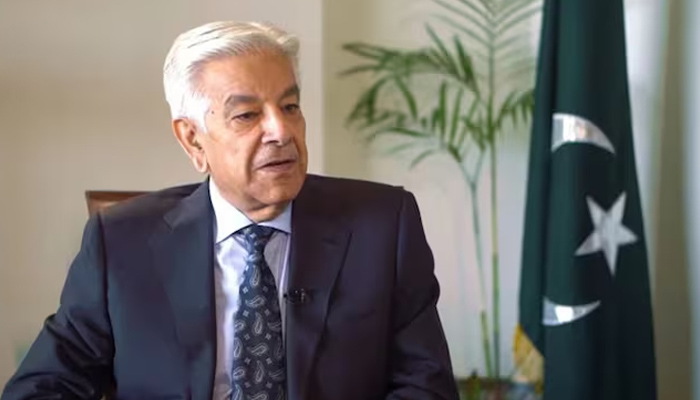
    SIALKOT: Defence Minister Khawaja Asif has rejected claims that he questioned the Kashmiri identity of the people of Rawalakot, saying his remarks had been misunderstood and reaffirming Pakistan’s support for the people of Jammu and Kashmir. Addressing a public gathering in Sialkot on Friday, the senior Pakistan Muslim League-Nawaz (PML-N) leader said he had “never said that the people of Rawalakot are not Kashmiris.” He stressed that Pakistan’s bond with Kashmir remains unwavering and added that pro-Pakistan slogans continue to be raised in Indian-administered Kashmir. Khawaja Asif also pledged that the government would not allow the abolition of refugee-reserved seats, describing Kashmiri refugees as the rightful stakeholders whose political representation must be protected. “The refugee seats will not be abolished. Kashmiri refugees are the true heirs of these constituencies,” he told supporters, adding that the government remained committed to safeguarding their constitutional and political rights. The defence minister also criticized the Action Committee operating in Azad Jammu and Kashmir, accusing it of encouraging unrest despite the government having previously accepted many of its demands. He claimed that financial assistance amounting to Rs24-25 billion had already been provided to address public concerns. Without presenting evidence, Asif further alleged that some members of the committee were “suspicious” and receiving foreign funding, asserting that their activities were creating unnecessary instability instead of contributing to constructive dialogue. Turning to politics, the PML-N leader expressed confidence that his party would form the next government in Azad Jammu and Kashmir, saying the party remained committed to development, stability and public welfare in the region. His remarks come amid heightened political debate over Kashmir-related issues and governance in Azad Jammu and Kashmir, where political parties continue to campaign on questions of representation, development and regional stability ahead of future electoral contests.

  • | |

    Raja Nasir Abbas condemns PIMS hospital tragedy, q…

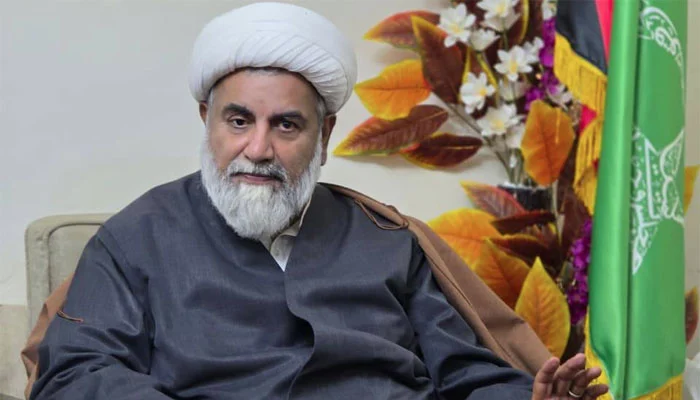
    ISLAMABAD: Leader of the Opposition in the Senate Allama Raja Nasir Abbas has described the PIMS Hospital incident as an extremely painful and unbearable tragedy, expressing deep concern over the loss of lives and the suffering of affected families. Speaking to the media after arriving at the Pakistan Institute of Medical Sciences (PIMS), Raja Nasir Abbas criticized the government’s response to the incident and questioned whether removing a health secretary could be considered an adequate action in response to such a serious tragedy. He said that simply removing a senior health official would not address the underlying issues that led to the incident. According to him, the government must look beyond administrative changes and take practical measures to prevent similar incidents from occurring in the future. “Do you think that by removing one health secretary, you have done your job?” he questioned while speaking to the media. The Senate opposition leader also expressed sympathy for the families who lost their children in the incident. He asked people to imagine the pain and suffering of parents whose children were burned to death. “What must the parents whose children were burned to death have gone through?” he asked, while condemning what he described as the actions and handling of the situation by the authorities. Raja Nasir Abbas said that such incidents raise serious questions about the quality of public services and the government’s responsibility toward citizens. He stressed that people rely on state institutions for essential services, particularly healthcare and education, and expect these institutions to provide safe and reliable facilities. The opposition leader also drew a comparison between the public education and healthcare systems and the growing reliance on private institutions. He said that when government schools fail to meet people’s expectations, families are often forced to turn toward private educational institutions. Similarly, when people do not receive satisfactory treatment or adequate medical facilities at government hospitals, they are compelled to seek treatment from private hospitals. He argued that this trend places an additional financial burden on ordinary citizens, particularly families who cannot afford expensive private healthcare or education. Raja Nasir Abbas emphasized that government institutions should be strengthened so that citizens can receive essential services without having to depend on private alternatives. He suggested that authorities need to identify weaknesses within public-sector institutions and take effective steps to improve their performance. His comments came during his visit to PIMS, where he spoke about the incident and the concerns surrounding the hospital’s safety and management. The tragedy has prompted questions about safety arrangements, institutional accountability and the government’s responsibility for protecting patients and their families. The opposition leader’s remarks also highlighted the broader issue of public confidence in government institutions. When public hospitals fail to provide adequate care or safe facilities, people who cannot afford private treatment are particularly vulnerable. He called for greater accountability and better management of public-sector institutions, arguing that administrative decisions alone cannot resolve systemic problems. The incident has intensified debate over hospital safety and emergency preparedness, with calls for authorities to investigate what happened and determine whether negligence or shortcomings contributed to the tragedy. Raja Nasir Abbas maintained that the government must take meaningful measures rather than limiting its response to the removal of individual officials. He stressed that improving public hospitals and ensuring the safety of patients should remain a priority. He further expressed solidarity with the bereaved families and condemned the circumstances surrounding the deaths, saying that the suffering of parents who lost their children could not be ignored.

  • |

    Kajal Aggarwal explains why she chose south cinema over bollywood

      Actress Kajal Aggarwal has successfully balanced her career between the South Indian film industry and Bollywood for nearly two decades. In a recent interview, the actress opened up about why she chose to prioritize South Indian cinema over Hindi films and shared what she believes Bollywood can learn from the South film industry. Born into a Punjabi family in Amritsar, the 41-year-old actress began her acting journey in Bollywood but eventually found greater success in Telugu and Tamil cinema. Reflecting on her career choices, Kajal said that the opportunities she received in South Indian films were significantly better than those being offered to her in Bollywood. She revealed that she deliberately avoided signing more Hindi films because the projects she was offered in the South had stronger scripts and more meaningful roles. According to Kajal, she always wanted to portray characters with depth and substance rather than settling for average or routine roles simply to remain active in Bollywood. “I received the kind of roles I wanted in South cinema,” she explained. “The stories and characters were more appealing, and I did not want to compromise by accepting ordinary roles in Hindi films.” During the interview, Kajal was also asked what Bollywood could learn from the South Indian film industry. Without hesitation, she highlighted one important quality—punctuality. According to the actress, professionalism and respect for time are deeply ingrained in the South Indian film industry. She said film shoots in the South operate according to strict schedules, with cast and crew members expected to arrive and work on time. “In Bollywood, things rarely happen on schedule,” Kajal said. “In South cinema, people work according to the clock. I have always been someone who likes to be punctual, and I appreciate working in an environment where everyone respects time.” Kajal also recalled her experience of working with Bollywood superstar Salman Khan in the film Sikandar. She admitted that she was thrilled to share screen space with one of India’s biggest stars and had been looking forward to the collaboration for a long time. However, she also revealed that working with Salman Khan introduced her to a very different working style. Kajal said the actor often arrived on set in the afternoon or evening, making her wait for extended periods—a routine she was not accustomed to after years of working in the South Indian film industry. “He made me wait the most,” she said with a smile. “I wasn’t used to it and kept wondering what was happening. Since he would arrive later in the day, I would spend the waiting time working out in the gym that was available on the film set. I have become accustomed to the discipline and punctuality of South cinema.” Kajal Aggarwal made her acting debut in 2004 with the Hindi film Kyun…! Ho Gaya Na before achieving widespread fame in Telugu and Tamil cinema. Over the years, she has become one of the most popular and highest-paid actresses in the South Indian film industry, delivering numerous commercial successes and earning critical acclaim for her performances. Despite her success in regional cinema, Kajal has continued to appear in select Bollywood projects while carefully choosing roles that align with her artistic goals. The actress will next be seen in the upcoming film The India Story, directed by Chetan DK. The film also stars Shreyas Talpade in a leading role and is expected to be one of Kajal Aggarwal’s notable releases in the coming months. Her comments have reignited discussions about the differences in work culture between Bollywood and the South Indian film industry, particularly regarding professionalism, discipline, and the quality of storytelling.

  • | |

    Qudsia Ali, Abbas Ashraf on unhealthy gender dynamics

    Pakistani dramas have long been a mirror to the society they come from, and Aik Mohabbat Aur is doing exactly that. The ongoing drama, in which Qudsia Ali plays Maham and Abbas Ashraf Awan plays Faris, explores the painful reality of marriages where women find themselves trapped with narcissistic partners. In a candid conversation with Fuchsia Magazine, the two actors stepped out of their fictional roles and spoke plainly about the dynamics they believe are damaging real relationships in Pakistan today. Abbas Ashraf was direct about where he believes the problem begins, and it is not with men themselves but with how they are raised. He said the narcissistic complex in men is a product of parenting, specifically the way sons are conditioned from childhood to feel superior to everyone around them. Parents, he argued, tell their sons they are the inheritors, the ones who matter, the ones who carry the family forward, while daughters are quietly assigned a lesser place. That imbalance, repeated across generations, plants the seeds of the entitlement and control that later destroys marriages. His prescription was as straightforward as his diagnosis. “Make both your sons and daughters feel equal if you want to stop your sons from becoming negative narcissists,” he said. It is a simple idea that carries enormous weight precisely because of how rarely it is practised. Qudsia Ali brought a different but equally sharp perspective to the same conversation, turning her focus toward the women who stay in difficult marriages long past the point of reason. Her explanation was rooted not in weakness but in a specific emotional wound. She said that many women are deprived of parental love from the very beginning of their lives. When they finally encounter even a fragment of affection from a partner, however temporary or conditional it may be, they hold on to it with everything they have because they have never known anything different. “Women are deprived of parental love and when they get even a glimpse of love, they lie down and take everything,” she said. “They take even a temporary love as they are extremely insecure.” The image is striking and uncomfortably accurate for anyone who has watched a woman accept treatment that from the outside looks impossible to justify. Qudsia did not offer this observation from a distance. She acknowledged that she herself had carried insecurities of her own, and that she had done the work to understand and overcome them. It was a moment of personal honesty that gave her words additional weight. Together, their observations form a connected picture of how the same system of unequal parenting produces both the men who expect everything and the women who accept anything. The drama they are appearing in explores exactly this territory on screen. But in this conversation, they chose to name it plainly off screen too, and that directness is what has made their remarks resonate beyond the usual boundaries of a promotional interview.

  • | | |

    Gold prices rise in Pakistan

      KARACHI: Gold prices climbed in Pakistan on Monday, even though international gold rates experienced a slight decline. The increase in local prices was mainly attributed to continued uncertainty surrounding the Middle East conflict, concerns over rising inflation, and investor caution ahead of key US economic data expected later this week. According to the All-Pakistan Gems and Jewellers Sarafa Association, the price of 24-karat gold increased by Rs1,700 per tola, taking it to Rs428,436. Similarly, the price of 10 grams of goldrose by Rs1,457, reaching Rs367,314. The latest increase came after a significant decline on Saturday, when gold prices had fallen by Rs3,700 per tola to settle at Rs426,736. In contrast, the international gold market remained under slight pressure. Spot gold slipped by 0.1% to $4,037.01 per ounce, while US gold futures for August delivery declined by 0.3% to $4,035.80 per ounce during trading. Despite the minor drop, analysts believe global investors remain cautious because of ongoing geopolitical tensions and expectations of fresh economic developments in the United States. Silver prices in Pakistan also moved higher. The price of silver gained Rs54 per tola, taking it to Rs6,291, reflecting continued demand for precious metals in the local market. Adnan Agar, Director at Interactive Commodities, said that international gold prices had eased slightly after fluctuating throughout the trading session. According to him, gold touched a high of $4,080 per ounce before falling to a low of$4,019, eventually stabilising near $4,038. He noted that gold remains under pressure and the market is closely monitoring upcoming US economic indicators, particularly employment data, which could influence the Federal Reserve’s future monetary policy decisions. Agar added that gold has remained within a broad trading range of approximately $3,950 to $4,250 per ounce since June. However, he expects this range to break within the next one or two weeks, potentially leading to a stronger upward or downward price movement depending on market conditions. Market participants are now awaiting a series of important US labour market reports, as these will provide further insight into the Federal Reserve’s interest rate outlook. Higher interest rates generally reduce the appeal of non-yielding assets like gold, while expectations of rate cuts tend to support bullion prices. Another factor attracting attention in the global market is reports that South Korea’s central bank intends to purchase gold from domestic producers, a move that could provide additional support to demand in the coming months. Meanwhile, oil markets have also remained highly volatile. Brent crude futures surged by more than 20% last month, driven largely by geopolitical tensions in the Middle East, raising concerns that higher energy prices could fuel inflation worldwide. Edward Meir, an analyst at Marex, said gold has traded within a narrow range of $4,000 to $4,200 per ounce for over a month. He explained that the possibility of inflation picking up again, particularly after July’s economic data, is helping support gold prices despite the recent weakness. Separately, the Pakistani rupee posted another modest gain against the US dollar. The local currency appreciated by 0.01%, closing at Rs277.77 per dollar, compared with Rs277.80 at the end of the previous trading session, reflecting continued stability in the foreign exchange market.

  • | | | |

    Trump signs new orders to restrict birthright citi…

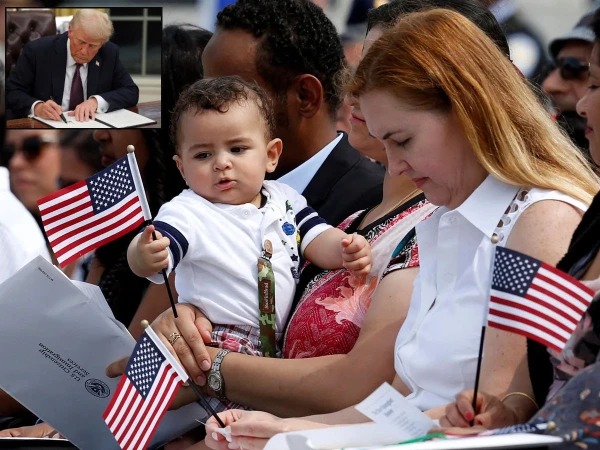
    US President Donald Trump has signed two new executive orders aimed at restricting birthright citizenship and curbing birth tourism, reviving one of the most contentious immigration debates in the United States despite a recent Supreme Court ruling that upheld constitutional protections for children born on American soil. The latest executive actions were announced at the White House, where President Trump defended his administration’s renewed effort to limit automatic US citizenship for certain children born in the country. He argued that the policy should have been implemented years ago and vowed to pursue a different legal path after the courts rejected an earlier attempt. The move comes only weeks after the US Supreme Court ruled that Trump’s previous executive order seeking to end automatic birthright citizenship was inconsistent with the Constitution. The court reaffirmed that the 14th Amendment continues to guarantee citizenship to individuals born in the United States. Under the first executive order, the administration seeks to expand the categories of foreign parents whose US-born children would not automatically qualify for American citizenship. According to the White House, the order targets cases involving parents linked to foreign terrorist organizations, individuals working for foreign governments, those accused of immigration fraud, or people residing in certain US territories where automatic citizenship rules differ. The second executive order focuses on birth tourism, a practice in which pregnant women travel to the United States on tourist or visitor visas to give birth so their children can obtain US citizenship. The Trump administration argues that the practice exploits America’s immigration laws and places an unnecessary burden on public resources. President Trump claimed that hundreds of thousands of children obtain US citizenship each year through birth tourism. However, independent estimates from the Migration Policy Institute suggest that approximately 22,000 to 26,000 births annually are linked to birth tourism. Official US government data also recorded around 9,600 births to foreign mothers in 2024. White House Deputy Chief of Staff and Homeland Security Adviser Stephen Miller defended the new policy, saying some visitors misuse tourist visas with the primary intention of securing citizenship for their children. He argued that existing immigration law gives the president authority to impose entry restrictions in specific circumstances. Legal experts, however, remain skeptical about the long-term viability of the new measures. Gabriel Chin, a law professor at the University of California, Davis School of Law, said that while the president may have authority to regulate entry into the United States, citizenship for children born on US soil is protected by the Constitution. He noted that the Supreme Court has already addressed the issue, making it likely that the latest executive orders will face fresh legal challenges. The renewed effort is expected to trigger another high-profile court battle over immigration policy and the constitutional limits of presidential authority, ensuring that the debate over birthright citizenship remains at the center of US politics.

Leave a Reply

Your email address will not be published. Required fields are marked *