trump warns iran
| |

Trump warns Iran backers of economic punishment

US President Donald Trump has warned that countries providing an economic “lifeline” to Iran could face financial penalties as Washington steps up pressure on Tehran. Trump has also announced what he described as an “economic D-Day” against Iran as part of his broader campaign to weaken the country’s economy and force changes in its policies.

The latest threat reflects Trump’s continued reliance on US economic power as a key foreign policy tool. His administration has increasingly used tariffs, sanctions and other financial measures to pressure countries and governments that Washington believes support US rivals or undermine its strategic objectives.

Analysts, however, question whether the strategy can deliver the same results against Iran as it has in cases where the United States enjoys greater cooperation from other major economies.

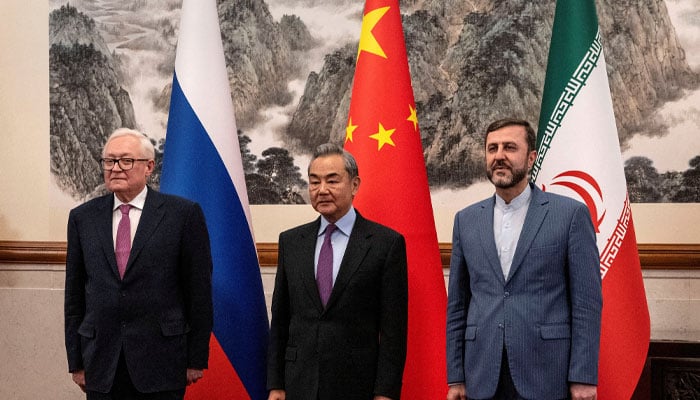
Iran maintains important economic ties with China and Russia, two countries that have strong reasons to resist US pressure. Russia already faces extensive American sanctions and has significantly reduced its dependence on the US-led global financial system. As a result, additional US economic pressure may have a limited impact on Moscow’s willingness to maintain trade and other economic relations with Tehran.

China could present an even greater challenge for Washington. Beijing has repeatedly shown that it is prepared to resist or work around US sanctions when its own economic and strategic interests are at stake. China remains one of Iran’s most important trading partners, particularly in the energy sector, making Beijing a key factor in any US effort to isolate Tehran economically.

Paul Musgrave, an associate professor of government at Georgetown University in Qatar, told Arab media that Trump would face significant difficulties in making his pressure campaign fully effective.

Musgrave said Trump was attempting to impose a coordinated sanctions regime largely through unilateral US pressure, even though such efforts have traditionally depended on cooperation from multiple countries. He noted that an effective international campaign would require support from major powers, including China and Russia, as well as cooperation among the five permanent members of the United Nations Security Council.

Trump said in a post on his social media platform, Truth Social, on Tuesday that his campaign against Iran would become one of the most devastating economic operations ever directed against a country.

The statement signals a major escalation in Washington’s economic pressure on Tehran. Trump’s administration appears determined to use America’s financial influence, access to global markets and trade relationships to make it increasingly difficult for Iran to maintain its international economic ties.

However, experts warn that the strategy could also create significant economic consequences beyond Iran. If Washington threatens countries that continue trading with Tehran, those governments could face a difficult choice between maintaining their economic interests and avoiding US penalties.

The effectiveness of Trump’s strategy will largely depend on whether Washington can convince major trading partners to cooperate. China and Russia are likely to remain the biggest obstacles, particularly if they view continued economic engagement with Iran as important to their own strategic interests.

The latest move also comes after a series of contentious trade battles during Trump’s second presidential term, highlighting his continued preference for economic pressure as a means of pursuing foreign policy goals. Whether the approach can isolate Iran without triggering further tensions with major global powers remains uncertain.

Similar Posts

  • |

    UN General Assembly extends rights chief’s term despite US objections

    The United Nations General Assembly has voted by a large majority to grant UN High Commissioner for Human Rights Volker Turk a second four-year term, despite strong opposition from the United States, Russia and Israel. The decision came after member states rejected calls to delay the vote and instead backed Secretary General Antonio Guterres’ recommendation to keep Turk in office when his current term expires in October. The 193-member General Assembly approved the extension with 144 countries voting in favor, while 10 countries voted against the proposal and 13 abstained. Before the final vote, member states also rejected a Russian proposal that would have extended Turk’s mandate only until the end of 2026 instead of giving him another full term. Turk has become one of the UN’s most outspoken voices on global human rights issues during his first term. He has repeatedly criticized Russia’s military actions in Ukraine and raised concerns over Israel’s conduct during the conflict in Gaza. He has also called for investigations into deaths that occurred in US immigration detention facilities. His willingness to publicly challenge major world powers has drawn criticism from several governments, including Washington, Moscow and Tel Aviv. The vote reflected growing tensions between the United States and the United Nations under President Donald Trump’s administration. In recent years, Washington has reduced financial support for several UN agencies and withdrawn from multiple international bodies. The administration has argued that reforms are needed before the United States continues its current level of participation and funding. Before the vote, the United States urged the General Assembly to postpone the decision for further consultations. US Representative for UN Management and Reform Jeff Bartos warned member states that approving the appointment without additional debate would damage the organization’s credibility. He said the United States would review its future engagement, participation and financial contributions if the assembly ignored its concerns. The US State Department also criticized the process before the vote, describing it as rushed and lacking sufficient discussion among member countries. Officials argued that member states should have been given more time to examine the proposal before making a final decision. Despite those objections, a broad coalition of countries supported Turk’s reappointment. The European Union strongly backed the extension, along with many African and Latin American nations. China also voted in favor of the proposal, helping secure the overwhelming majority needed for approval. UN Secretary General Antonio Guterres nominated Turk for a second term after working closely with him for several years. Guterres, who is due to leave office in December, praised Turk’s experience and commitment to defending human rights around the world. Turk, an Austrian lawyer, has spent decades working within the United Nations in senior positions based in Geneva as well as field assignments, including Kosovo. With the latest vote, he will become the first UN High Commissioner for Human Rights to serve two full four-year terms since the position was established in 1993. Human Rights Watch welcomed the decision, arguing that strong and independent leadership is needed at a time when democratic freedoms are facing increasing pressure in many parts of the world. The organization’s UN director, Louis Charbonneau, said the global human rights situation requires a commissioner willing to challenge powerful governments regardless of their influence. Russia and Israel strongly criticized the outcome after the vote. Russia’s deputy ambassador to the United Nations accused Turk of showing political bias and making unfair allegations against Moscow. Israeli officials also condemned the decision, describing it as a mistake and arguing that the appointment should have been left to the next UN secretary general rather than being decided during Guterres’ final months in office. The result highlights the continuing divisions within the United Nations over human rights issues and the organization’s relationship with some of its most influential member states. While a large majority of countries supported Turk’s leadership, the objections raised by the United States, Russia and Israel suggest that debates over the UN’s role and future direction are likely to continue throughout his second term.

  • | |

    India denies role in Sheikh Hasina’s planned vir…

    NEW DELHI: India has firmly denied any government involvement in a virtual address that former Bangladesh Prime Minister Sheikh Hasina is expected to deliver to mark two years since the political uprising that forced her from office. The clarification came after reports suggested that the online event, scheduled to be held in New Delhi, had official backing. India’s Ministry of External Affairs rejected those claims, insisting the government has no connection with the programme. Speaking at a weekly press briefing on Tuesday, Foreign Ministry spokesperson Randhir Jaiswal said the event was being organised by a private media organisation and not by the Indian government. “The Government of India has no role in organising this event,” Jaiswal said. He added that New Delhi neither endorses nor supports the views that may be expressed during the programme. The statement comes amid heightened political sensitivity surrounding Sheikh Hasina, who has been living in self-imposed exile in India since her government was toppled following student-led protests in 2024. According to media reports, the 78-year-old former premier is expected to make her first public appearance since leaving Bangladesh, addressing supporters and viewers via video link from New Delhi. The event is being hosted by the Foreign Correspondents Club of South Asia. Her son, Sajeeb Wazed Joy, is also expected to participate alongside other speakers. Meanwhile, authorities in Dhaka have reportedly instructed local media outlets not to broadcast or provide live coverage of Hasina’s virtual speech. The move reflects the continuing political tensions surrounding the former prime minister and her Awami League. Sheikh Hasina remains one of the most influential and controversial figures in Bangladesh’s recent political history. After losing power, she was convicted in 2025 on charges of crimes against humanity linked to a crackdown on anti-government protesters. A court sentenced her to death, a verdict she has rejected as politically motivated and legally invalid. Her planned address is expected to draw significant attention across South Asia, with supporters viewing it as a symbolic return to the political spotlight, while critics see it as another chapter in Bangladesh’s ongoing political divide. India’s latest statement appears aimed at distancing itself from any perception of official involvement, as New Delhi seeks to avoid diplomatic friction with Dhaka while continuing to host the former Bangladeshi leader. With regional attention focused on the event, Sheikh Hasina’s speech is likely to reignite debate over Bangladesh’s political future and her possible role in it.

  • | |

    US revokes over 600 visas in crackdown on birth to…

    The United States has revoked more than 600 visas from foreign nationals over the past month as part of a sweeping campaign against birth tourism operations, the State Department announced Wednesday. Secretary of State Marco Rubio said on social media that American citizenship is not for sale, accusing criminal organizations of profiting by coaching foreign nationals to defraud the visa system and forge documents in order to secure citizenship for their children. He said these networks have systematically exploited weaknesses in US immigration law for financial gain. The State Department recently launched a dedicated Birth Tourism Prevention Task Force tasked with identifying and dismantling these networks. Rubio said the unit will continue reviewing the activities of visa holders to put an end to what he called a heinous abuse of national law, and said the department intends to use every tool available to dismantle birth tourism networks and protect the integrity of American citizenship. The crackdown follows an executive order President Donald Trump signed on August 6 that describes birth tourism as a calculated exploitation of immigration policy and casts it as a threat to national security. The order gives the State Department and the Department of Homeland Security authority to permanently bar entry and revoke documentation for individuals found to be facilitating these schemes. Trump signed two executive orders on August 6 in a narrower attempt to limit birthright citizenship, again testing a constitutional provision even after the Supreme Court rejected an earlier version of his effort. Curbing birthright citizenship has remained one of the central goals of Trump’s broader immigration crackdown, with the White House specifically targeting birth tourism, in which pregnant foreign nationals travel to the United States specifically to give birth on American soil. Following the Supreme Court setback on June 30, Trump initially urged Congress to pass legislation addressing the issue before ultimately turning to executive orders instead, a route that allows the administration to set policy directly but carries less legal weight than legislation passed by Congress.

  • |

    UN warns Afghanistan’s child malnutrition crisis deepens

    Afghanistan is facing a rapidly worsening malnutrition emergency as severe funding cuts leave millions without life-saving assistance, the United Nations has warned. Speaking from Kabul, the World Food Programme’s (WFP) Afghanistan Director John Aylieff said the country’s nutrition crisis is escalating at an alarming pace, with growing numbers of severely malnourished children reaching health facilities too late to receive effective treatment. He said child wasting, the deadliest form of malnutrition, has now reached critical levels in nearly one-third of Afghanistan’s provinces. According to the WFP, ongoing conflict, disruptions to trade, the return of thousands of Afghan migrants from neighbouring countries, and shrinking international aid have combined to create an unprecedented humanitarian emergency. The UN official said last year recorded the sharpest annual increase in malnutrition cases, while the situation has deteriorated even further in 2026. Children under the age of two account for around 80 percent of the most severe cases, highlighting the devastating impact on the country’s youngest and most vulnerable population. Aylieff said the WFP has only enough resources to provide treatment to one out of every seven acutely malnourished women and children this year. The remaining six are forced to leave without assistance because of a severe shortage of funds. He warned that the cries of starving children in Afghan health centres reflect a preventable tragedy that could claim countless more lives if emergency funding is not secured. The humanitarian agency also expressed concern that widespread hunger could fuel migration, instability and extremism, stressing that a stable Afghanistan remains important for regional security. Millions of Afghans have also returned from neighbouring countries, including Pakistan and Iran, over the past three years, placing additional pressure on already overstretched resources. Although this year’s harvest has improved, the gains have been overshadowed by the country’s worsening economic and humanitarian challenges. The WFP estimates that nearly 14 million Afghans are currently experiencing acute hunger. However, funding shortages have limited food assistance to only a small fraction of those in need, while preventive food distribution programmes in high-risk areas have been suspended.

  • Meghan Markle reportedly reviving old disguise tactics after UK visit

    Meghan Markle appears to have returned to a familiar playbook, one she and Prince Harry relied on long before their wedding, following the couple’s recent trip to Britain. Details of this renewed strategy were shared with royal commentator Rob Shuter by sources close to the couple in Montecito. Writing in his column ‘Naughty But Nice’, Shuter reports that Markle has taken to wearing disguises nearly every time she leaves her home, a habit that reportedly picked up steam after her meeting with King Charles during the UK visit. According to insiders who spoke with Shuter, Markle has become notably dedicated to staying inconspicuous. Disguises are now said to be a standard part of her routine whenever she ventures beyond the gates of the Montecito property she shares with Harry. The getup reportedly includes wigs, baseball caps, loose-fitting sweatshirts, baggy trousers, and sunglasses so large they practically double as protective eyewear. A source close to Markle explained that recognition is exactly what she is trying to avoid, insisting that every element of her look is deliberate. The wig, the cap, the sunglasses, each piece is reportedly chosen with the specific goal of letting her move through public spaces without drawing attention. Interestingly, the source noted that this low-profile approach seems to have paid off during her recent UK trip. Despite the visit, Markle wasn’t photographed a single time, and the trip reportedly passed with minimal public attention, a rare feat given the usual scrutiny surrounding her movements. This is no new territory for the couple, though. Sources indicate that blending in has long been part of Markle and Harry’s shared approach to navigating public life, dating back to the earliest days of their relationship. Long before the world knew they were a couple, the pair reportedly attended a Halloween party in Toronto while in costume, a tactic that let them spend time together without being recognized. Harry, too, has spoken openly in the past about his own efforts to experience everyday life without the weight of royal recognition following him everywhere he goes. Taken together, the pattern suggests that as royal attention around the family continues, both Markle and Harry appear to be leaning on strategies that predate their public relationship, ones built around discretion, anonymity, and staying several steps removed from the spotlight.

Leave a Reply

Your email address will not be published. Required fields are marked *